Thanks for following along – this blog is now closed. You can catch up with the latest coronavirus coverage here.
Here is a round-up of today’s coverage of Covid-19 in the UK and around the world.
- The UK government has announced additional funding for adult social care infection control which it says will help prevent infections and support testing in adult social care throughout the winter.
- Flu jabs are safe to give at the same time as the Pfizer or AstraZeneca Covid vaccines, according to the first clinical trial to investigate co-administering the shots in a single appointment.
- South Africa’s president Cyril Ramaphosa has spoken to Boris Johnson regarding the “red list” status imposed by the UK on his country.
- United Airlines has reduced the number of employees who face losing their job for defying the company’s Covid-19 vaccine mandate. The carrier said 320 US-based staff rather than an earlier figure of 600 are now not in compliance with its Covid-19 vaccination policy.
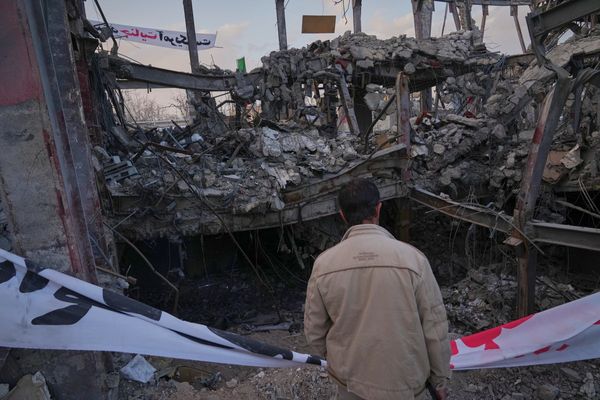
- A 20-day-old baby and a pregnant teen have died from Covid-19 in Syria, during a serious spike in cases over the past month, the charity Save the Children said. The charity said there were 1,151 deaths in north west Syria over the past month and cases rose 144%.
- Singapore recorded its highest-ever number of cases, with a rise of more than 200 to 2,478 in a week when it has tightened restrictions on social interactions.
- Only 15 countries in Africa have been able to meet the goal of vaccinating 10% of their populations - a target set earlier this year by the World Health Assembly for all countries to meet as a minimum by the end of this month.
- Medical charity MSF called for French pharmaceutical Sanofi to transfer knowledge and technology for its mRNA vaccine candidate to the WHO’s vaccine development hub in South Africa. Sanofi announced that it would be shelving the vaccine, despite promising results from early trials.
- The Philippines will need a decade for its economy to recover from the pandemic, a senior economy official announced, saying the damage from lockdowns will be felt by two generations.
- In Australia, Victorian authorities said Thursday’s spike in Covid-19 cases was “completely avoidable”. It is the highest one-day total for the state during the pandemic so far.
- India recorded a further 311 Covid deaths today, according to its latest government figures.
- Charity food banks in Britain are “preparing for the worst” as the government starts winding up emergency aid measures put in place to cushion the coronavirus pandemic’s impact on millions of workers and low-income households, Reuters reports.
- Malaysia has announced it is now mandatory for all federal government employees to be vaccinated against the coronavirus, with exceptions only to be allowed on health grounds.
- The lockdown in Ho Chi Minh City, Vietnam, will end tomorrow, ending almost three months of restrictions on movement to curb the Covid surge.
- The UK government needs to speed up Covid vaccine donations to developing countries or risk causing “irreparable damage” to both global health security and Britain’s reputation, a committee of MPs has warned.
I have finished for the day, but my colleague Helen Sullivan will be continuing the coverage.
Updated
A US judge upheld the University of California’s Covid-19 vaccine requirement against a challenge by a professor who alleged he had immunity because of a prior coronavirus infection, in what appears to be the first ruling on the issue.
Reuters reports that US district court judge James Selna in Santa Ana, California, said the university system acted rationally to protect public health by mandating the vaccine and not exempting individuals with some level of immunity from an infection.
More than 43 million Americans have had confirmed cases of Covid-19 and some opponents of vaccinations have argued that immunity from an infection negates the need for inoculation.
In August the US Centers for Disease Control and Prevention (CDC) said a study showed vaccines offer better protection than natural immunity gained from prior infection, which wanes over time.
Selna’s ruling denied a motion for a preliminary injunction by Aaron Kheriaty, who is professor of psychiatry at the University of California, Irvine School of Medicine. However, Dr Kheriaty said he plans to continue the litigation.
The university did not immediately respond to a request for comment.
Updated
Summary
The United States has administered 392,909,995 doses of Covid-19 vaccines in the country and distributed 474,245,945 doses, the US Centers for Disease Control and Prevention (CDC) said.
Those figures are up from the 391,992,662 vaccine doses the CDC said had been given by Wednesday out of 473,954,085 doses delivered, Reuters reports.
The agency said 214,332,261 people had received at least one dose while 184,601,450 people had been fully vaccinated as of 6am ET on Thursday.
About 4 million people have received an additional dose of either Pfizer or Moderna’s vaccine since 13 August, when the US authorised a third dose for people with compromised immune systems.
Updated
Accounting and consulting firm PwC told Reuters it will allow all of its 40,000 US client services employees to work virtually and live anywhere they want in perpetuity, making it one of the biggest employers to embrace permanent remote working.
Other major accounting firms, such as Deloitte and KPMG, have also been giving employees more choice to work remotely in the wake of the pandemic.
PwC’s deputy people leader, Yolanda Seals-Coffield, said the firm was the first in its industry to make full-time virtual work available to client services employees.
She said:
We have learned a ton through the pandemic and working virtually, as we think about the evolution of flexibility, is a natural next step.
If you are an employee in good standing, are in client services, and want to work virtually, you can, full stop.
Location will affect PwC employees’ pay, however.
Employees who opt to work virtually full-time from a lower-cost location would see their pay decrease, Seals-Coffield added.
Updated
Flu and Covid jabs safe to be given at same time, study finds
Flu jabs are safe to give at the same time as the Pfizer or AstraZeneca Covid vaccines, according to the first clinical trial to investigate co-administering the shots in a single appointment.
While some people experienced more side-effects with certain combinations of flu and Covid shots, the ailments were mainly mild to moderate, the study found. The most common side effects included pain at the injection site and temporary fatigue, headache or muscle pain.
Blood tests on the trial volunteers suggest there was no negative impact on the immune responses to either flu or Covid vaccines when the shots were given one after the other, in opposite arms, though one of the flu vaccines, FluBlok by Sanofi, appeared to be more potent when given alongside the Pfizer jab.
Researchers on the Combining Influenza and Covid-19 Vaccination (ComFluCov) study said the findings supported recent advice from the Joint Committee on Vaccination and Immunisation (JCVI) to offer Covid boosters alongside flu jabs this autumn and winter, where it is practical to do so.
Beaches and recreation centres reopened in Havana, Cuba’s capital, after authorities announced it was time to resume outdoor activities.
Officials said the reopening had been decided because 90% of the city’s residents are vaccinated against coronavirus and the number of new cases has been declining.
Gladys Gonzalez was keen to take advantage of the reopenings. She told the Associated Press:
Psychologically this benefits youth and children. Already more than half of the country is vaccinated. You have to trust.
Roberto García, a kitchen assistant and his wife, Laura, took their children to the city’s Eastern Beaches.
He said:
When we saw the news, we decided to come to the beach because we have children and we have not enjoyed the summer for two years.
On Tuesday, the governor of Havana, Reinaldo García Zapata, announced the reopening of beaches, swimming pools, gyms and other spots.
This was in addition to recent relaxations of pandemic restrictions including shortening the hours of the nighttime curfew and allowing restaurants, cafes and bars to admit customers again.
However, mask wearing in the pools and in the beach areas is mandatory except when bathers enter the sea, reported the official newspaper Tribuna de La Habana. Swimming pools are also limited to 50% capacity.

Updated
The UK government is to announce new rules to enable football players who travel to red zone countries during the international break to play upon their return, but conditions will be stricter for those who have not received the Covid-19 vaccine.
Plans would mean returning players would be forced to enter a quarantine similar to that experienced by Olympic athletes in Tokyo this summer. Allowed to train and play matches from the day of their return, players would otherwise be confined to a hotel room for 10 days.
It is understood the new regulations – which are expected to be announced on Friday – will apply only to players who have had both vaccine jabs.
Updated
UK government announces further funding for adult social care infection control
The government has announced additional funding which it says will help prevent infections and support testing in adult social care through the winter, the Press Association reports.
It comes after the National Care Forum warned that the last remaining dedicated funding for social care to deal with Covid-19 was due to end on Thursday.
The Department of Health and Social Care said it will provide an additional £388m to be delivered through the existing infection control and testing fund, which was first introduced in May 2020 with an investment of £600m.
It added that the funding will help prevent the spread of infection in social care settings, support care workers to access Covid-19 and flu vaccines, and allow testing to continue for staff, residents and visitors.
We’re announcing more than £388 million to support adult social care this winter.
— Department of Health and Social Care (@DHSCgovuk) September 30, 2021
Support for infection prevention control will include:
✅ regular #COVID19 testing
✅ help to access #COVID19 and flu vaccines, backed by £25 million
More info 👇
Updated
South Africa eases Covid restrictions to lowest alert level
South African president Cyril Ramaphosa has eased restrictions aimed at combating the coronavirus pandemic to the country’s lowest alert, level 1, the second such loosening this month, reports Reuters.
In a televised address, Ramaphosa announced the country would move down one level in a five-tier system of restrictions, where five is the highest, to an “adjusted level 1” as South Africa emerges from its third wave dominated by the Delta variant.
He said that more than 17m vaccine doses had been introduced and more than 8.6 million people are fully vaccinated. This is more than one-fifth of the adult population, he added.
Ramaphosa also said he had pressed Britain to relax its travel limits on his country.
Britain has placed South Africa on its coronavirus “red list”, forcing travellers from the country into often expensive hotel quarantine on arrival.
The president said he had discussed the issue with Boris Johnson, adding:
We both agreed that decisions of this nature should be informed by science, and we are both hopeful of a positive outcome when the issue comes up for review in the coming days by their scientists.
A Downing Street spokesperson said:
The prime minister agreed to continue working closely with President Ramaphosa on this issue, to ensure that safe travel, trade and tourism between our countries can recover as soon as possible.
Let us all go out and get vaccinated. Let us take our friends and family who are not yet vaccinated to go and get vaccinated.
— Cyril Ramaphosa 🇿🇦 #VoteANC (@CyrilRamaphosa) September 30, 2021
Let us as one to reach our 70% target by December.https://t.co/73LT2SWAWE
Updated
United Airlines has reduced the number of employees who face losing their job for defying the company’s Covid-19 vaccine mandate, Reuters reports.
The Chicago-based carrier said only 320 US-based staff are now not in compliance with its Covid-19 vaccination policy.
It marks a dramatic shift as on Tuesday the airline said it would fire 593 employees who had decided not to get vaccinated.
Excluding those who have sought an exemption, United said 99.5% of US-based employees have now been vaccinated against Covid-19.
In early August, United became the first US carrier to require Covid-19 vaccinations for all domestic employees. It had asked for proof of vaccination by Monday at the latest.
It later softened its position, saying workers could save their jobs if they chose to get vaccinated before their formal termination meetings.
More employees have provided a proof of vaccination, a company spokesperson said.
The airline expects a further decline in the number of unvaccinated staff in the coming days.
Updated
Donna Lu reports:
The amount of hydroxychloroquine and ivermectin dispensed from Australian pharmacies increased significantly in 2020 as the Covid pandemic took hold, according to new research.
Analysis of six publicly subsidised drugs – including hydroxychloroquine, ivermectin, corticosteroids and the common antibiotic azithromycin – found Covid-related changes in prescription patterns in Australia.
The study, a preprint that has not yet undergone peer review, used dispensing data to quantify the number of prescriptions that had been filled at pharmacies between January and November last year.
The researchers noted a 99% increase in hydroxychloroquine dispensing in March 2020, about 30% of which was the result of new prescriptions.
Updated
Oxford Nanopore, whose DNA sequencing technology has been essential in tracking Covid-19 variants globally, has made a stellar stock market debut in London. A rise in its share price of as much as 47% has left the firm valued at almost £5bn.
The flotation of the Oxford University spin-out has given its chief executive and co-founder, Gordon Sanghera, a fortune on paper of £63m.
Sanghera has not sold any of his 10.3m shares, while the co-founder, Spike Willcocks, the firm’s chief business development officer, sold 368,000 shares for £1.56m as part of the initial public offering (IPO). He now holds 4.9m, worth nearly £30m after the jump in value. Clive Brown, the chief technology officer, sold 191,066 shares for £812,000 but still owns 1.7m, worth £10m.
The shares closed up 44% at 612.6p, giving the company a value of £4.9bn, in London’s biggest biotech listing since the allergy specialist Circassia floated in 2014.
Summary
Here is a round-up of today’s coverage of Covid-19 in the UK and around the world.
- A 20-day-old baby and a pregnant teen have died from Covid-19 in Syria, during a serious spike in cases over the past month, the charity Save the Children said. The charity said there were 1,151 deaths in north west Syria over the past month and cases rose 144%.
- Singapore recorded its highest-ever number of cases, with a rise of more than 200 to 2,478 in a week when it has tightened restrictions on social interactions.
- Only 15 countries in Africa have been able to meet the goal of vaccinating 10% of their populations - a target set earlier this year by the World Health Assembly for all countries to meet as a minimum by the end of this month.
- Medical charity MSF called for French pharmaceutical Sanofi to transfer knowledge and technology for its mRNA vaccine candidate to the WHO’s vaccine development hub in South Africa. Sanofi announced that it would be shelving the vaccine, despite promising results from early trials.
- The Philippines will need a decade for its economy to recover from the pandemic, a senior economy official announced, saying the damage from lockdowns will be felt by two generations.
- In Australia, Victorian authorities say Thursday’s spike in Covid-19 cases was “completely avoidable”. It is the highest one-day total for the state during the pandemic so far.
-
India recorded a further 311 Covid deaths today, according to its latest government figures.
- Charity food banks in Britain are “preparing for the worst” as the government starts winding up emergency aid measures put in place to cushion the coronavirus pandemic’s impact on millions of workers and low-income households, Reuters reports.
- Malaysia has announced it is now mandatory for all federal government employees to be vaccinated against the coronavirus, with exceptions only to be allowed on health grounds.
-
The lockdown in Ho Chi Minh City, Vietnam, will end tomorrow, ending almost three months of restrictions on movement to curb the Covid surge.
- The UK government needs to speed up Covid vaccine donations to developing countries or risk causing “irreparable damage” to both global health security and Britain’s reputation, a committee of MPs has warned.
That’s me, Kaamil Ahmed, done for the day but my colleague Jane Clinton will be continuing the coverage.
Paul Karp, Lorena Allam and Nick Evershed report:
More than 3,000 Indigenous Australians have been infected with Covid-19 in New South Wales since the June outbreak, as lagging vaccination rates take their toll.
Seven Indigenous people have died in the NSW outbreak and there are currently 872 active cases, according to statistics sourced from the NSW health department.
The shadow minister for Indigenous Australians, Linda Burney, has accused the federal government of a lack of political will to fix the gap between Indigenous and non-Indigenous vaccination rates.
The gap has continued to widen despite the army being sent into western NSW and plans to deploy them to another 30 Indigenous communities where vaccination rates remain lower than the rest of the state.
Slovenian court blocks vaccine mandate for public sector workers
A vaccine mandate hours away from coming into force in Slovenia was blocked by the country’s Constitutional Court on Thursday, AFP reports.
It would require around 31,000 people, including civil servants, policemen and soldiers, to be vaccinated or have recovered from Covid-19 in order to continue working.
The court said that “despite the very serious epidemic situation”, it considered that “implementing the potentially unconstitutional (measure)... would have worse consequences than delaying implementation”.
Slovenia has vaccinated just 45 percent of its two million people, one of the lowest levels in the European Union.
Slovenia was one of several countries highlighted by the Red Cross as having witnessed violence against medica, the media and the public related to vaccines - alongside Italy, the Netherlands, the United Kingdom, Poland and France.
The Red Cross on Thursday called for more action to tackle vaccine hesitancy in Europe.
“We are facing a critical moment in the fight against COVID-19 in Europe,” said Birgitte Bischoff Ebbesen, the Europe director for the International Federation of Red Cross and Red Crescent Societies.
“Increased community engagement is needed to tackle vaccine hesitancy, myths and disinformation. Without addressing people’s concerns and fears, vaccines may not find their way into the arms of those most at risk, even where doses are available.”
Updated
French pharmaceutical company Sanofi should transfer technology and knowledge from its abandoned project for an mRNA vaccine to the vaccine development hub in South Africa, Medecins Sans Frontieres said.
The WHO vaccine hub was announced in April to support the development of vaccines outside of rich countries but has not had cooperation from pharmaceutical companies.
MSF said that as Sanofi is abandoning the vaccine candidate because of the existing Pfizer and Modern vaccines, it should transfer its knowledge to the South Africa facility.
Alain Alsalhani, Vaccines and Special Projects Pharmacist at MSF’s Access Campaign said:
It’s unconscionable for Sanofi to let a promising vaccine candidate gather dust on its shelves simply because it won’t be lucrative for them, when they have an opportunity to put this research to lifesaving use by transferring their know-how to the WHO mRNA vaccine hub in South Africa.
Considering the public funding that Sanofi received for its COVID-19 vaccine portfolio, the corporation has a responsibility to ensure that its mRNA vaccine eventually reaches people. MSF also calls on the French government, as well as other governments that funded Sanofi’s research, to put pressure on the corporation to take a rational decision of sharing this technology instead of abandoning it
Italy has recorded 51 deaths and 3,804 new cases of Covid-19, its health ministry said Thursday.
A 20-day-old baby has died from Covid-19 in northern Syria, Save the Children said on Thursday.
It said a pregnant 17-year-old has also died, repeating warnings from earlier this month that more help is needed to tackle rising cases in the rebel-held enclave where there are few intensive care beds.
The charity said there were 1,151 deaths in north west Syria over the past month and cases rose 144%.
“One death from coronavirus is one too many, but to hear that a baby and a 17-year-old have also been claimed is devastating,” said Sonia Khush, Director of Save the Children’s Syria Response.
“Without an urgent injection of funding, cases will continue to rise, and thousands of children living in some of the world’s most dire conditions will not even get the opportunity to access some of the basic relief our services provide to them. The world must not look away.’
In the last month COVID-19 cases in Northern Syria have increased by 144%, and those who have died include a 20 day old baby.
— Emily (@emily_wight) September 30, 2021
Countries that have benefitted from the vaccine should turn to places like Syria and give urgent funding and support. https://t.co/XZXH3xhlkt
Updated
Though patients are again filling up Bosnia’s hospitals, many are refusing, or delaying, getting vaccines according to this dispatch from the Associated Press.
When the European Union launched its mass vaccination campaign, non-member Bosnia struggled along with most other Balkan nations to get supplies. By late spring, however, hundreds of thousands of doses started pouring into the country.
But after an initial rush of people clamoring to get jabbed, demand for shots quickly slowed. It is now down to a trickle even though Bosnia has Europe’s highest coronavirus mortality rate at 4.5%, according to Johns Hopkins University data.
Dr. Edin Drljevic, an infectious disease specialist at one of Bosnia’s largest hospitals, in Sarajevo, thinks the disconnect is partly a result of authorities failing to properly promote vaccination against COVID-19.
“At first, we only had negative publicity because of the failure to secure vaccines, but once the vaccines finally started arriving, mainly through donations, people became picky,” he said.
So far, just under 13% of Bosnia’s 3.3 million people have been fully vaccinated, among the lowest shares in Europe. Even people willing to get inoculated are putting off shots so they can choose the vaccine they want instead of receiving whichever one is available.
Bosnia currently administers the Pfizer-BioNTech, Sputnik V, Sinopharm and AstraZeneca vaccines. AstraZeneca’s product, while the most widely available, appears to enjoy the least trust because of extensive news coverage when numerous European countries temporary suspended its use due to concerns about possible, rare side effects.
“The bottom line is, people are poorly informed and lack up-to-date knowledge,” Drljevic said.
With so few takers, over 50,000 AstraZeneca vaccine doses have already expired; an additional 350,000 doses are set to expire in October
UK reports 137 deaths
The UK has reported 36,480 new cases and 137 deaths on Thursday.
Cases over the past seven days rose 6.5% compared to the previous week, according to the latest data from the government.
There were 6,853 patients in hospital and 813 on ventilators as of Wednesday.
Singapore hits record-high for cases
The 2,478 new cases reported by Singapore’s health ministry on Thursday are the country’s highest since the beginning of the pandemic. Two new deaths were also reported.
Despite more than 80% of its population being vaccinated, Singapore has witnessed a recent rise in cases that has disrupted plans to reopen. Instead, this week the country limited social gatherings to two people and implemented working from home.
New protocols that envisage the return of in-person attendances at police stations in England and Wales have been published and will take affect from monday.
Previous guidelines, introduced in April 2020 in response to the Covid-19 pandemic, allowed for remote legal advice to be provided to suspects with their consent.
The Law Society of England and Wales had worked on the guidance with the Crown Prosecution Service (CPS), the National Police Chiefs’ Council (NPCC) and other practitioner associations.
Charities had warned earlier this year however that the rights of children and vulnerable people in police custody are being put at risk during the pandemic by problems with the remote provision of legal advice.
Stephanie Boyce, the president of the Law Society of England and Wales, which represents and governs solicitors, said on Thursday: “Despite the successful vaccine rollout, Covid-19 hasn’t gone away, and it remains crucial to balance the essential right to have one’s solicitor present in custody, with the need to maintain safety for all.
“We believe the new protocol is an important step towards returning to face-to-face legal advice but with safeguards in place to allow for remote hearings where necessary.”
The Covid-19 vaccination programme in England is estimated to have prevented 261,500 hospital admissions among people aged 45 and over, according to new figures from the authorities.
Previous estimates had put the number at 230,800 admissions, said Public Health England, an agency of Britain’s Department of Health.
Estimates for the number of deaths prevented by vaccinations in England have also increased to 127,500, from a previous figure of 123,100
As Covid case numbers grow in the western Canadian province of Alberta, so too are calls for its Premier to take action of the sort he has been resisting.
Jason Kenney, a conservative politician who has been Alberta’s premier since 2018, has maintained what the Toronto Star described a “a wait-and-see approach.”
More than 1,000 people are currently in hospital with Covid in Alberta’s hospitals, while it recorded 34 deaths Wednesday.
Kenney has chosen not to take up an offer of assistance from Canada’s federal government and has resisted calls to implement a lockdown.
Alberta’s Minister of Health has meanwhile been emphasising the roll out of vaccines.
Earlier today, I was very pleased to approve increased funding for the VaxBus pilot program ran by the Industry for Vaccine Coalition and @BizCouncilAB.
— Jason Copping (@JasonCoppingAB) September 29, 2021
The VaxBus has proven to be a tremendous asset in getting Albertans vaccinated. 1/3
While hospitals across Bosnia are again filling with Covid-19 patients, vaccination sites are mostly empty and unused coronavirus vaccines are fast approaching their expiration dates.
When the European Union launched its mass vaccination campaign, non-member Bosnia struggled along with most other Balkan nations to get supplies, reports the Associated Press.
By late spring, however, hundreds of thousands of doses started pouring into the country. But after an initial rush of people clamou ring to get jabbed, demand for shots quickly slowed.
It is now down to a trickle even though Bosnia has Europe’s highest coronavirus mortality rate at 4.5%, according to Johns Hopkins University data.
Dr. Edin Drljevic, an infectious disease specialist at one of Bosnia’s largest hospitals, in Sarajevo, thinks the disconnect is partly a result of authorities failing to properly promote vaccination against Covid-19. He said:
At first, we only had negative publicity because of the failure to secure vaccines, but once the vaccines finally started arriving, mainly through donations, people became picky
So far, just under 13% of Bosnia’s 3.3 million people have been fully vaccinated, among the lowest shares in Europe. Even people willing to get inoculated are putting off shots so they can choose the vaccine they want instead of receiving whichever one is available.


Somalia has opened its first public oxygen plant to ensure supplies to its hospitals, Reuters reports.
The pandemic has caused a surge in demand for medical oxygen and many countries have run short - the sight of hospitals scrambling for supplies has often been a sign of a country becoming overwhelmed.
The $240,700 plant will be installed at Banadir Maternity and Children Hospital in the capital Mogadishu and was funded by the Hormuud Salaam Foundation.
“One cylinder of oxygen usually costs around $50 in Somalia but can reach up to $400 or $500 (at private hospitals) because of the shortage,” said Abdullahi Nur Osman, CEO of Hormuud’s foundation, adding that they will distribute to hospitals for free.
A 105-year-old woman who survived the 1918 flu pandemic as a child and fled Mussolini’s Italy has died of the coronavirus. Though she was vaccinated, she contracted the virus and spent more than a week fighting it.
The Associated Press have put together this feature on Primetta Giacopini’s life:
Primetta was 2 years old when her mother died. Her father, a laborer, didn’t want to raise Primetta or her younger sister, Alice. He sent Alice back to Italy, their ancestral homeland, and handed Primetta to an Italian foster family that then relocated to Italy in 1929.
“The way Mom talked about it, he didn’t want to raise those kids alone, and men didn’t do that at that time,” [her daughter] Dorene recalled. “It’s ridiculous to me.”
Primetta supported herself by working as a seamstress. Raven-haired with dark eyes and sharp features, she eventually fell in love with an Italian fighter pilot named Vittorio Andriani.
“I didn’t see too much of him because he was always fighting someplace,” Primetta told the Golden Gate Wing, a military aviation club in Oakland, California, in 2008.
Italy entered World War II in June 1940. The local police warned Primetta to leave because Mussolini wanted American citizens out of the country. Primetta refused. Several weeks later, the state police told her to get out, warning her that she could end up in a concentration camp.
...
[Dorene] added: “I’m reminding myself that she was 105. We always talk about ... my grandmother and mother, the only thing that could kill them was a worldwide pandemic.”
15 African countries hit 10% vaccination goal
Fifteen African countries have met the target of vaccinating at least 10% of their population by the end of September, the WHO said.
The goal was set for every nation earlier this year by the World Health Assembly and while 90% of rich nations have hit the target, less than a third of African countries have been able to after having to wait longer for vaccines and receiving limited supplies.
Only 2% of vaccines administered globally were in Africa.
“Shipments are increasing but opaque delivery plans are still the number one nuisance that hold Africa back,” said Dr Richard Mihigo, WHO’s vaccines coordinator for Africa.
WHO said most of the 15 countries had relatively small populations and had received the required vaccines, including through sources other than donations from the Covax vaccine sharing initiative, which many low-income countries have had to rely on.
Updated
Philippines economy will need a decade to recover
The long-term cost of the pandemic on the economy of the Philippines will be 41.4 trillion Philippine pesos (£6oobn), said the Economic Planning Secretary, Karl Kendrick Chua.
“Our long run total cost of Covid and the quarantine both to the present and future society - meaning our children and our grandchildren - will reach 41.4 trillion,” said Chua.
He said nearly 70% of the economy remained under “heightened quarantine” restrictions but warned lockdowns have thrown millions out of work and are increasing hunger.
England: number of positive tests rise by almost a fifth
The number of positive tests rose by almost a fifth to 191,771 in England in the week to September 22, according to the latest Test and Trace figures.
The data also showed that the number of people getting their test results back within 24 hours had dropped from 87% to 75%.
Updated
Scuffles broke out in Taiwan’s legislature as members of the opposition party protested the government’s performance - including its handling of the coronavirus, Reuters reports.
Lawmakers from the Kuomintang party stormed the podium to disrupt an address by the head of the Cabinet, Su Tseng-chang.
This week party member’s protested the government’s handling of the pandemic and specifically criticised a policy to shorten quarantine for pilots.
Pilots required to only spend three days in quarantine were suspected by many of being the source of an outbreak in May and June that killed 800 people - though that has not been confirmed.
Taiwan’s legislature descended into a rowdy brawl after opposition lawmakers interrupted a policy address and rushed the podium. https://t.co/XB9qmz8okR pic.twitter.com/1T6g0YosZx
— ABC News (@ABC) September 30, 2021
Summary
Here is a brief round-up of the day’s top Covid news stories so far:
- In Australia, Victorian authorities say Thursday’s spike in Covid-19 cases – the highest one-day total for the state the pandemic so far – was “completely avoidable”.
-
India recorded a further 311 Covid deaths today, according to its latest government figures.
- Charity food banks in Britain are “preparing for the worst” as the government starts winding up emergency aid measures put in place to cushion the coronavirus pandemic’s impact on millions of workers and low-income households, Reuters reports.
-
Malaysia has announced it is now mandatory for all federal government employees to be vaccinated against the coronavirus, with exceptions only to be allowed on health grounds.
- The lockdown in Ho Chi Minh City, Vietnam, will end tomorrow, ending almost three months of restrictions on movement to curb the Covid surge.
- The UK government needs to speed up Covid vaccine donations to developing countries or risk causing “irreparable damage” to both global health security and Britain’s reputation, a committee of MPs has warned.
- In the US, a Covid outbreak within Disney’s stage show Aladdin prompted an 11th-hour cancellation of Wednesday evening’s performance.
-
Denmark appears to have fallen short of its target of 90% of people over the age of 12 having been vaccinated twice by 1 October.
- In the United States, a second hospital in Alaska is rationing health care as the state deals with a spike in coronavirus cases.
That’s it from me, Tom Ambrose, for today. I’ll be back tomorrow but am now handing over the coronavirus blog to my colleague Kaamil Ahmed, who will keep you across all this afternoon’s breaking Covid news. Goodbye.
The UK government needs to speed up Covid vaccine donations to developing countries or risk causing “irreparable damage” to both global health security and Britain’s reputation, a committee of MPs has warned.
In a report released today, the Commons Foreign Affairs Committee said “glaring inequality” in access to vaccines risked allowing new variants to spread in developing countries.
The report also warned that Russia and China were attempting to exploit that inequality to “undermine the West and expand their influence by donating and selling vaccines”, the Press Association reports.
Committee chairman Tom Tugendhat said:
The rapid creation of an effective vaccine is a remarkable achievement for international cooperation and has saved a huge number of lives.
However, glaring inequalities in vaccine access mean that lower-income countries have been left far behind. Bolstering vaccination rates in these countries is not only a moral imperative but will benefit us all by slowing the spread of a deadly disease.
The UK cannot allow authoritarian states, such as Russia and China, to exploit the shortfall in vaccine supply to gain leverage over other countries.

In Russia, people may soon be able to get coronavirus vaccines not registered in the country.
They are expected to be available from clinics set up in a special economic zone, under a healthcare ministry proposal, Russian Kommersant daily reported on Thursday.
Many Western nations have not registered Russian vaccines such as Sputnik V and require visitors to have other shots that are not available to Russians, a situation that has prompted vaccine tourism, Reuters reports.
According to the Kommersant report, the healthcare ministry has proposed allowing clinics set up in the Moscow International Medical Cluster to import vaccines made abroad, such as the Pfizer/BioNTech, or Moderna shots.
It was unclear whether and when the proposed regulations could be enacted.
In the United States, a second hospital in Alaska is rationing health care as the state deals with a spike in coronavirus cases.
Yukon Kuskokwim Health Corp, in Bethel, announced the move on Wednesday as it reported it is operating at full capacity.
Providence Alaska Medical Center in Anchorage, which is the state’s largest hospital, has already been rationing care.
Coronavirus infections in Alaska have risen 42% in the past week.
The president of the Bethel region hospital says it did everything possible to delay rationing but had to take the step.

Hospital CEO Dan Winkelman urged “every resident of the Yukon-Kuskokwim region to get vaccinated, wear a mask in indoor public areas, and social distance.” He warned that “this is our last stand against this virus.”
Denmark set to fall short of Covid vaccination target
Denmark appears to have fallen short of its target of 90% of people over the age of 12 having been vaccinated twice by 1 October.
The latest official figures from the Danish Health Authorities show only 84.9% have had both shots, amounting to 4,366,235 people.
Those who have received the first shot — 4,453,321 people — represent 86.6% of those over the age of 12.
The vaccine is voluntary and free of charge in Denmark, which on 10 September declared that it no longer considers Covid as “a socially critical disease” because of the large number of vaccinations.
All restrictions have since been removed.
Updated
Ukraine reports highest daily cases since April
Ukraine recorded its highest number of daily Covid cases since April today, after its health ministry confirmed almost 12,000 new infections in the past 24 hours.
It came as the country registered 194 new coronavirus-related deaths.
The number of new cases has been growing over the past several weeks and the government has already tightened lockdown restrictions, Reuters reports.
Ukraine lifted lockdown restrictions as cases dropped over the summer but last week imposed a nationwide “yellow” code, which curbs mass events and limits the occupancy rates of gyms, cinemas and other venues.
Updated
The lockdown in Ho Chi Minh City, Vietnam, will end tomorrow, ending almost three months of restrictions on movement to curb the Covid surge.
People will be able to leave their homes, restaurants can serve take-away meals and other essential businesses can reopen, the city said on its website Thursday.
However, social distancing will remain, while schools are closed, public transport continues to be suspended, travel in and out of the city will be controlled and public gatherings of more than 10 people outside is banned.
People who wish to attend social activities will have to show proof of vaccination to be admitted to establishments, authorities said.

Ho Chi Minh City along with 18 southern provinces went into lockdown in mid-July when cases started to surge.
In the past three months, the delta variant of the virus has infected 770,000 people and killed over 19,000, according to the health ministry. Most of Vietnam’s Covid deaths occurred in this wave, with Ho Chi Minh City accounting for the majority of them.
Updated
Malaysia has announced it is now mandatory for all federal government employees to be vaccinated against the coronavirus, with exceptions only to be allowed on health grounds.
It comes as the country looks to boost vaccination rates with the aim of inoculating 80% of the population by the end of the year, Reuters reports.
Malaysia has one of the fastest vaccine rollouts in Southeast Asia, with 61% of its 32 million population already fully vaccinated.
In a statement, the Public Service Department said vaccinations would be made compulsory for federal staff in order to boost public confidence and ensure government services can be delivered smoothly.
Nearly 98% of civil servants were already vaccinated, while 16,902 or 1.6% have yet to register under the country’s inoculation programme, the department said. Malaysia has around 1.6 million public servants.

Unvaccinated employees have been given until 1 November to complete their inoculations, while those who are unable to be vaccinated must submit health information verified by a government medical officer.
Those who fail to get vaccinated in time will face disciplinary action, the department said.
Technology allowing Australians to travel overseas with an internationally recognised vaccine certificate will be ready within weeks, as the government prepares to announce a plan for the country’s borders to finally reopen.
In evidence to the Senate’s Covid committee on Thursday, the chief executive of Services Australia, Rebecca Skinner, said the department had developed a visible digital seal for vaccine status that would be ready by the end of October. She said:
Our plan is to have all of the technology in place so that it is a settled and tested situation before the policy decisions need to be made.
We don’t want to be in a situation where policy decisions can’t be taken because the technology isn’t ready.

The so-called visible digital seal (VDS) project will allow Australians to verify their vaccination status with Home Affairs, who will create a “highly authenticated” digital record for travel and for use by third parties, such as airlines and other countries.
Meanwhile, India recorded a further 311 Covid deaths today, according to its latest government figures.
It brings its overall death toll up to 448,062 since the pandemic began last year.
It also registered some 23,529 new infections within the past 24 hours, bringing the total number to 33.74 million.

Updated
In the US, a Covid outbreak within Disney’s stage show Aladdin prompted an 11th-hour cancellation of Wednesday evening’s performance.
It came just one night after the production joined the return of Broadway’s biggest musicals from a pandemic-induced hiatus, reports Reuters.
In a notice posted on Twitter shortly before the curtain was due to go up, producers said testing protocols had detected an unspecified number of “breakthrough” infections among vaccinated members of the Aladdin company at The New York Amsterdam Theatre.
“Because the wellness and safety of our guests, cast, and crew are our top priority, tonight’s performance, Wednesday, September 29th, is canceled,” the tweet said, adding that tickets would be refunded at their points of purchase.
It said the status of future performances of Aladdin, based on Disney’s 1992 animated hit film, would be announced on Thursday.
Australians aged 60 and over will be able to get Pfizer and Moderna vaccines from Friday regardless of their state or territory of residence, health minister Greg Hunt has announced.
Hunt said expanding vaccine choice from AstraZeneca to include the mRNA vaccines could help more than 300,000 older people who have been waiting to get vaccinated.
From 1 October all people aged 12 and over will be able to get Moderna from a pharmacist and Pfizer from a GP.
The announcement follows moves earlier in September by Queensland, South Australia and Western Australia to offer Pfizer to older residents as Australia’s shortage of it eased.
On Thursday New South Wales opened eligibility for Pfizer and Moderna to those aged 60 and over.
Good morning, I’m Tom Ambrose and I will be bringing you the latest Covid news from the UK and around the world this morning.
We start with the news that people who experienced depression or anxiety before the Covid pandemic were more likely to lose their jobs and suffer delays to medical treatment at the height of the crisis.
The new study, one of several set up by the UK’s chief scientific adviser Sir Patrick Vallance, found those with higher levels of anxiety and depression pre-pandemic were 24% more likely to have had delays to medical procedures and 12% more likely to have lost their job than those with average levels of anxiety and depression.
They were also 33% more likely to have suffered delays or missed out on prescriptions or medication during the first eight to 10 months of the pandemic, according to the Press Association.

The UK Research and Innovation-funded Covid-19 Longitudinal Health and Wellbeing National Core Study is looking at the health, social and economic impacts of the pandemic.
The new analysis, published in the British Journal of Psychiatry, looked at data from 59,482 people who are surveyed regularly as part of ongoing studies.
Dr Praveetha Patalay, senior author on the paper from University College London (UCL), said:
Our findings highlight that the wider health and economic impacts of the pandemic have been disproportionately experienced by those with mental health difficulties, potentially leading to worsening longer-term outcomes, even post-pandemic, for those already experiencing poor mental health.
Rishi Sunak’s decision to wind up the furlough scheme today will intensify Britain’s economic woes, an array of unions, business groups, employment experts, City firms and politicians have warned.
With signs of activity slowing even before pressures on supply chains began to mount over the past few weeks, the chancellor was criticised for cutting off a wage-subsidy lifeline that is still supporting well over a million jobs.
Frances O’Grady, the TUC general secretary, said the end of the furlough scheme coupled with the £20 a week cut in universal credit next week meant the government was heading into the winter with no plan to protect workers.
“Ministers should rethink the end of furlough. Many workers in hard hit industries are still furloughed and need support for longer. Otherwise, we may see a rise in unemployment,” O’Grady said.
Business leaders warned of an “autumn storm” from the government dismantling emergency pandemic support schemes at a time when the economic recovery from Covid-19 was faltering.
Larry Elliott and Richard Partington report:
Blomberg has ranked the Philippines last in its list of the best and worst places to be during the pandemic.
The news organisation explains why:
The monthly snapshot – which measures where the virus is being handled the most effectively with the least social and economic upheaval – ranks 53 major economies on 12 datapoints related to virus containment, the economy and opening up.
The Philippines’ drop to No. 53 reflects the challenges it’s facing from the onslaught of the delta variant, which has hit Southeast Asia particularly hard amid difficulties containing the more contagious strain and slow vaccination rollouts. The region, which recently had the worst outbreak in the world, populates the September Ranking’s lowest rungs, with Indonesia, Thailand, Malaysia and Vietnam all in the bottom five.
Record cases in Australian state of Victoria
In Australia, Victorian authorities say Thursday’s spike in Covid-19 cases – the highest one-day total for the state the pandemic so far – was “completely avoidable”, with parties for the Australian Football League grand final and other social gatherings over the long weekend behind up to one-third of the 1,438 new local infections.
Premier Daniel Andrews said he was sure the latest case numbers would be “of great concern to all Victorians”.
“The Thursday after a long weekend, and particularly given what we know from interviews over recent days, many of these cases were completely avoidable,” he said:
UK food banks ‘preparing for worst’
Charity food banks in Britain are “preparing for the worst” as the government starts winding up emergency aid measures put in place to cushion the coronavirus pandemic’s impact on millions of workers and low-income households, Reuters reports.
An extra weekly payment of £20 (US$27) to support the country’s poorest families will be cut next month, and more than a million workers face an uncertain future as Britain becomes the first big economy to halt its Covid jobs support scheme.
Food banks, which hand out staple goods from dried pasta to baby food, are especially concerned about the loss of the top-up to the Universal Credit (UC) benefit, which is claimed by almost 6 million people, according to official statistics.
The British move comes as other countries start wrapping up state aid programmes announced last year as Covid battered the global economy.

In the United States, pandemic unemployment benefits that supported millions of jobless, gig workers and business owners came to an end in early September, a month after a moratorium on residential evictions expired.
Australia and Canada have also announced plans to end income subsidies in the near future.
A British government spokesperson said the income benefit increase was always intended to be temporary and had been effective in softening the pandemic’s impact on family finances, adding that the focus now was on helping people back to work.
Nationwide, more than 800,000 people will be pushed into poverty by the benefit cut, according to British think-tank the Legatum Institute.
A fifth of the benefit’s claimants said they would “very likely” need to skip meals once the uplift is withdrawn, found a survey of more than 2,000 people carried out for the Trussell Trust.
A similar number said they would struggle to afford to heat their homes.
Summary
Hello and welcome to today’s live coronavirus coverage.
Britain’s charity food banks are “preparing for the worst”, Reuters reports, as the government starts winding up emergency aid measures put in place to cushion the coronavirus pandemic’s impact on millions of workers and low-income households.
Meanwhile in Australia, the Victorian state of Melbourne has reported its highest one-day case total of the pandemic so far, as its Delta outbreak overtakes infections in the neighbouring state of New South Wales.
More on these stories shortly. In the meantime, here are the other key recent developments:
-
Latvia has reported 1,203 new coronavirus cases – the country’s highest daily figure since February. It is the first time infections have crossed the threshold of 1,000 since May.
-
There have been 1,847 new coronavirus cases in Lithuania over the past 24 hours, the country’s statistics office has said – the highest number of cases since early January.
- The number of Covid fatalities recorded in Scotland hit the highest level since February last week, with 165 deaths registered that involved Covid-19, 30 more than the previous week.
-
Slovenia has temporarily suspended use of the one-dose Johnson & Johnson coronavirus vaccine while it investigates the death of a 20-year-old woman. Health minister Janez Poklukar said the benefits of receiving the vaccine “continue to outweigh the risks”.
- Singapore has reported 2,268 new cases - its highest number since the pandemic began. Its previous highest daily increase was 2,236 reported on Tuesday.
- The UK has reported 36,722 new cases, an increase on Tuesday figure of 34,256. It also report 150 deaths within 28 days of a positive test.
-
Merck & Co’s experimental oral Covid-19 antiviral drug molnupiravir is likely to be effective against known variants of the coronavirus, the company has said following laboratory studies.
- The Pan American Health Organization (PAHO) is in advanced talks with vaccine manufacturers to purchase further vaccine doses for its members after reaching a deal with Sinovac to buy 8.5 million vaccine doses for 2021 and some 80 million doses next year.
- Cuba reported 5,617 new cases – the first time since July that the island has reported fewer than 6,000 new cases. It also reported 48 more deaths from the virus.