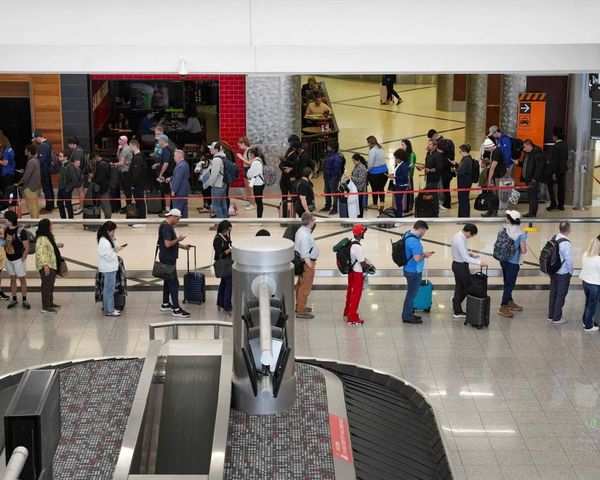
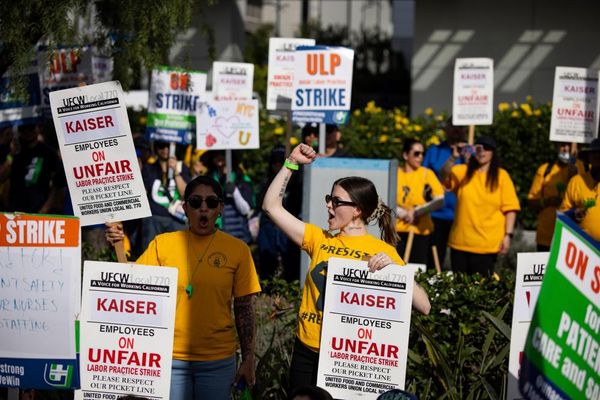
Flexible working to attend jab appointments and paid time off for side effects are two of the measures being used by companies to encourage employees to have the coronavirus vaccination.
Amazon, Sky, Molson Coors and Three UK are the latest firms to join the the UK government’s drive to push up vaccination rates, as a further 35,707 lab-confirmed Covid-19 cases were recorded in the UK as of 9am on Friday, the highest daily increase since January 22.
They join other organisations including Asda, Slimming World, Metro Bank, Santander, Nationwide Building Society, Severn Trent and Merlin Entertainments, who are pushing a positive vaccination message including offering flexibility for staff receiving the vaccine during working hours.
They have also committed to giving paid time off for employees, as well as sick pay, for anyone who suffers from side effects such as fever or a headache, PA reports.
LinkedIn has also committed resources and free advertising to help target chief executives and directors to support their staff and encourage employees to get both vaccine doses.
A reminder of the new restrictions in New South Wales, Australia.
- Browsing in shops is not allowed. Essential shopping only.
- Only two people are allowed to conduct outdoor exercise together at a time, down from 10.
- Exercise is now only allowed within your local government area, or within 10km of your place of residence.
- Carpooling is not allowed outside of members of your household
- Funerals are now allowed only 10 attendees. In force from Sunday.

Several countries promised to help Tunisia fight the coronavirus as the north African country recorded its highest daily death toll since the pandemic began, putting its health care system under severe stress and depleting oxygen supplies.
President Kais Saied said that Saudi Crown Prince Mohammed bin Salman had pledged to send vaccinations and whatever medical equipment Tunisia needed, Reuters reports.
Libya also pledged to send medical aid, the president’s office said in a separate statement. Officials and local media said that Kuwait, Turkey and Algeria had promised to help.
Qatar had already sent a military plane with a field hospital on board, including 200 medics and 100 respirators.
Tunisia recorded 189 deaths on Friday, the highest daily toll since the pandemic began last year. It reported 8,500 new coronavirus cases.
Updated
Tyson Fury’s world heavyweight title defence against Deontay Wilder in the US, due to be on 24 July, looks set to be postponed because of a coronavirus outbreak in the champion’s camp.
A number of positive tests are reported to have been recorded, with Fury’s US-based promoters Top Rank expected to clarify the situation later on Friday.
A court ruling in May forced Fury to ditch an immediate bout with Anthony Joshua and instead put his WBC title on the line in a third meeting with Wilder. Fury’s team hoped to resurrect his bout with Joshua later this year, but those plans are now set to be scuppered if the mandated meeting with Wilder is delayed.
Brazil registered 57,737 new Covid-19 cases and 1,509 deaths in the past 24 hours, the country’s health ministry data showed on Friday.
It means the total case count in Brazil has now exceeded 19 million, and the country has recorded 531,688 deaths, Reuters reports.
Eight months ago, in November 2020, Australia’s prime minister Scott Morrison faced the cameras in a laboratory in Sydney’s eastern suburbs and promised hope after a torrid year: “Today is another day when we can look forward to a much better 2021.”
The cause of his optimism was the belated signing of a deal for 10m Pfizer doses and an as-yet unfilled agreement to secure Novavax.
The vaccines were to ensure Australia was “in the leading pack of the world” during the pandemic’s next phase.
Australia was, in fact, more than four months behind its allies in securing Pfizer.
The US, United Kingdom, Japan and Canada had all struck agreements with Pfizer in July and August 2020, and the company was expecting to produce 1.3bn doses to satisfy global demand.
Pakistan’s top body overseeing the pandemic response has recommended that anyone who did not hold a Covid-19 vaccination certificate should not be allowed to travel by air after 1 August, Reuters reports.
The guidance by the National Command and Operation Centre (NCOC) would need the federal government’s approval, and came as the country’s leadership warned a fourth wave of the pandemic was beginning and dangerous variants of the virus, including the Delta variant, had been detected.
New guidelines to curb the virus spread ahead of the Eid-ul-Adha holiday later this month would be announced soon, the NCOC said.
Students over 18 would be required to get the vaccine by 31 August as well, and booking hotels and travel for tourists inside the country would also now require proof of vaccination.
Updated
A summary of today's developments
- The UK’s Medicines and Healthcare products Regulatory Agency has identified there “may be an extremely rare risk” of inflammatory heart conditions following jabs with the Pfizer/Biontech and Moderna vaccines. The regulator came to the conclusion following a “thorough review” of data in both the UK and internationally, but stressed benefits from either vaccines “greatly outweigh” any potential risks, PA reports.
- The Dutch government has reimposed Covid-19 curbs on nightclubs, music festivals and restaurants in an effort to halt a surge in infections among young adults. The measures include earlier closing of cafes and restaurants and a return to social distancing and fixed seating for diners or concert-goers, Reuters reports.
- Spain’s Canary Islands and its Mediterranean region of Valencia have asked the government to bring back curfews to counter a soaring Covid-19 infection rate among unvaccinated youngsters that is threatening to scupper the summer tourism season.
- The World Health Organization said it is not clear whether Covid-19 booster vaccines would be useful to maintain protection against the virus, as Pfizer/BioNTech said people’s immunity starts to wane six months after they have been vaccinated. The US Food and Drug Administration and the Centers for Disease Control and Prevention also pushed back against the Pfizer announcement and said Americans who have been fully vaccinated do not need a booster shot.
- Europe’s drug regulator found a possible link between rare heart inflammation and receiving Covid-19 vaccines from Pfizer and Moderna, and advised people with a history of a rare blood disorder to avoid getting J&J’s coronavirus shot, illustrating that the vaccine rollout so far has in some part resembled aspects of a medical trial due to an absence of long-term safety data.
- Malta said it would become the first European country to close its borders to anyone who has not been fully vaccinated against coronavirus, after a rise in cases. Only those in possession of a British or European vaccination certificate will be allowed in from 14 July, the health minister said – with 79% of the adult population currently fully vaccinated.
- France’s health regulator urgently recommended the compulsory vaccination of all professionals who come into contact with people vulnerable to Covid-19 infections. The HAS regulator for the the traditionally highly vaccine-sceptic nation also advised using mRNA-based vaccines to slow the spread of the Delta variant as they offered more protection than other shots.
- Senegal, the EU, the US, several European governments and other partners have signed an accord in the capital Dakar today to finance vaccine production in the west African state. The pandemic has highlighted the lack of vaccination-production facilities on the continent which critics have said is emblematic of Africa’s troubling dependence on the global north.
- During the first year of the pandemic 25 children and teenagers died as a direct result of Covid-19 in England and about 6,000 were admitted to hospital, according to the most complete analysis of national data on the age group to date. That equates to an absolute mortality risk of one in 481,000, or approximately two in a million.
- Fiji’s government announced it will make Covid-19 vaccinations a mandatory condition of work for civil servants and staff in the private sector, with some people liable to lose their jobs if they do not comply. The Latvian army made a similar announcement.
- The worst of the Covid-19 pandemic in terms of mortality and hospitalisations has passed for many countries, the WHO director, Dr Mike Ryan, said, with many countries doing “a good job” in getting their vulnerable populations vaccinated.
- Health workers in Indonesia who have been fully inoculated with the Sinovac jab will get a third jab using the Moderna vaccine, authorities said, after more than a dozen died from Covid-19 despite being vaccinated.
- North Korea rejected planned shipments of AstraZeneca’s Covid-19 vaccine through the global Covax distribution scheme due to concerns over side effects, a South Korean thinktank said, claiming authorities had become concerned about the AstraZeneca vaccine after reports of rare but serious blood clotting events among some people who received it.
- Hungary’s capital city is offering free antibody testing to its elderly residents in an attempt to increase pressure on the government over concerns that certain vaccines do not provide adequate protection against Covid.
- Three TV crew members from the Italian public broadcaster Rai, who are following Italy’s national team, tested positive for Covid-19, throwing the country’s football federation into panic and prompting officials to cancel a face-to-face press conference with the Azzurri.
Mexico reported 9,319 new confirmed Covid-19 infections on Friday, according to data from the health ministry.
The ministry also registered 217 additional fatalities, bringing Mexico’s total tally to 2,577,140 infections and 234,675 deaths, Reuters reports. The government has said the real number of cases is likely significantly higher, and separate data published recently suggested the actual death toll could be 60% higher than the official count.
The UK’s Medicines and Healthcare products Regulatory Agency has identified there “may be an extremely rare risk” of inflammatory heart conditions following jabs with the Pfizer/Biontech and Moderna vaccines.
The regulator came to the conclusion following a “thorough review” of data in both the UK and internationally, but stressed benefits from either vaccines “greatly outweigh” any potential risks, PA reports.
The benefits of mRNA Covid-19 vaccines outweigh the very small risk they might cause heart inflammation, as the jabs reduce hospitalisations and deaths, an advisory panel of the World Health Organization said.
The WHO said that reports of two rare conditions - myocarditis, an inflammation of the heart, and of its lining, called pericarditis - had typically occurred within days of vaccination, mainly among younger males after the second dose.
“Very rare cases of myocarditis and pericarditis have been observed following vaccination with the mRNA COVID-19 vaccines,” it said, referring to the two vaccines using such technology, by Pfizer-BioNTech and Moderna, Reuters reports.
“The benefits of mRNA COVID-19 vaccines outweigh the risks in reducing hospitalizations and deaths due to COVID-19 infections,” it said.
Available data suggested myocarditis and pericarditis following vaccination was “generally mild” and responded to treatment such as rest or non-steroidal anti-inflammatory drugs, the WHO said.
“Follow-up is ongoing to determine long-term outcomes,” it said.
France’s health regulator has recommended that coronavirus vaccinations should be made compulsory without delay for all health workers and for other professionals who come into contact with people vulnerable to Covid-19 infections.
The HAS regulator also advised using mRNA-based Pfizer or Moderna vaccines to slow the spread of the Delta variant as they offered more protection than other jabs, Reuters reports.
“While the number of new cases and the pressure on the hospital system remain relatively low, the dynamic of the epidemic in France is significant and could quickly lead to a deterioration in the health situation,” HAS said.
Spain’s Canary Islands and its Mediterranean region of Valencia have asked the government to bring back curfews to counter a soaring Covid-19 infection rate among unvaccinated youngsters that is threatening to scupper the summer tourism season.
Germany designated Spain a high-risk area on Friday, obliging returning travellers to take a test to avoid quarantine, Reuters reports. The Canaries’ regional government said late on Thursday it would ask its Supreme Court to authorise a 12:30 a.m. to 6 a.m. curfew on Tenerife, which has the islands’ highest coronavirus incidence. Regional leader Angel Victor Torres told Cadena Ser radio on Friday it would prevent crowds building up at night and over the weekends. “Pressure on hospitals is starting to grow. In Tenerife, ICU occupation is at around 15% and young people are being admitted to intensive care,” he said.
Netherlands reintroduces Covid-19 restrictions
The Dutch government has reimposed Covid-19 curbs on nightclubs, music festivals and restaurants in an effort to halt a surge in infections among young adults.
The measures include earlier closing of cafes and restaurants and a return to social distancing and fixed seating for diners or concert-goers, Reuters reports. All dance venues and nightclubs while festivals spread over several days would be cancelled and large public gatherings restricted to smaller groups, prime minister Mark Rutte said. The curbs would go into effect at 0500 GMT on Saturday and remain until August 14, the government said.

Today so far...
- The World Health Organization said it is not clear whether Covid-19 booster vaccines would be useful to maintain protection against the virus, as Pfizer/BioNTech said people’s immunity starts to wane six months after they have been vaccinated. The US Food and Drug Administration and the Centers for Disease Control and Prevention also pushed back against the Pfizer announcement and said Americans who have been fully vaccinated do not need a booster shot.
- Europe’s drug regulator found a possible link between rare heart inflammation and receiving Covid-19 vaccines from Pfizer and Moderna, and advised people with a history of a rare blood disorder to avoid getting J&J’s coronavirus shot, illustrating that the vaccine rollout so far has in some part resembled aspects of a medical trial due to an absence of long-term safety data.
- Malta said it would become the first European country to close its borders to anyone who has not been fully vaccinated against coronavirus, after a rise in cases. Only those in possession of a British or European vaccination certificate will be allowed in from 14 July, the health minister said – with 79% of the adult population currently fully vaccinated.
- France’s health regulator urgently recommended the compulsory vaccination of all professionals who come into contact with people vulnerable to Covid-19 infections. The HAS regulator for the the traditionally highly vaccine-sceptic nation also advised using mRNA-based vaccines to slow the spread of the Delta variant as they offered more protection than other shots.
- Senegal, the EU, the US, several European governments and other partners have signed an accord in the capital Dakar today to finance vaccine production in the west African state. The pandemic has highlighted the lack of vaccination-production facilities on the continent which critics have said is emblematic of Africa’s troubling dependence on the global north.
- During the first year of the pandemic 25 children and teenagers died as a direct result of Covid-19 in England and about 6,000 were admitted to hospital, according to the most complete analysis of national data on the age group to date. That equates to an absolute mortality risk of one in 481,000, or approximately two in a million.
- Fiji’s government announced it will make Covid-19 vaccinations a mandatory condition of work for civil servants and staff in the private sector, with some people liable to lose their jobs if they do not comply. The Latvian army made a similar announcement.
- The worst of the Covid-19 pandemic in terms of mortality and hospitalisations has passed for many countries, the WHO director, Dr Mike Ryan, said, with many countries doing “a good job” in getting their vulnerable populations vaccinated.
- Health workers in Indonesia who have been fully inoculated with the Sinovac jab will get a third jab using the Moderna vaccine, authorities said, after more than a dozen died from Covid-19 despite being vaccinated.
- North Korea rejected planned shipments of AstraZeneca’s Covid-19 vaccine through the global Covax distribution scheme due to concerns over side effects, a South Korean thinktank said, claiming authorities had become concerned about the AstraZeneca vaccine after reports of rare but serious blood clotting events among some people who received it.
- Hungary’s capital city is offering free antibody testing to its elderly residents in an attempt to increase pressure on the government over concerns that certain vaccines do not provide adequate protection against Covid.
- Three TV crew members from the Italian public broadcaster Rai, who are following Italy’s national team, tested positive for Covid-19, throwing the country’s football federation into panic and prompting officials to cancel a face-to-face press conference with the Azzurri.
Updated
Latvian soldiers must get Covid jabs or face sack, says general
Latvia’s top general has ordered all career soldiers in the Baltic Nato state to get vaccinated against Covid-19 by August or they will lose their jobs.
“I have issued an order that makes vaccination against Covid-19 mandatory for all the professional military staff in Latvia by 1 August, otherwise they will have to leave the forces,” Lt Gen Leonids Kalnins, told the public broadcaster LTV.
Personnel who do not want to get jabs “will have to make up their minds whether they will continue to serve in the armed forces or find a different job,” he added.
About 95% of Latvia’s 6,500 career soldiers have already received at least one Covid-19 jab while 87% have had the second, Kalnins said, adding that Latvia’s armed forces have had only two Covid-19 infections, AFP reports.
Latvia’s parliament is currently debating allowing employers to fire workers who refuse to get vaccinated, but the controversial proposed legislation has not yet mustered a majority votes.
As of today, nearly 600,000 people in Latvia had been vaccinated. The EU member of 1.9 million people has recorded 137,831 cases of Covid-19, including 2,536 fatalities.

Updated
US schools should reopen irrespective of Covid mitigation feasibility, says CDC
The Centers for Disease Control and Prevention has released revised guidelines saying schools across the US should reopen for in-person learning regardless of whether they can implement all the recommended Covid-19 mitigation efforts.
The revised recommendations mark the first time the CDC is taking a stance on reopening schools, which became a subject of contentious debate over the course of the pandemic. Previous recommendations included measures schools should undertake to curb the spread of the virus, but did not emphasise reopening in person.
“Students benefit from in-person learning and safely returning to in-person instruction in the fall 2021 is a priority,” the recommendation reads.
Updated
Cuba grants emergency approval to domestically produced jab amid rollout
Cuba’s drug regulator has announced it has granted emergency approval of the Abdala Covid-19 vaccine, which is already being deployed on the Caribbean island nation amid a surge in infections.
Approval by the Center for State Control of Medicines, Equipment and Medical Devices should help with the selling and licensing abroad of Abdala, which Cuba says has a 92% efficacy against Covid, Reuters reports.
A second locally produced Covid-19 vaccine, Soberana 2, is expected to be approved in the next few weeks, authorities said, after it proved 91% effective in late-stage clinical trials.
While the Cuban efficacy claims have not been peer-reviewed, they would, if accurate, catapult the US-boycotted Caribbean island nation into the select group of the US, Germany and Russia that produce vaccines with efficacy of more than 90% – Novavax, Pfizer/BioNTech, Moderna and Sputnik V.
Cuba’s biotech sector has a long history of vaccine development, producing 80% of vaccines used in the country and exporting some of them. Communist-run Cuba is the first country in Latin America and the Caribbean to successfully develop a coronavirus vaccine.
The import-dependent island is in the throes of an economic crisis with activity falling 10.9% last year and 2% the first half of 2021 as the pandemic kept the tourism industry shuttered and deep Trump-era sanctions on top of the decades-old trade embargo hammered finance and trade.
Abdala and Soberana 2 have also been submitted for potential approval by the World Health Organization. Iran, Argentina, and Vietnam have said they are interested in producing the Cuban vaccines, while Jamaica and Mexico are among the countries that have expressed an interest in purchasing them, according to Reuters.
Both vaccines use a traditional approach deploying a part of the virus’s spike protein which helps the virus enter and infect cells, to build up the immune system. These vaccines are generally less expensive to develop and easier to store and transport as they do not require extremely low temperatures.
Cuba is facing its worst Covid-19 outbreak since the start of the pandemic after the arrival of more contagious variants, setting new records for daily coronavirus cases at over 6,000 this week.
About 1.5 million of the country’s 11.2 million residents have been fully vaccinated to date. Cuba reported a total of 218,376 Covid-19 cases and 1,431 deaths yesterday.

Updated
French regulator recommends mandatory jabs for frontline workers
France’s health regulator has recommended without delay the compulsory vaccination of all professionals who come into contact with people vulnerable to Covid-19 infections.
The HAS regulator also advised using mRNA-based vaccines to slow the spread of the Delta variant as they offered more protection than other shots, Reuters reports.
The regulator’s recommendations come 72 hours before the president, Emmanuel Macron, addresses the traditionally highly vaccine-sceptic nation on the epidemic’s evolution and his government’s strategy.
Updated
Malta to become first European country to close borders to unvaccinated
Malta said it would be the first European country to close its borders to anyone who has not been fully vaccinated against coronavirus, after a spike in Covid-19 cases.
AFP reports:
Only those in possession of a British or European vaccination certificate will be allowed in from 14 July, the health minister, Chris Fearne, said –suggesting US tourists and others will be barred. “We will be the first country in Europe to take this step,” he said.
Malta has been hailed as a European success story for its vaccination campaign, with 79% of the adult population currently fully vaccinated.
But from reporting no new cases and having just 28 active cases on 27 June, the Mediterranean island nation on Friday reported 96 new virus infections, taking the total number of active cases up to 252.
“From 14 July, anyone coming to Malta must be in possession of a recognised vaccination certificate: a Maltese certificate, a British certificate, or a European Union certificate,” Fearne told reporters.
Previously visitors from the rest of the EU, the US and some other countries were allowed in if they showed a negative PCR coronavirus test, or if they were fully vaccinated.
Under the rules, a vaccination certificate will be enough although young children will have to present a negative PCR test.
Fearne said about 90% of the cases being found in Malta are among unvaccinated people, and that many have been traced to English Language Schools.
Asked whether it was “fair” to impose mandatory vaccination requirements at such short notice, Fearne said: “It is not fair to put locals who cannot get vaccinated at risk. We have to look after our residents first.”
Malta has had 30,851 cases of the virus so far, recording 420 deaths.
Updated
Two people under 50 and more than 100 over-50s have died of Covid after being fully vaccinated, official figures for England show, as experts said the jabs were working as expected amid surging infection rates attributed to the Delta variant.
Public Health England figures show that between 1 February and 21 June, there were 118 deaths in people who had had both vaccine doses, 116 of them over 50.
Among over-50s who died due to the Delta variant in that period, nearly half had been fully vaccinated while just 21 unvaccinated people under the age of 50 died. This is expected to be due to the “very strong risk gradient with age”, said Sir David Spiegelhalter, chair of the Winton Centre for Risk and Evidence Communication at the University of Cambridge.
An unvaccinated 30-year-old had a lower risk from coronavirus than a 60-year-old who had been jabbed, he said.
Updated
Johannesburg mayor dies from complications after Covid
The mayor of Johannesburg has became the latest fatality of a third Covid wave in South Africa after dying from complications at the age of 53.
Mayor Geoff Makhubo who fell ill with Covid last month, was diagnosed before the country opened up vaccination to people aged under 60.
The loss is “a stark reminder of the threat posed by this deadly pandemic, against which we are all extremely vulnerable,” said the president, Cyril Ramaphosa.
From 1 July, people aged 50-59 were asked to start registering for their shots, which were scheduled to be administered from 15 July. But many showed up at vaccination centres just after they had registered and were immunised.
We extend our deepest condolences to the family, friends, colleagues and comrades of the late mayor @GeoffMakhubo. The passing of Mayor Makhubo is a stark reminder of the threat posed by this deadly pandemic against which we are all extremely vulnerable. #RIPGeoffMakhubo pic.twitter.com/sbmFc50Z23
— Cyril Ramaphosa 🇿🇦 #StaySafe (@CyrilRamaphosa) July 9, 2021
Updated
Worst of pandemic over for many countries – WHO director
The worst of the Covid-19 pandemic in terms of mortality and hospitalisations has passed for many countries, a World Health Organization (WHO) director has told Ireland’s RTE news.
Dr Mike Ryan, who is the executive director of the WHO’s emergencies programme, told the broadcaster that many countries have done “a good job” in getting their vulnerable populations vaccinated.
He added: “So from that perspective, the worst of the health impacts of the pandemic are probably coming to an end in countries like Ireland. But that is not the case in many, many other countries around the world.”
He also said there was “every chance” the virus could evolve into something that vaccines no longer protect against.

Updated
Myanmar’s military ruler has said Russia had agreed to supply 2m doses of coronavirus vaccine from this month, as the south-east Asian country reported another record in Covid-19 cases and deaths.
Min Aung Hlaing, who led a February coup against Aung San Suu Kyi’s elected government, said the virus was spreading fast in Myanmar and that senior Russian defence officials had told him help with vaccines was on the way.
“I told them that I want two million and they will give,” he said in remarks carried by the army-owned Myawaddy television.
Myanmar reported 4,320 cases on Friday, a record for a second successive day, and 63 deaths. Min Aung Hlaing last month said he was seeking 7m doses of Russian vaccines.
Myanmar is in the midst of its most serious wave of infections to date, with efforts to manage the outbreak hampered by nationwide chaos in the wake of the military’s coup.
Some health experts say Myanmar’s real rate of infection is likely to be far higher due to a collapse in testing since the coup and health workers joining strikes in protest.
Russia is among the few countries that have openly embraced the military government, which has been condemned globally over the coup and the deadly crackdown on pro-democracy groups.

Updated
US recommends indoor masks for unvaccinated in schools
The US Centers for Disease Control and Prevention has updated its guidance to help reopen schools, including recommending masking indoors for everyone who is not fully vaccinated and maintaining 3ft of distance within classrooms.
The CDC in its latest guidance said all schools from kindergarten through grade 12 in the US should continue to mandate wearing masks indoors by all individuals who are not fully vaccinated.
The agency said that if localities decided to remove prevention strategies in schools based on local conditions, they should remove them one at a time, and that schools should monitor closely for increases in Covid-19 cases before removing the next prevention strategy.
“Because of the importance of in-person learning, schools where not everyone is fully vaccinated should implement physical distancing to the extent possible within their structures, but should not exclude students from in-person learning to keep a minimum distance requirement,” the new guidance said.
A study by the CDC also released on Friday showed that half of unvaccinated adolescents and parents of unvaccinated adolescents reported being uncertain about getting a Covid-19 vaccine, or did not intend to get one at all.
This is Ben Quinn picking up the blog now while Mattha takes a break.
Updated
New Senegal vaccine plant to lay foundation of 'pharmaceutical and medical sovereignty'
Senegal, the EU, the US, several European governments and other partners have signed an accord in the capital Dakar today to finance vaccine production in the west African state.
The pandemic has highlighted the lack of vaccination-production facilities on the continent, AFP reports, which critics have said is emblematic of Africa’s troubling dependence on the global north, which has been largely reluctant to sanction exports of jabs.
Ninety-nine percent of vaccines used in Africa are imported, according to a joint statement from the Senegalese government and the EU. The new financing deal is intended to kickstart vaccine production at the Paris-headquartered Pasteur Institute in Dakar, the statement explained, lowering the dependence on imports.
Senegal’s economy minister, Amadou Hott, was quoted in the statement as saying that the new production site would lay the foundation for “pharmaceutical and medical sovereignty”. It would also “increase access to affordable vaccines in Africa, and enable vaccine production to rapidly respond to new pandemics,” he added.
With about 5.8 million reported Covid-19 cases and about 149,000 deaths among its nearly 1.3 billion people, Africa is the world’s least-affected continent after Oceania, according to an AFP tally.
Construction of the plant is expected to start later this year, according to the statement, which added that 25m vaccine doses are due to be produced each month by the end of 2022.
The European Commission, European Investment Bank and the World Bank, as well as the US, France, Germany and Belgium, will fund the project, alongside the Senegalese government and other donors.
It is not yet clear how much other donors will contribute. However, several donors had already contributed millions towards a feasibility study.
“The initiative will not only support Africa’s autonomy in the production of life-saving vaccines, but also serve as an important building block in Senegal’s emergent health industrial ecosystem,” the European commissioner Thierry Breton was quoted in the statement as saying.
Updated
Many hospitals in Indonesia are buckling under the pressure of an escalating Covid-19 outbreak, my colleagues Rebecca Ratcliffe and Gemma Holliani Cahya report. The country announced another record daily increase in cases on Thursday, with 38,391 infections and 852 fatalities.
Epidemiologists say the official numbers are likely to be a significant underestimate and point to the country’s severe lack of testing. “We know we have already achieved more than 100,000 a day,” said Dr Dicky Budiman at Australia’s Griffith University.
Budapest offers antibody tests to elderly amid fears Chinese jabs not adequate
Hungary’s capital city is offering free antibody testing to its elderly residents in an attempt to increase pressure on the government over concerns that certain vaccines do not provide adequate protection against the coronavirus.
The offer of 20,000 free tests, available for Budapest residents over 60, came after many fully vaccinated people reported that tests they had undergone at private laboratories indicated that they had not developed antibodies to defend against Covid-19, the Associated Press reports.
Budapest’s deputy mayor, Kiss Ambrus, said those reports came primarily from people who had received China’s Sinopharm vaccine, convincing city leaders that there was “a genuine problem”. He said the government should consider offering third doses to those with an inadequate immune response.
“If there is such a loss of confidence in certain vaccines, then the government needs to order a third dose and free up the capacities for giving them,” he told the AP, adding that the tests were available to anyone over 60 regardless of which vaccine they received.
“We think the the more tests we perform, the more societal pressure there is for a third dose.” The testing drive would continue next week, with initial results likely released next week and the full results expected by the end of the month.
Hungary was an early vaccination leader in the EU, due largely to its procurement of jabs from Russia and China, on top of vaccines received through the bloc.
It was the first country in the 27-member bloc to approve Russia’s Sputnik V vaccine, and is the only one to deploy China’s Sinopharm. More than 5.1m doses of the jab have been distributed to Hungary, of which it has administered more than 2m, according to the European Centre for Disease Prevention and Control.
Critics of the Sinopharm jab, including Budapest’s liberal mayor, Gergely Karácsony, have cast doubt over its efficacy. Other countries such as Bahrein and the United Arab Emirates have offered booster shots for some Sinopharm recipients amid efficacy concerns.
Karacsony often spars with Hungary’s right-wing government and is considered a front-runner for replacing the prime minister, Viktor Orbán, in national elections next year.

Updated
The gap between the two shots of the Sputnik V coronavirus vaccine can be extended up to 180 days and it will remain effective, the Russian Direct Investment Fund (RDIF) has said.
An official at the RDIF, which markets the vaccine abroad, made the comments in a statement after some countries decided to widen the gap between the first and second doses of the vaccine developed in Russia, Reuters reports.
Kazakhstan has said a longer interval between shots provides a stronger immune response. Argentina has increased the gap to prioritise ensuring that as many people as possible receive at least a single dose.
Alexander Gintsburg, director of the Gamaleya Institute which developed the vaccine, said in April that the gap between the shots could be increased to 90 days.
The RDIF official quoted Gamaleya trials as showing longer gaps had secured a better immune response, but provided no further details of the trials. The official issued the statement after a Reuters request for comment, and denied it was related in any way to Russian deliveries of Sputnik V.
RDIF has notified all foreign partners and vaccine buyers that prolonging the gap between doses to 90 days helps to slightly increase the immune response, the official said. Russia’s vaccine roll-out involves giving people the second does of Sputnik V after 21 days.
The Philippines Food and Drug Administration said this week it would allow a 42-day interval between doses, after Russia proposed widening the time interval to 90 days.
The pharmaceutical giant Pfizer says there is no change in the number of doses the company has contracted to deliver to Australia over 2021 – contradicting reports asserting the Morrison government had secured a “game-changing deal” to triple its access to the jabs.
The prime minister – who has been under significant political pressure because of the slow pace of the vaccination rollout, pressure that has ramped up during the lockdown of greater Sydney – embarked on a media blitz today to argue the pace of the vaccination rollout was accelerating.
TV crew following Italian football team test positive for Covid
Three TV crew members from the Italian public broadcaster Rai, who are following Italy’s national team, tested positive for Covid-19 today, throwing the country’s football federation into panic and prompting officials to cancel a face-to-face press conference with the Azzurri.
A reporter and two TV technicians returned positive tests for coronavirus after taking a swab test early this morning, according to several reports in the Italian press. Two of the members of the TV crew are in London while the third is in Florence, where he is following the national team in its training camp in Coverciano.
The Italian football federation (FIGC), informed of the positive test results of the crew members in the early hours of the morning, has closed the doors of its sports centre to protect the team and the coaching staff. The in-person press conference with the players, scheduled for today, was cancelled and was held remotely, via video link.
Updated
EU regulator finds link between heart inflammation and mRNA Covid vaccines
Europe’s drug regulator has found a possible link between rare heart inflammation and receiving Covid-19 vaccines from Pfizer and Moderna, and advised people with a history of a rare blood disorder to avoid getting J&J’s coronavirus shot.
Heart conditions myocarditis and pericarditis must be listed as possible side effects of the two mRNA vaccines, the safety committee of the European Medicines Agency (EMA) said, illustrating that the vaccine rollout so far has in some part resembled aspects of a medical trial due to an absence of long-term safety data.
Such cases primarily occurred within 14 days from vaccination, more often after the second dose and in younger adult men, the EMA said. This is in line with findings from US health officials last month, Reuters reports.
The EMA panel also recommended that people who have a history of capillary leak syndrome (CLS) must not be vaccinated with J&J’s single-shot vaccine. The watchdog in June asked CLS to be added as a side-effect from AstraZeneca’s shot.
It also said it was too early to determine whether more than the two shots that are currently required for most approved Covid-19 vaccines would be called for, saying it was confident the established regimen was sufficient.
Updated
Germany has declared all of Spain a coronavirus risk area, the foreign ministry has said, after Spain’s Covid-19 infection rate more than doubled in a week as the Delta variant spreads rapidly among unvaccinated younger adults.
The move, which includes the popular tourist destinations of the Balearic and Canary Islands and takes effect on Sunday, will have a small immediate impact on travellers as it merely means they have to provide a negative test to avoid quarantine, Reuters reports.
However, a further rise in the infection rate in Spain could lead to mandatory quarantine for unvaccinated travellers, casting uncertainty over travel demand ahead of the peak school summer holiday season, during which Germans flock to sunny beach destinations.
The tourism minister, Reyes Maroto, said today that Spain was a safe destination for tourists, citing its vaccination programme and the number of hospitalised patients being kept under control.
Germany’s foreign ministry also said it was designating Cyprus as a high incidence area, meaning incoming travellers must quarantine - which can be shortened if they test negative five days after entering the country.
Updated
North Korea rejected free AstraZeneca jabs due to safety concerns, thinktank says
North Korea has rejected planned shipments of AstraZeneca’s Covid-19 vaccine through the global Covax distribution scheme due to concerns over side effects, a South Korean thinktank has said.
Covax has said it would provide nearly 2m doses of AstraZeneca’s shots to North Korea. The first batch had been expected in late May but was delayed amid protracted consultations, South Korea said last month, Reuters reports.
According to the report by the Institute for National Security Strategy (INSS) – which is affiliated with South Korea’s spy agency – Pyongyang is now looking at other vaccine options. The INSS report also said North Korea is not keen on Chinese vaccines due to concerns they may not be that effective, but it has shown interest in shots made in Russia, hoping they would be donated free of charge.
“It’s leaning towards the Russian vaccine, yet no arrangements have been made,” Lee Sang-keun, director of strategic research on the Korean peninsula at INSS, told Reuters, citing unnamed sources.
Lee added that North Korean authorities had become concerned about the AstraZeneca vaccine after reports of rare but serious blood clotting events among some people who received it.
North Korea has not reported any Covid-19 cases, a questionable position. The country has, however, imposed strict anti-virus measures, including border closures and domestic travel curbs.
On Wednesday, the Russian foreign minister, Sergey Lavrov, said Moscow has offered Pyongyang vaccines on a number of occasions.

Updated
A Greek metalworking company is offering workers a €500 bonus to get vaccinated against Covid-19, worried that enforced absences from work – which the jabs would not entirely prevent – could derail a boom in orders.
Cosmos Aluminium in the central city of Larissa, which employs about 180 workers, has seen a surge in orders since the start of the year and fears that having to shut down production for even a day would push it off track, Reuters reports.
“It would be a catastrophe,” said the company’s vice president, Yannis Kantonias. “We thought that by rewarding all those who were responsible, we could build on a trend among those who were more indifferent and change their minds.”
The move, in line with a government push to speed up vaccinations in the country of 11 million people in which 12,749 have died with Covid. Today, the Greek statistics agency reported that industrial production jumped 14% in May as the economy gained speed after last year’s imposed shutdown.
It comes as the government is expected to announce compulsory vaccinations for workers in some key segments such as healthcare and elderly care centres.
About 38% of the eligible population is fully vaccinated and the government has offered incentives, including cash and free mobile data for young people, to bring the rate up to 70% by the autumn.
Updated
The Dutch government is expected to reimpose restrictions on dance clubs, music festivals and restaurants today in response to rising Covid-19 infections among young adults, local media reported.
The Netherlands lifted most lockdown measures on 26 June, as cases were falling and around two-thirds of the population has received at least one vaccination shot, Reuters reports.
But, with bars, restaurants and nightclubs open again, new cases have risen at the fastest pace in months, with more than 5,400 cases reported over the 24-hours through yesterday. That compared to fewer than 1,000 a week earlier.
Prime minister Mark Rutte was expected to announce the decision at a news conference at 6pm local time today, news agency ANP reported.
The country is not expected to return to a widespread lockdown, but is widely expected to take targeted measures to limit the spread of infections among teenagers and young adults.
Broadcaster RTL said cafes and bars would be ordered to close at midnight, and outdoor events would be limited a maximum of 1,000 visitors and no more than 500 people allowed to attend indoor gatherings.
Around three-quarters of new cases in the Netherlands are occurring among young people and more than half are of the more infectious Delta variant, Dutch Health Minister Hugo de Jonge said this week.
Australia has rejected China’s accusations of meddling in the rollout of Chinese-made Covid-19 vaccines in Papua New Guinea, saying it accepted countries’ decisions over their choice of jab.
Relations between Canberra and Beijing have deteriorated sharply in recent years, with disputes over everything from the telecoms giant Huawei to Covid’s origins.
The latest row was sparked by Chinese state media, with the Global Times tabloid accusing “Australian consultants” planted in Papua New Guinea of “obstructing” the emergency use authorisation of Chinese vaccines.
Australia’s minister for international development and the Pacific, Zed Seselja, sharply rejected the accusations. “It’s simply not true,” he said. “We accept countries’ sovereign decisions about their vaccines.”
China’s foreign ministry spokesman, Wang Wenbin, had on Monday expressed concern over what he called “irresponsible behaviour” in Papua New Guinea. He urged Australia to “stop disrupting and undermining vaccine cooperation between China and Pacific island countries”.
Papua New Guinea has started rolling out 200,000 doses of China’s Sinopharm vaccine that arrived in the country last month.
The Global Times article published 2 July accused Australia of “threatening” senior Papua New Guinean officials with the loss of investment in road projects if they went to the airport to welcome the arrival of the jabs.
“With Australia working in the shadows, Papua New Guinea’s epidemic prevention centre did not approve the emergency use of Chinese vaccines until the end of May, when Australia-provided vaccines had already arrived in the country,” it said.
Papua New Guinea began a nationwide vaccine rollout in May as it sought to contain an outbreak that has taken the country’s caseload to more than 17,000 infections, including 177 deaths.

Updated
Health workers in Indonesia who have been fully inoculated with the Sinovac jab will get a third jab using the Moderna vaccine, authorities said, after more than a dozen died from Covid-19 despite being vaccinated.
The south-east Asian nation, battling its most serious outbreak to date driven by the Delta variant, has relied heavily on the Chinese-made Sinovac jab in its vaccine roll-out, AFP reports.
But out of 1,000 medical workers who have died of Covid-19, more than a dozen were fully inoculated, according to the country’s medical association, raising fresh concerns about Sinovac.
The health minister, Budi Gunadi Sadikin, said the government would give 1.47 million health workers an extra jab using the vaccine made by the US biotech company Moderna.
“The third jab will only be given to health workers, because health workers are the ones who are exposed to high levels of virus every day,” he said. “They must be protected at all costs.”
A donation of 4m Moderna vaccines would arrive in the next few days from the US, after which the inoculation of medics will begin, he said. Both Moderna and Sinovac follow two-jab regimes.
Safety data on mixing the Modern and Sinovac jabs appears non-existent but an immunologist at the University of Colorado Anschutz School of Medicine, Ross Kedl, told Bloomberg last month: “Mixing vaccine platforms — a method known as heterologous prime boost — has a long history in immunology as being far superior to multiple doses of the same vaccine.”
While Sinovac’s jab uses an inactivated virus to protect against infection – the traditional vaccine method – Moderna uses cutting-edge messenger RNA, which spurs cells to produce viral proteins that stimulate an immune response.
Updated
Almost 1.5m doses of the Johnson & Johnson Covid-19 vaccine arrived today in Afghanistan, bringing the total donated by the US through Covax, the global dose-sharing scheme, to 3.3m doses.
The Unicef representative in Afghanistan, Hervé Ludovic De Lys, said:
These vaccines arrive at a critical time for Afghanistan as the country faces a difficult surge in Covid-19 infections. As many countries face vaccine supply challenges, the dose-sharing mechanism is a rapid way to close the immediate supply gap and ensure the most vulnerable, including healthcare workers, teachers, the elderly, and those in hard-to-reach areas, are protected against Covid-19.
Unicef welcomes this shipment which is an important step in the continued fight against Covid-19 in Afghanistan. However, much more needs to be done. I hope that other governments will step up and share their doses, supplies and therapeutics to protect those most in need.”
Between April 2020 and 8 July 2021, 131,586 people were infected with Covid-19 in Afghanistan – which has a population of 38 million – with 5,561 deaths. But cases have been rising steeply since last month, with an average of more than 2,000 new cases and 100 deaths per day, Unicef said.
Updated
Fiji’s government has announced it will make Covid-19 vaccinations a mandatory condition of work for civil servants and staff in the private sector, with some people liable to lose their jobs if they do not comply.
Fiji recorded 860 new cases of Covid and three related deaths in the 24 hours up to 8am local time today. It has recorded a total of 51 deaths due to Covid, 49 of these during the outbreak that started in April this year. Of the 49, 41 were unvaccinated and eight had received one dose of vaccine.
Austria’s government has appealed to the public to get fully vaccinated against Covid as the number of doses available now outstrips the number of people who want one.
“Our great plea: take up the vaccination offer, there are enough vaccine doses,” the chancellor, Sebastian Kurz, said, warning that another wave of infections would come by the autumn.
“The decision every person must take for themselves is vaccination or infection. Either you get vaccinated or you are constantly at risk of infection, which will become reality at some point.”
The Alpine tourism hotspot is slightly above the average vaccination rate among EU and European Economic Area countries, with 45.7% of adults fully inoculated, according to the European Centre for Disease Prevention and Control.
The number of cases per 100,000 people in the past week remains very low at 8.4. However, after the latest loosening of restrictions this month, including the reopening of night clubs, daily infections have been rising as the Delta variant spreads.
A survey last month by the pollster Peter Hajek for the broadcaster ATV and the news agency APA found 66% of respondents said they had or definitely would get vaccinated; 15% said they definitely would not.
Local authorities in Austria have recently started appointment-free vaccination campaigns to accelerate inoculations, and Kurz said such efforts would continue.
Updated
A romantically suggestive French advertising campaign to persuade young people to have the Covid-19 vaccine has pointed out the “desirable” effects of getting jabbed.
The posters, produced by health authorities in the south of France, aim to show how getting inoculated can considerably improve people’s social lives by addressing public concerns over “undesirable” or adverse side-effects of coronavirus vaccines.
Children's risk of dying from Covid is two in a million, study suggests
Children’s risk of dying from Covid, or severe illness, is extremely low, according to three of the most comprehensive studies to date that suggest the threat may be lower than initially thought.
One study found that 99.995% of the 469,982 children in England who contracted Covid during the first 12 months of the pandemic survived, the Wall Street Journal reports, with 25 under-18s dying in that time.
Of the 61 child deaths linked to a positive Covid-19 test in England, 25 were actually caused by the illness, it said. Fifteen had serious underlying illnesses, while four had chronic underlying conditions. The other six did not appear to have an underlying health condition.
Researchers estimate that with a population of about 12 million children in England, there was an overall mortality rate of two per million children during the year studied, the BBC reports.
Updated
Evidence on usefulness of Covid booster shot is 'limited', says WHO
The World Health Organization has said it is not clear whether Covid-19 booster vaccines would be useful to maintain protection against the virus, as Pfizer/BioNTech said people’s immunity starts to wane six months after they have been vaccinated.
Pfizer plans to ask US regulators to authorise a booster dose of its Covid-19 vaccine within the next month, the drugmaker’s top scientist said today, based on emerging evidence of greater risk of reinfection six months after inoculation and the spread of the highly contagious Delta variant.
“We don’t know whether booster vaccines will be needed to maintain protection against Covid-19 until additional data is collected, but the question is under consideration by researchers,” the WHO said in a reply to a Reuters query.
“There is limited data available on how long protection from current Covid-19 vaccine doses lasts and whether an additional booster dose would be beneficial and for whom,” it said.
Pfizer’s chief scientific officer, Mikael Dolsten, said early data from the company’s own studies shows that a third booster dose generates antibody levels that are five- to tenfold higher than after the second dose, suggesting a third dose will offer promising protection.
In a statement emailed to CNN, Pfizer/BioNTech said evidence was building that people’s immunity starts to wane six months after they have been vaccinated.
“As seen in real world data released from the Israel Ministry of Health, vaccine efficacy in preventing both infection and symptomatic disease has declined six months post-vaccination, although efficacy in preventing serious illnesses remains high,” Pfizer said.
The absence of long-term data, as is usually customary with vaccines, means that only now are Pfizer learning about these issues with their two-shot vaccine.
In a joint statement the US Food and Drug Administration (FDA) and the Centers for Disease Control and Prevention (CDC) pushed back against the Pfizer announcement and said Americans who have been fully vaccinated do not need a booster shot.
FDA, CDC, and NIH (the National Institutes of Health) are engaged in a science-based, rigorous process to consider whether or when a booster might be necessary. This process takes into account laboratory data, clinical trial data, and cohort data – which can include data from specific pharmaceutical companies, but does not rely on those data exclusively ... We are prepared for booster doses if and when the science demonstrates that they are needed.
Hello and greetings to everyone reading, wherever you are the in the world. Mattha Busby here to take you through the next few hours of global Covid developments. Thanks to my colleague Martin Belam for covering the blog up until now. Please feel free to drop me a line on Twitter or message me via email (mattha.busby.freelance@guardian.co.uk) with any tips or thoughts on our coverage.
Updated
Gun homicides surged across the United States during the coronavirus pandemic, in the same year that Americans bought a record-breaking number of guns.
But some of America’s leading gun violence researchers have concluded that what might seem like an obvious cause-and-effect – a surge in gun buying leads to a surge in gun violence – is not supported by the data.
Through July of last year, there was no clear association between the increase in firearm purchases and the increase in most interpersonal gun violence at the state level, according to a new study published in Injury Epidemiology, a peer-reviewed scientific journal.
The findings suggest that “we need to be looking at other factors, like job loss, economic change, the closure of schools and community organizations and nonprofits, and civil unrest,” in order to understand last year’s increase in gun violence, Julia Schleimer, the lead author of the new study, said.
New South Wales police inspected 87 businesses and issued 51 warnings and eight fines on the first day of a compliance “crackdown” in Sydney’s south-western suburbs targeting people breaching Covid lockdown rules.
An extra 100 officers, including some on horseback, patrolled the Fairfield, Canterbury-Bankstown and Liverpool local government areas on Friday. Residents said fines were issued for not wearing masks and leaving home for non-essential reasons.
At the almost-deserted Bankstown Centro, one of the biggest shopping centres in Sydney’s west, a worker said police walked by her stall every 15 minutes from early in the morning.
Today so far…
-
Having escaped the worst when the coronavirus pandemic erupted last year, Southeast Asia is now suffering record rises in deaths and cases, while vaccination shortfalls and highly contagious variants have derailed containment efforts.
- Thai media is reporting that tougher restrictions will come into effect in Bangkok and other high risk areas tomorrow. This is expected to include the closure of shopping malls, a night time curfew and a stay-at-home order. Schools, gyms, bars, and restaurants are already closed.
- A hospital in Thailand taking reservations this week for the Moderna coronavirus vaccine was sold out in minutes - after offering shots via e-commerce platform Shopee.
- Vietnam aims to vaccinate 50% of people aged 18 or older by the end of this year and 70% by the end of March 2022, the health ministry said on Friday, as tighter coronavirus curbs were imposed in more cities including the country’s commercial hub.
- South Korea will raise coronavirus curbs to their highest level yet in the Seoul metropolitan area, prime minister Kim Boo-kyum said on Friday, warning that a record rise in new cases had reached “maximum crisis level”.
- Pfizer plans to ask US regulators to authorize a booster dose of its Covid-19 vaccine within the next month, the drugmaker’s top scientist said.
- The highly contagious Delta variant of Covid will probably account for most of the new coronavirus cases in France from this weekend, health minister Olivier Veran said.
- Public Health England’s latest data bulletin shows that numbers of the Delta variant in the UK have risen by 54,268 since last week to a total of 216,249. This represents a 32% increase in total cases, and a slight rise on the number of new cases recorded the previous week.
- UK transport secretary Grant Shapps urged people not to ignore the NHS Covid app if they are “pinged” and advised to self-isolate. Shapps said it is important that people continue to use the app.
- South Africa plans to start vaccinating people aged between 35 and 49 years old against Covid from 1 August, the country’s acting health minister said.
- A couple of quick sharp lines that are developing with the Tokyo Olympics. Firstly organisers are asking people not to spectate by the roadside for events like the road cycling, marathons and triathlons. Secondly, one member of the Israeli Olympic party has tested positive for Covid.
- Tokyo 2020 President Seiko Hashimoto said on Friday she aimed to reach an agreement on Paralympic spectators with relevant parties “at the earliest possible” timing after the close of the Tokyo Olympics – without saying when.
Nicola Slawson has the latest UK Covid news on her live blog. Mattha Busby will be here shortly to take the reins for global coronavirus news. That’s it from me, Martin Belam, for this week. I will see you again on Monday, possibly, just possibly, with a huge post-Euro 2020 final hangover. Have a great weekend, take care and stay safe.
The coronavirus pandemic has fueled the demand for American workers to be provided with paid sick leave at their jobs, as essential workers risked not only contracting coronavirus but also losing two weeks of income if they tested positive for the virus.
US workers receive far fewer days off than workers in other major industrialized nations, and work an average of four to eight more hours a week than the average worker in Europe. More than 32 million workers in the US had no paid sick days off before the pandemic, and low-wage workers are less likely to have paid sick leave and other benefits such as health insurance.
Esperanza Jimenez, a janitor in the Miami area for an office cleaning contractor, lives with her son and his three daughters, and relies on her income to send money to her 90-year-old mother in Nicaragua.
While working as an essential worker during the pandemic, Jimenez contracted Covid-19 in late December 2020 and spent several days in the hospital. While out sick from work, she didn’t receive any sick leave compensation from her employer because it was exempt from the federal paid leave requirement.
“I was worried about my bills, because it doesn’t matter if you’re sick or not, you still have to pay the bills,” said Jimenez. “When I left the hospital I still was getting these horrible muscular pains all over my body, these terrible headaches and a hoarseness in my throat, but I can’t miss any work because they’re not going to pay me for my days off.”
Though government action like the Cares Act and American Rescue Plan Act expanded paid sick leave to millions of workers in the US, paid leave advocates and workers are now pushing for a permanent solution, as the US is the only major nation in the world without a federal paid leave policy.
Read more of Michael Sainato’s report here: In a pandemic, US workers without paid medical leave can’t afford a sick day
Russia’s official Covid figures have settled into a fairly consistent rhythm again, albeit at a higher level to the caseloads they were recording in April and May. Russia reported 25,766 new Covid cases on Friday, including 6,643 in Moscow, taking the official national tally since the pandemic began to 5.7m.
Reuters report that the Russian government coronavirus task force said 726 people had died of coronavirus-linked causes in the past 24 hours.
Dominique Vidalon has a bit more detail from Reuters here after the media appearance by French health minister Olivier Veran this morning.
Veran, who has said a fourth wave of infections could hit France as early as end-July and is urging as many French people as possible to get vaccinated, told France Inter radio the Delta variant now represents nearly 50% of new Covid infections.
Senior ministers will meet on Monday to discuss the threat of a fourth wave and the government has said it is considering all possible scenarios, including possible compulsory vaccination for health workers.
Veran, who met health workers’ representatives earlier this week, told France Inter a consensus was building in the country for making vaccination for health workers compulsory, though no decision had yet been taken.
The government’s top scientific advisory body during the Covid crisis also now backs making vaccinations for health workers compulsory.
From a seven-day average of more than 42,000 new infections per day in mid-April, the infection rate had plunged to just over 1,800 at the end of June. But since then the trend has reversed, and the number of daily new cases is now back above 4,000.
Public Health England’s latest data bulletin shows that numbers of the Delta variant in the UK have risen by 54,268 since last week to a total of 216,249. This represents a 32% increase in total cases, and a slight rise on the number of new cases recorded the previous week.
Dr Jenny Harries, Chief Executive of the UK Health Security Agency, said:
The data continues to show that the sharp increase in cases that we are seeing is not being followed by a similar increase in hospitalisation and death. This is because 2 doses of the available vaccines offer a high level of protection against the Delta variant. Getting both jabs is the best way to ensure you and the people you love remain safe, so we once again urge everyone to come forward as soon as they are eligible.
Follow Nicola Slawson on our UK live blog for more…
Updated
A hospital in Thailand taking reservations this week for the Moderna coronavirus vaccine was sold out in minutes - after offering shots via e-commerce platform Shopee.
With a worsening outbreak and worries about the efficacy of vaccines offered locally, appetite has quickly grown in Thailand for mRNA vaccines, which aren’t available until near the end of the year.
“It was sold out within minutes,” a Shopee spokesperson said on Friday, adding the vaccine sale saw a spike in traffic on Phyathai Hospital’s page, attracting 2.6m visitors.
Chayut Setboonsarng and Orathai Sriring report for Reuters it offered 1,800 slots for doses of the Moderna vaccine at 1,650 baht (£36) apiece via Shopee.
“They were sold out at record speed,” the hospital’s CEO Att Thongtang told Reuters. “I feel very sorry for those who missed it.”
Demand for the Moderna vaccine has increased after a leaked health ministry memo showed the Thai government was considering giving a booster shot of mRNA vaccine to medical workers who had already received two doses of Sinovac’s vaccine.
A couple of quick sharp lines that are developing with the Tokyo Olympics. Firstly organisers are asking people not to spectate by the roadside for events like the road cycling, marathons and triathlons. Secondly, Reuters are snapping that one member of the Israeli Olympic party has tested positive for Covid.
My colleague Nicola Slawson is at the helm of the UK Covid and politics live blog today. You can follow the latest UK lines there…
I’ll be continuing here with the latest global coronavirus developments.
UK transport secretary Grant Shapps urged people not to ignore the NHS Covid app if they are “pinged” and advised to self-isolate. Shapps said it is important that people continue to use the app.
“You shouldn’t ignore this because it is vital information. People should want to know if they have been in contact with somebody with coronavirus. You don’t want to be spreading it around. It can still harm people,” he told BBC Radio 4’s Today programme.
PA report he said the app is being kept under review to ensure it is “calibrated in the right way” for the prevailing circumstances.
“The medical experts will advise us on what the level of sensitivity should be relative to where we are, for example, to our vaccination programme overall,” he said.
“We will follow scientific advice, keep this under review and tweak the app to be suitable to the circumstances of the time - double vaccination, for example, being at record highs in this country.”
Covid vaccination to be mandatory for Australia’s aged care workers
Vaccinations will be mandated for aged care workers, and South Australia will be tasked with establishing a home quarantine trial for returned travellers – who will also finally be asked for their vaccination status before entering Australia – in new decisions made in Friday’s national cabinet meeting.
The Morrison government will also roll out a vaccination campaign from Sunday, almost six months after the program began. But the prime minister still can’t answer say just how many Pfizer doses Australia is to receive in the coming weeks as part of the “ramp up” announced on Friday morning, or when under-40s will become eligible to be vaccinated.
Read more of Amy Remeikis’s report here: Covid vaccination to be mandatory for Australia’s aged care workers, Scott Morrison says
Anne Davies brings us this analysis of the situation in New South Wales, Australia:
The New South Wales premier, Gladys Berejiklian, emerged from her crisis briefing at the Department of Health on Friday looking more stressed – with good reason.
All the signs are that NSW is losing control of this outbreak of the Delta strain of Covid-19, despite the increasingly stringent lockdown rules.
“To 8pm last night there were 44 cases of community transmission. Regrettably, 29 of those were either partially or fully exposed to the community and that is the number that is really concerning us,” Berejiklian said on Friday.
“It tells us that both the case numbers and unfortunately the number of people who may be exposed or have been exposed in the community is going to go up.”
The number that should put fear into everyone is the 14,000 people who are under 14-day isolation orders as close contacts. That’s doubled in 24 hours and is an indicator of how quickly the pool of exposed people can grow.
Not only is Berejiklian battling the most serious outbreak of Covid that NSW has experienced and the added threat of the Delta variant, she is dealing with a new bout of destabilisation from within her own ranks.
The sniping and negative commentary is coming from disgruntled cabinet colleagues who seem intent on seizing on any setback to pour petrol on the fire.
Read more of Anne Davies’s analysis here: Gladys Berejiklian faces instability within as a Covid storm brews outside
Shapps: people need to expect 'more disruption than usual' when returning from abroad this summer
There’s a lot of excitement about the prospect of easier international travel to and from the UK as restrictions are eased, but these is a not of caution as well.
On BBC Breakfast, UK transport minister Grant Shapps has said holidaymakers should expect additional queues when they check in for their flights home due to the need for coronavirus checks.
Mr Shapps told BBC Breakfast: “Before you board a plane you would need to show you have completed your passenger locator form, that you have carried out a pre-departure test, that you have got your test booked for day two and all of that needs to be checked by the carrier - the airline usually - before you travel.
“So the place to expect queues is the airport you are coming from. Once you get back to the UK all of that is starting to be automated. People should expect more disruption than usual but I know that everyone is working very hard to minimise those queues.”
China’s official vaccination numbers continue to dwarf everybody else. Reuters report that yesterday they administered about 11.85m doses of vaccines, taking the total to 1.35bn doses.
France: Delta variant now represents nearly 50% of new Covid infections
The highly contagious Delta variant of Covid will probably account for most of the new coronavirus cases in France from this weekend, health minister Olivier Veran said on Friday.
The Delta variant now represents nearly 50% of new Covid infections, Reuters report Veran told France Inter radio station.
No decision yet on spectators for the Tokyo Paralympics
Having regular covered both the Olympics and the Paralympics in the past, I’m not saying that people often treat the Paralympics as an afterthought, however, Reuters report that Tokyo 2020 President Seiko Hashimoto said on Friday she aimed to reach an agreement on Paralympic spectators with relevant parties “at the earliest possible” timing after the close of the Tokyo Olympics – without saying when.
Organisers said yesterday that the Olympics would take place without spectators in host city Tokyo and three neighbouring prefectures, but that a decision on Paralympic spectators would be made after the Olympics, without mentioning specific timing.
The Olympics are scheduled for 23 July to 8 August, with the Paralympics slated to start 24 August.
Talking of face masks, without wanting to sound like a stuck record, this week our video team put together this great little explainer featuring our science correspondent Natalie Grover explaining why masks are more about protecting others than ourselves, and where we still might want to wear them. It’s useful as a refresher, and to share.
Also on the airwaves in the UK this morning is Gemma Peters, the chief executive of the Blood Cancer UK charity. She was expressing concern for the group of around half a million people who is immunosuppressed and for whom vaccines are not offering efficacy. She told the BBC Radio 4 Today programme:
It’s really important that people understand there are things that they can do, not actually to protect themselves, but to protect others you really need that support. People can continue to wear face masks when they’re in crowded places – that’s certainly what I will be doing and certainly when I’m inside – and to keep your distance from people and to not assume that the people around you are protected. They might well not be. They might be one of the half a million in the group that we’re talking about.
Blood Cancer UK have said they want to see:
- government and the NHS write to every immunocompromised person to tell them about likely vaccine efficacy in the immunocompromised.
- government to set out the support it will offer them, particularly what financial support will be available for people who work in busy workplaces and cannot work from home.
- the general public to keep wearing masks and respecting people’s social distancing - saying the more people do this, the safer the immunocompromised will feel when they are out.
UK transport minister Grant Shapps has been questioned on the vexed matter of whether people should wear face masks on public transport. People who are immunosuppressed or vulnerable have expressed concern that large numbers of people going maskless in public places will restrict their freedom of movement from 19 July. Shapps told Sky News:
We’ve been living with this for a year and a half now, and people know the things to do in order to try to keep themselves safe. It’s still sensible to wear a face covering if you’re on a crowded piece of transport – a crowded tube for example. But clearly, if you’re on a train, perhaps a long distance service, and there’s no one else in the carriage, their not really protecting anyone. We’re able to now shift to people using their own common sense, increasingly, as we get through the 19 July, and asking people to do that. So I think it’s right that we switch these things from the law to guidance, but nonetheless, that doesn’t mean that we’re not guiding people to be sensible and to think about how they can protect themselves and others.
Transport Secretary Grant Shapps says it is "sensible" for people to wear face masks on crowded public transport, adding "we are shifting to people using their own common sense. It's right we switch these things from the law to the guidance."#KayBurley https://t.co/ADEpuuC7rn pic.twitter.com/8gS1BfjMvF
— Sky News (@SkyNews) July 9, 2021
UK economic recovery from pandemic slowed in May – ONS figures
The UK’s economic recovery from the pandemic slowed in May, despite the latest easing of lockdown restrictions boosting hospitality venues.
UK GDP expanded by 0.8% during May, the Office for National Statistics reports, much weaker than the 1.5% growth expected.
That’s the fourth month of growth in a row, but it still leaves the economy 3.1% below its pre-pandemic levels.
And it’s slower than in April -- where growth has been revised down from 2.3% to 2.0%.
You can follow reaction to that news with Graeme Wearden on our business live blog…
Shapps: UK government 'actively working' on plans to let in double-jabbed tourists without quarantine
In the UK it is transport secretary Grant Shapps who is fronting up the morning media round for the government. He is being asked about when people who have been vaccinated in other countries will be able to visit the UK without restrictions. Here’s what he told Sky News:
[This is] something we’re very actively working on at the moment. Of course with the UK vaccination programme, you’re able to demonstrate your vaccine status very easily … That’s the first step. The next thing is to be able to recognise apps from other countries or certification from other countries, easier done from some places like the EU, where they have a digital app coming along, than it is in the United States where they have I think 50 different systems, one for each state, largely paper based, so there’s complexities to work through there. But this is phase one and we hope to follow up quickly with double vaccinated people from other countries coming here.
Pressed on that timescale, he wouldn’t be drawn further than saying there would be an announcement in the next couple of weeks, adding:
First of all this announcement [about people leaving and returning to England] kicks in on 19 July for anyone who’s been vaccinated in the UK. And then secondly we’re actively working on this issue of how to accept vaccinations from other people. Obviously we’re looking at whether they are World Health Organization certified, and I would think in terms of timescale, in the next couple of weeks, I’ll be able to come forward and say more about other locations in the world.
'It's something we're very actively working on.'
— Sky News (@SkyNews) July 9, 2021
Transport Secretary Grant Shapps says he'll be able to say more in the "next couple of weeks" about letting in fully vaccinated people living in other countries.#KayBurley: https://t.co/ADEpuuC7rn pic.twitter.com/0IA2n2ozim
Vietnam aims to vaccinate 50% of people aged 18 or older by the end of this year and 70% by the end of March 2022, the health ministry said on Friday, as tighter coronavirus curbs were imposed in more cities including the country’s commercial hub.
After successfully containing the virus for much of the pandemic, Vietnam has since late April faced a more stubborn outbreak that has prompted calls for the government to accelerate its vaccination programme.
Vietnam on Friday began movement restrictions in Ho Chi Minh City after imposing new curbs in the capital Hanoi after the country’s daily infection rates hit record highs above 1,000 four times this month.

Earlier this week, panic buying broke out in Ho Chi Minh City ahead of the new curbs and state media reports on Friday showed photographs of empty streets in the city of 9 million people.
“Vaccination against COVID-19 is a necessary and important measure to contain the disease and ensure socio-economic development,” the health ministry said in a statement.
Reuters report the government’s latest targets come after it had previously said it aimed to vaccinate 70% to 75% of the country’s 98 million population by the end of this year or early next year.
A quick one from Reuters in Johnannesburg here, that South Africa plans to start vaccinating people aged between 35 and 49 years old against Covid from 1 August, the country’s acting health minister said on Friday.
Mmamoloko Kubayi-Ngubane added at a news conference that indications were that the number of Covid cases in the most populous province, Gauteng, was peaking. Gauteng has been responsible for the lion’s share of infections during a severe “third wave”.
Good morning, it is Martin Belam here in London. Travel firm Skyscanner said that yesterday, 30 minutes after Grant Shapps’ announcement that fully vaccinated passengers will not need to quarantine upon their return to England from “amber list” countries, the agency saw a 53% increase in traffic from the UK compared to the same time on Wednesday.
PA quote Martin Nolan from the company, who said: “It’s clear that people are aching to be able to travel again within the guidelines, as evidenced by the immediate uptick in searches and bookings we’ve witnessed as destinations have been added to the green list.
“This is a huge moment for the UK travel industry, who have been waiting for measures that will truly help to kickstart travel in a safe, smart and sustainable way.
“This move will reunite families and allow people to finally plan travel to their favourite destinations around the world, many of which will be delighted to finally be able to welcome UK travellers for the first time in a year.”
I’m handing over to my colleague Martin Belam shortly. In the meantime, a short and joyful break from plague news:
South Korea raises Covid restrictions to highest level in Seoul amid ‘maximum crisis’
South Korea will raise coronavirus curbs to their highest level yet in the Seoul metropolitan area, prime minister Kim Boo-kyum said on Friday, warning that a record rise in new cases had reached “maximum crisis level”.
The country had previously been held up as a model of how to combat the pandemic, with the public largely following social distancing and other rules, but it was slow to start its vaccine rollout due to supply shortages.
On Friday it recorded 1,316 cases, its highest daily rise since the pandemic began, with most new infections in the capital of Seoul and its surrounding areas, home to almost half the South Korean population:
Pfizer to ask for third dose approval
Pfizer plans to ask US regulators to authorize a booster dose of its Covid-19 vaccine within the next month, the drugmaker’s top scientist said on Thursday.
The announcement was based on evidence of greater risk of reinfection six months after inoculation and due to the spread of the highly contagious Delta variant of coronavirus.
And the US pharmaceutical company and its German partner BioNTech have started designing a version of their vaccine specifically to combat the highly-contagious Delta variant, Pfizer’s chief scientific officer, Mikael Dolsten, said.
However, the companies do not think they will need to replace the current version of their highly-successful shot:
More on Thailand now: Thai media is reporting that tougher restrictions will come into effect in Bangkok and other high risk areas tomorrow. This is expected to include the closure of shopping malls, a night time curfew and a stay-at-home order. Schools, gyms, bars, and restaurants are already closed.
BREAKING: CCSA is imposing further #COVID19 restrictions, including a night-time curfew, travel restrictions in Bangkok and other Dark Red Zones for 14 days, expected to take effect tomorrow (Saturday). Details to follow. PM also announced he will not take a salary for 3 months. pic.twitter.com/LFXBjjaqbi
— Thai PBS World (@ThaiPBSWorld) July 9, 2021
Thailand is struggling to contain a third wave of the virus, which is its most severe yet and is driven by the Delta variant. Thailand confirmed a record 9,276 community cases on Friday, as well as 73 deaths. There are concerns that the official numbers are an underestimate, due to a lack of testing. Availability is so limited that people have been queuing overnight in the rain at a temple to try to get a free test.
The exact details of the new restrictions will be announced later today.
Updated
Thailand confirms record new cases
Having escaped the worst when the coronavirus pandemic erupted last year, Southeast Asia is now suffering record rises in deaths and cases, while vaccination shortfalls and highly contagious variants have derailed containment efforts, Reuters reports.
As countries like Britain, Germany and France prepare to remove most remaining restrictions after devastating outbreaks, governments in Southeast Asia have been tightening measures, hoping targeted lockdowns will act as circuit-breakers in arresting dramatic spikes after cases started rising in May.
A new terminal at the Thai capital’s airport is being turned into a 5,000-bed field hospital, as the country confirmed a record case rise of nearly 10,000 new infections on Friday.
Thailand confirmed a record 9,276 community cases on Friday, as well as 73 deaths, the Bangkok Post reports. The highest-ever national daily increase in cases was reported on 17 May, when 9,635 cases were confirmed, most of which were inside prisons.
Read more about the spread of the Delta variant in the region here:
Updated
Summary
Hello and welcome to today’s live coverage of the coronavirus pandemic.
Thailand confirmed a record 9,276 community cases on Friday, as well as 73 deaths, the Bangkok Post reports. The highest-ever national daily increase in cases was reported on 17 May, when 9,635 cases were confirmed, most of which were inside prisons.
Meanwhile Pfizer plans to ask US regulators to authorize a booster dose of its Covid-19 vaccine within the next month, the drugmaker’s top scientist said on Thursday.
The announcement was based on evidence of greater risk of reinfection six months after inoculation and due to the spread of the highly contagious Delta variant of coronavirus.
Here are the other key recent developments:
- Holidaymakers in Portugal will be required to show a negative Covid-19 test, a vaccination certificate or proof of recovery to stay in hotels or other holiday accommodation from Saturday, the government announced.
- Foreign tourists who are not vaccinated against Covid-19 will not be allowed to enter Canada for some time, with the government unwilling to jeopardise progress made on containing the virus, prime minister Justin Trudeau said.
- Olympic organisers decided to ban spectators from the Tokyo Games after Japan’s prime minister declared a state of emergency in the host city. Olympic minister, Tamayo Marukawa left open the possibility that some venues outside Tokyo could still have fans.
- Greece is to unveil plans to mandate vaccination for specific professional groups next week, the government said, after the country’s bio-ethics experts recommended compulsory shots for health workers and staff at elderly care facilities only “as a last resort measure” if efforts to encourage voluntary inoculation proved ineffective.
- Holidaymakers from England travelling to amber list countries will not have to quarantine on return if they are fully vaccinated, but Britons living overseas will not be able to prove their vaccine status if they have been jabbed abroad.
- Luxembourg’s prime minister Xavier Bettel left hospital today after treatment for Covid-19 and will resume work this week, officials said. A statement from Bettel’s government said his condition had improved, allowing him to work from home. He had been admitted to hospital on Sunday.
- Pharmacies across Indonesia are running out of ivermectin, an oral treatment normally used to parasitic infections, AFP reported, after it was used widely and reportedly with success in India, Mexico, Bolivia, and elsewhere.
- A case brought by more than 500 families of Covid victims seeking a total of €100m in compensation from the Italian government has reached court, as the first hearing into continental Europe’s deadliest outbreak got under way in Rome.
Updated