We’ve launched a new blog at the link below – head there for the latest as global deaths pass 900,000:
Summary
Here’s a quick recap of the latest coronavirus developments over the last few hours:
- Trump knew Covid was deadly but wanted to ‘play it down’, Woodward book says. Donald Trump knew the extent of the deadly coronavirus threat in February but intentionally misled the public by deciding to “play it down”, according to interviews recorded by one of America’s most venerated investigative journalists.
- France’s covid hospitalisations at one-month high as cases surge. France’s daily new Covid-19 infections rose by more than 8,500 for the third time in six days on Wednesday, with the disease spreading at its fastest pace since it emerged in the country. The number of people taken to hospital with the virus was also up, by 43 - increasing for the 11th day in a row to reach a one-month high of 5,003.
- Boris Johnson pinning hopes on £100bn ‘moonshot’ to avoid second lockdown. UK prime minister Boris Johnson believes a mass testing programme is “our only hope for avoiding a second national lockdown before a vaccine”, according to leaked official documents setting out plans for “Operation Moonshot”.
- Portugal reports highest daily cases since 20 April. Portugal has reported 646 new coronavirus cases. The country’s health secretary, Jamila Madeira, said transmission was occurring primarily in family households.
- Germany advises against tourist trips to batch of European destinations. Germany’s foreign ministry has advised tourists against travelling to a batch of European destinations including Prague, Geneva, Dubrovnik and Corsica due to high coronavirus infection rates.
- Mark Zuckerberg says Facebook won’t remove anti-vaccine posts despite Covid concerns. The Facebook chief said he would not remove anti-vaxxer posts, even as the leading virus experts express cautious optimism that a Covid-19 vaccination may become available late this year or early next year.
- Daily Netherlands cases highest since April. The number of new coronavirus cases registered in the Netherlands rose to 1,140 in the past 24 hours – the highest daily total since April.
- Greece calls on UK to review ‘unfair’ quarantine decision. Greece’s tourism minister has said the UK government should review its decision to quarantine people travelling from seven of the country’s most popular islands, labelling the move “unfortunate and unfair”.
- We have no idea where Covid-19 vaccine will come from, says expert. Nobody can know where the first safe and effective vaccine against Covid-19 will come from, warned one of the UK’s leading medical experts, as the trials of the frontrunner, from Oxford University, were put on hold.
- Silvio Berlusconi says he is fighting ‘hellish’ case of coronavirus. The former Italian prime minister has said doctors at the hospital treating him for Covid-19 told him he was “No 1” for the severity of his viral load and that he is fighting to emerge from a “hellish” illness.
Food and drink producers are leveraging the coronavirus pandemic to push unhealthy products such as alcohol, sugar-laden soft drinks and fatty fast food on consumers, an international coalition of health charities has said.
Crowd-sourced research conducted by the Non-Communicable Disease Alliance raised concerns that food giants are fuelling increases in chronic conditions such as diabetes and heart disease - themselves known Covid-19 risk factors.
Hundreds of examples reported from more than 90 countries included beer companies adapting their logos to suggest improved health, burger companies geo-tracking customers with the promise of free food, and soft drink giants donating cans to struggling communities.
Authors of the report, compiled jointly with the University of Edinburgh, accused food and drink behemoths of knowingly exacerbating the impact of Covid-19 on high-risk constituents, including obese individuals and smokers.
Lucy Westerman, police and campaigns manager with the NCD Alliance, said the survey had thrown up two clear trends.
The growing epidemiological evidence that people living with NCDs are suffering worse outcomes from Covid-19, and that many producers of unhealthy commodities have rapidly adapted their strategies in an attempt to capitalise on the pandemic and lockdowns.
So-called NCDs such as diabetes, hypertension and lung disease are the world’s biggest killers, leading to 40 million deaths every year.
Of more than 750 examples submitted by contributors of what the NCD Alliance called “corporate capture” by food and drink companies, the most were reported in Britain and the US.
But there were also numerous signs of the alleged influence of corporate lobbying pushing policy-makers to keep the sale of alcohol, tobacco and fast food even during near-total lockdowns.
In Bangladesh for example, the ministry of industry declared tobacco an essential commodity. Likewise, the government in Kenya included tobacco, alcohol and processed food and beverages in its official lists of essential items.
While countries such as South Africa and Thailand did initially ban the sale of alcohol during lockdown, the researchers reported that both governments relented to industry pressure and repealed the restrictions far sooner than planned.
Katie Dain, CEO of the NCD Alliance, called for tighter regulation on how companies market unhealthy products.
“We see that companies are deploying these tactics... in order to ingratiate themselves with policy-makers while barely concealing cynical attempts to weaken current rules and head off future policies,” she said.
British prime minister Boris Johnson believes a mass testing programme is “our only hope for avoiding a second national lockdown before a vaccine”, according to leaked official documents setting out plans for “Operation Moonshot”.
The prime minister is said to be pinning his hopes on a project that would deliver up to 10m tests a day – even though the current testing regime is struggling to deliver a fraction of that number and is beset by problems.
The documents say the “Mass Population Testing Plan” could cost £100bn – the equivalent to the UK’s entire education budget.
If delivered, the moonshot programme would be unprecedented in scale and, as reflected by its name, is considered by some officials to be at the outer level of possibility.
Some of the technology it would require does not yet exist.
Details of the moonshot proposals emerged as Johnson on Wednesday urged people to abide by new restrictions that outlaw gatherings of more than six people indoors and out, and said they were imperative if the country was to avoid further toughening of the rules.
In a gloomy assessment of the deteriorating position, England’s chief medical officer, Prof Chris Whitty, said the recent rise in positive cases was a matter of huge concern.
He also admitted the period “between now and spring is going to be difficult” and said the public should expect the new measures to be in place for a number of months – raising fears they may not be lifted before the new year.
President Donald Trump’s plan to hold campaign rallies this weekend at two Nevada airports have been scrapped after local authorities said the events would violate the state’s coronavirus-related ban on gatherings of more than 50 people.
Trump’s campaign said the president would still travel to Nevada, a swing state that will help decide whether the Republican incumbent or Democratic rival Joe Biden wins the 3 November presidential election.
The rallies had been scheduled at airports in Las Vegas and Reno. Tim Murtaugh, a Trump campaign spokesman, accused Democrats of trying to stop Trump from speaking to voters.
Nevada’s Democratic governor Steve Sisolak has limited in-person gatherings to 50 people since May as part of efforts to lower the rate of Covid-19 infections in the state.
“The Governor’s Office had no involvement or communication with the event organizers or potential hosts regarding the proposed campaign events advertised by the Trump campaign,” Sisolak said on Twitter.
The Governor’s Office had no involvement or communication with the event organizers or potential hosts regarding the proposed campaign events advertised by the Trump campaign.
— Governor Sisolak (@GovSisolak) September 9, 2020
Trump has held a series of recent campaign rallies in airport hangars in other states, often in violation of local coronavirus crowd-size guidance. His rally on Tuesday at an airport in North Carolina drew thousands, despite state guidelines limiting outdoor gatherings to 50 people.
Biden’s recent public events have been limited to small crowds in keeping with local safety guidelines.
The White House has said attendees of Trump’s rallies are encouraged to wear masks and that the gatherings are no different from people who show up to peacefully protest on American streets.
Madison Mundy, a spokeswoman for the Nevada Democratic Party, said in a statement: “The fact that Donald Trump was even considering holding these unsafe events in the midst of a global pandemic is just the latest example of his poor judgment and complete disregard for Nevadans’ public health and safety.”
The governor of Brazil’s São Paulo state said that Phase 3 clinical trials of a potential Covid-19 vaccine developed by China’s Sinovac Biotech have shown promising results and it may be available to Brazilians as early as December.
Governor João Doria added that Phase 2 trials of the potential vaccine had shown an immune response of 98% in the elderly.
Some 9,000 Brazilian volunteers are participating in the Sinovac vaccine trials, which are being conducted by the Butantan Institute in Sao Paulo city and 11 other locations, including the capital, Brasilia.
Brazil, which has the third worst outbreak of Covid-19 in the world after the US and India, has become a testing ground for at least two vaccine candidates.
One such vaccine is being developed by AstraZeneca, which has had to pause global trials after an unexplained illness in a participant in Britain.
Trials for the AstraZeneca vaccine on 5,000 volunteers in Brazil are well advanced and have not produced any problems in participants, according to the immunobiology center of Sao Paulo’s Federal University, which is running the trials.
Vaccination of volunteers in Sao Paulo, Rio de Janeiro and Salvador have been put on hold, but work continues monitoring those who have received the first and even the second dose, a university representative said.
At the start of next year, Phase 3 trials of Russia’s Sputnik-V Covid-19 vaccine will also be conducted on 10,000 volunteers in Brazil in partnership with the state of Paraná’s Technology Institute, known as Tecpar.
On Tuesday, Brazil’s acting health minister Eduardo Pazuello said a Covid-19 vaccine would be rolled out for all Brazilians in a mass vaccination starting in January.
Top UN officials have warned that the Covid-19 pandemic has aggravated discrimination and other human rights violations that can fuel conflict, and its indirect consequences are dwarfing the impact of the virus itself in the world’s most fragile countries.
UN political chief Rosemary DiCarlo and UN humanitarian chief Mark Lowcock painted a grim picture to the UN Security Council of the global impact of the pandemic, with over 26 million confirmed cases of Covid-19 and more than 860,000 deaths.
Lowcock warned the council that the indirect economic and health effects from the crisis in fragile countries will be higher poverty, lower life expectancy, more starvation, less education and more child death.
He said roughly a third of covid cases and fatalities are in countries affected by humanitarian or refugee crises, or those facing high levels of vulnerability.
But the full extent isn’t known because testing in these fragile countries is very low and in some places many people are reluctant to seek help, perhaps fearing being quarantined or fearing they won’t get useful medical treatment, he said.
The better news is that it seems possible that the fatality rate from Covid-19 may be lower in these fragile countries than initially feared, he said, but the indirect impact is greater.
DiCarlo said secretary-general Antonio Guterres’ 23 March call for a global cease-fire to deliver life-saving aid during the pandemic had an encouraging initial response, with temporary truces announced from Colombia and Ukraine to the Philippines and Cameroon.
However, many expired without extensions, resulting in little improvement on the ground, the undersecretary-general for political and peace-building affairs said.
She said another potential driver of instability is peoples perception that authorities have not addressed the pandemic effectively or have not been transparent about its impact, adding that reports of corruption related to Covid-19 responses are accentuating this trend.
As for growing human rights challenges during the pandemic, DiCarlo pointed to increased discrimination including in access to health services, surging violence against women particularly in the home during lockdowns, and growing limitations being placed on the media, civic space and freedom of expression.
Social media platforms are used to spread disinformation about the pandemic, DiCarlo said. And there has been a rise in stigma and hate speech, especially against migrants and foreigners.
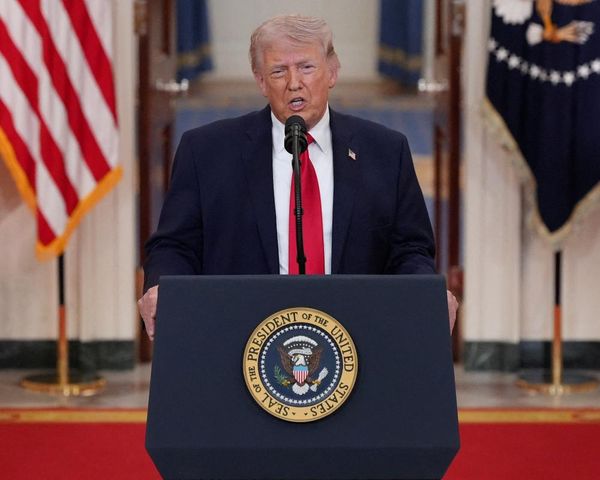
US president Donald Trump has pushed back against revelations that he downplayed the coronavirus’ severity throughout the pandemic, saying he acted in ways to reduce panic among Americans.
The remarks at the White House came after recordings, obtained by CNN and based on a new book titled Rage by journalist Bob Woodward, showed that Trump acknowledged in February he knew how deadly and contagious the coronavirus was but played it down because he did not want to create panic.
“I wanted to always play it down,” Trump told Woodward on 19 March, days after he declared a national emergency. “I still like playing it down, because I don’t want to create a panic.”
In that conversation, Trump also told Woodward that some “startling facts” had just come out about the virus’ targets: “It’s not just old, older. Young people too, plenty of young people.”
Trump on Wednesday defended his handling of the virus, which has killed more than 190,000 people in the US so far, with new cases spiking in the Midwest. He said at a Whitehouse event:
The fact is I’m a cheerleader for this country. I love our country and I don’t want people to be frightened.
We’ve done well from any standard.
Updated
“Covid-secure” marshals will be recruited to help in the enforcement of new stricter rules on social gatherings, the British prime minister has said.
The new roles are part of a series of measures designed to slow the spread of coronavirus, with people in England banned from meeting in groups of more than six from Monday.
It is unclear specifically what role the new marshals will perform and what powers they will have.
But the prime minister said they will be based in town and city centres, where there are large numbers of bars and restaurants which will be restricted on group sizes from next week.
Speaking at a press conference confirming the new rules on Wednesday, Boris Johnson said:
Fines will be levied against hospitality venues that fail to ensure that their premises remain Covid-secure.
We will boost the local enforcement capacity of local authorities by introducing Covid-secure marshals to help ensure social distancing in town and city centres, and by setting up a register of environmental health officers that local authorities can draw upon for support.
The new rules on socialising in England come as ministers try to tackle the rising number of coronavirus cases across the UK.
Cases have climbed from 12.5 per 100,000 people to 19.7 per 100,000 in the UK in the last week - with a particular rise in infections among young people.
Infections are most prevalent among the 19 to 21-year-old age group, with 54 cases per 100,000 people.
The US government is set to end enhanced screening of some international passengers for Covid-19 and drop requirements that travellers coming from the targeted countries arrive at 15 designated US airports, according to US and airline officials and a government document seen by Reuters.
The changes are set to take effect as early as Monday, according to the draft rollout plan seen by Reuters, but the move could still be delayed, US officials said.
The administration earlier this year imposed enhanced screening requirements on travellers who had been in China, the UK, Brazil, Iran and the Schengen region of Europe, and barred most non-US citizens who have been in those locations from coming to the United States.
The document seen by Reuters says the Centers for Disease Control and Prevention “is shifting its strategy and prioritising other public health measures to reduce the risk of travel-related disease transmission”.
It said that of 675,000 passengers screened at the 15 airports, “fewer than 15 have been identified as having Covid-19.”
The “current entry strategy for international arrivals only covers a small portion of the traveling public, requires significant resources and is not sustainable as travel volumes increase,” document said.
Updated
The Democratic presidential nominee, Joe Biden, has accused president Donald Trump of betraying the American people, saying he knowingly lied about the deadliness of the coronavirus in what amounted to a “dereliction” of his duty.
According to newly released recordings of interviews done in February for a book by the journalist Bob Woodward, Trump acknowledged he knew how deadly and contagious the coronavirus was but played it down because he did not want to create a panic.
With weeks remaining until the 3 November presidential election, the news about Trump’s comments again focused attention on the Republican president’s efforts to battle Covid-19, which Democrats say have been too little, too late.
“He knew, and purposefully played it down. Worse, he lied to the American people,” Biden said in a speech in Michigan. He was visiting the battleground state, home to the US auto industry, to promote a new proposal to tax companies that move US jobs overseas.
And while this deadly disease ripped through our nation, he failed to do his job on purpose. It was a life-and-death betrayal of the American people.
It’s a dereliction of duty, a disgrace.
Biden and Trump are ramping up travel in the final sprint to the election during a pandemic that has made waging a traditional campaign all but impossible.
The US has recorded the highest number of coronavirus deaths in the world. Deaths topped 190,000 on Wednesday along with a rise in new cases in the midwest, with states such as Iowa and South Dakota emerging as new hotspots in the past few weeks.
Updated
Germany advises against tourist trips to batch of European destinations
Germany’s foreign ministry has advised tourists against travelling to a batch of European destinations including Prague, Geneva, Dubrovnik and Corsica due to high coronavirus infection rates.
In France, the Auvergne-Rhône-Alpes, Occitanie and Nouvelle-Aquitaine regions were added to the warning list, as well as Corsica.
In Croatia, the Požega-Slavonia area was added, as well as Dubrovnik-Neretva.
The halting of clinical trials for one of the most advanced experimental Covid-19 vaccines shows the importance of safety in developing new medicines despite overwhelming international pressure, experts have said.
The pharmaceutical giant AstraZeneca and the University of Oxford said on Tuesday they were “pausing” trials of the vaccine after a volunteer developed an unexplained illness.
AstraZeneca said in a follow-up statement that a participant in Britain had been taken ill during large-scale phase 3 testing.
It called the move to pause the trial “a routine action”, but the setback briefly spooked markets as the world races for a vaccine that could signal the beginning of the end of the pandemic.
Alain Fischer, an immunologist, told AFP.
It’s a totally reasonable measure of caution. This should be seen as the proper functioning of a vaccine evaluation system.
The vaccine is one of nine that are undergoing the final phase of clinical testing, according to the World Health Organization.
Phase 3 trials involve experimental vaccines being tested among tens of thousands of volunteers to check if they are effective and safe on a large scale.
Fischer said an inquiry would determine if the volunteer got sick because of the vaccine or from something else.
While the developers appear to be exercising caution, the pause comes at a time when scientists are under enormous pressure to push through a Covid-19 vaccine.
Russia has already approved a vaccine – albeit with some question marks from international observers – and the EU on Wednesday reserved another 200m doses of a potential vaccine from AstraZeneca rivals, BioNTech-Pfizer.
“While we share with everyone the need to move fast, we can’t risk the safety of the (trial) participants,” Bruno Hoen, the director of medical research at Paris’ Institut Pasteur, told AFP.
Ohid Yaqub, a senior lecturer at the University of Sussex’s Science Policy Research Unit, said AstraZeneca’s pause may in fact end up benefiting the search for Covid-19 immunisation. He said:
Suspending the trial gives time to investigate whether the incident is related to the vaccine or is happening by coincidence.
In some senses, it is good that such a routine event is being publicised because it helps to build trust as it provides an opportunity for people to see the procedures at work.
Amid the frantic race, the European Medicines Agency sounded a note of caution, saying we may see no widely available vaccine for Covid-19 until “at least” the beginning of 2021.
In order to officially endorse it, the EMA said it “will need to have strong evidence from clinical trials on the safety, efficacy and the quality of this vaccine”.
Updated
New York City restaurants will be able to resume indoor dining at 25% capacity with some restrictions on 30 September, the New York governor, Andrew Cuomo, has said, relaxing one of last big lockdown limitations on life in the nation’s most populous city.
Cuomo said the restrictions would include mandatory temperature checks at the door and requiring one member of each party to provide contact information for contact-tracing should there be a Covid-19 outbreak originating from a restaurant.
The state, which has refrained from reopening restaurants in New York City due to concerns it would spread the coronavirus, could lift capacity to 50% by a reassessment deadline of 1 November depending on infection rates, Cuomo said.
The governor told a news conference that the state would establish a whistleblowing system whereby patrons could anonymously report restaurants not in compliance by sending a text.
“New Yorkers themselves will help with compliance,” Cuomo said. “New Yorkers will keep New Yorkers safe.”
In a statement, the New York City mayor, Bill de Blasio , acknowledged that dining at 25% capacity would not mark a full return to normal but characterised it as a starting point and a way to lift the city’s economy. He said:
We are continuing New York City’s economic recovery by bringing back indoor dining. This may not look like the indoor dining that we all know and love, but it is progress for restaurant workers and all New Yorkers.
Updated
Hi everyone, this is Jessica Murray taking over the coronavirus blog for the next few hours.
Please feel free to get in touch if you have any story tips or personal experiences you would like to share.
Email: jessica.murray@theguardian.com
Twitter: @journojess_
Here is a summary of the latest developments:
- The Oxford University coronavirus vaccine trial has been paused due to a possible adverse reaction in a participant. The illness suffered is said to be transverse myelitis, although AstraZeneca, the company working with the university has not confirmed that. Experts stressed that such setbacks were not uncommon during trials and that it was too early to speculate on causation.
- A 17% fall in daily global CO2 emissions in April compared with 2019 has failed to stem the climate crisis, a UN report has found. It says atmospheric CO2 concentrations have reached record levels. By early June, as factories and offices reopened, emissions were back up to within 5% of 2019 levels, the report states.
- French health authorities reported 8,577 new confirmed coronavirus cases on Wednesday, the second-highest number of daily additional infections on record. The cumulative number of cases now totals 344,101.
- The Czech Republic has recorded more than 1,000 new coronavirus cases in a single day for the first time. During the first wave of infections the previous daily peak was 377 in March but case figures have regularly been above 500 this month. In response, the government announced that the wearing of face masks inside buildings will be mandatory from Thursday.
- The number of new coronavirus cases registered in the Netherlands has reached its highest daily total since April. The health minister, Hugo de Jonge, said there had been 1,140 cases recorded in the past 24 hours.
- Portugal recorded 646 new coronavirus cases, its highest daily toll since 20 April. The country’s health secretary, Jamila Madeira, told a news conference transmission was occurring primarily in family households.
- Recordings have been published revealing that US president, Donald Trump, knowingly playing down the risk posed by coronavirus. Trump told journalist Bob Woodward in the recording, published by CNN: “I wanted to always play it down. I still like playing it down, because I don’t want to create a panic.” The White House press secretary, Kayleigh McEnany denied that Trump intentionally mislead people in the US
- In England, the prime minister, Boris Johnson, has announced plans for “mass testing” with the aim of allowing people who have tested negative to “lead more normal lives”. The country has been hit by a rise in cases and has announced new restrictions as a result.
France's covid hospitalisations at one-month high as cases surge
France’s daily new Covid-19 infections rose by more than 8,500 for the third time in six days on Wednesday, with the disease spreading at its fastest pace since it emerged in the country.
Health authorities have reported 8,577 new confirmed coronavirus cases, the second-highest number of daily additional infections on record since the disease started to spread in the country.
The number of people taken to hospital with the virus was also up, by 43 - increasing for the 11th day in a row to reach a one-month high of 5,003.
The number of patients in intensive care units with Covid-19 was up 25 to 599, a level not seen since the end of June.
The rate of increase of additional cases has been steadily rising for two months, but as they primarily involve younger people, who are less likely to fall seriously ill, that didn’t translate into renewed strain on the hospital system until the end of last month.
Hospitalisations for the disease are still more than six times below the 14 April peak of 32,292 and the number of patients in ICUs is far below the 8 April record of 7,148.
But the upward trend of those two indicators is fuelling fears of a second lockdown. France imposed one of Europe’s strictest lockdowns between 17 March and 11 May to prevent the hospital system from being overwhelmed.
In a statement, French health authorities reported 8,577 new infections, the second-highest daily tally on record after Friday’s 8,975. The cumulative number of cases is now 344,101.
The seven-day moving average of new infections, which smoothes out reporting irregularities, stood at 7,297, a 23rd consecutive record, versus a low of 272 on 27 May.
The number of people in France who have died from Covid-19 infections increased by 30, to 30,794, after a rise of 38 on Tuesday, a figure twice as high as the seven-day moving average of 15.
Updated
The White House press secretary, Kayleigh McEnany, said today that the US president, Donald Trump, did not intentionally mislead Americans about the severity of the coronavirus epidemic.
The remarks come after recordings, obtained by CNN and based on a new book titled “Rage” by journalist Bob Woodward, revealed earlier today that Trump acknowledged in February he knew how deadly and contagious coronavirus was but played it down because he did not want to create a panic.
Trump told Woodward that coronavirus was maybe five times “more deadly” than the flu, even though the president later repeatedly compared the novel virus to the flu, which attracted criticism from health experts.
A month later, the president told Woodward:
I wanted to always play it down. I still like playing it down, because I don’t want to create a panic.
In new tapes, President Trump admits to Bob Woodward he concealed critical details he knew about the coronavirus. "I wanted to always play it down." https://t.co/eICaAx70mY pic.twitter.com/zXNOZtIBx7
— CNN Newsroom (@CNNnewsroom) September 9, 2020
The governor of Brazil’s São Paulo state said today that phase 3 clinical trials of a potential Covid-19 vaccine developed by China’s Sinovac Biotech Ltd had shown promising results and that it may be available to Brazilians as early as December.
Governor João Dória added that phase 2 trials of the potential vaccine had shown an immune response of 98% in elderly people.
About 9,000 Brazilians are participating in the Sinovac vaccine trials, which are being conducted by the Butantan Institute in São Paulo city, the state capital.
Brazil, which has the third worst outbreak of the novel coronavirus in the world after the US and India, has become a testing ground for at least two vaccine candidates.
One such vaccine is being developed by AstraZeneca, which has had to pause global trials after an unexplained illness in a participant in Britain.
At the start of next year, phase 3 trials of Russia’s “Sputnik-V” Covid-19 vaccine will also be conducted on 10,000 volunteers in Brazil, in partnership with the state of Paraná’s Technology Institute, known as Tecpar.
The Brazilian lab and hospital group DASA SA said today that it had agreed to conduct phase 2 and 3 trials in Brazil for a Covid-19 vaccine developed by Covaxx, a unit of privately owned United Biomedical Inc.
Yesterday, Brazil’s acting health minister, Eduardo Pazuello, said a Covid-19 vaccine would be rolled out for all Brazilians next January.
Updated
Here is a picture of Pope Francis wearing a mask in public today – the first time he had done so, according to Reuters. You can find details of what he said at his weekly general audience in an earlier blogpost.

Updated
In England, the prime minister, Boris Johnson, has announced plans for “mass testing” with the aim of allowing people who have tested negative to “lead more normal lives”. He said:
Up to now, we have used testing primarily to identify people who are positive – so we can isolate them from the community and protect high-risk groups. And that will continue to be our priority. We are working hard to increase our testing capacity to 500,000 tests a day by the end of October.
But in future, in the near future, we want to start using testing to identify people who are negative – who don’t have coronavirus and who are not infectious – so we can allow them to behave in a more normal way, in the knowledge they cannot infect anyone else with the virus.
And we think, we hope, we believe that new types of test which are simple, quick and scalable will become available. They use swabs or saliva and can turn round results in 90 or even 20 minutes. Crucially, it should be possible to deploy these tests on a far bigger scale than any country has yet achieved – literally millions of tests processed every single day.
That level of testing would allow people to lead more normal lives, without the need for social distancing.
You can read more about what Johnson said and the latest developments in the UK here.
Updated
Regeneron Pharmaceuticals said today it expects to report biomarker data for its Covid-19 antibody cocktail by the end of this month.
The drugmaker last month struck a partnership with Roche AG to make and supply the Covid-19 antibody cocktail, which is being tested on hundreds of patients after it prevented and treated the respiratory disease in animals.
Regeneron has already signed a $450m (£340m) deal for the cocktail with the US government, under the Trump administration’s “operation warp speed” programme that is aimed at the faster distribution of vaccines and treatments to fight the new coronavirus when trials are successful.
The company said today it was moving manufacturing of some of its products to Ireland to increase the production capacity of the cocktail and might look for other supply partners if there is a lot of demand.
Regeneron’s cocktail, REGN-COV2, contains an antibody made by the company and another isolated from recovered Covid-19 patients. Rivals Eli Lilly and AbbVie are also pursuing antibody therapies for the respiratory illness. Shares of Regeneron were up 1.4% at $569.68.
Updated
Bar, restaurant and nightclub owners have gathered in the centre of Madrid, the capital of Spain, on Wednesday to ask the government for tax cuts and support to survive the fallout from the coronavirus pandemic. They held banners reading “Help!” and “We are not the problem”.

Nightclubs are closed in Madrid and usually bustling restaurants and bars are back to only being allowed to open at a reduced capacity to stem a rebound in Covid-19 cases in a country with a strong tradition of eating out.
Pepa Munoz, the owner and chef of the El Quenco de Pepa restaurant in Madrid, said:
With the capacity they have assigned, taking steps backwards, this is an impossible situation. We are hanging on thanks to terraces, but their days are numbered [as cold weather approaches].
She said she is serving about half her usual number of meals and fears for the future of her 34 employees.
“Mister politicians, more help and less restrictions,” one banner read, while another said: “Six months closed. Help!”. The main hospitality business lobby has warned 85,000 businesses were in jeopardy this year.
Jose Manuel del Moral, who works at his husband’s drinks bar Zarpa in Madrid, said:
We are not earning any money at the business but we are still paying (taxes). We can only survive for a short time, maybe two or three months, I don’t think we could last longer.
The government has rolled out plans to help businesses but has so far ruled out a cut to value added tax.
Spain, which before the pandemic had the highest density of bars in the world with one for every 175 residents, according to a study by Nielsen consultancy, has been hit especially hard by the coronavirus and on Monday became the first western European country to pass 500,000 cases.
Its economy shrank a record 18.5% in April-June, the sharpest drop among European Union member states.
Updated
Portugal reports highest daily cases since April 20
Portugal has reported 646 new coronavirus cases, the highest daily toll since 20 April. The country’s health secretary, Jamila Madeira, told a news conference transmission was occurring primarily in family households.
New cases fell to about 100 a day at the beginning of August but have crept back up since, worrying the tourism industry as it waits to hear whether it will taken back out of the UK’s air bridge list (countries UK residents can travel to without having to self-isolate on their return).
Stricter measures to curb the coronavirus outbreak will be introduced across Portugal from mid-September as students return to schools and many workers go back to the office, although details have yet to be announced.
Most new cases were split between the northern region and greater Lisbon, health ministry data showed.
Updated
The former prime minister of Italy, Silvio Berlusconi, has said that of the thousands of coronavirus tests carried out at San Raffaele hospital, doctors told him that he had the worst viral load.
The 83-year-old said:
[The virus] is very bad. I’m giving it my all, I hope to make it and to get back on track.
Turkish-occupied northern Cyprus has announced the temporary suspension of inbound flights due to a major rise in active coronavirus cases.
The breakaway region, only recognised as a sovereign state by Turkey, has so far officially recorded four deaths and 475 infections, but has seen a jump in new cases, registering 144 positive tests in the first eight days of September.
Mustafa Sofi, director of the north’s civil aviation authority, said inbound flights would be halted from this evening until Sunday evening, with the exception of emergency flights as well as military and medical planes.
The north only receives flights from Turkey, and requires new arrivals to be quarantined for seven to 14 days, depending on where the passengers have been besides Turkey.
But officials said they were running out of hotel and other rooms for self-isolation. Outbound flights to Turkey will still be allowed.
Yesterday, the Turkish Cypriot cabinet also announced the closure until 1 October of schools, clubs, discos, cinemas, theatres and casinos, which are banned in Turkey and are a major tourist draw.
Cyprus has been divided since 1974, when Turkey occupied its northern third in response to a coup engineered by the military junta in Athens, which had sought to unite the island with Greece.
Updated
Summary
These are the latest developments:
- The Oxford University coronavirus vaccine trial has been paused due to a possible adverse reaction in a participant. The illness suffered is said to be transverse myelitis, although AstraZeneca, the company working with the university has not confirmed that. Experts stressed that such setbacks were not uncommon during trials and that it was too early to speculate on causation.
- A 17% fall in daily global CO2 emissions in April compared with 2019 has failed to stem the climate crisis, a UN report has found. It says atmospheric CO2 concentrations have reached record levels. By early June, as factories and offices reopened, emissions were back up to within 5% of 2019 levels, the report states.
- The Czech Republic has recorded more than 1,000 new coronavirus cases in a single day for the first time. During the first wave of infections the previous daily peak was 377 in March but case figures have regularly been above 500 this month. In response, the government announced that the wearing of face masks inside buildings will be mandatory from Thursday.
- The number of new coronavirus cases registered in the Netherlands has reached its highest daily total since April. The health minister, Hugo de Jonge, said there had been 1,140 cases recorded in the past 24 hours.
- England has refused to rule out a second lockdown as cases increase and it has reimposed some restrictions. Asked about a possible return to a national lockdown, health secretary Matt Hancock said: “I wouldn’t make a vow like that.” But he added: “Our goal is to avoid having to do anything more drastic by people following the rules.” The government is launching a new “Hands. Face.Space” campaign to remind people to wash their hands, cover their faces and keep their distance.
Updated
Daily Netherlands cases highest since April
The number of new coronavirus cases registered in the Netherlands rose to 1,140 in the past 24 hours – the highest daily total since April – the health minister said today.
Hugo de Jonge announced the figures recorded by the National Institute for Health (RIVM) during a live video stream. “It’s not going the right way,” De Jonge said. A day earlier, the country recorded 964 cases, with cases rising quickly among young adults.
The RIVM said the increase was not tied to the reopening of primary schools across the country over the past three weeks.
Updated
Expert reaction to Oxford vaccine trial being put on hold
Here is some reaction from experts to the news that the Oxford University Covid-19 vaccine trial has been put on hold due to a possible adverse reaction in a trial participant.
They provide useful context to the setback, explaining that such occurrences are not uncommon during trials.
Prof Stephen Evans, professor of pharmacoepidemiology, London School of Hygiene & Tropical Medicine, said:
We do not know what event has occurred, but given that in the UK those aged over 70 have been included in the trials, coincidental events are to be expected. Very occasionally, what might be expected in an older person, such as a stroke (and this is certainly not a suggestion that it is such an event that has happened here), can occur in a young person.
The whole way of conducting vaccine trials with independent data and safety monitoring boards, as well as regulatory processes, is intended to protect the participants in the trials and is why trials are conducted. This very incident shows that the Oxford trial, and any other trials conducted in the UK, are monitored very carefully and precautions are taken to protect both the trial participants and those who might get the vaccine in the future.
It is premature to speculate on whether the vaccine caused the adverse event, and even if it eventually is concluded that it is possible the vaccine was the cause, there may be other factors involved and it would not necessarily mean the vaccine could not be used at all.
Prof Ian Jones, professor of virology, University of Reading, said:
An inevitable consequence of testing a vaccine on large numbers of people is that some will naturally fall ill of other causes during the trial. A similar incident some ten years ago during the roll out of the HPV vaccine resulted in the immediate quarantine of a batch of the vaccine, although the overall programme was not suspended. We must wait and see what the investigation in this case shows but at the moment, I think unfortunate more than sinister would be the best description of the halt.
Dr Doug Brown, chief executive of the British Society for Immunology, said:
This news does provide a good illustration of why conducting thorough and robust vaccine trials is so critical, and is just one more reason why we must not put pressure on researchers to rush through a vaccine for widespread use before these large and complex trials have been carried out.
Dr James Gill, honorary clinical lecturer, Warwick Medical School, and locum GP, said:
Whilst it has been reported that one trial volunteer has become ill, this may be due to an issue related to the vaccine. It also may not. That the trial has announced this, and has placed a pause on the testing to allow an independent panel to look into the event, should be championed as good science and great transparency for the public who are waiting for news on a Covid-19 vaccine
Personally, I would be suspicious of a vaccine for a novel virus which was developed without any hiccoughs or pauses. Science on TV is great, and usually gets completed in the course of an episode. In a real lab, chemistry, patients and biology don’t often follow a nice simple course, which is why from the start scientists have said that this Covid vaccine development will take considerable time to get right and safe.
Updated
Climate change 'unabated by lockdowns'
Concentrations of greenhouse gases in the Earth’s atmosphere hit a record high this year, despite an economic slowdown amid the coronavirus pandemic, a UN report published today shows.
The sharp but short dip in emissions earlier this year represented only a blip in the build-up of climate-warming carbon dioxide.
In a forward to the report, UN secretary-general António Guterres said:
This has been an unprecedented year for people and planet. The Covid-19 pandemic has disrupted lives worldwide. At the same time, the heating of our planet and climate disruption has continued apace.
Never before has it been so clear that we need long-term, inclusive, clean transitions to tackle the climate crisis and achieve sustainable development. We must turn the recovery from the pandemic into a real opportunity to build a better future.
While daily emissions fell in April by 17% relative to the previous year, those levels were still on a par with 2006 emissions underlining how much global emissions have grown over the last 15 years.
And by early June, as factories and offices reopened, emissions were back up to within 5% of 2019 levels, according to the report by several UN agencies.
Prof Petteri Taalas, secretary-general of the World Meteorological Organization said:
Whilst many aspects of our lives have been disrupted in 2020, climate change has continued unabated.
Updated
AFP has this interesting assessment of the success - or otherwise - of the various coronavirus tracing apps in Europe:
Germany: no cure-all
Launched in June, the German track and trace app is seen as “an important additional tool for keeping infection rates down” but “no cure-all” according to government spokesman Steffen Seibert.
In a country whose population jealously guards security and control over their personal data, the app has generally been well-received, even by staunch privacy advocates like the Chaos Computer Club.
As of 1 September, the app had been downloaded 17.8m times – compared with an overall population of around 83m – and at the start of July, it had alerted several hundreds of cases of infections.
Iceland: keeping tracks on tourists
Downloads of Iceland’s app peaked shortly after its launch – at an estimated 40% of the population, the user rate is high – but rose again with the start of the tourist season.
Visitors to the volcanic island are encouraged to download the app, not only for its good functionality, but also because it contains links to important Covid-19-related documents and even has an online chat function.
Unlike other tracing apps in use in Europe, the Icelandic app can track an individual’s movements in the case of infection or suspected infection. And, with the individual’s permission, it uses GPS to geo-locate the phone.
Portugal: compatibility issues
Portugal only launched its tracing app this month and it has come under fire from consumer rights groups for perceived loopholes in personal data usage and the dominant role played by tech giants in drawing up health protocols.
In addition, media reports suggest around 800,000 mobile phones – out of an overall population of 10 million – cannot install the app because of incompatible software, ultimately rendering it useless.
France: a flop
The French government launched its StopCovid app at the beginning of June, but by mid-August it had only been downloaded 2.3m times, compared with an overall population of 67 million. So far, only 72 possible risk contacts have been flagged up by the app, while 1,169 users have declared themselves positive.
StopCovid has been criticised by IT specialists with regard to data privacy.
Based on a so-called “centralised” protocol, the French app is incompatible with the majority of its European peers which are “decentralised”.
Under the centralised model, the anonymised data gathered are uploaded to a remote server where matches are made with other contacts, should a person start to develop Covid-19 symptoms.
The decentralised model gives users more control over their information by keeping it on the phone. It is there that matches are made with people who may have contracted the virus. This is the model promoted by Google, Apple and an international consortium.
Favourable marks for Switzerland and Italy
SwissCovid, developed by the EPFL university of Lausanne and based on the decentralised protocol, began testing on 25 May.
Nearly 1.6 million people now actively use the app, which has been downloaded 2.3m times out of a population of 8.5 million.
At the beginning of September, the app was signalling an average 56 infections every day and seems to be generally well accepted by the population.
In Italy, the Immuni app was downloaded 5.4m times, equivalent to 14% of the overall number of potential users (excluding anyone under the age of 14 and people without mobile phones). According to official data, 155 users have declared themselves positive between 1 June and 31 August.
Damp squibs in Norway and Britain
In June, the Norwegian health authorities suspended the locally developed app after the Nordic country’s national data protection agency found it too intrusive.
Authorities are working on a solution which they hope to launch before Christmas and do not rule out resorting to Google and Apple technology.
In Britain, the government revealed its first attempt at a contact-tracing app in May. But in a major U-turn in June, it abandoned the app, based on the centralised model and seen as flawed.
The government, which blamed the problems on restrictions imposed by Apple, has since switched to the decentralised approach. But, as yet, no track and trace app is widely available in much of the UK.
Northern Ireland, however, rolled out its own app at the end of July and it has been downloaded more than 300,000 times by 26 August.
Updated
Pope Francis told visitors at his weekly general audience today that the coronavirus pandemic should spur everyone to work for the common good and should not be exploited for economic or political gain. He said:
Unfortunately, we are witnessing the emergence of partisan interests. For example, there are those who want to appropriate possible solutions for themselves, such as (developing) vaccines and then selling them to others.
Some are taking advantage of the situation to foment divisions, to create economic or political advantages, to start or intensify conflict.
The pandemic and the quest for a vaccine have become points of contention in the US presidential campaign between Donald Trump and Joe Biden.
Trump wants to fast-track a vaccine, which he has said is coming “very, very soon”. The virus has killed more than 186,000 Americans and cost millions of jobs.
Biden has charged that Trump is politicising the issue to help his re-election and has called for any vaccine to be produced and distributed following established scientific standards without outside political interference.
The pope called people who turn their backs on the suffering coronavirus had caused “devotees of Pontius Pilate who simply wash their hands of it,” referring to the ancient Roman governor of Judea who ordered Jesus’ crucifixion but refused to take responsibility for it.
The audience was held in the Vatican’s San Damaso courtyard before about 500 people. It was only the second with public participation after six months of virtual audiences. Tens of thousands pack the usual venue, St Peter’s Square.
The pope asked people to remain in their seats and keep social distancing.

As of 10am GMT today, more than 27.66 million people had been reported to be infected by coronavirus globally and 897,349 had died, according to a Reuters tally based on statements from health ministries and government officials.
Hello, this is Haroon Siddique taking over the blog.
You can contact me via the following channels:
Twitter: @Haroon_Siddique
Email: haroon[dot]siddique[at]theguardian[dot]com
Updated
In the US, Iowa’s governor, Kim Reynolds, is refusing to enforce a White House coronavirus taskforce recommendation to close bars and require people to wear masks after Covid-19 infections in some of the state’s cities surged.

Meanwhile, coronavirus cases have risen sharply across the whole midwest in recent weeks, putting the region at the forefront of America’s pandemic. The region accounted for six of the eight states with the highest number of new Covid-19 cases by early September even as infections fell in other parts of the US previously among the worst hit.
North Dakota has the largest number of positive cases per capita in the country over the past 14 days. Iowa and South Dakota are enduring the highest percentage increases. Missouri has seen more than 1,300 new cases a day on average over the past week.
You can read the full story from our US reporter Chris McGreal here:
Updated
Russia’s sovereign wealth fund will sell 32m doses of the potential Covid-19 vaccine ‘Sputnik-V’ to a top pharmaceutical company in Mexico, Russia’s second vaccine export deal, a source close to the deal said on Wednesday.
Russia registered its first vaccine candidate, developed by Moscow’s Gamaleya Institute, in August. Late-stage trials of Sputnik-V, due to involve 40,000 participants, were launched on 26 August.
The Russian direct investment fund (RDIF), the state sovereign wealth fund backing the vaccine’s development, signed its first export deal with Kazakhstan in August.
Kazakhstan is set to buy more than 2m doses initially and could later increase the volume to 5m doses, RDIF said at the time.
Updated
Nearly 600 people who were potentially exposed to Thailand’s first domestic coronavirus infection in more than three months have been tested, but so far no other new cases have been found.
The latest domestic case was found in a 37-year-old man who worked as a DJ in three different nightclubs in the capital, Bangkok, before he tested positive on arrival at prison, following a recent conviction for a drugs-related offence.
Individuals deemed at risk across 12 venues including the court where he appeared, as well as nightclubs and supermarkets, were tracked down and 569 tests were administered, the public health ministry said.

So far, all tests have come back negative while 32 individuals are still awaiting results. Authorities have asked 400 other individuals considered low-risk to self-quarantine for 14 days.
How the man became infected remains a mystery, with all of Thailand’s recent cases, typically less than a handful each day, detected in state quarantine among people returning from abroad.
Thailand has reported a total of 3,447 confirmed infections, 58 fatalities and has relaxed internal restrictions. That tally is one of the lowest in south-east Asia, with Indonesia and the Philippines the highest with more than 200,000 cases each.
Updated
The wearing of face masks inside buildings across the Czech Republic will be mandatory from Thursday.
Health minister Adam Vojtěch said the government had made the decision following a spike in new infections in the country.
Kvůli zhoršující se epidemiologické situaci jsem dnes ráno svolal mimořádné jednání Centrálního řídícího týmu @ChytraKarantena. S odborníky jsme se shodli, že od zítra zavedeme povinnost nosit roušku ve vnitřních prostorách budov v celé ČR. Podrobnosti vydáme v průběhu dne.
— Adam Vojtěch (@adamvojtechano) September 9, 2020
On Tuesday, the Czech Republic recorded 1,164 new cases of Covid-19.
“We agreed with the experts that from tomorrow we will introduce the obligation to wear a [face mask] inside buildings throughout the Czech Republic,” he said.
Updated
The safety of a prospective vaccine for Covid-19 comes “first and foremost”, the World Health Organization’s chief scientist said on Wednesday, as a trial of a candidate from AstraZeneca was paused due to concerns over side-effects.
“Just because we talk about speed … it doesn’t mean we start compromising or cutting corners on what would normally be assessed,” Dr Soumya Swaminathan said during a social media event.
“The process still has to follow through rules of the game. For drugs and vaccines which are given to people, you have to test their safety, first and foremost.”
Updated
Czech Republic records 1,000 new cases in a day for first time
The Czech Republic has recorded more than 1,000 new coronavirus cases in a single day for the first time.
On Wednesday, the country reported 1,164 new infections, as it battled a surging spread of the virus.
Daily case figures have regularly come in above 500 so far in September, already well above a previous daily peak of 377 in March during the first wave of infections.

Czech authorities, which acted quickly to impose a strict lockdown in March to halt the spread of the virus, are keen to avoid taking that costly route again after the economy shrank by 11% in the April-June period on an annual basis.
The rise in the number of Czech cases has been among the fastest in Europe, with infection rates over the last two weeks only faster in Spain, France, Malta, Romania and Croatia, according to the European Union agency European Centre for Disease Prevention and Control (ECDC).
The Czech pace is roughly three times that of neighbouring Germany.
However, the death toll in the Czech Republic has remained lower than in many other European countries, with 441 fatalities reported as of Wednesday out of a total of 29,877 cases since the start of the pandemic.
Updated
Russia’s official coronavirus death toll has risen to more than 18,000
On Wednesday, Russia said 142 people had died from Covid-19 in the last 24 hours, raising the total to 18,315.
Its taskforce also reported 5,218 new cases, bringing the nationwide caseload to 1,041,007, the fourth largest in the world.
Updated
UK health secretary refuses to rule out second lockdown
Returning to Matt Hancock now, as the coronavirus situation in the UK continues to look increasingly fraught.
Speaking to radio station LBC, Hancock said he would not rule out a return to the national lockdown experienced by Britons earlier this year. He said:
I wouldn’t make a vow like that. You wouldn’t expect me to – I am the health secretary in the middle of a pandemic where we are trying to keep the country safe.”
He added that he hoped a lockdown could be avoided, saying: “Our goal is to avoid having to do anything more drastic by people following the rules.”
Updated
In Australia’s coronavirus epicentre, Victoria, a retail boss has warned the state government’s roadmap out of lockdown could wipe out 50% of small businesses.
Paul Zahra, the former chief executive of David Jones who is now head of the Australian Retailers Association, made the comments at the National Press Club in Canberra on Wednesday.
He said he expects to see in Victoria in the coming weeks “the first signs of the economic collapse” through the “highly visible” failure of retail businesses and proliferation of for lease signs.

Zahra said there were “no signs yet” that the Victorian government would vary its roadmap which controversially does not lift most restrictions until there are fewer than five new coronavirus cases a day – estimated to be reached in late November.
“We were called into what was classed as a consultation session but was more like information sessions,” he said. “Unfortunately, there was very little feedback that was taken on board.”
You can read the full story from our Guardian Australia reporter, Paul Karp, here:
More from the UK’s health secretary, Matt Hancock, who has said it is still safe for people to return to work because “we have Covid-secure offices”.
His comments come after the government announced a ban on gatherings of more than six people from next Monday, due to a surge in new infections in the UK.
“[Workplaces] are under health and safety legislation and businesses are legally obliged to follow health and safety legislation,” Hancock told Times Radio.
All of our evidence is that the vast majority of the transmission that we are seeing is essentially in social circumstances, not at work.”
He added: “We have got to protect livelihoods through this crisis as well as lives and the strategy is to protect education, to protect work, we are therefore bringing in tighter rules on social engagement because that’s where we are seeing the majority of the transmission.”
Updated
If you’re waking up to the news that the AstraZeneca and Oxford University Covid vaccine trial had been put on hold again, here’s some details.
A spokesman for AstraZeneca, the company working with a team from Oxford University, told the Guardian the trial has been stopped to review the “potentially unexplained illness” in one of the participants.

The spokesman stressed that the adverse reaction was only recorded in a single participant and said pausing trials was common during vaccine development.
“This is a routine action which has to happen whenever there is a potentially unexplained illness in one of the trials, while it is investigated, ensuring we maintain the integrity of the trials. In large trials illnesses will happen by chance but must be independently reviewed to check this carefully,” the spokesperson said.
You can read the full story here:
Updated
If the Covid-19 pandemic does not prevent the Tokyo Olympics from going ahead again next year, blazing summer heat could still make the Games “a nightmare”, an adviser to the organising committee has told Reuters.
Makoto Yokohari said the highest temperatures in a typical August — when most of the delayed Games will take place — could mean a dangerous mix of heat and humidity.

Yokohari, a professor of environment and urban planning at the University of Tokyo, analysed data going back to the 1984 Olympics in Los Angeles and said he found that in the period where the Games were held, Tokyo had the highest average temperature and precipitation of any host city.
“When it comes to heat stress or heat stroke, the problem is not only the temperature but also the humidity as well,” Yokohari told Reuters.
“When you can combine these two … Tokyo is the worst in history.”

Temperatures this July, when the Olympics were due to start before the new coronavirus forced a postponement, were significantly cooler than the five-year average for the month of 30.4 degrees Celsius.
But with August averaging highs of 30.8 degrees Celsius and lows of 24.2 over the 30 years over his study, Yokohari said organisers should be prepared for the worst.
“If the weather turns out like right now, or like last year, then it is going to be a nightmare,” he said.
Updated
The UK’s health secretary, Matt Hancock, has said banning gatherings of more than six people will make social distancing “easier for police to enforce”.
Fines for those who flout the rules – which do not apply to work or education settings, as well as weddings and funerals – will start at £100 but could go up to £3,200 for repeated non-compliance.
“We’re making this change to make [the rules] super simple. You can’t have more than six people in social settings, except in limited exemptions like weddings,” Hancock told Times Radio.
That’s it from me, Helen Sullivan and not an AI robot, I promise. I look forward to using my cognitive capacity to generate human-like text tomorrow.
In the meantime, I’m handing over to my colleague Amy Walker.
Updated
After her @USOpen match tonight, @ESPN showed @NaomiOsaka video messages from @SybrinaFulton, mother of #TrayvonMartin, and Marcus Arbery, father of #AhmaudArbery — two of the five names she's worn on masks before and after her matches. #SayTheirNames pic.twitter.com/1BOyzQbzg9
— Ben Crump (@AttorneyCrump) September 9, 2020
Summary
Here are the key developments from the last few hours:
- AstraZeneca Plc and Oxford pause major vaccine trial for second time. AstraZeneca Plc has put a hold on the late-stage trial of its highly anticipated Covid-19 vaccine candidate after a suspected serious adverse reaction in a study participant, health news website Stat News reported on Tuesday. It quoted an AstraZeneca spokesperson as saying in a statement that the “standard review process triggered a pause to vaccination to allow review of safety data”. The study is testing a Covid-19 vaccine being developed by AstraZeneca and University of Oxford researchers at sites including the US and the UK, where the adverse event was reported.
- Canada is seeing a worrying increase in the number of people infected with the coronavirus as schools across the country start to reopen, a top medical official said on Tuesday. Chief public health officer Theresa Tam said an average of 545 new cases had been reported daily over the past week, up from about 300 in July.
- Disruptions to health services due to the pandemic are putting millions of additional lives at risk worldwide, the United Nations said Wednesday, warning that Covid-19 could reverse decades of progress in reducing child mortality.
- A million jobs were lost in Australia between March and June quarters. The Australian Bureau of Statistics has announced that the total number of filled jobs fell by 6.4% and hours worked fell by 9.8% between the March and June quarters.
- New Zealand reported six new cases of Covid-19 on Wednesday, all spread by community transmission and connected to an outbreak in the largest city, Auckland. Health authorities are asking all members of a particular church, Mt. Roskill Evangelical Fellowship, to be tested for the coronavirus –even if they are not symptomatic or have been tested before. All six of the new cases have links to the church.
-
Gatherings of more than six people to be banned in England. Social gatherings of more than six people will be illegal in England from Monday after the number of daily positive Covid-19 cases in the UK rose to almost 3,000.
- France recorded 6,544 new daily cases. The number of new, confirmed cases of Covid-19 in France rose by 6,544 over the last 24 hours to stand at a total of 335,524.
- Three migrant camps near Athens were placed in quarantine as concerns mount over spread of virus. Three migrant camps near Athens were placed in quarantine on Tuesday as concerns mounted over the spread of Covid-19 among thousands of asylum seekers living in squalid conditions in Greece.
- Spain reported 3,168 new cases in past 24 hours. Spain’s health ministry reported 8,964 new Covid cases on Tuesday, 3,168 of them diagnosed over the past 24 hours.
- The coronavirus bill has cost UK government £210bn, spending watchdog says. The government response to the coronavirus pandemic is on track to cost £210bn for the first six months of the crisis, Whitehall’s spending watchdog has said.
- Hong Kong will ease coronavirus curbs. Hong Kong will expand the size of public gatherings to four people and reopen more sports venues from Friday as the Asian financial hub relaxes strict curbs against a third wave of the coronavirus.
- School disruption could have century-long economic impact: OECD. Disruption to schooling stemming from the Covid-19 epidemic will cause a skill loss that could result in a 1.5% drop in global economic output for the rest of this century, the Organisation for Economic Cooperation and Development has estimated.
Updated
Thousands have fled an overcrowded refugee camp after multiple fires gutted much of the site on the Greek island of Lesbos, authorities have said.
There were no reports of injuries after the fire started in the early hours of Wednesday at Moria camp, Reuters reports.
The cause of the blaze which burned tents and containers was not immediately clear, a fire brigade official said. A police official said that migrants had been taken to safety. People were seen leaving the camp, carrying their luggage, witnesses said.
At least 25 firefighters with 10 engines, aided by police, were battling the flames both inside and outside the facility, the fire brigade said, adding that emergency personnel were pushed back by migrants during their efforts to put out the fire.
The Moria facility, which hosts more than 12,000 people – more than four times its stated capacity – has been frequently criticised by aid groups for poor living conditions.
It was placed under quarantine last week after authorities confirmed that an asylum-seeker had tested positive for the coronavirus. Confirmed infections have risen to 35 since then:
'Hands. Face. Space': UK government to relaunch Covid-19 slogan
A new government campaign is being launched to remind people to wash their hands, cover their faces and keep their distance, in a bid to keep infections down as the winter months approach.
With the slogan “Hands. Face. Space”, advertising will run across TV, radio, print, social and digital display advertising, as well as on community media channels, the Department of Health and Social Care has said.
The slogan was originally launched by the prime minister in July, but collided with the chancellor Rishi Sunak’s catchy and inviting message, “Eat out to help out”, offering discounts at local restaurants. “Hands. Face. Space” failed to enter the public consciousness to the same degree:
An important clarification of the meaning of ‘intimacy’ from the premier of the Australian state of Victoria:
.@DanielAndrewsMP explanation to a reporter as to why intimate partners don’t need masks during lockdown, is something I didn’t expect during covid pic.twitter.com/sK1jX0vfWx
— Brett Sutton Fan Club😷 #BLACKLIVESMATTER (@nick_spurway) September 8, 2020
Mexico reported 5,351 new confirmed cases of coronavirus infection and 703 additional fatalities on Tuesday, bringing its totals to 642,860 infections and 68,484 deaths, according to updated health ministry data.
The government has said the real number of infected people is likely to be significantly higher than the confirmed cases.
Coronavirus pandemic threatens lives of millions of children: UN
Disruptions to health services due to the pandemic are putting millions of additional lives at risk worldwide, the United Nations said Wednesday, warning that Covid-19 could reverse decades of progress in reducing child mortality.
The past 30 years have seen remarkable strides forward in preventing or treating causes of infant deaths including premature births and pneumonia.
New mortality estimates published by the UN’s children’s fund Unicef, the World Health Organisation, and the World Bank Group found that 2019 saw the lowest number of global under-five deaths on record.
Last year around 5.2 million children died due to preventable illness, compared with 12.5 million in 1990.
But it warned that the pandemic risked undoing all this by cutting routine child and maternal health services.
A Unicef survey across 77 countries found 68 percent reported at least some disruption in child health checks and immunisations.

Henrietta Fore, Unicef executive director, said that children and mothers particularly in low- and middle-income countries were being denied access to healthcare as Covid-19 cases clog national infrastructure.
“The global community has come too far towards eliminating preventable child deaths to allow the pandemic to stop us in our tracks,” she said.
“Without urgent investments to re-start disrupted health systems and services, millions of children under five, especially newborns, could die.”
Neo-natal care in developing nations is relatively inexpensive and can profoundly affect child survival rates.
For example, women who receive care by professional midwives are 16 percent less likely to lose their baby and 24 percent less likely to experience pre-term birth, according to the WHO.
Modelling conducted earlier this year by Johns Hopkins University found that almost 6,000 additional children could die every single day if Covid-19 healthcare disruptions continue in the medium term.
The survey found that seven countries had child mortality rates of more than 50 deaths in 1000 live births last year.
In Afghanistan, where 1 in 17 children die before their fifth birthday, the ministry of health reported a “significant reduction” in visits to health facilities, UNICEF said.

Much of the disruption may be down to fear of contracting Covid-19. But there are profound risks for mothers and babies avoiding healthcare facilities unrelated to the coronavirus.
John Wilmoth, director of the Population Division of the UN Department of Economic and Social Affairs, said that the report showed that the world had made significant progress on reducing child mortality over the last 30 years.
“It also draws attention to the need to redress the vast inequities in a child’s prospects for survival and good health,” he said.
Venezuelan President Nicolas Maduro on Tuesday proposed administering a Russian coronavirus vaccine to nearly 15,000 candidates in upcoming legislative elections so that they can campaign safely, Reuters reports.
Russia in August licensed a Covid-19 vaccine after less than two months of human testing, a move celebrated by Moscow but questioned by some experts who note that only about 10% of clinical trials are successful.
Maduro’s adversaries are broadly planning to boycott the 6 December vote on the grounds that it is rigged in favour of the ruling Socialist Party, although one faction of the opposition has opened talks with the government to seek vote guarantees.

“It would be a good idea to give the Russian vaccine to the 14,400 candidates who have registered ... so that they can carry out their electoral campaign more comfortably,” Maduro said during a televised address.
He said that in September, some Russian vaccines would arrive for clinical trials, and that in October “other vaccines” would arrive, without elaborating.
Russia’s “Sputnik-V” Covid-19 vaccine produced an antibody response in all participants in early-stage trials, according to results published on Friday by The Lancet medical journal, which noted that long-term trials were still necessary.
Kirill Dmitriev of Russia’s sovereign wealth fund, which has backed the vaccine, said at least 3,000 people had already been recruited for the large-scale Sputnik-V trial, and that initial results were expected in October or November.
That trial involves some 40,000 participants, the sovereign wealth fund said in August.
Charlotte Graham-McLay reports from Wellington
A fringe political party in New Zealand that has not featured in pre-election polling, and whose co-leader has been decried for spreading conspiracy theories about Covid-19, has been included in the roster for a televised debate on TVNZ, a state-owned broadcaster.
The invitation to Advance NZ has prompted concerns the debate could legitimise conspiracy theories in a country where online misinformation has not gained the same traction as overseas.
“It normalises questions that are not really questions, or ideas that have no traction,” said Kate Hannah, a cultural historian and research fellow in the physics department at the University of Auckland:
The number of confirmed coronavirus cases in Germany increased by 1,176 to 253,474, data from the Robert Koch Institute for infectious diseases showed on Wednesday.
The reported death toll rose by nine to 9,338, the tally showed.
New Zealand confirms six new cases of community transmission
Charlotte Graham-McLay reports for the Guardian:
New Zealand reported six new cases of Covid-19 on Wednesday, all spread by community transmission and connected to an outbreak in the largest city, Auckland.
Health authorities are asking all members of a particular church, Mt. Roskill Evangelical Fellowship, to be tested for the coronavirus –even if they are not symptomatic or have been tested before. All six of the new cases have links to the church.
One of the cases reported on Wednesday was diagnosed in a bus driver, health officials said.
The government imposed tighter restrictions on Auckland as the new community cases emerged after a period in June where New Zealand was free of Covid-19. There are currently 82 cases in the community, and 43 imported cases in the managed isolation facilities for travelers returning to New Zealand.
The country has recorded 1,437 cases of the virus, and 23 people have died. There are four people in hospital with Covid-19, two of them in intensive care.
An earlier lockdown of the entire country – one of the world’s strictest – has been widely credited with curbing the virus’ spread in New Zealand.
Trouble in store as Covid canning craze leads to empty shelves and price gouging
It’s the time of year when gardeners are turning their ripe tomatoes into sauces and salsas and cucumbers into pickles. But a boom in gardening and preparing food at home during the coronavirus pandemic has led to a scarcity of supplies with which to preserve them, the AP reports.
From Maine and Vermont to Louisiana and West Virginia, gardeners have reported being in a pickle when it comes to finding the right size glass jars, the special lids to safely seal them, or the bands with which to screw them on. They’ve gone from store to store and some have given in to paying higher prices online.
“We have been everywhere,” said Vanessa Ware of Hurricane, West Virginia, who said she went to at least half a dozen stores after running out of supplies for her tomatoes, peppers, corn and sauerkraut canning. She still had enough leftover jars and lids but not the bands, so she started looking – and looking. And a search of online retail sites proved to be frustrating due to price gouging:
A million jobs lost in Australia between March and June quarters
The Australian Bureau of Statistics has announced that total filled jobs fell by 6.4 per cent and hours worked fell by 9.8 per cent between the March and June quarters.
Head of Labour Statistics at the ABS, Bjorn Jarvis, said: “The Labour Account provides the most comprehensive measure of total job losses during the Covid-19 period – a fall of around 932,000 jobs. This echoes what we have previously seen in falls of employment in Labour Force Survey data and changes in jobs in the indexed payroll data.”
The record decrease in filled jobs followed a small decrease of 0.1 per cent in the March quarter. The decrease between March and June was more pronounced in the private sector (down 7.1 per cent), compared to the public sector (down 1.9 per cent).
The number of secondary jobs in the labour market decreased by 19.6 per cent, with the rate of multiple job holding falling to 4.9 per cent of all employed people (from around 6.0 per cent prior to the COVID-19 period).
The number of job vacancies decreased by 42.1 per cent over the quarter, and was down 43.3 per cent on June quarter 2019. Vacant jobs accounted for 0.96 per cent of all jobs in the June quarter, the lowest since March 2002.
“In line with the impact seen in other indicators, the largest declines in hours worked since the March quarter were in the Accommodation and food services industry, down 36.0 per cent, and Arts and recreation industry, down 35.5 per cent,” Mr Jarvis said.
In case you missed it:
China has passed “an extraordinary and historic test” with its handling of the coronavirus, President Xi Jinping said on Tuesday at a triumphant awards ceremony for medical professionals decorated with bugle calls and applause, Reuters reports.
The nation’s propaganda machine has churned out praise for China’s Covid-19 response, reframing the public health crisis as an example of the agility and organisation of the Communist leadership.

Xi doled out gold medals to four “heroes” from the medical field in front of hundreds of applauding delegates on Tuesday, all wearing face masks and strikingly large red flower pins.
“We have passed an extraordinary and historic test,” Xi said, praising the country for a “heroic struggle” against the disease.
“We quickly achieved initial success in the people’s war against the coronavirus. We are leading the world in economic recovery and in the fight against Covid-19.”

China has come under intense global scrutiny over its response to the virus, with the US and Australia leading accusations against Beijing that it covered up the origins and severity of the virus.
Tuesday’s lavish ceremony in the Great Hall of the People began with a minute’s silence for those who lost their lives during the outbreak.
Mainland China reported two new Covid-19 cases on 8 September, down from 10 a day earlier, the country’s national health authority said on Wednesday.
The National Health Commission said in a statement that both cases were imported infections involving travellers from overseas, marking the 24th straight day of no local infections.
The number of new asymptomatic cases also fell to eight from 13 reported a day earlier. China does not count these symptomless patients as confirmed Covid-19 cases.
The total number of confirmed Covid-19 cases for mainland China now stands at 85,146 while the death toll remained unchanged at 4,634.
Concerns in Canada over rising cases as schools reopen
Canada is seeing a worrying increase in the number of people infected with the coronavirus as schools across the country start to reopen, a top medical official said on Tuesday.
Reuters reports that Chief Public Health Officer Theresa Tam said an average of 545 new cases had been reported daily over the past week, up from about 300 in July.
“This is concerning and I want to underscore that when cases occur, including in schools, it is a reflection on what’s happening in the community,” she told a briefing.
“This week is a really critical week.”
Several of the 10 provinces have started to reopen schools this week for in-person learning for the first time since March after investing millions in added protections. Quebec, which welcomed back pupils last month, has already reported a number of cases in schools.

Annie Drake waits with her parents Amanda and Austin Drake for her school bus as schools reopen with measures in place to prevent the spread of coronavirus in Vernon Bridge, Prince Edward Island, Canada 8 September 2020. Photograph: John Morris/Reuters
Tam noted that the increase in infections was concentrated among younger adults and cited the risk posed by private functions and family gatherings.
Alberta, which reopened schools one week ago, reported 11 new Covid-19 cases spread across 11 different schools, Chief Medical Health Officer Dr. Deena Hinshaw told reporters on Tuesday. She said the infections were spread in the community, and not acquired within the schools.
Alberta now has 1,692 known active cases, the most since early May.
The premier of Ontario, Canada’s most-populous province, railed against young people and students who he said were holding unauthorized parties and warned them he wanted the police to lay charges if necessary.
“No more parties. I just can’t stress it enough,” Doug Ford told a briefing on Tuesday. Ontario announced a one-month suspension of efforts to lift remaining restrictions that had been imposed to fight the outbreak.
The coronavirus reproduction number, which shows how many people someone with Covid-19 is infecting, has risen to just above one, an indication that the virus is spreading.
Canada has recorded a total of 132,142 Covid-19 cases and 9,146 deaths.
Are there important developments in your country that we’re not covering? Have you seen something online that you think may provide a bit of comic relief for our blog readers? Have you discovered the secret to eternal youth?
Get in touch on Twitter @helenrsullivan or via email: helen.sullivan@theguardian.com.
Australia’s coronavirus hot spot of Victoria state on Wednesday reported 76 new cases and 11 deaths from the virus in the last 24 hours, Reuters reports.
Victoria, the country’s second most populous state, a day earlier reported eight deaths and 55 cases.
The state, which extended its tough movement restrictions in its largest city of Melbourne until 28 September to contain a second wave, is deepening its contact tracing programme to further ease a rise in daily new cases.
On the UK government announcing further coronavirus restrictions:
Fantastic headline. Hats off to the @theipaper pic.twitter.com/Nv1ZtasnIN
— Mark Downie (@markmdownie) September 8, 2020
Gatherings of more than six to be banned in England
Peter Walker and Simon Murphy report:
The UK government has announced emergency action to try and stem a feared autumn resurgence of coronavirus, tightening laws to ban virtually all gatherings of more than six people in England.
Amid concerns that the current rules are both widely misunderstood and too difficult for police to implement, Boris Johnson will hold a hastily-arranged Downing Street press conference on Wednesday to outline the new restrictions.
The dramatic change of approach by No 10 follows a sudden spike in the number of people being infected with the virus, with almost 8,500 positive tests being recorded in England in the last three days:
The Seattle Times reports that drive-through testing centres in a Seattle health district have been closed due to poor air quality caused by the wildfires:
Due to the poor air quality caused by wildfires in the region, the Snohomish Health District has closed its drive-thru testing operations at two sites until Thursday.
The sites are located at the Lynnwood Food Bank and 3900 Broadway.
Staff is notifying all individuals with appointments to reschedule for later this week, and to contact their healthcare provider if symptoms worsen.
The Health District hopes to reopen Thursday and Friday from 9 a.m. to 4 p.m., but will continue to monitor air quality over the next 24 to 36 hours.
The District recommends that people monitor the website at www.snohd.org/testing or the Health District’s social media channels for any further changes to the testing schedule.
AstraZeneca Plc and Oxford pause major vaccine trial for second time
Here is what we know so far about the vaccine trial being put on hold.
AstraZeneca Plc has put a hold on the late-stage trial of its highly-anticipated Covid-19 vaccine candidate after a suspected serious adverse reaction in a study participant, health news website Stat News reported on Tuesday.
It quoted an AstraZeneca spokesperson as saying in a statement that the “standard review process triggered a pause to vaccination to allow review of safety data.”
The study is testing a Covid-19 vaccine being developed by AstraZeneca and University of Oxford researchers at sites including the United States and the United Kingdom, where the adverse event was reported.
The nature of the safety issue and when it happened were not immediately known, although the participant is expected to recover, according to Stat News.
This is the second ‘pause’ in the trial. The investigation should be complete in a few days.
— Fergus Walsh (@BBCFergusWalsh) September 8, 2020
The development of a promising Covid-19 vaccine has been put on hold due to an adverse reaction in a trial participant.
A spokesman for AstraZeneca, the company working with a team from Oxford University, told the Guardian the trial has been stopped to review the “potentially unexplained illness” in one of the participants.
The vaccine, which had been expected to be publicly available as early as January 20201, is one of two projects the Australian government plans to spend AI$1.7bn on as part of a deal to ensure free vaccines for all citizens.
On Monday, the Australian government committed to buying 33.8 million doses of the vaccine, if it was successful.
Summary
Hello and welcome to today’s live coverage of the coronavirus pandemic.
My name is Helen Sullivan and I’ll be bringing you the latest from around the world for the next few hours. Is there news you’d like to see more of or a major story in a country that we’ve missed? Get in touch on Twitter @helenrsullivan or via email: helen.sullivan@theguardian.com. Questions, comments, frankly embarrassing amounts of praise welcome.
AstraZeneca Plc has put a hold on the late-stage trial of its highly-anticipated Covid-19 vaccine candidate after a suspected serious adverse reaction in a study participant, health news website Stat News reported on Tuesday.
It quoted an AstraZeneca spokesperson as saying in a statement that the “standard review process triggered a pause to vaccination to allow review of safety data.”
The study is testing a Covid-19 vaccine being developed by AstraZeneca and University of Oxford researchers at sites including the United States and the United Kingdom, where the adverse event was reported.
The nature of the safety issue and when it happened were not immediately known, although the participant is expected to recover, according to Stat News.
BBC Medical editor Fergus Walsh pointed out that this is the “second ‘pause’ in the trial” and that the “investigation should be complete in a few days.”
This is the second ‘pause’ in the trial. The investigation should be complete in a few days.
— Fergus Walsh (@BBCFergusWalsh) September 8, 2020
-
Gatherings of more than six people to be banned in England. Social gatherings of more than six people will be illegal in England from Monday after the number of daily positive Covid-19 cases in the UK rose to almost 3,000.
- Tour de France director tests positive. The Tour de France director, Christian Prudhomme, has tested positive for coronavirus. However, all 166 remaining Tour de France riders were cleared to continue racing after Covid-19 tests.
- France records 6,544 new daily cases. The number of new, confirmed cases of Covid-19 in France rose by 6,544 over the last 24 hours to stand at a total of 335,524.
- Three migrant camps near Athens placed in quarantine as concerns mount over spread of virus. Three migrant camps near Athens were placed in quarantine on Tuesday as concerns mounted over the spread of Covid-19 among thousands of asylum seekers living in squalid conditions in Greece.
- Spain reports 3,168 new cases in past 24 hours. Spain’s health ministry reported 8,964 new Covid cases on Tuesday, 3,168 of them diagnosed over the past 24 hours.
- Coronavirus bill has cost UK government £210bn, spending watchdog says. The government response to the coronavirus pandemic is on track to cost £210bn for the first six months of the crisis, Whitehall’s spending watchdog has said.
- Hong Kong eases coronavirus curbs. Hong Kong will expand the size of public gatherings to four people and reopen more sports venues from Friday as the Asian financial hub relaxes strict curbs against a third wave of the coronavirus.
- School disruption could have century-long economic impact: OECD. Disruption to schooling stemming from the Covid-19 epidemic will cause a skill loss that could result in a 1.5% drop in global economic output for the rest of this century, the Organisation for Economic Cooperation and Development has estimated.