Thanks for following along – this blog is now closed. You can catch up with the latest coronavirus coverage here.
The International Air Transport Association (Iata) has said the airline industry is now over the worst of the Covid pandemic, but urged governments to simplify travel rules and open borders to help the aviation sector operate within a now “endemic” phase of the virus.
Total industry losses are expected to fall to $11.6bn (£8.5bn) in 2022, according to Iata forecasts, which would mean a cumulative loss of just over $200bn in three years as a result of Covid.
Iata’s director general, Willie Walsh, said:
We are past the deepest point of the crisis. While serious issues remain, the path to recovery is coming into view.
Walsh called for harmonisation of travel restrictions. Given the improved data, knowledge, vaccines and testing, he said, “the idea that the measures we put in place in February 2020 are relevant today is a nonsense”.
Travel restrictions are a complex and confusing web of rules with very little consistency among them. And there is little evidence to support ongoing border restrictions and the economic havoc they create.
Where people are fully vaccinated, they should be allowed to travel without restriction or testing.
My colleague Gwyn Topham reports:
Marc Pilcher, the Emmy-winning hairstylist and makeup designer known for his work on Bridgerton, has died of Covid-19 at the age of 53.
News of Pilcher’s death comes just weeks after he won a Creative Emmy for his work on the Netflix hit. He was double-vaccinated and had no underlying health conditions, as confirmed to Variety by his agency, Curtis Brown.
“Glamorous and extravagant, he brought his flair and style to every design,” a statement read. “Never limited in his thought process for his creations, he pushed boundaries and created work never realised before.”
Here is the full story:
Updated
Summary
As the end of my shift approaches, here is a recap of some of the main developments so far today:
- An overhaul of England’s rules governing international travel came into force at 4am, replacing the traffic-light system. A single red list of countries remains, with the previous green and amber countries now classified as the “rest of the world” or “non-red list”. There have also been changes to the testing requirements when returning from a non-red-list country, if fully vaccinated. All the details are here.
- A Covid vaccination mandate for teachers and other staff members took effect in New York City’s sprawling public school system in a key test of the employee vaccination rules now being rolled out across the US. A similar mandate is set to come into effect in Los Angeles on 15 October.
- The Kremlin implored people to get vaccinated against Covid, calling it the only way to stop the spread of the virus, as Russian authorities mulled reintroducing health restrictions to cope with daily cases rising to their highest level – 25,781 new infections – since January.
- The European Union’s drugs regulator said people with weakened immune systems should get a third dose of a Covid vaccine from Pfizer/BioNTech or Moderna, but left it to member states to decide whether the wider population should get a booster.
- Japan’s new prime minister, Fumio Kishida, called a parliamentary election for 31 October and vowed to bolster the country’s response to the pandemic. He said he would consider Covid relief payouts, adding that he had also instructed ministers overseeing the pandemic response to come up with policies on vaccinations, to strengthen the medical system, and to expand testing to help reopen the economy.
- Influential African figures called on G20 countries to urgently donate Covid vaccines to Africa. In an open letter published by Unicef, the group warned that only 4% of the continent’s population were fully vaccinated, while some wealthy countries have already met or exceeded 70%. The letter reads: “This inequity is unjust – and self-defeating. It leaves Africans – and the whole world – at the mercy of the virus. Unchecked, it can create new and more dangerous variants.”
- Venezuelans are increasingly relying on friends and strangers to help pay for Covid treatment, as hyperinflation and soaring health care fees make social media pleas and crowdfunding campaigns the only way to cover costs while infection rates rise.
- Thailand rolled out Covid vaccines to high school students for the first time, as it sought to boost its immunisation rate ahead of a planned school reopening next month.
Updated
As of 9am on Monday, there were a further 35,077 lab-confirmed Covid-19 cases in the UK, the government has said in its daily release of figures.
A further 33 people died within 28 days of testing positive for Covid-19 as of Monday, bringing the official tally to 136,986.
Separate figures published by the Office for National Statistics show there have been 161,000 deaths registered in the UK where Covid-19 was mentioned on the death certificate.
You can view the UK government’s Covid dashboard here.
Updated
The weekly number of coronavirus deaths worldwide has fallen to levels unseen for almost a year, according to an AFP count on Monday based on official national figures.
The 53,245 deaths recorded worldwide between 27 September and 3 October, at an average of 7,606 each day, showed that the pandemic has continued the downward trend that began at the end of August, after a peak of about 10,000 deaths per day.
The new weekly death toll figure is the lowest recorded since 31 October-6 November 2020.
Over the last month, the number of Covid-related deaths has fallen by almost a quarter, as vaccination campaigns make progress.
After a year of coronavirus waves, linked in particular to the spread of variants including the more contagious Delta, the curve of new cases is also down, by almost a third compared with the end of August.
With nearly 81 doses of Covid vaccine administered per 100 inhabitants worldwide, according to an AFP count, the authorities hope to see this decline continue, even if there are still major disparities between regions.
For every 100 residents of North America, 123 vaccines doses have been administered. The figure for Africa is 11 doses per 100 people, with half the nations on the continent managing to fully vaccinate just two percent of their people, according to the World Health Organization’s Africa office.
Since the virus was first discovered in China in late 2019, about 4.8 million people have died of Covid-19 around the world.
The WHO has said that taking into account excess mortality directly and indirectly linked to Covid-19, the pandemic’s true overall toll could be two to three times higher than official records.
Updated
Covid vaccine mandate takes effect in NYC for teachers and school staff
A Covid vaccination mandate for teachers and other staff members took effect in New York City’s sprawling public school system on Monday in a key test of the employee vaccination rules now being rolled out across the country, AP reports.
The mayor, Bill de Blasio, said 95% of the city’s approximately 148,000 public school staff had received at least one vaccine dose as of Monday morning, including 96% of teachers and 99% of principals.
THIS JUST IN: 95% of our full-time @NYCSchools staff is vaccinated against #COVID19, and our city will surpass 11.5 million doses today. Join us at City Hall. https://t.co/e6e5fXaseB
— Mayor Bill de Blasio (@NYCMayor) October 4, 2021
Some 43,000 employees have received the jab since the mandate was announced on 23 August, De Blasio said.
“Our parents need to know their kids will be safe,” he said. “They entrust us with their children. That’s what this mandate is all about. Every adult in our schools is now vaccinated, and that’s going to be the rule going forward.”
The US secretary of education, Miguel Cardona, joined De Blasio’s virtual briefing and hailed the vaccine mandate.
“You’re doing it right,” Cardona said. “Students need to be in the classroom. They need to be safe and we need to make sure we’re doing everything possible to let our staff get vaccinated and make sure that our schools are as safe as possible.”
The mayor had warned that unvaccinated school employees would be placed on unpaid leave and not be allowed to work this week. The city planned to bring in substitutes where needed.
The New York schools chancellor, Meisha Ross Porter, said she did not know exactly how many employees had declined the shots and been put on leave.
Implementing the mandate smoothly will be a test for De Blasio, a Democrat who boasted of the city’s record of keeping school buildings open during most of the last school year when other districts went to all-remote instruction. New York City is not offering a remote option this year.
The vaccination mandate in the nation’s largest school system does not include a test-out option, but does allow for medical and religious exemptions. It was supposed to go into effect last week but was delayed when a federal appeals court granted a temporary injunction. An appeals panel reversed that decision three days later.
The 96% teacher vaccination rate cited by the mayor was slightly different from the 97% figure provided earlier on Monday by the head of the United Federation of Teachers, Michael Mulgrew.
New York City’s public school system, which has more than a million students, is one of the first in the nation to require inoculations for all staff members. A similar mandate is set to come into effect in Los Angeles on 15 October.
A group of teachers and other school employees who had sued over New York’s school vaccine mandate asked the US supreme court on Thursday for an emergency injunction blocking its implementation. The request was denied on Friday.
Many students and parents support the vaccine mandate as the best way to keep schools open during the pandemic.
“It’s safer for our kids,” said Joyce Ramirez, 28, who was picking her three children up from a Bronx elementary school last week. She hopes the requirement will lessen the chances of teachers contracting the virus and prompting classroom or school shutdowns.
Cody Miller, a 15-year-old sophomore at a high school in Manhattan, said teachers should all be vaccinated. “I think they should,” said the teen, who got vaccinated himself as soon as the Pfizer shot was approved for 12-year-olds and up. “It’s so many kids. It’s a big environment, you know?”
But Mally Diroche, another Bronx parent, had mixed feelings. “I kind of feel like that’s a decision they should be able to make on their own,” said the mother of three boys between 3 and 12. Diroche, 29, said she felt that masks and other precautions could check the spread of the virus within schools.
Some educators have reservations about the mandate but are complying.
Maurice Jones, 46, a support staff member at a Manhattan middle school, said he got vaccinated months ago but sympathises with co-workers who have not gotten the shots. “If they’ve got to get tested more, they’ve got to get tested more,” Jones said. “I don’t think they should lose their job.”
Roxanne Rizzi, who teaches technology at an elementary school in Queens, waited until Friday to get her first coronavirus vaccine shot. “I had to do it for the finances of my family,” she said. Rizzi, 55, had resisted the vaccine because she contracted Covid in November and believed natural immunity would protect her. She said she would continue to protest against the mandate.
According to the US Centers for Disease Control and Prevention, people should get vaccinated even if they have already been infected by the virus. The agency says Covid vaccines offer better protection than natural immunity and help prevent getting infected again.
Updated
Rising numbers of teachers across the US are quitting or retiring early, with schools reopening for the new academic year and Covid cases among children surging in recent weeks in the face of some states banning mask mandates, Michael Sainato reports.
There have been more than 200,000 reported weekly cases among children in the past five consecutive weeks, with most cases spreading in areas with no school mask mandates in place and low vaccination rates, as vaccines for children under the age of 12 continue to await federal approval.
Several schools and school districts have periodically been forced to close in-person learning because of Covid exposure or high infection rates, leaving teachers struggling to continue their lessons through the disruptions.
A shortage of teachers in the US was already a growing problem before the pandemic, particularly in high-poverty schools and it has worsened during the pandemic. Some schools have closed when too many teaching positions could not be filled, while others have grappled with higher than normal teacher vacancies, leaving remaining teachers overworked.
Read the full report here:
Updated

Updated
Venezuelans are increasingly relying on friends and strangers to help pay for Covid treatment, as hyperinflation and soaring health care fees make social media pleas and crowdfunding campaigns the only way to cover costs while infection rates rise, Reuters reports.
Although Venezuelans have used such platforms for years to cover the cost of medical treatment and operations in the country, now in its seventh year of economic crisis, the onset of the Covid pandemic has dramatically increased the practice.
The state of Venezuela’s already overloaded and crumbling public health system, in which hospitals often lack access even to water, has pushed many to use costly private centres. Meanwhile, vaccination campaigns have been slow while drug prices increase as the country consolidates an informal dollarisation.
As a result of voracious inflation, most Venezuelans have no savings. Now some families and friends of patients with Covid post weekly appeals for funds on Twitter and Facebook, often using an account loaned to them from someone abroad if asking in dollars.
In July, Miguelangel Borsegui, a 20-year-old engineering student, posted to Twitter in search of help towards getting medicine and oxygen for his 62-year-old mother, who had Covid and was receiving treatment at home.
Two weeks before his mother got sick, he lost his job, and by the time he posted on Twitter, he had contracted the virus himself. Meanwhile the bills had racked up to more than $700 (£515) and continued to rise.
“It was the hardest thing I’ve had to live through. But the crowdfunding had more reach than expected,” he said.
Nearly 20% of Venezuelan households that have suffered from a health condition have not purchased medicines, largely for economic reasons, Caracas-based firm Anova Policy calculated in an April report.
In Venezuela, the average monthly salary of a worker in the private sector reaches just over $50 and in the public sector $4.70, according to an estimate from the Venezuelan Observatory of Finance. Antiviral medicines often cost $80 an injection, while an oxygen machine, without canisters, can cost $1,000.
Milfri Perez, a self-employed journalist whose 86-year-old father died of Covid at home in August, posted on social media as costs reached over $10,000 between medicines, tests, nurses’ fees and oxygen. The nearest private clinic cost a prohibitive $3,000 a day.
Despite all eight siblings contributing, the cost was still well above what they could afford. About 40% was paid for with the help of friends and acquaintances.
In Venezuela, 95.2% of households do not have access to an effective health insurance system, estimates Anova. In March the government established a tab for local insurance for Covid care to cover a maximum of 14 days of intensive care and pay up to $23,600 per patient with coronavirus; after that, families scramble to pay, even after death.
Many of the social media crowdfunding efforts are to pay off debts of the deceased.
German Cortez, president of Venezuela’s medical clinic association, said sometimes they just tell families what medicines to buy more cheaply elsewhere.
Those with friends and family in public hospitals have to bring supplies because of the lack of medicines and equipment.
Carlos Roque, a pharmacist, turned to social media to cobble together funds to hire an external service to provide his mother, who later died, with dialysis because the hospital’s machine was not working. Each dialysis cost $725. Part of the expense was covered from his posts on social media, but not all of it.
Venezuela’s official Covid case count exceeds 372,000, while its death toll is more than 4,500, although doctors and medical academies say that the figures are higher.
Updated
'Get vaccinated,' says Kremlin as Russia's daily Covid cases hit highest in months
The Kremlin on Monday implored people to get vaccinated against Covid, calling it the only way to stop the spread of the virus, as Russian authorities mulled reintroducing health restrictions to cope with daily cases rising to their highest levels since January (see 14.58).
Moscow may soon bring back incentives, such as prize draws, for people to get vaccinated, said the city’s mayor, Sergey Sobyanin, as authorities struggle to contain a wave of cases and deaths. The 25,781 new infections reported nationwide on Monday was the most since 2 January.
“The vaccination rate, despite the complete preparedness of all infrastructure, leaves much to be desired,” the Kremlin’s spokesperson, Dmitry Peskov, told reporters on Monday.
Vaccine hesitancy has hampered Russia’s inoculation drive. Russians who have refused the vaccination have frequently cited a general fear of new medical products and distrust of the authorities as their reasons.
Authorities relaxed many restrictions after Russia overcame the worst of a third wave of the virus in the summer, but the daily number of coronavirus-related deaths, which stood at 883 on Monday, has remained high and regularly reaches a record single-day rise.
Now, with cases also rising sharply, which Sobyanin said was a cause for concern, restrictions look set to return, although officials have said that lockdowns are not being considered.
Some regions are planning to force people to show proof of vaccination, a recent negative test, or evidence of immunity, before visiting venues like cinemas and gyms.
The regional government in Kaliningrad said on Monday that measure would extend to restaurants and cafes from 8 October.
Mass events of more than 3,000 people are banned across the country, said Anna Popova, head of consumer health regulator Rospotrebnadzor. Events of more than 1,000 people are permitted in just two of Russia’s more than 80 regions, she said.
Updated
Resident doctors in Nigerian public hospitals called off a nine-week strike on Monday, saying some of their grievances had been addressed but that others, including salary arrears, remained outstanding, Reuters reports.
The strike, which began on 2 August, was organised by the Nigerian Association of Resident Doctors (NARD) to protest against the delayed payment of salaries and allowances – a recurrent problem in Nigeria’s healthcare sector.
The NARD said resident doctors – medical school graduates training as specialists who play a major role on emergency wards – would return to work on Wednesday after some of the payments had been made.
However, it called on the federal and state governments to urgently address outstanding issues such as what it said was a failure to pay benefits to the relatives of doctors who had died of Covid-19 after caring for patients affected by the virus.
The NARD said its executive committee would reconvene in six weeks to assess the progress made.
Updated
EU regulator backs mRNA vaccine booster for people with weak immunity
The European Union’s drugs regulator said on Monday that people with weakened immune systems should get a third dose of a Covid vaccine from Pfizer/BioNTech or Moderna, but left it to member states to decide if the wider population should get a booster.
The long-awaited guidance comes after several EU member states pre-empted the European Medicines Agency’s (EMA) opinion and launched their own booster campaigns, although they vary widely over who is eligible.
The EU joins the US, UK and Israel, where regulators have approved the use of Pfizer boosters, although there is no consensus among scientists about how broadly they should be deployed. Israel is the outlier, using them across the whole population.
Governments are under pressure to revive their ailing economies, fight the more infectious Delta coronavirus variant, and avoid further lockdowns in the winter.
The EMA’s ruling comes after the EU’s infectious diseases centre warned last week that the region’s coverage of vaccines was still too low and there was a risk of a significant surge in cases, hospitalisations and deaths over the next six weeks.
The EMA said people with a severely weakened immune system should be given a third dose of the vaccines from Pfizer/BioNTech and Moderna – both based on mRNA technology – at least 28 days after their second one.
It also said a booster shot of the Pfizer/BioNTech vaccine could be considered for adults with normal immune systems about six months after the second dose, but added that that was up to individual countries.
“At national level, public health bodies may issue official recommendations on the use of booster doses, taking into account emerging effectiveness data and the limited safety data,” it said.
The World Health Organization has criticised rich nations for hoarding Covid-19 vaccines for booster campaigns for larger population groups, while poorer countries are struggling even to roll out first doses.
Allowing EU countries to decide broader use of a booster is consistent with the EMA’s earlier decisions in the pandemic. For instance, it largely left it up to member states to decide whether to restrict vaccines in the face of potential side effects.
Updated
Russia has reported a record number of Covid deaths for four of the past six days, as the country experiences a devastating fourth wave caused by the Delta variant and a low vaccination rate of under 30% of the adult population, Pjotr Sauer reports.
On Monday, 883 deaths and 25,781 new coronavirus cases were reported, taking the official death toll to 210,000. Calculations based on publicly available mortality data suggest that the “excess death” toll between the start of the pandemic and July this year is almost 600,000.
The pandemic has reached Russia’s leadership. Last month, Vladimir Putin was forced to go into self-isolation after “several dozen people” in the president’s inner circle tested positive.
Vasily Vlasov, an epidemiologist at Moscow’s Higher School of Economics, said: “The recent developments are very concerning. Even though many people have already been sick and the country should have developed some immunity, deaths are on the rise again.
“This was expected as there have been practically no restrictions and a very sluggish vaccination rate.”
Read more here:
Updated
Japan's new PM calls 31 October election with vow to bolster pandemic response
Japan’s new prime minister, Fumio Kishida, has called a parliamentary election for 31 October and vowed to bolster the country’s response to the coronavirus pandemic, shortly after being formally confirmed by lawmakers in the top job, Reuters reports.
Kishida, a 64-year-old former foreign minister with an image as a consensus builder, earlier unveiled a cabinet lineup dominated by allies of the former prime minister Shinzo Abe and ex-finance minister Taro Aso.
While Kishida may enjoy a honeymoon period usually afforded to new governments by the electorate, political analysts said he probably did not want to lose time, given the risks posed by the pandemic, and that he first needed to rally his Liberal Democratic party (LDP) for the forthcoming election.
His decision to call an election came as a surprise, even though one has to take place by 28 November, as the term of this parliament was due to expire on 21 October. Parliament will now be dissolved on 14 October.
Kishida said he would consider Covid-19 relief payouts, adding that he had also instructed ministers overseeing the pandemic response to come up with policies on vaccinations, to strengthen the medical system, and to expand testing to help reopen the economy.
He told reporters: “Many people are worried that even though the situation has now improved, the number of infections could rise again and, if there is a rebound, whether the hospitals would be able to handle it.”
New coronavirus cases in Tokyo on Monday totalled 87, the lowest since 2 November last year.
Kishida’s predecessor, Yoshihide Suga, enjoyed support ratings of about 70% soon after taking office a year ago, but came under heavy fire for his handling of the pandemic.
Following Suga’s decision to make way for a new face, Kishida beat three contenders for the LDP leadership last week, paving the way for parliament to formally elect him premier on Monday.
Kishida’s cabinet features allies of Abe, Japan’s longest-serving premier, who quit last year, citing ill health.
Of the 20 posts, 13 were filled by people with no previous cabinet experience, in line with Kishida’s pledge to promote fresh faces, but many heavyweight jobs went to allies of Abe or of the outgoing finance minister, Aso.
“He won the election with the support of Abe and Aso, so now it’s time for him to return the favour; it’s not the time for him to cut them off,” said political analyst Atsuo Ito.
One of those closest to Abe, the former economy minister Akira Amari, became the ruling party’s powerful secretary-general.
Amari, who has promised a big extra budget after the election, told reporters on Monday it would need to include steps to ameliorate social divisions and Covid-19.
“So we need to empathise with the people and share their pain, and our leader needs to show the path to unite society and to make it one again,” he said.
Updated
The singers Angélique Kidjo and Davido have called on G20 leaders scheduled to meet later this month to urgently donate coronavirus vaccines to Africa, AFP reports.
In an open letter published by Unicef, a group of influencers warned that only 4% of the continent’s population are fully vaccinated, while some wealthy countries have already met or exceeded 70%.
It reads: “This inequity is unjust – and self-defeating. It leaves Africans – and the whole world – at the mercy of the virus. Unchecked, it can create new and more dangerous variants.”
Kidjo, a popular Beninese singer and activist, said: “We cannot wait for promises to be fulfilled, we need vaccines NOW.”
Covid-19 deaths are declining almost everywhere except in Africa, where they are rising, the group said.
Nigeria’s Afrobeat popstar David Adedeji Adeleke, known as Davido, also issued a special video message urging vaccine equity. He said: “For this pandemic to truly end, it has to end everywhere. Africans must have their fair access to the vaccines.”
Other influential Nigerians in business and entertainment joined the call, including the musician Femi Kuti and businessman Tony Elumelu.
About 57m vaccine doses have been donated so far to Africa by governments and private firms, about three-quarters of the total 77.5m pledged, according to Unicef.
Updated
Thailand’s government is in talks with Merck & Co to buy 200,000 courses of its experimental antiviral pill for Covid treatment, the latest Asian nation to scramble for supplies of the drug after lagging behind western countries for vaccines.
Somsak Akksilp, the director general of the Department of Medical Services, told Reuters that Thailand is currently working on a purchasing agreement for the antiviral drug molnupiravir.
South Korea, Taiwan and Malaysia said they were also in talks to buy the potential treatment, while the Philippines, which is running a trial with the pill, said it hopes its domestic study would allow access to the treatment.
They all declined to provide details of purchase negotiations.
The rush to order the drug comes after data from interim clinical trials released on Friday indicated it could reduce by about 50% the chance of hospitalisation or death for patients at risk of severe disease from Covid.
The molnupiravir pills, designed to introduce errors into the genetic code of the virus, would be the first oral antiviral medication for Covid.
Many Asian countries want to lock in supplies early after they were hit by tight supplies in their vaccine rollouts this year, putting them behind wealthier countries that bought hundreds of millions of doses.
“We are now working on a purchasing agreement with Merck that is expected to be completed by this week ... We have pre-booked 200,000 courses,” Somsak said. He added that the pills could arrive as soon as December, though the deal would be subject to the pills’ approval by the US Food and Drug Administration and the Thai regulator.
Representatives at Merck’s Thailand office were not immediately reachable.
The number of daily confirmed Covid cases in Thailand fell below 10,000 on Monday for the first time since mid-July. The country has administered 55.5m doses of Covid vaccines so far, fully inoculating about 31% of the population.
Merck has said it expects to produce 10m courses of the treatment by the end of 2021. It has a US government contract to supply 1.7m courses of molnupiravir at a price of $700 (£515) per course.
The company has said it plans a tiered pricing approach based on country income criteria.
In the Philippines, the health undersecretary, Maria Rosario Vergeire, told a regular news conference on Monday: “We see we can have more access to this medicine because we have this clinical trial counterpart.”
A spokesperson for the European Commission said Brussels might launch a joint procurement of the therapy for the bloc, a similar strategy used to buy Covid vaccines, but there was no particular information on Merck’s drug.
A German health ministry spokesperson said the government monitored the development of new therapies, but declined to comment on whether Germany planned to order Merck’s pill.
Updated
Senegal logged only two new daily Covid infections on Monday, the lowest number since the pandemic reached the country and two months after the rate of new cases hovered at record highs, the health ministry said.
“Two cases were recorded today, the lowest ever recorded,” said the health ministry spokesperson Ngone Ngom. “They were, in the past, seven, 10 cases, but from the top of my head I think this is the lowest.”
While the number of Covid cases has been relatively low in Senegal compared with elsewhere, the country is emerging from its deadliest wave yet - about 20,000 of its total 73,800 cases and 250 of its 1,860 deaths were recorded in July alone.
The country of approximately 17 million people is pressing ahead with vaccinations, but still has a long way to go.
Vaccinations have more than doubled since the start of July, with the country having administered since then about 730,000 of its total 1.25m doses used so far. However, it remains a far cry from the World Health Organization’s target vaccination rate of 40%.
Updated
Indonesia will reopen the resort island of Bali to some international travellers next week, a senior minister said, after the pandemic starved the holiday hotspot of one of its primary sources of income, AFP reports.
The island’s Ngurah Rai airport will be open to international travellers from South Korea, China, Japan, the United Arab Emirates, Dubai, and New Zealand as of 14 October, the maritime and investment minister, Luhut Panjaitan, told a press conference.
The partial reopening, however, does not include Australia - a key source of tourists before the pandemic.
“Ngurah Rai airport in Bali will open internationally on 14 October 2021 as long as it meets the provisions and requirements regarding quarantine, Covid-19 tests, and the readiness of the taskforce,” Panjaitan said.
He did not elaborate on whether tourists would be eligible to visit the island or if only those with a residence permit could come.
All international travellers will be required to have proof of hotel booked for a quarantine of at least eight days at their own expense, but it remains unclear what other restrictions may apply beyond that.
Indonesia’s hospitals were overwhelmed by the highly contagious Delta variant of the virus and in mid-July it recorded over 56,000 new Covid cases in just one day.
The government announced emergency restrictions in the hardest-hit area, shutting down non-essential businesses and limiting people’s movement.
Bali’s tourism-dependent economy was also badly affected by the pandemic as millions of visitors disappeared from the island.
But case numbers are now falling as the government ramps up vaccinations, with the country reporting 922 new Covid cases and 88 deaths on Monday.
Authorities have begun a steady easing of restrictions as the country sees a decrease in daily confirmed Covid infections and deaths, including in Bali.
Malls, movie theatres and offices in most cities have begun to reopen at reduced capacity and some schools have begun partial offline learning.

Updated
Thailand kicks off vaccinations for school students
Thailand rolled out Covid vaccines to high school students for the first time on Monday, as it seeks to boost its immunisation rate ahead of a planned school reopening next month.
About 88% of high school students aged 12-18 in the capital, Bangkok, had signed up for the vaccine, city authorities said. Nationwide, 3.6 million of more than 5 million eligible students have registered, according to official figures.
Puwarit Chinnaburanasophon, 16, told Reuters: “I want the situation to return to normal because I want to return to school.”
Thailand has vaccinated about 31% of its more than 66 million people and has eased many restrictions in Bangkok, where infection numbers have recently declined.
It is in a rush to boost that inoculation rate so it can safely welcome back foreign visitors following 18 months of restrictions that contributed to the collapse of its vital tourism sector.
Following several other countries, Thailand will administer the Pfizer/BioNTech vaccine in schools.
Bangkok’s governor, Aswin Kwanmuang, hopes the required two doses can be completed by the end of October. “We have high hopes that by that time, the new cases will slow down, so students can return to school again,” he said.

Updated
A resurgence of global economic activity has lifted merchandise trade above its pre-pandemic peak, the World Trade Organization (WTO) said on Monday as it upgraded its 2021 and 2022 trade forecasts, AFP reports.
“The WTO is now predicting global merchandise trade volume growth of 10.8 percent in 2021 – up from 8.0% forecasted in March – followed by a 4.7% rise in 2022,” up from 4% previously, the global trade body said.
The strong annual growth rate for merchandise trade in 2021 is mainly due to the collapse in 2020, when trade bottomed out in the second quarter.
The rate of growth is expected to moderate as merchandise trade returns to the long-term trend it was on before the Covid-19 crisis.
Supply-side issues such as semiconductor scarcity and port backlogs may strain supply chains, but are unlikely to have large impacts on global aggregates, WTO experts said.
They said the biggest downside risks came from the pandemic itself.
“Trade has been a critical tool in combatting the pandemic, and this strong growth underscores how important trade will be in underpinning the global economic recovery,” said the WTO director general, Ngozi Okonjo-Iweala.
“But inequitable access to vaccines is exacerbating economic divergence across regions. The longer vaccine inequity is allowed to persist, the greater the chance that even more dangerous variants of Covid-19 will emerge, setting back the health and economic progress we have made to date.”
While regions with access to Covid jabs and sufficient fiscal space were recovering strongly, poorer regions with mostly unvaccinated populations were lagging behind, she said.
The WTO’s 12th ministerial conference is to be held in Geneva from 30 November to 3 December.
Okonjo-Iweala has said that one of her main objectives is to push long-blocked trade talks on fishery subsidies across the finish line.
The Nigerian former finance and foreign minister started her four-year term at the WTO helm in March. She dismissed as “fake news” the reports that she was threatening to resign if no progress was made on major logjams at the global trade body.
Updated
The US has seen a dramatic drop in the number of Covid cases and hospitalisations in recent weeks, a trend that epidemiologists see as an encouraging sign that the country’s wave of the Delta variant has peaked.
The seven-day average of daily new cases in the US dropped from about 151,000 on 14 September to about 106,000 on 29 September, a 29% fall, according to data from the Centers for Disease Control and Prevention.
The number of people admitted to hospital with Covid, after some intensive care units were filled to capacity at the peak of the Delta surge, has followed a similar downward trajectory in recent weeks.
However, while those experts said they did not expect another surge as big as previous ones during the pandemic, they emphasised that the virus remained a significant threat because of the large number of people who have not been vaccinated and the risk of a new variant, possibly even emerging from the unvaccinated population.
“Will the next surges be as big as this current one? It’s not likely, but it’s possible,” said Michael Osterholm, director of the Center for Infectious Disease Research and Policy at the University of Minnesota.
“When you have 70 million people left who have not been vaccinated, many of whom have not yet been infected, that’s a lot of human wood for this coronavirus human forest fire to burn.”
The number of vaccinations in the US has slowed at a rate below many of its industrialised peers where the vaccine is widely available. Reasons vary, but include a mix of rightwing and religious opposition and scepticism, fears over safety, and concerns from communities of colour wary of previous racist treatment by American healthcare institutions.
The downward trend in the number of cases can be attributed to increased immunity in the US population because of vaccination or natural infection and because of behaviour change, such as people again wearing masks and avoiding travel or the large gatherings that they participated in before the recent surge, said Jennifer Nuzzo, an epidemiologist at Johns Hopkins University.
The full story is here:
Updated
Johnson & Johnson is planning to ask US federal regulators this week to authorise a booster shot of its Covid vaccine, the New York Times reported on Monday, citing officials familiar with the company’s plans.
While scientists are divided over the need for booster shots when so many people in the US and other countries remain unvaccinated, the Biden administration announced the push for an extra dose in August as part of an effort to shore up protection against the highly transmissible Delta variant.
The US Food and Drug Administration (FDA) last week scheduled a 15 October meeting of its expert advisory committee to discuss whether to grant emergency use authorisation for a booster shot of J&J’s vaccine.
More than 15 million Americans have received J&J’s vaccine, which is administered as a single dose, according to the latest data from the Centers for Disease Control and Prevention.
The healthcare conglomerate last month said an additional second shot of its vaccine given about two months after the first increased its effectiveness to 94%, compared with 70% protection after the single dose.
J&J declined to comment on the New York Times report and pointed to its press release dated 21 September, saying the company had submitted available data to the US health regulator and intended to submit the data to other regulators.
The FDA has already authorised a booster dose of the Pfizer/BioNTech jab for those aged 65 and over, people at high risk of severe disease, and others who are regularly exposed to the virus.
Moderna also submitted its application seeking authorisation for a booster shot of its two-dose vaccine last month, and the FDA’s Vaccines and Related Biological Products Advisory Committee panel will hold a meeting on 14 October to discuss the additional dose.
Updated
More detail on the overhaul of England’s Covid-19 rules governing international travel, which came into force at 4am on Monday, replacing the traffic-light system, from my colleague Nazia Parveen.
A single red list of countries remains, with the previous green and amber countries now classified as the “rest of the world” or “non-red list”. There have also been changes to the testing requirements when returning from a non-red-list country, if fully vaccinated.
There is no longer a requirement for fully vaccinated travellers to take a test in the three days before their return from a non-red-list country.
In addition, from the end of October, they will no longer be required to take a PCR test on day two of their arrival in England or Scotland; instead they will need to take a lateral flow test. If the lateral flow test is positive, they will need to isolate and take a confirmatory PCR test at no additional cost.
For those who are unvaccinated or not fully vaccinated, there are currently no changes to the testing or quarantine requirements. This means if they arrive in the UK from any non-red-list country, they will still need to take a pre-departure test, a PCR test on day two and day eight, and quarantine at home for 10 days. If they are arriving in England, they still have the option to use the test-to-release scheme on day five.
Requirements for arrivals in the UK from red-list countries remain the same: a pre-departure test and the pre-booking of a mandatory 11-night quarantine hotel package, which will include two PCR tests, taken on day two and day eight, whatever the traveller’s vaccination status.
All travellers, regardless of their vaccination status and the country they are travelling from, will still need to complete a passenger locator form any time in the 48 hours before they arrive in the UK.
More changes to travel rules are expected to be announced on Thursday.
Updated

Updated
Vaccinations have made people more confident to sit in enclosed spaces without masks, the UK transport secretary, Grant Shapps, has said, prompting scientists to warn that such messages risk complacency, and that mask use is vital in limiting the spread of Covid.
Some scientists said it was important that the messaging on masks was not undermined. Dr Deepti Gurdasani, an epidemiologist at Queen Mary University of London, said it was clearly established that people who were vaccinated could get infected and transmit Covid, and should wear masks in crowded places.
“Infection rates in England currently are very high, so the risk of ‘super-spreading’ in indoor crowded places is also very high,” she said. “And government officials not wearing masks in such environments undermines their own public messaging that advises others to do so, and further erodes public trust, which is critical in the midst of what is a crisis, where we’re having an NHS that’s already struggling and 1,000 deaths per week and it’s not even winter yet.”
Trish Greenhalgh, a GP and professor of primary care health at the University of Oxford, said that while Covid vaccines had been a “game-changer” for the pandemic, vaccinated people should still wear masks at indoor events.
“People who are fully vaccinated can still transmit the virus and still catch it,” she said. “The more people in the room, the more chance that someone is exhaling the virus even when they’re vaccinated, but especially if they aren’t.”
She urged people to take a “belt and braces” approach, adding: “The combination of masks and vaccines gives vastly more protection than either one alone.”
Updated
Here’s a summary of the Covid news from this morning:
- More than half of the midwives currently working in the UK are considering leaving their jobs, according to a new survey of its members by the Royal College of Midwives (RCM). Midwives say they are being driven out of the NHS by understaffing linked in part to Covid stresses on the system.
- Parents in the UK think their child’s behaviour is worse now than before the pandemic, a survey suggests.
- From today, all British arrivals to India will have to spend 10 days in quarantine, even if they are double-jabbed. They will also have to take a test within 72 hours of travelling to India, along with another test on arrival and a third one eight days later.
- Israel is going a step further than most other countries in its mandatory vaccination campaign: citizens will now need a third dose of the Covid-19 vaccine if they want the “green pass” that will allow entry to restaurants, gyms and many other venues.
- All 12- to 15-year-olds in Wales will be offered a Covid vaccine by the end of the October half-term, the Welsh health minister has said.
- The UK chancellor, Rishi Sunak, has announced more funding for job creation to boost the economy following the end of Covid furlough payments.
- European nations are diverging over plans for Covid booster shots, Reuters reports, with some moving ahead and giving the extra jabs even before the region’s drug watchdog rules on whether they are safe and effective.
- Teachers in New York are supposed to be fully vaccinated against Covid as of today, one of the first such mandates for educators in the US.
Updated
Good morning from London. I’m Lucy Campbell and I’ll be bringing you all the latest global developments on the coronavirus pandemic for the next eight hours. Please feel free to get in touch with me as I work if you have a story or tips to share! Your thoughts are always welcome.
Email: lucy.campbell@theguardian.com
Twitter: @lucy_campbell_
Updated
More than half of the midwives currently working in the UK are considering leaving their jobs, according to a new survey by the Royal College of Midwives (RCM). Midwives say they are being driven out of the NHS by understaffing linked in part to Covid stresses on the system. Many are worried that a lack of staff and support means they can’t deliver safe care to women.
The RCM is warning of a “midwife exodus” as it publishes the results of its annual member experiences of work survey. More than half of midwives surveyed said they were considering leaving their job as a midwife, with 57% saying they would leave the NHS in the next year.
The RCM described as “alarming” the finding that the highest level of dissatisfaction among those surveyed came from midwives who had only worked for five years or less in the NHS.
They warned that burnout among midwives and all maternity staff was higher than ever, particularly since the Covid-19 pandemic, which has seen an increase in sickness absence adding to a pre-existing shortage of 2,000 midwives in England alone.
The RCM’s general secretary and chief executive, Gill Walton, said: “What these numbers suggest is a midwife exodus, which will leave already struggling services on their knees. Quite rightly, there is a strong focus on improving maternity safety, but there is a risk that the government is ignoring the essential ingredient to that: having the right staff, in the right place.”
A report published by NHS Digital in July revealed the number of NHS midwives working in England in May had fallen by almost 300 in just two months. That was the fastest fall for those two months for any of the years listed in the NHS report, which goes back 20 years, says the RCM.
Updated
Parents in the UK think their child’s behaviour is worse now than before the pandemic, a survey suggests.
Parents were more likely to say their child was gaming excessively and refusing to do homework compared with before Covid-19, according to a report by the children’s mental health charity Place2Be.
About half of the 900 parents surveyed said they felt isolated during the pandemic and a similar number felt overwhelmed or anxious about parenting.
Overall, 18% of parents said they think their child’s behaviour is worse now than before the pandemic.
The most common concerning behaviours cited by parents included children spending too much time gaming (20%), feeling anxious (18%), having meltdowns (17%) and having trouble sleeping (17%).
Catherine Roche, the chief executive of Place2Be, said: “We all want the best for our children, but being a parent can be really tough, and this has been exacerbated over the past year and a half by the pandemic.
“Through our frontline work in schools, we’ve spoken with countless parents and carers who have seen changes in their children’s behaviour and are worried about the impact on them.”
The findings come as the charity is launching Parenting Smart, an online resource with practical advice for parents and carers of primary age children.
Updated
As the UK changes the rules on travel in and out of the country, some other nations are still wary of British visitors. From today, all British arrivals to India will have to spend 10 days in quarantine even if they are double-jabbed. They will also have to take a test within 72 hours of travelling to India, along with another test on arrival and a third one eight days later.
The ministry of health and family welfare said it had been introduced “considering the trajectory of Covid-19 cases” in the UK and the “presence of all four variants of concern”.
Updated
Israel is going a step further than most other countries in its mandatory vaccination campaign – citizens will now need a third dose of the Covid-19 vaccine if they want the “green pass” that will allow entry to restaurants, gyms and many other venues.
Reuters reports that from tomorrow, store owners or event organisers will have to scan a customer’s digital barcode before allowing entry. There will be some exemptions, such as museums and libraries.
The new green pass is being issued to those who received three shots or recently recovered from Covid-19, replacing a previous system that required just two shots. It raises the bar for what the government considers full immunisation.
Israel was an early adopter of Pfizer/BioNtech booster shots – administering them to members of risk groups in July and by the end of August to anyone above the age of 12. Its campaign is being watched closely by other countries.
About 37% of Israel’s 9.4 million population has received a booster shot. The number of Covid-19 patients hospitalised in serious condition has been dropping in recent days, as has the number of confirmed daily cases, which fell to below 4,000 after topping 10,000 last month.
Updated
All 12- to 15-year-olds in Wales will be offered a Covid vaccine by the end of the October half-term, the Welsh health minister has said.
The BBC reports that the rollout is due to gather pace this week with all health boards providing jabs, mostly at mass vaccination centres and others in schools.
Some of the most vulnerable children have already received the vaccine.
Updated
The UK chancellor, Rishi Sunak, has not ruled out unemployment rising now the furlough scheme has ended. But he told Sky News this morning that the government is “throwing the kitchen sink” at helping people find new roles and learn new skills.
When it was put to him that there might be “significant rises” in unemployment now the scheme has come to a close, he said: “I said right at the beginning of this crisis it wasn’t going to be possible for me, or quite frankly any chancellor, to save every single person’s job.
“But what I do know is that the interventions we put in place have made an enormous difference.”
The chancellor added: “I think the plan is working. Now of course some people have sadly lost their jobs and will lose their job.
“But that’s why I want them to be reassured that we are throwing literally the kitchen sink at helping them get a new job, new skills, new opportunities and we know that’s been working over the past 12 to 18 months and that’s why we’re doing more of it today.”
Updated
European nations are diverging over plans for Covid booster shots, Reuters reports, with some moving ahead and giving the extra jabs even even before the region’s drug watchdog rules on whether they are safe and effective.
The European Medicines Agency (EMA) is due to give its opinion on boosters later today – but Italy, France, Germany and Ireland are among those countries that have already started to administer booster shots.
The push towards boosters will further stir the ongoing debate over whether rich countries should give extra jabs while poorer nations still struggle to access supplies.
The World Health Organization has called on countries to delay boosters until more people around the world have been inoculated.
One problem is the disparity in vaccination rates, with eastern Europe falling behind its neighbours.
The EU’s infectious diseases centre warned last week that the region’s coverage of vaccines was still too low and there was a risk of a significant surge in cases, hospitalisations and deaths over the next six weeks.
Only 61% of the total EU population have been fully vaccinated, and only three countries – Malta, Portugal, Iceland – have vaccinated more than 75% of their total population, it said.
That compares with less than a quarter of the population in Bulgaria.
If the EMA gives its backing for the Pfizer booster, the 27-member bloc will join the US, Britain and Israel, which have already received the green light to administer them.
Those have relied on data from Israel where boosters are being offered to the whole population showing that more than 1.1 million people aged 60 and older received a booster dose of Pfizer, resulting in a decline in overall infections as well as severe illness from Covid-19 in that group.
Many vaccine experts say the data so far only suggest a need for boosters in older adults and people with compromised immune systems.
A decision by the EMA is expected today, although the regulator is unlikely to provide detailed guidance on who should receive a booster shot.
Updated
Teachers in New York are supposed to be fully vaccinated against Covid as of today, one of the first such mandates for educators in the US.
The city mayor, Bill de Blasio, has warned that unvaccinated employees will be placed on unpaid leave and not allowed to work, with plans for substitutes to cover them where needed.
De Blasio said 90% of Department of Education employees had received at least one vaccine dose, including 93% of teachers.
The vaccination mandate has been the subject of an ongoing legal battle It was supposed to go into effect last week but was delayed when a federal appeals court granted a temporary injunction. An appeals panel reversed that decision three days later.
Teachers and other school employees who had sued over the school vaccine mandate asked the US supreme court on Thursday for an emergency injunction blocking its implementation. The request was denied on Friday.
A similar mandate is set to go into effect in Los Angeles on 15 October, the Associated Press agency reports.
Mark Cannizzaro, president of the Council of Schools Supervisors and Administrators, said that despite a surge in vaccinations last week, some principals can’t find enough staff to replace unvaccinated workers.
“While we’re thankful that the percentage of vaccinated staff has increased systemwide since the deadline was extended, there are still too many school leaders that have been unable to find qualified substitutes for Monday,” Cannizzaro said.
Cody Miller, a 15-year-old sophomore at a high school in Manhattan, said teachers should all be vaccinated. “I think they should,” said the teen, who got vaccinated himself as soon as the Pfizer shot was approved for people 12 and up. “It’s so many kids, it’s a big environment, you know?”
But Mally Diroche, a Bronx parent, had mixed feelings. “I kind of feel like that’s a decision they should be able to make on their own,” said the mother of three boys between three and 12. Diroche, 29, said she feels that masks and other precautions can check the virus’ spread within schools.
Some educators have reservations about the mandate but are complying.
Maurice Jones, 46, a support staff member at a Manhattan middle school, said he got vaccinated months ago but he sympathises with co-workers who have not gotten the shots. “If they’ve got to get tested more they’ve got to get tested more,” Jones said. “I don’t think they should lose their job.”
Updated
In the UK, the chancellor, Rishi Sunak, will today announce details of £500m in funding for the jobs market, part of efforts to help the economy recover from the pandemic.
The funding comes after the end of the furlough scheme that supported the wages of 11.6 million people who couldn’t work during lockdown.
Sunak will be outlining the plans at the Conservative party conference in Manchester.
Updated
Good morning I’m Harriet Grant and I’ll be bringing you the Covid news from around the world this morning.
The outbreak in Australia’s most populous state, New South Wales, has continued to ease.
It recorded 623 cases on Monday, which is less than half the num,ber being racked up every day a month ago. The state is on course to come out of 15 weeks of lockdown in the coming week when it becomes 70% double-vaccinated.
NSW recorded 623 new locally acquired cases of #COVID19 in the 24 hours to 8pm last night. pic.twitter.com/ZZIAbQh2gY
— NSW Health (@NSWHealth) October 4, 2021
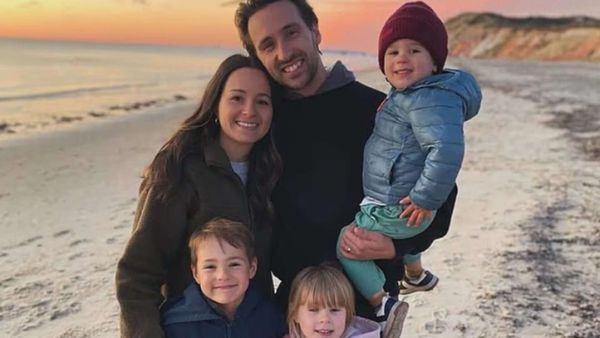
However, the outbreak leaves a terrible legacy. One of my colleages, Rafqa Touma, has been speaking to one Sydney family torn apart by the virus.
You can read her excellent report here:
Updated
India’s coronavirus death toll edged closer to 500,000 after another 180 deaths were recorded on Monday.
The toll is now 448,997, with more than 33 million cases.
However, the number of cases and deaths are far lower than the peaks of May and June.
India reports 20,799 new Covid-19 cases and 180 deaths in 24 hours https://t.co/0Wpc35HDkz pic.twitter.com/VPXKi4a46y
— The Times Of India (@timesofindia) October 4, 2021
New Zealand to phase out elimination strategy
New Zealand is going to phase out its controversial policy of trying to eliminate the virus, prime minister Jacinda Ardern said on Monday.
The country has become the poster child for successful suppression of Covid-19 but even it has struggled to contain the Delta variant. Despite low numbers of cases by most international standards – the outbreak totals 1,314 – its largest city Auckland has been in lockdown for seven weeks.
Ardern said the arrival of vaccines meant it could transition towards a new policy in three stages.

“Vaccines will mean that in the future we can do things differently … but even then, our strategy remains: that while cases will continue, we want to control the virus, stamp out cases, and prevent hospitalisations, but with vaccines we have more options on how we do that,” Ardern said.
Full story here:
England drops traffic light system for travel
A major change in the rules for international travel in and out of England came into force at 4am BST on Monday morning when the traffic-light system was replaced with a single red list of countries subject to the toughest restrictions.
The previous green and amber countries have become the “rest of the world” or “non-red list”. There are also changes to the testing requirements when returning from a non-red-list country, if fully vaccinated.
From 4am, there was no longer a requirement for fully vaccinated travellers to take a test in the three days before their return from a non-red-list country.
The new rules announced apply to England. The devolved administrations of Scotalnd, Wales and Northern Ireland are in charge of their own travel rules, but they have typically been mirroring Westminster’s approach.
The full story is here:
Morning/afternoon/good evening wherever you are. Thanks for joining me for live updates on the coronavirus pandelic.
The main developments in the past few hours are:
- New rules for international travel in and out of England have come into force on Monday morning. The much-criticised traffic light system has been be replaced with a single red list of countries and tresting requirements for travel will be overhauled.
-
New Zealand’s strategy of aiming to eliminate Covid-19 will be phased out. The policy has been controversial but prime minister Jacinda Ardern said on Monday that vaccines meant the country could transition away from it.
- Australia’s Delta outbreak appears to have levelled off, with more than half the country in extended lockdowns and vaccination rates starting to approach national targets, ministers said on Monday.
- India death toll from Covid edged closer to 500,000 after another 180 deaths were recorded on Monday. The toll is now 448,997, with more than 33 million cases.
- Doctors in the UK have urged all secondary school pupils to get vaccinated following the death last week of 15-year-old Jorja Halliday.
- Scientists in the UK have warned that the country may still have worse to come during the pandemic, as winter approaches. They fear that more people will begin socialising inside as the weather gets colder, which increases the chance of transmitting the virus, as workers also return to offices.
.png?w=600)