We’ve launched a new blog at the link below – head there for the latest:
I recently wrote about the experience of being away from my husband for five months because of the pandemic.
Now, we’d like to hear from readers who have been separated from their loved ones.
If you’d like to share your story, email me with a few paragraphs explaining what happened (and, if you’re writing about a romantic partner, how you met) on helen.sullivan@theguardian.com.
Here is my own tale:
Updated
Hi, Helen Sullivan taking over now from my colleague Lucy Campbell.
Get in touch on Twitter @helenrsullivan or via email: helen.sullivan@theguardaian.com.
Peru extends lockdowns following surge in coronavirus cases
The Peruvian president Martín Vizcarra has banned family gatherings and extended lockdowns to five more regions of the country amid a fresh surge in cases of coronavirus.
Fifteen of Peru’s 25 regions were already covered by rolling lockdowns.
Vizcarra announced the return of a blanket Sunday curfew as figures revealed a 75% rise in infections among children and adolescents.
“Now those who are infecting us are the people we know, the relatives who come to visit us, the friends who get together to kick a ball around or enjoy a barbecue,” Vizcarra said in a speech broadcast from the Government Palace in Lima.
It is a problem that together we have to solve.
In recent days, the Andean country has registered a daily average of 7,000 confirmed infections and 200 deaths, according to official data.
There have been 489,680 confirmed cases while the dead totalled 21,501 by Tuesday, the ministry of health said.
The first case of Covid-19 appeared in Peru on 6 March and a week later the government imposed a strict quarantine, halting almost all productive activity in the world’s second-largest copper miner, whose economy is expected to contract this year by 12%, according to central bank projections.
In July, in a bid to stave off the worst economic performance in a century, the government began a staged reopening which included resumption of mining, industry and commerce, including restaurants and shops.
Brazil has registered 55,155 new confirmed cases of coronavirus and 1,175 deaths, the health ministry said. The country now has 3,164,785 confirmed cases and 104,201 deaths.
Summary
As Australia wakes up, here are some of the key developments from the last few hours:
- Italy has ordered travellers arriving from Croatia, Greece, Malta and Spain to be tested for Covid-19 on and added Colombia to a list of countries under a complete travel ban amid growing concern over new infections. With the annual summer holiday reaching its peak, health services are bracing for a return of travellers from destinations where social distancing, face masks and other protective measures appear to have been widely ignored.
- France reported 2,524 new coronavirus infections over the past 24 hours, a new post-lockdown daily record. Despite the rise in infections, the number of people in hospital with Covid-19 continued to fall and was down by 121 to 4,891, the first time it fell below 5,000 since 19 March.
- Turkey is to delay the reopening of schools by almost a month. Students will return to classrooms in Turkey in late September, nearly a month after the start of the new academic year, the government announced, as daily coronavirus cases remain above 1,000. It will be a gradual transition, starting with online learning before transitioning to in-person education.
- Chile will lift one of the world’s longest lockdowns on Monday. The capital Santiago’s central business district and adjoining Central Station will move to a “transitional” stage under a “Step by Step” reopening. The mayor said citizens should remain indoors whenever possible, wear masks in public and wash their hands. People may leave their homes on weekdays without the previously required police permissions, and meet in small groups, while businesses can gradually reopen.
Italy has ordered travellers arriving from Croatia, Greece, Malta and Spain to be tested for Covid-19 on and added Colombia to a list of countries under a complete travel ban amid growing concern over new infections.
Once the world’s worst-affected country, Italy has managed to bring down and contain the number of infections in recent weeks but officials are worried by a gradual resurgence.
On Wednesday, authorities recorded 481 new cases and 10 deaths, twice the levels regularly seen in June when tough lockdown measures imposed from March were being eased.
With the annual summer holiday reaching its peak, health services are bracing for a return of travellers from destinations where social distancing, face masks and other protective measures appear to have been widely ignored.
Health minister Roberto Speranza announced late on Wednesday he had signed an order requiring antibody or swab tests to be performed on all arrivals from the four countries and said there would be a ban on arrivals and transit passengers from Colombia.
“We must continue on a path of caution to defend the results we have obtained over the past months through sacrifices by everyone,” he said on Facebook.
Greece reported 262 new cases of Covid-19 on Wednesday, its highest daily tally since the start of the outbreak, while Spain reported almost 1,700 new cases.
Malta, which had brought cases down to zero for a few days, last week reintroduced some controls after a jump.
Earlier this month, the Italian government extended until September a number of measures, including telling people to wear masks in closed public spaces and maintain distance of at least 1 metre while also recommending frequent hand washing.

France reported 2,524 new coronavirus infections over the past 24 hours, a new post-lockdown daily record, but there was no strain on hospitals as the virus circulates mainly among younger people, the health minister said.
The country’s cumulative total of cases now stands at 206,696 and the seven-day moving average of new infections - which smoothes out daily data-reporting irregularities - increased to 1,810, the highest level since 24 April, when the epidemic was in full swing and France under strict lockdown.
Despite the rise in infections, the number of people in hospital with Covid-19 continued to fall and was down by 121 to 4,891, the first time it fell below 5,000 since 19 March. It had set a high of 32,292 on 14 April.
The number of people in intensive care with coronavirus also continued its slide, down by 12 to 379.
Health minister Olivier Veran said that the number of infections that lead to serious complications was now much lower than in February-March.
“There are several explanations, notably the fact that patients diagnosed with Covid now are younger, 20 to 40, and less fragile, and because older people continue to protect themselves well,” Veran said on France 2 television.
He said the government would do all it could to avoid a new lockdown, and that schools are scheduled to open normally in September, albeit with the virus protection procedures.
The government will also gradually ramp up police checks to ensure people wear face masks where it is mandatory and respect social distancing.
The seven-day moving average of daily new infections - which topped at 4,537 on 1 April - has now been above 1,000 for two weeks, with the infection rate increasing as millions of French people travel and social distancing rules are not always respected in busy areas.
The daily death toll increased by 18 to 30,371 on Wednesday, compared to 14 on Tuesday and a seven-day average of nine.
The US Centers for Disease Control and Prevention (CDC) has reported 5,119,711 cases of coronavirus. That is an increase of 55,540 cases from its previous count. The CDC said the number of deaths in the United States had risen by 1,244 to 163,651.
The CDC reported its tally of Covid-19 as of 4pm ET on 11 August versus its previous report a day earlier.
The CDC figures do not necessarily reflect cases reported by individual states.
Turkish schools will start to reopen on 21 September in a gradual transition to in-person education, the country’s education minister Ziya Selcuk said on Wednesday, delaying the reopening after a rise in coronavirus cases.
In a news conference after a meeting of Turkey’s science board to discuss measures to combat the spread of coronavirus, Selcuk said that distance learning will begin on 31 August, when schools had previously been set to open.
The science board recommended that education in schools should not begin for at least one more month, health minister Fahrettin Koca said.
In a written statement following the meeting, Koca said that face-to-face education will begin gradually and that online education will be conducted if necessary.
Ankara announced the initial closure of schools in mid-March after the emergence of the first coronavirus cases in the country.
Chile will lift one of the world’s longest lockdowns on Monday, moving the capital Santiago’s central business district and adjoining Central Station to a “transitional” stage under a “Step by Step” reopening.
“This is a very important announcement for us and one that gives us great satisfaction,” the health minister Enrique Paris told a press conference in Santiago on Wednesday.
Chile has faced one of Latin America’s fiercest coronavirus outbreaks, at one stage ranking only behind Qatar globally for cases per head of the population, but case and fatality rates have declined steadily over the last two months.

Santiago mayor, Felipe Alessandri, said the reopening did not give a “carte blanche” to citizens, who should remain indoors whenever possible, wear masks in public and wash their hands.
People may leave their homes on weekdays without the previously required police permissions, and meet in small groups, while businesses can gradually reopen.
The centre of Santiago has been under strict lockdown for 143 days since 26 March, shortly after the country’s first coronavirus case was confirmed. Central Station followed a month later.
The government started to reopen the capital city two weeks ago by lifting the lockdown in suburbs to the east and south.
It has been more cautious about reopening Santiago’s densely populated center, particularly the Alameda central thoroughfare and Plaza Italia, where massive and often violent social protests started in October over inequality.
Smaller, scattered protests over deepening poverty and inequality have sprung up despite the lockdown.
Summary
Here’s a quick look back at the latest coronavirus-related stories from the past few hours:
- Coronavirus pushing much of the world into record financial slumps. The pandemic has pushed most of the world’s major economies into unprecedented contractions in the second quarter, except for China which escaped a recession.
- WHO concerned about coronavirus in Lebanon as it seeks $76m aid after Beirut blast. The World Health Organization has appealed for $76m in aid for Lebanon after last week’s massive explosion in Beirut destroyed or damaged hospitals, clinics and medical supplies.
- Russia says first batch of Sputnik V vaccine ready in two weeks. Russia said on Wednesday the first batch of its Sputnik V Covid-19 vaccine would be ready within two weeks and rejected safety concerns over its rapid approval as ‘groundless’.
-
UK’s Covid-19 official death toll lowered by over 5,000 after methodology change. Britain’s official death toll from the Covid-19 pandemic has been lowered by to 41,329 as the government adopted a new way of counting fatalities, after concerns were raised that the old method overstated them.
- Greece posts its highest daily number of virus cases. Greece has registered 262 new Covid-19 infections, the highest figure since the pandemic began and part of a steadily rising trend this month.
- Germany: government says people must keep guard up as new infections hit three-month high. Germany’s government has urged citizens to keep their guard up and stick to public health guidelines, as new Covid-19 infections hit a three-month high and schools reopened in the country’s most populous state.
- ‘Archbishop’ of Florida church selling bleach ‘miracle cure’ arrested with son. The self-styled “archbishop” of a purported church in Florida that sells industrial bleach as a “miracle cure” for Covid-19 has been arrested with his son in Colombia and faces extradition to the US.
That’s all from me for today, I’ll be handing over to my colleague Lucy Campbell for the next few hours.
Spain reports nearly 1,700 new cases
Coronavirus cases in Spain jumped by nearly 1,700 on Wednesday, part of a surge that has prompted the construction of a military field hospital in the hard-hit Aragon region and led authorities in Galicia to practically ban smoking in public places.
Health ministry data showed 1,690 new coronavirus cases were diagnosed in the 24 hours to Wednesday, up from the 1,418 reported on Tuesday and bringing the cumulative total to 329,784.
The new daily number excluded Madrid, which did not provide fresh data due to technical difficulties.
Since lifting its strict lockdown around six weeks ago Spain has struggled to keep a lid on new infections, with average daily cases rising from less than 150 in June to more than 1,500 in the first 12 days of August.
In scenes reminiscent of the epidemic’s March-April peak, TV footage showed air force personnel setting up dark green tents to serve as a field hospital in Zaragoza, Aragon’s regional capital in northeastern Spain.

Set to open on Friday, the facility attached to Zaragoza’s University Clinic hospital will be used as a triage centre and temporary ward, the air force said in a statement.
With 571 cases per 100,000 inhabitants, Aragon has the highest prevalence of the virus in Spain.
Navarre, with the second-highest rate, has just 159 cases per 100,000 people.
Despite having some of the lowest levels of the virus, northwestern Galicia issued a blanket ban on smoking on the street and on restaurant terraces when social-distancing cannot be guaranteed.
Under Spain’s decentralised government, each region is largely in charge of its own response to the virus, leading to a patchwork of different restrictions and preventative measures.
Wealthy northeastern Catalonia is set to expand a mass-testing program in the coming days to include several neighbourhoods of its capital, Barcelona.
Updated
The self-styled “archbishop” of a purported church in Florida that sells industrial bleach as a “miracle cure” for Covid-19 has been arrested with his son in Colombia and faces extradition to the US.
Video footage posted to the Twitter feed of Colombia’s top prosecutor showed Mark Grenon and his son Joseph Grenon, dressed in blue jump suits and masks, being led away by armed police.
The prosecutor’s office said the pair had been taken into custody on suspicion of selling a “miracle solution” that had caused the deaths of seven American citizens.
The Grenons’ apprehension comes a month after the “archbishop” of the Genesis II “church”, as well as three of his sons, were charged by federal authorities in Florida with dealing in a substance that has not been approved for medical use and could be life-threatening.
The substance, chlorine dioxide, is a powerful bleach used in textile manufacturing.
The Grenons market it as “miracle mineral solution” or MMS which they say when drunk as a dilution can cure almost all illnesses including Covid, cancer, HIV/Aids as well as the condition autism.
Greece posts its highest daily number of virus cases
Greece has registered 262 new Covid-19 infections, the highest figure since the pandemic began and part of a steadily rising trend this month.
The public health organisation also said two more people had died, bringing the total virus death toll to 216.
The number of patients under intensive care has nearly doubled, with 24 reported on Wednesday up from 13 last week.
Authorities have blamed the spike in infections on the flouting of social distancing rules in restaurants, bars and public gatherings.
Health minister Vassilis Kikilias said earlier the average age of those infected in August had dropped to 36 years old.
“It can happen even if you’re young and think you’re invulnerable,” Kikilias tweeted.
The Greek government on Monday announced a night curfew for restaurants and bars in some of its top tourist destinations.
Eateries and bars are closed from midnight to 7am in a dozen parts of the country, including the popular islands of Mykonos, Santorini, Corfu, Rhodes and Crete.
The cities of Thessaloniki, Larissa, Volos and Katerini are also affected, as is the Halkidiki peninsula which is popular with Balkan visitors.
In addition, all passengers on flights from Belgium, the Czech Republic, the Netherlands, Spain and Sweden arriving from 17 August must provide a negative Covid-19 result obtained up to 72 hours before entry, as must all land border arrivals.
The civil protection agency last week made masks compulsory in all indoor public areas.
The government has ruled out a general lockdown after gradually reopening the economy in May and starting to accept foreign arrivals in June to salvage part of the tourism season which is vital to the economy.
Only 10% of cases in Greece can be traced to foreign arrivals.
Venezuelan oil minister Tareck El Aissami said he has recovered from Covid-19, a month after he tested positive for the virus.
El Aissami, who is also the OPEC nation’s economic vice president, said on Twitter he had received a negative result on a rapid test for the virus.
“Thanks to President Nicolas Maduro and [first lady] Cilia Flores for all their support and strong prayers,” El Aissami wrote. “We have overcome.”
Venezuela, whose oil industry and economy have unraveled during Maduro’s six-year tenure, has reported 27,938 cases of the coronavirus and 238 deaths.
Besides El Aissami, the most prominent member of the ruling socialist party who has tested positive is Diosdado Cabello, who presides over the government-friendly National Constituent Assembly and is widely recognised as Maduro’s second-in-command.
Cabello has rarely been seen in public since testing positive in early July, though last week state-funded media outlets published images of him standing and waving outside a health clinic.
UK's Covid-19 official death toll lowered by over 5,000 after methodology change
Britain’s official death toll from the Covid-19 pandemic has been lowered by over 5,000 as the government adopted a new way of counting fatalities, after concerns were raised that the old method overstated them.
The UK government and the devolved regional administrations agreed to publish the number of deaths that occurred within 28 days of a positive, lab-confirmed Covid-19 test result on a daily basis, the Department of Health said.
Previously, there was no cut-off time for deaths after a positive test.
Under the new method, Britain has an official Covid-19 death toll of 41,329 rather than the 46,706 recorded under the old methodology.
South Korea has opened a high-tech new front in the battle against coronavirus, fortifying bus shelters with temperature-checking doors and ultraviolet disinfection lamps.
Ten advanced facilities have been installed in a northeastern district of Seoul, offering protection from monsoon rains, summer heat, and Covid-19.

To enter, passengers must stand in front of an automated thermal-imaging camera, and the door will only slide open if their temperature is below 37.5 degrees.
A separate camera is installed lower down to test children.
Inside the glass-walled booths - which cost about 100m won ($84,000) each - the air-conditioning systems have ultraviolet lamps installed to kill viruses at the same time as cooling the air.
A dispenser provides hand sanitiser, and users are advised to wear face masks at all times, while keeping at least one metre apart from others.
“We have installed all the available anti-coronavirus measures we can think of into this booth,” Kim Hwang-yun, a district official in charge of the Smart Shelter project, told AFP.
Since they were installed last week each booth has been used by about 300 to 400 people a day, Kim said.
South Korea endured one of the worst early coronavirus outbreaks outside China but brought it broadly under control with an extensive “trace, test and treat” programme while never imposing a compulsory lockdown.
English authorities have reassured school pupils they would be graded fairly for exams missed because of the coronavirus, after the Scottish government was forced into a major U-turn on the issue.
As in many countries, British pupils were unable to sit exams as planned in April, May and June due to the Covid-19 lockdown, and instead will receive a moderated grade based on an assessment by their school or teacher.
But the publication of key results in Scotland last week caused uproar and demands for its education minister John Swinney to resign, amid complaints that the moderation process had caused the downgrading of grades for the poorest pupils.
Swinney on Tuesday bowed to pressure and announced that more than 70,000 Scottish pupils would have their results restored to their teachers’ original assessments.
In a bid to head off a similar row in England, which has a different school system, education minister Gavin Williamson announced a new policy.
Pupils aged 18 receiving A-Level results on Thursday will be able to accept their result, challenge it based on the preparatory mock exam results or sit new tests in the autumn.
“This triple lock system will help provide reassurance to students and ensure they are able to progress with the next stage of their lives,” he said.
Opposition Labour leader Keir Starmer called the idea “deeply flawed”. He said:
Talking to teachers today, it’s obvious that they expect... young people will do better in the real exam than they’d done in the mock.
It’s not going to work, it’s not going to wash.
Students in Scotland had complained that the moderation process gave unfair weighting to the historical performance of the school and local area, disproportionately affecting poor students.
Pass rates for pupils in the most deprived areas were reduced by 15.2%, compared with 6.9% in more affluent areas.
The row rocked the devolved government of Scottish first minister Nicola Sturgeon, who has otherwise been riding high in the polls, including over her handling of coronavirus.
The Pakistan Cricket Board (PCB) said all-rounder Mohammad Hafeez will self-isolate until he tests negative for Covid-19 after breaching a bio-security protocol by posing for a photograph with a member of the public in England.
The photo, posted on Twitter by the 39-year-old all-rounder, was taken on a golf course next to the hotel where Pakistan are staying, which is part of a bio-secure bubble.
Met an inspirational Young lady today morning at Golf course. She is 90+ & & living her life healthy & happily.Good healthy routine 😍👍🏼 pic.twitter.com/3tsWSkXl1E
— Mohammad Hafeez (@MHafeez22) August 12, 2020
Hafeez is not part of Pakistan’s 20-man test squad playing in England but is on the tour for the three-match Twenty20 international series starting 28 August.
“As it was evident from the photograph that Hafeez had breached the two-metre social distancing protocol...the team management has decided to isolate him until he returns a negative Covid-19 test,” PCB said in a statement.
The team management believes it was an inadvertent mistake, but a good reminder for everyone on the importance of following the bio-secure protocols, which have been designed for the health and safety of everyone involved in the series.
The PCB said Hafeez was tested for the virus on Wednesday afternoon with the results expected on Thursday.
Earlier in June, Hafeez was among the 10 Pakistan players who tested positive for the coronavirus ahead of their England tour but he returned a negative result a day later following a subsequent examination at a private laboratory in Lahore.
Coronavirus pushing much of the world into record slumps
The coronavirus pandemic has pushed most of the world’s major economies into unprecedented contractions in the second quarter, except for China which escaped a recession.
Here are the second quarter changes in gross domestic product (GDP) compared to the previous quarter for the world’s top economies, as reported by AFP.
Unless stated otherwise, the figures are from the national statistics institutes.
Germany
Europe’s top economy was hit less hard by the coronavirus than its neighbours, but still saw its GDP fall by 10.1% in the second quarter.
As GDP had already declined by 2% in the first quarter, Germany’s economy met the definition of a recession: two consecutive quarters of contracting GDP.
Germany’s previous record for a quarterly GDP drop: 4.7% in the first quarter of 2009.
France
The eurozone’s number two economy was in a longer and stricter lockdown than its eastern neighbour, and second quarter GDP fell more steeply, by 13.8%, after a drop of 5.9% in the previous three months.
Previously the worst quarterly GDP growth in France happened in 1968 because of a general strike in May of that year.
Italy
Italy’s growth was impacted very early on by the coronavirus which hit its richest region, Lombardy, particularly hard.
Italian GDP fell by 5.4% in the first quarter and then by 12.4% in the second, pushing the country into recession.
Spain
After a 5.2% drop in the first quarter, Spain’s economy contracted a further 18.5% in the second, notably because of a 60% drop in tourism income and a fall by one third in exports.
Eurozone
The eurozone’s overall GDP plunged 12.1% in the three months to June, after 3.6% in the first quarter, making the second quarter downturn “by far” the worst since statistics agency Eurostat started compiling growth data for the area in 1995.
United Kingdom
The UK suffered the worst recession in Europe in the first two quarters of the year, also recording the highest number of coronavirus deaths in Europe.
GDP fell 20.4% in the second quarter after a 2.2% drop in the first.
United States
The United States, the world’s top economy, suffered a 9.5% slump in the second quarter following a 1.3% drop in the first, according to figures published by the OECD.
The US government publishes annualised figures (-32.9% in the second quarter), a method that is not comparable with most other countries.
China
China, the world’s second-largest economy, may have been where Covid-19 originated, but thanks to strict lockdown measures it was able to largely halt the spread of the virus and reopen factories, thus avoiding a recession.
In the second quarter its economy rebounded by 11.5%, having fallen by 10% in the first quarter. Still, growth for this year will be much below what China has become accustomed to for decades.
Japan
Japan announced in mid-May it was already in recession when first quarter GDP slid by 0.6% after a 1.9% drop in the final quarter of 2019. The world’s number three economy has yet to publish second quarter GDP figures.
A federal judge in Missouri said a group of hair salons and restaurants can sue their insurance carrier for business interruption losses caused by the coronavirus pandemic, which they say caused a “direct physical loss” to their premises.
The decision against Cincinnati Insurance by US District Judge Stephen Bough in Kansas City appears to be the first victory for policyholders suing insurers for improperly denying claims related to shutdowns caused by Covid-19.
Insurers had won similar earlier cases in a Michigan state court and a Washington DC, court, successfully arguing that coverage was not warranted because the virus travels through the air and does not cause physical damage.
While not ruling on the merits, Bough rejected Cincinnati Insurance’s bid to dismiss the Missouri case.
He said the presence of Covid-19 was not a “benign condition,” and the plaintiffs plausibly alleged that particles were a “physical substance” that attached to and damaged their property, rendering them unsafe and unusable.
Business owners have filed hundreds of lawsuits claiming that their business interruption insurance, which typically offers coverage for losses from calamities such as fires or floods, should also cover a pandemic.
Insurers have countered that applying such coverage to Covid-19 losses would result in crippling payouts and deplete their capital.
Analysts have said the industry’s coronavirus-related losses have so far been modest.
Russia says first batch of Sputnik V vaccine ready in two weeks
Russia said on Wednesday the first batch of its Sputnik V Covid-19 vaccine would be ready within two weeks and rejected safety concerns over its rapid approval as ‘groundless’.
The health minister, Mikhail Murashko, said the vaccine, developed by the Gamaleya Institute, would be administered on a voluntary basis.
The vaccine has not yet completed its final trials.
Only about 10% of clinical trials are successful and some scientists fear Moscow may be putting national prestige before safety.
“It seems our foreign colleagues are sensing the specific competitive advantages of the Russian drug and are trying to express opinions that in our opinion are completely groundless,” Murashko said, the day after president Vladimir Putin announced it had won regulatory approval.
Scientists from Germany, the United States and Britain have queried the wisdom of approving the vaccine before testing is complete.
Updated
US house speaker Nancy Pelosi has said Democrats and the Trump administration remain far apart regarding any agreement over further economic aid amid the coronavirus pandemic, adding that Republicans also seemed divided amongst themselves over relief efforts.
“We’re miles apart,” the US House of Representatives’ top Democrat told MSNBC, citing education funding in particular, among other needs.
“It’s a chasm ... but as a practical matter, they’re going to have to come to the table.”

Updated
A total of 1,009 new cases of Covid-19 have been confirmed in the United Kingdom, taking the country’s total to 313,798, government data showed.
The daily figure was down from 1,148 on Tuesday.
It was the third time the daily number of cases has surpassed 1,000 this month. Previously, it had last topped 1,000 in June.
Switzerland is extending its ban on gatherings of more than 1,000 by one month until 1 October, with Covid-19 cases back on the rise.
The Swiss government “intends to ensure that the epidemiological situation in Switzerland does not deteriorate”, it said in a statement.
“This careful reopening step takes into account the needs of society and the economic interests of sports clubs and cultural venues.”
Unlike some of its European neighbours, Switzerland stopped short of imposing strict confinement when it introduced measures in mid-March aimed at stopping the spread of the new coronavirus.
It began gradually easing its restrictions in stages, from 27 April.
The ban on events for more than 1,000 people was due to expire on 31 August but has been extended for another month, with the government spelling out the conditions in which they could return - measures which will have implications for the country’s ice hockey and football championships.
“Strict protective measures will apply and the events will have to be authorised by the cantons, taking into account the local epidemiological situation and their contact tracing capacity.
“These should apply across the board, such as for sporting, cultural and religious events.”
Some 37,079 people have tested positive for Covid-19 in Switzerland, a country of 8.5 million people, while 1,713 have lost their lives.
Daily infection rates spiked at over 1,000 in March but plunged to a few dozen between mid-May and mid-June.
They have since risen, with 273 new cases announced on Wednesday - a level not seen since mid-April.
While face masks have been mandatory on trains, trams and buses since 6 July, the government decided they must be worn on all flights from Saturday.
“The measure concerns all scheduled and charter flights taking off from or landing in Switzerland, regardless of airline,” the government said.
Announcing the new changes at a press conference in the capital Bern, president Simonetta Sommaruga said: “We must face this situation together. The virus is still here.”
WHO concerned about coronavirus in Lebanon, as it seeks $76m aid after Beirut blast
The World Health Organization (WHO) said has appealed for $76m in aid for Lebanon after last week’s massive explosion in Beirut destroyed or damaged hospitals, clinics and medical supplies.
Lebanon was already struggling with a financial crisis and a rise in the number of new coronavirus cases before the 4 August explosion in the capital’s port area that left at least 171 dead and injured some 6,000.
The blast put three hospitals out of operation and has left three others working at partial capacity, reducing the number of beds in public and private hospitals by 500-600, WHO officials said.
Rana Hajjeh, WHO’s regional programme director, said:
A week after the blast, the World Health Organization is still concerned about the health and wellbeing of people who were injured, lost loved ones, or became homeless, and it’s expected (that) recovery from the psychological pain from the blast will last much longer.
In particular, we are concerned about the return of Covid-19 in Lebanon. We have launched an appeal for $76m, and ask the international community to support the Lebanese people and show solidarity with them in every way possible.
The loss of hospital beds had “clear implications for the management of Covid as well as other medical conditions”, said Richard Brennan, WHO’s regional emergency director.
Initial results from an assessment of 55 primary healthcare clinics and centres across Beirut showed just over half are not functioning, with the remainder functioning at varying levels, Brennan said.
The WHO has so far brought in 25 tonnes of personal protective equipment (PPE), distributed trauma and surgical supplies to 2,000 patients at 10 hospitals, and is working with at least 11 emergency medical teams that have arrived from overseas, officials said.
Updated
Three of 10 Americans who lost work during the coronavirus pandemic said they may have trouble paying for food or housing after a $600-per-week enhanced unemployment payment expired last month, according to a Reuters/Ipsos poll.
The poll found that Americans divide blame for its expiration - and the weeks-long standoff in Congress over how to replace it - pretty evenly between Democrats and Republicans.
The $600 weekly payments, approved as part of a $3tn package that Congress approved early in the crisis, became a lifeline for the tens of millions of Americans thrown out of work in a pandemic that has prompted widespread business closures.
It expired on 31 July, and weeks of talks between top congressional Democrats and the White House failed to produce agreement on a new round of funding.
Republican president Donald Trump on Saturday signed a memorandum aimed at restoring half that federal payment, though economists warned that even if the maneuver overcomes possible legal challenges, it will likely have little impact.
Three out of 10 people surveyed by Reuters/Ipsos reported that they will have “a very difficult time meeting basic needs,” which includes paying for rent or buying groceries.
Half said they are under some stress “but we will be able to meet our basic needs.”
Twenty-eight percent of American adults said congressional Democrats should receive most of the blame, while 15% said they blame congressional Republicans and another 14% said Trump was most at fault.
Thirty-two percent said all share the blame equally.
The Reuters/Ipsos poll gathered responses from 1,215 US adults, including 139 who said they had received the weekly coronavirus unemployment benefit.
The poll has a credibility interval, a measure of precision, of about 3 percentage points.
Uzbekistan will lift its second lockdown starting from Saturday, the government said, promising to restore most services in the central Asian country within days in order to revive the economy.
The government reintroduced a lockdown last month, after lifting restrictions in June led to a surge in new Covid-19 cases, leaving hospitals struggling to cope.
On Saturday, people will be allowed to drive their cars again and hold ceremonies such as weddings for up to 30 guests at their homes.
Businesses such as hotels, barbershops and outdoor cafes will also be able to reopen and air and rail traffic will resume, president Shavkat Mirziyoyev’s office said in a statement.
On Monday the former Soviet republic plans to restart bus services and on 20 August large shops, markets and gyms will be able to reopen.
Uzbekistan, a country of 34 million, has reported 32,215 Covid-19 cases and 208 deaths from the disease.
It has yet to announce its plans with regards to schools which usually open on 2 September.
However, the government has said university and college entrance exams will be held at stadiums across the country.
Vaping may be associated with a five to seven times increased risk of Covid-19 among US teenagers and young adults, a study published on Tuesday suggests.
Researchers at the Stanford University School of Medicine analysed nationally representative survey data collected in May from 4,351 participants aged 13-24 years.
The findings were published in the Journal of Adolescent Health.
“Young people may believe their age protects them from contracting the virus or that they will not experience symptoms of Covid-19, but the data show this isn’t true among those who vape,” study leader Shivani Mathur Gaiha said.
Participants were asked if they had ever used vaping devices or combustible cigarettes, whether they had vaped or smoked in the past 30 days, and if they had experienced Covid-19 symptoms, been tested for Covid-19 or been diagnosed with the infectious disease.
Participants who had used both cigarettes and e-cigarettes in the previous 30 days were 4.7 times more likely to experience Covid-19 symptoms compared with those who never smoked or vaped.
Among people tested for Covid-19, those who used just e-cigarettes were five times more likely to get a positive Covid-19 test result.
Those who had ever used both e-cigarettes and cigarettes were seven times more likely to be diagnosed with Covid-19, the study found.
The study cannot prove that vaping causes Covid-19. The researchers note, however, that vaping involves the repeated touching of hands to the mouth and face, which is associated with the spread of Covid-19.
Further, exposure to nicotine and other chemicals in e-cigarettes and combustible cigarettes causes lung damage.
The researchers hope their findings will prompt the US Food and Drug Administration to effectively regulate e-cigarettes during the Covid-19 pandemic.
Sicilian holidaymakers returning from Greece, Spain and Malta will be tested for coronavirus, regional authorities said on Wednesday.
On Tuesday Sicily registered its highest number of new Covid-19 cases, 89, followed by Lombardy (68) and Veneto (65).
“We have serious concerns about what is happening in Malta, Greece and Spain,” said Sicily’s president Nello Musumeci.
Sicilians who return from these three countries will be placed under a ‘voluntary quarantine’ and at the end of which they will be tested for coronavirus. It is a sacrifice that we necessarily have to ask.
Romanian prime minister Ludovic Orban has pledged schools will re-open in September under strict hygiene rules, as the country continues to fight a spike in the number of coronavirus cases.
“Our decision is clear, schools will start on 14 September”, Orban said during a speech in parliament.
He mentioned that students, teachers and other school staff will have to wear masks and that disinfectants should be available at all times.
Romania closed schools, kindergartens and universities in March to prevent the spread of Covid-19 and subsequently decided to keep them shut for the rest of the academic year.
Since then, Romania has faced a jump in the number of infections, which on Wednesday reached a new daily record with 1,415 cases reported in the last 24 hours.
So far a total of 65,177 people have been infected in Romania and 2,807 have died, according to government data.
Orban clarified that local authorities could decide to keep some schools shut if there were more then three new infections per 1,000 inhabitants in a particular area.
In that scenario students would then have to attend lessons online from home.
However, Orban himself admitted that hundreds of thousands of Romanian children do not have access to a computer and 20% of schools don’t have an internet connection.
The government has promised to buy 250,000 tablets for students who can’t afford one and need it for online lessons, but according to NGOs several times that number would be needed in order to match demand.
Meanwhile, the opposition Social Democrats (PSD) says they plan to bring a vote of no-confidence in Orban’s government next week over what it says are failures in the response to the pandemic.
Germany: government says people must keep guard up as new infections hit three-month high
Germany’s government has urged citizens to keep their guard up and stick to public health guidelines, as new Covid-19 infections hit a three-month high and schools reopened in the country’s most populous state.
Germany’s response so far has widely been seen as successful in slowing the spread of the virus efficiently and quickly, but the country’s disease control authority on Wednesday reported 1,226 new infections.
That was the highest number since early May, although the figure has topped 1,000 on several days recently.
Health minister Jens Spahn said smaller and mid-sized outbreaks have occurred in almost all regions, largely driven by travellers returning from abroad and people partying or having family gatherings.
“This is worrying, without doubt,” Spahn told Deutschlandfunk radio. “And it can naturally lead to a new dynamic, if we don’t all now exercise caution.”
In the early days of the pandemic the average age of people infected was 50; it is now 34.
Germany has recorded 218,519 confirmed Covid-19 cases and 9,207 deaths, according to the Robert Koch Institute, the national disease control center.
At the height of the pandemic in early April, there were about 6,000 new cases each day.
Many of the current new infections were people who contracted the virus during visits to the western Balkans, Turkey, Bulgaria, Romania, Poland and Spain, the Robert Koch Institute said.
The uptick comes as students are returning to school across the country, adding to concerns.
Some 2.5 million children were returning to school on Wednesday in North Rhine-Westphalia, Germany’s most populous state, which has the strictest rules in the country including that students above elementary school age must wear masks at all times, including in class.

The eastern state of Mecklenburg-Western Pomerania, which has seen the country’s lowest number of coronavirus infections, took a different approach when it became the first state to send children back to school on 3 August, with no mask regulations or social distancing rules.
It was forced to temporarily close two schools four days later after a student from one and teacher from the other tested positive for Covid-19.
In Brandenburg, where school resumed Monday, a child and a worker at an after-school programme tested positive on Wednesday and authorities were awaiting test results for 68 people who had been in contact with them.
And in Schleswig-Holstein in the country’s north, where students also went back to class on Monday, a primary school was almost immediately shut down after a teacher tested positive, though it was expected to soon reopen.
Two grades at a second school were also sent home on Wednesday as a precaution after a student’s sibling tested positive.
Updated
Tourism giant TUI and the German government have agreed to a second massive aid package, in a sign of how the effects of the coronavirus pandemic are still battering the industry.
The Hanover-based company agreed to a €1.2bn ($1.4bn) package with German public lender KfW, intended to bolster the firm through its winter 2020/21 season.
The new funds add to the €1.8bn government loan that the company agreed to in April.
The company previously announced that it would cut 8,000 jobs worldwide to reduce costs.
TUI’s hotels, flights and cruise ships were empty at the height of worldwide lockdowns and have struggled to reopen as major destinations such as Spain have seen virus infections spike and been subjected to further quarantines.
CEO Fritz Joussen said the group had already introduced “massive cost reductions in good time and implemented them quickly and consistently”.
“However, no one knows at present when a vaccine or medication will be available and what effects the pandemic will have in individual markets in the coming months,” Joussen added.
“Therefore it is right and important to take further precautions together with the German government.”
The grandmother of Brazil’s first lady, Michelle Bolsonaro, has reportedly died of Covid-19.
Maria Aparecida Firmo Ferreira, 81, died in a hospital in the capital Brasília in the early hours of Wednesday, according to Brazilian media.
“We’re all very shaken,” the first lady’s aunt told the news website Metrópoles.
Ferreira was admitted to hospital at the start of July after collapsing in the street on the outskirts of the capital.
Brazil’s president, Jair Bolsonaro, has drawn international condemnation for his chaotic handling of the epidemic, which has now killed more than 103,000 Brazilians, as well as his wife’s grandmother.
Despite the huge number of deaths - the second highest toll after the US - Bolsonaro has been criticised for failing to offer words of comfort to the families of victims.
“We’re sorry about all the deaths but that’s everyone’s destiny,” Brazil’s far-right leader told reporters in June.
School leaving exams were cancelled, postponed or adapted because of the coronavirus crisis in countries across Europe, but most have avoided the rows, recriminations and abrupt about-turns experienced in the UK.

In 1977 Scott Halstead, a virologist at the University of Hawaii, was studying dengue fever when he noticed a now well-known but then unexpected feature of the disease.
Animals that had already been exposed to one of the four closely-related viruses that cause dengue and produced antibodies to it, far from being protected against other versions became sicker when infected a second time, and it was the antibodies already produced by the first infection that were responsible, allowing the second infection to hitchhike into the body.
The effect was called antibody-dependent enhancement (ADE). The reason it matters today, in the midst of the coronavirus pandemic, is because unexpected glitches like ADE are the kind of problems vaccine developers look for in phase 3 testing of vaccines – testing which has yet to be carried out on Russia’s newly-approved Sputnik V vaccine.
In recent weeks, as announcements on development of scores of vaccines around the world have come in rapid succession, the still poorly understood mechanisms of ADE have been thrust into the spotlight as scientists speculate whether vaccine-produced antibodies could trigger this effect.
ADE “is a genuine concern”, virologist Kevin Gilligan, a senior consultant with Biologics Consulting, told Nature Biotechnology in June. “Because if the gun is jumped, and a vaccine is widely distributed that is disease enhancing, that would be worse than actually not doing any vaccination at all.”
This week, following Russia’s announcement that it is pushing ahead with mass production of Sputnik V and mass inoculation, the fears expressed by the likes of Gilligan became a chorus, underlining the genuine concerns among scientists that Russian researchers had jumped the gun.
Jordan will close its only land trade border crossing with Syria for a week after a spike in Covid-19 cases coming from its northern neighbour, officials said.
They said the interior minister’s decision to close the main Jaber border crossing would come into effect on Thursday morning.
The move, which also puts officials working at the crossing under quarantine, comes after 12 cases were reported on Wednesday in addition to 13 on Tuesday in the first such surge for several weeks.
The country’s other land crossings with Saudi Arabia, Israel and the Palestinian territories are only open for commercial goods since the tight lockdown in March to stem the pandemic.
Prime minister Omar al Razzaz said on Wednesday the spike was a “source of concern” and officials have said most cases came from truck drivers arriving from Syria, where NGOs say a significant rise in cases has been recorded by humanitarian workers.
Earlier this month the kingdom postponed a resumption of international flight services that was planned for Wednesday.
Updated
Britain’s NatWest is cutting at least 500 jobs across its retail business and closing one of its remaining offices in London as banks press on with cost-cutting in the face of a wave of expected loan losses due to the Covid-19 pandemic.
The state-backed bank is finalising a voluntary redundancy round targeting cutting 550 full-time equivalent roles across its branches and ‘premier banking’ premium service, union Unite told Reuters.
A NatWest spokesman confirmed the redundancy process.
“We have taken the decision to invite applications for voluntary redundancy and will support those colleagues who apply with a comprehensive support package. There will be no compulsory redundancy as a result of this announcement,” the spokesman said.
Around 800 staff are expected to leave once part-time workers are included, Unite national officer Rob MacGregor said.
NatWest is also separately closing its Regents House office in London, which was home to one of the bank’s biggest tech hubs and had space for 2,500 workers.
The bank has told the bulk of its staff they can work from home until next year.
Unite’s MacGregor said he understood the pandemic meant more people were banking online but urged lenders not to cut too deeply.
Tens of thousands of people working for banks have risen to the challenge that the pandemic created. The banks’ response should not be a repeat of the austerity measures that we saw after the financial crisis.
Reuters reported on Monday that TSB was phasing out more than 900 branch roles including dedicated cashiers, with staff affected asked to retrain for more complex jobs or take voluntary redundancy.
A coronavirus vaccine being worked on by American researchers induces a robust immune response in healthy adults, results from early phases of clinical trials suggest.
Scientists found that the RNA vaccine, called BNT162b1, was generally well-tolerated, although some participants experienced mild to moderate side-effects.
These increased with dose level, in the seven days following vaccination, including pain at the injection site, fatigue, headache, fever and sleep disturbance.
According to an interim report of a phase 1/2 clinical trial published in Nature, the vaccine, which is being developed by Pfizer, elicited a robust immune response in participants, which increased with dose level and with a second dose.
Antibodies against Covid-19 were present 21 days after a single vaccination at all dose levels, and there was a substantial increase in Sars-CoV-2-neutralising antibodies seven days after the second dose was given.
According to the study, levels of neutralising antibodies in participants were 1.9 to 4.6 times higher than those in patients recovering from Sars-CoV-2 infection.
But the scientists warned that, although this comparison provides a benchmark for evaluating the vaccine-elicited immune response and the vaccine’s potential to provide protection, phase 3 trials are needed to determine the efficacy of BNT162b1.
Kathrin Jansen, senior vice president and head of vaccine research and development, Pfizer, said:
The publication of peer-reviewed data from our mRNA-based vaccine development programme against Sars-CoV-2 in a world-renowned publication like Nature provides further validation of our rapid progress toward developing a safe and effective potential vaccine to help address this current pandemic.
We are encouraged by the overall advancement of the programme and look forward to generating additional data from our ongoing studies.
Norway is reimposing quarantine on more travellers from foreign countries, the government has said, and reiterated its advice that Norwegians should avoid travelling abroad amid a jump in the number of new coronavirus cases.
Norway diagnosed 357 people with Covid-19 last week, the highest since April, but still well below the record 1,733 cases found in a single week in late March, data from the Norwegian Institute of Public Health showed.
Hong Kong carrier Cathay Pacific said it lost HK$9.9bn (US$1.27bn) in the first half of this year as the coronavirus pandemic sent passenger numbers tumbling, eviscerating its business.
Before the pandemic, Cathay Pacific was one of Asia’s largest international airlines and the world’s fifth-largest air cargo carrier. But it has been battered by the evaporation of global travel.
Chairman Patrick Healy said in a stark statement announcing the results:
The first six months of 2020 were the most challenging that the Cathay Pacific Group has faced in its more than 70-year history.
The global health crisis has decimated the travel industry and the future remains highly uncertain, with most analysts suggesting that it will take years to recover to pre-crisis levels.
The airline said it carried 4.4 million passengers in the first six months of 2020 - a 76% plunge on-year - as the coronavirus burst out of central China and spread around the world.
At the height of the global lockdowns in April and May, Cathay Pacific’s entire fleet was averaging just 500 passengers a day.
Cargo remained the lone bright spot, rising 9% on-year to HK$11.2bn. Demand was driven up by a squeeze on space for cargo, which is often carried in the holds of passenger planes.
Despite the grim results, Cathay’s share price rose 12% on Wednesday, its biggest one-day jump since 2008.
Bloomberg News said the rally was caused by a tweet by China’s state-run tabloid Global Times saying Hong Kong’s airport may soon restart transfer flights to the mainland.
The paper gave no source for its tweet but investors were buoyed because transfer flights could give Cathay some much-needed extra passengers.
Unlike other big international carriers, Cathay has no domestic market to fall back on, and it was already under pressure after months of huge protests in Hong Kong last year caused passenger numbers to plunge.
It was also punished by Beijing last year when some of its 33,000 employees expressed support for Hong Kong’s pro-democracy movement.
Summary
If you’re just joining us, here’s a quick recap of the latest coronavirus developments across the globe:
- UK economy plunges into deepest recession since records began. Britain has officially entered into recession after the coronavirus crisis saw the economy contract by a record 20.4% between April and June.
- Paris marathon cancelled as Covid-19 cases pick up in France. The marathon was originally due to take place on 5 April but had been postponed to 15 November because of the pandemic.
- Brussels makes face masks compulsory in all public places. The Minister President of the Brussels region, Rudi Vervoort, announced the measure on Wednesday, after coronavirus cases exceeded 50 per 100,000 people in the capital.
- German health minister skeptical about Russia vaccine. Jens Spahn said he was sceptical about Russia becoming the first country to grant regulatory approval to a Covid-19 vaccine, saying it was key to have a safe, tested product rather than just being first.
- Victoria, Australia records highest Covid death toll as aged care sector remains hardest hit. Victoria has recorded its highest overnight death toll from Covid-19, with 21 deaths and 410 new cases announced on Wednesday as the premier Daniel Andrews expressed concern about continued aged care cases and deaths.
-
New Zealand delays dissolving parliament amid mystery coronavirus outbreak. Opposition National leader Judith Collins criticised the government for a lack of transparency surrounding the community outbreak in Auckland and said a general election – scheduled for 19 September – should be delayed until November or even next year.
- Polio vaccinations resume in Pakistan and Afghanistan after Covid-19 delays. Polio vaccination campaigns have resumed in Afghanistan and Pakistan – the last two polio-endemic countries in the world – after a “surge” in cases.
Italy has deployed 90 soldiers to Sicily in order to patrol a migration centre where rescued migrants who tested positive for coronavirus have been placed under quarantine.
The goal is to prevent 73 asylum seekers, who have tested positive for Covid-19, from leaving the hotspot in Pozzallo, in the province of Ragusa.
A recent upsurge in the number of migrant-boat landings has put the facilities under strain in the island, news agency Ansa has reported.
A few days ago, several cases of migrants under quarantine running away from the facilities hosting them to avoid repatriations has caused widespread concern in Italy, although the government said none of them had tested positive for the virus and that most had returned.
It is not the first time that Italy has deployed its soldiers to patrol facilities housing quarantined migrants.
In July, authorities sent dozens of soldiers to a town in Calabria to patrol apartment buildings where 13 migrants from Bangladesh who tested positive for Covid-19 had been placed under quarantine.
At the time, the decision followed residents’ protests in Amantea, in the province of Cosenza, where the asylum seekers were moved to after arriving in the coastal town of Roccella Jonica and testing positive for the virus.
Brussels makes face masks compulsory in all public places
The city of Brussels has made face masks compulsory in all public places, following a rise in coronavirus cases in the Belgian capital.
The Minister President of the Brussels region, Rudi Vervoort, announced the measure on Wednesday, after coronavirus cases exceeded 50 per 100,000 people in the capital.
📢 Le port du masque devient obligatoire dès aujourd’hui sur l’ensemble du territoire bruxellois.
— Rudi Vervoort (@rudivervoort) August 12, 2020
Plus d'infos : https://t.co/xMM0DWc2gd#Bruxelles #covid19be pic.twitter.com/XcOZM3X5qD
Exempt from the rules are children under 12, people doing sport or intense physical labour in the street, or those with a disability that prevents them from wearing a mask.
The Belgian government said the nationwide increase in coronavirus cases had stabilised, with an 12% increase in cases this week, compared to the previous week. That compares to a 58% increase in cases in July.
However, cases are rising at a faster rate in Brussels, home to 1.2 million people, as well as the EU institutions and Nato. The latest weekly data shows a 57% increase in coronavirus cases in the capital, which the government described as “alarming”.
Cases are now declining in Antwerp, which became a hotspot at the end of last month.
In the week ending 8 August, an average of 604 people were diagnosed with coronavirus each day, compared to 538 the previous week, and up to 1,700 at the peak of the pandemic in the spring.
The number of people being hospitalised each day has returned to the level of late May.
“That should remind us that the virus remains dangerous,” said crisis centre spokesperson Frédérique Jacobs. “Even if we are not in the same dramatic situation as in March or April.”
Further restrictions have been imposed on people travelling to and from Spain.
Germany has added Madrid and the Basque Country to its blacklist of areas not to visit, along with Catalonia, Aragón and Navarra.
As of today, the northern Italian region of Emilio-Romagna is insisting on Covid-19 tests for anyone travelling from Spain, Greece and Malta.
The move follows spikes in infections in Madrid and the Basque Country, as well as Castilla-León in Spain’s northwest. Infection rates continue to be high in Aragón but are falling in the Barcelona region.
Mass testing has been carried out in some Catalan towns and is to be extended to parts of Barcelona at the weekend.
The average age of those testing positive is 40 and the overall positive rate in Catalonia is 8.63 per 100, considerably above the WHO’s recommended maximum of 5%.
Track and trace teams in the region say they are meeting resistance from people who have been in contact with infected individuals.
Some refuse to be tested while others won’t accept being quarantined after only being in contact with someone positive for 15 minutes. In the town of Ripollet, for example, 45 out of 193 people traced refused to be tested.
Meanwhile, in order to meet its targets, Madrid has privatised testing, and track and trace, paying the private medical company Quiron €194,000 for a three-month contract.
The UK’s de facto travel ban has effectively killed off British travel to Spain with the industry reporting an 80% drop in reservations right through until the end of the year.
France’s advice to avoid the region has also had a negative impact. Spain is not planning to retaliate with quarantine or other restrictive measures.
Updated
Vietnam’s prime minister has said the next 10 days will be critical in the country’s fight against Covid-19, which resurfaced late last month after three months of no domestic cases.
Vietnam was lauded for suppressing an earlier outbreak through aggressive testing, contact-tracing and quarantining, but it is now racing to control infections in multiple locations linked to the popular holiday city of Danang, where a new outbreak was detected on 25 July.
Prime minister Nguyen Xuan Phuc said in a government statement:
Note that the period from this week to the middle of next week is critical.
Which measures should we continue to implement to win against the virus? Which lessons have we learnt from this current outbreak?
Vietnam reported three new coronavirus infections on Wednesday, raising the number of cases in the country to 866, with 17 deaths. All fatalities stemmed from the new outbreak.
The majority of recent cases were in Danang, a town of 1.1 million, where broad social distancing measures and a city-wide lockdown were extended indefinitely on Tuesday.
A sports stadium converted into a 1,000-bed field hospital received its first Covid-19 patients on Wednesday, many of them from three urban hospitals at the centre of Danang’s outbreak.

Phuc characterised actions taken by the authorities to combat the current, third wave of infections as better than previous outbreaks.
People in Vietnam had also reacted more calmly, despite the sudden re-emergence of the virus, Phuc said.
He has previously said early August would be the decisive time within which to stop the virus spreading in Vietnam on a large scale.
Paris marathon cancelled as Covid-19 cases pick up in France
This year’s Paris marathon has been cancelled, as France battles against a resurgence of the Covid-19 virus.
The marathon was originally due to take place on 5 April but had been postponed to 15 November because of the pandemic.
Organisers said in a statement:
After having tried everything to maintain the event, we, alongside the City of Paris, feel obliged to cancel the 2020 edition of the Schneider Electric Marathon de Paris and the Paris Breakfast Run.
Faced with the difficulty that many runners, especially those coming from abroad, had in making themselves available... it was decided that it would be better... for those concerned if we organised the Schneider Electric Marathon de Paris in 2021.
We will be working side-by-side with the City of Paris to put on a 2021 edition that brings together the most passionate runners on the most beautiful streets in the world.
The Paris marathon, one of the most popular events on the global running calendar which routinely attracts over 40,000 participants, is the latest to be disrupted by the worldwide coronavirus outbreak.
In June, the New York City marathon was cancelled while the Boston marathon was also scrapped for the first time in its 124-year history.
Marathon majors in Berlin and Chicago were also cancelled while the London marathon, originally set for April, was postponed to 4 October and will be run as an elite-only event.
France has reported over 236,000 infections and more than 30,000 deaths from Covid-19.
Updated
Within hours of posting a video to Facebook and Twitter in which she offered to donate iPads to K-12 Native students, Amanda Cheromiah was inundated with increasingly desperate requests.
This was back in March, as schools across the country started closing because of Covid-19.
Cheromiah, a PhD student at the University of Arizona, had begun hearing stories of Native students parking outside gas stations to finish their homework or reading for class.
It was there they could maybe get better cell reception, or wifi, or enough light when the power was out at home.
Unequal access to utilities – especially electricity – made remote learning nearly impossible on Native lands.
Cheromiah, who leads a mentorship program for Native students, said that for many students it was “just not an option”. She mailed about a dozen iPads to students before realizing their need for more resources was too great.
The pandemic has exacerbated already severe energy and economic inequalities in Indian country.
For decades, many tribes have suffered from insufficient energy infrastructure, high costs, and a lack of funding for new projects. Low electricity rates are compounded by limited cell and broadband service on many reservations.
These needs have only gotten worse during the pandemic.
Cases of Covid-19 in Florida were below 50,000 in May when Rebekah Jones, co-creator and manager of the state’s official coronavirus database, first claimed she was ordered to censor information to justify Governor Ron DeSantis’s ambitious reopening plans for the state.
The retribution was as swift and brutal.
Jones was fired for insubordination, and subjected to a vitriolic public character assassination by DeSantis, a Republican who is a close ally of Donald Trump, in the presence of Vice-President Mike Pence.
DeSantis questioned Jones’s qualifications and personality and aired demonstrably false statements about her private life.
To many observers, the governor’s strategy looked like a blatant attempt to intimidate and silence a troublesome data scientist obstructing the path to a speedy reopening. If so, it appears to have failed.
Not only was the reopening premature, with the pandemic still intensifying in Florida and this week surpassing half a million confirmed cases, but Jones continues to be a thorn in DeSantis’s side.
Hi everyone, this is Jessica Murray taking over the coronavirus live blog for the next few hours.
Please do get in touch with any suggestions or story tips.
Email: jessica.murray@theguardian.com
Twitter: @journojess_
Hard times are here, says UK finance minister Rishi Sunak on the recession
Updated
Twice as bad as the US. Ten times worse than anything seen during the financial crash of the late 2000s. Worse than any EU country. The UK is planted firmly at the bottom of the Covid-19 developed country league table after the economy contracted by a fifth in the second quarter of 2020.
The reasons Britain is once again being dubbed by some “the sick man of Europe” are pretty clear. After weeks of dithering, the government imposed a stringent lockdown that was tougher and lasted for longer than elsewhere. Allowing the virus to spread to care homes meant the re-opening of bits of the economy was slow.
Boris Johnson and his ministers can’t be blamed for the arrival of a global pandemic. What will be an issue at the inevitable inquiry into why Britain had more deaths and suffered a bigger hit to growth than its rivals is the extent to which government mistakes intensified the crisis.
The latest data from the Office for National Statistics shows how the economy has evolved since the start of the year. Activity started to fall in the last 10 days of March before coming to a virtual halt in April. There was a modest pick-up of 2.4% in May followed by a more substantial 8.7% rise in June.
This sounds impressive but as Samuel Tombs of Pantheon Macro pointed out, the level of gross domestic product – the official yardstick for gauging the size of the economy – was still 17.1% below its January peak by the end of June. There is an awful lot of ground to make up.
Updated

France will gradually ramp up police checks to ensure people wear face masks where it is mandatory and respect social distancing amidst a new surge of COVID-19 infections, the government’s spokesman said on Wednesday, Reuters reports.
“We’re at a tipping point (...) We’re going to mobilise polices forces to make checks,” Gabriel Attal told journalists while visiting the Mediterranean island of Corsica.
“But it’s not the police people should be afraid of (...) they should fear the virus, that lurks and contaminates,” he said.
Israel shows interest in Russia's coronavirus vaccine
Israel will examine Russia’s COVID-19 vaccine and enter negotiations to buy it if it is found to be a “serious product”, Israel’s health minister said, according to a report by Reuters.
Russian President Vladimir Putin said on Tuesday his was the first country to grant regulatory approval to a COVID-19 vaccine, after less than two months of human testing. His health minister on Wednesday dismissed allegations that the vaccine was unsafe.
Israeli Health Minister Yuli Edelstein told reporters:
We are following vigilantly every report, no matter what country
We have already discussed the reports from the research centre in Russia about the vaccine development.
If we are convinced it is a serious product, we will also try to enter negotiations.
But I don’t want to delude anyone. The ministry’s professional staff is working on this all the time. The vaccine will not come tomorrow.
Updated
Singapore on Wednesday reported 42 new COVID-19 cases, its lowest daily count in about four and a half months, Reuters reports.
The city-state went into a lockdown in mid-April after mass outbreaks in cramped migrant worker dormitories pushed its caseload to one of the highest in Asia.
Meanwhile, Indonesia reported 1,942 new coronavirus cases on Wednesday, bringing the total number of confirmed infections in the country to 130,718, data from the government’s health ministry website showed.
The Southeast Asian country also added 79 new deaths, taking the total number to 5,903, the highest COVID-19 death toll in Southeast Asia.
Russian Health Minister Mikhail Murashko said allegations that Russia’s COVID-19 vaccine was unsafe were groundless and driven by competition, Reuters reports citing the Interfax news agency.
On Tuesday, president Vladimir Putin announced that Russia had become the first country to grant regulatory approval to a COVID-19 vaccine, after less than two months of human testing.
Wearing a face mask became compulsory on Wednesday in all public places in Brussels as the number of COVID-19 infections rose, Reuters reports.
The Belgian capital, which hosts the headquarters of the European Union and NATO, recorded on average 50 cases per 100,000 inhabitants daily over the last week, which puts the city among the worst affected in Europe.
Everybody in the city, which has a population of 1.2 million, now has to wear a face mask when in parks, on streets or in any other public sites, as well as in private space accessible to the public, the regional government said.
Until now masks had been compulsory only in crowded public spaces and enclosed sites, such as shopping malls.
Updated
Polio vaccination campaigns have resumed in Afghanistan and Pakistan – the last two polio-endemic countries in the world – after a “surge” in cases.
The pandemic halted campaigns in both countries in March and confirmed cases have now reached 34 in Afghanistan and 63 in Pakistan – where cases are being recorded in areas of the country previously free of the disease.
According to Afghanistan’s health ministry, most of the new cases this year have been recorded in the southern provinces. “It’s a surge,” said Akmal Samsour, a health ministry spokesperson.
He added:
The reason is that we didn’t have a door-to-door vaccination campaign over the last three months as the ministry has been concerned that the volunteers who vaccinate the children may help the [Covid-19] virus to spread.
After coronavirus left an estimated 50 million children without a polio vaccine programmes restarted in three provinces in Afghanistan during July, with a second campaign covering almost half of the country due to start this month. In Pakistan an initial round of vaccinations took place at the end of July, covering about 780,000 children, with a nationwide campaign planned for later this month.
Pakistani authorities said a three-day campaign would be launched in most districts of the country, plus a longer five-day campaign in Karachi, Peshawar, Khyber and Quetta.

Victoria has recorded its highest overnight death toll from Covid-19, with 21 deaths and 410 new cases announced on Wednesday as the premier Daniel Andrews expressed concern about continued aged care cases and deaths, and a rise of cases in disability services, among health workers, and in regional areas.
Australia recorded its deadliest day of the coronavirus pandemic on Wednesday and the biggest daily rise in infections in three days, Reuters reports.
Victoria reported 21 deaths - two more than the previous deadliest days earlier this week - and 410 new cases in the past 24 hours. The new cases end a run of three consecutive days with new infections below 400 and dent hopes that a second wave gripping the state of Victoria may be stabilising.
A cluster of infections in Melbourne, the Victorian capital and Australia’s second-largest city, forced authorities last week to impose a night curfew, tighten restrictions on people’s daily movements and order large parts of state economy to close.
Victorian Premier Daniel Andrews said that while the number of cases were trending down, the impact of the strict new lockdown measures was yet to show up in the case numbers.
He told reporters:
We all know that a week is not the life cycle of this virus ... and our experts remain firm in the view that this will drive the numbers down.
German Health Minister Jens Spahn on Wednesday said Russia’s COVID-19 vaccine had not been sufficiently tested, Reuters reports.
President Vladimir Putin announced on Tuesday that Russia had become the first country to grant regulatory approval to a COVID-19 vaccine after less than two months of human testing.
But Moscow’s decision to grant approval before final trials have been completed has raised concerns.
Spahn told radio broadcaster Deutschlandfunk:
It can be dangerous to start vaccinating millions, if not billions, of people too early because it could pretty much kill the acceptance of vaccination if it goes wrong, so I’m very sceptical about what’s going on in Russia.
I would be pleased if we had an initial, good vaccine but based on everything we know - and that’s the fundamental problem, namely that the Russians aren’t telling us much - this has not been sufficiently tested.
Spahn added it was crucial, even during a pandemic, to carry out proper studies and tests and make the results public to give people confidence in the vaccine.
If you want to find out more information on the UK economy entering the deepest slump on record, follow the business live blog.
Britain’s economy has been officially confirmed in recession for the first time since the 2008 financial crisis as the coronavirus pandemic plunges the country into the deepest slump on record.
The Office for National Statistics said gross domestic product (GDP), the broadest measure of economic prosperity, fell in the three months to the end of June by 20.4% – the biggest quarterly decline since comparable records began in 1955.
After a decline of 2.2% in the first quarter, the figures confirm the UK economy plunged into recession after the outbreak spread in March and the government imposed a nationwide lockdown to contain it. Economists consider two consecutive quarters of shrinking GDP as the technical definition of a recession.
However, monthly figures for the economy indicate that Britain’s economy continued to recover from the pandemic in June as lockdown measures were gradually relaxed and pent-up demand fuelled a rise in consumer spending. GDP grew by 8.7% on the month – faster than expected by City economists.
Morning, I’ll be taking over the liveblog for the next few hours. If you need to get in contact, you can email me (aamna.mohdin@theguardian.com) or tweet me (@aamnamohdin)
That’s it from me, Helen Sullivan for today. Thank you for following along.
My colleague Aamna Mohdin will be bringing you the latest for the next few hours.
Britain enters recession
Britain has officially entered into recession after the coronavirus crisis saw the economy contract by a record 20.4% between April and June, the Office for National Statistics has said.
Jonathan Athow, deputy national statistician at the ONS, said: “The recession brought on by the coronavirus pandemic has led to the biggest fall in quarterly GDP on record, PA Media reports.
“The economy began to bounce back in June with shops reopening, factories beginning to ramp up production and housebuilding continuing to recover. “Despite this, GDP in June still remains a sixth below its level in February, before the virus struck.
“Overall, productivity saw its largest-ever fall in the second quarter. Hospitality was worst hit, with productivity in that industry falling by three-quarters in recent months.”
Updated
German health minister skeptical about Russia vaccine
German Health Minister Jens Spahn on Wednesday said he was sceptical about Russia becoming the first country to grant regulatory approval to a Covid-19 vaccine, saying it was key to have a safe, tested product rather than just being first, Reuters reports.
Russia’s vaccine, which will be called “Sputnik V” in homage to the world’s first satellite launched by the Soviet Union, has not yet completed its final trials. Its regulatory approval came after less than two months of human testing.
“It’s not about being first somehow - it’s about having an effective, tested and therefore safe vaccine,” Spahn told Deutschlandfunk radio.
“In order to have trust in such a vaccine, I think it is very, very important, even during a pandemic, to properly do studies, the relevant tests and especially to make them public. The problem is that we know very little about it as the Russian authorities are not being very transparent,” he said.
Hi, Helen Sullivan here. I recently wrote about being separated from my husband for five months by the pandemic.
Now, we’d like to hear from couples and other loved ones kept apart by border closures and flight palavers. If you would like to tell your story, my email address is helen.sullivan@theguardian.com – please do drop me a few lines explaining your own situation.
For context, here is the story mentioned above:
Victoria, Australia records highest Covid death toll at 21 as aged care sector remains hardest hit
Melissa Davey, Matilda Boseley and Josh Taylor report for the Guardian:
Here is the full story on the Australian state of Victoria, which has recorded its highest overnight death toll from Covid-19, with 21 deaths and 410 new cases announced on Wednesday as the premier Daniel Andrews expressed concern about continued aged care cases and deaths, and a rise of cases in disability services, among health workers, and in regional areas.
Those who died ranged in age from their 70s to 100s, and of the deaths 16 were linked to aged care facilities. There are 662 Victorians in hospital and 43 of those are receiving intensive care, while 25 are on a ventilator. Meanwhile 476 aged care residents have been transferred from aged care to hospital as the state struggles to contain spread in the facilities:
Phil Taylor reports for the Guardian from Auckland:
In the hours immediately before Auckland went into Level 3 lockdown at noon on Wednesday, the city’s roads were full, queues snaked outside supermarkets and toilet paper flew off the shelves once more.
People hurried to stock up and carry out last-minute tasks in the knowledge that the luck for one of the very few countries that appeared to have contained coronavirus had changed.
Mary Robson, 77, said having to remain indoors again was sad, “but it’s a wise decision. I will do that but I’m old school - born during the war years”.
The Guardian met her just after she lost her bank card. Robson handed a fish merchant $5 - all the cash she had with her - only to be given a bag of fillets and her money back.
“Kiwi spirit,” said Robson, a widow of 45 years, “I love it.”
She was shopping at Manukau City, the commercial hub of south Auckland, home to four people from the same family whose positive tests for Covid-19 prompted the new stage 3 lockdown:
With that, the press conference in New Zealand is over.
Jacinda Ardern, New Zealand’s prime minister, has told those who live in Auckland, the country’s largest city that they should cover their faces every time they leave their home – the first time New Zealanders have been required to do so.
This is in response to the outbreak of community transmission in the country, with four confirmed and four probable cases.
Ardern said today that supermarkets were selling masks, and people could make their own or wear any fabric, like a scarf, over their noses and mouths. Masks are not legally mandated.
She said the government would release 1m masks from its stockpile to be distributed to those who could not access or afford them – mainly via social services providers, or in food parcels.
The rest of New Zealand, she said, should cover their faces if they are in an environment where physical distancing is a problem – such as on public transport.
Jacinda Ardern, New Zealand’s prime minister, says she needs “time to fully consider” the situation around the country’s fresh Covid-19 outbreak before she considers a call from the leader of the opposition to delay the 19 September election date.
She said she was focused on the health and jobs response.
Earlier, Judith Collins, the parliamentary opposition leader, had called for a delay to the vote. Collins took over as the leader of the centre-right National party last month.
It was “unsustainable to expect there to be a fair and just election” when parties were not free to campaign, and the public had “no certainty” about whether they could publicly cast their vote, Collins said.
She urged Ardern to postpone the election until November, which could be done relatively easily, she added. A later vote was more complex, but Collins suggested an election in 2021 might be preferable.
Ardern said it was too early – 24 hours after the fresh cases had been diagnosed – to make a decision. She has deferred until Monday the dissolution of Parliament, and expects to consider a decision about the election before then.
Updated
Jacinda Ardern, New Zealand’s prime minister, has referenced Australia’s infection numbers in a stark warning to her country about following the lockdown rules.
“There were 322 new cases of Covid-19 in Australia yesterday,” she said.
“Our response to the virus so far has worked,” she added. “We all want to get back there as soon as we can but success relies on us all working together.”
Again referencing Australia, she said: “We don’t need to look far to know what it will mean if we don’t get on top of it.”
New Zealand has registered four confirmed and four probable cases of Covid-19 in the community. Others are contained at quarantine facilities for returning travellers.
Updated
Jacinda Ardern, New Zealand’s prime minister, said it would now be mandatory for businesses to prominently display QR codes for the government’s contact-tracing app.
The app, and the QR code posters for businesses, have been entirely optional thus far, and uptake has been slow. But it will now be compulsory for firms to display them.
That’s in response to the fresh outbreak of Covid-19 transmitted within the city of Auckland.
Ashley Bloomfield, New Zealand’s top health official, has taken the rare and serious step of making an order that certain people in Auckland remain at home and in isolation – and stay isolated until they are contacted by health officials with the contact tracing service.
These are people who could be connected to the four confirmed cases of Covid-19 transmitted in the community in New Zealand’s largest city.
They are:
- Any employees or contractors of the firms Americold in the area of Mt Wellington, or Finance Now in Dominion Road.
- Any visitors to those workplaces in the past 14 days.
- Anyone who lives with those employees or contractors.
There are four more “probable” cases of Covid-19 transmitted in the community in Auckland, New Zealand, in addition to the four instances confirmed yesterday, the country’s top health official, Ashley Bloomfield said.
Bloomfield is giving an update at Parliament in Wellington, after yesterday’s four locally transmitted cases – the first in New Zealand in more than 100 days – prompted a strict lockdown of the largest city, Auckland.
The four probable cases are linked to yesterday’s four. All have Covid-19 symptoms and are awaiting test results. All four, as well as yesterday’s confirmed cases, are in isolation at home.
New Zealand Prime Minister Jacinda Ardern is speaking now with Dr Ashley Bloomfield, the country’s top health official.
You can watch the New Zealand press conference live here when it begins:
New Zealand PM to give press conference on new coronavirus cases
New Zealand’s prime minister, Jacinda Ardern, and the country’s top health official, Ashley Bloomfield, are due to give a news conference beginning shortly, at 4pm local time (2pm AEST).
The pair is expected to provide an update on any new community-spread cases of Covid-19 in the country after four were diagnosed yesterday, prompting a strict lockdown for the city of Auckland.
The Guardian will bring you the latest from the news conference.
More than half of Victoria’s active cases of Covid-19 are in people aged 39 years old and younger, while less than 6% of the state’s deaths have been in the same age group, data from the Department of Health shows.
The data included all cases of the virus and deaths up to 11 August. The age group with the highest amount of active cases is 20-29 years, with 1,823 infections. There have been no deaths in the state in this age group. Four deaths have occurred in those aged 30-39, while one death occurred in the 40-49 age group. Those aged between 0 and 39 comprise 54.9% of all active cases.
Meanwhile, 103 people in their 80s and 47 people in their 70s have died. On Thursday the premier, Daniel Andrews, said of the 21 deaths overnight – the state’s deadliest 24 hours to date – 11 were aged in their 80s:
Podcast: How one hotel outbreak of Covid-19 put an Australian state back in lockdown
Melbourne bureau chief, Melissa Davey, discusses life under a second lockdown after a hotel security breach in Victoria caused a resurgence of coronavirus cases:
New Zealand opposition leader calls for election delay
Judith Collins, New Zealand’s parliamentary opposition leader, has called for a delay to the country’s 19 September election to November, after fresh cases of Covid-19 in the country prompted a strict lockdown of the largest city, Auckland.
Collins, who took over as the leader of the centre-right National party last month, is speaking to reporters at Parliament in Wellington.
It was “unsustainable to expect there to be a fair and just election” when parties were not free to campaign, and the public had “no certainty” about whether they could publicly cast their vote.
She urged Ardern to postpone the election until November, which could be done relatively easily. A later vote was more complex, but Collins suggested an election in 2021 might be preferable.
Auckland was placed in lockdown, with lesser restrictions on the rest of the country, after four fresh cases were diagnosed in the community. There had been no community transmission for more than 100 days.
Collins claimed she had received “absolutely no transparency” and had not been consulted properly by Ardern before the lockdown was announced.
She said her shadow health spokesperson had been unable to secure a briefing from Ardern’s health minister.
Ardern, the leader of the centre-left Labour party, earlier said that it was too early to say whether the date of the vote would be postponed.
She deferred the dissolution of Parliament, due to happen on Wednesday NZT, to Monday instead, due to the fresh outbreak. Dissolving Parliament means Cabinet can still make decisions but the full Parliament cannot be convened.
Updated
‘If I give up, all my effort is for nothing’: international students thrown into Melbourne lockdown despair
Nibarchana Oli has tried to avoid thinking about the prospect that she might soon be, as she puts it, “sitting on the road”.
“I don’t know what’s going to happen,” she says. “We don’t have money and we don’t know how we are going to pay rent for next month.”
Oli, 19, is an international student from Ghorani, Nepal and is in her first year of a three-year IT degree at the Melbourne campus of a university based in another state.
Almost half of Australian PhD students considering disengaging from studies due to pandemicRead more
She arrived in Australia in February, just before the coronavirus took hold and the lockdowns that followed dispensed with her chances of getting a job.
With that, Oli has seen her savings reduced to about $400, she says. That is also how much she pays each month for a shared room in a modest house in St Albans, in Melbourne’s west. She shares the place with seven other Nepali students who are all in similar positions.
“It’s a really hard situation right now,” Oli says. “We are all jobless.”
A range of organisations, large and small, is supporting some of Melbourne’s 200,000 international students with food parcels and other essential items:
On Russia’s claims of having developed a vaccine, US health secretary Azar sounded sceptical.
“It’s important we provide safe, effective vaccines and that the data be transparent,” he said, adding that US vaccines would be well researched and ethically developed, with transparent data reviewed by outside experts.
This is not a race to be first. This is using every power of the US government, its economy, our biopharmaceutical industry across the globe, and harnessing that to deliver as quickly as we can for the benefit of the US citizens and also the people of the world, a safe and effective vaccine. I should note that two of the six US vaccines we invested in, entered phase 3 clinical trials weeks ago, that the Russian vaccine is now only just beginning. The data from the initial trials has not been disclosed, is not transparent. That would be our position - we will require any vaccine in the US be safe and effective and meet the FDA’s gold standard.
More from that press conference with the US health secretary Azar, who will tour a medical mask factory later today. While he declined to give details he said there had been discussions with Taiwanese officials about potential bilateral trade agreements, and in particular investment and opportunities to establish manufacturing of personal protective equipment or pharmaceuticals onshore in the US.
The most senior US visit to Taiwan in four decades, the trip has been widely seen as provocative to Beijing - which counts Taiwan as a part of China - and a forthright declaration of its growing relationship with Taipei.
Azar declined to comment on this.
“The purpose of this trip is really to highlight the partnership of the US and Taiwan across security, economics and healthcare issues,” he said.
“And to highlight Taiwan as a model of transparency openness… and to repeat consistent calls for Taiwan to be able to contribute in an appropriate way in international fora so the world may learn from Taiwan’s expertise.”
The US secretary of health, Alex Azar, has just held a press conference to mark the end of his multi-day visit to Taiwan.
Azar has met with senior government and health officials on the visit, including president Tsai Ing-wen. In the press conference Azar continued his criticism of China’s handling of the coronavirus outbreak, saying that if a novel virus had emerged in the US, Taiwan “or another open society, it would have gone very differently”.
China could have and should have disclosed more information, more transparently, more cooperatively, regarding Covid-19. They should have disclosed the rapid human-to-human transmission of the disease that they knew about. They should have disclosed the asymptomatic carriage and transition of the disease.
For a month and an half they delayed allowing outside experts in to learn more about the nature of the disease, all the while continuing to pressure the World Health Organisation to stop other countries from having border controls and travel restrictions, even as China imposed internal travel restrictions while still allowing its people to travel [internationally].
China has been widely criticised for its attempts to coverup the outbreak, and prevent international investigators. The US president Donald Trump has also been widely criticised for failing to respond quickly or appropriately even when the information was available.
Taiwan and the US both reported their first case of the virus on the same day - 21 January. Taiwan has recorded fewer than 500 cases. The US just passed 5.1 million.

More on New Zealand’s outbreak, which has sent the largest city in the country back into lockdown. Reuters is reporting:
New Zealand officials are investigating the possibility that its first COVID-19 cases in more than three months were imported by freight, as the country plunged back into lockdown on Wednesday.
The discovery of four infected family members in Auckland led prime minister Jacinda Ardern to swiftly reimpose tight restrictions on movement in New Zealand’s biggest city and travel limitations across the entire country.
The source of the outbreak has baffled health officials, who said they were confident there were was no local transmission of the virus in New Zealand for 102 days and that the family had not travelled overseas.
“We are working hard to put together pieces of the puzzle on how this family got infected,” said director general of health Ashley Bloomfield.

Investigations were zeroing in on the potential the virus was imported by freight. Bloomfield said surface testing was underway in an Auckland cool store where a man from the infected family worked.
“We are very confident we didn’t have any community transmission for a very long period,” Bloomfield said during a televised media conference. “We know the virus can survive within refrigerated environments for quite some time.”
China has reported instances of the coronavirus being detected on the packaging of imported frozen seafood.
Updated
The United States has entered an agreement with drugmaker Moderna to acquire 100 million doses of its potential COVID-19 vaccine for around $1.5 billion, the company and White House said on Tuesday.
The United States in recent weeks has made deals to acquire hundreds of millions of doses of potential COVID-19 vaccines from several companies as part of its Operation Warp Speed program, which aims to deliver a vaccine in the country by the end of the year.
Moderna’s price per dose comes to around $30.50 per person for a two dose regimen.
With the exception of its deal with AstraZeneca, which offered a lower price per drug in exchange for upfront research and development costs, all the deals price Covid-19 vaccines between $20 to $42 for a two dose course of treatment.
Moderna’s vaccine candidate, mRNA-1273, is one of the few that have already advanced to the final stage of testing and is on track to be completed in September, the company said this month.

US secretary of health, Alex Azar, expressed confidence in the Moderna trial.
“We believe that it is highly credible we will have in the high tens of millions of doses… by the end of this year, and many hundreds of millions of doses as we go into the beginning of next year.”
Other countries, including Japan, the UK, and Canada, have forged similar deals with drugmakers.
Updated
The Dead Sea Scrolls have been pulled out of a heavily fortified vault and put back on display at the Israel Museum ahead of its reopening to the public this week following a five-month Covid-19 shutdown.
The museum, Israel’s largest cultural institution, closed down in March as the country entered lockdown. But budgetary problems left the Jerusalem museum shuttered after Israel began easing restrictions on public spaces in May.
Most of the museum’s 500 employees have returned from months of furlough ahead of Thursday’s reopening, which will also see the return of other treasured artworks and artefacts.
Throughout the empty galleries, curators and cleaners dusted off works, removed protective coverings and returned masterpieces from storage.
The Dead Sea Scrolls fragile, two millennia-old parchments that include the oldest existing copies of Biblical texts came out of deep sleep in the museum’s climate-controlled vaults to return to display, Shrine of the Book curator Hagit Maoz said.

“The delicate scrolls require low light and humidity for their long-term preservation. Each scroll sits in the showcase only for three months, then we rotate the parts,” said Maoz.
“Because we didn’t know how long we won’t be here ... to be on the safe side we decided to take everything down.”
In the museum’s modern art wing, senior curator Adina Kamien oversaw the re-installation of several statues by celebrated French sculptor Auguste Rodin, including the iconic The Kiss.

Israel has recorded more than 86,000 cases and 622 deaths, according to Johns Hopkins University.
Updated
Mexico’s health ministry on Tuesday reported 6,686 new confirmed coronavirus cases and 926 additional fatalities, bringing the totals in the country to 492,522 infections and 53,929 deaths.
The government has said the real number of infected people is likely significantly higher than the confirmed cases.

Argentina deaths top 5,000
Argentina’s death toll from the coronavirus has topped 5,000, the government said on Tuesday, as cases have skyrocketed in recent weeks, pushing the South American nation up in the global charts despite months of lockdown and a promising start, Reuters reports.
Argentina has been under quarantine since March 20, although officials previously relaxed restrictions in many parts of the nation, a move blamed for the recent spike in cases.

The country recorded 7,043 new cases of Covid-19 on Tuesday, pushing the total confirmed infections to 260,911, surpassing the total caseload in Italy. The latest government data shows 5,004 people have died from the disease.
The capital Buenos Aires and the surrounding province have been bound by the strictest quarantine measures but have nonetheless emerged as the focal point of the country´s outbreak.
The World Health Organization earlier on Tuesday expressed special concern for the spike in cases in Argentina after months in which the country appeared to have the outbreak under control. More than 100,000 cases of C0VID-19 are being reported daily in the Americas, the global health organization said.
Cases of Lyme disease, a potentially debilitating condition primarily transmitted by black-legged ticks, have doubled over the past two decades to about 30,000 cases a year in the US. These ticks have spread into the upper reaches of New England and the midwest, while other tick species normally found in warmer southern states, such as the longhorned tick and lone star tick, are now popping up in New York and New Jersey.
Infections may now spread further, ironically, due to restrictions imposed to curb the spread of Covid-19. National parks and hiking groups have reported huge booms in the number of people seeking to break the monotony of lockdown by heading to walking trails, risking contact with ticks that latch on to people as they brush through vegetation:
Expert says Australia's aged care death rate second highest in the world
In Australia, an aged care expert has told the royal commission examining the sector that Covid-19 is “the worst disaster that is still unfolding before my eyes”, and warned that hundreds of residents will die prematurely because of a failure of authorities to act.
Professor Joseph Ibrahim, the head of health law and ageing research unit, at Monash University’s Department of Forensic Medicine, told the aged care royal commission on Wednesday morning that the approach to keep residents in aged care facilities during outbreaks is “wrong and inappropriate”.
Ibrahim believes Australia’s rate of death in residential aged care is the second highest in the world, behind Canada at 80%, and that “we’re faring very badly”.
The human misery and suffering must be acknowledged. This is the worst disaster that is still unfolding before my eyes and it’s the worst in my entire career.
In my opinion, hundreds of residents are, and will, die prematurely because people have failed to act. There’s a lack of empathy, a lack of urgency. There’s an attitude of futility which leads to an absence of action.
The reliance or promotion of advanced care plans as a way to manage the pandemic and the focus on leaving residents in their setting I think is wrong and inappropriate.
When I voiced my concerns I have had comments saying that everything is under control, that I’m simply overreacting and causing panic.
We fail because we have treated residents as second class citizens. There’s an absence of accountability. There still is and there is no consequences for failing to deliver good care in aged care.”
Ibrahim previously gave evidence to the royal commission before this week’s Covid-19 specific hearings, and said “I didn’t think we would sink any lower following the royal commission findings from last year and yet we have”.
"Hundreds of residents...will die prematurely": Professor Joseph Ibrahim, the head of health law and ageing research unit, at Monash University, kicks off the aged royal commission hearing on Wednesday. "(Covid-19) is the worst disaster...in my entire career" #auspol #agedcareRC pic.twitter.com/usb4koXTyQ
— Elias Visontay (@EliasVisontay) August 11, 2020
Department of Health secretary Brendan Murphy and Aged Care Quality and Safety Commissioner Janet Anderson are set to give evidence to the royal commission later on Wednesday.
Updated
In other vaccine news, Mexico aims to conduct late-stage clinical trials for Covid-19 vaccines in development by US and Chinese companies, two of which might base some of their vaccine production in the country, the foreign ministry said on Tuesday.
Reuters reports that Mexico has signed memorandums of understanding with Johnson & Johnson, along with Chinese companies CanSino Biologics Inc and Walvax Biotechnology Co Ltd, Foreign Minister Marcelo Ebrard said at a news conference.
Ebrard said the trials would start between September and January, depending on approval from Mexico’s food and drug agency.
He said the goal to secure access to the drugs for Mexico, highlighting growing anxiety and “vaccine diplomacy” around the world as developing countries jostle to get timely access to treatments and vaccines.
The foreign ministry said CanSino and Walvax were interested in producing an eventual vaccine in Mexico for delivery to the Latin American market.
More than 150 vaccines are being developed and tested around the world to stop the Covid-19 pandemic, with 25 in human clinical trials, according to the World Health Organization.
Russia’s vaccine is administered in two doses and consists of two serotypes of a human adenovirus, each carrying an S-antigen of the new coronavirus, which enter human cells and produce an immune response, Reuters reports.
The platform used for the vaccine was developed by Russian scientists over two decades and had formed the basis for several vaccines in the past, including those against Ebola.
Authorities hope it will allow the Russian economy, which has been battered by fallout from the virus, to return to full capacity.
Kirill Dmitriev, head of Russia’s sovereign wealth fund, said Russia had already received foreign requests for 1bn doses. He said the vaccine was also expected to be produced in Brazil.
Dmitriev said clinical trials were expected to start soon in the United Arab Emirates and the Philippines. Philippine President Rodrigo Duterte has said he is willing to participate personally.
In case you missed it – here is the latest on President Vladimir Putin saying on Tuesday that Russia had become the first country to grant regulatory approval to a Covid-19 vaccine after less than two months of human testing, a move Moscow likened to its success in the Cold War-era space race, Reuters reports.
The vaccine, which will be called “Sputnik V” in homage to the world’s first satellite launched by the Soviet Union, has however not yet completed its final trials.
The WHO said it had not received enough information to evaluate the Russian vaccine. The Pan American Health Organization said the vaccine should not be introduced in Brazil, as has been reportedly planned, until phase 2 and 3 trials are completed.
Moscow’s decision to grant approval before then has raised concerns among some experts. Only about 10% of clinical trials are successful and some scientists fear Moscow may be putting national prestige before safety.

Putin and other officials have said it is completely safe. The president said one of his daughters had taken it as a volunteer and felt good afterwards.
“I know that it works quite effectively, forms strong immunity, and I repeat, it has passed all the necessary checks,” Putin told a government meeting.
The Russian business conglomerate Sistema has said it expects to put the vaccine, developed by Moscow’s Gamaleya Institute, into mass production by the end of the year.
New Zealand PM says it's too early to say whether election will be postponed
Jacinda Ardern, New Zealand’s prime minister, says it’s too early to say whether the country’s 19 September election date will need to be postponed.
Ardern deferred the dissolution of Parliament, due to happen on Wednesday NZT, to Monday instead, due to a fresh outbreak of Covid-19 cases in the country.
Dissolving Parliament means Cabinet can still make decisions but the full Parliament cannot be convened.
Auckland, New Zealand’s largest city is in a strict lockdown for three days in an attempt to trace the source of the latest outbreak, at which point Ardern’s government will make its decision about whether the dissolution of Parliament should be deferred further.
But she won’t be drawn on any delay to the election. Ardern said Parliament had some flexibility to hold a vote as late as 21 November. An election delayed beyond that would be more complicated.
Lebanon sees record cases after blast
Lebanon on Tuesday announced a record daily number of over 300 Covid-19 infections and seven deaths from the virus as the country grapples with the aftermath of the Beirut port explosion that rocked the capital and overwhelmed hospitals, Reuters reports.
The country’s tally now stands at 7,121 Covid-19 cases and 87 deaths since February, according to health ministry data. Even before the blast there had been a recent surge in infections.
The 4 August explosion killed at least 171 people, injured some 6,000 and damaged swathes of the capital, leaving some 300,000 without habitable housing. Hospitals, many of which were damaged and their staff injured, were flooded with wounded.

World Health Organization spokesman Tarik Jarasevic told a United Nations briefing in Geneva on Tuesday that the displacement of so many people risks accelerating the spread of COVID-19.
The WHO on 7 August issued an appeal for $15 million to cover emergency health needs in Lebanon, where the healthcare sector had already been strained by shortages of medical supplies and medicine due to a deep financial crisis.
“The emergency in Beirut has caused many Covid-19 precautionary measures to be relaxed, raising the prospects of even higher transmission rates and a large caseload in coming weeks,” the U.N. Office for the Coordination of Humanitarian Affairs (OCHA) said in an 10 August report.
It said at least 15 medical facilities, including three major hospitals, sustained partial or heavy structural damage from the blast. An assessment of 55 primary healthcare centres in Beirut showed only 47% could still provide full routine services.
Updated
New Zealand PM defers dissolution of parliament due to outbreak
Jacinda Ardern, New Zealand’s prime minister, has deferred the dissolution of the country’s Parliament until Monday due to the Covid-19 outbreak, with a reassessment due then.
Parliament was due to dissolve today at 11am ahead of an election scheduled for 19 September.
When Parliament is dissolved, Cabinet retains a mandate to make decisions, but it means the full Parliament cannot be convened.
Officials are hoping a strict lockdown of the largest city, Auckland, for the next three days will isolate the source of the new outbreak.
Updated
Jacinda Ardern, New Zealand’s prime minister, has urged New Zealanders who are asked to take a Covid-19 swab to “please get tested”.
Ardern is giving a news conference following the news last night that New Zealand has recorded its first cases of Covid-19 within the community in more than 100 days.
She announced testing stations for the virus established around Auckland, New Zealand’s largest city, where the four new cases were uncovered.
Officials were “prepared to test tens of thousands of people in the coming days” the country’s top health official, Ashley Bloomfield said.
It is not known where the cases originated from, so officials are relying on increased testing to trace the source.
The news has prompted a strict lockdown of Auckland, and lighter restrictions imposed on the rest of the country.
New Zealand Covid-19 case travelled to another city over weekend
Health officials in New Zealand say one of the country’s new cases of Covid-19 – the first diagnosed in the community in 102 days – was diagnosed in a woman who had traveled to another New Zealand city while she had symptoms.
The woman, who lives in Auckland – New Zealand’s largest city – traveled to Rotorua, 228km away, at the weekend, said Ashley Bloomfield, the country’s top health official.
The four new cases have prompted a strict lockdown of Auckland, New Zealand’s largest city. They are all among the same household.
The family is still in isolation at home, and officials are deciding whether they will be transferred to a managed isolation facility in Auckland. The cases are a mystery because there had been no known community transmission in New Zealand, and they did not have apparent connections to the country’s border facilities, where travelers returning to New Zealand are in quarantine.
Updated
Australia suffers deadliest day of pandemic so far with 21 deaths
The Australian state of Victoria has recorded 410 new coronavirus cases and a record (for the state and the country as a whole) 21 deaths in the last 24 hours.
The previous highest death toll was yesterday, with 19 deaths confirmed.
There were 410 new cases of #coronavirus (#COVID19) detected in Victoria in the last 24 hours. We are sad to report that there have been 21 deaths.#Covid19VicData pic.twitter.com/ddHx2bCGmu
— VicGovDHHS (@VicGovDHHS) August 11, 2020
One of New Zealand’s largest supermarket chains has urged calm after shoppers in Auckland flocked to stores on Monday night ahead of an impending lockdown of the country’s largest city.
Images and videos on social media showed huge queues outside stores and shoppers – many not wearing masks, as is now advised, and not physically distanced from each other – jostling to enter.
Police are at New Lynn Countdown after people ripped the doors open when security tried to control the amount of people rushing in. That woman is saying she needs food for her kid. This ain’t it Auckland. pic.twitter.com/PDf1Oe26Mx
— Matt Manukia (@MattManukiaTVNZ) August 11, 2020
The chain Countdown said in a statement that it would impose item limits for shoppers, physical distancing measures, and extra cleaning.
“We’d echo the Prime Minister’s comments that there is no need at all for anyone to stock up - we have plenty of food and supplies for everyone and we want everyone to shop as they usually would and consider others,” said Kiri Hannafin, a spokesperson.
Summary
Hello and welcome to today’s live coverage of the coronavirus pandemic.
My name is Helen Sullivan and I’ll be bringing you the latest from around the world for the next few hours.
You can get in touch with suggestions, questions, tips and news from your part of the world on Twitter @helenrsullivan and via email: helen.sullivan@theguardian.com.
A week after a massive explosion in Beirut left more than 200 people dead and 300,000 unable to return to their homes, Lebanon has recorded its highest daily coronavirus case rise, at more than 300.
Meanwhile in New Zealand, which had celebrated more than 100 days without community transmission, four new cases have been discovered among a family in Auckland, the country’s largest city.
New Zealand’s government has responded by introducing Alert level 3 restrictions – people are encouraged to work from home and bars and restaurants are closed except for takeaways – in Auckland and Alert level 2 in the rest of the country, where people can go to work and school, but gatherings may not exceed 100 people.
Here are the key developments from the last few hours:
- Lebanon registered a record daily number of coronavirus cases. As the country grapples with the aftermath of the Beirut port explosion that has rocked the political sphere and overwhelmed hospitals, Lebanon’s totals now stand at 7,121 cases and 87 deaths since February, according to health ministry data. Even before the blast there had been a recent surge in infections.
-
New Zealand’s largest city is to go into lockdown. Restrictions were announced for Auckland after the first community transmission in more than 100 days was detected. All restrictions on daily life had eased in early June when the last remaining Covid-19 case recorded in the community recovered. Auckland residents were told that from midday Wednesday they were not to gather in large numbers and to work from home if possible. The rest of New Zealand will have measures imposed too.
-
The Netherlands plans to introduce mandatory home quarantine for people identified by local authorities as having been in close contact with somebody infected with coronavirus, and for travellers returning from high-risk countries. The Dutch health minister Hugo de Jonge said in a letter to lawmakers that mandatory quarantine could be imposed if people refuse to isolate voluntarily. It comes amid rising infection rates in the Netherlands and an unwillingness among some people to adhere to social distancing measures and cooperate with contact tracing.
- Germany has extended a partial travel warning for Spain to the capital of Madrid and the Basque region amid the Covid-19 pandemic. The foreign ministry said it was warning against any unnecessary tourist trips to both regions because of a rising number of new infections and local restrictions put in place to contain the spread of the virus.
- The Russian president, Vladimir Putin, said his country has granted the first regulatory approval to a Covid-19 vaccine. The announcement came after less than two months of human testing. The country’s sovereign wealth fund said the vaccine would be named Sputnik V, in a reference to the cold war space race. The news from Moscow was greeted with some scepticism. Experts highlighted the lack of proper phase-3 testing, with one warning that “collateral damage from release of any vaccine that was less than safe and effective would exacerbate our current problems insurmountably”.
- The WHO said it had not received enough information to evaluate the Russian vaccine. The Pan American Health Organization said the vaccine should not be introduced in Brazil, as has been reportedly planned, until phase 2 and 3 trials are completed.


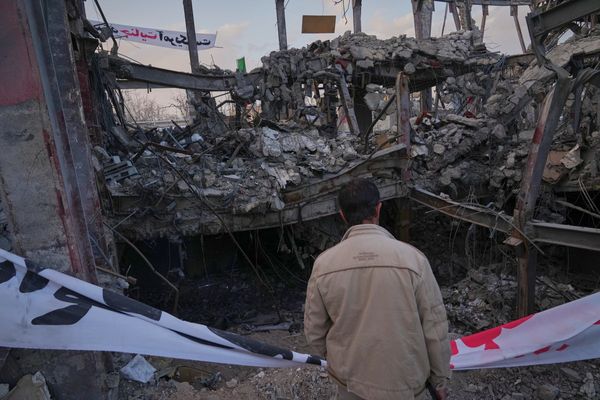



.png?w=600)