This blog is closing now. You can read all our latest coronavirus coverage here. Thank you for reading.
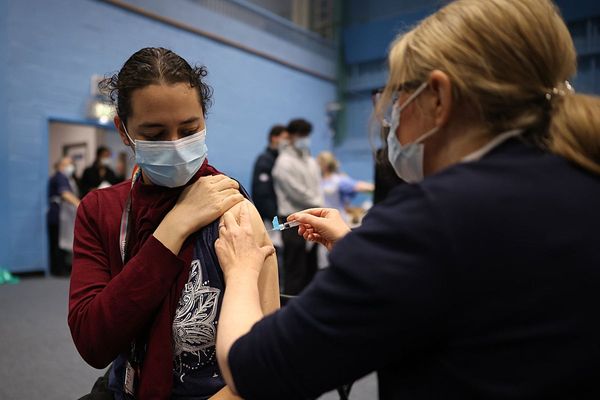
US regulators have now authorised Pfizer BioNTech’s Covid-19 vaccine for use in children as young as 12, Reuters has reported. Previously, the vaccine had been available only under an emergency use authorisation to people as young as 16.
You can read more on that story here, which we will update in due course.
Evening summary
Here are some of the key developments over the past few hours.
- France records its’ lowest case figures of 2021. The country records 3,292 new Covid-19 cases and 292 deaths.
- University students at the State University of New York (SUNY) and the City University of New York (CUNY) must get vaccinated against Covid-19 to attend classes during the fall semester.
- The French prime minister Jean Castex has said that France was “emerging on a long-term basis” from the Covid-19 crisis.
- WHO chief Tedros Adhanom Ghebreyesus said that public health capacities must be strengthened to prepare for the possibility of vaccine-evading Covid-19 variants.
- Argentina’s health ministry confirmed its first cases of the Covid-19 variants first discovered in India and South Africa in three travellers returning from Europe.
- FDA authorises Pfizer/BioNTech vaccine for emergency use in adolescents. US regulators authorised the Pfizer/BioNTech Covid-19 vaccine for use in children as young as 12.
- Novavax Inc has said the development of its Covid-19 vaccine is slower than previously anticipated and does expect to file for regulatory approval until the third quarter of 2021.
That’s all from me tonight. Thank you for reading along!
The story of Dilli Raj Joshi is now a sadly familiar one. After travelling to a wedding in mid-April with his family – a fun, rowdy affair – he began to be troubled by a headache and then breathing difficulties.
Joshi’s worried family took him to a nearby hospital, where he was diagnosed with Covid-19 and pneumonia. As his condition deteriorated, the doctors suggested he be transferred to a hospital with intensive care unit (ICU) beds and ventilators, as they had none.
But though the family frantically searched for three days, no ICU ward had any space for Joshi. On Friday he died, having never received the medical care he needed to live.
“If we had found one ICU bed or a ventilator, he would have survived,” said his brother, Lekh Raj Joshi. “We tried our best, inquired in nearby districts, called all the politicians I know but we couldn’t save him.”
Similar accounts have dominated Indian media over the past few weeks as a devastating coronavirus second wave has brought the country and its healthcare system to its knees. But this story isn’t from India. Joshi died in northwest Nepal.
Indeed, the terrible scenes that have emerged from India are being repeated across Nepal, a country with high poverty levels that shares a porous border with five Indian states.
As India has battled its deadly second wave, thousands have continued to cross over into Nepal – many, it is feared, bringing the virus and its contagious variants that have emerged in India with them.
A further 400,000 migrant workers are expected to cross back over but officials have struggled to screen and enforce quarantine for such large numbers.
More on this harrowing report from Nepal Covid crisis here:
Brazil recorded 25,200 confirmed cases of Covid-19 in the past 24 hours and 889 fatalities, the health ministry reported.
The total number of confirmed cases in Latin America’s largest country had now reached 15,209,990 and the official death toll to 423,229.
FDA authorises Pfizer/BioNTech vaccine for emergency use in adolescents
US regulators authorised the Pfizer/BioNTech Covid-19 vaccine for use in children as young as 12, widening the country’s inoculation program as vaccination rates have slowed significantly.
The US Food and Drug Administration said it was amending the Emergency Use Authorisation (EUA) to include the millions of children aged 12 to 15.
The vaccine had previously been given emergency authorised to people as young as 16 in the United States.
Novavax Inc has said it will ramp up production of its Covid-19 vaccine slower than previously anticipated and does expect to file for regulatory approval in the United States, Britain or Europe until the third quarter of 2021.
The US company has repeatedly pushed back its production timeline and said it struggles to access raw materials and equipment needed to manufacture its vaccine.
While the Novavax shot has yet to be authorised by any regulator, it has reported late-stage trial data, which shows it to be highly effective against the original version of the coronavirus and the variant discovered in the UK.
Mexico has recorded 704 new confirmed coronavirus cases and 104 more deaths, the health ministry reports.
Monday’s figures bring the total number of cases in the country to 2,366,496 and fatalities to 219,089.
Separate government data published in March suggested the actual death toll may be at least 60% above the confirmed figure.
Argentina discovers the Indian and South African variant in travellers returning from Europe
Argentina’s health ministry confirmed its first cases of the Covid-19 variants first discovered in India and South Africa in three travellers returning from Europe.
The Indian variant of the virus was detected in two minors who returned from Paris, while the South African variant was found in a 58-year-old passenger returning from Spain, the ministry said in a statement.
Analia Rearte, the ministry’s head of epidemiology and strategic information, said in the statement, “Since we began surveillance of genomic sequencing in travellers, we have identified ‘priority’ variants in almost 50% of positive cases.”
The three passengers arrived at Buenos Aires international airport on April 24 and were quarantined in a hotel.
The country has registered a total of 3,147,740 cases since the pandemic began and 67,325 deaths.
Inovio Pharmaceuticals said on Monday it plans to start a global late-stage trial for its Covid-19 vaccine candidate, INO-4800, this summer. The drug company earlier reported promising results from a mid-stage trial of its vaccine candidate.
Italy’s La Scala opera house reopened its doors to a restricted audience on Monday, raising hopes of a gradual resumption of the capital’s cultural life after nearly seven months of shutdown due to the Covid-19 pandemic.
Italy had shut its theatres and concert halls last October to contain a resurgence after the summer.
However, with case numbers and deaths decreasing, the country is assessing lockdown measures, with plans to lift quarantine restrictions for travellers arriving from European countries, Britain and Israel, as early as mid-May.
Reuters reports,
Masked members of the orchestra, conducted by in-house music director Riccardo Chailly, and the choir performed arias by Giuseppe Verdi, Richard Wagner and other world-renowned composers in an empty auditorium, with nearly 500 masked people watching the concert from the surrounding boxes.
The concert also marked the 75th anniversary of the reopening of the Milan opera house after World War Two bombings.
“It was a sort of regaining of what we had before the pandemic. Being here tonight gives me goosebumps,” said 47-year-old jeweller Andrea Sangalli.
With the situation gradually improving in the northern Lombardy region around Milan, one of Italy’s areas hardest hit by the pandemic, La Scala is expected to unveil its new season this month.
On Tuesday, director Riccardo Muti will conduct a concert with the Wiener Philharmoniker orchestra, while British conductor Daniel Harding is scheduled to take the stage on 17 May.

Updated
World Health Organization chief Tedros Adhanom Ghebreyesus said that public health capacities must be strengthened to prepare for the possibility of vaccine-evading Covid-19 variants.
Even in countries with a sliding trend in cases and with the highest vaccination rates.
A new drug helps Covid-19 patients breathe on their own.
A new monoclonal antibody drug was added to treatments being given to hospitalised Covid-19 patients who were still breathing on their own.
Researchers found the drug - lenzilumab from Humanigen Inc - significantly improved their odds of not needing invasive mechanical ventilation.
Humanigen chief executive and study coauthor Dr Cameron Durrant said his team believes the results “indicate a substantial improvement in Covid-19 treatment.”
The 540 patients in the randomised trial were already receiving various standard treatments, with half of them also receiving lenzilumab via three intravenous infusions.
Ahead of peer review, in a paper posted on Wednesday on medRxiv, the research team reported that patients in the lenzilumab group had a 54% better chance of surviving without needing mechanical ventilation.
In patients receiving steroids and the antiviral drug remdesivir, the addition of lenzilumab improved survival without the need for mechanical ventilation by 92%.
In those under age 85 with a weak immune system, lenzilumab improved the odds of ventilator-free survival by nearly three-fold.
Updated
The French prime minister Jean Castex has said that France was “emerging on a long-term basis” from the Covid-19 crisis as he gave new details about shop and restaurant openings, according to AFP.
The prime minister told Le Parisien newspaper:
I say it in the clearest way possible: we are finally in the process of emerging on a long-term basis from this health crisis.’
“Obviously, this exit will take place in a progressive, careful and supported way. But the trend is clear, we are nearing the end, and it’s good news.”
Restaurant and bar terraces are set to open nationwide on May 19. However, they would be limited to half their standard capacity, while eating inside would be possible from June 9, also with half capacity.
Shops will reopen on 19 May, but with restrictions on the number of people they can admit based on their size, with limits set to be lifted on 30 June.
Updated
The Spanish government has urged people to act ‘responsibly’ after crowds celebrated the end of a state of emergency over the week without masks or social distancing, AFP reports.
Justice Minister Juan Carlos Campo wrote in an opinion piece in El Pais daily saying:
The end of the state of emergency does not mean the end of restrictions. Far from it. The virus threat still exists, that’s why the authorities will continue to take action, and the public must keep on behaving responsibly.”
It had been more than six months of curfews and a ban on travel between the country’s 17 regions under the state of emergency, which was imposed in October.
As the deadline passed, crowds in Madrid, Barcelona and other Spanish cities took to the streets to celebrate, sparking much debate on the lack of social distancing.
More here:
Updated
University students at the State University of New York (SUNY) and the City University of New York (CUNY) must get vaccinated against Covid-19 to attend classes during the fall semester, Governor Andrew Cuomo said on Monday.
Affecting more than 435,000 full-time students, the announcement comes as the governor and other officials offer incentives to encourage more people to get the vaccine as demand declines, Reuters reports.
At a briefing, the governor said, “So, today, no excuses.” SUNY and CUNY boards will require vaccinations for all in-person students coming back to school in the fall.”
Other incentives involve free seven-day subway passes for getting inoculated at station sites that will dispense Johnson & Johnson vaccine starting on Wednesday.
“So think about this,” the governor said. “You are walking into the subway station anyway. You are walking past the vaccination site. It’s a one-shot vaccination. Stop, take a few minutes, get the vaccine.”
The incentives come as New York showed massive progress against the virus since a January surge, with its Covid-19 hospitalisations down 75% and its positivity rate down 82% at 1.4%.
Updated
France records its' lowest case figures of 2021
France records 3,292 new Covid-19 cases and 292 deaths. Monday’s new cases figures are the lowest figure since the start of the year, while the tally of patients in intensive care for the disease was down for the seventh consecutive day.
New cases always tend to fall on Mondays as fewer tests are conducted over the weekend. However, the seven-day moving average of daily infections, which evens out reporting irregularities, fell to 17,767, a trough since January 14, versus an April 14 peak of 42,225.
Since the pandemic began, the country has recorded 106,684 coronavirus fatalities.

Photograph: Gerard Bottino/SOPA Images/REX/Shutterstock
Hi, I’m Edna Mohamed; I’ll be taking over the blog for the next few hours. You can drop me a message on Twitter for any tips or email me at edna.mohamed.casual@theguardian.com
Updated
Summary of recent developments
-
Germany has opened access to Johnson & Johnson’s coronavirus vaccines to all adults, lifting a priority system determining who gets the jabs first.
- Malaysia’s government has announced that it will impose a national lockdown in response to rising coronavirus cases.
- The World Health Organziation has designated the B.1.617 coronavirus variant, first detected in India, a variant of global concern. The variant has three lineages, of which B.1.617.2 is the fastest growing.
-
More than 15 million people in England have received two doses of Covid-19 vaccine, according to the latest data from NHS England.
-
Vaccinations offer high levels of protection against hospitalisation and death from Covid-19, according to latest analysis of the outcome of England’s vaccination programme.
- Nepal has recorded its highest daily number of coronavirus cases, registering 9,127 new infections as it struggles to combat the staggering force of its second wave.
- No Covid deaths within 28 days of a positive Covid test have been reported in England on Monday – the first time since 30 July last year.No such deaths were also recorded in Scotland or Northern Ireland on Monday, however four deaths were recorded in Wales.
That’s all from me for today – I’ll hand over to my colleague Edna Mohamed now. Thanks for reading along.
Greece has reported 1,904 new infections and 60 more coronavirus deaths as the country relaxes restrictions and looks forward to the reopening of its tourism industry.
This takes the country’s death toll to 11,089, while cases stand at 363,904. A total of 732 are on ventilators in intensive care.
Schools in Greece reopened for face-to-face learning on Monday for the first time in months.
A young Italian woman has accidentally received six doses of the Pfizer-BioNTech’s Covid-19 vaccine.
According to media reports, on Sunday, a nurse at Apuane Hospital in Massa, Tuscany, mistakenly injected the woman’s arm with an entire phial of the vaccine, which contains six doses.
The woman, a 23-year-old medical trainee, was placed under medical supervision for 24 hours, and was discharged on Monday morning.
“I have a headache, a lot of tiredness but I’m still alive’’, the woman told the Italian newspaper il Corriere della Sera.
Asked if she will report the nurse to the police, she said: “Absolutely not, these are things that can happen.’’
Doctors say they have no idea what long-term effects the overdose might have on the woman but said they will monitor her antibody levels and her immune response to Covid 19
Health authorities in Massa have launched an investigation.
Mexico’s government has applied for emergency authorisation for Russia’s “Sputnik Light” Covid-19 vaccine from the country’s regulator, its foreign minister has announced.
Russia authorised the jab, which the Russian Direct Investment Fund said is 79.4% effective against Covid-19 and costs under $10 a dose, last week.
The single-dose vaccine has been has been earmarked for export and could increase the number of people with partial immunity, particularly in countries suffering high infection rates.
Updated
The head of the World Trade Organization has said she hopes the body will have found a “pragmatic” solution in regard to Covid-19 vaccine patents waivers by December.
Ngozi Okonjo-Iweala said she saw “movement on both sides” – those who are for a waiver and those against – and was hopeful on an agreement being reached, with December set as an “outer limit”, Reuters reports.
“I hope there will be a meeting of minds on how developing countries get easier access to vaccines, higher volumes and more manufacturing capacity,” the WTO director-general said at a briefing with journalists.
Experts have said that waivers – which can take years to negotiate – would not address the immediate need to rapidly manufacture doses.
Okonjo-Iweal’s statement follows Joe Biden backing India and South Africa’s calls for patent waivers. The move was met with opposition from some European states.
About 40 bodies believed to be Covid-19 victims have washed up on the banks of the Ganges River in northern India as the pandemic spreads into India’s vast rural hinterland, overwhelming local health facilities as well as crematoriums and cemeteries.
WHO classifies Indian B.1.617 'variant of global concern'
The World Health Organziation has designated the B.1.617 coronavirus variant, first detected in India, a variant of global concern.
“We classify it as a variant of concern at a global level,” Maria Van Kerkhove, WHO technical lead on Covid-19, told a briefing. “There is some available information to suggest increased transmissibility.”
The agency has said the predominant lineage of B.1.617 was first identified in India last December, with an earlier version discovered in October.
The variant has three lineages, of which B.1.617.2 is the fastest growing. B.1.617.2 was designated a variant of concern by Public Health England on Friday, with the body saying there is evidence to suggest it is at least as transmissible as B.1.1.7, the so-called “Kent variant”, which currently dominates in the UK.
The B.1.617 variants continue to tear through India, where coronavirus infections and deaths held close to record daily highs on Monday.
WHO director-general Tedros Adhanom Ghebreyesus said that the WHO Foundation was launching a “Together for India” appeal to raise funds to purchase oxygen, medicines and protective equipment for health workers.
World Health Organization head Tedros Adhanom Ghebreyesus has deflected questions around whether he will stand for a second term as chief, saying he is focusing on fighting the coronavirus pandemic.
“So I think it’s time to still focus on this pandemic. It’s very unprecedented. I’m currently focused on fighting this pandemic with my colleagues working day and night,” Tedros told a briefing.
Stat News reported last week he would run, citing a person familiar with the matter.
Tedros has served as the WHO’s director-general since 2017.
Boris Johnson’s coronavirus briefing is underway, with the prime minister confirming further lockdown easing for England from next Monday. You can follow the Guardian’s live coverage of it here:
Updated
AstraZeneca has hit its milestone of delivering 50 million vaccine doses to the European Union – a target it was originally meant to hit in January.
The cuts to vaccine supplies, which slowed down the EU’s vaccine rollout, led the European executive to sue the drugmaker last month.
AstraZeneca had shipped nearly 50 million doses by 7 May, an EU official told Reuters on Monday, citing the latest EU internal figures on vaccine supplies.
Under its contract with the EU, the company had committed to its “best reasonable efforts” to deliver 300 million doses by the end of June, including 70 million by the end of January.
However, the manufacturer said in March that it would only be able to deliver 100 million doses by the end of June, blaming production issues and export restrictions.
England reports 0 Covid deaths for first time since July
No Covid deaths within 28 days of a positive Covid test have been reported in England on Monday – the first time since 30 July last year.
No such deaths were also recorded in Scotland or Northern Ireland on Monday, however four deaths were recorded in Wales.
While the figures are only one measure of Covid-related deaths, and are often affected by time lags in reporting – meaning that they tend to be higher in the second half of the week – the data suggests the combination of lockdown and Covid vaccinations has had the desired effect, driving down the death toll.
The news comes as data from Public Health England (PHE) suggests a single dose of the Oxford/AstraZeneca jab means individuals have approximately an 80% lower risk of death with COVID-19 compared with those who have not received any jab.
The figure comes from combining the impact of a single dose of the jab on the chance of becoming a case, with the impact of the jab on reducing the risk of death among those who have nonetheless become infected and developed symptoms.
PHE added a similar overall reduction in the risk of death with COVID-19 was seen for those who had one dose of the Pfizer/BioNTech jab, compared with unvaccinated individuals , however this protection rose to 97% for those who have had two doses of this jab.
The UK has reported 2,357 new lab-confirmed coronavirus cases as well as four more deaths within 28 days of a positive test.
This takes the UK’s caseload to 4,437,217 while the death toll has risen to 127,609.
Separate figures published by the UK’s statistics agencies show there have been 152,000 deaths registered in the UK where Covid-19 was mentioned on the death certificate.
Nepal reports record number of daily cases
Nepal has recorded its highest daily number of coronavirus cases, registering 9,127 new infections as it struggles to combat the staggering force of its second wave.
The country also reported a further 139 deaths, pushing the toll up to 3,859, while cases stand at 403,794.
The Covid positivity rate is at 47%, one of the highest in the world, and cases have surged by 1,200% in recent weeks.
Nepal is facing severe oxygen shortages, with some mid-size cities having no oxygen at all in any of their hospitals. In the capital of Kathmandu, ICU beds are full and Covid wards are at capacity.
Updated
AstraZeneca and Pfizer vaccines offer high levels of protection against hospitalisation and death, Public Health England report finds
Vaccinations offer high levels of protection against hospitalisation and death from Covid-19, according to latest analysis of the outcome of England’s vaccination programme.
According to a report published today, individuals who receive a single dose of the AstraZeneca vaccine have approximately 80% lower risk of death with Covid-19 compared with unvaccinated individuals.
The report also shows protection against death from the Pfizer-BioNTech vaccine rises from approximately 80% after one dose to 97% after two doses.
The data showed that Covid-19 cases who had been given a single dose of either the Pfizer or the AstraZeneca vaccines had similar levels of protection against mortality - at 44% and 55% respectively, compared with unvaccinated cases.
Dr Mary Ramsay, head of immunisation, at PHE said:
The vaccines are saving lives every day. This analysis gives us even more reassurance that the vaccine is highly effective in protecting adults against death and hospitalisation from Covid-19.
Getting your vaccine will significantly reduce your risk of dying or becoming seriously ill from Covid-19. It will also significantly reduce your chances of getting infected and infecting others. It is vital to get both doses of your vaccine when you are offered it.
Updated
While most health authorities are trying to allay people’s fears over needles right now, in Romania they’re daring people to get jabbed. The Associated Press has the story:
At Dracula’s castle in picturesque Transylvania, Romanian doctors are offering a jab in the arm rather than a stake through the heart.
A Covid-19 vaccination centre has been set up on the periphery of Romania’s Bran Castle, which is purported to be the inspiration behind Dracula’s home in Bram Stoker’s 19th-century gothic novel Dracula.


Every weekend in May “vaccination marathons” will be held outside the storied 14th-century hilltop castle, where no appointment is needed, in an attempt to encourage people to protect themselves against Covid-19.
“We wanted to show people a different way to get the (vaccine) needle,” Alexandru Priscu, the marketing manager at Bran Castle, told the Associated Press.
Those brave enough to get a Pfizer vaccine shot receive a “vaccination diploma”, which is aptly illustrated with a fanged medical worker brandishing a syringe.

Updated
The Indian variant of coronavirus has arrived in Thailand, health authorities in the country have announced after finding it in a Thai woman and her son who had recently arrived back in the country from Pakistan.
Apisamai Srirangsan, a deputy spokesperson for Bangkok’s Covid-19 situation centre, said the Indian variant was found in a pregnant 42-year-old woman who arrived on 24 April with three sons.
She and her four-year-old were staying in the same room under state quarantine. The two other sons, ages six and eight, stayed in another room and tested negative.

The finding came as Thailand battled a new wave of coronavirus that began at the beginning of April, originating in upmarket entertainment venues in Bangkok and spawning clusters in several crowded slum communities.
Many of the recent cases involve the British variant of the virus, which is more infectious than the original form found last year.
Thai authorities have banned visitors, other than Thai nationals, from India since 1 May, in response to India’s ongoing outbreak of Covid-19. On Monday, the entry ban was extended to foreigners visiting from Pakistan, Bangladesh and Nepal, and there remain fears over people arriving in the country illegally from Myanmar and Cambodia.
Thailand on Monday announced 1,630 new cases, bringing its confirmed total to 85,005 since the pandemic began. There were 22 new deaths, for a total of 421.
Updated
More than 15m people in England now fully vaccinated
More than 15 million people in England have received two doses of Covid-19 vaccine, according to the latest data from NHS England.
The health agency reported 233,651 new vaccinations on Monday, bringing the total number of vaccine doses administered across the country to 44,683,075 since 8 December.
Of those 29,651,554 were the first dose of a vaccine, a rise of 73,338 on the previous day, while 15,031,521 were a second dose, an increase of 160,313, NHS England said.
This is Damien Gayle keeping the coronavirus blog ticking over for a bit while Clea has a well-deserved break. Follow or message me on Twitter at @damiengayle.
Updated
Facing its third coronavirus wave, Sudan is struggling to provide hospital beds, drugs and medical oxygen as its healthcare system becomes overwhelmed, according to Reuters.
The country has registered 33,000 cases and more than 2,600 deaths since the pandemic began, but officials say the figures are likely to be much higher due to low levels of testing.
There is a serious shortage of ventilators, with officials saying there are only about 300 available in the country – nowhere near enough to respond to the country’s healthcare crisis.
Sudan has also faced a serious lack of medical oxygen in recent weeks, exacerbated by a series of power cuts that hindered production at the country’s main plant. Meanwhile, a government study showed that 38% of oxygen cylinders had been smuggled out of the health system for patients to use at home.
Medicines to target Covid are also in short supply, with officials saying last month that Sudan was able to meet only 40% of its need for drugs. Despite the capital making up over 70% of cases, only 11 of the 37 hospitals able to treat Covid patients are in Khartoum.
Updated
Egyptian drugmaker Eva Pharma has signed a deal to provide 300,000 doses of Covid drug remdesivir to India, the company said in a statement reported by Reuters.
The agreement comes as India continues to combat a surge of infections which have overwhelmed the country’s health system, resulting in shortages of medical oxygen, drugs and hospital beds.
Eva Pharma, a generic drugmaker established in 1997, said in June 2020 it had been licensed to manufacture remdesivir in Egypt and distribute it in 127 countries.
The drug targets moderate to severe cases of Covid-19 in intensive care who require oxygen.
American biotech firm Inovio Pharmaceuticals has said its Covid-19 vaccine candidate was safe, well-tolerated and produced an immune response against the virus in all tested age groups during a mid-stage clinical trial.
The trial, which included around 400 participants aged 18 and over, helped the company confirm an appropriate dose for testing in a late-stage Phase 3 trial, Inovio said in a statement reported by Reuters.
The FDA had paused the mid-to-late stage for more information on the device used to deliver the vaccine. The firm said it will use data from the trial to answer pending regulatory questions about its delivery device.
The company plans to conduct its late-stage study testing the candidate abroad after the US government withdrew its funding, citing increased availability of authorised vaccines.
Prof Ravi Gupta of the University of Cambridge said that unpicking issues around coronavirus variants is more complex than last year, given that many people in the population have now either had Covid, or been vaccinated.
Gupta added that while B.1.617.2 does not have the E484Q mutation seen in the other two India variants that might help it to escape the body’s immune response, it has other mutations, including one called T478K.
“We don’t know anything about this mutation at the moment, we are running experiments at the moment” he said. “We need to keep an open mind as to what that mutation may do in terms of changing susceptibility neutralising antibodies for example.”
Gupta noted the mutations the India variants and others contain highlights that the idea, mooted last year, that new variants tended to show the same mutations is incorrect. Instead the virus is exploring different ways of achieving similar outcomes, such as dodging antibodies or binding to human cells.
“It shows that the virus has multiple routes to doing things” Gupta said.
Prof Sharon Peacock of the University of Cambridge added the UK is in a very different position to last year, with the level of disease dropping, vaccination programme underway and surge testing in place for variants of concern. “[B.1.617.2] isn’t a special variant of concern that is going to get around washing your hands and distancing and wearing a mask and being in a well-ventilated place,” she said.
Nonetheless, the experts warned it’s important to track and understand the variants noting that while many will be protected against severe disease and death because of the vaccines, some will remain susceptible to coronavirus, while such efforts will also help in work to tweak Covid vaccines to maintain their efficacy against new variants.
“As we are opening up society now, what we don’t want to see is transmission of these variants that have more immune escape properties because then the vulnerable people within in the UK population are at greater risk, we think,” said Gupta.
Gupta added that it is a possibility that B.1.617.2 – or even the South African variant – could become dominant in the UK.
“We have very low transmission in the UK, so there is an opening in a way for a virus that is better adapted to vaccinated people to start transmitting,” he said. “It all depends on the dynamics of transmission and how quickly we can detect them and close them off.”
Updated
A coronavirus variant first discovered in India could become dominant in the UK, scientists have said.
B.1.617.2 was designated a variant of concern by Public Health England on Friday, with the body saying there is evidence to suggest it is at least as transmissible as B.1.1.7, the so-called “Kent variant”, which currently dominates in the UK.
B.1.617.2 is one of three variants first discovered in India which have since been found in the UK, and is the fastest growing of the three, with clusters found around England, some of which show evidence of transmission in the community.
Speaking at a press briefing on Monday, experts said it is too soon to be sure just how problematic B.1.617.2 may be.
“At the moment there is just not enough information to say whether this causes more severe disease or not, but there is no reason for me at the moment to think that it does,” said Prof Sharon Peacock of the University of Cambridge and Executive Director and Chair of the COVID-19 Genomics UK (COG-UK) consortium, adding more data is also needed to be sure just how transmissible the variant is compared with others.
“We need to be sufficiently cautious so we are controlling disease, but not so that we are over interpreting the [experimental] data in a way that is not supported,” she said.
With widespread mask wearing in the US credited for a huge drop in seasonal flu deaths, the White House’s chief medical adviser Anthony Fauci has said people may opt to continue wearing them during seasonal virus spikes.
“We’ve had practically a non-existent flu season this year merely because people were doing the kinds of public health things that were directed predominantly against Covid-19,” Fauci told NBC’s Meet the Press on Sunday.
“So it is conceivable that as we go on, a year or two or more from now, that during certain seasonal periods when you have respiratory-borne viruses like the flu, people might actually elect to wear masks to diminish the likelihood that you’ll spread these respiratory-borne diseases.”
Updated
As England’s hospitality industry prepares to begin serving customers indoors, the chief executive of Hospitality has call next week’s opening “a psychological opening, not an economic opening”.
Asked about whether pubs can begin to make money from 17 May, Kate Nicholls told the BBC’s Radio 4: “We don’t make money until those restrictions are lifted. During the course of last summer when we reopened with these same restrictions – and the restrictions are slightly tighter this time round – there was only one week that pubs and restaurants broke even.
“So even if they are busy, even if they are trading well, they are still not making a profit and they are still not viable until we get to 21 June and all those restrictions are lifted.”
There are labour shortages in parts of the UK’s hospitality industry as the sector reopens for business, the chief executive of HospitalityUK has said.
Speaking to the BBC’s Radio 4 programme, Kate Nicholls said that the issue has emerged “because the whole of the economy is standing up at the same time”.
She said: “We’re seeing 85% of our team members coming back from furlough and keen to get back into their roles. But clearly, throughout the course of the pandemic our businesses have been closed for months without any revenue coming in, for months with significant restrictions. Unfortunately, we did have to let a large number of staff go, we didn’t furlough everybody – so there is a pressure on recruitment at the moment.”
She says that staff are saying that they want certainty that the country isn’t going to go back into lockdown, underlining: “There’s a lot that the government can do to build confidence.”
Nicholls also pointed out that some people have left the hospitality industry over the last year, while there are also foreign workers stuck outside the UK and many who have returned to their home countries for good during the crisis.
The problem is “particularly acute” in London and the southeast of England, Nicholls said, as well as Scotland where there is a “highly seasonal workforce”.
Updated
Support for the Japanese government has plummeted to its lowest level since Prime Minister Yoshihide Suga took office, with most people unhappy with the way he has dealt with the pandemic, a survey reported has found.
Nearly two-thirds of respondents said they did not rate the government’s coronavirus response positively, while 82% said the vaccine rollout had been slow, the survey by public broadcaster NHK showed.
The Japanese government has presided over the slowest vaccination rate among wealthy countries, with just 2.2% vaccinated as of last week, Reuters reports.
Just over a third (35%) said they supported Suga’s government, a fall of nine points since last month. A higher proportion – 43% – said they did not support the government.
The poll comes as Japan battles its fourth coronavirus wave, with Tokyo’s state of emergency extended last week until late May – less than two months before the Olympics are meant to begin in the capital. A separate survey found that nearly 60% of people in Japan want the Games to be cancelled.
Updated
The Pfizer-BioNTech Covid vaccine does not currently need to be adapted to offer higher protection against virus variants, Germany firm BioNTech has said.
“To date, there is no evidence that an adaptation of BioNTech’s current Covid-19 vaccine against key identified emerging variants is necessary,” the company said in a statement reported by AFP.
However, the company has been running tests since March in order to anticipate any need for adaptations in the future.
“The aim of this study is to explore the regulatory pathway that BioNTech and Pfizer would pursue if Sars-CoV-2 were to change enough to require an updated vaccine,” it said.
The option of a third dose is also being considered, with scientists assessing the potential impact it could have on lengthening immunity as well as shielding against variants.
Updated
The terrible scenes that have emerged from India are being repeated across Nepal, a country with high poverty levels that shares a porous border with five Indian states. As India has battled its deadly second wave, thousands have continued to cross over back into Nepal – many, it is feared, bringing the virus and its contagious variants that have emerged in India with them. A further 400,000 migrant workers are expected to cross back over but officials have struggled to screen and enforce quarantine for such large numbers.
Hannah Ellis-Petersen and Rajneesh Bhandari report on how the coronavirus crisis is devastating Nepal, where the Covid positivity rate is at 47%:
Updated
Police patrol a market in the Punjabi city of Amritsar as new rules on retail come into force:


From Monday, shops in the city are allowed to open on a rotating basis from 9am to 5pm on weekdays in order to limit crowds.
The UK’s chief medical officers have downgraded the Covid-19 alert level from level 4 to level 3, meaning the “epidemic is in general circulation”.
Andrew Sparrow has more on the UK’s coronavirus situation, although that liveblog is mainly focussed on politics at the moment.
Updated
Malaysia to enter month-long national lockdown
Malaysia’s government has announced that it will impose a national lockdown in response to rising coronavirus cases, according to Reuters.
The lockdown measures will come into effect on 12 May and last until 7 June.
The government has said all social gatherings will be banned during lockdown, while schools will be closed.
“All educational institutions are to be closed, with the exception for students sitting for international examinations. Only three people will be allowed in private vehicles, taxis and e-hailing vehicles, including the driver,” Prime Minister Tan Sri Muhyiddin Yassin announced in a statement reported by English language daily, The Star.
Travel between Malaysia’s districts and states will not be permitted except in cases of emergency.
Despite the imposition of strict rules on socialising, travel and education, all economic sectors will remain open.
The latest coronavirus wave in the southeast Asian country has seen new cases surpass 3,600 per day on average over the last week. During the January peak, the seven-day average reached around 4,750.
Updated
Poland will shorten the interval between vaccines doses for the Pfizer, Moderna and AstraZeneca jabs, the country’s vaccine minister has said in a statement reported by Reuters.
The gap between doses of the AstraZeneca jab will be cut from 84 to 35 days, Michal Dworczyk told a news conference, while for Moderna and Pfizer the interval will be narrowed from 42 to 35 days.
Around 9.6% of the country’s population has been fully vaccinated, according to Johns Hopkins University’s coronavirus tracker.
Poland has reported more than 2,830,000 cases and over 70,000 deaths linked to Covid since the pandemic began.
Updated
A Spanish government minister has called for people to “behave responsibly” as the country ends its state of emergency after people were photographed celebrating in streets across cities, AFP reports.
Images of hundreds of people marking the end of curfews and other restrictions in the streets of Madrid and Barcelona made front pages on Monday morning.

“The end of the state of emergency does not mean the end of restrictions. Far from it. The virus threat still exists,” justice minister Juan Carlos Campo wrote in an opinion piece in El Pais daily.
“That’s why the authorities will continue to take action and the public must keep on behaving responsibly.”
The state of emergency, which introduced curfews and a ban on travel between Spanish regions for six months, ended in the early hours of Sunday.
Updated
She’s been fully vaccinated for three weeks, but Francesca, a 46-year-old professor, does not plan to abandon the face mask that she’s come to view as a kind of “invisibility cloak” just yet.
“Maybe it’s because I’m a New Yorker or maybe it’s because I always feel like I have to present my best self to the world, but it has been such a relief to feel anonymous,” she said. “It’s like having a force field around me that says ‘don’t see me’.”
Francesca is not alone. After more than a year of the coronavirus pandemic, some people – especially some women – are reluctant to give up the pieces of cloth that serve as a potent symbol of our changed reality.
Julia Carrie Wong speaks to people who want to stay masked as rules relax:
Hello, this is Clea Skopeliti taking the liveblog reins for the next few hours. If you’d like to draw my attention to something I haven’t included, you can reach me on Twitter. Thanks in advance.
Today so far…
- British prime minister Boris Johnson is set to outline the next steps in relaxing England’s lockdown in a press conference at 5pm BST today. Indoor drinks and meals will be allowed for groups of up to six or two households, while cinemas, galleries and the rest of the accommodation sector will reopen.
- International leisure travel will be possible, with some destinations given a “green light” enabling return without self-isolation, and ministers indicated that “intimate contact” will once more be permissible.
- The government will advise cautious cuddling when hugging is permitted in the next phase of lockdown easing in England, amid concerns over the possible increase in Covid variants.
- Australia’s federal court has rejected an urgent bid to overturn the India travel ban, meaning 9,500 Australians stranded there will not be able to return until after it is repealed on Friday.
- India’s health ministry reported 366,161 new infections and 3,754 deaths on Monday, down a little from recent peaks. Calls continue to grow for a nationwide lockdown, increasing pressure on the government of prime minister Narendra Modi.
- The remainder of the suspended Indian Premier League season will have to be played outside India, the Board of Control for Cricket in India has said.
- The United Arab Emirates will bar entry for travellers from Bangladesh, Pakistan, Nepal and Sri Lanka starting on Wednesday.
- Taiwan will quarantine all pilots for its largest carrier China Airlines for 14 days as it tries to stop an outbreak of Covid-19 among its crew, effectively grounding the airline.
- Nepal is so short of oxygen canisters that it has asked climbers in the Himalayas to bring back their empties instead of abandoning them on mountain slopes.
- Germany has opened access to Johnson & Johnson’s coronavirus vaccines to all adults, lifting a priority system determining who gets the jabs first.
- In Norway, a government-appointed commission said the country should exclude the Covid-19 vaccines made by AstraZeneca and Johnson & Johnson in its inoculation programme.
- Ireland is lifting some coronavirus lockdown restrictions today. A phased reopening of non-essential retail will begin, with click-and-collect services and in-store shopping by appointment allowed, while close contact services, such as hairdressers, can resume.
- The reopening of outdoor bars and restaurants in France will go ahead on 19 May, health minister Olivier Véran has said.
- South Africa’s president Cyril Ramaphosa said that if wealthy nations hogged Covid-19 shots while millions in poor countries died waiting for them it would amount to “vaccine apartheid”.
- Preparations for the Tokyo Olympics have suffered another setback after a poll found that nearly 60% of people in Japan want them to be cancelled, less than three months before the Games are due to open.
That is it from me, Martin Belam, today. Andrew Sparrow has our UK live blog, which is likely to be extremely politics-based. Clea Skopeliti will be here shortly, and she’ll continue to bring you the latest global coronavirus news alongside the top Covid lines from the UK.
Updated
Here’s Lucy Campbell with a full round-up of what has been said today about lifting Covid restrictions in England and what we can expect to be announced by British prime minister Boris Johnson later today:
The government will advise cautious cuddling when hugging is permitted in the next phase of lockdown easing in England, amid concerns over the possible increase in Covid variants.
With the data looking “extremely positive” and the roadmap “on course”, the health minister Nadine Dorries suggested friends and family would be allowed to hug when the next stage of easing restrictions goes ahead from 17 May, but called for cautious optimism.
Indoor dining will be allowed for groups of up to six or two households, while cinemas, galleries and the rest of the accommodation sector will reopen. Foreign leisure travel will also resume, with some “green list” destinations allowing travellers to return without self-isolating.
Though infection rates in England are at their lowest level since September and more than two-thirds of UK adults have had their first dose of a vaccine, scientists are concerned about the possible spread of variants, particularly one of three first found in India, as restrictions are relaxed and international travel resumes.
Read more of Lucy Campbell’s report here: Government to advise caution when hugging allowed in England
Visitors to Romania’s forbidding Bran Castle, which styles itself as the inspiration for Dracula’s lair, are being jabbed with needles rather than vampire fangs in a coronavirus vaccination drive.
“I came to visit the castle with my family and when I saw the poster I gathered up my courage and agreed to get the injection,” said Liviu Necula, a 39-year-old engineer.
Those who receive the vaccine are handed a certificate hailing their “boldness and responsibility” promising they will be welcome at the castle “for the coming 100 years” – as well as offered a free tour of the “torture chamber”.
Nestled in a misty valley in the Carpathian mountains, Bran Castle is associated with the 15th-century Romanian prince Vlad Tepes, known as “the Impaler”, although he never stayed there.
Norway: commission says AstraZeneca and Johnson & Johnson jabs should be excluded
It’s a slightly different vaccine decision in Norway, where a government-appointed commission said the country should exclude the Covid-19 vaccines made by AstraZeneca and Johnson & Johnson in its inoculation programme due to a risk of rare but harmful side-effects,
Those who would volunteer to take either of the two vaccines should however be allowed to do so, the commission added.
Reuters note that authorities suspended the AstraZeneca rollout on 11 March after a small number of younger inoculated people were hospitalised for a combination of blood clots, bleeding and a low count of platelets, some of whom later died.
On 15 April, the Norwegian Institute of Public Health said the AstraZeneca vaccine should be dropped entirely but the government instead sought further advice, including on the jabs made by Johnson & Johnson which the country has yet to adopt.
“The government will use this as basis for its decision, together with recommendations from the Institute of Public Health, on whether to use these vaccines,” health minister Bent Hoeie told a news conference.
Germany opens access to Johnson & Johnson’s coronavirus vaccine to all adults
Germany has opened access to Johnson & Johnson’s coronavirus vaccines to all adults, lifting a priority system determining who gets the jabs first.
With the majority of people over 60 expected to be already vaccinated by June, health minister Jens Spahn said authorities decided not to restrict the jabs to older people over very rare thrombosis risks.
Rather, younger people can choose to take the vaccine, which only requires one shot, after consultation with their doctors, he said.
AFP reports Spahn noted that 10m doses of Johnson & Johnson vaccines would be delivered over June and July - when older people who want the jabs would already have been vaccinated.
“So we are lifting prioritisation for Johnson & Johnson, like we have done for AstraZeneca … so that everyone can have the possibility of getting vaccinated after clarifications with their doctors and based on their individual decisions,” said Spahn.
The move would allow Germany “to work on this vaccination campaign with greater speed, in a pragmatic manner”.
Germany had initially recommended AstraZeneca vaccines only for older people following concerns over several blood clotting cases among younger recipients of the vaccine. But it has since opened the jabs up to all adults who want them after consultations with doctors.
The European Medicines Agency has said blood clots should be listed as a rare side-effect of both the Johnson & Johnson and AstraZeneca jabs but that the benefits continue to outweigh risks.
Both vaccines use the same adenovirus vector technology, unlike the jabs made by BioNTech/Pfizer or Moderna, which are messenger RNA vaccines.
Updated
Australia’s federal court rejects urgent bid to overturn India travel ban
The federal court in Australia earlier today rejected an urgent application to overturn the India travel ban, meaning 9,500 Australians stranded there will not be able to return until after it is repealed on Friday.
On Monday, Justice Thomas Thawley declined to make orders overturning the ban after hearing the first half of the challenge brought by Gary Newman, 73, an Australian man stranded in Bangalore since March 2020.
Thawley rejected the first two grounds of the case: that health minister Greg Hunt failed to ensure the ban was “no more restrictive or intrusive than is required”; and the Biosecurity Act was not clear enough to override Australians’ common law right to enter their country.
Thawley sided with Hunt, whose counsel argued the Biosecurity Act was intended to have “paramount force” in the case of emergencies, operating as a “commonwealth legislative bulldozer” that overrides state laws and common law rights.
Justice Thawley found Hunt had relied on the chief medical officer’s advice, was satisfied of what he needed to be to fit the safeguards of the act, and the determination contained appropriate limitations.
The judge accepted that Australians have a common law right to enter Australia, but said that preventing them from doing so was a “necessary incident” of the scheme in the act to prevent an infectious disease, such as Covid-19, entering Australia.
Read more of Paul Karp’s report here: Australia’s federal court rejects urgent bid to overturn India travel ban
Updated
The Duchess of Sussex has made her first television appearance since her and Prince Harry’s interview with Oprah Winfrey. Meghan said women had been ‘disproportionately affected’ by the pandemic in a pre-recorded message for Global Citizen’s Vax Live charity concert.
The Duchess of Sussex said 47 million more women around the world were expected to slip into extreme poverty. President Joe Biden, Prince Harry and Jennifer Lopez were among the big names who took part in the event, which was recorded several days ago. Prince Harry used his appearance, like his wife, to call for the equitable distribution of Covid vaccines.
Updated
UAE to bar entry to travellers from Bangladesh, Pakistan, Nepal and Sri Lanka
A quick snap from Reuters here. The United Arab Emirates will bar entry for travellers from Bangladesh, Pakistan, Nepal and Sri Lanka starting on Wednesday. It is part of measures to contain the spread of the Covid-19 pandemic, the country’s National Emergency Crisis and Disasters Management Authority announced on its website.
“Flights between the four countries will continue to allow the transport of passengers from the UAE to Bangladesh, Pakistan, Nepal and Sri Lanka,” it said.
The UAE announced last month a ban on entry from India to guard against the spread of the highly contagious Indian variant of the coronavirus.
South African president Cyril Ramaphosa warns of 'vaccine apartheid'
South African president Cyril Ramaphosa said on Monday that if wealthy nations hogged Covid-19 shots while millions in poor countries died waiting for them it would amount to “vaccine apartheid”.
Alexander Winning reports from Johannesburg for Reuters that Ramaphosa called on South Africans to support the campaign for a waiver on some intellectual property (IP) rights for vaccines and medicines in a weekly newsletter, saying vaccines should be “a global public good”.
“It is about affirming our commitment to the advancement of equality and human rights, not just in our own country but around the world,” he wrote.
“A situation in which the populations of advanced, rich countries are safely inoculated while millions in poorer countries die in the queue would be tantamount to vaccine apartheid.”
Sub-Saharan Africa has administered the fewest vaccines relative to its population of any region, with roughly 8 doses per 1,000 people versus 150 doses per 1,000 people globally, according to the World Health Organization.
Ramaphosa recalled that twenty years ago South Africa faced off against “big pharma” over efforts to import and manufacture affordable generic antiretroviral medicines to treat people with HIV/AIDS.
“Years later, the world is in the grip of another deadly pandemic in the form of Covid-19. And once again, South Africa is waging a struggle that puts global solidarity to the test,” he said.
Ramaphosa said South Africa was one of only five countries on the African continent able to manufacture vaccines and that there was a need for new capacity to be built.
Palliative care doctor Rachel Clarke writes for us this morning to say that Covid’s cruellest blow has been keeping the dying from their loved ones:
The most hellish detail was not what was present, but what my patient lacked. No husband, no children, no friends at her bedside. Disorientated and fighting for air, she faced the prospect of dying from Covid entirely cut off from those she loved most. Worse, her experience wasn’t rare but ubiquitous. On stretchers, in care homes, on trolleys, in corridors, tethered to ventilators, blasted by high-flow oxygen, sequestered inside negative pressure rooms, patients in their thousands throughout the last year have confronted death’s proximity alone.
No other disease in our lifetimes has required hospitals to be almost completely purged of visitors, even at the end of life. In place of the deathbed vigil – families clustered round the one they love, watching, waiting, clasping, holding – Covid has torn parent from child, sister from brother, husband from wife, grandparent from grandchild. We have been forced to exile the one group of people who matter more than anyone else when death draws near.
This particular cruelty of Covid disrupts a fiercely primal need. Across cultures, eras and institutional settings, what we crave in extremis is the same. Someone to cling to, preferably someone we love, their presence an antidote to fear and pain. As my patient put it: “I wanted someone to scoop me up. It really doesn’t matter if you are three or 53, it’s still the same feeling.”
Read more here: Rachel Clarke – Covid’s cruellest blow? Keeping the dying from their loved ones
Andrew Sparrow has launched our UK live blog for today. In his preamble he says “Today I expect to be focusing mostly on non-Covid politics – Labour, the reaction to the elections, Scotland – but I will be covering the coronavirus press conference at No 10 this afternoon.”
You can follow him over here…
I’ll be continuing here with global coronavirus news and the top Covid lines from the UK.
Dr Mike Tildesley, from the University of Warwick, has urged people to “act responsibly” when restrictions are lifted in England. British prime minister Boris Johnson is expected to hold a press conference at 5pm today in which he is expected to announce relaxations.
The member of the Scientific Pandemic Influenza Group on Modelling (Spi-M) group said more mixing, including hugging, is a good thing for people’s mental wellbeing but warned that the pandemic is not yet over.
PA report he told BBC Breakfast: “I think it’s actually very important for our mental health and wellbeing that we can hug our loved ones, but to me the key message is, if and when this comes in, we need to remember that the pandemic hasn’t gone away.
“We are still a few steps away from normality, so it’s really great that we can hug our loved ones, but what we need to remember is we need to be a little bit careful.
“We have really, really high levels of vaccination but of course vaccines are not 100% protective so we need to be a little bit careful. But I think it’s a good step in the right direction.”
Dr David Nabarro, special envoy on Covid-19 for the World Health Organization, has told Sky News this morning: “I’m pleased with the reality that people are being quite cautious, perhaps even a little bit afraid, of what this virus might bring. But I think, at the same time, we’ve got to get on with life, and we can’t go on mothballing ourselves forever. So, finding a way to restart, despite this fear, is what I think we will have to do.”
PA Media reports he said he would urge people to maintain social distancing and keep using face masks. “On the one hand we’ve got a dangerous virus, on the other hand we must get on with life because it just can’t go on with the restrictions that people have had up till now.
“Finding that middle path, how to live with this virus’s constant threat, is key. If I were able to talk to everybody personally over the coming weeks, I would say: You must restart life and everybody wants you to do that, but please be really careful, maintain that physical distance of between one metre and two metres, especially indoors, and don’t forget to wear your face masks because that really can give extra protection.
“It’s these simple things, but all done together that will really make the difference as to whether or not future spikes are huge or future spikes are small and easily contained.”
Updated
Taiwan to quarantine all China Airlines pilots for 14 days
Taiwan will quarantine all pilots for its largest carrier China Airlines for 14 days as it tries to stop an outbreak of Covid-19 among its crew, effectively grounding the airline, the health minister said. The move effectively amounts to a 14-day grounding for the airline
Reuters report that while Taiwan has generally kept the pandemic well under control due to early prevention with only sporadic domestic cases, since last month it has been dealing with an outbreak linked to China Airlines pilots and an airport hotel where many of them stayed. There have been 35 confirmed infections so far in the outbreak.
Health minister Chen Shih-chung told reporters the only way to break what they believe is a chain of transmission at the carrier is to quarantine all China Airlines pilots in Taiwan, and send into quarantine those who return to Taiwan.
“This will have a big impact on China Airlines, on its passenger and freighter flights, and for the crew too. But for the safety of the whole community we cannot but make this decision,” he said.
China Airlines did not immediately respond to a request for comment, though it has said repeatedly it is cooperating with the government to end the infections, and has stepped up vaccinating its staff, including pilots.
Taiwan’s health authorities believe some of the pilots got infected first overseas, then spread the infection upon returning to Taiwan. Some of the pilots went to bars and restaurants in northern Taiwan before their infections were confirmed, running the risk of community transmission, though no infections have been linked to that yet.
The pilots will only be allowed out of quarantine once they have tested negative.
Updated
Nurse May Parsons, who in December administered the first Covid vaccine dose in the UK outside of medical trials, has this morning endorsed the idea of holding a National Thank You Day on 4 July.

Photograph: Jonny Weeks/NHS England/Getty Images
She told BBC Breakfast: “I think it is important that we show appreciation to our colleagues who have turned up and stopped whatever they are doing just to help us. I think it is quite important and this is something I am passionate about as well.”
PA Media reports that Kwame Kwei-Armah, artistic director of the Young Vic theatre, said he is backing the campaign because it “just felt beautiful”.
He told the programme: “This is a moment where we can say thank you to anyone who has helped, particularly over these last four years, I would say, where we have gone from one body blow to another.
“I think that, by the time we get to the end of this phase of the lockdown, we are desperately going to want to be close to people and say thank you.”
He added that he wanted to thank everyone who has supported theatre and the arts for “just keeping the faith”.
Parsons delivered Margaret Keenan’s first and second doses of Covid vaccine.
Keenan herself has already received a rather strange kind of thanks. A reticulated giraffe calf born at ZSL Whipsnade on 8 December, the day the first shot was delivered, was named Margaret in Keenan’s honour.

Updated
Nepal asks Himalayan climbers to bring back empty oxygen tanks to help Covid fight
Reuters have this despatch from Gopal Sharma in Kathmandu this morning, saying that Nepal is so short of oxygen canisters that it has asked climbers on Sagarmāthā (Mount Everest) to bring back their empties instead of abandoning them on mountain slopes as it struggles with a second wave of the coronavirus.
The country issued climbing permits to more than 700 climbers for 16 Himalayan peaks for the April-May climbing season in a bid to get the mountaineering industry and tourism back up and running.
Kul Bahadur Gurung, a senior official with the Nepal Mountaineering Association, said climbers and their Sherpa guides were estimated to have carried at least 3,500 oxygen bottles this season. These bottles often get buried in avalanches or are abandoned on the mountain slopes at the end of the expedition.
“We appeal to climbers and sherpas to bring back their empty bottles wherever possible as they can be refilled and used for the treatment of the coronavirus patients who are in dire needs,” Gurung told Reuters.
On Sunday, Nepal reported a daily increase of 8,777 infections. The total caseload stands at 394,667 and 3,720 deaths, according to government data.
Many private and community hospitals in Kathmandu have said they are unable to take any more patients due to lack of oxygen. There was a shortage of both the gas and canisters.
“We need about 25,000 oxygen cylinders immediately to save people from dying. This is our urgent need,” Samir Kumar Adhikari, a health ministry official said.
China has pledged to provide oxygen cylinders, ventilators and other medical supplies, health and population minister Hridayesh Tripathi said.
Updated
Health minister Nadine Dorries is still out and about on TV and radio this morning in the UK. PA Media reports she has said it is important that everyone is aware that as the country moves into each step of lockdown easing there “may be an increase in the variants or there may be an increase in the virus”.
She told BBC Breakfast: “Our objective is to nail that virus, to make sure that we are never, as a country, in the position we were in last year again, and that we move out of this cautiously and safely.”
Dorries – who hasn’t always been the most reliable of information sources – said the UK is “still in the tail end of the pandemic” while “globally the world is still in the grips of this pandemic”.
Updated
Christina Maxouris reports for CNN this morning that the US may be turning the corner on Covid. She writes:
Roughly 58% of US adults have received at least one Covid-19 vaccine dose. More than 34% of the US population is fully vaccinated, CDC data shows.
Once the country climbs above that 60% mark of American adults with at least one dose, Jonathan Reiner, professor of medicine and surgery at George Washington University, says it’s likely we’ll begin to see Covid-19 numbers plummet.
“I expect during the month of May we will see daily cases drop dramatically and deaths finally drop to quite low numbers,” he said.
“This summer is going to seem so much closer to normal than we’ve had in a very long time. The key statistic to think about is … what percentage of the adult population has received at least one vaccination.”
There are still some fears about vaccine hesitancy, however.
“What I really worry about is that those people who are already on the fence don’t get vaccinated (and) we don’t reach herd immunity come the fall,” CNN medical analyst and emergency physician Dr Leana Wen told CNN earlier this month.
“And then with the winter … we have a big resurgence, maybe we have variants coming in from other countries, and we could start this whole process all over again and have another huge pandemic come the winter.”
Read more here: CNN – US may be turning a corner on Covid-19. Here’s when we could see cases and deaths plummet, expert says
Updated
Covid vaccine maker BioNTech has said today it will build a south-east Asia headquarters and manufacturing site in Singapore to produce hundreds of millions of mRNA-based vaccines per year.
Construction of the site will start this year, and it could become operational by 2023, the German company said in a statement reported by AFP.
“With this planned mRNA production facility, we will increase our overall network capacity and expand our ability to manufacture and deliver our mRNA vaccines and therapies to people around the world,” said BioNTech chief executive Ugur Sahin.
It is now supplying more than 90 countries worldwide with the Covid vaccine produced jointly with Pfizer of the US, and is expecting to ramp up its production to up to 3bn doses by the end of the year from 2.5bn doses expected previously.
Updated
Australia’s international travel ban is based on politics and not science, according to health experts who say there are a number of countries Australia could safely resume travel with this year.
On Sunday, the treasurer Josh Frydenberg told SBS News that the budget expectation is that international travel will begin in 2022, with further detail expected when the budget is released on Tuesday. Meanwhile, the prime minister Scott Morrison posted on Facebook that borders would only open “when it is safe to do so”, saying during media interviews over the weekend that Australians do not have an “appetite” for opening borders if it means further lockdowns and restrictions.
But a professor in paediatrics, vaccinology, epidemiology and infectious diseases with the University of Sydney, Robert Booy, said there were south Pacific and east Asian countries that had proved to have strong infection control procedures in place and that Australia could open sooner.
“Vietnam has done a great job,” said Booy, who is a senior fellow at the National Centre for Immunisation Research and Surveillance. “South Korea has had a problem, but they’ll soon be under control again. Taiwan has done fantastically well, and they have a similar total population to Australia.
“But politics rules. And therefore the governments at state and federal levels say they will respect and follow the medical advice, [but] some of it is based on rather anecdotal medical evidence. Some of it comes down to whether you respect one medical expert over another, and that’s when the government has the opportunity to take a political decision.”
Booy said closing borders was politically popular, and while he believed the government was hearing views on various ways of reopening borders, “they’re also working for reelection”.
Read more of Melissa Davey’s report here: ‘Politics rules’ – Australia’s international travel ban not based on science, health experts say
Updated
France to reopen outdoor bars and restaurants on 19 May
The reopening of outdoor bars and restaurants in France will go ahead on 19 May, health minister Olivier Véran has said on Monday, as the number of Covid cases in intensive care eases.
“The prospects look rather good but we must not let down the guard,” Veran told LCI television.
The number of Covid-19 patients in French intensive care units fell below 5,000 for the first time since late March on Sunday, health ministry data showed.
Reuters also note that Veran said about 20 people in France have been detected with the variant of Covid-19 first found in India.
Updated
I mentioned earlier that it now seems unlikely that the Indian Premier League cricket can be completed in India. Another major sporting event under threat from a Covid resurgence is the Tokyo Olympics. Justin McCurry in Tokyo has the latest for us:
Preparations for Tokyo Olympics have suffered another setback after a poll found that nearly 60% of people in Japan want them to be cancelled, less than three months before the Games are due to open.
Japan has extended a state of emergency in Tokyo and several other regions until the end of May as it struggles to contain a surge in Covid-19 cases fuelled by new, more contagious variants, with medical staff warning that health services in some areas are on the verge of collapse.
The Olympics, which were delayed by a year due to the pandemic, are set to open on 23 July, with the International Olympic Committee (IOC) and organisers insisting that measures will be put in place to ensure the safety of athletes and other visitors, as well as a nervous Japanese public.
The survey, conducted between 7 and 9 May by the conservative Yomiuri Shimbun, showed 59% wanted the Games cancelled as opposed to 39% who said they should be held. “Postponement” – an option ruled out by the IOC – was not offered as a choice.
Of those who said the Olympics should go ahead, 23% said they should take place without spectators. Foreign spectators have been banned but a final decision on domestic attendance will be made in June.
As public opposition holds firm just over 70 days before the opening ceremony, the IOC and the Japanese government appear to be sending mixed messages over who is ultimately responsible for deciding the Games’ fate.
While no prominent athlete has publicly opposed the Games being held this summer, the Japanese tennis star Naomi Osaka said the time had come to discuss the merits of holding the event in the middle of a pandemic.
Read more of Justin McCurry’s report from Tokyo: Olympics – poll shows 60% of Japanese people want Games cancelled
Also doing the morning media round in the UK is Professor Sir John Bell, Oxford University’s regius professor of medicine. PA report he has told ITV’s Good Morning Britain that the prospect of people being able to hug their loved ones again was “great”.
Asked about the next phase of the Government’s road map - which will allow more mixing indoors - he said: “I think we’ll still probably go steady but perhaps a bit faster, I’ll be interested to see what the Government announces. I’m feeling pretty comfortable with where we are at the moment.”
He said that data from vaccination programmes from the UK, Israel and the US shows a “rather rapid fall-off” in cases of disease, hospital admissions and deaths after rising numbers of people were given their first dose of vaccine.
He also said it was “tactically” important to get vaccines to the rest of the world at a quicker pace.
Asked about whether new variants of the virus could derail the progress made in the UK, Professor Bell said: “Tactically the most important thing for us to do is to make sure that other bits of the world get vaccines faster - the state of global vaccination is pretty lamentable at the moment and I think we need to really push to help that happen much more effectively.
“Because, in the end, we’re vulnerable, not because we haven’t vaccinated our population, but if more variants come onshore from overseas - which they will naturally as people start to travel - we’re potentially going to be in trouble and that’s why we have a real interest in making sure everyone else is vaccinated.
“That plus the humanitarian importance of making sure that people don’t die unnecessarily.”
One of the UK’s junior health ministers, Nadine Dorries, has hinted at what will be announced later today when British prime minister Boris Johnson will hold a press conference about plans to lift parts of the Covid-19 lockdown, junior minister said.
“It does look as if the roadmap is on course,” Reuters report Dorries told Sky News. “The prime minister will be making an announcement later this afternoon and he will be detailing how we’re going to unlock and when.”
Dorries said hugs and physical contact are “massively important”, telling Sky News: “I think it’s what most people have missed, that intimate contact with family and friends, and entertaining, having people in your own house, meeting outdoors.”
PA Media reports she did not comment on suggestions that people under 40 would have to follow different rules.
Updated
The remainder of the suspended Indian Premier League season will have to be played outside India, the Board of Control for Cricket in India (BCCI) has said, though it is unclear whether a window can be found to play the outstanding 31 games.
The lucrative Twenty20 league was suspended indefinitely last week after several personnel tested positive for Covid-19.
Sourav Ganguly, the head of the BCCI, told Sportstar magazine that Covid-19 restrictions meant it was impossible to stage the remaining games in India.
“There are lots of organisational hazards like 14-day quarantine. It can’t happen in India,” Ganguly said. “This quarantine is tough to handle. Too early to say how we can find a slot to complete the IPL.”
Warwickshire, Surrey and the MCC are keen to host the remaining matches in September, but a BCCI official told Reuters on Friday they were yet to discuss the offer. The entire 2020 tournament was played in the United Arab Emirates because of the pandemic.
Updated
Ireland lifting some coronavirus restrictions today
Ireland is lifting some coronavirus lockdown restrictions today. A phased reopening of non-essential retail will begin, with click-and-collect services and in-store shopping by appointment allowed, while close contact services, such as hairdressers, can resume.
Restrictions on inter-county travel have also lifted, while some of the limitations on indoor and outdoor social gatherings have eased.
David Young reports for PA Media that many museums, galleries and libraries are now able to reopen and the number of people allowed to attend religious services, including weddings and funerals, has increased to 50. Indoor wedding receptions will be capped at six people and 15 for outdoor celebrations.
Three households, or up to six people from individual households, can now meet outdoors, including in private gardens. Vaccinated households can also meet with an unvaccinated household indoors (without masks or social distancing) provided they are not at risk of severe illness and there are no more than three households present.
Next Monday retail will reopen fully, with a variety of other restrictions due to lift in June.

On Sunday, Taoiseach Micheál Martin expressed hope that Ireland could look forward to a good summer. He was commenting after he received an AstraZeneca vaccine in Cork. “I think we’re making great progress as a country,” he said.
“I think people have done extremely well in responding to the various guidelines over the last number of months and the results are that we are emerging from this pandemic.
Ireland’s much criticised vaccination programme delivered a record for the number of jabs administered in one day on Friday, with 52,000 shots.
Updated
The UK’s cybersecurity agency has taken down more scams in the last year than in the previous three years combined, with coronavirus and NHS-themed cybercrime fuelling the increase.
Experts oversaw a 15-fold rise in the removal of online campaigns compared with 2019, according to the National Cyber Security Centre (NCSC).
There was a jump in the number of phishing attacks using NHS branding to dupe victims, with the Covid-19 vaccine rollout used as a lure via email and text message to harvest people’s personal information for fraud.
Forty-three fake NHS Covid-19 apps hosted outside of official app stores were also pulled.
“The big increase in Covid-19-related scams, fake vaccine shops, fake PPE shops, show – to me anyway – that criminals have no bounds on what they will abuse and the fear that they engender to try and harm and defraud people,” Dr Ian Levy, the technical director of the NCSC told reporters.
Vietnam reported 102 new Covid-19 infections on Sunday as the country battled an outbreak that prime minister Pham Minh Chinh said threatened political stability if not brought under control.
The new cases raised the total to 3,332 since the pandemic began, with 35 deaths, the ministry of health said.
Vietnam has been praised for its record in containing its outbreaks quickly through targeted mass testing and a strict, centralised quarantine programme.
But a new outbreak emerged late last month and has spread rapidly in the country, infecting 333 people in 25 cities and provinces, including the capital Hanoi, and leaving around 10 hospitals under lockdown.
“The risk for the outbreak to spread nationwide is very high,” Chinh said on Sunday. “We need to deploy stronger measures to curb the outbreak.
“If the outbreak spread nationwide, it would affect political stability, people’s health and the national assembly and People’s Council elections, and the consequence would be unpredictable.”
Chinh said coronavirus infections in neighbouring countries has put pressure on Vietnam, adding that illegal immigrants were among the prime sources of the virus.
Of the 102 new cases, 92 were transmitted locally, the health ministry said.
Updated
India reports more than 366,000 daily cases
India’s health ministry reported 366,161 new infections and 3,754 deaths on Monday, down a little from recent peaks. India’s tally of infections stands at 22.66 million, with 246,116 deaths.
Calls continue to grow for India to impose a nationwide lockdown as new coronavirus cases and deaths held close to record highs, increasing pressure on the government of prime minister Narendra Modi.
As many hospitals grapple with an acute shortage of oxygen and beds while morgues and crematoriums overflow, experts have said India’s actual figures could be far higher than reported.

The 1.47m samples tested on Sunday for Covid-19 were this month’s lowest yet, data from the state-run Indian Council of Medical Research showed. The figure compared with a daily average of 1.7 million for the first eight days of May.
Many states have imposed strict lockdowns over the past month while others have adopted curbs on movement and shut cinemas, restaurants, pubs and shopping malls.
But pressure is mounting on Modi to announce a nationwide lockdown as he did during the first wave of infections last year.
He is battling criticism for allowing huge gatherings at a religious festival and holding large election rallies during the past two months even as cases surged.
On Sunday, top White House coronavirus adviser Dr. Anthony Fauci said he had advised Indian authorities they needed to shut down.
“You’ve got to shut down,” Fauci said on ABC’s “This Week” television show. “I believe several of the Indian states have already done that, but you need to break the chain of transmission. And one of the ways to do that is to shut down.”
The Indian Medical Association (IMA) has also called for a “complete, well-planned, pre-announced” lockdown.
Updated
China to set up 'separation' line on Mount Everest over Covid-19 fears
China will set up a “separation line” on the peak of Mount Everest to avoid possible Covid-19 infections by climbers from virus-hit Nepal, state media reported, after dozens were taken ill from the summit’s base camp.
AFP reports that while the virus first emerged in China in late 2019, it has largely been brought under control in the country through a series of strict lockdowns and border closures.
Over 30 sick climbers were evacuated from base camp on the Nepalese side of the world’s highest peak in recent weeks as Nepal faces a deadly second wave, raising fears that the virus might ruin a bumper climbing season.
Mount Everest straddles the China-Nepal border, with the north slope belonging to China.
Tibetan authorities told reporters at a press conference they would take the “most stringent epidemic prevention measures” to avoid contact between climbers on the north and south slopes or at the top, reported the official Xinhua news agency on Sunday.
Mountain guides will set up dividing lines on the summit of the mountain before allowing mountaineers to start the gruelling climb up, the head of the Tibet Mountaineering Association was quoted as saying by Xinhua.
The official did not provide details on what the dividing lines would be made of.
Twenty-one Chinese climbers have been approved to climb to the summit of Everest this year after having quarantined in Tibet since early April, the official added.
The Chinese side will also step up virus control measures at the Chinese base camp on the northern side of the mountain, with non-climber tourists in the Everest scenic area forbidden to enter.
China has banned foreign nationals from climbing Everest since last year due to the virus outbreak.
But this year Nepal has issued a record number of climbing permits to try and boost visitors after its tourism industry suffered a devastating blow through 2020 from the pandemic.
An Everest permit alone from Nepal costs $11,000 and climbers pay upward of $40,000 for an expedition.
More than a thousand people are typically camped at the bustling tent city at the foot of Everest on the Nepalese side at any one time, including foreign climbers and the teams of Nepali guides that escort them to the peak.
In the last three weeks, Nepal’s daily case trajectory has shot up with two out of five people tested now returning positive as infections spill over from neighbouring India’s deadly second wave.
Johnson to unveil timetable for lifting England restrictions
Friends and family in England will be able to hug and mix indoors from next week, while cinemas and museums can reopen, Boris Johnson is to confirm on Monday despite growing concerns over the spread of the India coronavirus variant.
Scientists warned this weekend that cases are doubling in some areas where the variant, B1.617.2, has been detected. More deprived areas and those with large ethnic minority communities where vaccination rates may be lower are most affected, they said.
But at a press conference on Monday the prime minister will hail the Covid vaccine rollout, with more than two-thirds of UK adults having had a first dose and a third now fully vaccinated. Just two deaths within 28 days of a positive test were reported on Sunday.
Johnson will confirm that the next stage in the easing of Covid restrictions for England will go ahead from 17 May. Indoor drinks and meals will be allowed for groups of up to six or two households, while cinemas, galleries and the rest of the accommodation sector will reopen.
International leisure travel will be possible, with some destinations given a “green light” enabling return without self-isolation, and ministers indicated that “intimate contact” will once more be permissible.
“The roadmap remains on track, our successful vaccination programme continues – more than two-thirds of adults in the UK have now had the first vaccine – and we can now look forward to unlocking cautiously but irreversibly,” Johnson said in comments released overnight.
You can read Sarah Boseley’s full story below:
Hello and welcome to our live coverage of the coronavirus pandemic, with me, Alison Rourke.
Before we get started, here are the main developments so far:
- The British prime minister, Boris Johnson, is to set out a timetable on Monday for lifting coronavirus restrictions in England. He’s expected to say friends and family will be able to hug and mix indoors from next week, while cinemas and museums can reopen. It comes despite growing concerns over the spread of the India coronavirus variant.
- China will set up a “separation line” on the peak of Mount Everest to avoid possible Covid-19 infections by climbers from virus-hit Nepal, state media reported, after dozens were taken ill from the summit’s base camp.
- Members of India’s opposition have called on Prime Minister Narendra Modi to order a national lockdown as the country’s official death toll to date hits 238,270.
- Anthony Fauci says there’s “no doubt” the United States, which has reported the world’s worst overall Covid-19 death toll, has been undercounting fatal cases.
- The European Union has not yet renewed its contract for the supply AstraZeneca vaccines beyond June and is not certain it will, the bloc’s internal market commissioner Thierry Breton said, a day after a new contract with Pfizer is announced.