We’ve launched a new blog at the link below – the world is on the bring of passing 20m coronavirus cases. Head there for the latest:
In the months my husband and I were apart, the world changed completely
Time has never moved as slowly as it did in that last week. But eventually, the day arrived. In the five months since we had last seen each other, the world had changed completely. Had we?
At the hotel, a woman took down my details and asked who I was there to pick up. My voice cracked as I explained, and she warned me not to cry, “because I won’t be able to hug you”. As I left the lobby to head to the street where Felix would emerge, I heard her cooing to a colleague: clearly I was one of many pining spouses, and she was a romantic.
As I waited on the street in the middle of the city, I attempted to lean coolly against the blue Toyota Corolla borrowed from my in-laws. To my left, guests emerged, embraced their parents, friends and partners. To my right, every now and then, was someone craning their neck up, smiling as they spoke into earphones.
Then Felix called to say he would be emerging from the lobby side after all. I jumped into the car and turned the key in the ignition. The engine spluttered. The battery had died.
Asked about Brazil, which has the world’s second highest number of cases and deaths, Trump says, “I have a very good relationship with President Bolsonaro,” says Trump, “And I hear he’s doing well. He’s recovering from Covid-19.”
Here is the video of Trump leaving the press conference earlier:
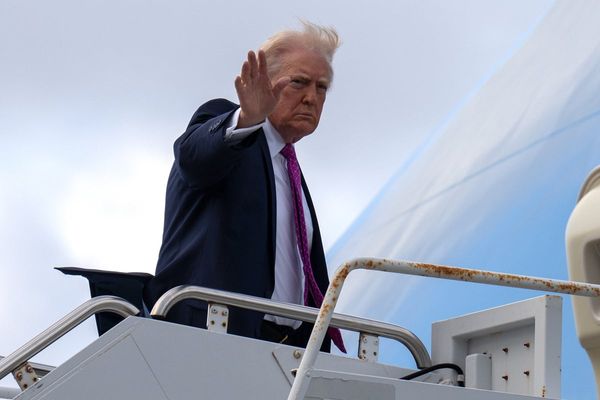
Two minutes into a press briefing, Donald Trump was abruptly approached by a Secret Service agent and escorted out of the briefing room. The president said nothing as he walked out and did not answer a reporter’s question about why he was leaving.
REPORTER: 97,000 children tested positive for coronavirus in the last week of July. Does that give you any pause about schools reopening for in-person learning?
— Aaron Rupar (@atrupar) August 10, 2020
TRUMP: No
REPORTER: So do you still think kids are essentially immune?
TRUMP: Yeah [this is false -- kids can die] pic.twitter.com/5UCuRkOuRK
Trump is asked whether he still plans to hold an in-person G7 meeting in September.
He says he hasn’t sent out invitations and is now “much more inclined to do it after the election” in November.
US President Donald Trump has claimed in his White House coronavirus press briefing that “in recent days, cases have rapidly increased in Japan and Australia.”
Australia continues to see new cases in the hundreds each day, while Japan is seeing cases rise by around 1,500 per day.
But to put this in perspective, the US is confirming roughly 60,000 cases per day. The last time they saw increases in the hundreds was mid-March.
Trump has again blamed China for the coronavirus pandemic, which has infected one in 65 Americans and killed one in 2,000:
And one in every 65 Americans has tested positive for coronavirus https://t.co/QTnW5IQLUu
— Helen Sullivan (@helenrsullivan) August 10, 2020
Trump tries to shift blame to China: "We must stop politicizing the virus and instead be united in our condemnation of how this virus came to America, how this virus came to the world, & we are going to figure it out, and we are going to find out, and we are very angry about it." pic.twitter.com/Q5MQatlWXt
— Aaron Rupar (@atrupar) August 10, 2020
US President Donald Trump is holding a coronavirus briefing at the White House.
A few minutes after the briefing started, he left abruptly. When he returned he said, “It was a shooting outside of the White House... I’d like to thank the Secret Service for doing their always quick and very effective work... Somebody’s been taken to the hospital.” He added, “You were surprised. I was surprised also. I think it’s pretty unusual.”
He said he understands the suspect was armed. “It might not have had anything to do with me.” Asked about the location, Trump said: “It was outside of the premises.”
Hi, Helen Sullivan joining you now. I’ll be bringing you the latest for the next few hours.
Get in touch on Twitter @helenrsullivan or via email: helen.sullivan@theguardian.com.
Brazil on Monday registered 22, 048 new cases of coronavirus and 703 deaths, the health ministry said.
Overall, Brazil now has 3,057,470 confirmed cases, while the death toll has risen to 101,752.

Updated
People arriving in Finland from coronavirus “risk countries” have to self-isolate for 14 days or risk a fine or up to three months’ imprisonment, ministers announced on Monday.
Until now, the Nordic country has relied on arrivals voluntarily quarantining themselves, with no sanctions in place for those who do not follow the recommendation.
Announcing that the new rules will be implemented “as soon as possible”, the health minister, Krista Kiuru, also said arrivals may face compulsory coronavirus testing.
The decision follows a number of reports in recent days of planes arriving from eastern European and Balkan countries carrying passengers who were either found to be infected or who refused to be tested on arrival.
After a number of weeks early in the summer with only a trickle of cases, 135 new infections have been recorded in the past seven days.
“The number of infections has surprised us all,” Kiuru told a press conference on Monday, while health officials blamed arrivals from overseas for some of the increase in cases.
“We have had discussions as to whether we can stop flights from risk countries. We are looking into it,” Kiuru said.
The measures will apply to arrivals to all countries except those on Finland’s green list, which are those with fewer than eight new cases per 100,000 population in the last two weeks.
Currently, 25 countries are deemed safe, including Ireland, Japan, Greece, Cyprus and Uruguay.
According to the World Health Organization, Finland has one of the lowest virus incidence rates in Europe, with just three new cases per 100,000 population.
Updated
The UK government said 46,526 people had died in hospitals, care homes and the wider community after testing positive for coronavirus in the UK, as of 5pm on Sunday. That represented a rise of 21 in the previous 24 hours.
Separate figures published by the UK’s statistics agencies show there have now been 56,600 deaths registered in the UK where Covid-19 was mentioned on the death certificate.
The government also said that in the 24-hour period up to 9am on Monday, there had been a further 816 lab-confirmed cases. Overall, a total of 311,641 cases have been confirmed.

Updated
The US death toll from Covid-19 fell 16% to about 7,200 people last week, the first decline in deaths after four weeks of increases, according to a Reuters tally of state and county reports.
The country posted more than 376,000 new Covid-19 cases for the week ending 9 August, or an average of roughly 53,000 per day. New cases have now fallen for three straight weeks, though the United States still accounts for a quarter of the global total of almost 20 million cases.
Last week’s decline in new cases came largely from recent hot spots. For instance, new cases in Arizona fell by more than 48% in the last week, and on 9 August the state reported fewer than 1,000 cases for the first time since 29 June.
The rate of community spread in Florida, California and Tennessee remained high, but they all reported fewer cases than in the previous week, according to the Reuters tally.
Hawaii had kept the virus at bay for most of the summer, but new cases more than doubled last week to over 1,200. On 6 August, Hawaii governor David Ige said he would reinstate inter-island travel restrictions that require people to quarantine for 14 days.
In South Dakota, new cases increased for the third straight week. More than 100,000 motorcycle enthusiasts are expected to travel from all over the country to attend an annual rally in Sturgis, South Dakota, which began on 7 August.
Nationally, the share of all tests that came back positive for Covid-19 held steady at 8%, according to data from The COVID Tracking Project, a volunteer-run effort to track the outbreak. Mississippi and Texas had the highest positive rates in the country at 21%.
Only 15 states reported a positive rate under 5%, which is the threshold that the World Health Organization considers concerning because it suggests there are more cases in the community that have not yet been uncovered.
Summary
As Australia wakes up, here are some of the latest headlines in our global coronavirus coverage:
- Nearly 20 million cases of coronavirus have been officially confirmed around the world, with the World Health Organisation saying that the number is likely to be reached this week. According to a tally of official statistics kept by Johns Hopkins University, 19,947,467 cases had been recorded by about 9pm GMT on Monday, with 732,650 deaths so far from the pandemic.
- The United States reported 5,023,649 cases of the coronavirus, an increase of 48,690 from its previous count, and said that the number of deaths had risen by 558 to 161,842.
- The European Union’s health agency has called on states seeing an increase in cases of coronavirus to reinstate control measures, as it warned of a “true resurgence” or “risk of further escalation of Covid-19” in several countries.
- Concern is growing that a resurgence of coronavirus in Europe will lead to a “second wave” of uncoordinated border restrictions. In a letter, the European commission warns that “while we must ensure that the EU is ready for possible resurgences of Covid-19 cases ... we should at the same time avoid a second wave of uncoordinated actions at the internal borders of the EU.”
- Greece is “formally” in the midst of a second wave of the coronavirus pandemic, one of the country’s top infectious disease experts said, adding: “We can say that Greece has formally entered a second wave of the epidemic. This is the point that we could win or lose the battle.”
- Wearing a face mask became compulsory on dozens of busy Paris shopping streets and in other popular parts of the city from 8am on Monday as coronavirus numbers continued to tick up in in and around the French capital.
-
Authorities in Iran shut down a newspaper after it published remarks by an expert who cast doubt on official coronavirus figures, claiming they only account for 5% of the real toll. Meanwhile, 189 more people died from Covid-19 and 2,132 more people had tested positive for the virus in the past 24 hours, the country’s health ministry said.
- There is a huge gap between funds needed to fight the coronavirus and funds committed worldwide, World Health Organization chief Tedros Adhanom Ghebreyesus has said. Tedros said that ACT accelerator, an initiative established to develop and distribute tools to counter the spread of the pandemic, had received just one tenth of the funding it needed.
Pakistanis flocked to gyms, salons and restaurants that opened on Monday for the first time in five months after being shut to stop the spread of coronavirus, Reuters reports.
Pakistan has recorded more than 280,000 cases of Covid-19 and nearly 6,100 deaths, but has seen a slowing of numbers since June, when it recorded nearly 7,000 infections and 118 deaths in a single day.
On Sunday, the country recorded 539 new infections and 15 deaths. New daily cases have been under a thousand throughout August.

“Thank God, the government has allowed dine-in; we were managing through take-away, but now business will improve,” said Sher Khan, owner of a tea stall in a bustling area of Karachi, Pakistan’s largest city.
The government allowed a partial resumption of commercial activities in May. Despite reopening the remaining businesses, it urged people take precautions including wearing masks.

In Lahore’s Bazar Mozang, shops were packed and few wore masks. At a clothing and cosmetics shop, Nadeem Sheikh said he was reluctant to turn away customers who did not adhere to the rules for fear of the financial loss.
At a packed salon in the southwestern city of Quetta, Muhammad Usman was happy to shed locks of hair that had grown unruly over the months.
Pointing to his long hair and laughing, Usman said people had started to think he was an ascetic hermit and had approached him with charity, asking him to pray for them.
Gyms opened in the city of Peshawar, with customers relieved they no longer had to train at home.
“I gained 20 kg (44 pounds) because of the closure of gyms,” said Najeeb Ullah Achakzai, 27. “That destroyed all my personality... My marriage was postponed due to my becoming overweight.”
The number of new Covid-19 cases among children in the United States rose 40% in the last two weeks of July, according to a report released just weeks before tens of millions of American students are scheduled to begin the new school year.
Health experts are keeping an eye on coronavirus infections among kids and teenagers as officials struggle with the thorny question of whether to reopen schools for in-person classes, adopt a virtual learning model or a hybrid of the two.
Donald Trump, who is seeking a second term in the White House in a 3 November election, has pushed states to allow students to physically return to classrooms, but health officials have expressed caution about doing so in areas where cases have been rising sharply.
The new report by the American Academy of Pediatrics and the Children’s Hospital Association found that more than 338,000 children have tested positive for Covid-19 since the onset of the US epidemic, with 97,078 new cases reported in the 16-30 July period.
Most of the new infections in this group occurred in states in the US South and West, according to the report, which was based on data from 49 states, New York City, the District of Columbia, Puerto Rico and Guam.
It did not give a reason for the recent surge. Testing for coronavirus overall has risen in the United States and concerns about children as possible spreaders of the virus have been sparked by new studies showing they can catch it.
The American Academy of Pediatrics noted the data showed that severe illness due to Covid-19 appears to be rare among children. The US Centers for Disease Control and Prevention also has said that children who get the virus are less likely to have severe symptoms.
The CDC recently updated its guidance to recommend that schools reopen to some degree unless their communities were experiencing an uncontrolled or high rate of transmission of the virus.
Some cities including Chicago and Los Angeles plan to start the school year with online classes, while New York City, once the epicenter of the US epidemic, plans to have at least some in-person learning in all its school districts in the fall.
Children account for a tiny fraction of the more than 162,000 people who have died from Covid-19 in the United States.
More than 5 million people in the country have been infected with the virus, representing about one-quarter of the total worldwide cases.
UK theatre boss Kwame Kwei-Armah has said a woman removed her mask to cough in the face of his 15-year-old son on public transport.
The director and playwright, who is black, said the white woman said to her son: “This is what you people do.”
He added that his son has since tested negative for coronavirus.
Kwei-Armah, who has been the artistic director of the Young Vic theatre since 2018, tweeted:
I don’t speak of my family on social but last week my 15yr old was on a train when an adult white woman out of the blue removed her mask n coughed in his face. She ran off train shouting ‘this is what u people do’. Covid test has just come in negative. We r relieved. But really?
— Kwame Kwei-Armah (@kwamekweiarmah) August 10, 2020
His directing credits include New York’s Public Theatre, Signature Theatre, Oregon Shakespeare Festival, the Baltimore Symphony Orchestra and Birmingham Repertory Theatre.
His production of One Night In Miami at the Donmar Warehouse was nominated for an Olivier Award for best new play.
The United States Centers for Disease Control and Prevention (CDC) on Monday reported 5,023,649 cases of the coronavirus, an increase of 48,690 cases from its previous count, and said that the number of deaths had risen by 558 to 161,842.
The CDC reported its tally of cases of Covid-19 as of 4pm ET on 9 August versus its previous report a day earlier.
The CDC figures do not necessarily reflect cases reported by individual states.
Updated
Spain’s government defended its response to the coronavirus pandemic on Monday after official data showed the country had overtaken the UK to register the highest total number of cases in western Europe.
“Appropriate measures are being taken to control the pandemic in coordination” with the regions, the government said in a statement, after experts questioned its policies.
The data shows that we are being very active in tracking and detecting the virus.
Health ministry data showed 1,486 new cases were diagnosed in the past day, bringing the cumulative total to 322,980, compared with 311,641 in Britain.
The virus claimed 65 lives in Spain over the past seven days. More than 28,000 people have died in Spain, while more than 46,000 have died in Britain.
The Spanish government also said it had tested nearly 7.5 million people since the start of the pandemic, with over 400,000 tested in the past week alone.
In the first half of April, Spain was second only to the United States in total cases before reining in its soaring infection rate through a strict nationwide lockdown.
However, the virus has rebounded sharply since the state of emergency was lifted six weeks ago, with average daily infections surging from 132 in June to nearly 1,500 in the first 10 days of August.
In a letter published in the journal the Lancet last week, a group of Spanish health experts called for an independent evaluation of the government’s handling of the crisis and highlighted a litany of flaws.
One signatory, Ildefonso Hernandez Aguado, a public health professor at Alicante’s Miguel Hernandez University, said a lack of qualified tracing staff was allowing the disease to spread unseen.
“Some regions have not understood that this was the key in the months after the lockdown and in the long term,” he said, stressing that authorities should begin hiring and training new personnel as soon as possible.
He also pointed the finger at Spain’s highly social culture:
This is a country that doesn’t understand holding a celebration, or taking a holiday if you’re not going to share them.
Summary
The latest headlines in our world coronavirus coverage include:
- Nearly 20 million cases of coronavirus have been officially confirmed around the world, with the World Health Organisation saying that the number is likely to be reached this week. According to a tally of official statistics kept by Johns Hopkins University, 19,936,547 cases had been recorded by about 6pm GMT on Monday, with 732,467 deaths so far from the pandemic.
- The European Union’s health agency has called on states seeing an increase in cases of coronavirus to reinstate control measures, as it warned of a “true resurgence” in several countries. In an update on Monday, the European Centre for Disease Prevention and Control (ECDC) warned of a “risk of further escalation of Covid-19.”
- Concern is growing that a resurgence of coronavirus in Europe will lead to a “second wave” of uncoordinated border restrictions. In a letter, the European commission warns that “while we must ensure that the EU is ready for possible resurgences of Covid-19 cases ... we should at the same time avoid a second wave of uncoordinated actions at the internal borders of the EU.”
- Greece is “formally” in the midst of a second wave of the coronavirus pandemic, one of the country’s top infectious disease experts said. “We can say that Greece has formally entered a second wave of the epidemic. This is the point that we could win or lose the battle,” said Gkikas Magiorkinis, assistant professor of hygiene and epidemiology at Athens university.
- Wearing a face mask became compulsory on dozens of busy Paris shopping streets and in other popular parts of the city from 8am on Monday as coronavirus numbers continued to tick up in in and around the French capital.The order applies to everyone aged 11 or over covers crowded zones where physical distancing is difficult, police said.
-
Authorities in Iran shut down a newspaper after it published remarks by an expert who cast doubt on official coronavirus figures, claiming they only account for 5% of the real toll. Meanwhile, 189 more people died from Covid-19 and 2,132 more people had tested positive for the virus in the past 24 hours, the country’s health ministry said.
- There is a huge gap between funds needed to fight the coronavirus and funds committed worldwide, World Health Organization chief Tedros Adhanom Ghebreyesus has said. Tedros said that ACT accelerator, an initiative established to develop and distribute tools to counter the spread of the pandemic, had received just one tenth of the funding it needed.
That’s it from me, Damien Gayle, for today.
For those of you who were concerned about the best way to manage the risk of coronavirus while having sex, a UK-based sexual health charity has published a list of guidelines, which include wearing face coverings, avoiding kissing and picking positions where participants are not face to face during intercourse.
Research by the Terrence Higgins Trust (THT), with sexual health clinic 56 Dean Street, found 84% of people had abstained from sex outside of their immediate household after lockdown restrictions were imposed in March.
However, after several months of the lockdown and its partial easing, THT said it was no longer realistic to ask people to completely refrain from sex.
In the guidance, the charity advised the best sexual partner during the pandemic is yourself or someone you live with. Masturbation, using sex toys or participating in phone or online sex are recommended as the safest options, as these can be done at a distance from others.
If having sex with someone outside of your household, THT advised having one regular partner or limiting the number of sexual partners as well as taking other precautions.
Sexual partners are advised to wash their hands for 20 seconds before and after sex to help reduce the risk. Due to the ways Covid-19 is spread, the charity further recommends not kissing and wearing a face covering during intercourse.
The charity also advises picking positions where participants are not face to face.
Finally, having borne those precautions (and others on the THT website) in mind, THT’s medical director Dr Michael Brady adds:
Once you’ve made the decision to have sex, try to relax and enjoy it
Updated
Health authorities in France have reported 785 new confirmed coronavirus cases in the past 24 hours, compared to 2,288 on Friday, but gave no indication of the number of infections over the weekend, Reuters reports.
In its latest update, the health ministry said that it had registered 10,800 new cases over the past week, but did not provide an updated number for the total cumulative number of coronavirus infections, which on Friday stood at 197,921.
The ministry said that over the past week, 10,800 new cases had been registered but it was not immediately clear what period this referred to and whether infections over the weekend were included in this total.
Denmark’s health minister says the virus is “on its way back,” and has announced local measures to contain it, according to the Associated Press.
“We are intervening with local measures that are fitted to local needs,” Magnus Heunicke told a news conference on Monday. “We are doing that to avoid a total lockdown of the country.”
Increases in the number of cases were reported in Aarhus — Denmark’s second-largest city — and in six other places geographically spread across the country of nearly 6 million.
Since Sunday, Denmark has recorded 76 new cases, bringing its total so far since the outbreak began to 14,815 cases and 620 deaths. More than half of the new cases are in Aarhus.
The decision comes after Aarhus made it mandatory as of Monday to use face masks on public transportation.
Restaurants and bars in some of Greece’s top tourist destinations will be subject to a night curfew, after coronavirus infections in the country reached a new high.
The announcement comes after one of Greece’s top infectious disease experts told the Guardian that the country was “formally” in the grip of a second wave of coronavirus, and the government said visitors arriving from Sweden, Belgium, Spain, the Netherlands and the Czech Republic will need proof they have tested negative for coronavirus to gain entry
Areas in which eateries and bars will be closed from midnight to 07:00 am include the popular islands of Mykonos, Santorini, Corfu, Crete, Rhodes, Zakynthos and Kos, Aristotelia Peloni, a government spokeswoman, said in a televised address, according to the French news agency AFP.
Some of these destinations are known for late-night clubbing.
The cities of Thessaloniki, Larissa, Volos and Katerini were also affected, as was the Halkidiki peninsula which is popular with Balkan visitors.
The restrictions will be in place from Tuesday to 23 August, she said.
Greece’s public health watchdog on Sunday announced 203 new infections, the highest since the start of the pandemic. A total of 213 people have died from the virus. Another 126 infections were announced on Monday,
Officials have blamed the increase in cases on overcrowding in clubs and social events. Only 10% of cases in Greece can be traced to foreign arrivals.
EU health agency calls for new lockdowns
The European Union’s health agency has called on member states that are seeing an increase in cases of coronavirus to reinstate control measures, as it warned of a “true resurgence” in several countries.
In a “rapid risk assessment” published on Monday, the European Centre for Disease Prevention and Control (ECDC) warned of a “risk of further escalation of Covid-19” across the continent. The agency said:
While many countries are now testing mild and asymptomatic cases, which has resulted in increased case reports, there is a true resurgence in cases in several countries as a result of physical distancing measures being relaxed.
The Stockholm-based agency said that the Covid-19 pandemic continued to “pose a major public health threat”, in spite of a recent decline in cases. Since the relaxation of movement restrictions and other measures, the spread of the virus had resumed, it said.
“Further increases in the incidence of Covid-19, and associated hospitalisations and deaths, can be mitigated if sufficient control measures are reinstalled or reinforced in a timely manner,” the agency said.
Countries that are now observing an increase in cases, after having lifted their control measures following a temporary improvement in the epidemiological situation, should consider re-instating selected measures through a phased, step-wise and sustainable approach.
For those countries seeing an increase “the risk of further escalation of COVID-19 is high.” If those countries fail to implement or reinforce restrictions, the risk was “very high,” it warned.
The agency conceded that as the pandemic wears on “it is natural for people to become fatigued and reduce compliance with public health measures.”
Risk communication efforts should be tailored to changes in the local situation and continuous messaging is needed to remind the population that the SARS-CoV-2 virus will remain in circulation within the community and that they should take everyday measures to reduce potential exposure, such as practising cough and respiratory etiquette, physical distancing and hand hygiene, wearing face masks, reducing the number of contacts and staying home when ill.
Rate of new infections in Ireland overtakes UK
The rate of new coronavirus infections in Ireland over the past 14 days is now higher than that of the UK, figures released by the European Centre for Disease Control show.
After a spike in cases over the past week, Ireland’s infection rate is 16.9 cases per 100,000 people, compared to 16.5 in the UK, which remains the European country worst-affected so far by the pandemic.
According to RTE, Ireland’s national public broadcasting corporation, the Irish government used figures from the ECDC to decide which countries went on its green list for travel.
Updated
Parisians and holidaymakers strolling along the banks of the River Seine and some crowded areas around Paris must now wear a mask, as the authorities imposed new rules to curb a rise in COVID-19 infections https://t.co/P9ATnzM6OR pic.twitter.com/gu9E9bDLdg
— Reuters (@Reuters) August 10, 2020
Royal Caribbean Group has reported a net loss of $1.6bn (£1.2bn) for the second quarter of the year, after the coronavirus pandemic caused the cruise operator to cancel all sailings during that period, writes Joanna Partridge for the Guardian business desk.
The group, which operates brands including Royal Caribbean and Celebrity Cruises, made a $473m net profit during the same period in 2019.
The company, which suspended all of its voyages globally on 13 March, said the Covid-19 pandemic was posing an “unprecedented challenge” to the cruise industry.
Royal Caribbean is burning through between $250m and $290m cash a month, while its ships are not sailing, because of ongoing costs including operating and administrative expenses, and commitments to build new vessels.
A 15-year-old boy in England has admitted punching a student from Singapore and saying: “I don’t want your coronavirus in my country.”
The “vicious and completely unprovoked” attack by the teenager, who cannot be named for legal reasons, on Oxford Street in February left Jonathan Mok, 23, with a bloodied and bruised face which required surgery, said the Crown Prosecution Service (CPS).
Mok was coming back home after a dinner in central London when he was “clearly targeted in this hate crime because of his ethnic appearance”, Daniel Kavanagh, a senior crown prosecutor, said, according to the PA news agency.
The boy admitted wounding or inflicting grievous bodily harm at Highbury Corner Magistrates’ Court on Monday, the CPS said. He will be sentenced at the same court on 7 September.
Kavanagh said:
This was a vicious and completely unprovoked attack on a young man who was simply making his way home with a friend after dinner in central London. Hate crime has a corrosive effect on our society and nobody should be subjected to such vile behaviour.
The prosecution case included CCTV footage of the incident, leaving the defendant little choice but to plead guilty and own up to his actions. I hope this conviction provides the victim with some comfort and shows that the CPS will take action to prosecute those who commit hate crimes.”
The CPS said it will be applying for a “hate crime uplift” at the sentencing, which can see defendants handed a lengthier sentence.
Earlier we reported that travellers from Lithuania were banned from entering Belgium. A reader has written in to say this is incorrect. While Lithuania does appear on the Belgian government’s “red list”, this is because Lithuania bans travellers entering the country from Belgium, rather than vice versa.
The UK recorded 816 confirmed cases of COVID-19 on Monday, according to the Department of Health and Social Care.
On Sunday there were 1,062 new positive tests for the coronavirus.
Tourists from certain countries will need proof of negative coronavirus test before entering Greece
Visitors to Greece arriving from Sweden, Belgium, Spain, the Netherlands and the Czech Republic will need proof they have tested negative for coronavirus to gain entry, the government said on Monday.
Reuters reports:
Tightening controls after a recent spike in Covid-19 infections, the government said the requirement will go into effect from August 17. The required test cannot be older than 72 hours prior to entry.
On Sunday Greece reported its highest daily tally of coronavirus infections, 203 cases, since the start of the outbreak.
The brought the total number of infections in the country to 5,623 since its first infection surfaced in late February.
The government said the same requirement will apply to all visitors entering Greece via its land borders, including Greek citizens returning home.
The government also moved to suspend public gatherings, including shows and concerts, where audiences are not seated.
Updated
Sinopharm, a Chinese state-owned pharmaceutical company, has begun phase 3 clinical trials of a Covid-19 vaccine in Bahrain. The company launched similar trials in the United Arab Emirates last month.
Reuters reports:
The human trial, which launched in the UAE capital Abu Dhabi in mid-July, is a partnership between Sinopharm*s China National Biotec Group (CNBG) and Abu Dhabi-based artificial intelligence and cloud computing company Group 42 (G42).
G42 Healthcare CEO Ashish Koshy said expanding the trial to the small island state of Bahrain will increase the numbers of participants on a par with trials under way in nations with much larger populations.
The study, which uses an inactivated vaccine, will include around 6,000 citizens and resident volunteers in Bahrain over 12 months, the health ministry said.
No Covid-19 vaccine has yet been approved for commercial use.
The trial in the UAE, which was expanded from Abu Dhabi to include another centre in Sharjah emirate, on Thursday reached a milestone of 5,000 vaccinations, a joint statement from the trial organisers said.
Bahrain, with a population of 1.5 million, has recorded more than 44,000 cases of the new coronavirus and 162 deaths.
Updated
India has registered a record 1,007 fatalities in the past 24 hours as new coronavirus infections surged by 62,064 cases, the Associated Press reports.
The health ministry said the total fatalities reached 44,386 on Monday. The number of confirmed cases reported so far are 2,215,074. At least 634,935 patients were still undergoing treatment.
India has recorded more than 60,000 cases of the virus daily in the last four days and more infections than any other country in the world for six consecutive days. It has averaged around 50,000 new cases a day since mid-June.
Infections in India remain concentrated in 10 states that contribute nearly 80% of the new cases.
India has the third-highest caseload in the world after the United States and Brazil. It has the fifth-most deaths but its fatality rate of about 2% is far lower than the top two hardest-hit countries.
EU warns over uncoordinated border controls in Europe
Concern is growing that a resurgence of coronavirus in Europe will lead to a “second wave” of uncoordinated border restrictions that will undermine the open borders on which the European Union is founded.
In a letter to national governments, seen by the Associated Press, the European commission warns that “while we must ensure that the EU is ready for possible resurgences of Covid-19 cases ... we should at the same time avoid a second wave of uncoordinated actions at the internal borders of the EU.”
“The re-establishment of ineffective restrictions and internal border controls must be avoided. Rather, the response should be to have targeted, proportionate and coordinated measures, informed by scientific evidence,” said the letter, sent to the 27 EU member countries and Britain.
The letter comes after some countries have imposed new restrictions, or demanded that travellers quarantine, in an echo of the panic border closures which blocked the movement of supplies and medical equipment after Europe’s first outbreak emerged in Italy in February.
Experts fear that countries are becoming so used to lowering the gates at their frontiers as they see fit that the future of Europe’s ID-check free Schengen area is in peril.
Belgium — where EU headquarters are based — does not allow travel to some regions in Spain, notably Catalonia in the north, and also has bans on people coming from parts of France, Britain, Bulgaria, Croatia, Romania and Switzerland.
Scandinavian nations are notably quick to react to any rise in infection rates. Denmark’s foreign ministry now has Spain, Bulgaria, Luxembourg, Romania and Andorra on its so-called red list. Norway, which is not an EU member but is part of the Schengen area, has not hesitated either.
The Migration Policy Institute said “Scenes of backed-up borders and checkpoints would have been unthinkable just five years ago. Yet today, the unilateral reintroduction of border checks and border closures has become an accepted part of member states’ toolkits to respond to cross-border emergencies.”
The danger, the institute said, is that “the instinct to return to national borders at times of crisis may only grow stronger, particularly as second or third waves of the virus necessitate the reintroduction of some level of travel restrictions.”
Updated
The actor Antonio Banderas has confirmed on Twitter that he is suffering from coronavirus. In a message posted on 10 August, his 60th birthday, the actor said he was forced to celebrate in quarantine but reassured followers that his health was largely unaffected.
Quiero contaros lo siguiente... pic.twitter.com/u579iBVLM0
— Antonio Banderas (@antoniobanderas) August 10, 2020

Educational authorities across Germany are divided over whether students should be required to wear masks during lessons, as schools reopen in large swathes of the country today, writes Philip Oltermann, the Guardian’s Brussels bureau chief.
Pupils in the states of Berlin, Brandenburg, Berlin and Schleswig-Holstein got back into classrooms on Monday, following from Mecklenburg-Vorpommern and the city state of Hamburg.
In four states, pupils and staff are required to wear masks in corridors, common rooms, stairwells and canteens, but not in classrooms.

The education ministry of Schleswig-Holstein merely recommends the use of face masks in the first two weeks after the summer holidays, but also advises students from year seven (aged 13-14) to wear masks in their classrooms.
Teachers’ unions have criticised the rules: “Starting schools with full classrooms can only be something other than a risky experiment if we are prepared to replace safety distances with other effective hygiene measures at schools,” said Heinz-Peter Meidlinger, the head of the German Association of Teachers.
His association has praised measures taken in North-Rhine Westphalia. When Germany’s most populous state opens secondary schools on Wednesday, students of all ages will be required to wear masks anywhere on school grounds, including classrooms.
Updated
Greece 'formally' in second wave of outbreak
Greece is “formally” in the midst of a second wave of the coronavirus pandemic, one of the country’s top infectious disease experts has told the Guardian, writes Helena Smith, the Guardian’s Athens correspondent.
After recording its highest number of positive diagnoses ever – a record 203 cases on Sunday – the nation has reached a critical juncture in its ability to contain further spread of the virus.
“We can say that Greece has formally entered a second wave of the epidemic. This is the point that we could win or lose the battle,” said Gkikas Magiorkinis, assistant professor of hygiene and epidemiology at Athens university. The former Oxford University academic, among the expert scientists advising the government, forecast cases climbing to 350 a day if the “dramatic increase” continued unabated.
“Unless there is a change in the trend that we are seeing we are likely to propose more measures along the lines we have seen in Poros,” he added referring to the Argo Saronic island where a surge in cases late last week prompted authorities to announce an unprecedented crackdown including the closures of clubs, bars and restaurants from 11pm.
The Greek health minister Vasillis Kikilias hinted that further containment measures were likely to be announced later on Monday warning “transmission of the virus is growing dangerously”.
Until this month, Greek health officials appeared to have the epidemic under control but Magiorkinis said the abrupt rise, compounded by a sudden jump in the number requiring intubation, up from nine on 1 August to 22 last night, left no doubt that the highly contagious disease was working its way through society. Prior to additional precautionary measures being enforced last week – not least mask-wearing in all enclosed spaces – Greece had seen its effective reproductive number, or R number, reach 1.
“Our main concern is the degree to which this epidemic can stretch any health system,” he said. “Greece currently has around 1,000 beds that can support Covid-19 patients … no health system, anywhere in the world, can cope effectively with a full epidemic resurgence. In the next two weeks we could have as many as 100 people intubated, almost matching the number we had at the height of the pandemic.”
Tourism has partly played a role for the sudden increase. But echoing government officials, Magiorkinis attributed the resurgence mostly to lax observance of hygiene protocols by Greeks particularly younger generations who have flooded bars and beaches in recent weeks.
Updated
Authorities in Iran have shut down a newspaper after it published remarks by an expert who said that official figures on the country’s coronavirus outbreak only account for 5% of the real toll, according to the Associated Press.
Mohammad Reza Sadi, the editor-in-chief of Jahane Sanat, told the official IRNA news agency that authorities closed his newspaper, which began publishing in 2004 and was mainly focused on business news.
On Sunday, the daily quoted Mohammad Reza Mahboobfar, an epidemiologist the paper said had worked on the government’s anti-coronavirus campaign, as saying the true number of cases and deaths in Iran could be 20 times the number reported by the health ministry.
He also said the virus was detected in Iran a month earlier than 19 February, when authorities announced the first confirmed case. He said they held up the announcement until after the commemorations of the anniversary of the 1979 Islamic Revolution and parliamentary elections earlier that month.
“The administration resorted to secrecy for political and security reasons,” he said, and only provided “engineered statistics” to the public.
Authorities in Iran have come under heavy criticism since the start of the pandemic because of their reluctance to impose the kind of sweeping restrictions seen elsewhere in the region. The country has suffered the deadliest outbreak in the Middle East.
From today, people in Ireland are requested to wear a face covering in a variety of indoor settings, such as supermarkets, shopping centres, cinemas and theatres.
— Department of Health (@roinnslainte) August 10, 2020
Those under 13 or who have difficulty wearing them are not asked to do so. #COVID19 #HoldFirm pic.twitter.com/6wBmi7YIGb
The coronavirus outbreak has placed India’s largest crocodile park under threat, according to Reuters.
Annual sales of about 5 million tickets usually make up roughly half the revenue of the park, located about 25 miles from the southern city of Chennai, but it has been shut since 16 March, with no prospect of reopening in sight.
It is home to more than 2,000 crocodiles and alligators, as well as reptiles such as turtles, tortoises, lizards and snakes.
The lockdowns during the summer vacation season have cost an estimated 14 million rupees (£143,245) as visitors dropped by almost 2.5 million, said Allwin Jesudasan, the director of the Madras Crocodile Bank.
“Our present funding situation will allow us to stay functional for another three or four months,” he said.
If funds run out, the future of its animals was not immediately clear, according to Reuters.

In Iran, 189 more people have died from Covid-19 in the past 24 hours, the country’s health ministry has said, according to the Islamic Republic News Agency.
Sima Sadat Lari, the health ministry spokeswoman, said the total death toll from the coronavirus outbreak in Iran had now reached 18,616.
Meanwhile, 2,132 more people had tested positive for the virus over the past 24 hours, bringing the total number of cases in the country, scene of the Middle East’s worst outbreak, to 328,844, 286,642 of whom have recovered.
There were 3,992 Covid-19 patients in a critical condition in intensive care units, Lari said.

WHO has received just 10% of funds needed for Covid fight
There is a huge gap between funds needed to fight the coronavirus and funds committed worldwide, World Health Organization chief Tedros Adhanom Ghebreyesus has said.
In a press briefing on Monday, Tedros said that ACT accelerator, an initiative established to develop and distribute tools to counter the spread of the pandemic, had received just one tenth of the funding it needed. He said:
There is a vast global gap between our ambition for the ACT-Accelerator and the amount of funds that have been committed. While we’re grateful for those that have made contributions, we’re only 10% of the way to funding the billions required to realise the promise of the ACT Accelerator.
And this is only part of the global investment needed to ensure everyone everywhere can access the tools. For the vaccines alone, over $100 billion dollars will be needed. This sounds like lot of money and it is.
But it’s small in comparison to the 10 trillion dollars that have already been invested by G20 countries in fiscal stimulus to deal with the consequences of the pandemic so far.
In the same briefing, Dr Mike Ryan, head of WHO’s emergencies programme, said the pandemic has shown no seasonal pattern and if health authorities take the pressure off fighting it, it will bounce back.
He said said Western Europe and elsewhere needed to react fast to new flareups.
Shortages of personal protective equipment and medical supplies in the US could persist for years without strategic government intervention, officials from healthcare and manufacturing industries have said, writes Jessica Glenza for the Guardian US.
Officials said logistical challenges continue seven months after the coronavirus reached the United States, as the flu season approaches and as some state emergency management agencies prepare for a fall surge in Covid-19 cases.
Although disarray is not as widespread as it was this spring, hospitals said rolling shortages of supplies range from specialized beds to disposable isolation gowns to thermometers.
“A few weeks ago, we were having a very difficult time getting the sanitary wipes. You just couldn’t get them,” said Dr Bernard Klein, chief executive of Providence Holy Cross medical center in Mission Hills near Los Angeles. “We actually had to manufacture our own.”
Serena Williams has announced she will help to donate more than 4 million face masks to US schools serving the most disadvantaged pupils as the school year begins this autumn.
The 38-year-old tennis superstar says she will work with Bella+Canvas, the T-shirt maker, and the national school board to also provide educational materials about masks to 54 million school pupils at all 115,000 US schools.
The head of California’s public health department has resigned after it emerged that a glitch had caused a lag in collecting coronavirus test information used to make decisions about reopening businesses and schools, the Associated Press reports.
Dr Sonia Angell said she was departing from her role as director and state public health officer at the California department of public health in a letter to staff released by the California health and human services agency.
She did not give a specific reason for her departure, but her resignation came after Dr Mark Ghaly, the secretary of California HHS, said the glitch caused up to 300,000 records to be backlogged, though not all of them were coronavirus cases and some could be duplicates.
The problem affected the California Reportable Disease Information Exchange, also known as CalREDIE. The glitch has since been repaired.
“I am grateful to Dr. Angell for her service to the people of California,” Ghaly said in the statement late on Sunday. “Her leadership was instrumental as Californians flattened the curve once and in setting us on a path to do so again.”
Hi, Damien Gayle here, taking the reins on the live blog for the next eight hours or so, bringing you the latest coronavirus-related news and headlines from around the world.
If you have any comments, tips or suggestions about what we could be covering on here, feel free to drop me a line, either via email to damien.gayle@theguardian.com, or via Twitter direct message to @damiengayle.
Reuters has just drawn up a tally of global coronavirus cases and deaths.
More than 19.92 million people have been reported to be infected with Covid-19 across the world, and 729,883 have died.
Infections have been reported in more than 210 countries and territories since the first cases were identified in China in December 2019.
Fresh outbreaks of Covid-19 in north-east Spain continue to cause concern. In the past 24 hours, Catalonia has reported 863 new infections and five deaths while there were 633 new cases in neighbouring Aragón. With the weekend’s figures still to be taken into account, Spain has had 314,362 cases and 28,503 deaths.
Fresh outbreaks have also been reported in Marbella and elsewhere on the Costa del Sol. The football club Atlético de Madrid, who are due to travel to Lisbon to take part in the Uefa Champions League, also reported two cases, although it was not clear if those affected were player or staff.
According to Johns Hopkins University, Spain has overtaken the UK and has the most cases of any western European country. As a result, a majority of Schengen group countries have joined the UK in advising against travel to Spain. The only exceptions at present are Portugal, Poland, Luxembourg, Romania and Sweden.

In a letter published in the medical journal The Lancet, 20 Spanish epidemiologists call for an independent review of the country’s handling of the Covid-19 crisis. Noting that Spain is among the worst affected countries, they add that the nation has “one of the best performing health systems in the world and ranks 15th in the Global Health Security index. So how is it possible that Spain now finds itself in this position?”
Despite the recent spike in cases, Maria Neira, the WHO’s director of public health and environment, said a new national lockdown would only be justified by a “very alarming” epidemiological scenario which she said “simply doesn’t exist”.
She was responding to a report widely circulated on social networks that Spain is to go into full lockdown as of 18 September. The report was dismissed by Spanish government sources.
Updated
Wearing a face mask became compulsory on dozens of busy Paris shopping streets and in other popular parts of the city from 8am on Monday as coronavirus numbers continued to tick up in in and around the French capital.
The order applies to everyone aged 11 or over covers crowded zones where physical distancing is difficult, police said, including open-air markets and streets with large numbers of cafés and bars, such as the rue Oberkampf and two popular streets in the Marais district, the rue de Bretagne and the rue des Francs-Bourgeois.

The city’s busiest boulevards as well as the pedestrianised banks of the Seine and the Canal St Martin - popular evening and weekend gathering places - are also included, plus some tourist attractions such as Montmartre with its warren of narrow streets. More open parts of the city, such as the zone around the Eiffel Tower, are not covered.
#COVID19 😷 | Le port du masque sera obligatoire à #Paris dans les zones à forte fréquentation de personnes à compter du lundi 10 août à 8h.https://t.co/HOfho8JcQn
— Préfecture de Police (@prefpolice) August 8, 2020
Pour plus de détails consultez notre communiqué de presse 👇 pic.twitter.com/cPigy6eWge
“The target is places with a lot of people places with a lot of people where it is hard to keep more than a metre apart, and areas where people go to to relax in the evening and at weekends, where distancing measures are being forgotten,” said Nicolas Nordmanm, a city hall safety official.
Nordman said that for the first few days of the new order people not wearing masks would be warned, but that after a fortnight police would start handing out fines of €135. The zones where masks are obligatory will be evaluated regularly, he said, and could be expanded.
Several other French cities, including Lille, Nice and Biarritz, have adopted similar measures in recent days as the spread of Covid-19 has accelerated in several parts of France.
Updated
Chinese air force jets briefly crossed the mid-line of the Taiwan Strait on Monday and were tracked by Taiwanese missiles, Taiwan’s government said, as US health chief Alex Azar visited the island to offer President Donald Trump’s support.
Azar arrived in Taiwan on Sunday, the highest-level Us official to visit in four decades, and praised the country’s response to Covid-19.
China, which claims the island as its own, condemned the visit which comes after a period of sharply deteriorating relations between China and the US.

China, which had promised unspecified retaliation to the trip, flew J-11 and J-10 fighter aircraft briefly on to Taiwan’s side of the sensitive and narrow strait that separates it from its giant neighbour, at about 9am (0100 GMT), shortly before Azar met Taiwan President Tsai Ing-wen, Taiwan’s air force said.
The aircraft were tracked by land-based Taiwanese anti-aircraft missiles and were “driven out” by patrolling Taiwanese aircraft, the air force said in a statement released by the defence ministry.
China’s defence ministry did not immediately comment. A senior Taiwan official familiar with the government’s security planning told Reuters that China was obviously “targeting” Azar’s visit with a “very risky” move given the Chinese jets were in range of Taiwan’s missiles.
The incursion was only the third time since 2016 that Taiwan has said Chinese jets had crossed the strait’s median line.
The Trump administration has made strengthening its support for the democratic island a priority, amid deteriorating relations between Washington and Beijing, and has boosted arms sales.
Updated
Hong Kong has reported 69 new coronavirus cases, of which 67 were locally transmitted, as authorities battle to contain a resurgence of the virus in the financial hub.
Since late January, over 4,000 people have been infected in Hong Kong, and 55 people have died. Yesterday, it reported 72 new cases.
Indonesia has also reported its daily tally of new coronavirus cases and deaths. On Monday, the country’s total infections rose by 1,687 to 127,083.
Data from the government’s Covid-19 task force also showed a further 42 people had died after being diagnosed with the virus.
Russian authorities have confirmed 5,118 new Covid-19 infections, pushing the national caseload to 892,654.
The country’s total number of coronavirus cases remains as the fourth largest number in the world.
The official death toll also rose to 15,001 on Monday after authorities said in their daily coronavirus report that 70 people had died in the last 24 hours.
Australia has recorded its biggest daily rise in Covid-19 deaths, although a slowdown in new cases has given hope to officials that a second wave in the state of Victoria may have peaked.
Nineteen people had died from the virus, all in Victoria, in the past 24 hours, a national daily record. However only 337 people had been diagnosed with coronavirus across the country, the lowest one-day rise since July 29, officials said on Monday.

Michael Kidd, Australia’s deputy chief medical officer, told reporters:
This is an agonising day for the members for the 19 families who have lost a loved one to Covid-19 today.
“We are now seeing the first promising signs of a significant decline in the number of cases.”
The slowdown in cases comes more than a month after the nearly 5 million residents of Melbourne, capital of Victoria, were told to stay at home, and a week after most businesses in the country’s second-largest city were ordered to close in an attempt to curb the spread of the disease.
With around 21,000 Covid-19 cases and 314 deaths, Australia has still recorded fewer infections and fatalities than many other developed nations.
Outside the two largest states of Victoria and New South Wales, the virus has been effectively eliminated.
Updated
The US health secretary has praised Taiwan’s response to the Covid-19 pandemic during a rate high-level visit to the country.
Alex Azar met with president Tsai Ing-wen, during the highest-level US visit in more than four decades, pledging “strong support and friendship” from president Donald Trump, reports my Beijing-based colleague Lily Kuo.

The meeting in Taipei on Monday threatened to escalate worsening tensions between the Washington and Beijing, the latter of whom’s government claims Taiwan is part of the People’s Republic of China, taking issue with any acknowledgement of Taiwan’s status as a sovereign state.
Applauding Taiwan’s response to the Covid-19 crisis, Azar said: “Taiwan’s response to Covid-19 has been among the most successful in the world, and that is a tribute to the open, transparent, democratic nature of Taiwan’s society and culture.”
You can read the full report here:
Updated
The Red Cross has trained 43,000 North Korean volunteers to help fight Covid-19 and provide flood assistance in communities.
Leader Kim Jong-un declared an emergency last month and imposed a lockdown in Kaesong, near the border with South Korea, after a man who defected to the South in 2017 returned to the city showing coronavirus symptoms.
In recent days, heavy rain and flooding have also sparked concern about crop damage and food supplies in the isolated county.
The International Federation of Red Cross and Red Crescent Societies (IFRC) has built an extensive network of North Korean volunteers to help residents in all nine provinces to avoid the virus and reduce damage from floods and landslides, spokesman Antony Balmain told Reuters.
“Hundreds of homes have been damaged and large areas of rice fields have been submerged due to heavy rain and some flash flooding,” Balmain said.
In Kaesong, which was grappling with both the lockdown and floods, IFRC volunteers were providing 2,100 families most at risk with relief items including tarpaulins, kitchen sets, quilts, hygiene kits and water containers.
North Korea has not confirmed any coronavirus cases but has enforced strict quarantine measures. South Korea has said there is no evidence the returning defector was infected.
The IFRC last month provided North Korea with kits designed to run up to 10,000 coronavirus tests, alongside infrared thermometers, surgical masks, gowns and protective gear.
I’m Amy Walker, taking over from my colleague Helen Sullivan in Australia. I’ll be running the global blog from the UK for the next few hours.
Updated
That’s it from me, Helen Sullivan for today. Thanks for following along.
Before I go – here is a piece I wrote about finally being reunited with my husband, five months after I kissed him goodbye and boarded a flight from Beirut to Sydney:
More on the call to regularly test teachers and schoolchildren, from PA media:
Schools minister Nick Gibb did not support the call, saying: “All the advice we’ve had is the measures that we’re putting in place, the hierarchy of controls about hygiene and so on and bubbles within schools, is the most effective method of reducing the risk of transmission of the virus.”
Mr Johnson, who has spoken of a “moral duty” to reopen schools, is expected to focus on the minimal risk getting children back in class presents to their health and the potential dangers of keeping them away.
But National Education Union deputy general secretary Avis Gilmore called for ministers to “be clear” about support if a second wave of the virus strikes.
“Robust track, trace and test alongside health and safety checks in schools and colleges are necessary,” she said.
Boris Johnson is facing widespread calls to boost coronavirus testing and tracing in order to safely reopen schools to all pupils without imposing further restrictions on businesses or social lives, PA media reports.
The Prime Minister said it is the “national priority” to get children back in class in England next month, but he has been warned by scientific advisers that “trade-offs” may be necessary to keep transmission down.
Teachers, scientists, opposition politicians and the children’s commissioner for England Anne Longfield have all called for improvements to testing before pupils return.

Ms Longfield welcomed Mr Johnson’s commitment to make children the priority after previously accusing ministers of treating them as “an afterthought”.
But she said regular testing of pupils and teachers, perhaps as frequently as weekly, could be needed even if they do not exhibit symptoms to keep transmission rates down.
“I think it needs to be as regular as it needs to be, to ensure that the infection is caught and identified as quickly as possible and then the tracking system can move on from that,” she told Times Radio.
Summary
Here are the key developments from the last few hours:
- Globally coronavirus cases are nearing 20m, with almost 730,000 known deaths. The current number of confirmed infections stands at 19,792,519, according to data from Johns Hopkins University, with total new cases daily averaging more than 250,000.
- Australia recorded its deadliest day of the pandemic on Monday, with 19 deaths. The nation is dealing with an outbreak in its second largest city, Melbourne, where authorities have struggled to contain the spread of the virus, which began in quarantine facilities.
- In China new locally transmitted cases fell to just 14 in the past 24 hours, the National Health Commission reported on Monday. The low figure was offset, however, by 35 cases brought into the country by Chinese travellers from overseas arriving in seven different cities and provinces across the country. All the cases of local transmission were in the northwestern region of Xinjiang, whose main city Urumqi is the centre of China’s latest outbreak. There are now 29 countries with higher cases than China, which has 88,793 confirmed infections and fewer than 5,000 deaths.
- Britain saw cases rise by 1,062 on Sunday, going over 1,000 for the first time since late June. As cases rose in the country, new local lockdowns have been implemented in some areas and worries over a second wave of infections were rife.
- In Greece, authorities announced a record daily number of 203 new coronavirus cases, with one death. The total number of cases is now 5,623, with 212 deaths. Greece introduced an early lockdown in mid-March which buffered the country from the devastating effects of the pandemic seen in many of its European counterparts.
- US Health Secretary Alex Azar is in Taipei, Taiwan for a three-day visit to promote shared democratic values and the island’s success in taming the coronavirus. Azar said: “Taiwan’s response to Covid-19 has been among the most successful in the world, and that is a tribute to the open, transparent, democratic nature of Taiwan’s society and culture.”
- New Zealand has reported its 101st day in a row with no recorded community transmission of Covid-19 from an unknown source. All 21 active cases of the coronavirus have been diagnosed in travellers returning to New Zealand from other countries; all of them are in quarantine at the government’s managed isolation facilities. There were no new cases of the coronavirus recorded in the quarantine hotels on Monday.
Consumer borrowing from UK banks will fall at the fastest rate on record in 2020, amid the recession caused by the coronavirus pandemic, forecasts suggest.
Banks are expected to lend 15.9% less to consumers via personal loans and credit cards, according to forecasts by EY Item Club, the economic forecasting arm of the accounting firm.
A fall at that speed would represent the steepest slowdown in lending to consumers in at least a generation, since records began in 1993:
The number of confirmed coronavirus cases in Germany increased by 436 to 216,327, data from the Robert Koch Institute for infectious diseases showed on Monday.
The reported death toll rose by one to 9,197, the tally showed.
In Australia, the aged care regulator has been accused of a “catastrophic communications failure” causing a “potentially deadly delay”, amid revelations it took four days for the body to inform the government about a Covid-19 outbreak at Melbourne’s St Basil’s aged care home.
The admission from the Aged Care Quality and Safety Commissioner, Janet Anderson, was revealed on Monday morning, as her organisation and the Department of Health was simultaneously questioned during a hearing of the aged care royal commission for failing to prepare a Covid-19 response plan for the aged care sector.
At least 11 deaths and 163 infections have been associated with the St Basil’s outbreak. The revelation that it took four days for the ACQSC to alert the health department was made in a letter Anderson sent to the Senate select committee on Covid-19 on Friday:
Hi, Helen Sullivan here. I’ll be bringing you the latest coronavirus news from around the world for a the next little while. Please do get in touch with news from your part of the world if we’ve missed it.
You can find me on Twitter @helenrsullivan or send an email to helen.sullivan@theguardian.com.
Here is more on the latest China figures, from the AP:
New locally transmitted cases of coronavirus in China fell to just 14 over the past 24 hours, the National Health Commission reported Monday. The low figure was offset, however, by 35 cases brought into the country by Chinese travellers from overseas arriving in seven different cities and provinces across the country.

All the cases of local transmission were in the northwestern region of Xinjiang, whose main city Urumqi is the centre of China’s latest outbreak. Tightened restrictions on travel, widespread testing and a lockdown on some residential communities appear to have been effective in bringing down numbers of new infections in Urumqi, while a separate outbreak in the northeastern city of Dalian seems to have run its course.
Chinese hospitals are currently treating 802 people for COVID-19, 41 of them in serious condition, while another 290 people are under observation while being isolated for showing signs of having the virus or for testing positive without displaying symptoms. China has reported a total of 4,634 fatalities from the disease among 84,668 cases.
Hong Kong reported another 72 cases and five deaths as it continues to battle a new wave of infections with tightened rules on indoor dining and obligatory mask wearing in public settings. The semi-autonomous southern Chinese city has reported 52 deaths among 4,079 total cases.
US Health Secretary Alex Azar calls Taiwan's handing of pandemic 'among the most successful in the world'
US Health Secretary Alex Azar is in Taipei for a three-day visit to promote shared democratic values and the island’s success in taming the coronavirus, AFP reports.
His trip comes as relations between the United States and China are in tumult, with the two sides clashing over a wide range of trade, military and security issues, as well as the pandemic.
China, which insists Taiwan is its own territory and vows to one day reclaim it, has described Azar’s visit as a threat to “peace and stability”.
On Monday morning, Azar met President Tsai Ing-wen, who advocates the island being recognised as a sovereign nation and is loathed by China’s leaders.

“Taiwan’s response to Covid-19 has been among the most successful in the world, and that is a tribute to the open, transparent, democratic nature of Taiwan’s society and culture,” Azar told Tsai.
Tsai thanked the US for supporting its bid to be part of the World Health Organization, a body Beijing keeps the island frozen out of.
“Political considerations should never take precedence over the rights to health,” Tsai said, calling Beijing’s refusal to let Taiwan join “highly regrettable”.
Azar brushed off China’s criticism when asked about Beijing’s anger over his visit.
“The message that I bring from the US government is one of reaffirming the deep partnership the United States has with Taiwan in terms of security, commerce, health care and shared common values of democracy, economic freedom and liberty,” he told reporters before his meeting with Tsai.
Azar has previously been critical of Beijing’s response to the coronavirus, which began in central China, as well as the WHO.
Updated
China’s consumer inflation edged up in July, official data showed Monday, in part due to rising food prices from flood-related disruptions and as the country continues its recovery from the coronavirus outbreak, AFP reports.
The consumer price index (CPI), a key gauge of retail inflation, had been pushed up over the past year by livestock prices after China’s pig herds were ravaged by African swine fever, with the COVID-19 outbreak later hitting supply chains.
Consumer inflation has been easing since January but ticked up again in recent months, with the CPI up 2.7% on-year last month, according to the National Bureau of Statistics (NBS), as the world’s second-largest economy continued its recovery from the virus outbreak.
This was just above the 2.6% rise a Bloomberg poll of analysts predicted.
Meanwhile, the producer price index (PPI) fell 2.4% from a year ago in July, better than the three percent drop the month before.
The PPI - which measures the cost of goods at the factory gate - also shrank less than the 2.5% drop forecast by analysts.
Factory gate prices had been dragged by the pandemic fallout but started rising again in June, with analysts noting a recovery in industrial demand.
China is working to bounce back from a historic economic contraction in the first quarter caused by the virus, which had shut down most activity in the country.
In the months my husband and I were apart, the world changed completely
In March, when I left Beirut, where my husband Felix and I were living, for a new job in Sydney, I knew we would be apart for a little while. It wasn’t a huge deal – if the worst came to the worst, one of us could just jump on a plane.
But 10 days after I arrived in Australia, Lebanon closed its only airport. Ten days after that, Australia introduced a mandatory fortnight of hotel quarantine for all overseas arrivals.
There were repatriation flights but we decided it was best for Felix to stay in Lebanon. He was working for the United Nations high commissioner for refugees and, with the country closed, it wasn’t possible for UNHCR to replace him.
We didn’t know the airport’s reopening would be delayed several times. Or that three of Felix’s flights home would be cancelled. We didn’t know it would be five months.
But somehow, in late July, Felix boarded the plane. At 8pm, he landed at a mostly empty Sydney airport, where a border agent, struggling to scan Felix’s passport, said, “Sorry, my machine is shitting itself.” A colleague ribbed him, “No, it’s human error! Human error!” Ah, Australia:
Updated
The US death toll stands at 162,919, according to the Johns Hopkins University tracker, with cases at 5.04m. The US population is 328.2m:
And one in every 65 Americans has tested positive for coronavirus https://t.co/QTnW5IQLUu
— Helen Sullivan (@helenrsullivan) August 10, 2020
More from New Zealand with Charlotte Graham-McLay:
A man in New Zealand apparently wanted so badly to see someone in government-run quarantine for travelers returning to the country that he allegedly made a 320km (almost 200 mile) round-trip and forced his way through a 1.8m-tall fence surrounding a facility to do so.
While he managed to make “brief” contact with a quarantined traveler, officials said, things didn’t entirely go to plan for the 33 year-old man who was due to appear in the Auckland District Court on Monday after being arrested by the police. He was charged with failing to comply with a Covid-19 order and unlawfully being in an enclosed area.
The man, who lives in the northern New Zealand city of Whangārei, broke into the isolation facility in Auckland on Friday and managed to return home before he was arrested on Saturday morning.
New Zealand’s managed isolation facilities house travellers returning to the country, who spend two weeks in strict quarantine. There have been a handful of escapes from the hotels – and a couple of break-ins.
Officials said the quarantined traveler the man spoke to while he was briefly inside the facility’s exercise area was a low risk of Covid-19 and had earlier returned a negative test.
Podcast: the Covid long haul – why are some patients not getting better?
When the Guardian’s Luke Harding began suffering symptoms of Covid-19 he assumed he would be laid low for a couple of weeks. Five months later he is still unwell, and he has found hundreds of people like him:
More from New Zealand with Charlotte Graham-McLay:
New Zealanders who fancy a summer break in the Cook Islands could be in luck, with Jacinda Ardern, the prime minister, telling reporters that a travel “bubble” between the two destinations could be in place by the end of the year.
Tourism operators in the Cook Islands – a tiny nation in the South Pacific with close political ties to New Zealand – are desperate for travel to reopen due to the country’s dependence on tourism. There is no known community transmission of the virus in either country.
Ardern’s Cabinet on Monday agreed to a draft text of how the bubble would work and who would be eligible. It would allow travelers to move between the islands, and New Zealand, without time in quarantine on their return, and apply to New Zealand passport holders based in New Zealand, plus others in the country who qualify for visas.
Officials will begin work on the ground in both countries within the next ten days to ensure quarantine-free travel could be undertaken safely, Ardern said. While she didn’t want to confirm a specific date, she hoped the “bubble” could be in place by the end of 2020.
Currently, only New Zealanders and their families can enter the country, and all arrivals must spend two weeks in government-managed quarantine.
New Zealand sees 101st day without community transmission
Charlotte Graham-McLay reports for the Guardian:
New Zealand has reported its 101st day in a row with no recorded community transmission of Covid-19 from an unknown source.
All 21 active cases of the coronavirus have been diagnosed in travellers returning to New Zealand from other countries; all of them are in quarantine at the government’s managed isolation facilities. There were no new cases of the coronavirus recorded in the quarantine hotels on Monday.
The absence of known community transmission of the virus means that apart from strict border controls, life in New Zealand has returned to normal and no physical distancing or masks are required.
There have been 1,219 confirmed cases of Covid-19 in New Zealand, with 22 deaths. None of those currently infected are in hospital.
Victoria launches new testing programme for vulnerable people in the state – those who have limited mobility, for example, or chronic health conditions.
Victorian health minister Jenny Mikakos explains:
We are starting a call-to-test program that will enable someone to call our coronavirus hotline, they’ll be assessed by a nurse through that hotline and, with a GP referral, we will go to them.
We will go to people’s homes and we will ensure that they will be able to be tested within a 48-hour period.
This is designed to ensure that approximately 200 vulnerableVictorians every day will have access to this new testing capacity, making sure that people who might have limited mobility due to disability or might have other vulnerabilities due to chronic health conditions can get tested in their own home.
It is a free service and will be available throughout Victoria.
Victorian Premier Daniel Andrews on the relatively low case numbers reported today:
I know there’ll be questions whether the relative low number today marks any point of significance. Just in advance of that, I understand where those questions come from, but I think we all got to be careful not to begetting ahead of ourselves. We have one day’s data. It’s always be better to be lower than the previous day, but it is only one day’s data and the stage 4 changes, many of which only came into effect at midnight last night, a number of others which came into effect midnight Wednesday last week, the oldest of these being the curfew, that had been in place for one week yesterday as of 8:00pm yesterday. So it is still very early for us to be trying to measure the impacts of stage 4, but we’re certainly seeing perhaps some greater stability that is a result of the cumulative impact of stage 3. I think yesterday or the day before we shared with you what our experts tell us would have been the case, many tens of thousands of cases if we had not gone to stage 3and masks and the other settings we put in place. So that has achieved a lot. It just hasn’t achieved as much as we needed to.
The premier of the Australian state of Victoria, Daniel Andrews, is speaking now about the 19 deaths overnight in the state:
Of those 19 Victorians who have passed away, one male in his 50s, one female in her 60s, two males in their 70s, one male and six females in their 80s, and one male and seven females in their 90s. 14 of those 19 deaths are linked to aged care outbreaks.
Australian prime minister Scott Morrison has spoken about the 19 coronavirus deaths in the state of Victoria, which marks the highest one-day toll for Australia in the pandemic so far, and has taken the country to over 300 deaths:
More than 300 Australians now have fallen victim to the coronavirus.
This news is devastating no matter what age Covid affects people, and we just want to reaffirm again our support through every channel we can provide it.
Sadly, when it comes to the fatalities that result from COVID, that reflects a situation of several weeks ago now as the virus has taken its course with these particular individuals, the work continues.
We look for better news when it comes to the stabilising of cases in Victoria. I am more hopeful of that today than I was in the course of the past week over the briefings I have received over the course of the weekend and again this morning, of course, the Premier will be on his feet again shortly in Victoria and will be updating the situation there.
Asian shares started cautiously on Monday as investors kept one eye on flaring tensions between the United States and China and another eye on US fiscal stimulus after talks between the White House and Democrat lawmakers broke down.
Trading was expected to be light with Japanese and Singaporean markets closed for public holidays, Reuters reports.
MSCI’s broadest index of Asia-Pacific shares outside Japan stayed below a 6-1/2 month peak touched last week to be last at 560.17.
Australian shares recouped Friday’s losses to be up 0.7% while South Korea’s main index added 0.4%.
Global equities have rallied hard since hitting a bottom in March on central bank bazooka and government largess around the world, although rising coronavirus cases and deaths in many countries have tempered investor enthusiasm recently.
Also weighing on sentiment is uncertainty over US fiscal stimulus after President Donald Trump signed a series of executive orders to extend unemployment benefits after talks with Congress broke down.
The orders would provide an extra $400 per week in unemployment payments, less than the $600 per week passed earlier in the crisis.
Updated
Mexico’s health ministry reported on Sunday 4,376 new confirmed coronavirus infections and 292 additional fatalities, bringing the total in the country to 480,278 cases and 52,298 deaths.
Officials have said the real number of infected people is likely significantly higher than the confirmed cases.
Mexico has the third highest coronavirus death tally globally, behind the United States and Brazil.

China reports 49 new cases
China reported on Monday 49 new coronavirus cases in the mainland for August 9, compared with 23 cases a day earlier, the health authority said.
The National Health Commission said in a statement 35 of the new infections were imported cases. There were no new deaths.
China also reported 31 new asymptomatic patients, compared with 11 a day earlier.
As of August 9, mainland China had a total of 84,668 confirmed coronavirus cases, it said.
China’s death toll from the coronavirus remained unchanged at 4,634.

As many as a third of UK employers expect to cut jobs by October, according to a survey that suggests that the economic impact of the coronavirus pandemic will accelerate in the coming weeks.
About 33% of more than 2,000 companies, charities and public sector bodies in the poll said they expected to make redundancies in the third quarter of 2020, according to figures from the Chartered Institute of Personnel and Development (CIPD) and Adecco Group, a staffing company.
The poll suggests the UK is likely to experience a wave of job losses across the economy as the government starts to withdraw the coronavirus job retention scheme:
Victoria records 322 cases and 19 deaths, marking Australia's deadliest day
The Australian state of Victoria has recorded 322 new coronavirus cases in the last 24 hours, the state’s health department said on Monday.
Victoria is home to Melbourne, which is expected to remain under strict Stage-4 lockdown until 13 September.
The government said there were 19 fatalities from the virus in the last day, which is the deadliest day for the state so far. Yesterday was the previous record, with 17 deaths.
This brings Australia’s death toll from the pandemic so far to over 300 for the first time, with 314 deaths recorded.
The cases mark the most significant drop since the second wave began:
We are now seeing the most significant drop in daily cases numbers in Victoria since the second wave began. pic.twitter.com/Fy09VCrYhC
— casey briggs (@CaseyBriggs) August 9, 2020
Updated
UK’s new daily infections surpass 1,000 for first time since June
Britain’s confirmed coronavirus cases rose by 1,062 on Sunday, going over 1,000 for the first time since late June. As cases rise in the country, new local lockdowns are implemented in some areas and worries over a second wave of infections are rife.
Official data showed Sunday’s reported cases are 304 higher than the 758 new cases reported on Saturday.
In mid-June, the World Health Organization advised that England’s coronavirus lockdown should not be further lifted until the government’s contact-tracing system has proven to be “robust and effective”, after widespread criticism of the first results of the government’s new tracking operation.Non-essential shops began reopening in England and Northern Ireland in mid-June, and in Wales and Scotland later that month.
Hotels, pubs and restaurants in England, Scotland and Northern Ireland followed suit in July, though customers were only allowed back inside Welsh pubs and cafes in the first week of August.
Updated
French passengers sue Costa Cruises over virus ship ordeal and for manslaughter
Around 850 French passengers who were onboard a coronavirus-riddled cruise ship that was turned away from numerous ports in March have filed a collective suit in Paris with 180 complaints, including manslaughter, against Costa Cruises, their lawyer said on Sunday.
The class action, which includes complaints from the families of three passengers who died of Covid-19, accuses the Italy-based cruise giant of negligence and various faults during their trip on the Costa Magica.

From 6 to 13 March the ship was refused to dock in most of the Caribbean islands it visited, including Trinidad and Tobago, Grenada, Barbados and Saint Lucia.
In the absence of stopovers, the crew encouraged the passengers to use the ship’s shops, spas, restaurants and casino without sufficiently putting health measures in place, or informing them there were suspected infections onboard, the complainants said in their suit.
The staff members on the ship “were at fault, the passengers had almost no information and only found out from local media that there were cases on the ship,” lawyer Philippe Courtois, who represents the collective of some 850 French passengers, told AFP.Courtois also criticised the “extremely light” virus measures on the ship.
“It was meant to be a dream cruise, but it ended in an ordeal,” he said.Costa Cruises, which is part of the Carnival group, has suspended its trips worldwide until 15 August due to the pandemic.
Greece sees highest daily case rise
Greek authorities have announced a record daily number of 203 new coronavirus cases, with one death.
The total number of cases is now 5,623, with 212 deaths.
Greece introduced an early lockdown in mid-March which buffered the country from the devastating effects of the pandemic seen in many other European countries.
Beginning Monday and ending August 31, everyone must wear a mask in all retail places, as well as all modes of transport, other than private cars, the government has decided. People attending church must also do so, though priests are not required to wear masks in church.

Updated
Summary
Hello and welcome to today’s live coverage of the coronavirus pandemic.
My name is Helen Sullivan and I’ll be bringing you the latest coronavirus news from around the world for the next few hours. Please do get in touch with news from your part of the world if we’ve missed it.
You can find me on Twitter @helenrsullivan or send an email to helen.sullivan@theguardian.com.
Global coronavirus cases are nearing 20 million, with 19,734,428 currently recorded on the Johns Hopkins University tracker.
The US accounts for a quarter of these cases, after passing the 5 million mark on Sunday.
The world passed 10 million cases just six weeks ago.
Meanwhile, Greece, which has in recent weeks opened up to tourists , recorded 203 new infections in the 24 hours to Sunday, the highest daily rise since the start of the outbreak in the country.
Greece introduced an early lockdown in mid-March which buffered the country from the devastating effects of the pandemic seen in many other European countries.
But the recent increase in infections prompted authorities to introduce measures like mandatory face masks in closed spaces.
- The US has passed 5 million confirmed cases of coronavirus, the highest in the world, as Donald Trump’s executive orders seeking to break a political impasse over further economic relief were denounced by a Republican as “unconstitutional slop” and Joe Biden accused the president of issuing little more than “excuses and lies”.
- Britain’s economy will be officially declared in recession this week for the first time since the 2008 financial crisis, as the coronavirus outbreak plunges the country into the deepest slump on record. The country recorded more than 1,000 new infections on Sunday, for the first time since late June.
- Greece recorded 203 new infections in the 24 hours to Sunday, the highest daily rise since the start of the outbreak in the country.
- Ten coronavirus patients have died in India in a fire that broke out early on Sunday at a hotel being used as a Covid-19 facility, officials said. This is the second such incident this month.
- UK Ministers have rejected a call from the children’s commissioner for England to bring in routine coronavirus testing in English schools. Nick Gibb, the schools minister, confirmed that teachers and pupils in England will not have access to routine testing when they reopen in September, and will instead be primarily reliant on hygiene and distancing measures to control any spread of the virus. Scotland, where schools start to reopen from Tuesday, plans to bring in an enhanced Covid-19 testing and surveillance regime, though it will not be ready in time for the start of term.