Closing summary
We’re closing down this live blog now. Thanks for reading and commenting. You can follow developments from around the world in our new live blog here:
Here’s a summary of the latest news:
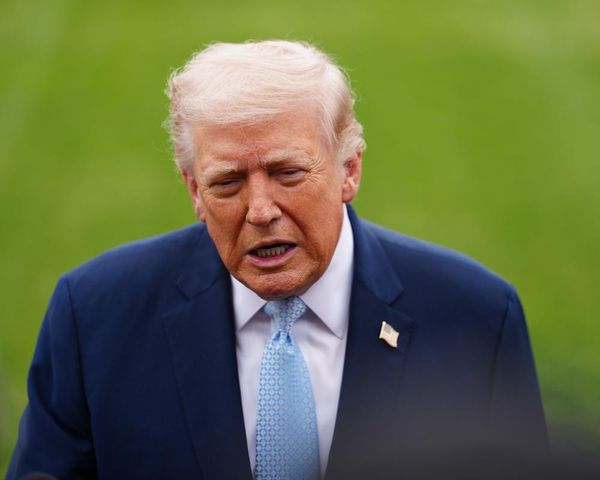
- The US president says he is terminating the nation’s relationship with the World Health Organization. Donald Trump, who has previously threatened to withhold funding from the organisation, says the US will redirect the money to other bodies.
- The death toll in Brazil exceeds that of Spain as the country becomes the world’s fifth-worst affected. Reuters reports that Brazil’s health ministry has said another 1,124 people have died, taking the total number of fatalities to 27,878. That surpasses the 27,121 deaths that researchers at Johns Hopkins University believe Spain has suffered.
- The UK government is lifting lockdown restrictions too early, another member of its own advisory committee warns. Sir Jeremy Farrar, the director of the Wellcome Trust and a member of the Scientific Advisory Group for Emergencies (Sage), voices approval of comments made by his Sage colleague Prof John Edmunds, who said the government is “taking risks” by relaxing measures from Monday.
- A senior Downing Street aide did not follow the spirit of the UK’s lockdown rules with his actions , the former prime minister Theresa May says. Her successor, Boris Johnson, has refused to sack Dominic Cummings, despite anecdotal evidence lending weight to experts’ concerns his transgressions are harming the country’s public health efforts during an epidemic that has killed tens of thousands of people in the country.
- Worshippers in Turkey hold their first communal Friday prayers in 74 days as the government reopens some mosques. Prayers are held in the courtyards of selected mosques to minimise the risk of infection. Authorities distribute masks at the entrance to the mosques, spray hand sanitisers, and check temperatures.
And you can see a summary of some of the earlier events here.
Updated
Brazil's death toll surpasses that of Spain
The death toll in Brazil exceeds that of Spain as the country becomes the fifth-worst affected.
Reuters reports that Brazil’s health ministry has said another 1,124 people have died, taking the total number of fatalities to 27,878. That surpasses the 27,121 deaths researchers at Johns Hopkins University believe Spain has suffered.
Brazil, which now has the second-largest outbreak in the world, also registered 26,928 additional cases.
British experts have warned of the folly of terminating Washington’s relationship with the WHO during a pandemic. Dr Stephen Griffin, an associate professor in the School of Medicine, University of Leeds, said:
There is no logic to the move by President Trump to sever links with the WHO. Pandemics are, by definition, a global crisis. To not face Covid-19 with a united front seems futile.
Given the scale of the outbreak in the US, this action appears nothing short of an attempt to refocus attention away from how this has been handled.
Dr Gail Carson, the director of network development at the International Severe Acute Respiratory and Emerging Infection Consortium, said during a pandemic is not the time to make health political. The consultant in infectious diseases at the University of Oxford, added:
If there was a time not to make health political it is now, when the world is in the throes of a pandemic. Now is the time for solidarity and to stand together to end the pandemic as soon as we can and to save lives.
Is this US government decision going to do good to all?
WHO stands for the health of all of us and should not be ‘punished’ by any country in the middle of a pandemic because of an opinion, certainly not before any action review process has taken place.
Now is not the time to weaken the world’s leading health agency, who has shown strong leadership with strong technical messages throughout this pandemic.
Sir Jeremy’s comments appeared to be a reference to those made by Edmunds; a professor of infectious disease modelling at the London School of Hygiene and Tropical Medicine who was quoted as saying:
We cannot relax our guard by very much at all. There are still 8,000 new infections every day in England without counting those in hospitals and care homes. If you look at it internationally, it’s a very high level of incidence.
The issue is, clearly there’s a need to try and get the economy restarted and people back to their jobs and so on, and also there’s a social and a mental health need to allow people to meet with their friends and families.
I think many of us would prefer to see the incidence driven down to lower levels because that then means that we have fewer cases occurring before we relax the measures.
I think at the moment, with relatively high incidence and relaxing the measures and also with an untested track and trace system, I think we are taking some risk here.
Updated
UK government adviser questions PM's plan to ease lockdown
The UK government is lifting lockdown restrictions too early, a member of its own advisory committee has warned.
Sir Jeremy Farrar, the director of the Wellcome Trust and a member of the Scientific Advisory Group for Emergencies (Sage), has tweeted what appears to be a reference to comments made by his Sage colleague Prof John Edmunds, who said the government is “taking risks” by relaxing measures from Monday.
Covid-19 spreading too fast to lift lockdown in England. Agree with John & clear science advice. TTI has to be in place, fully working, capable dealing any surge immediately, locally responsive, rapid results & infection rates have to be lower. And trusted https://t.co/ZmYKs4Go3W
— Jeremy Farrar (@JeremyFarrar) May 29, 2020
Sir Jeremy also said the newly-introduced NHS test and trace system needed to be “fully working” before measures were eased.
Egypt records most deaths and infections in one day since outbreak began
Egypt registered 1,289 new cases and 34 deaths, the health ministry has said, marking another record of daily increases on both counts despite stricter curfew rules.
That brought the total number of fatalities to 879 and confirmed cases to 22,082, of which 5,511 people have recovered.
Infections rose this week during Eid al-Fitr celebrations, at the end of the Ramadan fasting month, despite the government bringing forward a curfew by four hours to 5pm (EET, 4pm BST) and banning public transport for six days since Sunday.
Trump’s announcement that he is pulling the US out of the WHO came three weeks ahead of an ultimatum he laid down earlier this month.
On 19 May, the US president sent a four-page letter to the WHO director general Dr Tedros warning he would permanently cut US funding of the WHO and reconsider US membership if the organisation did “not commit to major substantive improvements within the next 30 days”.
He has made the break only 10 days later, falsely claiming that “China has total control over” the global health body. Trump said:
We have detailed the reforms that it must make and engage with them directly, but they have refused to act because they have failed to make the requested and greatly needed reforms. We will be today terminating our relationship with the World Health Organization and redirecting those funds to other worldwide and deserving urgent global public health needs.
The move will confirm the suspicions of many in the WHO and in western capitals that the US was seeking reforms and a dialogue was a smokescreen for a politically-motivated break with the WHO.
Beth Cameron, a biologist and former senior official in the National Security Council tweeted:
There aren’t words for how much this decision will hurt the US, our global partners, and our ability to to impact the #COVID19 pandemic that is a threat to our national and global peace and security. https://t.co/DjRzHCgwAK
— Beth Cameron (@BethCameron_DC) May 29, 2020
A senior Downing Street aide did not follow the spirit of the UK’s lockdown rules when he made repeated trips away from his residence, the former prime minister Theresa May has said.
Her successor, Boris Johnson, has refused to sack Dominic Cummings, despite anecdotal evidence lending weight to experts’ concerns his transgressions are harming the country’s public health efforts during an epidemic that has killed tens of thousands of people in the country.
Among various defences put forward by Johnson’s allies was the claim that Cummings had not breached the government-ordered lockdown in either its letter or spirit.
Police have since concluded his actions might have breached the country’s lockdown rules, tempering their language only for fear of police officers being considered to have declared him guilty without a trial.
In a letter to her constituents seen by the Daily Mirror, May said she can “well understand the anger” of people who obeyed the guidance.
What this matter has shown is that there was a discrepancy between the simple messages given by the government and the details of the legislation passed by parliament.
In these circumstances, I do not feel that Mr Cummings followed the spirit of the guidance.
I can well understand the anger of those who have been abiding by the spirit of the guidance given by the government and expect others to do so.
May said the focus on Cummings was “detracting from the most important task” of dealing with the epidemic.
Summary
Key developments in the global coronavirus outbreak today include:
- Donald Trump said he was terminating the US’ relationship with the World Health Organization. Trump, who has previously said he would withhold funding from the organisation, says the US will now redirect funds to other bodies.
- Russia suffered its biggest daily increase in deaths, with 232 more in 24 hours pushing the nationwide total to 4,374. Officials say 8,572 new infections have been confirmed, bringing the national tally to 387,623. Russia has the third highest reported total of cases in the world after the United States and Brazil.
- Iran identified more new coronavirus cases in a day than at any time since early April, with 2,819 more people testing positive on Friday. Kianoush Jahanpour, the Iranian health ministry spokesman, said that 50 more people had died in the same period, raising the total death toll to 7,677. Out of 146,668 cases, 114,931 people have recovered.
- Health authorities in South Africa said the country has a backlog of nearly 100,000 unprocessed tests as it and other countries on the continent face difficulties in obtaining essential supplies. “This challenge is caused by the limited availability of test kits globally,” the health ministry said.
- Plans to reopen more than 800 schools in South Korea were shelved as the country battled a renewed outbreak. The country’s easing of lockdown measures went into reverse, with museums, parks and art galleries closed again on Friday for two weeks amid a resurgence in infections. It was originally reported only 200 schools due to reopen would remain closed.
- A Nordic rift opened up over proposals to ease coronavirus border restrictions, with Sweden excluded from Norwegian and Danish plans to reopen to tourists from some countries next month. The Danish prime minister, Mette Frederiksen, and the Norwegian prime minister, Erna Solberg, say most restrictions will end on 15 June.
- UK, France, Spain and Italy were among the countries excluded from Greece’s border reopening. The country to reopen its airports in Athens and Thessaloniki to arrivals from 29 countries from 15 June, the start of the tourist season. Visitors from 16 EU countries – including Germany, Austria and Denmark – will be allowed in.
- Only half of the people in the UK who develop symptoms were self-isolating for at least a week, according to the government’s scientific advisers. The revelation raises questions about the success of the country’s test, trace and isolate strategy, which scientists say is needed to contain future outbreaks.
- Employers will be asked to contribute to pay the wages of staff sent home under the The UK’s furlough scheme, the country’s chancellor, Rishi Sunak, said, adding that it cannot continue indefinitely. Employers will be asked to pay national insurance and employer pension contributions from August and towards people’s wages in September.
Making the announcement earlier, Trump accused the WHO of failing to adequately respond to the pandemic because he believes it is controlled by China. He also noted that the body was much more dependent on funding from Washington than on that from Beijing.
The US is the largest single source of financial support to the WHO and its exit is expected to significantly weaken the organisation.
Trump also mischaracterised the WHO’s recommendations on travel restrictions, claiming it had strongly resisted his early efforts to ban travel from China.
In reality, the WHO’s director general suggested international travel bans were of limited public health benefit and could be counter-productive, but did not call for them to be abandoned altogether. Dr Tedros Adhanom Ghebreyesus said that, where restrictions were introduced, they should be limited and proportionate. The Trump administration introduced limited restrictions, which came later date than those put in place by many other nations.
Trump, who was still publicly dismissing the virus as a “hoax” when the WHO raised the global risk to its highest level, alleged that the body had misled the world on the dangers in the early stages, under pressure from Beijing’s officials, whom he also accused of ignoring their reporting obligations to the WHO.
Updated
Trump, who has been embroiled in a long-running diplomatic clash with Beijing, has criticised the WHO for being too forgiving of China since the outbreak began.
As he faces criticism of his handling of the epidemic in the US, he has sought to highlight China’s status as the pandemic’s origin. In mid-April, Trump announced the US was freezing payments to the WHO for 60 to 90 days pending a review of the organisation’s handling of the crisis.
US 'terminating' WHO relationship – Trump
The US president Donald Trump has said he is terminating the nation’s relationship with the World Health Organization. Trump, who has threatened to withhold funding from the organisation, says the US will redirect funds to other bodies.
The pharmaceutical company Sanofi has temporarily stopped recruiting new Covid-19 patients for two clinical trials on hydroxychloroquine and will no longer supply the anti-malaria drug to treat Covid-19 until concerns about safety are cleared up, it has said.
The moves come after the World Health Organization paused its large trial of hydroxychloroquine, prompting several European governments to ban the use of the drug, also used in rheumatoid arthritis and lupus.
That dealt a major blow to hopes for a treatment, touted by the US president Donald Trump, as drugmakers and governments race to find ways to treat patients and control the spread of the virus.
Portugal has given the green light to the third phase of its lockdown exit, but some restrictions will remain in Lisbon due to localised outbreaks in industrial hubs and outskirts.
From 1 June, shopping malls, childcare centres, gyms, cinemas, theatres and other cultural venues can reopen across most of the country but with capacity restrictions.
Gatherings of up to 20 people will be allowed, and the 50% capacity rule on restaurants in place since their reopening on 18 May will be lifted.
But in Greater Lisbon, where most recently reported cases were located, gatherings remain limited to ten people, and shopping malls stay closed until at least Thursday. The country’s prime minister Antonio Costa said:
Unfortunately, the evolution in Lisbon is significantly different from the rest of the country. But as I said at the beginning, I have no shame in taking a step back if necessary.
The UK’s prime minister Boris Johnson and Turkey’s president Recep Tayyip Erdoğan have discussed the pandemic this evening, Downing Street says. A spokeswoman said:
The two leaders agreed on the importance of working together internationally to deal with and defeat the coronavirus pandemic.
They discussed the importance of the UK and Turkey’s economic and trade relationship and their shared goal to build on it in the future.
They also agreed to keep working together on important regional and geopolitical issues, including the crises in Libya and Syria.
The prime minister extended an invitation to President Erdoğan to attend the UK-hosted Global Vaccine Summit on 4 June, which aims to raise vital funds to save the lives of millions of children around the world.
Summary
Key developments in the global coronavirus outbreak today include:
- Russia suffered its biggest daily increase in deaths, with 232 more in 24 hours pushing the nationwide total to 4,374. Officials say 8,572 new infections have been confirmed, bringing the national tally to 387,623. Russia has the third highest reported total of cases in the world after the United States and Brazil.
- Iran identified more new coronavirus cases in a day than at any time since early April, with 2,819 more people testing positive on Friday. Kianoush Jahanpour, the Iranian health ministry spokesman, said that 50 more people had died in the same period, raising the total death toll to 7,677. Out of 146,668 cases, 114,931 people have recovered.
- Health authorities in South Africa said the country has a backlog of nearly 100,000 unprocessed tests as it and other countries on the continent face difficulties in obtaining essential supplies. “This challenge is caused by the limited availability of test kits globally,” the health ministry said.
- Plans to reopen more than 800 schools in South Korea were shelved as the country battled a renewed outbreak. The country’s easing of lockdown measures went into reverse, with museums, parks and art galleries closed again on Friday for two weeks amid a resurgence in infections. It was originally reported only 200 schools due to reopen would remain closed.
- A Nordic rift opened up over proposals to ease coronavirus border restrictions, with Sweden excluded from Norwegian and Danish plans to reopen to tourists from some countries next month. The Danish prime minister, Mette Frederiksen, and the Norwegian prime minister, Erna Solberg, say most restrictions will end on 15 June.
- UK, France, Spain and Italy were among the countries excluded from Greece’s border reopening. The country to reopen its airports in Athens and Thessaloniki to arrivals from 29 countries from 15 June, the start of the tourist season. Visitors from 16 EU countries – including Germany, Austria and Denmark – will be allowed in.
- Only half of the people in the UK who develop symptoms were self-isolating for at least a week, according to the government’s scientific advisers. The revelation raises questions about the success of the country’s test, trace and isolate strategy, which scientists say is needed to contain future outbreaks.
- Employers will be asked to contribute to pay the wages of staff sent home under the The UK’s furlough scheme, the country’s chancellor, Rishi Sunak, said, adding that it cannot continue indefinitely. Employers will be asked to pay national insurance and employer pension contributions from August and towards people’s wages in September.
We often report news from Sweden, which as a country which has not imposed mandatory measures to curb the spread of coronavirus is a subject of intense interest for those following the outbreak’s spread around the world.
However, little is said about another European country that has done even less to respond to the outbreak. Belarus - labelled “Europe’s last dictatorship” by some observers - has made almost no changes to adapt to the Covid-19 pandemic.
Belarus has stood out for its lack of official response since the start of the pandemic, with Alexander Lukashenko, who has been president since 1995, repeatedly disputing the seriousness of the virus. The country has ignored insistent calls from the World Health Organisation to implement social distancing and ban mass events, holding a large military parade in the capital Minsk, on 9 May. Presidential elections are scheduled for 9 August and candidates are campaigning as normal.

On Friday, the health ministry reported 906 new confirmed cases of coronavirus, taking the total in the country of 9.5 million to 40,765, according to Russia’s Tass news agency. The daily death toll was five on Friday, down from a peak of seven on 12 May, adding to an official total of 224 since the outbreak began.
Earlier this week, AFP, the French news agency, reported that volunteer groups in the countries had stepped in to bring supplies of protective equipment to hospitals. Its reporter met a group called ByCovid1, who were taking sacks of protective suits and face masks, funded by donations, to a hospital in the small town of Chervyen, about 40 miles west of the capital Minsk.
One of the coordinators, Andrei Tkachev, told AFP the true scale of the outbreak could be much higher. “Unfortunately the statistics from the hospitals are very depressing. And they are different from what is published officially: they are much worse,” he said.
Updated
Greece might be high on the list of many people’s summer holiday destinations, but for Britons dreaming of getting away the country will be out of reach for some time yet, writes Helena Smith, the Guardian’s Athens correspondent.
The UK was not included on a list of 29 countries released by Athens on Friday deemed to fit an “epidemiological profile” that makes travel from them relatively safe.
However, people from European countries including Albania, Austria, Denmark, Germany, Finland, Norway Romania and Serbia – which like Greece have kept coronavirus infection rates and casualties low – will be allowed to fly in from 15 June.
And further afield, residents of Australia, New Zealand, China, Japan, South Korea were also told they could visit.
But the epidemiological profile “sadly” did not apply to Britain, said government officials, aware that the UK is one of Greece’s biggest markets. Last year close to 4 million Britons travelled to Greece, with most heading to its extensive archipelago, which has remained remarkably Covid-free.
As Madrid’s spring evenings warm into summer nights, cinemagoers are parking up to watch Grease. In Munich, they are taking al fresco seats to follow the adventures of a communist kangaroo with a penchant for boozy chocolates, and in Prague they are witnessing a croaky vigilante work out some profound childhood traumas.
As Europe begins to stir from its Covid-19 lockdown, people bloated by two-month boxset binges have a new way to feed their entertainment needs as they emerge, blinking, into the daylight. Or, rather, the twilight.
Openair cinemas in Spain, Germany, the Czech Republic and Greece have reopened in recent days, albeit at reduced capacity and with the novel strictures of physical distancing. Our reporters in the three countries have investigated Europe’s new entertainment boom.
Updated
Young doctors and medical students across Italy threw their white coats on the ground on Friday to call for educational reform and for scholarships allowing them to specialise.
Many of the doctors and students involved in the protests helped care for patients during Italy’s coronavirus outbreak, which has killed over 32,000 people. They are complaining of training bottlenecks that prevent them from choosing a focus, even as over 10,000 specialists are set to retire in the next five years, AFP reports.
Only about 4,000 specialisation grants are allotted by the government, a number far lower than those doctors who want to specialise. That forces many of them to leave Italy for further training abroad, depleting the country of valuable medical expertise.

“The efforts and sacrifices that health workers have made in recent months must not remain in vain, which is why serious medical training reform is urgent and necessary,” organisers wrote in a statement.
“By 2025, more than 60% of our specialist and general practitioner colleagues will retire. Given the current health policy, there will not be enough staff to replace them.
“The right to health care and health of all citizens will therefore be jeopardised.”
The one-day protest took place in 21 Italian cities, including Naples, Bologna, Genoa, Turin, Florence and Palermo.
Updated
Turkish Muslims hold first communal Friday prayers in 74 days
Worshippers in Turkey have held their first communal Friday prayers in 74 days after the government reopened some mosques, the Associated Press reports.
Prayers were held in the courtyards of selected mosques, to minimise the risk of infection, according to the US news agency. Authorities distributed masks at the entrance to the mosques, sprayed hand sanitisers, and checked temperatures.
Worshippers were asked to bring their own prayer rugs, but some mosques offered disposable paper rugs which were placed 1.5 metres apart.

Later on Friday, Islamic prayers will also be recited in Istanbul’s 6th-century Hagia Sophia — the main cathedral of the Byzantine Empire which was converted into a mosque with the Ottoman conquest of the city, then known as Constantinople, in 1453. The prayers are being held to mark the 567th anniversary of the conquest.
The Muslim prayers at the Hagia Sophia are highly controversial, hitting at the heart of the country’s religious-secular divide.
In 1935, Mustafa Kemal Ataturk, the Turkish republic’s founder, converted the building into a museum that attracts millions of tourists, but some Islamic groups want it reconverted into a mosque.
The president, Recep Tayyip Erdogan, who leads an Islamic-oriented party and has himself recited prayers inside Hagia Sophia, has also spoken about the possibility of turning the domed complex back into a place of worship.
Jon Henley, the Guardian’s Europe correspondent, has more details on the decision by Denmark and Norway to exclude Sweden from plans to drop mutual border controls, after Sweden chose a different approach to tackling its Covid-19 outbreak.
The Danish prime minister, Mette Frederiksen, told a news conference in Copenhagen on Friday that restrictions on Norwegian nationals entering the country, as well as on citizens of Iceland and Germany, would be lifted from 15 June.
“Denmark and Sweden have a close relationship and that will continue in the future,” Frederiksen said. There was “a strong desire to find a solution with our neighbour, Sweden”, she added, but Denmark and Sweden “are in different places when it comes to the coronavirus, and this affects what we can decide on the border”.

Norway’s prime minister, Erna Solberg, said at a simultaneous Oslo event that Norway would admit only Danish citizens for now, but that her government was talking to Sweden, Finland and Iceland about including them at a later date.
Solberg said she had twice spoken to the Swedish prime minister, Stefan Löfven, but had entered a bilateral agreement with Denmark “because we have a similar infection situation … The infection situation looks different in Sweden”.
While her objective was “a common Nordic regulatory framework”, she said, “it is going to be hardest to find a solution for Sweden. But there are regions in Sweden with a low level of infection where we might be able to find a solution.”
Mexico’s president has announced plans for a seven-day, seven-city tour – which comes as the country’s Covid-19 cases and death toll continue to climb, writes David Agren in Mexico City.
Andrés Manuel López Obrador unveiled details at his Friday press conference, saying he would start in Cancún on Monday and oversee progress on a suite of mega projects he’s pushed since taking office. The projects included a train around the Yucatán Peninsula and a behemoth refinery in his home state of Tabasco.
Those projects have raised environmental concerns and objections from indigenous communities, but have been protected by the president, who spared them from the austerity measures he’s implemented in response to Covid-19.

AMLO, as the president is known, announced his plans for a tour on the same day health and education officials unveiled details on Mexico’s return to the “new normalcy,” which begins June 1.
That normalcy will commence with 31 of Mexico’s 32 states under maximum alert, according to a system developed by the health secretariat. Schools will also resume in August – not on Monday as originally proposed.
The health secretariat revealed on Thursday that the Covid-19 death toll had topped 9,000 and the country recorded a record number of new cases.
AMLO has courted controversy with his past tours. He held a series of rallies in mid-March as the pandemic was descending on Mexico – even posting videos of him kissing babies and posing for selfies. He later detoured from a tour in Sinaloa to greet the mother of drug lord Joaquín “El Chapo” Guzmán.
The country’s coronavirus tsar Hugo López-Gatell later defended AMLO’s actions, saying, “The president’s force is moral, not a force of contagion.”
A flight carrying 12 tons of humanitarian aid is scheduled to land in Venezuela on Friday, to assist the sanction-hit country in its response to the Covid-19 outbreak, the UN’s aid agency said.
Since the beginning of the pandemic, the UN’s office for the coordination of humanitarian affairs (OCHA) has arranged for more than 100 tons of aid to Venezuela, which remains subject to a trade embargo by the US.

Venezuela has so far been spared an outbreak on the scale experienced by some of its neighbours in the region, recording 1,325 confirmed cases of coronavirus and 11 deaths (figures that have been questioned by Human Rights Watch). However, lockdowns imposed across the continent have spurred hundreds of thousands of people who had left the country to escape its economic crisis to return, putting additional strain on services.
Peter Grohmann, the UN’s resident coordinator and humanitarian coordinator in Venezuela, said:
This is the second humanitarian shipment from the United Nations in support of the response to the Covid-19 pandemic and its socio-economic impact in Venezuela. These vital supplies will help provide nutrition assistance and access to safe water to thousands of families and will be distributed to health centers and the most vulnerable communities.
I would like to thank the Government of the Federal Republic of Germany for its efforts and for providing the transport for this important shipment that will help save many lives.
Users of illicit drugs in Europe are facing higher prices and reduced purity for some drugs, amid local shortages caused by the impact of the coronavirus outbreak, according a European Union report published on Friday.
Nevertheless, according to the Europol and the European Monitoring Centre for Drugs and Drug Addiction, the EU drugs agency, organised crime groups have remained “active and resilient” even during the pandemic, by “adapting transportation methods, trafficking routes and concealment methods.”
The findings, based on a survey of drugs experts in EU member states, show that disruption to the drugs supply chain has mostly been at the distribution level, as a result of social distancing, while wholesale trafficking continues largely at pre-pandemic levels.
“With street dealing severely affected by restrictions on movement, consumers and dealers are increasingly turning to alternative methods, including the use of darknet markets, social media platforms and encrypted communication apps, with cashless payments and fewer face-to-face interactions,” the agencies said in a release.
Europol’s executive director, Catherine De Bolle, said:
The pandemic has had a major impact on our lives and is slowing down our economy. However, this economic trend has not been seen in international drug trafficking. These illegal markets continue to generate huge profits, including during the pandemic. Seizures of illegal drugs in some EU countries during the first half of 2020 have been higher than in the same months of previous years.
More than ever, these findings should motivate us to ensure that any recovery from the pandemic is accompanied by a strong and effective international law enforcement response. We need to establish that drug traffickers do not benefit from the potential social and economic consequences of the current crisis.
UK, France, Spain and Italy excluded from Greece border reopening
Greece is to reopen its airports in Athens and Thessaloniki to arrivals from 29 countries from 15 June, the start of the tourist season, AFP reports. Visitors will be from 16 EU countries, including Germany, Austria, Denmark, Finland, the Czech Republic, Baltic countries, Cyprus and Malta, the tourism ministry said in a statement.
Countries hardest hit by the coronavirus pandemic - such as France, Spain, UK and Italy - were not on the list.
Outside the European Union, holidaymakers from Switzerland, Norway, and neighbouring Balkan countries such as Albania, Serbia and North Macedonia will be allowed to land. Also on the list are Australia, Japan, Israel, Lebanon, China, New Zealand and South Korea.
The ministry said that further countries could be added before 1 July when the country’s regional airports also reopen. “The list... has been drawn up on the basis of the epidemiological profile of each country,” taking into account the recommendations of the European Aviation Safety Agency and a report by Greece’s commission for infectious diseases, the statement said.
Visitors would be tested for the novel coronavirus when they landed.
In light of the changes to border restrictions in the Nordic area, Antonia Wilson, the Guardian’s travel reporter, has updated our guide to European coronavirus lockdown easing measures and travel restrictions across Europe.
Updated
More from Sweden, where the two biggest opposition parties have called for an independent commission to probe the country’s response to the coronavirus outbreak.
The conservative Moderate party and the populist Sweden Democrats on Friday said they wanted a commission in place before the summer, French news agency AFP reports. The prime minister, Stefan Lofven, a Social Democrat, has repeatedly expressed support for a commission but has said he would appoint one after the pandemic was over.
Despite criticism from overseas and some domestic public disquiet, there has been broad political unity over Sweden’s softer approach to the outbreak, but most parties have agreed on the need to examine the government’s crisis management.
Sweden, which on Friday reported 4,350 COVID-19 deaths, has struggled to protect its elderly from the illness, with more than three-quarters of the dead residing in nursing homes or receiving at-home care. A commission would also be likely to examine the country’s economic response to the crisis, and its slow roll-out of testing for the illness.
Updated
The World Health Organization’s coronavirus briefing has started. You can watch it in the player embedded at the top of the blog.
In today’s briefing, the WHO director general, Tedros Adhanom Ghebreyesus, will be joined by Carlos Alvarado, the president of Costa Rica, as they announce the Covid-19 Technology Access Pool, “an initiative aimed at making vaccines, tests, treatments and other health technologies to fight Covid-19 accessible to all”.
Live: Launch of the #COVID19 Technology Access Pool https://t.co/rntShkaGGj
— World Health Organization (WHO) (@WHO) May 29, 2020
Updated
Twenty-five people have been arrested in Moscow and St Petersburg after staging protests against the arrest of a prominent journalist, in violation of Russia’s coronavirus restrictions, the Associated Press reports.
An opposition Moscow city council member, several journalists and activists were among those detained, the US news agency said, citing the OVD-Info rights group said. Three people were reportedly let go, while others were taken to police stations.
The activists were protesting against the arrest of journalist Ilya Azar, who was sentenced to 15 days in jail the night before, also for holding a one-man protest amid the lockdown.
Moscow has banned mass public events to curb the spread of the coronavirus. On Tuesday, Azar came to the city’s police headquarters to protest against the jailing, on extortion charges, of an activist who monitors police corruption.
His arrest elicited outrage among journalists and opposition activists. On Thursday, 13 people were detained for picketing the police headquarters.
Updated
Moscow has significantly revised its mortality statistics for the coronavirus outbreak from April amid scrutiny that the government numbers were not reflecting Russia’s true death toll from the disease, writes Andrew Roth, in the Russian capital.
The updated data say that coronavirus likely played a role in 1,561 deaths, nearly 2.5 times higher than initial reports of 639 coronavirus deaths.
In the release, the health department said there were an additional 756 cases where coronavirus was diagnosed but not identified as the primary cause of death. Another 169 cases of coronavirus were suspected but not confirmed by test. That left 192 cases of excess deaths not attributed to the disease, the department said.
Moscow’s health department explained the change as prompted by new reporting guidelines from the World Health Organization issued last month.
But local and foreign journalists had already cast doubt on the numbers and been accused by Russian officials and lawmakers of spreading “fake news.” The New York Times had noted that Moscow had more than 1,700 “excess deaths” for that month, a figure which was confirmed by Moscow health ministry on Friday, which said he correct figure was 1,753 excess deaths.
Russia is expected to release April mortality data for the whole country on Friday and officials have warned to expect a significant rise in mortality rates.
Even with the additional coronavirus cases, Moscow’s reported mortality rates from the disease are still far lower than other western capitals.
Updated
Wearing face masks will no longer by mandatory in shops in Austria from mid-June, the government has announced.
Covering the mouth and nose will only be mandatory on public transport, in health facilities including pharmacies, and in places where social distancing rules are hard to keep, such as hairdressers, said the chancellor, Sebastian Kurz.
“We are on a good path in Austria ... so we can begin the next phase: fewer rules, more self-responsibility,” he was quoted as saying by AFP.
However, he warned that while numbers of new infections had subsided, they could shoot up again quickly, urging citizens to use “common sense” to avoid posing a risk to others.

The relaxation of mask-wearing rules will take effect on 15 June. Restaurants will also allowed to stay open until 1am, an extension from the 11pm mandatory closing time imposed when they reopened earlier this month, and the current limit of four adults per table will also be abolished.
On Friday no new Covid-19 deaths were reported in Austria. Twenty-seven more people tested positive for the virus, bringing the total number of confirmed cases to 16,655, of whom 668 have died.
Updated
Sweden left out of Nordic border reopenings
A Nordic rift has opened up over plans to ease coronavirus restrictions, with Sweden excluded from plans by Denmark and Norway to reopen their borders to tourists from some countries next month.
During news conferences taking place simultaneously on Friday, the Danish prime minister, Mette Frederiksen, and the Norwegian prime minister, Erna Solberg, said most restrictions would end on 15 June.
The leaders said they would allow tourists to travel between the two countries, and Denmark will also welcome tourists from Germany and Iceland. But tourists from Sweden will still not be able to visit, with Frederiksen telling journalists that the two countries were in different places when it came to the coronavirus.
On Friday Sweden’s public health authority reported a further 84 deaths from Covid-19. The country’s total death toll from the outbreak now stands at 4,350, about four times the combined total of the other Nordic countries. Sweden has chosen not to impose the kinds of compulsory lockdown measures imposed by its neighbours and elsewhere across Europe, instead opting for public health advice.
Earlier this week, Sweden’s foreign minister, Ann Linde, warned that excluding Sweden from moves to open borders across the Nordic region would be a political decision and not justifiable on health grounds. On Thursday, Norway said it would reopen its borders to business travel from all its Nordic neighbours.
Updated
Damien Gayle back at the controls now. Feel free to send any comments, tips or suggestions for coverage to me, either via email to damien.gayle@theguardian.com, or via Twitter to @damiengayle.
Dominic Cummings may have weathered the storm of anger which engulfed him for apparently flouting the government’s own coronavirus lockdown guidance, but that has not stopped Boris Johnson’s top adviser being ridiculed on the other side of the world.
As Australia’s NRL season restarted this week, the Fan in the Stand initiative allowed the public to pay $22 for a cardboard cutout of themselves to be placed in a seat to “watch” their teams in action.
But it seems one Sydney Roosters fan with a sense of humour had other ideas. A cardboard cutout of the under-fire Cummings appeared at Bankwest Stadium for the Roosters’ behind-closed-doors clash with South Sydney Rabbitohs, and did not go unnoticed by TV viewers.
Updated
Hello all. I am on the live blog while my colleague Damien gets some lunch. Please do share your thoughts, comments and news tips with me as they are always very useful.
Twitter: @sloumarsh
Instagram: sarah_marsh_journalist
Email: sarah.marsh@theguardian.com
Planned reopening of 800 South Korean schools postponed
We reported earlier that more than 200 schools in South Korea had been forced to close just days after they reopened. In fact, the planned reopening of more than 800 schools was postponed. We have deleted the earlier post. Luke Harding reports:
South Korea has postponed the planned reopening of more than 800 schools as it battles a renewed outbreak of the coronavirus, with cases now at their highest level for almost two months.
The country’s easing of lockdown measures has gone into reverse, with museums, parks and art galleries closed again on Friday for two weeks. Kindergarten pupils, and some primary and secondary school students were due back from Wednesday, in the last phase of school reopenings.
According to the education ministry, however, 838 schools out of 20,902 nationwide remain shut. They are located in areas hard hit by the latest wave of infections, including the capital Seoul and the cities of Bucheon and Gumi.
South Korea has been praised for its deft handling of the Covid crisis. It seemed to have brought the virus under control only to record 79 new cases this week, the highest daily figure for two months. The government has responded by bringing back lockdown measures in the Seoul metropolitan area, home to half of the country’s 51 million population.
Most of these cases have been linked to a distribution centre in Bucheon. The warehouse is run by the country’s biggest e-commerce firm Coupang. Health officials traced at least 82 infections to the facility, with the virus found on workers’ shoes and clothes. They are now testing all employees and visitors.
Updated
People in Turkey have held their first communal Friday prayers in 74 days after the government reopened some mosques as part of its plans to relax measures put in place to fight the coronavirus outbreak. Prayers were held in the courtyards of selected mosques, to minimize the risk of infection.
Authorities distributed masks at the entrance to the mosques, sprayed hand sanitizer and checked temperatures.
Worshippers were asked to bring their own prayer rugs, but some mosques offered disposable paper rugs which were placed 1.5 metres apart.
Updated
Healthcare professionals should closely monitor Covid-19 patients who are receiving malaria drug hydroxychloroquine, given the serious side-effects associated with the medicine, the European health regulator said on Friday.
Several EU countries have paused trials of the drug in patients infected by the new coronavirus over safety concerns, the European Medicines Agency said, adding the drug’s benefits have not been established for the illness.
The World Health Organization also suspended testing the drug in Covid-19 patients last week.
Updated
Monkeys mobbed an Indian health worker and took coronavirus test blood samples, spreading fears that the animals could spread the pandemic in the local area.
After making off with the three samples earlier this week in Meerut, near the capital New Delhi, the monkeys scampered up nearby trees and one then tried to chew its plunder.
The sample boxes were later recovered and had not been damaged, Meerut Medical college superintendent Dheeraj Raj told AFP on Friday, after footage of the encounter went viral on social media.
“They were still intact and we don’t think there is any risk of contamination or spread,” Raj said.
He added that the three people whose samples were stolen were retested for the virus.
South Africa has backlog of nearly 100,000 coronavirus tests
Health authorities in South Africa say the country has a backlog of nearly 100,000 unprocessed coronavirus tests, as it and other countries on the continent face difficulties in obtaining essential supplies.
“This challenge is caused by the limited availability of test kits globally,” the health ministry said in a statement, seen by the Associated Press, which put the backlog at 96,480 as of Monday. Priority is given to processing tests from patients admitted to hospitals and health workers, it said.
South Africa has conducted more tests for the virus than any other country in Africa — more than 655,000 — and has the most confirmed cases with 27,403.
The shortages, especially in testing materials, have exposed how richer countries are sidelining African nations in the race to obtain crucial supplies. The continent relies almost entirely on imports for drugs and other medical items.
“We have to have Made in Africa products,” the director of the Africa Centers for Disease Control and Prevention, John Nkengasong, told reporters Thursday. “We cannot keep importing basic things.”
Across Africa slightly under 2 million tests for the virus have been conducted, Nkengasong said, far below the target of testing 13 million people — or 1% of the continent’s population of 1.3 billion.
Updated
Hello all. I am taking over the live blog while my colleague Damien gets some lunch. Please do share your thoughts, comments and news tips with me as they are always very useful.
Twitter: @sloumarsh
Instagram: sarah_marsh_journalist
Email: sarah.marsh@theguardian.com
Spain’s government will discuss with various political parties whether to seek another extension to a state of emergency over the coronavirus beyond 7 June, the government spokeswoman Maria Jesus Montero said on Friday, according to Reuters.
She added that the prime minister, Pedro Sanchez, would disclose during the weekend the government’s decision on such an extension, which has to be approved by parliament.
The state of emergency was first established in mid-March, imposing some of the toughest restrictions in Europe.
Updated
When the US Bureau of Labor Statistics released its monthly jobs report earlier this month, the unemployment numbers were jaw-dropping: the unemployment rate rose from 4.4% in March to 14.7% in April – a decade’s worth of job gains wiped out in mere weeks, writes Lauren Aratani for the Guardian US.
The jobs report also unveiled the grim reality of which communities have been hit hardest from the economic impacts of Covid-19. Hispanic Americans saw the highest unemployment rate of any racial group at 18.9%, over 4% more than the national unemployment rate of 14.7%.

Clara Lopez of Miami, Florida, worked for 17 years as a room attendant at the Fontainebleau Miami Beach hotel and was laid off at the end of March as things were starting to shut down. She has been trying to apply for unemployment insurance since 29 March, but has yet to have success. Florida, which has a 12.9% unemployment rate, continues to have a backlog of unemployment applications, meaning people like Lopez have been left with no unemployment insurance to pay essential bills.
“I have my light bill, my water bill, my car bill, my electric bill. As of now, I don’t even have one cent left to be able to pay for any of it,” Lopez said. Even though Lopez is able to buy groceries with food stamps, prices in supermarkets have gone up, meaning she is barely able to buy the groceries she needs.
The mass job losses hitting the community are a devastating blow in light of the gains that Hispanic Americans had made before the pandemic hit. In September, the Hispanic unemployment rate hit a historic low at 3.9% and hovered about 4% through February. Median household income had risen to $51,450 in 2018, another record high. Hispanic Americans were buying homes at a rate higher than any other race and had the highest labor force participation rate of any race.
The debate rages on about the merits and risks of hydroxychloroquine and chloroquine, after dozens of scientists signed an open letter raising concerns over a study that suggested the antiviral drugs had no benefit for Covid-19 patients.
The research, which was published in the Lancet on 22 May, concluded that treatment with hydroxychloroquine and chloroquine, an anti-malarial, could produce potentially serious side effects, particularly heart arrhythmia.
Within days of the research being published the World Health Organization suspended use of the drugs in its Solidarity trial, which has seen hundreds of hospitals across several countries enrol patients to test possible treatments for Covid-19.
“This impact has led many researchers around the world to scrutinise in detail the publication in question,” said the open letter, signed by a number of prominent scientists, French news agency AFP reports.
It added this scrutiny raised “both methodological and data integrity concerns”.
The authors list several issues with the study, including a lack of information about the countries and hospitals that contributed to the data, a lack of an ethics review and discrepancies in data for Australia, which did not match published national figures.
“Surgisphere [the data company] have since stated this was an error of classification of one hospital from Asia. This indicates the need for further error checking throughout the database,” the letter said.
Among the signatories are clinicians, statisticians and other researchers from around the world, from Harvard to Imperial College London.
Hydroxychloroquine, normally used to treat arthritis, is one of an array of drugs being tested as scientists look for potential treatments for coronavirus patients.
It has also become the most high profile, partly because of comments by Donald Trump, who announced this month he was taking the drug as a preventative measure against coronavirus.
Updated
About 5,500 more more people have tested positive for the coronavirus in Africa since Thursday, according to the World Health Organization’s regional office for the continent.
The latest update from the UN health agency’s Africa office showed that there were now 128,500 confirmed infections across the continent’s 54 countries, which between them account for about 1.3billion people. Of those who have tested positive so far, more than 53,000 have recovered and about 3,700 have died.
Over 128,500 confirmed #COVID19 cases on the African continent - with more than 53,000 recoveries & 3,700 deaths. View country figures & more with the WHO African Region COVID-19 Dashboard: https://t.co/V0fkK7WnuG pic.twitter.com/H7aVNiWugS
— WHO African Region (@WHOAFRO) May 29, 2020
On Thursday, Matshidiso Moeti, WHO regional Director for Africa, lauded the swift action taken by African governments to curb the spread of the coronavirus. But she called on member states to be cautious in easing containment measures. Moeti said:
These actions came at great social and economic cost, particularly for the most vulnerable and there is an understandable push to lift the measures as rapidly as they were implemented. However, WHO urges countries to follow a step by step approach.
We must all remain vigilant. As more countries begin to ease confinement measures, it is vital that effective testing and surveillance systems are in place to detect any spike in cases. Ending a lockdown is not an event, but a process, and it’s important to have a clear view of local conditions so informed decisions can be made about how to relax these measures.
Summary
Key developments in the global coronavirus outbreak today include:
-
Spain’s cabinet has approved a minimum basic income scheme, the deputy prime minister, Pablo Iglesias, announced. The €3bn scheme will provide monthly payments of between €462 and €1,015 to about 850,000 households struggling to buy food in the wake of the pandemic.
- Global deaths from the coronavirus outbreak have passed 360,000, according to the Johns Hopkins Coronavirus Resource Center. The US remains the worst-affected nation, followed by the UK, Italy and France.
- The carmaker Renault plans to eliminate about 14,600 jobs worldwide and lower production capacity by almost a fifth, as part of cost reductions aimed at outlasting the downturn that has rocked the global auto industry.
- The Philippines has recorded its highest daily infection rate but will ease lockdowns. Residents in Manila will see their lockdown – one of the toughest and longest in the world – ease from Monday, despite the country reporting 539 infections on Thursday, its highest ever daily tally.
- Iran recorded its highest tally of new coronavirus infections since early April, with 2,819 more people testing positive in the past 24 hours. The increase in new infections comes as measures to restrict the spread of the disease are eased in Iran.
- Life during the coronavirus lockdown has reinforced gender inequality across Europe, with the economic and social consequences of the crisis threatening to push women back into traditional roles in the home. Campaign groups are warning that the growth in equality over the past decades is in danger of being rolled back by the health crisis.
Updated
The Spanish cabinet has approved a €3bn minimum basic income scheme to help the poorest people in the country, who are among those hardest hit by the Covid-19 pandemic, writes Sam Jones, the Guardian’s Madrid correspondent.
The €3bn scheme, which will provide monthly payments of between €462 and €1,015 to around 850,000 households, comes as tens of thousands of Spanish families struggle to buy food in the wake of the pandemic and charities, foodbanks and neighbourhood associations report huge demand for help with basic items.
The monthly payments, which will be available to those under 65, will begin on 15 June.
Speaking at a press conference on Friday morning, the deputy prime minister and Podemos leader, Pablo Iglesias, hailed the decision as “a historic day for our democracy”.

Iglesias said the scale of Spain’s socio-economic problems had been laid bare by Philip Alston, the UN rapporteur on human rights and extreme poverty, who visited the country in January. He said:
Even before the Covid-19 pandemic hit, we already had a very high poverty rate and were the European country with the third highest level of child poverty.
The pandemic has made things worse for many of our compatriots. And although we have mobilised resources to build a social shield to protect Spanish families from the economic impact of the crisis, it’s obvious that the situation has obliged us to speed up the implementation of this basic income.
Now more, than ever, he said, it was a “absolutely urgent necessity because thousands of Spanish families just can’t wait any longer”.
Iglesias thanked the neighbourhood associations, foodbanks, churches and NGOs that had stepped in to help people, but added: “They have been playing a role that needs to be played by the public authorities.”
Updated
Iran records highest tally of new infections since early April
Iran recorded its highest tally of new coronavirus infections since early April on Friday, with 2,819 more people testing positive in the past 24 hours, the health ministry reported.
Kianoush Jahanpour, the health ministry spokesman, said in his daily update that 50 more people had died from Covid-19 in the past 24 hours, pushing the total death toll from the outbreak to 7,677.
Out of 146,668 cases detected so far, 114,931 people have recovered.
Currently there are 2,547 people in a critical condition in hospital with the virus, he added, according to the Islamic Republic News Agency.
The increase in new infections comes as measures to restrict the spread of the disease are eased in Iran. The last time the health ministry reported a higher number of new infections was 2 April, when 2,875 new confirmed cases were recorded, according to data archived on the Worldometers website.

Egypt’s prime minister, Mostafa Madbouly, has told the country’s embattled medical syndicate that doctors who die on the job will be viewed as “martyrs” and their families compensated, in the same manner as security forces who die in battle, Ruth Michaelson reports.
The comparison to military honours was an attempt to cool tensions between the country’s medical syndicate, which represents medical professionals in Egypt, and a government that has drawn anger over poor working conditions for medical professionals on the frontline against Covid-19. Earlier this week the syndicate accused the Egyptian health ministry of negligence, describing it as a “crime of killing by irresponsibility”.
Twenty-three Egyptian doctors have died and 350 have contracted Covid-19. True numbers are expected to be higher, as doctors previously complained of barriers to obtaining vital tests for themselves and patients. The health ministry drew particularly pointed criticism this week over the death of doctor Walid Yehia, who died after he was unable to access treatment at an overcrowded Cairo hospital, despite the attempts of his colleagues.

In an alarming development, the medical syndicate warned earlier this week that the Egyptian healthcare system is on the brink of collapse if the government fails to take action. “The syndicate is warning that the health system could completely collapse, leading to a catastrophe affecting the entire country if the health ministry’s negligence and lack of action towards medical staff is not rectified,” it said. At the beginning of May, one health ministry official warned a parliamentary committee that the country’s quarantine facilities were full.
Madbouly said that at least 8,900 tests of medical staff have been conducted, while the government made a further 330 hospitals available to screen Covid-19 patients.

Egypt on Thursday recorded 20,793 cases of Covid-19, and 845 deaths. Government officials had hoped that an extended five-day curfew over the Eid al-Fitr holiday that began last weekend would help stop the surge in numbers. Yet each day has brought a new record number of cases, and increasing alarm from the medical syndicate who say the government should reconsider plans to begin reopening the country after the Eid holiday, and implement a full lockdown.
Government officials have repeatedly spoken of a need to “coexist” with the coronavirus, even as cases spike. About a third of Egyptians live in poverty, according to the government’s own statistics. Authorities have spoken of a need to prioritise the health of the economy while repeatedly claiming that it is citizens’ individual responsibility to avoid getting infected.
“We looked into all scenarios, including a total lockdown, but to be honest we can’t afford it,” the information minister, Osama Heikel, told the local cable news channel MBC Egypt. “The citizen’s is the major role, the state’s task is merely to organise, and every person should be responsible for themselves.”
Updated
Summary
South Korea closes schools days after reopening
More than 200 schools in South Korea have been forced to close just days after they reopened, due to a new spike in virus cases. Thousands of students had earlier on Wednesday returned to school as the country began easing virus restrictions, but a day later, 79 new cases were recorded, the highest daily figure in two months.
Spain approves minimum basic income scheme
Spain’s deputy prime minister Pablo Iglesias, the Podemos leader, has just announced that the coalition government’s minimum basic income scheme has been approved by the cabinet. The €3bn scheme, which will provide monthly payments of between €462 and €1,015 to around 850,000 households, comes as tens of thousands of Spanish families struggle to buy food in the wake of the pandemic.
Global deaths pass 360,000
According to the Johns Hopkins Coronavirus Resource Center global deaths from coronavirus have now passed 360,000.
Renault to cut nearly 15,000 jobs worldwide
Renault SA plans to eliminate about 14,600 jobs worldwide and lower production capacity by almost a fifth as part of cost reductions aimed at outlasting the downturn that has rocked the global auto industry.
Philippines records its highest daily infection rate – 539 new cases – but will ease lockdowns.
Residents in Manila will see their lockdown – one of the toughest and longest in the world – ease from Monday, despite the Philippines seeing its biggest spike in coronavirus cases on Thursday. The Philippines reported 539 infections on Thursday, its highest ever daily tally, to make a total of 15,588. It has recorded 921 deaths.
Life during the coronavirus lockdown reinforces gender inequality across Europe
Life during the coronavirus lockdown has reinforced gender inequality across Europe with research emphasising that the economic and social consequences of the crisis are far greater for women and threaten to push them back into traditional roles in the home which they will struggle to shake off once it is over. Throughout the continent, campaign groups are warning that the burdens of the home office and home schooling together with additional household duties and extra cooking, has been unequally carried by women and that improvements made in their lives by the growth in equality over the past decades are in danger of being rolled back by the health crisis.
The number of Americans who have lost their jobs in the past 10 weeks soared to more than 40 million, with 2.1 million people filing for unemployment last week
The growth in the number of claims has slowed, but millions more have continued to file for unemployment each week, bringing the total number to a rate not seen since the Great Depression.
US records more than 100,000 deaths from Covid-19
The US has now recorded more than 100,000 deaths from Covid-19, according to Johns Hopkins University, as many states continued to relax mitigation measures. The US has recorded more deaths from the disease than any other country in the pandemic, and almost three times as many as the second-ranking country, the UK.
More than 159,000 excess deaths recorded in Europe since early March
There have been more than 159,000 excess deaths in Europe since since early March, during the height of the coronavirus epidemic, the head of the World Health Organization’s regional office for the continent said. Hans Kluge said 2 million people had been confirmed to have caught the coronavirus since it was first detected on the continent four months ago. About 175,000 had died.
Up to six people will be able to meet outside in England from Monday
Members of different households will have to stay two metres apart, the prime minister has said. This will be allowed in gardens and other private outdoor spaces, Boris Johnson added.
Paris is no longer a ‘red’ coronavirus danger zone
The risks posed by the virus have been reduced to “orange”, according to France’s prime minister, Edouard Philippe. The rating means Paris is not as free as the majority French regions designated “green”.
Health officials in Moscow updated their figures on coronavirus deaths to add those who ‘died with’ the virus.
On top of 636 deaths in April directly caused by Covid-19 reported earlier, the health department added the deaths of 756 people who tested positive for the virus but died of other causes.
Updated
The Philippines has been granted a $500m loan from the world bank to help it cope with the economic impact of the coronavirus pandemic, with its economy facing the deepest contraction for nearly three decades.
From next month, in spite of the country seeing its highest daily tally yet of new infections on Thursday, the government has said it will begin easing the lockdown in Manila, the capital, and other key cities, which has been one of the longest and toughest in the world.
The Philippines reported 539 infections on Thursday, its highest ever daily tally, to make a total of 15,588. It has recorded 921 deaths. Figures for Friday are yet to be published.
Achim Fock, World Bank acting country director for Brunei, Malaysia, Philippines and Thailand, said: “The Covid-19 pandemic has badly hurt millions of poor and vulnerable Filipino families, particularly daily wage earners.”
The loan will support efforts to provide immediate relief to poor Filipinos and small business workers who have lost their jobs during the lockdown since mid-March, the finance secretary, Carlos Dominguez, said in a statement.
Updated
Russia records biggest rise in coronavirus deaths
Russia recorded its biggest increase yet in coronavirus-related deaths on Friday, with 232 more deaths in the past 24 hours pushing the nationwide total to 4,374.
Officials said 8,572 new infections had been confirmed, bringing the national tally to 387,623, according to Reuters. Russia has the third highest reported total in the world after the United States and Brazil.
According to Tass, a Russian news agency, 50 deaths were recorded in Dagestan, 20 in the Moscow region and 11 in St Petersburg, while the North Ossetia, Krasnoyarsk and Oryol regions reported six coronavirus deaths each.
In the face of questioning over the country’s comparatively low coronavirus death toll, given its high infection rates, Russian officials have said its low virus death figures are also down to mass testing which has identified many cases with mild or no symptoms.
San Francisco has seen a surge in deaths among homeless people this spring, fatalities that officials are not directly attributing to coronavirus but which advocates say is a result of the shelter-in-place order that forced people onto the streets, writes Vivian Ho for the Guardian US.
From 30 March to 24 May, 48 people experiencing homelessness died in San Francisco, more than three times the 14 deaths recorded during this same period last year. Though some of those 48 tested positive “near their time of death,” their causes of death are still under investigation and have not been counted among the city’s Covid-related fatalities, according to the San Francisco department of public health.
There have been 40 Covid-related deaths officially recorded in San Francisco since the first case was reported in the city on 5 March.
When the mayor, London Breed, joined the other Bay Area counties in putting into effect the nation’s first regional shelter-in-place order on 17 March, businesses and many places that provided services to homeless individuals had to close. Shelters, no longer taking in new guests during the pandemic, were forced to reduce capacity by 76% to adhere by social distancing guidelines.
In a statement, the city’s department of public health acknowledged that “measures San Franciscans have taken to protect our community from the virus and reduce its spread have been necessarily disruptive, and have saved lives, but they could also be having indirect impacts on other aspects of life for people experiencing homelessness”.
Belgium reported 42 more coronavirus-related deaths on Friday, taking the total death toll to 9,430.
According to the latest update from the Sciensano health institute, 212 more people have tested positive for the virus. So far the country of 11.6 million people has reported 58,061 confirmed cases of coronavirus.
Earlier this week, Belgium’s data watchdog called for more safeguards around a plan by the government store massive amounts of personal data in a database to carry out contact tracing. Other countries, including the UK, have proposed similar schemes. The watchdog said:
There is no reason for the Belgian state to foresee - and hence impose - the registration of the massive amounts of personal data, including health-related, used by the tracing contact centres into a unique central database.
Hi this is Damien Gayle taking over the live blog now, for the next eight or so hours, bringing you the latest news from the global coronavirus outbreak.
If you have any comments, tips or suggestions for coverage, feel free to drop me a line, either via email to damien.gayle@theguardian.com, or via Twitter direct message to @damiengayle.
Global deaths pass 360,000
According to the Johns Hopkins Coronavirus Resource Center global deaths from coronavirus have now passed 360,000.
The global death toll from the coronavirus outbreak has passed 360,000, according to data collated by @JohnsHopkinsSPH. pic.twitter.com/9UIA66gGqi
— Damien Gayle (@damiengayle) May 29, 2020
Updated
Spain approves minimum basic income scheme
Spain’s deputy prime minister Pablo Iglesias, the Podemos leader, has just announced that the coalition government’s minimum basic income scheme has been approved by the cabinet.
Aprobado el #IngresoMínimoVital en el Consejo de Ministros. #SíSePuede ✊
— Pablo Iglesias 🔻 (@PabloIglesias) May 29, 2020
The €3bn scheme, which will provide monthly payments of between €462 and €1,015 to around 850,000 households, comes as tens of thousands of Spanish families struggle to buy food in the wake of the pandemic.
Giving more details of the scheme last Saturday, the prime minister, Pedro Sánchez, said: “Neither the government nor Spanish society is going to look the other way while our compatriots queue up to eat, as we are sadly seeing now in some parts of the country.”
More details will follow at a press conference in half an hour …
Updated
Starting from 19 June Poland will allow football fans back into stadiums at a maximum of 25% capacity, according to Jakub Krupa. More on this when we get it.
Starting from June 19th, Poland will allow football fans back into stadiums at max 25% capacity.
— Jakub Krupa (@JakubKrupa) May 29, 2020
One of the first, if not the first, countries in the world to do so, I believe? https://t.co/A1qveq7V14
Updated
Indonesia reported on Friday 678 new coronavirus infections, taking the total number of cases in the Southeast Asian country to 25,216, said health ministry official Achmad Yurianto.
Yurianto reported 24 new deaths related to COVID-19, bringing the total to 1,520, while 6,492 people have recovered
Malaysia reported 103 new coronavirus infections on Friday, mostly involving foreigners, the health ministry said, raising the country’s total to 7,732 cases.
The health ministry reported no new deaths, leaving the total number at 115.
Updated
Love this story from Uki Goñi in Buenos Aires.
With commercial flights cancelled around much of the world because of the coronavirus pandemic, one country has adapted its main airport to a new use: as a drive-in cinema.
Instead of planes flying in and out of Uruguay’s Carrasco international airport, cars are now arriving nightly for Uruguayans to enjoy a socially distanced movie in the safety of their own vehicle.
“It was fantastic,” said dentist Cecilia Muttoni who recently went to a screening of Sonic the Hedgehog with her 29-year-old daughter. “It was the chance to have a communal experience but with each car being its own private universe.”
Read the full piece here:
Bulgaria plans to lift an obligatory 14-day quarantine from June 1 for travellers from most European Union countries, but not those states with the biggest coronavirus outbreaks, a senior health official said on Friday.
Reuters reports:
The quarantine will remain obligatory for travellers from Sweden, Belgium, Ireland, Portugal, Spain, Italy and Malta, the official said, as well as the UK, which is in a transition period after leaving the EU.
Angel Kunchev, the country’s chief health inspector, said the anti-virus taskforce had proposed to the government to lift the quarantine as of June 1. The health minister still needs to approve the plan.
A ban on the entry of visitors from outside the EU will remain in place.
Bulgaria has eased most of the restrictive measures it imposed in March to combat the spread of the coronavirus, allowing restaurants, cafes, gyms and theatres to reopen and lifting a ban on travel between cities.
Kunchev said: “We plan to lift the obligatory quarantine for Bulgarians returning from abroad and for travellers from the European Union countries and Serbia and North Macedonia. We will keep it for the eight EU countries that have the biggest registered cases in the past two weeks.”
The Balkan country of 7 million people registered eight new cases of the coronavirus on Friday, bringing the total registered cases to 2,475, including 136 deaths - a much lower rate than many other EU countries.
Updated
🇫🇷'It's a relief for the population. But it's also a relief for the virus.'🦠
— Haxie Meyers-Belkin (@haxieMB) May 29, 2020
Soon, French cafés, restaurants & museums will open their doors once again. But this epidemiologist @GustaveRoussy warns #France's testing strategy is woefully insufficient to contain the threat.#f24 pic.twitter.com/w0srh4Ru56
In Afghanistan, there are signs of a continued surge in coronavirus cases in the capital, Kabul, writes Akhtar Mohammad Makoii in Herat.
The western province of Herat has recorded its worst day of the crisis after seven patients died overnight.
More than of half of tests done in a 24-hour period came back positive across the country. There has been 623 new cases recorded in the last 24 hours, and 11 new deaths.
This takes the number of confirmed cases to 13,659 and the death toll to 245.
However, there have been no tests carried out in most of southern provinces in last two weeks due to a problem in testing process in Kandahar lab, which risks creating a backlog.
Meanwhile, the defence ministry said at least 14 security forces personnel had been killed in a Taliban attack in eastern province of Paktia as the Taliban “violated the truce”.
The Thursday night attack comes as a government officials confirmed on Friday morning that the Eid ceasefire which started on 24 May continues across the country despite some security incidents in the last two days.
Javid Faisal, spokesman for the Office of National Security Council said:
The détente that started during Eid ul-Fitr continues despite reports of scattered incidents to the contrary. A ceasefire is a complex operational undertaking that requires significant and ongoing coordination to avoid incidents. Those efforts will continue.
Updated
A three-day transition from lockdown to relative normality is under way in Saudi Arabia, with malls and waterfronts open and the Kingdom readying to allow up to 90,000 mosques to receive worshippers on Sunday for the first time in nearly two months, writes the Guardian’s Middle East correspondent, Martin Chulov.
It’s a similar story in the United Arab Emirates, where Dubai beaches and parks were reopened on Friday. The city’s museums are expected to reopen their doors on Monday, as officials try to position the country as ‘open for business’ after the most crippling economic slowdown in the country’s history.
Both the Emirates and Saudi Arabia have been among the regional states most affected by Covid-19, with the virus taking an unprecedented toll on state revenues and forcing seismic shake-ups in labour markets and other key sectors.
Balancing dwindling revenues and consumer confidence against a public health emergency has been particularly challenging for the UAE, one of the globe’s main aviation hubs and an emerging tourist destination, the viability of which depends heavily on a pre-Covid interconnected world resuming on a similar scale.
Both countries have enforced social distancing and have imposed curfews throughout the crisis. Numbers have increased steadily throughout the pandemic, with more than 32,500 cases registered in the UAE and more than 80,000 in Saudi Arabia. Migrant workforces account for large numbers of cases in each state. The ratio of deaths to contractions in each state is lower than the global average, at less than one per cent.
Updated
In the UK all eyes are on the chancellor, Rishi Sunak, who this morning is expect to announce details about how the country’s furlough scheme will be reduced.
The government is expect to start tapering the scheme from August by forcing those employers taking part to pay 20% of workers’ wages as well as covering their national insurance and pension contributions.
Currently the Coronavirus Job Retention Scheme (read more here) allows employers to stand down workers and claim a cash grant of up to 80% of their wages, capped at £2,500 a month.
The scheme is currently paying out to around 7.5 million employees, a quarter of Britain’s private sector workforce. It has been used by 935,000 companies.
The support given by the furlough scheme will be cut back due to government concerns about its spiralling cost and the likely impact on the UK’s growing public spending deficit.
Our full story is here:
Updated
Singapore’s health ministry said on Friday it had confirmed 611 new coronavirus cases, taking the city state’s tally for infections to 33,860.
After US president Donald Trump saw some of his tweets fact-checked by Twitter, China’s Foreign Ministry spokesman Zhao Lijian has also had a tweet flagged.
Lijian suggested the U.S. military brought the novel coronavirus to China on March 12, writing: “When did patient zero begin in US? How many people are infected? What are the names of the hospitals? It might be US army who brought the epidemic to Wuhan. Be transparent! Make public your data! US owe us an explanation!”.
Twitter posted a blue exclamation mark under it with a comment urging readers to check the facts about COVID-19.
Clicking on the link directed readers to a page with the headline, “WHO says evidence suggests COVID-19 originated in animals and was not produced in a lab”.
UN delays COP26 climate summit
The United Nations has decided to delay a crucial climate summit that had been scheduled for Britain this year.
The COP26 summit, billed as the most important climate change summit since the 2015 talks that produced the Paris Agreement, will be rescheduled to Nov. 1 to 12, 2021, the UN’s climate body decided on Thursday.
The dates were proposed by the British government and, as planned, the summit will take place in Glasgow, Scotland, with “a warm-up summit” in Italy.
See our story here:
This is Lexy Topping, here with you for the next four hours or so. If you are one of our (much-loved!) readers around the world and you have a story or pertinent personal story to flag please do get in touch. I’m on alexandra.topping@theguardian.com and @lexytopping on Twitter. My DMs are open.
I’m signing off now (it’s Friday afternoon here in Sydney). I leave you in the hands of my wonderful colleague Alexandra Topping, who assures me it’s a glorious morning in London.
Thanks all for your comments and correspondence. Be well all of you.
Renault to cut nearly 15,000 jobs worldwide
Renault SA plans to eliminate about 14,600 jobs worldwide and lower production capacity by almost a fifth as part of cost reductions aimed at outlasting the downturn that has rocked the global auto industry.
The plan includes cutting almost 4,600 positions in France, or about 10% of the carmaker’s total in its home country, through voluntary retirement and retraining, according to a statement released on Friday.
More than 10,000 further jobs will be scrapped in the rest of the world. Renault employs about 180,000 people globally.
In Glasgow:
A 94-year-old woman living alone, who did not eat for five days because she was “too scared” to leave her house under lockdown and had no one to shop for her, has been rescued from acute hunger by charity volunteers.
The woman (not named) from Govan, Glasgow, came to the attention of Salvation Army volunteers and housing officers who were knocking on doors to check up on people as a part of a local Covid-19 food support scheme.
More than 120 researchers and medical professionals from around the world have written an open letter to the editor of the Lancet raising serious concerns about a large and widely publicised global study that prompted the World Health Organisation to halt several Covid-19 clinical trials.
On Thursday Guardian Australia revealed that the Australian data in the study, published last week, did not reconcile with health department records or databases.
In Germany, the number of confirmed coronavirus cases increased by 741 to 180,458, data from the Robert Koch Institute (RKI) for infectious diseases showed on Friday.
The reported death toll rose by 39 to 8,450, the tally showed.
Thailand confirmed 11 new coronavirus cases on Friday and no new deaths, taking the number of infections to 3,076.
The new cases were all patients who had arrived from Kuwait and were in quarantine, said Taweesin Wisanuyothin, a spokesman for the government’s Centre for Covid-19 Situation Administration.
The coronavirus has killed 57 people in Thailand since it was first detected in January.
Updated
Summary
The number of people infected by Covid-19 has exceeded 5.8 million, according to data compiled by Johns Hopkins University. At least 360,000 people have died from the virus. The US accounts for about 30% of cases, way ahead of Brazil (7.2%), Russia (6.6%), the UK (4.7%), Spain (4.1%) and Italy (4%).
Philippines records its highest daily infection rate- 539 new cases - but will ease lockdowns. Residents in Manila will see their lockdown – one of the toughest and longest in the world – ease from Monday, despite the Philippines seeing its biggest spike in coronavirus cases on Thursday. The Philippines reported 539 infections on Thursday, its highest ever daily tally, to make a total of 15,588. It has recorded 921 deaths. “For me, this does not look bad,” Duterte said in a late-night televised address, citing what he described as the country’s low mortality rate. His health minister, Francisco Duque, said 90% of the country’s Covid-19 cases were “mild” and only less than 2% are “severe and critical”.
India’s health system is at risk of being overwhelmed by Covid-19 spread. In Mumbai’s Sion hospital emergency ward there are two people to a bed. Patients, many with coronavirus symptoms and strapped two to a single oxygen tank, were captured lying almost on top of each other, top-to-toe on shared stretchers or just lying on the floor, in footage shared on social media in India this week. Mumbai, a city of more than 20 million people, is weeks into the pandemic, but with new cases showing no sign of slowing down the city’s already weak healthcare system appears to be on the brink of collapse. State hospitals such as Sion, overcrowded in normal times, are overrun. With frontline doctors and nurses falling sick with the virus in their droves, it is also leading to a shortage of medical staff.
Life during the coronavirus lockdown has reinforced gender inequality across Europe with research emphasising that the economic and social consequences of the crisis are far greater for women and threaten to push them back into traditional roles in the home which they will struggle to shake off once it is over. Throughout the continent, campaign groups are warning that the burdens of the home office and home schooling together with additional household duties and extra cooking, has been unequally carried by women and that improvements made in their lives by the growth in equality over the past decades are in danger of being rolled back by the health crisis.
The number of Americans who have lost their jobs in the past 10 weeks soared to more than 40 million, with 2.1 million people filing for unemployment last week. The growth in the number of claims has slowed, but millions more have continued to file for unemployment each week, bringing the total number to a rate not seen since the Great Depression.
New York governor Andrew Cuomo said he would sign an executive order allowing businesses to deny entry to customers not wearing masks. He said: “That store owner has a right to protect himself … You don’t want to wear a mask, fine. But you don’t have a right to then go into that store if that storeowner doesn’t want you to.”
The US has now recorded more than 100,000 deaths from Covid-19, according to Johns Hopkins University, as many states continued to relax mitigation measures. The US has recorded more deaths from the disease than any other country in the pandemic, and almost three times as many as the second-ranking country, the UK.
There have been more than 159,000 excess deaths in Europe since since early March, during the height of the coronavirus epidemic, the head of the World Health Organization’s regional office for the continent said. Hans Kluge said 2 million people had been confirmed to have caught the coronavirus since it was first detected on the continent four months ago. About 175,000 had died.
Up to six people will be able to meet outside in England from Monday, providing members of different households continue to stay two metres apart, the prime minister has said. This will be allowed in gardens and other private outdoor spaces, Boris Johnson added.
Paris is no longer a “red” coronavirus danger zone, the risks posed by the virus moving down a notch to “orange”, according to France’s prime minister, Edouard Philippe. The rating means Paris is not as free as the majority French regions designated “green”.
Health officials in Moscow updated their figures on coronavirus deaths to add those who “died with” the virus. On top of 636 deaths in April directly caused by Covid-19 reported earlier, the health department added the deaths of 756 people who tested positive for the virus but died of other causes.
Updated
It is Italy’s wealthiest province, yet Covid-19 spread lethally through Lombardy and residents want answers.
From our correspondent Angela Giuffrida.
From our correspondent Justin McCurry:
South Korea’s government will inspect working conditions at distribution centres and toughen guidelines on the number of students allowed to attend classes in the Seoul metropolitan area, amid concern over a recent spike in the number of coronavirus cases in the capital and surrounding areas.
The education ministry said it would limit the number of students going back to school to one-third of the total student body at primary and middle schools, and two-thirds at high schools, according to the Yonhap news agency.
The announcement came after the Korea Centres for Disease Control and Prevention reported 58 new Covid-19 cases on Friday, a day after it reported a near two-month high of 79 cases.
All of the infections identified on Friday were in the Seoul metropolitan area, home to around half of the country’s 51 million people, bringing the national total to 11,402 infections and 269 deaths.
After managing to contain the first outbreak, South Korea is battling to prevent a second wave of infections.
The latest cluster has been traced to a warehouse in Bucheon, near Seoul, where employees reportedly failed to take preventive measures such as wearing masks and observing social distancing. Their employer, the e-commerce firm Coupang, reportedly refused to allow some workers to self-isolate even after they started showing symptoms of the illness.
Health authorities have found at least 82 infections linked to the warehouse, and are in the process of testing all 4,000 employees and recent visitors.
As a precaution, the Bucheon city government earlier this week ordered the closure of 251 local schools, but allowed classes for older high school students to continue, Yonhap said.
Life during the coronavirus lockdown has reinforced gender inequality across Europe with research emphasising that the economic and social consequences of the crisis are far greater for women and threaten to push them back into traditional roles in the home which they will struggle to shake off once it is over.
Throughout the continent, campaign groups are warning that the burdens of the home office and home schooling together with additional household duties and extra cooking, has been unequally carried by women and that improvements made in their lives by the growth in equality over the past decades are in danger of being rolled back by the health crisis.
From my colleagues Kate Connolly, Ashifa Kassam, Kim Willsher, and Rory Carroll, from Berlin to Dublin.
The arts community of New Zealand is celebrating after prime minister (and arts minister) Jacinda Ardern announced a NZ$175m rescue package.
The sector contributes nearly $11 billion a year to the country’s GDP, Ardern said, and employs 90,000 people.
Without pandemic interventions, modelling based on treasury forecasts warned the cultural sector would be hit roughly twice as hard as the rest of the economy, and 11,000 jobs could be lost within 12 months.
“The arts and music sectors have been decimated by Covid-19,” the PM s said.
“A healthy cultural sector has many positive flow-on effects for other important parts of our economy, such as technical production, hospitality, venues and domestic tourism.”
The first wave of funding will be available from July.
“We know many of our creatives get income from multiple sources and it is an ongoing challenge to piece together the gigs and commissions to earn a livelihood,” Ardern said.
“These initiatives will provide hundreds of opportunities for creatives to earn income and rebuild their careers, and at a time when we have all been reminded of the importance of our creative industries.”
The funding was met with elation by those in New Zealand’s arts community - and envy from many across the Tasman.
We had an impromptu visit from the Prime Minister @jacindaardern at our Pōneke office this arvo, following her announcement of a Government injection into the arts. We're thrilled by this news & look forward to further announcements - we'll issue a formal statement tomorrow. pic.twitter.com/f8MqqNXwJ0
— Creative New Zealand (@CreativeNZ) May 28, 2020
The New Zealand government has just announced a $175 million package to boost the arts and creative sector in the wake of Covid-19. "The arts and music sectors have been decimated," Prime Minister Ardern said.
— David Berthold (@DavidBerthold) May 29, 2020
Australia waits. https://t.co/9t9DyQl51o
Graham Russell is too noble to put his byline on it. But he has compiled this most comprehensive global summary.
News from, inter alia, the Philippines, China, South Korea, Japan, India, Sri Lanka, the UK, the US, and France.
In Japan, there are fears of an emerging mental health crisis.
The phones at the Tokyo suicide hotline start ringing as soon as it opens for its once-weekly overnight session. They don’t stop until the lone volunteer fielding calls from hundreds of people yearning to talk signs out early the next morning.
Both operating days and volunteer numbers at the volunteer-run Tokyo Befrienders call centre have been cut to avoid coronavirus infection, but the desperate need remains.
“There are so many people who want to connect and talk to somebody, but the fact is we can’t answer all of them,” centre director Machiko Nakayama told Reuters.
Health workers fear the pandemic’s economic shock will return Japan to 14 dark years from 1998 when more than 30,000 people took their lives annually. With the grim distinction of the highest suicide rate among G7 nations, Japan adopted legal and corporate changes that helped lower the toll to just over 20,000 last year.
Worried the current crisis will reverse that downward trend, frontline workers are urging the government to boost both fiscal aid and practical support.
“We need to take steps now, before the deaths begin,” said Hisao Sato, head of an NGO that provides counselling and economic advice in Akita, a northern prefecture long known for Japan’s worst suicide rate.
National suicides fell 20% year-on-year in April, the first month of the country’s soft lockdown, but experts said that was likely due to an internationally recognised phenomenon in which suicides decrease during crises, only to rise afterwards.
“It’s the quiet before the storm, but the clouds are upon us,” Sato said.
Prevention workers see echoes of 1998 when a sales tax hike and the Asian economic crisis first drove annual suicides above 30,000, then to a peak of almost 34,500 in 2003.
Economic circumstance is the second biggest reason for suicides, behind health, according to 2019 police data, which also shows that men are nearly three times more likely to kill themselves than women, and most are in the 40-60 age group.
The current crisis, which is forecast to shrink Japan’s economy 22.2 percent this quarter, is especially dangerous for cash-strapped small and medium-sized businesses for whom government subsidies might not arrive in time.
“It’s tough. A lot of people are really worried,” said Shinnosuke Hirose, chief executive of a small human resources firm that has lost nearly 90% of its business. “It’s like waiting at the execution grounds to see if they survive or not.”
A Health Ministry official in charge of suicide policy told Reuters his department planned to ask for more money from a $1.1 trillion central government stimulus package to help fund measures such as extra hotlines. The official, who declined to be named as he was not authorised to speak on the record, added there were limits to central government action and local efforts were crucial.
Talking Horses: Scottish racing plans to be back in action from 22 June https://t.co/QWO92CVloD
— The Guardian (@guardian) May 29, 2020
News from Australia’s most populous state (and where your correspondent currently sits): a further easing of Covid-19 restrictions.
Australia’s Covid-19 infection numbers remain, by global standards, very low. 7165 cases have been confirmed. 103 people have died.
From Australian Associated Press:
NSW will ease coronavirus restrictions on religious services, weddings and funerals from Monday, when measures to increase pub and restaurant patronage come into effect.
Premier Gladys Berejiklian on Friday said in a statement that from June 1, up to 20 people could attend weddings, 50 at funerals and 50 at places of worship.
However, strict social distancing guidelines would continue to apply.
“We know how important these services are to individuals and families but as we ease restrictions further, we must remember to keep one another safe,” Berejiklian said.
South Korea reported 58 new cases of the coronavirus, all of them in the Seoul area, as officials scramble to stem transmissions linked to a massive e-commerce warehouse near the capital.
The figures announced by the Korea Centers for Disease Control and Prevention on Friday brought national totals to 11,402 infections and 269 deaths.
Prime Minister Chung Sye-kyun called for officials to examine working conditions at warehouses of online shopping companies, which have seen orders surge during the epidemic, and other congested workplaces where infections risks may be high.
South Korea has reported 177 new COVID-19 cases over the past three days, a resurgence that threatens to erase some of its hard-won gains against the virus and worsen whats already a massive shock on its trade-dependent economy.
South Korea’s factory output plunged 6% in April from a month earlier, the sharpest decline since December 2008, as global outbreaks and lockdowns battered exports, Statistics Korea said Friday.
A little more on the Philippines lifting key Covid-19 restrictions despite the country announcing its highest new daily infection total for the whole pandemic.
Health officials have announced 539 new infections Thursday. The country has had more than 15,000 cases and 921 deaths, but it is believed the real toll is far higher, because of limited testing across the archipelagic nation.
As well, in correspondence, readers have told The Guardian that different cities are enforcing the lockdown laws with varying severity. The ban on bars has been lifted in many parts of Manila, but in places like Davao City in Mindanao, it remains strictly enforced.
From Agence France Presse:
The Philippines will lift key coronavirus lockdown measures in the nation’s capital, President Rodrigo Duterte said Thursday, aiming to resuscitate a faltering economy after nearly three months of strict home quarantine.
Manila has endured one of the world’s longest lockdowns, which has hit the livelihoods of millions of workers but not halted a steady stream of new infections.
Most businesses will be allowed to re-open from Monday and public transit is to return in a limited form, although children and the elderly will have to stay home unless they are out getting essentials or headed to work.
“Remember that the entire nation is under quarantine,” Duterte said in a late-night speech. “Let us move to the so-called ‘new normal’.”
Schools, bars, dine-in restaurants and barber shops will all remain shuttered.
The capital’s shopping malls - de-facto centres of community life and drivers of consumer spending - have been open at a limited capacity for about two weeks.
Duterte’s announcement came hours after health officials announced 539 new coronavirus infections, the highest daily figure since the outbreak took off in March.
Health officials said that was primarily due to delays in submissions from testing labs and a manual process for validating results.
The Philippines has detected 15,588 cases with 921 deaths, but the number of infected is believed to be higher due to limited testing.
Manila, home to some 12 million people, is the centre of the nation’s outbreak and efforts to battle the contagion.
The capital has been under lockdown since mid-March, roughly the same time when hard-hit France and Spain issued their stay at home orders.
While those countries have steadily loosened their restrictions in recent weeks, Manila only started allowing outdoor exercise two weeks ago.
Trips to the grocery store have been allowed, but only workers deemed essential were allowed out while everyone else was expected to work from their homes.
Under the eased restrictions, most people will be allowed to go to their places of work, but working from home is still strongly encouraged.
The easing of the capital’s restrictions came shortly after the nation’s economy shrank 0.2 percent in January-March this year - the first contraction in over two decades.
Economic pain will likely only increase as hundreds of thousands of Filipino migrant workers are expected to be put out of work by the global economic halt prompted by the pandemic.
Updated
In Mumbai’s Sion hospital emergency ward there are two people to a bed. Patients, many with coronavirus symptoms and strapped two to a single oxygen tank, were captured lying almost on top of each other, top-to-toe on shared stretchers or just lying on the floor, in footage shared on social media in India this week.
Mumbai, a city of more than 20 million people, is weeks into the pandemic, but with new cases showing no sign of slowing down the city’s already weak healthcare system appears to be on the brink of collapse. State hospitals such as Sion, overcrowded in normal times, are overrun. With frontline doctors and nurses falling sick with the virus in their droves, it is also leading to a shortage of medical staff.
Updated
I’m in Australia. Surely we can have the Sheffield Shield back by our summer. Every spectator gets their own grandstand (and that was before the pandemic).
County cricket may return in August with small socially distanced crowds https://t.co/pUwdLirdd2
— The Guardian (@guardian) May 28, 2020
Meanwhile... at a mall in Bangkok.
A mall in Thailand has replaced buttons with foot pedals in its elevators pic.twitter.com/k01JiP4wfu
— Reuters (@Reuters) May 29, 2020
“The deep cracks in the glittering facade...” from my colleague Ed Pilkington in the US.
Already one lesson of the pandemic is clear: America’s deep and brutal fault lines – of race, partisanship, gender, poverty and misinformation – rendered the country ill-prepared to meet the challenges of this disease.
The ravages of Covid-19 have revealed the deep cracks in the glittering facade of the richest and most powerful nation on Earth.
The coronavirus pandemic could cause up to 7 million unwanted pregnancies globally, and child deaths could spike by up to 6000 a day.
The Thomson Reuters Foundation reports:
A “wake-up call” is needed to protect women’s and children’s rights amid the pandemic, said the president of Estonia and former prime minister of New Zealand who held a virtual summit with leaders from Canada, Costa Rica, Senegal and United Nations officials.
“We’ve all come together because none of us are prepared to stand by and see this pandemic erode the significant progress that has been made on the health and rights of women and children and adolescents,” Helen Clark, prime minister of New Zealand from 1999 to 2008, said.
“We are hearing stories from the front lines of the immunisations not being able to be done, the pregnancy services not there, the sexual health and reproductive health services generally not there,” she told the Thomson Reuters Foundation.
“It doesn’t have to be like this, but there’s not currently enough global solidarity.”
The United Nations estimates the pandemic could cause 7 million unwanted pregnancies over the next six months as women lose access to contraception and reproductive health care.
Child deaths are expected to spike by up to 6,000 per day due to reductions in routine services such as postnatal check-ups and vaccines, which could mark an increase in the under-5 death rate for the first time in decades, according to the U.N. Children’s Agency (UNICEF).

As vulnerable members of society, particularly in poorer countries, women are likely to take a big economic hit and have a hard time recovering, Clark said.
Several leaders said community-level interventions are the best solution, such as a campaign in Senegal to distribute food and information about health resources to women working in markets.
“If it is small, it is still important,” Awa Marie Coll-Seck, minister of state to the president of Senegal, said.
President Kersti Kaljulaid of Estonia urged countries to look for innovative solutions.
“Traditional tools are not sufficient. Therefore let us try to do things differently, reach out more at grassroots level,” Kaljulaid said.
“If something positive can stem from this pandemic at all, it is the wider acceptance of the importance of global communal goods ... and supporting the weakest in society, the children, adolescents and women,” she said.

In Japan, a cluster response team has been sent to the south-western city of Kitakyushu, which has seen a sudden rise in cases after three weeks with no new infections, the Mainichi reports.
It says 43 cases have emerged in the six days to Thursday, after not reporting any at all since the end of April, bringing the total for the city to 119.
How more than a dozen of the latest infections came about remains unclear.
The mayor, Kenji Kitahashi, warned of a second wave of infections and asked residents to refrain from non-essential outings. “If we leave this as it is, we will definitely be hit by a large second wave,” he said at a press conference.
From Monday in Manila, gatherings of up to 10 people will be allowed. Workplaces, shops and some public transport will reopen and movement in and out of Manila will be permitted, provided the people wear masks and observe social distancing.
Schools, universities, tourist destinations and dine-in restaurants will stay closed, however, and stay-at-home orders will remain for the elderly and children.
Philippines records its highest daily infection rate: 539 new cases
Residents in Manila will see their lockdown – one of the toughest and longest in the world – ease from Monday, despite the Philippines seeing its biggest spike in coronavirus cases on Thursday.
The Philippines reported 539 infections on Thursday, its highest ever daily tally, to make a total of 15,588. It has recorded 921 deaths.
“For me, this does not look bad,” Duterte said in a late-night televised address, citing what he described as the country’s low mortality rate.
His health minister, Francisco Duque, said 90% of the country’s Covid-19 cases were “mild” and only less than 2% are “severe and critical”.
Manila’s lockdown will this weekend surpass the 76-day quarantine of Wuhan, the Chinese city where the first outbreak of the coronavirus was detected.
Updated
No new cases in China
China has reported zero new cases of coronavirus, the country’s National Health Commission has said.
Just five new asymptomatic cases were recorded, down from 23 a day earlier.
Good morning/afternoon/evening wherever this finds you. Ben Doherty here in Sydney, helming our rolling coronavirus coverage for the next few hours. You can reach me by email ben.doherty@theguardian.com or via twitter @BenDohertyCorro.
Below is a summary of recent developments around the globe. The number of Covid-19 infections still rising, now above 5.7m.
Summary
- The number of people infected by Covid-19 has exceeded 5.7 million, according to data compiled by Johns Hopkins University. The US accounts for about 30% of cases, way ahead of Brazil (7.2%), Russia (6.6%), the UK (4.7%), Spain (4.1%) and Italy (4%).
- Up to six people will be able to meet outside in England from Monday, providing members of different households continue to stay two metres apart, the prime minister has said. This will be allowed in gardens and other private outdoor spaces, Boris Johnson added.
- Paris is no longer a “red” coronavirus danger zone, the risks posed by the virus moving down a notch to “orange”, according to France’s prime minister, Edouard Philippe. The rating means Paris is not as free as the majority French regions designated “green”.
- Health officials in Moscow updated their figures on coronavirus deaths to add those who “died with” the virus. On top of 636 deaths in April directly caused by Covid-19 reported earlier, the health department added the deaths of 756 people who tested positive for the virus but died of other causes.
- The number of Americans who have lost their jobs in the past 10 weeks soared to more than 40 million, with 2.1 million people filing for unemployment last week. The growth in the number of claims has slowed, but millions more have continued to file for unemployment each week, bringing the total number to a rate not seen since the Great Depression.
- New York governor Andrew Cuomo said he would sign an executive order allowing businesses to deny entry to customers not wearing masks. He said: “That store owner has a right to protect himself … You don’t want to wear a mask, fine. But you don’t have a right to then go into that store if that storeowner doesn’t want you to.”
- The US has now recorded more than 100,000 deaths from Covid-19, according to Johns Hopkins University, as many states continued to relax mitigation measures. The US has recorded more deaths from the disease than any other country in the pandemic, and almost three times as many as the second-ranking country, the UK.
- There have been more than 159,000 excess deaths in Europe since since early March, during the height of the coronavirus epidemic, the head of the World Health Organization’s regional office for the continent said. Hans Kluge said 2 million people had been confirmed to have caught the coronavirus since it was first detected on the continent four months ago. About 175,000 had died.
- The number of Covid-19 cases linked to a live export ship which docked in Western Australia doubled from six to 12. Of these seven new cases recorded in the state on Thursday, six are crew members from the Al-Kuwait ship which docked in Fremantle this week. The only other case was a returned overseas traveller who is already in hotel quarantine.
- The president of Namibia and several of the country’s top officials have been fined after breaching coronavirus regulations last month by hosting a celebration to mark his party’s 60th anniversary. The South West Africa People’s Organisation (Swapo) birthday party took place in parliament on 19 April, when Namibia was under lockdown and group gatherings were banned to limit the spread of coronavirus. As well as the president, Hage Geingob, himself, the guests included vice-president Nangolo Mbumba, prime minister Saara Kuugongelwa-Amadhila and SWAPO secretary-general Sophia Shaningwa. All have since been fined N$2,000 (£92.34).
- In sport, Premier League football is poised to return after a three-month coronavirus shutdown, with top-flight games in England provisionally set to resume in June. Aston Villa will host Sheffield United and Manchester City face Arsenal on 17 June. Serie A, Italy’s top division, will return on 20 June after a three-month suspension, the sports minister, Vincenzo Spadafora, said on Thursday. Australia’s professional rugby league competition, the NRL, resumed on Thursday night with Parramatta defeating Brisbane.
- Cancer patients with Covid-19 treated with a drug combination promoted by US President Donald Trump to counter coronavirus were three times more likely to die within 30 days than those who got either drug alone, U.S. researchers said. The preliminary results suggest doctors may want to refrain from prescribing the decades-old malaria treatment hydroxychloroquine with the antibiotic azithromycin for these patients until more study is done, researchers said. “Treatment with hydroxychloroquine and azithromycin were strongly associated with increased risk of death,” Dr. Howard Burris, president of the American Society of Clinical Oncology(ASCO), said in a briefing with reporters on the results.
Updated