This blog is now closed. A summary of key recent developments can be found here. For up to date coverage of the coronavirus pandemic, head to the link below:
Johnson urges caution as England takes first big step out of lockdown
Boris Johnson will stress the need for people to be cautious on Monday as England takes its first significant step towards easing lockdown restrictions for adults.
People will now be able to meet up legally outdoors in groups of six, or in two households, including in private gardens, and organised outdoor sport can resume.
The relaxation of restrictions is being accompanied by the launch of a government advertising campaign showing vividly why indoor mixing with people from other households is still deemed risky. In an unusual move, as part of the campaign, the Department of Health and Social Care (DHSC) is publicising advice from a psychologist about how people can resist pressure from their friends and relatives to break the rules:
A government-funded study of care home residents in England has found that their risk of infection with Covid-19 – either symptomatic or asymptomatic – fell by 62% five weeks after they received their first Oxford/AstraZeneca or Pfizer/BioNTech vaccine dose.
Those who were infected after having the vaccine may also be less likely to transmit Covid-19, initial findings showed. The study, funded by the Department of Health and Social Care, is key, given that most clinical trials and observational studies evaluated the impact of the vaccines on symptomatic infections, but whether the vaccines can reduce asymptomatic infections – which play a crucial role in the spread of the virus – is still unclear:
A summary of today's developments
- Chancellor Angela Merkel pressed Germany’s states on Sunday to step up efforts to curb rapidly rising coronavirus infections and raised the possibility of introducing curfews to try to get a third wave under control, Reuters reports.
- Brazil has recorded 44,326 new coronavirus cases and 1,656 further deaths, Reuters reports. The total number of cases has surpassed 12.53m while the number of fatalities is over 312,000.
- Kosovo received its first shipment of Covid-19 jabs on Sunday through the UN-backed Covax scheme to help poorer nations.
- More than 30 million people in the UK have received their first dose of the coronavirus vaccine. A total of 30,151,287 people between 8 December and 27 March received their first jabs – around 57% of all UK adults, the country’s Department of Health and Social Care announced.
- The UK reported a further 3,862 Covid-19 cases and 19 more deaths within 28 days of a positive coronavirus test, according to official data.
- The number of Covid-19 patients in France’s intensive care units has risen to a new high for this year, health ministry data showed on Sunday, as doctors warned a third wave of infections could soon overwhelm hospitals. There were 4,872 ICU patients being treated for Covid-19, close to a November peak during France’s second wave of the virus. The number of new infections fell, however, by around 5,600 to 37,014.
- The UK’s culture secretary, Oliver Dowden, refused to guarantee that there would be no further lockdowns, saying, “You can’t rule things out.” Appearing on the BBC’s Andrew Marr Show before the minister, Prof Mark Woolhouse said that another lockdown should be regarded as “a failure of public health policy”, underlining that government has the knowledge to avoid that route.
- South Africa plans to vaccinate to up to 200,000 people daily from mid-May, according to a report in the South African Sunday Times newspaper. So far, only 231,605 people have been vaccinated.
- The head of the EU’s vaccine taskforce said he hoped Europe would have a summer tourist season “comparable to last year”, supported by the bloc’s vaccine rollout. A new poll shows that 68% of Britons have not booked any summer holiday this year.
- Authorities imposed a nighttime curfew on India’s western state of Maharashtra after the state capital, Mumbai, reported a record daily rise in cases. The state-wide curfew, which is between 8pm and 7am, begins on Sunday and will be in force until 15 April.
- President Emmanuel Macron said France’s vaccination rollout will have caught up with the UK’s “in a few weeks” amid tensions over vaccine supplies.
- Sweden will not meet its target of fully vaccinating all adults by 30 June, the country’s vaccine coordinator said, citing delays in deliveries. He said it may take “a couple of weeks into July” before the goal is reached.
- Malta tightened its coronavirus restrictions on public gatherings on Sunday as it sought to avert a surge in infections over Easter. The limit on the number of people from different households who can meet outdoors has been reduced from four to two.
Updated
Prime minister Boris Johnson will stress the need for people to be cautious on Monday as England takes its first significant step towards easing lockdown restrictions for adults.
People will now be able to meet up legally outdoors in groups of six, or in two households, including in private gardens, and organised outdoor sport can resume.
The relaxation of restrictions is being accompanied by the launch of a government advertising campaign showing vividly why indoor mixing with people from other households is still deemed risky. In an unusual move, as part of the campaign, the Department of Health and Social Care is publicising advice from a psychologist about how people can resist pressure from their friends and relatives to break the rules.
Updated
On Sunday, the incidence of the virus per 100,000 rose to 130 from 104 a week ago in Germany.
The number of total confirmed coronavirus cases increased by 17,176 to 2,772,401, data from the Robert Koch Institute (RKI) for infectious diseases showed, Reuters reports.
The reported death toll rose by 90 to 75,870, the tally showed.
Germany’s vaccination rollout has got off to a sluggish start, hampered by supply constraints.
As of Sunday, 10.3% of the population had received at least a first dose, far behind rates in other countries including Israel, the US and the UK.
Updated
Brazil has recorded 44,326 new coronavirus cases and a 1,656 further deaths, Reuters reports.
The total number of cases has surpassed 12.53 million while the number of fatalities is over 312,000.
Updated
Kosovo received its first shipment of Covid-19 jabs on Sunday through the UN-backed Covax scheme to help poorer nations.
The batch of 24,000 doses of the AstraZeneca vaccine was delivered as Kosovo, like the rest of its Balkans neighbours, is fighting a significant surge in the number of coronavirus infections, AFP reports.
“Our country is small and poor, so it needs strong support and solidarity, especially from the US and the EU” in fighting the pandemic, prime minister Albin Kurti told reporters at the Pristina airport.
“This is a small contingent but it raises great hopes for the beginning of saving people’s lives.”
Updated
Chancellor Angela Merkel pressed Germany’s states on Sunday to step up efforts to curb rapidly rising coronavirus infections and raised the possibility of introducing curfews to try to get a third wave under control, Reuters reports.
“We have our emergency brake ... unfortunately, it is not respected everywhere. I hope that there might be some reflection on this,” Merkel said in a rare appearance on broadcaster ARD’s Anne Will talkshow.
What additional measures do we need? ... We need to do more. We have the possibilities of restrictions on going out, further contact restrictions, further mask wearing ... plus testing strategies in all places: so in schools twice a week, and through the economy.”
Updated
Mexico on Sunday reported 1,783 new confirmed cases of Covid-19 and 194 more fatalities, Reuters reports.
It brings the country’s total to 2,226,550 infections and 201,623 deaths, according to health ministry data.
A summary of today's developments
- More than 30 million people in the UK have received their first dose of the coronavirus vaccine. A total of 30,151,287 people between 8 December and 27 March received their first jabs - around 57% of all UK adults, the country’s Department of Health and Social Care announced.
- The UK reported a further 3,862 Covid-19 cases and 19 more deaths within 28 days of a positive coronavirus test, according to official data.
- The number of Covid-19 patients in France’s intensive care units has risen to a new high for this year, health ministry data showed on Sunday, as doctors warned a third wave of infections could soon overwhelm hospitals. There were 4,872 ICU patients being treated for Covid-19, close to a November peak during France’s second wave of the virus. The number of new infections fell, however, by around 5,600 to 37,014.
- The UK’s culture secretary, Oliver Dowden, refused to guarantee that there would be no further lockdowns, saying, “You can’t rule things out.” Appearing on the BBC’s Andrew Marr Show before the minister, Prof Mark Woolhouse said that another lockdown should be regarded as “a failure of public health policy”, underlining that government has the knowledge to avoid that route.
- South Africa plans to vaccinate to up to 200,000 people daily from mid-May, according to a report in the South African Sunday Times newspaper. So far, only 231,605 people have been vaccinated.
- The head of the EU’s vaccine taskforce said he hoped Europe would have a summer tourist season “comparable to last year”, supported by the bloc’s vaccine rollout. A new poll shows that 68% of Britons have not booked any summer holiday this year.
- Authorities imposed a nighttime curfew on India’s western state of Maharashtra after the state capital, Mumbai, reported a record daily rise in cases. The state-wide curfew, which is between 8pm and 7am, begins on Sunday and will be in force until 15 April.
- President Emmanuel Macron said France’s vaccination rollout will have caught up with the UK’s “in a few weeks” amid tensions over vaccine supplies.
- Sweden will not meet its target of fully vaccinating all adults by 30 June, the country’s vaccine coordinator said, citing delays in deliveries. He said it may take “a couple of weeks into July” before the goal is reached.
- Malta tightened its coronavirus restrictions on public gatherings on Sunday as it sought to avert a surge in infections over Easter. The limit on the number of people from different households who can meet outdoors has been reduced from four to two.
Updated
Dr Mike Tildesley, a member of the Scientific Pandemic Influenza Modelling group (SPI-M), the modelling subgroup of Sage, said the UK will need to send vaccine supplies abroad if it wants a return to international travel.
He told BBC News on Sunday that while the vaccine programme could allow the UK to return to a “level of freedom”, other countries will take a long time to roll out jabs.
He added: “Domestically it’s pretty easy for us to get back to a level of freedom given how well our vaccination campaign is going.
“But this is a global problem, it could be a long time before some countries get the vaccines they need to be able to fully unlock and start international travel again.
So we do need to look more widely, if we want to have a free UK as we did 18 months ago, but also allow international travel, we do need to think about sending vaccines to those countries where they are not able to acquire the levels of vaccines we have been able to.”
The United Arab Emirates and China have announced a venture to produce the Sinopharm coronavirus vaccine in the Gulf nation, state media has reported.
The UAE’s Group 42 and China’s CNBG “have launched a joint project ... to initiate the first Covid-19 vaccine production line in the UAE”, said official Emirati news agency Wam.
It did not specify when commercial production will begin, AFP reported.
The UAE’s foreign minister, Sheikh Abdullah bin Zayed Al-Nahyan, said the project adds “value to the international efforts being made in the face of the Covid-19 crisis, which has been taking a toll on everyday lives across the world”.
Updated
Thousands of Brazilians are traveling to coastal cities on the first weekend of a 10-day holiday period decreed to contain the increase in Covid-19 infections despite authorities in Sao Paulo and Rio de Janeiro telling the population to stay home.
Associated Press reports:
Some residents are clearing out and taking advantage of the holidays, despite warnings from authorities. Brazil’s two biggest cities, Rio and Sao Paulo, have imposed extensive restrictions on nonessential activities. Their state authorities brought forward holidays to create a 10-day break period, which started Friday.
In Sao Sebastiao, a city of more than 80,000 inhabitants on the Sao Paulo coast, tourists destroyed barriers installed at the access to beaches to avoid crowds, according to local reports.
“Don’t come to the coast. We depend on tourism, but right now we depend on health. We need to avoid an even bigger collapse,” said the city’s mayor, Felipe Augusto, angered by the acts of vandalism.
In Ubatuba, another of the main cities on the Sao Paulo coast, residents burned tires on a road to try to prevent an influx of visitors.
The US has administered 143,462,691 doses of vaccines as of Sunday morning and distributed 180,646,465 doses, the US Centers for Disease Control and Prevention has said.
The tally is for Moderna, Pfizer/BioNTech and Johnson & Johnson’s vaccines, Reuters reports.
According to the tally posted on 27 March, the agency had administered 140,180,735 doses of the vaccines and distributed 180,644,125 doses.
Updated

Updated
France on Sunday recorded 37,014 new coronavirus cases compared with 42,619 the previous day, health ministry data showed.
That took the total number of cases reported in France since the start of the pandemic to 4,545,589, the fifth-highest tally in the world, Reuters reports.
Updated
Brazil’s health regulator Anvisa has suspended the deadline for analysing a request for the emergency use of Russia’s Sputnik V coronavirus vaccine, Reuters reports.
Anvisa said that Uniao Quimica, the company that will manufacture the shots in Brazil, did not present the necessary documentation.
“Despite the suspension of the deadline, Anvisa continues to analyze other information presented by Uniao Quimica,” it said in its statement.
According to Anvisa’s website, the health regulator’s deadline for analysing emergency use requests is either seven or 30 business days.
Anvisa said on Friday that it had received a request from Uniao Quimica for the emergency use of the Sputnik V vaccine.
Colombian health authorities have detected four coronavirus infections in three shelters in Arauquita set up for refugees who have fled clashes between the military and illegal armed groups in Venezuela, the local mayor said.
Hundreds of Venezuelans are arriving in Colombia each day, worsening a humanitarian crisis spread across 18 makeshift shelters.
We’re already beginning to see a new crisis, which we knew could happen, that the health crisis would begin to appear, with Covid cases that we hope will be controlled quickly and will not overwhelm us,” Etelivar Torres, the mayor of Arauquita, told Reuters.
The UK’s prime minister Boris Johnson has posted a video on Twitter looking forward to the return of team sports on Monday, following a relaxation of Covid-19 regulations.
Ahead of outdoor organised sport returning across England tomorrow, good luck to everyone getting back to the sports you love – from football to netball and much more.
— Boris Johnson (@BorisJohnson) March 28, 2021
After a difficult few months, it’s great that so many will be able to get back out there. pic.twitter.com/dPED46vpPp
A 104-year-old Romanian woman has received her second Covid-19 vaccination jab, becoming the oldest person in Romania’s capital of Bucharest to be fully inoculated against the disease.
Accompanied by relatives who helped her into Bucharest’s Children’s Palace, Zoea Baltag, born in 1916, welcomed her second dose of the Pfizer vaccine on Sunday and declared it the only way to combat the pandemic.
“A vaccine is the only way to get rid of this virus,” she said.
The pandemic had forced the centenarian — whose granddaughter is a doctor and convinced her to get vaccinated — to spend a year physically distancing from her close relatives.
“I missed very much my great-grandson, I want to see him growing up. I’ve not been able to be with my grandchildren because I stayed isolated from them until now in order to not risk catching the virus. Everyone in the family is vaccinated now we can now spend the holidays together,” she said.
Baltag, who was born two years before the Spanish Flu pandemic, did not report any side effects after receiving her first Pfizer shot.
Local authorities presented her with a plaque to commemorate her vaccination.
Updated
Slovenia has reimposed lockdown restrictions until mid-April with prime minister Janez Jansa warning: “We’re in a race against time.”
He announced the closure of shops selling nonessential items, as well as cultural and religious venues, a ban on public gatherings and limits on travel between 1 and 12 April, Reuters reports.
People would be asked to work from home where possible and schools would resume distance learning, the premier said.
“We hope to see a positive effect from the lockdown after April 12,” Jansa said.
People would only be allowed to leave the country on presentation of proof of vaccination or post-infection immunity.
Updated

Slovak prime minister has offered to swap places with the deputy prime minister, Eduard Heger, in an attempt to resolve a crisis within his governing coalition, Reuters reports.
Igor Matovič said he had decided to drop all previous conditions for his resignation. He and Heger, who is also the finance minister, are from the coalition’s strongest party, Olano.
Slovakia has been hit hard by the coronavirus pandemic and the crisis erupted after Matovič ordered a shipment of Russia’s Sputnik V vaccine without his coalition partners’ knowledge.
Updated
Venezuela’s government has accused Facebook Inc of “digital totalitarianism” after it froze the president Nicolás Maduro’s page for 30 days for violating policies against spreading misinformation about Covid-19, Reuters reports.
Facebook told Reuters this weekend it had also taken down a video in which Maduro promoted Carvativir, a Venezuelan-made remedy he claims, without evidence, can cure the disease.
The social media company said it followed guidance from the World Health Organization that there is currently no medication that can cure the virus.
In a statement on Sunday, Venezuela’s information ministry said Facebook was going after “content geared toward combating the pandemic” and described Carvativir as a retroviral of “national production and engineering.”
“We are witnessing a digital totalitarianism exercised by supranational companies who want to impose their law on the countries of the world,” the ministry said.
Updated
France on Sunday recorded a further rise in the number of Covid-19 patients in intensive care units to 4,872 from 4,766 the previous day, Reuters reports.
Health ministry data showed the overall number of Covid-19 patients in hospital rose to 27,712 from 27,259.
UK surpasses 30 million milestone for vaccinations
More than 30 million people in the UK have received their first dose of the coronavirus vaccine.
A total of 30,151,287 people between 8 December and 27 March received their first jabs - around 57% of all UK adults, the country’s Department of Health and Social Care announced.
Meanwhile, 3,527,481 people – accounting for 6% of the adult population – have had their second doses, totalling 33,678,768 jabs administered overall.
The DHSC said it is on track to achieve the government’s target of offering all over-50s and the clinically vulnerable their first vaccine by April 15.
Matt Hancock, the health secretary, said: “I’m absolutely thrilled that more than 30 million people have now had the jab across the UK - including 650,000 vaccinations delivered yesterday.
“The vaccine is saving lives and is our route out of this pandemic. I want to say a massive thanks to the team.
“When you get the call - get the jab.”
It comes as the UK is expecting to receive its first shipment of the Moderna vaccine next month.
Updated
Hauliers travelling to England from outside the UK for visits lasting more than two days will be tested for coronavirus, the government announced.
Grant Shapps, the transport secretary, said that from 6 April drivers and crew of heavy goods vehicles and vans will need to be tested within 48 hours of arriving and then every three days.
Announcing the news on Twitter on Sunday, he said: “This is to ensure we keep track of any future coronavirus variants of concern.”
Updated government guidelines say hauliers face a £2,000 fine if they do not have proof of a negative Covid-19 test. Those travelling from Ireland, the Channel Islands or the Isle of Man are not required to be tested unless they have been outside those areas in the 10 days before arriving in England. There has been growing concern over the spread of South African and Brazilian variants of coronavirus in Europe as a third wave of Covid-19 sweeps across the continent.
Updated
Italy reported 297 coronavirus-related deaths on Sunday compared to 380 on Saturday, Reuters reports.
The daily tally of new infections fell to 19,611 from 23,839.
Some 272,630 coronavirus tests were carried out in the space of 24 hours, compared with a previous 357,154, the health ministry said.
UK records further 19 deaths and more than 3,800 cases
The UK reported a further 3,862 Covid-19 cases and 19 more deaths within 28 days of a positive coronavirus test, according to official data.
The number of people to have received a first dose of coronavirus vaccine passed 30 million.
A total of 30,151,287 people had their first dose between 8 December and 27 March – about 57% of all UK adults, the Department of Health and Social Care said.
In addition, 3,527,481 people have had their second doses, totalling 33,678,768 jabs administered overall.
Updated
Summary of recent developments
- The UK culture secretary, Oliver Dowden, refused to guarantee that there would be no further lockdowns, saying “you can’t rule things out”. Appearing on the BBC’s Andrew Marr Show before the minister, Prof Mark Woolhouse said that another lockdown should be regarded as “a failure of public health policy”, underlining that government has the knowledge to avoid that route.
- South Africa plans to vaccinate to up to 200,000 people daily from mid-May, according to a report in the South African Sunday Times newspaper. So far, only 231,605 people have been vaccinated.
- The head of the EU’s vaccine taskforce said he hopes Europe will have a summer tourist season “comparable to last year”, supported by the bloc’s vaccine rollout. It comes as a poll showed that 68% of Britons have not booked any summer holiday this year.
-
Authorities imposed a night-time curfew on India’s western state of Maharashtra after the state capital, Mumbai, reported a record daily rise in cases. The state-wide curfew, which is between 8pm and 7am, begins on Sunday and will be in force until 15 April.
-
President Emmanuel Macron said France’s vaccination rollout will have caught up with the UK’s “in a few weeks” amid tensions over vaccine supplies.
- Sweden will not meet its target of fully vaccinating all adults by 30 June, the country’s vaccine coordinator said citing delays in deliveries. He said it may take “a couple of weeks into July” before the goal is reached.
-
Malta tightened its coronavirus restrictions on public gatherings on Sunday as it looks to avert a surge in infections over Easter. The limit on the number of people from different households who can meet outdoors has been reduced from four to two.
That’s all from me for today. Handing over to my colleague Nadeem Badshah – thanks for following.
Updated
Moderna doses unlikely to be 'game-changer' to UK rollout, JCVI members says
The Moderna vaccine’s arrival is not expected to be a “game-changer” to the UK’s rollout, a member of joint committee on vaccination and immunisation (JCVI) has said, explaining that the quantities are expected to be smaller than those delivered by AstraZeneca and Pfizer.
Prof Adam Finn told the PA Media news agency:
I think we have all been clear from the outset that the quantities that Moderna are capable of providing are likely to be many fewer doses than we are seeing from AstraZeneca and Pfizer. Partly because they are a small outfit and partly because they are primarily directing their supplies towards the US rather than Europe.
So I don’t think it’s a game-changer, I think it’s an incremental change. It adds an extra string to our bow if you like and it gives us an extra line of security. But it’s not a profoundly different change of direction.”
Updated
Malta toughens limits on gatherings ahead of Easter
Malta tightened its coronavirus restrictions on public gatherings on Sunday as it looks to avert a surge in infections over Easter.
The limit on the number of people from different households who can meet outdoors has been reduced from four to two, according to Reuters.
Fines for those flouting the rule were also increased from €100 to €300.
The island’s prime minister, Robert Abela, said although the number of new cases has been falling following the introduction of tough measures earlier this month, including shutting schools, now is not the time to ease restrictions.
Abela also said that all travellers to Malta will, from Monday, be required to produce a negative test result for the virus taken not more than 72 hours before departure.
Malta, which has a population of 500,000, reported a record 510 new cases on 10 March, but numbers have consistently decreased since, with just 67 new cases on Sunday and the lowest number of active cases this year at 1,402.
Nearly a third (30%) of Malta’s adults have received the first dose of a vaccine and around 12% have had a second shot – the highest proportion in the EU.
Updated
The rain was falling steadily and the Pembrokeshire coast in south-west Wales was being buffeted by strong winds, but the Moran family were not worried about the weather.
“It’s great to be back,” said Jonathan Moran, a teacher from Merthyr Tydfil taking a break at Meadow House Holiday Park in Summerhill with his wife, Lauren, and three children, aged one to seven. “The last lockdown was a difficult one and we’ve been planning this break since November.
“This is our happy place. We’ll be taking walks on the beach and playing on the playground. It’s lovely for the kids to have more space to have fun in.”
Here’s Steven Morris on Wales lifting its stay local rule:
Updated
A further 23 people have died in hospital in England after testing positive for Covid-19, according to NHS England data.
Sunday’s figure takes the total number of confirmed fatalities reported in hospitals to 86,176. Patients were aged between 15 and 91 and all except one had known underlying health conditions.
The deaths were between 19 March 2020 and 27 March 2021.
A further eight deaths were reported without a positive Covid-19 test result.
Updated
Sweden will miss target for fully vaccinating all adults by end of June
Sweden will not meet its target of fully vaccinating all adults by 30 June, the country’s vaccine coordinator said citing delays in deliveries.
The Scandinavian country registered its highest number of new infections in 2021 on Thursday amid a third coronavirus wave that is sweeping Europe, Reuters reports.
Vaccine coordinator Richard Bergstrom told Swedish Television:
It will take a bit longer before everyone is fully vaccinated, but maybe 5 million people will be fully vaccinated by the end of the first half of the year, 30 June. It will take maybe a couple of weeks into July before everyone has had two shots.”
More than a million of Sweden’s population of 10 million have received a first vaccine dose, while 450,000 have had both shots.
Updated
France says it will catch up with UK vaccine rollout in weeks
France’s vaccination rollout will have caught up with the UK’s “in a few weeks”, President Emmanuel Macron has said amid tensions over vaccine supplies.
At present, 11.45% of French people have received at least one vaccine, compared with 43.79% of Britons.
However, Macron told Le Journal du Dimanche that France had significantly stepped up the pace of its vaccine drive and said the UK’s rollout would slow down soon.
“In a few weeks we will have completely caught up with the British, who will meanwhile be increasingly dependent on us to vaccinate their population,” he said, referring to AstraZeneca supplies produced in the EU.
The premier’s remarks follow the European commission earlier this week moving to enhance the bloc’s powers to allow it to potentially block exports to countries with high vaccination rates.
Updated
More than two-thirds of people in the UK – 68% – have not booked any summer holiday this year, and most of those who have fear they may have to cancel or rearrange, according to the latest Opinium poll for the Observer.
The message that “we’re not going on a summer holiday” this year rings out loudly from the survey, which suggests the vast majority of people have reconciled themselves to either staying put at home, or taking some limited form of break in the UK.
Over recent days, government ministers have gone out of their way to dampen down public expectations about foreign breaks, saying they believe it is “extremely unlikely” that overseas holidays will be permitted in the near future because of the dangers of people returning with coronavirus variants to the UK.
Updated
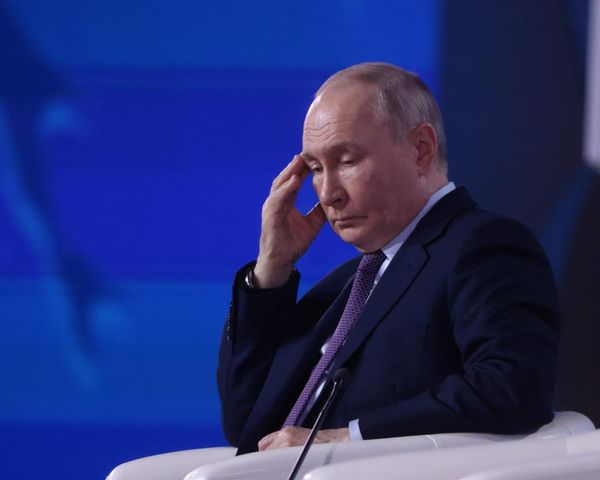
Russia’s president, Vladimir Putin, has called on his fellow citizens to get inoculated against the coronavirus amid a sluggish vaccine rollout and stubbornly high levels of scepticism in the country.
The AFP news agency reports that Putin told Kremlin-controlled television that getting vaccinated was “needed, even necessary”.
“If a person wants to feel confident, does not want to get sick and have serious consequences after an illness, then it is better to get this vaccine, of course,” news agencies quoted Putin as saying on Rossiya-1.
The 68-year-old received his first dose on Tuesday, but did not reveal which of Russia’s three home-grown jabs – Sputnik V, EpiVacCorona or CoviVac – he had been given.
According to Reuters, Putin said he experienced minor side effects from the vaccine after receiving the first shot on Tuesday.
“I woke up the next morning after the vaccination and it seemed to me I felt slight pain in muscles. I took a thermometer... my temperature was normal,” he told the state Rossiya 1 TV channel. He said he also had an uncomfortable feeling on the site of the injection.
Updated
Indian state of Maharashtra imposes nighttime curfew
Authorities have imposed a night-time curfew on India’s western state of Maharashtra after the state capital, Mumbai, reported a record daily rise in cases, Reuters reports.
Mumbai’s mayor, Kishor Pednekar, announced on Sunday that hotels, pubs and shopping malls will be shut at night under the curfew as Mumbai reported 6,123 new infections.
“We are seeing a higher Covid positive rate in high-rise residential buildings than in slums … to stop the spread only essential services will be allowed (at night),” said Pednekar.
The state-wide curfew, which is between 8pm and 7am, begins on Sunday and will be in force until 15 April.
India on Sunday reported its highest single-day tally since mid-October, with 62,714 new cases, according to the country’s health ministry.
With 312 deaths, single-day fatalities were also at their highest level since Christmas, ministry data showed.
Updated
Five thousand fans enjoyed a concert at Barcelona’s Palau Sant Jordi concert hall on Saturday night after passing a rapid coronavirus screening as part of an experiment to test its effectiveness in preventing outbreaks of the virus at large cultural events.
Attendees were required to wear high-quality face masks provided by the organisers.
One concertgoer, Jose Parejo, 40, told AP:
We were able to evade reality for a while. We were inside our small concert bubble. And we were even able to remember back in time when things like this one were normal. Things that nowadays aren’t that normal, sadly.


Updated
Wales has reported an additional 171 Covid-19 infections, taking the total number of confirmed cases to 209,066.
There were no further deaths reported, Public Health Wales figures show. The death toll stands at 5,505 since the pandemic began.
A total of 1,387,583 first doses of the Covid-19 vaccine have now been administered in Wales, according to the agency. A further 412,663 people have also received a second doses.
Updated
Hauliers crossing to England from outside the UK and Ireland for more than two days will need to be tested for Covid-19, the transport secretary has said.
They will need to undergo a test for Covid-19 within 48 hours, and one every 72 hours after that.
“This is to ensure we keep track of any future coronavirus variants of concern,” Grant Shapps wrote on Twitter.
HAULIER NEWS: From April 6, lorries visiting England from outside UK (and the Common Travel Area) for more than 2 days will need to take a #Covid test within 48hrs + one every 72hrs after. This is to ensure we keep track of any future #Coronavirus Variants of Concern.
— Rt Hon Grant Shapps MP (@grantshapps) March 28, 2021
EU vaccine chief hopes for summer tourist season like in 2020
The head of the EU’s vaccine taskforce has said he hopes Europe will have a summer tourist season “comparable to last year”, supported by the bloc’s vaccine rollout.
Thierry Breton, who is the European internal market commissioner, told RTL radio and TV channel LCI that the EU should distribute enough doses by mid-July to reach a level of herd immunity.
Breton’s comments follow the European commission this week increasing its powers to block vaccine exports to countries with a better record than the EU in vaccinating its population, or those that restrict exports through law or in their contracts with suppliers.
Updated
Pope Francis has led Palm Sunday services in an almost empty St Peter’s Basilica due to coronavirus restrictions for the second time as the Vatican continues to impose strict measures, Reuters reports.
Before the pandemic, Palm Sunday would see tens of thousands of people flocking to St Peter’s Square holding olive branches and palm fronds in an outdoor ceremony. Instead, at today’s mass there were only 120 attendees joining the pope.


Updated
South Africa plans to vaccinate up to 200,000 people a day from mid-May
South Africa plans to vaccinate to up to 200,000 people daily from mid-May, according to a report in the South African Sunday Times newspaper.
More than 2,000 vaccination sites will be established to administer the 2.8m single-dose Johnson & Johnson vaccines, the first batch of which are due to arrive in late April, the newspaper said.
So far, just 231,605 people have been vaccinated. The government aims to inoculate around 40 million of the country’s hard hit population, which has reported the highest number of Covid-19 cases and deaths in Africa.
Updated
Sinopharm will need to assess phrase 3 trial results before deciding whether its two-dose Covid-19 vaccine should be accompanied by a booster shot, a company executive said on Sunday.
Vaccine manufacturers are considering whether additional doses may be required amid concerns about emerging virus variants that could lower the protection existing vaccines offer, Reuters reports.
The preliminary results so far showed that the booster vaccination can effectively increase the neutralising antibody titer and antibody persistence, and also effectively improve the vaccine’s ability to resist mutations,” Zhang Yuntao, vice-president at China National Biotec Group (CNBG), an affiliate of Sinopharm, said on Sunday.
Is a booster shot needed? When will the booster be given? The answer should be based on the results of future phase 3 clinical studies,” Zhang said at a news conference.
Updated
A third coronavirus vaccine will start being administered in the UK next month, joining the Pfizer and AstraZeneca jabs already in use, the culture secretary, Oliver Dowden, has confirmed.
Britain has ordered 17m doses of the Moderna vaccine, which has a 94% efficacy rate in trials, and Dowden said the first supplies were expected to arrive in April.
In an interview on Sky’s Sophy Ridge on Sunday, Dowden also insisted the government was confident it would be able to meet its target of getting people over-50 vaccinated by 15 April, and and all remaining adults vaccinated by the end of July.
Oliver Dowden said vaccine passports will not be introduced on a “permanent basis”.
He told the BBC’s Andrew Marr Show: “Of course we would never look to do this on a permanent basis, it’s just whether it might be a tool in the short-term.”
Updated
Minister says he can't rule out further lockdowns
The culture secretary refused to guarantee that there would be no further lockdowns, saying “you can’t rule things out”.
“The aim of [cautiously easing restrictions] is to make sure it’s irreversible, but certainly my whole experience of the past year is that you can’t rule things out,” Oliver Dowden told Andrew Marr, to which Marr responded “so there could be another lockdown”.
Dowden continued: “We have every confidence that there won’t be another lockdown, it’s the last thing in the world that we’d want to do. I’m confident that because of these measures, we’ll be able to avoid another lockdown – that’s why we’re taking a more cautious approach.”
Appearing on the show before the minister, Prof Mark Woolhouse said that another lockdown should be regarded as “a failure of public health policy”, underlining that we have the knowledge to avoid that route.
Updated
The UK can have “more confidence” that Europe’s third wave won’t impact it in the same manner because of the progress made by the vaccine rollout, Oliver Dowden said, while urging people to remain vigilant.
“People still have to abide by the rules from Monday – this isn’t a complete free for all, this is a limited easing which we will then test the impact of in the next four weeks,” Dowden said.
Updated
Oliver Dowden, the culture secretary, has said the phased relaxation “could be delayed if the situation deteriorates” but at the moment the country is on track to continue easing.
Asked by Andrew Marr on the BBC if the Moderna vaccine will arrive in time to make up the delayed doses, Dowden said the government expects the US-made doses in April.
Dowden said he was “confident” the government would deliver everyone a second vaccine dose within the 12-week window without requiring mixing of vaccines.
Updated
Palau’s president has travelled to Taiwan to launch a travel corridor between the two coronavirus-free allies, AFP reports:
A charter flight carrying president Surangel Whipps landed at Taoyuan international airport for the start of a four-day visit and to kick off what the two sides are billing as Asia’s first travel bubble.
He is set to return to Palau on Thursday with a group of 110 Taiwanese tourists on the first of weekly vacation flights.
The plan is to eventually have 16 flights a week on the route, a major lifeline for Palau’s economy that before the pandemic relied on tourism for more than half its gross domestic product.
“The main reason we are going is really to open up the travel corridor because tourism is our biggest economic driver and it’s important to get the tourism back in operation,” Whipps told Taiwan’s Central News Agency (CNA) in a recent interview. “I think it’s important to demonstrate to the world that this can work.”
Palau, which lies about 1,000 kilometres east of the Philippines, is one of the few places on Earth never to have recorded a Covid-19 case.
Taiwanese visitors must undergo pre-flight coronavirus checks, they can travel only in tour groups and are barred from making individual excursions.
Updated
Further lockdowns will be 'public health policy failure', expert says
Another lockdown next winter should be regarded as “a failure of public health policy”, Prof Mark Woolhouse said, adding that we have the knowledge to avoid that route.
Updated
Prof Mark Woolhouse has said he is “a little bit nervous” about a full relaxation of restrictions in June.
He said the idea that we can emerge from the coronavirus crisis “in one great bound” is overly optimistic.
Asked about vaccine passports, Prof Woolhouse said it’s something that should be considered as part of a wider “package of measures”.
After a year of restrictions, the focus not has to be “how to make activities safe”, he said, adding that additional measures may still need to remain in place such as social distancing and screens. These safety measures can be used for venues such as hospitality and many workplace environments.
However, passports could be considered for activities that it’s difficult to make safe, Prof Woolhouse said, such as clubs, “whether that’s vaccine passports, negative test passports, or even immunity passports”.
It is crucial that the “whole world, not just the UK” monitors emerging variants, Prof Mark Woolhouse warned amid concerns vaccines may have to be updated to tackle other virus strains.
Hopefully vaccines will take us to the “herd immunity threshold”, which would mean that outbreaks are smaller and more easily contained.
However, we will have to remain alert to the virus “into the years ahead”, he warned.
Testing, tracing and – particularly – isolating will “remain important for the entire future” Prof Woolhouse said.
An uptick in the number of cases is “inevitable” at some stage as restrictions are eased, an adviser on the government’s scientific pandemic influenza group on modelling (Spi-m) has warned as a third coronavirus sweeps Europe.
Asked about what a third wave could look like in the UK now half of adults have had a first vaccine dose, Prof Mark Woolhouse said: “At some stage, an uptick in the number of cases is inevitable as we relax restrictions... we haven’t vaccinated everyone, so there’s still potential for the virus to spread.”
Prof Woolhouse, professor of infectious disease epidemiology at Edinburgh University, added: “The question is whether those increasing cases will translate into a large number of hospitalisations and deaths. I’m pretty optimistic on this... but we have to be careful, there’s no question that some of the more pessimistic scenarios out there do allow for a significant third wave and it’s something we have to continue to guard against.”
Vaccines do not completely stop transmission, JCVI member says
Covid-19 vaccines do not completely prevent transmission, Prof Anthony Harnden, deputy chair of the Joint Committee on Vaccination and Immunisation (JCVI) has said.
He told BBC Breakfast on Sunday that while they appear to reduce transmission by about 50%, vaccinated people can still get the virus and spread it to others.
He added:
There’s some good evidence now from Public Health England and from the Oxford/AstraZeneca trials that the vaccines do prevent transmission.But they don’t completely prevent transmission. The figures are still being calculated but it’s in the order of 50%.
So, there will be some reduction in transmission, no doubt at all, but it’s still possible, even though you’ve been vaccinated, to get infected, have no symptoms and transmit it to others. That’s why it’s important that all those who get vaccinated still stick to the rules.
Updated
Asked about what mistakes Wales made that led to its mortality rate – 196 deaths/100,000 people – being higher than the overall UK rate, Mark Drakeford said in hindsight they should have taken more actions than they did.
He said that would have been true of other parts of the UK too, and rebuffed Andrew Marr’s suggestion that Wales had more lockdowns that England, saying Wales had no more but just went into them “earlier and deeper”.
Updated
Some restrictions will likely stay in place to the end of the year, Mark Drakeford has suggested, underlining that the coronavirus “is with us for the foreseeable future”.
“By the end of this year I still think that we will need to go on doing the things that we’ve learned to do – the mask-wearing in crowded places, the hand-washing, the social distancing and so on,” Drakeford told the BBC.
“This virus is with us for the foreseeable future. Albeit, because of vaccination and other measures we are taking, life can be and will be better. But the idea that with one bound we are free and the coronavirus is over – that’s not my message to people here in Wales.”
Asked about vaccine passports, Mark Drakeford said this is being considered on a four-nations basis.
“There are definitely prizes to be won... but there are some very big practical and ethical challenges as well,” Drakeford said.
Mark Drakeford has said that he is hoping that by the end of April people in Wales will be able to enjoy outdoor hospitality, adding that meeting indoors is always more dangerous and will have to wait until May.
Pressed on a roadmap, the first minister said he will be setting out a “prospectus” for the whole of April and into May on Thursday.
“This is an inherently unstable time,” Drakeford said, adding that the figures are studied every day. “At the moment we are heading in the right direction but we know how quickly this virus can change and I’m not prepared to give people false assurance too far into the future.”
Wales’ first minister has said he won’t be able to tell people that this will definitely have been the country’s last lockdown “any time soon” after Wales eased its restrictions on Saturday.
Appearing on the Andrew Marr show, Mark Drakeford was asked when he will be able to guarantee that lockdowns are finished.
“I’m afraid that I don’t think anybody responsible in my position will be able to do that anytime soon,” Drakeford said. “Of course we hope it will be, but we see what’s happening on the continent of Europe and we know about new variants that are being discovered around the globe.”
Updated
Russia has reported 9,088 new coronavirus cases, including 1,878 in Moscow, taking the national tally to 4,519,832, Reuters reports.
The Russian coronavirus task force said that 336 more deaths of Covid-19 patients had been confirmed in the past 24 hours, taking Russia’s official coronavirus death toll to 97,740.
UK minister says Moderna rollout will begin in April
England’s relaxation of coronavirus restriction on Monday is “an important step back towards normality”, the culture secretary has said, adding that people should continue to follow the rules.
Asked about reports that the Moderna vaccine could be rolled out within the next three weeks, Oliver Dowden told Sky News that the health secretary has indicated that it will begin “later this month”, but would not be drawn on a specific date.
Pressed on a date, the minister said the government will “deliver on vaccine promises”.
Dowden said the UK does not “currently have a surplus” of Covid-19 vaccines following a report jabs could be sent to Ireland, saying that the government’s “first priority is ensuring we deliver vaccines” for the UK.
The minister also said the UK continues to have “constructive” discussions with the EU over vaccine supplies following an announcement that the bloc would be changing how it authorises exports of doses.
“Our position is very clear – that the EU should not be engaging in blocking exports and that they should honour the pledge that Ursula von der Leyen gave to Boris Johnson whereby they agreed that any contract should be honoured,” Dowden said.
"We do expect Moderna to come later this month" says Culture Secretary, Oliver Dowden.
— Sophy Ridge on Sunday (@RidgeOnSunday) March 28, 2021
He adds we are "still on course with the roadmap" but does not provide further detail on an EU vaccine deal or supply chain issues. #Ridge https://t.co/qKgRWPii05 pic.twitter.com/cix3Yc03tt
Updated
Just over a year into the pandemic, Venice remains a ghost town, AFP reports. Portofino, a colourful playground for the jet-set on the Ligurian coast, and Varenna on the shores of Lake Como are also deserted.
The coronavirus has taken a heavy toll on tourism in Italy, the world’s fifth-most visited destination - and with a third wave now under way, there is no obvious end in sight.
The collapse in the number of tourists to Italy was jaw-dropping last year, with only 25.5 million foreign visitors spending at least one night in the peninsula, versus 65 million in 2019 - a drop of more than 60 percent.

That corresponded to revenue of only 17.45 billion euros ($20.6 billion), 26.85 billion euros less than the prior year, according to new figures from the Bank of Italy.
“The situation is really dramatic and everything must be done to revive a sector so vital for our country,” said the president of the Italian Union of Chambers of Commerce, Carlo Sangalli.
Nearly 100,000 companies in Italy’s tourism sector are at risk of bankruptcy, according to the research institute Demoskopika, with a potential loss of 440,000 jobs.
Updated
Under-50s to be offered Moderna vaccine in three weeks – Mail on Sunday
People under 50 in the UK will begin to be offered Moderna’s Covid-19 vaccine within three weeks, according to a report in the Mail on Sunday.
More than 500,000 new doses of the US vaccine will be used to expanded the programme to people in lower age cohorts in mid-April, the paper says.
Doctors are expected to administer the first doses of the new vaccine, which will join Pfizer and AstraZeneca in the UK’s vaccine stocks, within three weeks.
The development comes as NHS England urges all those who are eligible but have not yet received a dose to book an appointment ahead of a contraction of supply next month.
Updated
Millions of UK workers could be returning to unsafe workplaces without Covid risk assessments while the vaccines are still being rolled out and dangerous variants are circulating.
A survey of union safety reps by the TUC suggests almost half of employers have not carried out a Covid risk assessment or have outdated, inadequate measures in place that may not prevent transmission of the virus.
This comes as staff at the Driver and Vehicle Licensing Agency (DVLA) in Swansea prepare to strike over safety concerns following the largest workplace outbreak of the pandemic. The Public and Commercial Services (PCS) union notified the government agency last week that hundreds of staff in the Welsh city’s offices, where more than 600 workers tested positive, will walk out unless occupancy levels in the buildings are reduced.
Summary
Here are the key developments from the last few hours:
- Germany must suppress virus now or risk losing control, Merkel aide says. Germany must bring down coronavirus infections in the next few weeks or risk new virus mutations that are resistant to vaccines, and should impose night-time curfews in regions with high caseloads, said a top aide to Chancellor Angela Merkel.
- Ukraine’s daily Covid hospitalisations rise to record high. A record number of Ukrainians were taken to hospital with Covid over the past 24 hours, health ministry data showed on Sunday as the country grapples with a surge in infections.
- Brazil Covid-19 death toll exceeds 3,000 for second day. Brazil recorded 85,948 additional confirmed cases of the novel coronavirus in the past 24 hours and 3,438 deaths from Covid-19, the Health Ministry said on Saturday, the second day in a row fatalities have exceeded 3,000.
- Queensland authorities say man had not hosted party. Queensland authorities say a man who later tested positive for Covid-19 had not hosted a party while he was supposed to be isolating, drastically reducing the potential for a cluster in the state to expand.
- Half a million Australians vaccinated. More than half a million Australians have now been vaccinated against Covid, with the rollout boosted by the AstraZeneca vaccine manufactured in Melbourne.
- Hong Kong says initial investigation of BioNTech vaccines shows no ‘obvious systemic factors’. Hong Kong’s government said an initial investigation by Germany’s BioNTech and Fosun Industrial into its coronavirus vaccine did not show any “obvious systemic factors” during packaging after use of the vaccine was suspended in the city and neighbouring Macau this week.
- More than 2.5 million people in England have had second Covid jab. More than 2.5 million people in England have now received their second dose of a coronavirus vaccine, with more than one-in-three of those taking place in the last week.
- Mexico death toll revised by 60% to 321,000. Mexico’s government acknowledged Saturday that the country’s true death toll from the coronavirus pandemic now stands above 321,000, almost 60% more than the official test-confirmed number of 201,429. Mexico does little testing, and because hospitals were overwhelmed, many Mexicans died at home without getting a test. The only way to get a clear picture is to review “excess deaths” and review death certificates.
- Saudi Arabia daily Covid cases climb back above 500. Daily coronavirus cases in Saudi Arabia have risen above 500 for the first time since October and the health ministry on Saturday blamed the increase on gatherings and laxity in complying with preventive measures such as social distancing.
Ukraine's daily Covid hospitalisations rise to record high
A record number of Ukrainians were taken to hospital with Covid over the past 24 hours, health ministry data showed on Sunday as the country grapples with a surge in infections, Reuters reports.
Health Minister Maksym Stepanov said on Facebook 5,052 people had been hospitalised in the past day compared to the previous record of 4,887 people registered on March 17.
Ukraine also reported 11,932 new infections in the past 24 hours and 203 coronavirus related deaths.
The number of daily hospitalisations did not exceed 2,000 during the peak of the pandemic in late 2020 but has begun to rise in recent weeks. Ukraine registered a record daily high of 18,132 new cases and 362 coronavirus-related deaths last week.
The minister has linked the worsening of the situation to the spread of the coronavirus variant first found in Britain, which was detected in Ukraine in late February, amid a slow pace of vaccination.
So far in the country of 41 million people around 197,000 people have received their first shots since the inoculation campaign began a month ago.
More than 1.64 million people have been infected and 31,954 have died since the start of the pandemic.
Saudi Arabia daily Covid cases climb back above 500
Daily coronavirus cases in Saudi Arabia have risen above 500 for the first time since October and the health ministry on Saturday blamed the increase on gatherings and laxity in complying with preventive measures such as social distancing, Reuters reports.
The Gulf state recorded 510 new infections on Friday and 502 on Saturday to take its total tally to 387,794 cases with 6,643 deaths. More than 200 of the cases were in the capital Riyadh.
The kingdom had seen daily infections fall to below 100 in January from a peak of more than 4,000 in June.
Authorities last week expanded Covid vaccinations to all citizens and residents aged 16 and above. Starting mid-May, unvaccinated workers at food outlets, public transport, gyms and salons would be required to take a PCR test every week.
Saudi Arabia in January postponed the end of a ban on travel for its citizens and full reopening of entry points to 17 May. In February, it suspended entry for non-citizens from 20 states with the exception of diplomats and medical practitioners.
The number of confirmed coronavirus cases in Germany increased by 17,176 to 2,772,401, data from the Robert Koch Institute for infectious diseases showed on Sunday.
The reported death toll rose by 90 to 75,870 , the tally showed.
Mexico death toll revised by 60% to 321,000
Mexico’s government acknowledged Saturday that the country’s true death toll from the coronavirus pandemic now stands above 321,000, almost 60% more than the official test-confirmed number of 201,429.
Mexico does little testing, and because hospitals were overwhelmed, many Mexicans died at home without getting a test. The only way to get a clear picture is to review “excess deaths” and review death certificates.
On Saturday, the government quietly published such a report, which found there were 294,287 deaths linked to Covid from the start of the pandemic through 14 February. Since 15 February there have been an additional 26,772 test-confirmed deaths.
The higher toll would rival that of Brazil, which currently has the world’s second-highest number of deaths after the United States. But Mexico’s population of 126 million is far smaller than either of those countries.
The new report also confirms just how deadly Mexico’s second wave in January was. As of the end of December, excess death estimates suggested a total of about 220,000 deaths related to Covid in Mexico. That number jumped by around 75,000 in just a month and a half.
Also suggestive were the overall number of “excess deaths” since the pandemic began, around 417,000. Excess deaths are determined by comparing the deaths in a given year to those that would be expected based on data from previous years.
A review of death certificates found about 70.5% of the excess deaths were Covid-related, often because it was listed on the certificates as a suspected or contributing cause of death. But some experts say Covid may have contributed to many of the other excess deaths because many people couldn’t get treatment for other diseases because hospitals were overwhelmed.
Former President Felipe Calderón wrote in his Twitter account Saturday that “more than 400,000 Mexicans have died, above the average for previous years ... probably the highest figure in the world.”
Still in Europe: Dutch bank ING now expects eurozone growth of 3.0 percent this year, down more than half a percentage point from its previous estimate, AFP reports.
Most of the growth will also come from the third quarter, slightly later too, ING added.
Andrew Kenningham, chief Europe economist at Capital Economics, said he does not expect the bloc to return to pre-pandemic activity levels before the second half of 2022, a year behind the US.
“We are revising down our forecast for eurozone GDP growth due to the resurgence of virus cases, slow pace of vaccination and extension of lockdowns,” Kenningham said.
“The outlook has deteriorated,” said Chris Williamson, chief economist at IHS Markit.
The key Purchasing Managers Index (PMI) compiled by IHS Markit for March showed Germany, Europe’s strongest economy, doing better than France and the northern countries generally doing better than their southern partners - Spain, Italy, Greece, Portugal - which risk seeing their key tourist industries shackled for yet another year.
Standard and Poor’s however has decided to keep its eurozone growth forecast unchanged at 4.2 percent for 2021, citing the positive factor of cheap credit.
At the same time, the economy and Europe’s people have adapted to the restrictions, lessening the impact, said Sylvain Broyer, chief S&P economist for Europe.
More on Europe’s economy now via AFP: just a couple of weeks ago, European Central Bank head Christine Lagarde was even talking about a “firm rebound in activity in the second half of the year”.
Now the EU’s strongest economies - Germany, France and Italy - have reimposed restrictions and the vaccine programme in Europe is mired in a blame game over supplies.
Credit insurer Euler Hermes estimates that the EU is now seven weeks adrift of its target to have 70 percent of the population vaccinated by the end of the summer, compared with five weeks in February.
It estimates the delay will cost the bloc’s 27 member states some 123 billion euros this year.
“If you compare us with the US, where the outlook is so much more positive, we are falling further behind on the recovery because of this third wave,” said Charlotte de Montpellier, economist with Dutch bank ING.
An upsurge in new coronavirus cases is forcing governments across Europe into new, damaging lockdowns that threaten to delay a much hoped-for return to growth, economists say.
AFP: The plan was that mass vaccination programmes would turn the tide on the pandemic, allowing locked-down consumers free rein after months penned up at home.
Instead the virus has embarked on a third wave which is proving more difficult to bring under control.
French President Emmanuel Macron warned Thursday that the European Union would have to do more and beef up its already massive 750 billion euro ($885 billion) virus recovery fund as a result.
The EU had made a major effort after the first wave last year, Macron said, but “following the second and third waves... we will no doubt have to add to our response”.
In September, as the economy picked up sharply after a rapid reverse in the first wave, expectations were high that by the middle of this year it would be solidly back on track, thanks especially to the vaccine rollout.
More than 2.5 million people in England have had second Covid jab
More than 2.5 million people in England have now received their second dose of a coronavirus vaccine, with more than one-in-three of those taking place in the last week.
More than 25 million people in England have been vaccinated with their first dose, with the number of people receiving their second dose reaching a new weekly high.
Approximately 900,000 people received their second jab in the last week, NHS England said, around twice as many as the week before.
The focus is now on ensuring those in the most at-risk cohorts have had the chance to be vaccinated, ahead of a target of offering all priority groups their first vaccine by 15 April:
In Australia, unions are using the end of the jobkeeper payment to urge the government to lift the minimum wage, saying low-income earners will spend the money and help stimulate economic recovery.
Calling the end of the government wage subsidy a “grim” day for workers, Australian Council of Trade Unions secretary Sally McManus said she was concerned about the effect of withdrawing the pandemic support measure, with up to 150,000 people expected to lose their employment as a result:
Hong Kong says initial investigation of BioNTech vaccines shows no 'obvious systemic factors'
Hong Kong’s government said an initial investigation by Germany’s BioNTech and Fosun Industrial into its coronavirus vaccine did not show any “obvious systemic factors” during packaging after use of the vaccine was suspended in the city and neighbouring Macau this week.
Reuters: Authorities on Wednesday halted the use of a Covid vaccine developed by BioNTech citing defective packaging, triggering confusion in inoculation centres across the city.
The suspension came as the Asian financial hub has faced a sluggish take-up of vaccines due to dwindling confidence in China’s Sinovac vaccine and fears of adverse reactions.
In a statement published late on Saturday, the city’s government said the investigation results did not rule out that the situation was “caused by environmental conditions during the long-haul transport process.”
It was not related to the cold-chain and logistical management of the vaccine and random testing of intact vials delivered to Hong Kong did not uncover any issue of leakage, it said.
Both Fosun and BioNTech considered the vaccines to have no safety risks and people who have received them “do not need to worry”, the government said.
The remaining part of the investigation will focus on “ascertaining the integrity of the intrinsic properties of the relevant batches of vaccine, and that the batches are safe for use.”
The government said it was following up with Fosun and BioNTech to complete the investigation within a week to allow for a resumption of supplying the vaccines to the public.
The city started vaccinating residents with doses from Sinovac in February and began offering the one developed by BioNTech in March.
The BioNTech vaccine is distributed in Hong Kong and Macau via a partnership with China’s Fosun Pharma, while BioNTech partners with Pfizer in markets outside greater China.
China reported eight new Covid cases on 27 March compared with 12 new infections the previous day, the country’s national health authority said on Sunday.
The National Health Commission said in a statement that all of the new cases were imported infections originating from overseas. The number of new asymptomatic cases, which China does not classify as confirmed cases, fell to 19 from 27 cases a day earlier.
The total number of confirmed Covid cases in mainland China now stands at 90,167 while the death toll remained unchanged at 4,636. The last reported death was on 25 January.
Updated
There has been debate over which of the two vaccines being used in Australia – Pfizer and AstraZeneca – are more effective, AAP reports.
“One of the things I would say to people about the vaccines in Australia, take the first one you are offered,” Jane Halton, from the national Covid-19 commission, told Sky News’s Sunday Agenda program.
“They are both going to do what we want them to do, which is to prevent severe disease and death.”
Halton is also co-chair of the Covax global coordination program that helps develop vaccines and ensures they are distributed around the world.
So far the program has helped to get 31m doses to 57 countries and the objective this year is for 2bn doses.
She also warned last year of “vaccine nationalism”.
Asked if Europe’s response in blocking vaccines to Australia falls into that category, she said: “Absolutely.”
“Domestic governments have an obligation to protect their populations,” she said.
“What we can’t do is to have that done at the expense of the globe and vulnerable people right around the world.”
Updated
Half a million Australians vaccinated
More than half a million Australians have now been vaccinated against Covid, with the rollout boosted by the AstraZeneca vaccine manufactured in Melbourne.
AAP: The first of 50m Australian-made AstraZeneca doses have been distributed and more will be on an ongoing basis, health minister Greg Hunt said.
He said the decision to produce the vaccine at CSL had ensured Australia was one of the few countries with “strong, clear” domestic supplies going forward.
More than 507,000 Australians had been vaccinated as of Friday – 329,000 vaccines administered in state and territory vaccination clinics, 97,000 in general practices and more than 80,000 in aged care homes, Hunt said.
“Our GPs have played a vital role in this expansion and have not only been vaccinating over the week, but many practices are continuing to vaccinate on Saturday and Sunday this weekend,” he said in a statement on Sunday.
Updated
Queensland authorities say man had not hosted party
Queensland authorities say a man who later tested positive for Covid-19 had not hosted a party while he was supposed to be isolating, drastically reducing the potential for a cluster in the state to expand.
On Saturday, the man was said to have hosted 25 people while he was supposed to be isolating after receiving a Covid-19 test. But it was revealed on Sunday that only five people had seen the man during this period, and most of them were his housemates.
Queensland’s health minister, Yvette D’Ath, said it was “extremely unfortunate” that incorrect information had been circulated regarding the party, but she said the information had come from the man, a 26-year-old landscaper from Strathpine.
There was one new Covid-19 case detected in the state in the past 24 hours, the brother of the landscaper, who appears to have had Covid-19 earlier and has since recovered.
Queensland’s chief health officer, Dr Jeannette Young, said it was important to remain vigilant, despite the significant reduction in people identified as close contacts of the positive case.
“It’s far far too early to relax because we know our two current cases have been out infectious in the community for the last week.”
Queensland police say the landscaper was now believed to have not committed any criminal breaches of Covid-19 restrictions.
Updated
Brazil Covid-19 death toll exceeds 3,000 for second day
Brazil recorded 85,948 additional confirmed cases of the novel coronavirus in the past 24 hours and 3,438 deaths from Covid-19, the Health Ministry said on Saturday, the second day in a row fatalities have exceeded 3,000.
Brazil has registered nearly 12.5 million cases since the pandemic began, while the official death toll has risen to 310,550, according to ministry data.
Germany must suppress virus now or risk losing control, Merkel aide says
Germany must bring down coronavirus infections in the next few weeks or risk new virus mutations that are resistant to vaccines, and should impose night-time curfews in regions with high caseloads, said a top aide to Chancellor Angela Merkel according to Reuters.
“We are in the most dangerous phase of the pandemic,” Merkel’s chief of staff Helge Braun told the Bild am Sonntag newspaper. “The next few weeks will determine whether we can foreseeably get the pandemic under control.”
If the number of infections rises rapidly again there is a growing danger that the next virus mutation will become resistant to the vaccine, Braun said.
“Then we would need new vaccines, then we would have to start vaccinating all over again,” he added.
After a popular backlash and legal hurdles, Merkel was forced to ditch plans for an extended Easter holiday intended to try to break a third wave, but Braun said it remained imperative to reduce the number of infections.
In regions where the number of cases per 100,000 people in the last seven days is more than 100, he spoke out in favour of additional curbs. “That’s where regional curfews in the evening and at night can help, because we have the highest infection rates at meetings in people’s homes,” he said.
Coronavirus infections have risen sharply in Germany in recent weeks, driven by a more transmissible variant of the virus and moves to ease some restrictions.
On Saturday, the number of confirmed coronavirus cases in Germany increased by 20,472, while the reported death toll rose by 157, according to data from the Robert Koch Institute for infectious diseases.
Braun said he expected the infection situation to ease in May, helped by the impact of vaccinations and the onset of warmer weather. “By Whitsun (May 23) we will see the first positive effects - provided the situation doesn’t get out of hand by then.”
Australian state of Queensland records one new Covid case
Queensland has recorded one new case of coronavirus overnight but the infected person has recovered and aren’t infectious at the moment, authorities have said. The man is the brother of a Brisbane landscaper who tested positive to the UK variant on Thursday.
Queensland police also revealed on Sunday that a man in his 20s whose positive Covid test was announced on Saturday did not host a party for 25 people while awaiting his test results as initially reported.
Instead he had contact with five others, “most” of whom lived in the same house.Here is the latest list of Covid hotspots in the state that were visited by infected people:
Updated
Summary
Hello and welcome to today’s live coverage of the coronavirus pandemic with me, Helen Sullivan.
I’ll be bringing you the latest Covid news from around the world for the next few hours.
Germany must bring down coronavirus infections in the next few weeks or risk new virus mutations that are resistant to vaccines, and should impose night-time curfews in regions with high caseloads, said a top aide to Chancellor Angela Merkel.
Meanwhile Brazil recorded 85,948 additional confirmed cases of the novel coronavirus in the past 24 hours and 3,438 deaths from COVID-19, the Health Ministry said on Saturday, the second day in a row fatalities have exceeded 3,000.
Here are the key recent developments:
- Facebook has frozen Venezuelan president Nicolas Maduro’s page for violating policies against spreading misinformation about Covid-19 by promoting a remedy he claims, without evidence, can cure the disease, a company spokesman said.
- More than 150,000 people have died from coronavirus in the UK, according to a Guardian analysis.
- Turkey has recorded 30,021 new coronavirus cases in 24 hours, the highest number this year, Reuters reports.
- Italy reported 380 coronavirus-related deaths on Saturday compared with 457 the day before, the health ministry said. The daily tally of infections fell slightly to 23,839 from 23,987 the day before, Reuters reports.
- France has recorded 42,619 new cases on Saturday compared with 41,869 cases on Friday, Reuters reports. The total number has surpassed 4.5 million.
- Allowing international air travel without testing at UK airports risks reversing “all the good our vaccination programme has done”, an infectious diseases expert has warned. He called for efficient testing and tracing at airport and supporting people to self-isolate.
-
The Philippines will reimpose tougher coronavirus measures in the capital of Manila and nearby provinces, a senior official said on Saturday in order to fight a surge in infections.
-
Spain will require people arriving from France by land to present a negative Covid-19 test following a rise in Spain’s infection rate. The requirement will not apply to truck drivers, people who cross the border for work, and people who live within 30km of Spain.
-
Brazil’s coronavirus situation is likely to deteriorate even further, experts have warned, forecasting that the nation’s death toll will pass the United States’ by the end of the year.
-
The World Health Organization says it has not ruled out any theory on the origins of the coronavirus pandemic, despite one top official earlier this week appearing to dismiss the idea it had escaped from a laboratory.
- Indonesia’s vaccination drive will slow down next month due to India’s delay in exporting AstraZeneca vaccines, its health minister has said. India has temporarily suspended large vaccines exports as it seeks to step up its own inoculation efforts amid surging infections.
-
Ireland’s health minister has suspended vaccination provision at a private hospital in Dublin after it emerged that it administered spare jabs to staff at a private school.
- NHS England has passed the milestone of 25m first vaccine doses administered across the country, after a further 344,008 people received a shot.