A summary of today's developments
- US president Joe Biden has said he will be getting his Covid-19 booster jab “as soon as he can get it done.” Speaking at a press conference Biden said the jab would be free and “easily accessible”, with 60 million Americans now eligible.
- U.S. Centers for Disease Control and Prevention (CDC) director Rochelle Walensky said she recommended booster shots for at-risk adult workers to protect essential workers and minority communities despite the agency’s advisory committee voting against the measure.The U.S. government is rolling out boosters starting with third doses of the Pfizer/BioNTech vaccine for Americans aged 65 and older, adults with underlying medical conditions and those in high-risk working and institutional settings, after health regulators cleared the move.
- Brazil recorded 19,438 new confirmed Covid-19 cases in the past 24 hours and 699 deaths, the country’s health ministry said on Friday.Brazil has registered more than 21 million cases since the pandemic began, while the official death toll has risen to 593,663, according to ministry data, Reuters reports.
- Rules that have limited social interaction and hit businesses during the pandemic will be dropped from Saturday in Norway, Reuters reports. Social distancing will no longer be required, nightclubs can reopen and restaurants can return to capacity.
- About one in 90 people in private homes in England had Covid-19 in the week up to 18 September, down from one in 80 the previous week, according to the Office for National Statistics. The rate is lower than Scotland, Wales and Northern Ireland.
- South Korea is expected to exceed its record for daily positive Covid-19 cases with 2,924 new infections reported as of 9pm on Friday, the country’s Yonhap news agency has reported.
- Nepal has restarted issuing visas for vaccinated tourists as the country is aiming to revive its tourism industry. Its hoped it will help businesses that have been affected by restrictions and a travel shutdown because of the pandemic.
- France and Germany have nominated incumbent director general of the World Health Organization Tedros Adhanom Ghebreyesus for a second term. Tedros has been the head of the organisation throughout the pandemic.
- A nightly curfew in Tunisia will be lifted from Saturday, its presidency has said, after being in place for a year.
- Italy has reported 3,797 new cases on Friday, a drop from 4,061 the day before. Another 52 people have died, compared to 63 on Thursday.
- The UK has reported 35,623 new cases and 180 more deaths within 28 days of a positive test, official data shows. The figures compare to 36,710 cases and 182 deaths recorded on Thursday.
- Members of Brazil’s government have tested positive for Covid on Friday. Agriculture minister Tereza Cristina, solicitor general Bruno Bianco and president Jair Bolsonaro’s son Eduardo, a congressman, have confirmed they’ve got the virus, days after the premier’s trip to the UN general assembly in New York.
Brazil recorded 19,438 new confirmed Covid-19 cases in the past 24 hours and 699 deaths, the country’s health ministry said on Friday.
Brazil has registered more than 21 million cases since the pandemic began, while the official death toll has risen to 593,663, according to ministry data, Reuters reports.
Mexico’s health ministry on Friday reported 10,139 new confirmed cases of Covid-19 in the country and 564 additional deaths.
It brings the total number of official infections since the pandemic began to 3,619,115 and the death toll to 274,703.
Health ministry officials have previously said the figures are likely to be significantly higher.
Cuba is allowing a staggered opening from Friday of restaurants, shopping centres and beaches in provinces that have lowered coronavirus cases even as it battles some of the highest nationwide rates of infection per capita worldwide, Reuters reports.
The government has already announced it will allow more flights and accept Covid-19 vaccination certificates for inbound travelers in lieu of a PCR test from November.
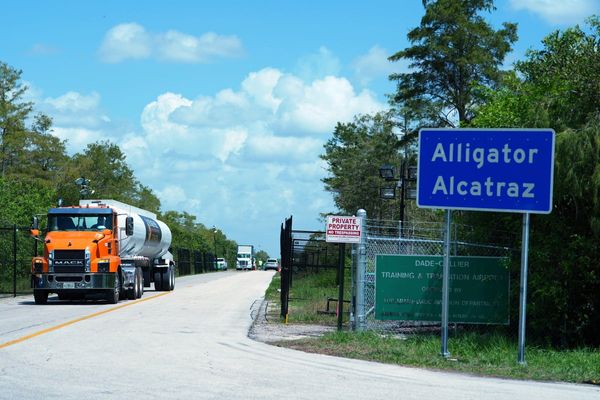
A steel shade structure went up on Friday over the Gold Coast highway at Tugun, where police and soldiers are manning the border checkpoint between New South Wales and Queensland.
The permanent shelter was put in place a day after the Queensland premier, Annastacia Palaszczuk, made comments that implied the temporary border closure might drag on beyond Christmas.
A roadside monument to a pandemic with no end in sight.
“It’s the uncertainty … that’s as big a problem as anything,” says Emma Visman, who moved from Queensland to the northern NSW town of Ballina last year.
It’s New Zealand’s 1pm Covid press conference, and Chris Hipkins is eyeballing a room of journalists. He stands, sanitising his hands, and takes a moment to look around.
“We’ll start with some good news,” he begins.
In a global pandemic, good news can be hard to come by, but Hipkins, the Covid response minister, uses the line frequently enough that it became a catch-cry.
Even when a gaffe went viral – he advised Aucklanders on how to “get outside and spread their legs” during lockdown – the minister responded with the bright side. “At least I’ve given you all something to laugh about”.

Pregnant women who receive an mRNA vaccine against Covid-19 pass high levels of protective antibodies on to their babies, research shows.
Doctors analysed umbilical cord blood from 36 newborns whose mothers had received at least one dose of an mRNA vaccine from Pfizer/BioNTech or Moderna, Reuters reports
All 36 babies had high levels of antibodies that target the spike protein on the surface of the virus – and all of the antibodies could be traced to the mothers’ vaccinations, Reuters reports.
It is not clear whether the timing of vaccination during pregnancy is related to antibody levels in the baby.
Updated
US vice president Kamala Harris’s planned in-person appearance on The View has been delayed after two of the show’s hosts tested positive for coronavirus.
Moments before the vice-president was supposed to appear on Friday, it was announced that hosts Ana Navarro and Sunny Hostin had contracted Covid.
The US administered 388,567,109 doses of Covid-19 vaccines in the country as of Friday morning and distributed 470,630,875 doses, the US Centers for Disease Control and Prevention said.
The figures are up from the 387,821,704 vaccine doses the CDC said had gone into arms by 23 September out of 469,561,625 doses delivered.
The agency said 212,861,380 people had received at least one dose while 182,958,696 people are fully vaccinated as of 6am ET on Friday, Reuters reports.
Updated
The White House has said millions of federal contractors must be vaccinated against Covid-19 by 8 December and that the administration will add clauses to future government contracts mandating inoculations.
President Joe Biden signed an executive order on 9 September requiring federal contractors to mandate vaccinations, but many US companies with federal contracts have awaited formal guidance from the White House before moving forward.
US airlines were among the industries awaiting confirmation, as they sometimes hold contracts to sell tickets to government employees, Reuters reports.
Updated
US Centers for Disease Control and Prevention (CDC) director Rochelle Walensky said she recommended booster shots for at-risk adult workers to protect essential workers and minority communities despite the agency’s advisory committee voting against the measure.
The US government is rolling out boosters starting with third doses of the Pfizer/BioNTech vaccine for Americans aged 65 and older, adults with underlying medical conditions and those in high-risk working and institutional settings, after health regulators cleared the move.
“Many of our frontline workers, essential workers, and those in congregate settings, come from communities that have already been hardest hit,” Walensky told reporters.
“It was a decision about providing rather than withholding access.”
Walensky said the CDC would update its guidance on boosters as needed and expects to evaluate in the coming weeks data on boosters for recipients of the Moderna and Johnson & Johnson Covid-19 vaccines.
Updated

Summary
Here’s a round-up of today’s Covid-19 news
- US president Joe Biden has said he will be getting his Covid-19 booster jab “as soon as he can get it done.” Speaking at a press conference Biden said the jab would be free and “easily accessible”, with 60 million Americans now eligible.
- Rules that have limited social interaction and hit businesses during the pandemic will be dropped from Saturday in Norway, Reuters reports. Social distancing will no longer be required, nightclubs can reopen and restaurants can return to capacity.
- About one in 90 people in private homes in England had Covid-19 in the week up to 18 September, down from one in 80 the previous week, according to the Office for National Statistics. The rate is lower than Scotland, Wales and Northern Ireland.
- South Korea is expected to exceed its record for daily positive Covid-19 cases with 2,924 new infections reported as of 9pm on Friday, the country’s Yonhap news agency has reported.
- Nepal has restarted issuing visas for vaccinated tourists as the country is aiming to revive its tourism industry. Its hoped it will help businesses that have been affected by restrictions and a travel shutdown because of the pandemic.
- France and Germany have nominated incumbent director general of the World Health Organization Tedros Adhanom Ghebreyesus for a second term.Tedros has been the head of the organisation throughout the pandemic.
- A nightly curfew in Tunisia will be lifted from Saturday, its presidency has said, after being in place for a year.
- Italy has reported 3,797 new cases on Friday, a drop from 4,061 the day before. Another 52 people have died, compared to 63 on Thursday.
- The UK has reported 35,623 new cases and 180 more deaths within 28 days of a positive test, official data shows. The figures compare to 36,710 cases and 182 deaths recorded on Thursday.
- Members of Brazil’s government have tested positive for Covid on Friday. Agriculture minister Tereza Cristina, solicitor general Bruno Bianco and president Jair Bolsonaro’s son Eduardo, a congressman, have confirmed they’ve got the virus, days after the premier’s trip to the UN general assembly in New York.
I’ll hand over to my colleague Nadeem Badshah who will guide you through the latest Covid developments for the rest of the evening.
More members of Brazil’s government have tested positive for Covid on Friday, in addition to Tereza Cristina earlier on Friday (see 12:55), including president Jair Bolsonaro’s son.
Eduardo Bolsonaro, a congressman has confirmed that he has Covid, according to Reuters, as has solicitor general Bruno Bianco.
Bolsonaro was part of his father’s delegation to New York for the UN general assembly. He added on Twitter that he had received the first dose of the Pfizer vaccine.
This is in addition to Marcelo Queiroga, a health minister, who tested positive in recent days.
In England, Covid cases are going down despite restrictions being relaxed. Science editor Ian Sample looks at the potential reasons behind the decrease.
In early September, outbreak modelling for the government’s Sage advisers showed Covid hospitalisations had the potential to soar. If people rushed back to work and resumed all the socialising they had put on hold, the number of daily admissions in England could peak at 7,000 within six weeks. It was, in effect, a worst-case scenario, barring a dramatic waning of immunity or a troublesome new variant.
The optimistic scenario looked very different. Assuming a more gradual return to normality, the modelling had daily Covid hospitalisations rising slowly and slightly, topping out at nearly 2,000, before falling again in November. Now, even that looks overly gloomy. Over the past fortnight, hospitalisations have fallen in England, even as schools and offices reopened.
Italy has reported 3,797 new cases on Friday, a drop from 4,061 the day before.
Another 52 people have died, compared to 63 on Thursday, according to the country’s health ministry. A total of 130,603 people have died from Covid since the start of the pandemic, Reuters reports.
Data shows that 93,350,658 Covid-19 jabs have now been given out in the UK, with 48,705,771 being first doses - a rise of 31,617 compared to Thursday.
A total of 44,644,887 jabs were second doses, an increase of 44,817 on the previous day, PA Media reports.
The UK has reported 35,623 new cases and 180 more deaths within 28 days of a positive test, official data shows. The figures compare to 36,710 cases and 182 deaths recorded on Thursday.
Updated
Singapore’s health ministry has reported 1,650 new cases; the greatest number since the beginning of the pandemic.
A recent rise in cases after the relaxation of some measures has prompted Singapore to pause further reopening. More than 80% of its population has been vaccinated against the virus, Reuters reports.
Updated
Moderna will supply 20 million doses of Covid-19 vaccines to Peru, with deliveries starting in the first quarter of next year.
Reuters reports that Moderna has said it will work with regulators in the country to pursue approvals before the jab is distributed, as it is not received the go-ahead for use in the South American country.
So far it has vaccinated about 37.6% of its population, and already had deals with Pfizer, AstraZeneca and China’s Sinopharm. In July it bought 20 million doses of Russia’s Sputnik V jab.
Nearly 200,000 people have died from the virus in Peru since the start of the pandemic.
Biden to get booster jab as he urges others to get vaccinated
US president Joe Biden has said he will be getting his Covid-19 booster jab “as soon as he can get it done,” Reuters is reporting.
Speaking at a press conference Biden said the jab would be free and “easily accessible”, with 60 million Americans now eligible in total.
“We have made incredible progress in vaccinating Americans but this is a pandemic of the unvaccinated,” he said.
He added that there are 70 million Americans who have not had their first dose, and that unvaccinated people are putting the economy at risk.
“Please don’t let this tragedy become your tragedy, get vaccinated, you can save your life and the lives of those around you.
“We have all made so much progress in the last eight months in this pandemic and we now face a critical moment. We have the tools, and the plan, we just need to finish the job together, as one nation.”
Updated
A nightly curfew in Tunisia will be lifted from Saturday, its presidency has said, after being in place for a year.
Covid cases spiked in July but has since fallen as the country’s vaccination programme has progressed, Reuters reports.
South Korea expected to break its daily case record
South Korea is expected to exceed its record for daily positive Covid-19 cases with 2,924 new infections reported as of 9pm on Friday, the country’s Yonhap news agency has reported.
The figure already beats the country’s record of 2,434 – set on Thursday as cases continue to rise.
The country’s prime minister Kim Boo-Kyum told a meeting that virus-prevention rules may have to be stricter after a three-day holiday this week could have seen people ignore rules.
Officials have advised people returning from holiday to be tested before going back to work.
“If prevention measures are not managed stably, the gradual recovery to normal life will inevitably be delayed,” he said.
Updated
Mexico will only use the Pfizer vaccine for at-risk children aged 12 to 17, a health minster has announced.
Hugo López Gatell, the government’s deputy health minister, said it was expanding its vaccine campaign to children with health issues that make them vulnerable to the virus, according to Reuters.
Nepal has restarted issuing visas for vaccinated tourists as the country is aiming to revive its tourism industry.
Its hoped it will help businesses that have been affected by restrictions and a travel shutdown because of the pandemic.
The country reopened to tourists and scrapped quarantine requirements for vaccinated foreign nationals on Thursday, and its neighbours are expected to follow soon afterwards.
AFP reports that a near shutdown has been in place in India, Bangladesh, Nepal, Bhutan and Sir Lanka for more than a year.
Neighbouring India is set to announce it will give away 500,000 free tourist visas as it begins to open. It had 12.5 million tourists in 2019 but the industry ground to a halt as restrictions were introduced.
“The resumption of on-arrival visas is aimed at reopening the tourism sector which is one of the mainstays of Nepal’s economy,” tourism ministry spokesman Tara Nath Adhikari told AFP.
Updated
Brazil’s agriculture minister Tereza Cristina has tested positive for Covid-19 and will self isolate after cancelling meetings, she tweeted on Friday.
The news comes three days after health minister Marcelo Queiroga announced he had also tested positive on a trip to the UN general assembly in New York.
Bom dia! Informo a todos que testei positivo para #Covid19. Estou bem. Cancelei meus compromissos presenciais e permanecerei em isolamento durante o período de orientação médica.
— Tereza Cristina (@TerezaCrisMS) September 24, 2021
Updated
Covid rates decrease in England amid higher numbers in rest of UK
About one in 90 people in private homes in England had Covid-19 in the week up to 18 September, down from one in 80 the previous week, according to the Office for National Statistics.
The ratio is equivalent to about 620,100 people. At the peak of the second wave in early January it was one in 50 in England.
The ONS said the figure was higher in both Wales and Northern Ireland, with research finding that one in 60 people were estimated to have Covid.
The figure in Scotland is highest in the UK, with one in 45 thought to have it.
The statistics body said the decrease in England was the first in several weeks, but infections among children aged from two to 16, potentially driven by a return to classrooms over the last few weeks.
Nearly two-thirds of people reported that they were now commuting to work for at least part of the week, indicating that the norm of home working for many in the last 18 months was tapering off. It is 8 percentage points higher than the 57% between 25 August and 5 September.
Its research also found fewer than half of adults were now social distancing.
Updated
Norway to end Covid restrictions
Rules that have limited social interaction and hit businesses during the pandemic will be dropped from Saturday in Norway, Reuters reports.
Social distancing will no longer be required, nightclubs can reopen and restaurants can return to capacity, prime minister Erna Solberg announced in a press conference.
“It is 561 days since we introduced the toughest measures in Norway in peacetime … now the time has come to return to a normal daily life,” she said.
The move is part of a four-step plan to remove restrictions imposed during the beginning of the pandemic last year. However this, the final step, was postponed several times over infection rates.
“In short, we can now live as normal,” Solberg said.
Seventy-six per cent of all Norwegians have received at least one dose of a Covid-19 vaccine, while 67% of the population is fully vaccinated, according to the country’s institute of public health.
Updated

France and Germany have nominated incumbent director general of the World Health Organization Tedros Adhanom Ghebreyesus for a second term.
Tedros has been the head of the organisation throughout the pandemic and could get another five-year term at the agency’s next annual assembly meeting in May 2022, according to Associated Press.
For the first time in the agency’s history, a candidate for the top job at the UN health agency has not been nominated by their home country. Tedros is at odds with the Ethiopian government of Abiy Ahmed over killings and human rights abuses in his home region of Tigray.
The diplomatic missions of France and Germany to the UN announced their support for him on Twitter, after the deadline for nominations closed on Thursday.
This is Harry Taylor taking the blog. If you’ve got any comments, tips or suggestions - drop me an email to harry.taylor.casual@theguardian.com or via Twitter @HarryTaylr.
Updated
Use of anti-parasite drug ivermectin has been increasing in countries including the US to try to treat Covid, despite medical experts advising against it.
Nick Robins-Early explains how it was first taken by people in Peru last year to treat the virus, as infections climbed.
As Covid-19 cases in Peru rose rapidly during the early months of the pandemic, public interest in the drug ivermectin surged.
Misleading information suggesting the drug, used to treat parasites in humans and livestock, had been proven effective against coronavirus reached many Peruvians online, doctors told the Guardian.
With vaccines still in development, desperate physicians soon began administering ivermectin to patients and, despite a lack of evidence of the drug’s effectiveness in treating Covid, Peru’s government included it in treatment guidelines in early May 2020. A frenzy ensued.
Updated
Record daily Covid deaths in Russia
Russia has recorded its highest daily death toll from coronavirus after a rise in cases in the country. There were 828 deaths across the country in the past 24 hours, according to official figures.
The new figures bring Russia’s total deaths from Covid-19 to 202,273 - the highest number in Europe, but still regarded as an underestimate.
Authorities have been accused of downplaying the severity of the outbreak. Under a broader definition for deaths linked to the coronavirus, statistics agency Rosstat in late August reported a total of more than 350,000 fatalities.
In spite of the spread of the virus, Russia’s vaccine programme has foundered in the face of public apathy and scepticism, with the Kremlin forced to drop its goal of fully vaccinating 60% of the population by September.
As of Friday, only 28% of the population had been fully vaccinated, according to the Gogov website, which tallies Covid data from the regions.
Independent polls have shown that a majority of Russians do not plan to get jabbed.
Updated
The Oregon Health Authority has given the all clear for people in the state to start getting busy again - as long as they are both vaccinated.
It comes almost 18 months after the public health authority first circulated advice warning Oregonians: “You are your safest sex partner.”
Updated
Pregnant women in Italy will be able to receive mRNA-based Covid-19 vaccinations in the second or third trimesters of their pregnancy, the country’s National Health Institute (ISS) has said.
ISS said its decision was due to growing evidence on the safety of vaccines during pregnancies for both the foetus and the mother. “Women wishing to be vaccinated in the first trimester of pregnancy should assess the risks and benefits with a doctor,” it said, citing evidence that fever, which is one of the possible reactions to the vaccine, can cause an increased risk of congenital malformations.
Women who are breastfeeding can safely get vaccinated, ISS said, adding that infants can safely absorb antibodies via milk.
Health systems in Alaska are at a breaking point, and the Republican governor, Mike Dunleavy, has activated crisis standards of care for the entire state, joining all of Idaho and part of Montana in rationing medical care, writes Melody Schreiber for the Guardian US.
Alaska has the highest rate of Covid in America. On Wednesday, the state hit its record number of cases and hospitalisations in the entire pandemic, and the numbers continue rising as its rolling seven-day average of daily cases tops 800.
Updated
Vietnam has postponed plans to reopen the resort island of Phu Quoc to foreign tourists until November, after failing to meet targets for vaccinating residents due to insufficient vaccine supplies.
The south-east Asian nation, which is shut to all visitors apart from returning citizens and investors, has been struggling to speed up vaccinations to help contain a spike in Covid cases in recent months.

Authorities had initially planned to allow vaccinated foreign tourists to start returning to Phu Quoc in October to revive the tourism sector and prop up the economy.
Foreign arrivals to Vietnam slumped from 18 million in 2019, when tourism revenue was $31bn, or nearly 12% of gross domestic product, to 3.8 million last year.
The plans to welcome back tourists come as Malaysia last week reopened its Langkawi island to domestic visitors, while Thailand has opened Phuket and Samui islands to vaccinated foreign tourists.
Updated
China administered about 4.2m doses of Covid-19 vaccines on 23 September, bringing the total number of doses administered to 2.191bn, data from the National Health Commission showed on Friday, according to Reuters.
Updated
A large study in Malaysia has found that Sinovac’s Covid-19 vaccine is highly effective against serious illness, although rival shots from Pfizer/BioNTech and AstraZeneca showed better protection rates.
The latest data is a boost to the Chinese firm, whose Covid-19 vaccine has been under growing scrutiny over its effectiveness following reports of infections among healthcare workers fully immunised with the Sinovac shot in Indonesia and Thailand.
The study, conducted by the Malaysian government, found that 0.011% of about 7.2m recipients of the Sinovac shot required treatment in intensive care units (ICU) for Covid-19 infections, health officials told reporters on Thursday.
By contrast, 0.002% of about 6.5 million recipients of the Pfizer/BioNTech vaccine needed ICU treatment for Covid-19 infections, while 0.001% of 744,958 recipients of the AstraZeneca shot required similar treatment.
Covid booster doses approved in the US
Public health authorities in the US have backed Covid-19 vaccine booster doses for Americans aged 65 and older, some adults with underlying medical conditions and some adults in high-risk working and institutional settings.
The decision overrules an advisory panel to the Centers for Disease Control that on Thursday did not recommend that people in high-risk jobs, such as teachers, and risky living conditions should get boosters. The panel had recommended boosters for elderly and some people with underlying medical conditions.
The CDC’s director, Rochelle Walensky, said her agency had to make recommendations based on complex, often imperfect data, saying in a statement:
In a pandemic, even with uncertainty, we must take actions that we anticipate will do the greatest good. I believe we can best serve the nation’s public health needs by providing booster doses for the elderly, those in long-term care facilities, people with underlying medical conditions, and for adults at high risk of disease from occupational and institutional exposures to Covid-19. This aligns with the FDA’s booster authorisation and makes these groups eligible for a booster shot.
The recommendation follows Food and Drug Administration authorisation and clears the way for booster dose distribution to begin as soon as this week.
The CDC said that people 65 years and older should get a booster. Beyond older Americans, the CDC also recommended the shots for all adults over 50 with underlying conditions.
It said that, based on individual benefits and risks, 18- to 49-year-olds with underlying medical conditions may get a booster, and people 18-64 at increased risk of exposure and transmission due to occupational or institutional setting may get a shot.
The recommendations only cover people who received their second Pfizer/BioNTech shot at least six months earlier. The CDC said that group is about 26 million people, including 13 million aged 65 or older.
The CDC’s Advisory Committee on Immunization Practices had on Thursday given the thumbs down to additional doses for groups including healthcare workers, teachers and residents of homeless shelters and prisons.
Panel member Lynn Bahta, who works with the Minnesota Department of Health, voted against that measure. She said the data does not support boosters in that group yet. “The science shows that we have a really effective vaccine,” she said.
The committee had said it could revisit the guidance later.
More than 180 million people in the US are fully vaccinated, or about 64% of the eligible population.
Updated
Emergency conditions could soon be lifted in most parts of Japan as the Covid-19 situation in the country improves, the country’s health minister has said.
Norihisa Tamura said the rate at which patients were being admitted to hospital and bed availability would factor into whether the state of emergency in Tokyo and much of the country can be lifted at the end of the month.
“After hearing the opinions of experts, the cabinet will make a final decision,” he was quoted as saying by the Reuters news agency.
Covid infection levels reached highs last month in a fifth wave of infections caused by the virus’s so-called Delta variant. The Japanese government responded with emergency restrictions covering about 80% of the population, which officials said were necessary to stop hospitals being overwhelmed.
Restaurants were asked to close early and stop serving alcohol. Workers were urged to work from home as much as possible and refrain from travel.
New daily cases in Tokyo have declined to about 550 in recent days, a tenth of their peak last month. At a meeting of health experts on Friday, the governor, Yuriko Koike, stressed the need to press on with vaccinations, saying some 80% of Covid-19 fatalities in Tokyo since August were among the unvaccinated.
The government is considering using checks of vaccination status or negative Covid-19 results as a means to ease restrictions on businesses and human mobility.
Yasutoshi Nishimura, economy minister, said a demonstration project of a vaccine confirmation system will be carried out in 13 prefectures.
A coronavirus outbreak among monks in Phnom Penh has led authorities in Cambodia to cancel the city’s “Festival of the Dead” – an annual holiday where Buddhists pay respects to deceased relatives.
Worshippers around the country visit pagodas during the two-week Pchum Ben festival to offer prayers and food to the spirits of their ancestors.
This year’s observance began on Tuesday but will come to an early end on the weekend after nearly 50 Buddhist monks tested positive for coronavirus and authorities locked down their temple in the Cambodian capital.
In a statement on Thursday night, the prime minister, Hun Sen, said the festival cancellation was “necessary to control the spread of Covid-19 … at the time that Cambodia is reopening schools and is planning to reopen the country.”

This is Damien Gayle taking over the reins of the live blog from London.
Updated
Jacinda Ardern wants to make New Zealand a world leader in Covid vaccinations, inoculating 90% of the population, but experts warn there will be challenges ahead as the prime minister seeks to find a way to take the harshest lockdowns “out of the toolbox”.
Ardern’s aim to make the population one of the most vaccinated in the world may seem ambitious but it was made as Covid modellers warned that anything less could result in 7,000 deaths, and 60,000 hospitalisations in the event of a community outbreak. So far, New Zealand has recorded a total of just 27 deaths.
“The best outcome would be what is called ‘population immunity’,” says Shaun Hendy, a Covid-19 modeller at research centre Te Pūnaha Matatini. “This is where enough people are vaccinated that the virus simply can’t find new people to infect. Outbreaks fizzle out on their own.” If the R value – or reproductive rate of the virus – can remain below 1, then the effects of the virus would be “greatly blunted”, he says.
But the centre’s modelling shows that because Delta is so transmissible, population immunity is out of reach by way of the vaccine alone; other public measures must be adopted to bolster its effects. Even if 80% of the population is vaccinated, a community outbreak of the virus would lead to thousands of deaths and put immense strain on the already under-resourced healthcare system:
WHO backs Regeneron for high-risk patients
The World Health Organization (WHO) on Friday recommended the synthetic antibody treatment Regeneron for Covid-19, but only in patients with specific health profiles, AFP reports.
Persons with non-severe Covid-19 who are nonetheless at high risk of hospitalisation can take the antibody combo, as should critically ill patients unable to mount an adequate immune response, according to a WHO finding published in BMJ.
Regeneron is only the third treatment for Covid to be recommended by the global health authority, which added it to its “living WHO guideline” on drugs for Covid-19.
In July, WHO gave the nod to a class of drugs that act to suppress a dangerous overreaction of the immune system to the Sars-CoV-2 virus that causes Covid.
These medicines work well in tandem with corticosteroids, which were first recommended by WHO for use in Covid patients in September 2020.
Updated
Fewer than 4% of Africans vaccinated
Tanzanian president Samia Suluhu Hassan has told the UN general assembly: “No one is safe unless we are all safe.”
As of mid-September, fewer than 4% of people in Africa have been fully immunised and most of the 5.7bn vaccine doses administered around the world have been given in just 10 rich countries, AP reports.
The struggle to contain the coronavirus pandemic has featured prominently in leaders’ speeches over the past few days – many of them delivered remotely exactly because of the virus. Country after country acknowledged the wide disparity in accessing the vaccine, painting a picture so bleak that a solution has at times seemed impossibly out of reach.
South Africa’s president Cyril Ramaphosa pointed to vaccines as “the greatest defence that humanity has against the ravages of this pandemic”.
“It is therefore a great concern that the global community has not sustained the principles of solidarity and cooperation in securing equitable access to Covid vaccines,” he said.
“It is an indictment on humanity that more than 82% of the world’s vaccine doses have been acquired by wealthy countries, while less than 1% has gone to low-income countries.”
He and others urged UN member states to support a proposal to temporarily waive certain intellectual property rights established by the World Trade Organization to allow more countries, particularly low- and middle-income countries, to produce Covid vaccines.
Earlier this year, US president Joe Biden broke with European allies to embrace the waivers, but there has been no movement toward the necessary global consensus on the issue required under WTO rules.
While some non-governmental organisations have called the waivers vital to boosting global production of the shots, US officials concede it is not the most constricting factor in the inequitable vaccine distribution – and some privately doubt the waivers for the highly complex shots would lead to enhanced production.
Updated
Summary
Hello and welcome to today’s live coverage of the coronavirus pandemic.
Tanzanian president Samia Suluhu Hassan has told the UN General Assembly: “No one is safe unless we are all safe.”
As of mid-September, fewer than 4% of people in Africa have been fully immunised and most of the 5.7bn vaccine doses administered around the world have been given in just 10 rich countries.
Meanwhile the World Health Organization (WHO) on Friday recommended the synthetic antibody treatment Regeneron for Covid-19, but only in patients with specific health profiles.
Persons with non-severe Covid-19 who are nonetheless at high risk of hospitalisation can take the antibody combo, as should critically ill patients unable to mount an adequate immune response, according to a WHO finding published in BMJ.
- Coronavirus has caused male life expectancy in the UK to drop for the first time since records began. A boy born between 2018 and 2020 is expected to live until he is 79 years old – a drop from 79.2 years for 2015-2017, the Office for National Statistics (ONS) said.
- The number of people testing positive for Covid-19 in England has dropped to its lowest level since the end of June.
- Novavax has announced that it has applied to the World Health Organization for an emergency-use listing of its Covid-19 vaccine. The listing is a prerequisite for export to several countries participating in the Covax vaccine-sharing facility
- Covid-19 could resemble the common cold by spring next year as people’s immunity to the virus is boosted by vaccines and exposure, a leading British expert has said. Prof Sir John Bell, regius professor of medicine at the University of Oxford, said the UK was “over the worst”.
- Portugal will lift almost all remaining Covid-19 restrictions, allowing full occupancy in restaurants and cultural venues from 1 October, the prime minister, Antonio Costa, said on Thursday.
- Thailand is considering cutting hotel isolation requirements for vaccinated tourists in half to one week in a bid to attract foreign visitors again. It comes amid delays to plans to waive quarantine and reopen Bangkok and other tourist destinations from next month after the pandemic caused a collapse in the country’s tourism industry
- Covid deaths in Russia, where 820 people died from the virus in the last 24 hours, matched the all-time one-day high reached in August. Since the start of the pandemic, Russia has recorded 7,354,995 coronavirus cases.
- The US Food and Drug Administration on Wednesday authorized a booster dose of the Pfizer and BioNTech Covid-19 vaccine for those ages 65 and older and some high-risk Americans, paving the way for a quick rollout of the shots, Reuters reports.
Updated