This blog is closing now but thanks very much for reading. We’ll be back in a few hours with more rolling coverage of the pandemic from all around the world.
In the meantime you can catch up with all our coverage of the pandemic here.
People who are clinically extremely vulnerable will be advised to avoid others who are unvaccinated when all remaining coronavirus restrictions are eased in England next week.
Those most at risk of serious illness from the virus should continue to meet outdoors where possible and ask friends and family to take a lateral flow test before visiting from July 19, according to government guidance, PA reports.
The updated advice is aimed at the estimated 3.7 million in this group, which includes people with certain cancers and those with severe respiratory conditions.
“As someone who is at a higher risk of becoming seriously ill if you were to catch Covid-19, you may wish to think particularly carefully about additional precautions you might wish to continue to take,” the guidance says.
The advice acknowledges how difficult social distancing has been for people who were advised to shield in the past, as it suggests a series of measures to reduce the risk of the virus spreading once restrictions are lifted.
It suggests meeting outdoors wherever possible to reduce the risk of airborne transmission, as particles are blown away, and ensuring that indoor spaces are well ventilated.
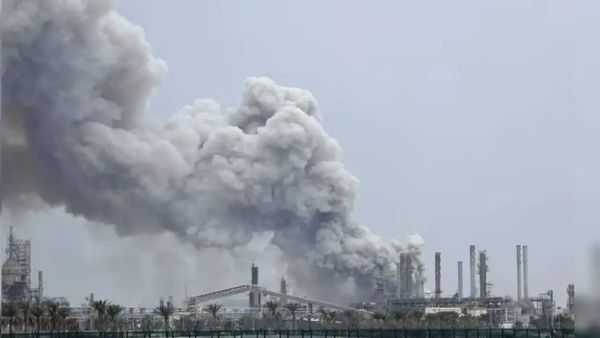
The death toll in a fire likely caused by an oxygen tank explosion at a coronavirus hospital in Iraq’s southern city of Nassiriya has risen to 42.
More than 60 are injured , health officials and police said on Monday.
As rescuers combed the smoke-charred building in search of more bodies, Prime Minister Mustafa al-Kadhimi held an urgent meeting with ministers and top security commanders to discuss the tragedy.
“Health crews carried charred bodies out of the burning hospital while many patients were coughing from the rising smoke,” a Reuters reporter at the site of the fire said.
US Commerce Secretary Gina Raimondo said she is pressing for the easing of coronavirus restrictions that bar much of the world from traveling to the United States but that U.S. health officials remain concerned about more outbreaks.
Dozen of U.S. business groups, lawmakers and officials from foreign governments are urging President Joe Biden’s administration to relax tough restrictions put in place under former President Donald Trump. “We’re working it,” Raimondo told Reuters in an interview “I’m pushing really hard.”
The Kuwaiti Cabinet has decided to close down all activities for children, including summer clubs, from July 25 until further notice, as a precautionary measure to combat the spread of coronavirus.
After a briefing by the health minister, the Cabinet also ordered the ministry of defence and the Kuwait Petroleum Corporation (KPC) to put their hospitals at the service of the country’s healthcare system, according to a Cabinet statement.
Kuwait on Monday reported 1,770 Covid-19 infections, and 19 deaths, bringing the total of infections to 37,7364 and deaths to 2,136.
A government minister in the UK has denied a planned free speech law for universities will result in anti-vaccination speakers being given a platform.
Universities minister Michelle Donelan said the Bill “categorically” did not give anti-vaxxers a right to speak on campus, PA reports. She said: “The Opposition raised the issue of anti-vaxxers. We have one of the world’s most successful vaccination programmes with over half of 18 to 24-year-olds already having had their first jab. “This Bill categorically does not give the right to a platform of anti-vaxxers who may make baseless claims.”
Brazil registered 745 Covid-19 deaths on Monday and 17,031 additional cases, according to data released by the nation’s health ministry.
The South American country has now registered a total of 534,233 coronavirus deaths and 19,106,971 total confirmed cases, Reuters reports.
Johnson & Johnson said it was in discussions with the U.S. Food and Drug Administration about rare cases of a neurological disorder, Guillain-Barre syndrome, that have been reported following vaccination with the Janssen Covid-19 vaccine.
The chance of having Guillain-Barre syndrome occur is very low and the rate of reported cases exceeds the background rate by a small degree, J&J said.
The statement follows a Washington Post report on Monday, which said the FDA was expected to announce a new warning on J&J’s coronavirus vaccine related to a rare autoimmune disorder.
Guillain-Barre syndrome is a rare neurological disorder in which the body’s immune system mistakenly attacks part of its peripheral nervous system, or the network of nerves located outside of the brain and spinal cord.
At least 36 people dead after fire in Covid isolation ward in Iraq
At least 36 people died in a fire in the coronavirus isolation ward at an Iraqi hospital, the second such deadly inferno in a Covid-19 unit in three months, a health official said.
The fire broke out at the Al-Hussein hospital in the southern Iraqi city of Nasiriyah late Monday and was still ongoing, according to an AFP correspondent.
Haydar al-Zamili, a spokesman for the local health authorities, told AFP that the “fire... ripped through the Covid isolation ward,” and put the death toll at 36.
Five were injured, “including two in critical condition,” he added.
Updated
Anyone entering a restaurant, café, shopping centre, hospital or taking a long-distance train in France will have to show a special Covid health pass from August, Emmanuel Macron has announced, as France tightens restrictions to contain the rising Delta variant.
The same Covid health pass – which shows that a person has been vaccinated or had a negative Covid test – will be similarly required for anyone over the age of 12 to enter a cinema, theatre, museum, theme park or cultural centre from as early as 21 July, the president said, in a bid to pressure more French people to take up vaccines.
Macron also announced mandatory Covid-19 vaccinations for workers in healthcare and in retirement homes. Vaccine checks on those workers would begin in September, with a risk of sanctions or fines. The compulsory vaccines also applied to all volunteers or staff in contact with elderly or vulnerable people in their homes, including home-helps.
Saudi Arabia will send a medical aid package to Tunisia that includes one million doses of vaccine to help the North Africa country control the rapid spread of the Covid-19 pandemic.
Saudi Arabia joins other Arab countries in helping Tunisia, which is facing the collapse of its health care system, including Egypt, Algeria, UAE, Kuwait, Turkey and Qatar.
The Saudi Press Agency said on Monday the aid also includes 190 respirators and other equipment.
“We are in a catastrophic situation ... the health system has collapsed, we can only find a bed in hospitals with great difficulty,” said health ministry spokesperson Nisaf Ben Alaya.
Labour leader Sir Keir Starmer has condemned the UK government’s decision to lift almost all remaining coronavirus restrictions in England at the same time.
Sir Keir said: “With infection rates still going up at the rate they are going up that is still reckless, I am afraid. We need a safe way to come through this.
“At the moment the Government wants to put the country in a car without a seatbelt to get us as quickly as possible to the end of the road map. Lifting all protections at the same time is just wrong.”
He said it was “basic common sense” to continue with the requirement to wear face masks in settings such as public transport.
“The Government is saying they are strongly recommended. The reason for that is because they keep the infection rate down,” he said.
A summary of today's developments
- France will not allow health workers to go to work and will not pay them if they are not vaccinated against Covid-19 by September 15, the health minister Olivier Veran said.
- Indonesia has reported its highest daily number of infections yet, with 40,427 cases logged on Monday, data from the country’s Covid-19 task force showed. Meanwhile, authorities have expelled four foreign tourists from Bali after they breached the island’s tough coronavirus restrictions.
- South African president Cyril Ramaphosa said that days of protests, looting and riots in the country led to the cancellation of coronavirus vaccination efforts in some parts of the country and could lead to further disruption of the programme just when the country was picking up the pace to inoculate its citizens.
- Vietnam has reported another new record in daily coronavirus infections, with 2,367 cases, its health ministry said.
- Another grim record has been set in Bangladesh, where 13,768 new infections were logged in the 24 hours to Monday morning. A further 220 deaths were also registered.
- The reopening of schools cannot wait for all pupils and teachers to be vaccinated, or for the number of Covid cases to be reduced to zero, the chiefs of Unicef and Unesco have said in a joint statement.
- Dutch prime minister Mark Rutte apologised for relaxing coronavirus restrictions too soon as cases surge in the wake of reopening.
- The number of people who did not have enough food to eat rose steeply during the Covid-19 pandemic to include almost a third of the world, according to a new UN report published on Monday.
- Valencia’s regional government has succeeded in obtaining a court order to authorise lockdowns in more than 30 towns in eastern Spain as cases surge among unvaccinated young people.
- Healthcare workers and nursing home staff in Greece will be required to be vaccinated against Covid, prime minister Kyriakos Mitsotakis has said as infections rapidly soar again after a sustained decline.
France will not allow health workers to go to work and will not pay them if they are not vaccinated against Covid-19 by September 15, the health minister said on Monday.
Speaking on LCI television, health minister Olivier Veran said it was vital to impose obligatory measures given how contagious the Delta variant of the virus is, Reuters reports.
Meanwhile, French online medical booking site Doctolib temporarily froze as thousands of citizens scrambled to book COVID-19 shots after president Emmanuel Macron said a ‘health pass’ would be needed to go to bars and restaurants from August.
Updated
Mexico’s health ministry has reported 3,074 new confirmed cases of Covid-19 in the country and 89 more fatalities.
It brings the total figures to 2,593,574 infections and 235,058 deaths.
The government has said the real number of cases is likely significantly higher, and separate data published recently suggested the actual death toll could be 60% higher than the official count, Reuters reports.
South African President Cyril Ramaphosa said that days of protests, looting and riots in the country could lead to food and medicine shortages in the next few weeks, Reuters reports.
He said the protests led to the cancellation of coronavirus vaccination efforts in some parts of the country and could lead to further disruption of the programme just when the country was picking up the pace to inoculate its citizens.
The US administered 334,600,770 doses of Covid-19 vaccines in the country as of Monday morning, the U.S. Centers for Disease Control and Prevention (CDC) said.
The figure is up from the 334,151,648 vaccine doses the CDC said had been administered by July 11 out of 387,006,120 doses delivered.
The agency said 184,132,768 people had received at least one dose while 159,266,536 people are fully vaccinated as of Monday.
At the request of the Supreme Court, Brazil’s federal police has formally opened a probe into President Jair Bolsonaro related to alleged irregularities in the purchase of an Indian vaccine and could now question him, a source told Reuters.
The president has been caught up in allegations of irregularities surrounding the 1.6 billion reais ($316 million) contract signed in February for 20 million doses with a Brazilian intermediary for the vaccine*s maker, Bharat Biotech.
A Brazilian Senate commission investigating the administration’s handling of the pandemic has cited suspicions of overpricing and corruption related to the contract. Some senators have alleged that Bolsonaro did not immediately look into allegations of wrongdoing when he was alerted.
After the reports of irregularities became public, the government suspended the contract.
Brazilian federal prosecutors and the comptroller general’s office, or CGU, are also separately investigating the alleged irregularities in the deal. Bolsonaro has denied any wrongdoing.
The U.S. Food and Drug Administration is expected to announce a new warning on Johnson & Johnson’s coronavirus vaccine related to a rare autoimmune disorder, the Washington Post reported.
According to the Post, about 100 preliminary reports of Guillain-Barré syndrome (GBS) have been detected in the US after vaccination with J&J shot, mostly in men, many of whom were 50 or older. Around 12.8 million people have received the one-dose vaccine in the US. GBS is a rare neurological condition in which the body’s immune system attacks the protective coating on nerve fibers. Most cases follow a bacterial or viral infection. The condition has been linked in the past to vaccinations - most notably to a vaccination campaign during a swine flu outbreak in the US in 1976, and decades later to the vaccine used during the 2009 H1N1 flu pandemic.
French president Emmanuel Macron said vaccination against Covid-19 will be made mandatory for all health staff and other workers who come into contact with vulnerable patients.
He added that from September 15th there would be controls and sanctions. “If we don’t act now, case numbers and hospital numbers will rise,” he said in a televised speech.

Summary of recent developments
-
Indonesia has reported its highest daily number of infections yet, with 40,427 cases logged on Monday, data from the country’s Covid-19 task force showed. Meanwhile, authorities have expelled four foreign tourists from Bali after they breached the island’s tough coronavirus restrictions.
-
Vietnam has reported another new record in daily coronavirus infections, with 2,367 cases, its health ministry said.
- Another grim record has been set in Bangladesh, where 13,768 new infections were logged in the 24 hours to Monday morning. A further 220 deaths were also registered.
- The reopening of schools cannot wait for all pupils and teachers to be vaccinated, or for the number of Covid cases to be reduced to zero, the chiefs of Unicef and Unesco have said in a joint statement.
-
Dutch prime minister Mark Rutte apologised for relaxing coronavirus restrictions too soon as cases surge in the wake of reopening.
- The number of people who did not have enough food to eat rose steeply during the Covid-19 pandemic to include almost a third of the world, according to a new UN report published on Monday.
-
Valencia’s regional government has succeeded in obtaining a court order to authorise lockdowns in more than 30 towns in eastern Spain as cases surge among unvaccinated young people.
- Healthcare workers and nursing home staff in Greece will be required to be vaccinated against Covid, prime minister Kyriakos Mitsotakis has said as infections rapidly soar again after a sustained decline.
-
France is also moving to make vaccines mandatory for healthcare workers amid a slowdown in vaccination rates and rising infections.
- South African chemists have warned that the turmoil gripping the country will hinder the vaccine rollout as pharmacies are “looted and destroyed”.
I’m off now – my colleague Nadeem Badshah will be bringing you the latest for the remainder of today. Thanks for following along.
South African chemists have warned that the turmoil gripping the country will hinder the vaccine rollout as pharmacies are “looted and destroyed”.
Troops have been deployed to two provinces, including around Johannesburg, after the jailing of ex-president Jacob Zuma triggered unrest resulting in seven deaths and hundreds of arrests.
According to AFP, the nation of 59 million accounts for 37% of the continent’s recorded infections, but just over 4.2 million South Africans are vaccinated. In light of the vicious third wave of Delta cases, the South African government is aiming to administer a quarter of million jabs per day – a goal the Independent Community Pharmacy Association says is now “impossible” due to the loss of medication.
“It is with utter dismay that we as independent pharmacies, the frontline against Covid-19 infections and a primary role player in vaccinations, find ourselves in a desperate situation,” the association, which represents more than 1,100 pharmacies, said in a statement.
Driven by the highly transmissible Delta strain, the third wave has seen an average of nearly 20,000 new cases recorded daily in South Africa.
Updated
My colleagues Rachel Obordo and Jedidajah Otte have been speaking to people living with invisible conditions in England about their concerns ahead the end of social distancing next week:
France to make vaccines mandatory for health workers
France is also moving to make vaccines mandatory for healthcare workers amid a slowdown in vaccination rates and rising infections.
Vaccination will remain voluntary for other members of the public, BFM TV reported ahead of a televised speech by president Emmanuel Macron.
Macron is expected to also announced that a ‘health pass’ will be required to attend some large scale events, according to the channel. The pass provides proof that a person has either been vaccinated or holds a recent negative PCR test.
Vaccinations in France, which has a significant vaccine-hesitant population, have plummeted from an average of more than 400,000 first doses per day at the end of May to about 165,000 per day now, Reuters reports.
France follows Italy, which made vaccines mandatory for healthcare workers at the end of March. Some in Italy are fighting the measure in court, but most complied. Greece made a similar announcement on Monday.
Cases have risen to nearly 4,000 a day in France after falling to less than 2,000 per day in late June. Epidemiologists warn they could rise to up to 20,000 by the end of the month without intervention.
Updated
Greece imposes vaccine mandate on healthcare staff
Healthcare workers and nursing home staff in Greece will be required to be vaccinated against Covid, prime minister Kyriakos Mitsotakis has said as infections rapidly soar again after a sustained decline.
The requirement for nursing home staff is effective immediately, while healthcare workers will have to be vaccinated from 1 September, he said in remarks reported by Reuters.
Mitsotakis also announced new vaccine requirements on leisure activities. Customers will need to be vaccinated in order to be served indoors in bars, cinemas, theatres and other closed spaces.
Meanwhile, the country is also this week expanding its vaccination programme to include 15 to 17-year-olds. The head of Greece’s vaccination committee, Maria Theodoridou, said that while the risk of serious illness in teenagers is “small but real”, vaccinating younger groups chiefly aims to prevent them “spreading the virus to their environment”.
Health authorities reported 2,065 new cases and 10 deaths on Monday, taking Greece’s caseload to 440,872 infections with 12,802 fatalities. There were 999 infections and six deaths reported a week today.
Around 41% of the Greece’s 11 million people are fully vaccinated, according to Marios Themistokleous, secretary-general in charge of vaccinations.
Updated
Spain's Valencia imposes fresh restrictions
Valencia’s regional government has succeeded in obtaining a court order to authorise lockdowns in more than 30 towns in eastern Spain as cases surge among unvaccinated young people.
The restrictions include a 1am to 6am nighttime curfew in towns with more than 5,000 inhabitants considered high-risk, as well as a ban on gatherings of more than 10 people.
“These are proportional measures to create an atmosphere to curb the pandemic’s rebound,” said Valencia’s regional leader, Ximo Puig.
Following declining infection rates, cases in Spain have been resurging, driven primarily by the spread of the highly contagious Delta variant alongside younger, unvaccinated people mixing.
While 250 cases per 100,000 inhabitants is considered the threshold for ‘extreme risk’, the rate among people aged 20-29 rose to 1,047 cases per 100,000, health authorities said on Friday.
Across Spain’s population, the infection rate has tripled in the last two weeks, reaching 316 cases on Friday.
The UK’s health secretary has confirmed that most Covid restrictions are due to end in England next week - as expected. But he indicated that face masks and what have been called “vaccine passports” would be strongly encouraged.
Speaking in the house of commons on Monday, Sajid Javid said the four tests of whether it was time to lift restrictions had been met, including that no new variants had been detected that could derail progress.
“But we know that the greatest risk to the progress we’ve made is the possibility of another new variant - especially one that can escape immunity, and puncture the protective wall of our vaccination programme,” Javid said.
“So even as we look to ease restrictions, we’ll maintain our tough measures at the borders and we’ll expand our capacity for genomic sequencing, already one of the largest in the world, so we can come down hard on new variants.”
Javid said that the UK had entered a new phase of pandemic, “where we live with the virus and manage the risks.”
School reopenings cannot wait for vaccines, say Unicef and Unesco chiefs
The reopening of schools cannot wait for all pupils and teachers to be vaccinated, or for the number of Covid cases to be reduced to zero, the chiefs of Unicef and Unesco have said in a joint statement.
More than 156m primary and secondary school age children in 19 countries are still not attending school, the senior UN officials said, as they insisted “reopening schools for in-person learning cannot wait.”
The joint statement by Henrietta Fore, Unicef executive director, and Audrey Azoulay, Unesco director-general, may prove controversial in some sectors, with fears still widespread that schools are a major driver of disease transmission. Fore and Azoulay insisted this was not the case. They said:
There is clear evidence that primary and secondary schools are not among the main drivers of transmission. Meanwhile, the risk of COVID-19 transmission in schools is manageable with appropriate mitigation strategies in most settings. The decision to open or close schools should be based on risk analysis and the epidemiological considerations in the communities where they are situated.
Reopening schools cannot wait for all teachers and students to be vaccinated. With the global vaccine shortages plaguing low and middle-income countries, vaccinating frontline workers and those most at risk of severe illness and death will remain a priority. All schools should provide in-person learning as soon as possible, without barriers to access, including not mandating vaccination prior to school entry.

In their statement, Fore and Azoulay criticised governments for failing to prioritise children’s education over other areas of life, pointing out that in many countries schools were closed even as bars and restaurants remained open.
“The losses that children and young people will incur from not being in school may never be recouped,” they said.
From learning loss, mental distress, exposure to violence and abuse, to missed school-based meals and vaccinations or reduced development of social skills, the consequences for children will be felt in their academic achievement and societal engagement as well as physical and mental health. The most affected are often children in low-resource settings who do not have access to remote learning tools, and the youngest children who are at key developmental stages.
The losses for parents and caretakers are equally heavy. Keeping children at home is forcing parents around the world to leave their jobs, especially in countries with no or limited family leave policies.
Executives from Pfizer are due to meet with officials from the US Food and Drug Administration on Monday to discuss the possibility of supplying booster doses of coronavirus vaccines, according to a report by the UPI news agency.
The meeting between the drug company and the US medicines regulator comes as Israel announced it would this week begin distributing a third vaccine dose to adults with weaker immune systems.
Pfizer, which developed its Covid vaccine in collaboration with German biotech company BioNTech, last week announced the launch of a booster shot designed to tackle the so-called Delta variant of the Sars-Cov-2 virus.
Albert Bourla, the chief executive of Pfizer, earlier this year floated the possibility that Covid vaccination could be required annually - which would give his company a major new income stream.
“A likely scenario is that there will be likely a need for a third dose, somewhere between six and 12 months and then from there, there will be an annual revaccination,” Bourla said.
This is Damien Gayle taking the reins of the live blog for the next hour, while Clea has a break.
A World Health Organization scientist has said that watching last night’s Euro 2020 final felt “devastating” – a sentiment felt by many in England, but she wasn’t talking about the score.
The WHO’s Covid-19 technical lead, Maria Van Kerkhove, said the virus “will take advantage of unvaccinated people” as unmasked crowds sang and shouted at the football final in London on Sunday.
She warned that the pandemic is “not taking a break tonight” as Delta variant cases surge. Her remarks comes as England prepares to end restrictions – including mask-wearing and social distancing rules – in a week’s time.
Sixteen countries in Africa have detected cases of the highly transmissible Delta variant.
Dr Nicksy Gumede-Moeletsi, regional virologist at WHO regional office for Africa, encourages people to take up vaccines when offered them, adding that the strain is thought to be between 30 and 60% more virulent than other variants of concern.
Our @WHOAFRO Expert explains the #DeltaVariant & its spread in #Africa.
— WHO African Region (@WHOAFRO) July 12, 2021
The new #COVID19 Delta variant has been found to be 30 - 60% more transmissible than other variants. However, there is no evidence that available vaccines are less effective against it. pic.twitter.com/0QdUfr2qbn
Sweden has said it will ease coronavirus restrictions this week as planned but warned people to remain cautious as the highly transmissible Delta variant spreads.
Authorities are planning on removing limits on the number of passengers on long-distance transport such as trains and the number of shoppers allowed in stores on 15 July, Reuters writes.
The country has mostly relied on voluntary measures during the pandemic, avoiding the kind of lockdowns imposed in most other European countries. It did implement some limits on hospitality and retail, however, such as a restricting opening hours and capacity.
Infection rates in Sweden have fallen following the country’s springtime third wave as vaccinations rise and warmer weather dampens the spread of the virus.
Just over two-thirds of Swedish adults have received at least one dose of vaccine and the proportion of fully covered has been steadily rising toward 50%.
Updated
Dutch PM apologises for relaxing Covid restrictions too soon as cases surge
Dutch prime minister Mark Rutte apologised for relaxing coronavirus restrictions too soon as cases surge in the wake of reopening.
Rutte reimposed measures on bars, restaurants and nightclubs in the Netherlands as cases spread rapidly among young people, just two weeks after lifting curbs, according to Reuters. Restaurants and bars will have their opening hours restricted during midnight to 6am, while clubs will be closed entirely.
“What we thought would be possible, turned out not to be possible in practice,” Rutte told reporters on Monday. “We had poor judgement, which we regret and for which we apologise.”
Infection levels in the Netherlands have risen to their highest levels of this year in recent days. However, as most case are young people, the rise in infections has yet to lead to a significant increase in hospitalisations – but the health minister, Hugo de Jonge, warned this could change if the “unprecedented” increase continues.

Updated
The number of people who did not have enough food to eat rose steeply during the Covid-19 pandemic to include almost a third of the world, according to a new UN report published on Monday.
Five UN agencies said the number of people without access to healthy diets grew by 320 million last year to nearly 2.37 billion people– more than the increases in the previous five years combined.
The number of people who went hungry grew by about 161 million last year to 811 million.
Another grim record has been set in Bangladesh, where 13,768 new infections were logged in the 24 hours to Monday morning. A further 220 deaths were also registered.
The country’s total caseload now stands at 1,034,957, with a death toll of 16,639, according to Bangladeshi news site bdnews24.com.
A total of 44,067 samples were tested across the country, which is in the midst of a resurgence of cases and deaths, recording a positivity rate of 31.2%.
Daily cases peak in Vietnam
Vietnam has reported another new record in daily coronavirus infections, with 2,367 cases, its health ministry said.
The country has reported over 32,000 cases overall, with 123 deaths, according to Reuters.
As cases rise in the capital, Hanoi will impose further restrictions on non-essential services from 13 July, according to a report Vietnam News. Restaurants and bars will be closed for sit-in service, thought takeaways will continue to be allowed.
Hairdresser salons and barbershops will also be shut, the newspaper writes.
The shutdown comes just weeks after hospitality venues were allowed to reopen, with restrictions in place, on 21 June.
Updated
Indonesian authorities have expelled four foreign tourists from Bali after they breaching the island’s tough coronavirus restrictions, as the country battles its deadliest Covid-19 wave.
Three visitors from the US, Russia and Ireland were sent back to their home countries after being caught maskless in public, violating Bali’s new zero-tolerance policy, AFP cites authorities as saying.

“They broke minimum virus rules requiring face masks during the emergency restriction period,” said Jamaruli Manihuruk, head of Bali’s legal and justice office, which oversees immigration enforcement.
A Russian woman who refused to self-quarantine after testing positive was also set to be deported once she was virus-free, he added. The four tourists are the first foreigners to be expelled for breaking the popular holiday island’s rules as it clamps down on the spread of the virus.
On Monday, south-east Asia’s worst-hit country reported a record 40,427 new infections and 891 deaths in the last 24 hours.
Updated
People who are vaccinated against influenza may be partly protected against some of the severe effects of coronavirus, and be less likely to need emergency care, according to a major study.
The analysis of nearly 75,000 Covid patients found significant reductions in stroke, deep vein thrombosis (DVT) and sepsis, and fewer admissions to emergency departments and intensive care units, among those who had been given the flu jab.
While the flu vaccine did not reduce Covid deaths in the study, previous research suggests the jab may provide some protection against coronavirus by boosting the innate immune system – the body’s general defences that are not targeted against a particular pathogen.
India’s rollout of the Sputnik V vaccine is being held up by the Russian producer’s shortage of second doses, pharmaceutical company Dr Reddy’s Laboratories Ltd has told Reuters.
Dr Reddy’s had received about 3m first doses by 1 June and about 360,000 doses of the second by early this month, the company and the Indian government have said.
“As a matter of responsibility, we would not like to announce a full-fledged commercial launch until we have an equivalent quantity (of the second dose),” Dr Reddy’s said in an email to Reuters.
India expects 100m Sputnik V doses, including both those imported and produced domestically, to be available in the country between August and December. India is expected to be one of the biggest manufacturing hubs of the vaccine.
Around a third of India’s estimated 944 million adults have received at least one dose.
Updated
Plenty of gymgoers rely on a good tune to get themselves through that workout, but in South Korea their musical options have just reduced significantly under new Covid-19 rules.
To the standard restrictions such as social distancing and travel curbs, South Korea has added a requirement that gyms do not play music with higher than 120 beats per minute (bpm) during group exercises such as aerobics and spinning.
Health officials said the measure was intended to prevent breathing too fast or splashing sweat on other people while avoiding having to close such businesses entirely, as has happened during previous waves of infection.
The rule has been ridiculed as “nonsense” by some opposition lawmakers, and gym owners see the rules as barely effective or unrealistic to maintain.
Reuters has this report on South Korea’s strange Covid restrictions on a good gym playlist:
Updated
Vietnam is aiming to procure 40m further Russia’s Sputnik V doses, the state-run Tuoi Tre newspaper reported on Monday, citing a government resolution.
Vietnamese T&T group will work directly with the Russian Direct Investment Fund to finalise the deal, the report added. The southeast Asian country Vietnam has said it has procured 20m doses of Sputnik V this year.
Health official have administered more than 4m vaccine doses in Vietnam since its campaign began in early March, with 277,447 people fully vaccinated.
The government aims to have vaccinated two-thirds of Vietnam’s nearly 98 million people by the first quarter of next year.
Updated
Pfizer will meet with US health officials on Monday to discuss the authorisation of a third dose of its vaccine amid concerns that booster shots may be necessary.
President Joe Biden’s chief medical adviser said that “it is entirely conceivable, maybe likely” that booster jabs may be necessary, while the drugmarker has said they will be needed within 12 months, the Associated Press reports.
Dr Mikael Dolsten of Pfizer said early results from the manufacturer’s booster study suggests antibody levels jump five- to 10-fold after a third dose, compared with their second dose months earlier.
However – although he did not rule out the option – Dr Anthony Fauci said it was too early at this point for the government to back a third round of vaccinations. He said the Centers for Disease Control and Prevention and the FDA did the right thing last week by pushing back against Pfizer’s assertion with their statement that they did not view booster shots as necessary “at this time”.
“Right now, given the data and the information we have, we do not need to give people a third shot,” Fauci said. “That doesn’t mean we stop there .… There are studies being done now ongoing as we speak about looking at the feasibility about if and when we should be boosting people.”
Updated
Indonesia reports record daily case numbers
Indonesia has reported its highest daily number of infections yet, with 40,427 cases logged on Monday, data from the country’s Covid-19 task force showed.

Deaths also rose by 891, taking the total to 67,355 – the highest toll in south-east Asia. The country has reported more than 2.5 million cases since the onset of the pandemic, according to Reuters.
Updated
We know that Covid is an airborne disease, but this hasn’t changed the focus from “endless disinfecting and hand sanitising” to ventilation. Sirin Kale asks if this “hygiene theatre” could be making things worse by lulling people into a false sense of security:
Updated
Hello, I’m Clea Skopeliti and I’ll be running the blog for the next few hours. Tips and suggestions are welcome – you can message me on Twitter. Thanks in advance.
Today so far…
- Thailand said it will use AstraZeneca’s Covid vaccine as a second dose for those who received Sinovac’s shot as their first dose to increase protection against the disease. The plan, if implemented, would be the first publicly announced mix and match of a Chinese vaccine and a Western-developed shot.
- South Korea has reported more than 1,000 coronavirus cases for the sixth straight day as the greater capital area entered stringent social distancing restrictions to slow transmissions. Private social gatherings of three or more people will be prohibited from 6pm, nightclubs and churches will be shut down, and visitors will be banned at hospitals and nursing homes.
- Major Taiwanese tech companies have inked a deal to buy 10m vaccine doses for Taiwan, sidestepping months of complicated geopolitical wrangling between Beijing and Taipei.
- A shipment of 1.5m doses of Johnson and Johnson vaccine donated by the US arrived today in Nepal. Health minister Krishna Gopal Shrestha said the shipment, obtained through the UN-backed Covax vaccine facility, would be given to people between the ages of 50 and 54.
- An Indonesian pharmaceutical firm has postponed a plan to sell Chinese Covid vaccines directly to the public, amid criticism by health experts that such commercial schemes could bypass vulnerable groups in a country that promised free shots to all.
- The Gavi alliance says it has signed two advance purchase agreements with Chinese drugmakers Sinopharm and Sinovac to provide 110m vaccines to the Covax programme immediately.
- Nigeria’s Lagos state faces a “potential third wave” of coronavirus infections, its governor said in a statement. He warned of fines or even imprisonment for those who break rules to contain the virus and said Lagos state would step up its vaccination campaign, following the detection of the highly infectious Delta variant in an incoming traveller.
- A WHO epidemiologist said she had been devastated to watch unmasked crowds singing and shouting at the Euro 2020 final, expressing concerns that it would spur Covid transmission, including of the Delta variant.
- New figures show London Heathrow passenger numbers remain almost 90% down on pre-pandemic levels and significantly lower than large airports that are within the EU.
- Scientists have raised hopes of a blood test for long Covid after discovering distinctive patterns of rogue antibodies in patients whose symptoms persisted for months.
- New Zealand Prime Minister Jacinda Ardern said in a post-Cabinet press conference on Monday that many government-employed workers at the border have been vaccinated but privately-employed workers are lagging behind. “Our view is that the uptake in that group hasn’t been as high and so now we are taking the next step to place an order upon them.”
- In Australia, three new cases of Covid-19 have emerged in Victoria after a removalist from New South Wales, and two members of a family who returned from Sydney last week tested positive.
- A new Australian government Covid awareness advertisement featuring a young woman gasping for air in a hospital bed has been criticised for leaning into scare tactics and for urging vaccination among a group who are still not eligible for the recommended vaccine.
That’s it from me today. I’m off to go and nurse my England hangover and heartbreak. Andrew Sparrow has our UK live blog. Clea Skopeliti will be here shortly to take you through the rest of the day’s global Covid news.
110m doses of Sinopharm and Sinovac vaccines to be made available via Covax
The Gavi alliance says it has signed two advance purchase agreements with Chinese drugmakers Sinopharm and Sinovac to provide vaccines to the Covax programme immediately.
“The agreements, which come at a time when the Delta variant is posing a rising risk to health systems, will begin to make 110m doses immediately available to participants of the Covax Facility, with options for additional doses,” Gavi said in a statement, reported by Reuters.
Updated
1.5m doses of J&J vaccine from US arrive in Nepal via Covax scheme
Binaj Gurubacharya reports for Associated Press from Kathmandu that a shipment of 1.5m doses of Johnson and Johnson vaccine donated by the US arrived today in Nepal, which is struggling to inoculate its population against the coronavirus.
“Today’s delivery of the single-dose vaccine means that this single donation is enough to protect over 1.5 million people in Nepal,” US ambassador Randy Berry said at Kathmandu airport.
Health minister Krishna Gopal Shrestha said the shipment, obtained through the UN-backed Covax vaccine facility, would be given to people between the ages of 50 and 54.
Though situated between India and China, which are among the biggest producers of vaccines, Nepal has been struggling to obtain doses. It began its vaccination campaign in January, but less than 3% of its population has been fully inoculated.
China has donated 1.8m doses of Sinopharm vaccine and is selling Nepal about 4m more doses this month.
“We are very likely to be hit by a third wave of Covid because we have a very porous border and only a small number of people have received the vaccine,” said Dr Rajan Pandey of Bheri hospital in the border city of Nepalgunj, 360km (225 miles) south-west of Kathmandu.
In May, the city was the first in Nepal to be hit by the new outbreak and the hospital was overwhelmed with cases. Patients lined up outside its doors and many were turned away or treated in ambulances or in corridors.
Updated
Nigeria’s Lagos state faces a “potential third wave” of coronavirus infections, its governor said in a statement.
He warned of fines or even imprisonment for those who break rules to contain the virus and said Lagos state would step up its vaccination campaign, following the detection of the highly infectious Delta variant in an incoming traveller.
Nigeria has had just over 168,000 cases and 2,124 deaths confirmed since the outbreak began. But Nation Centre for Disease Control officials last week confirmed that they had detected the Delta variant, putting officials nationwide on alert. The NCDC did not say when the infected traveller had arrived.
“From the beginning of July, we started to experience a steep increase in the number of daily confirmed cases, with the test positivity rate going from 1.1% at the end of June 2021 to its current rate of 6.6% as at 8 July 2021,” Lagos state governor Babajide Sanwo-Olu said in a statement. “The rapid increase within a week gives great cause for concern.”
Reuters remind us that there are self-isolation requirements for all incoming passengers, and arrivals from red-list countries Brazil, India, South Africa, and Turkey, must quarantine in a government facility.
But Sanwo-Olu said that 15% of Lagos state arrivals from red-list nations had absconded, while authorities could not reach 18% of other incoming passengers.
Thailand to mix Sinovac, AstraZeneca vaccines to increase protection
Thailand said it will use AstraZeneca’s Covid vaccine as a second dose for those who received Sinovac’s shot as their first dose to increase protection against the disease.
The plan, if implemented, would be the first publicly announced mix and match of a Chinese vaccine and a Western-developed shot.
“This is to improve protection against the Delta variant and build high level of immunity against the disease,” health minister Anutin Charnvirakul told reporters.
Reuters report that Thailand and neighbours like Indonesia have reported breakthrough infections among medical and frontline workers inoculated with Sinovac’s inactivated virus vaccine.
The majority of Thailand’s medical and frontline workers were given Sinovac’s shots after February with the viral vector vaccine from AstraZeneca made more widely available since June.
The announcement came a day after Thailand’s health ministry said 618 medical workers out of 677,348 personnel who received two doses of Sinovac became infected with Covid from April to July. One nurse has died and another medical worker is in critical condition.
The country plans to also give mRNA booster shots to medical workers who received two shots of the Sinovac vaccine.
Updated
Andrew Sparrow has our UK live blog up and running for the day. Like me earlier, I should imagine he’s having to pick his way through lots of politicians wanting to chat about the football to actually get to any of the news. Follow that here …
I’ll be carrying on with global coronavirus updates here
Updated
A WHO epidemiologist said she had been devastated to watch unmasked crowds singing and shouting at the Euro 2020 final at Wembley yesterday, expressing concerns that it would spur Covid transmission, including of the Delta variant.
Emma Farge notes for Reuters that in unusually forthright comments from the UN health agency, which usually refrains from remarking on the policies of individual member states, its Covid technical lead Maria Van Kerkhove called the sight of the more than 60,000 spectators at the match between Italy and England “devastating”.
“Am I supposed to be enjoying watching transmission happening in front of my eyes?” she tweeted in the late stages of the match.
“The Covid pandemic is not taking a break tonight … the Delta Variant will take advantage of unvaccinated people, in crowded settings, unmasked, screaming/shouting/singing. Devastating.”
Updated
In Australia, three new cases of Covid-19 have emerged in Victoria after a removalist from New South Wales, and two members of a family who returned from Sydney last week tested positive.
The first case, reported early on Monday by state health minister Martin Foley, is a removalist who travelled from Sydney to Melbourne on 8 July. The moving crew delivered furniture to a home in the Whittlesea local government area, before picking up furniture in a home in the Maribyrnong local government area, and arriving in South Australia in the early hours of 9 July.
The removalist was alerted when he reached South Australia that he was a close contact of another Covid-19 case, and subsequently tested positive when he returned to Sydney.
Victoria’s Covid commander, Jeroen Weimar, said a second member of the crew may have tested positive but it was not yet confirmed as of Monday afternoon.
Read more of Josh Taylor’s report here: Victoria records three new cases after arrival of Covid-positive travellers from NSW
Pretty standard numbers coming out of Russia this morning. Reuters report that figures show there were 25,140 new Covid cases on Monday, including 5,403 in Moscow, taking the official national tally since the pandemic began to 5,808,473.
The government coronavirus task force said 710 people had died of coronavirus-linked causes in the past 24 hours, pushing the official national death toll to 143,712.
Always worth remembering that the federal statistics agency has kept a separate count and has said Russia recorded around 290,000 deaths related to Covid from April 2020 to May 2021.
Just a bit more here on face masks from UK government junior health minister Edward Argar’s appearance on the BBC Radio 4 Today programme, where he denied there could be confusion around the government’s stance.
With regard to public transport, he said: “Train companies may well look at, as conditions of carriage, whether they want to impose additional guidance or additional restrictions.
“But at a governmental level, what we have set out, what we will be looking to do is see the legal requirements fall away but for guidance – strong guidance and cautious guidance – to be in place for people to exercise their common sense. I think people will look at it, they will form a sensible judgment based on the guidance.”
Heathrow airport passenger numbers remain 90% down on pre-pandemic levels
A quick one here from Simon Neville, who is PA Media’s City editor. He reports that new figures show London Heathrow passenger numbers remain almost 90% down on pre-pandemic levels and significantly lower than large airports that are within the EU.
The airport revealed that 957,000 passengers passed through its terminals in June compared with 7,246,157 who used the airport in June 2019.
The number of passengers travelling through the airport covers the month where Portugal was moved from the green list of countries to amber, which led to widespread fury in the travel sector over the speed of rule changes for travellers.
Following the latest data, Heathrow bosses have again urged the UK government to do more to support the sector.
You can follow the day’s business news, by the way, with Graeme Wearden over on our business live blog.
Updated
Face mask hypotheticals continue to be a line of questioning on the airwaves in the UK this morning.
Health minister Edward Argar says he ‘probably would’ wear a mask in a deserted train carriage as well as a busy one
— Jason Groves (@JasonGroves1) July 12, 2021
This follows on from an earlier appearance on LBC, where PA Media reports junior health minister Edward Argar said:
I suspect – and I won’t pre-empt the secretary of state when he addresses the house later and he sets out more of what you can expect to see in that guidance – but speaking for myself, I will continue to carry my face mask in my jacket pocket.
And the sort of circumstances where I would wear it, where I would encourage others to do so, are the sort of things that Chris Whitty, the chief medical officer set out a week or so again.
If, for example, you are in a crowded train, if you are in a setting like a hospital where the relevant authority requires you to wear it, or where, as common courtesy, if you are in an indoor environment with someone who clearly feels uncomfortable with you not wearing it, it would be common courtesy to put it on then – that’s how I would behave.
As I’ve mentioned before when health secretary Sajid Javid made a similar point, it doesn’t convince you that any of these minister have ever been in a situation where someone not wearing a mask has made them feel uncomfortable, because they seem very gung ho about the idea that you’d just go up and ask a bunch of strangers on public transport to put their masks on.
Updated
It tells you something about the phenomenally high level of Chinese vaccinations that I immediately thought “Oh, that’s low” when I saw that according to official figures reported by Reuters that yesterday they only did 8.32m jabs nationwide, which is below the 11m or 12m we often see. The total number of doses administered in China is now up to 1.382bn, which is roughly one in three doses across the whole planet.
There’s a lot of focus on England understandably with the expected announcement on removing legal restrictions from 19 July, but the other nations in the UK are moving at a different pace. Worth noting that the latest figures from Scotland show that there were no new deaths recorded on Sunday, but there were 2,048 new cases. Scotland has 444 people in hospital with coronavirus, with 40 in intensive care.
Updated
You’d think we might be allowed one day off from the face mask “debate” in England, but you would be wrong. Dr Mike Tildesley, from the University of Warwick and a member of the Scientific Pandemic Influenza Group on Modelling (Spi-M) group, has complained that there had been “mixed messaging” over face masks.
He told BBC Breakfast that “some ministers have come out and said they’ll be very happy not to wear their face masks and then we’ve had others, even in the last couple of days, saying ‘we would still advise you to wear them in these settings’.
“I think it’s quite confusing actually for people to know what the right thing to do is. I think all that we can do is take a sort of appropriate approach where we look at the situation and sort of weigh up the risk ourselves, and I hope that enough people do that going forward that we don’t see a big surge.”
PA media report that Dr Tildesley said the UK was at a “really tricky phase” of the pandemic, with rising cases but “still very low numbers of deaths and very low numbers of hospital admissions, though they are creeping up a little bit.”
He added: “So I think it’s really, really difficult. We might expect beyond 19July those will go up a little bit further.
“I don’t expect we’ll see the same size of the wave as we saw back in January, but we might expect some kind of surge in hospital admissions as we move into August so really, really difficult... I think we need to be a little bit cautious just for a little bit of a while yet until hopefully we see these turn over and we start to see hospital admissions ultimately going down again.”
A new Australian government Covid awareness advertisement featuring a young woman gasping for air in a hospital bed has been criticised for leaning into scare tactics and for urging vaccination among a group who are still not eligible for the recommended vaccine.
The federal government released two ads at the weekend, one featuring the young woman, which also carries a message for people to stay at home and get tested, and the other showing a parade of arms bearing Band-Aids after vaccination with the tagline: “Arm yourself against Covid-19.”
The federal health minister, Greg Hunt, said the “arm yourself” ad had always been planned for “exactly this moment” while the hospital ad had been made and held in reserve in case of a significant outbreak.
The ad “leans very, very strongly into scare tactics and fear”, said Dr Jessica Kaufman, a research fellow at Murdoch Children’s Research Institute.
That could increase vaccine hesitancy and, because it uses an actor, be viewed as manipulative and increase distrust in government, Kaufman said.
“We’ve seen with vaccination in particular that fear campaigns or scary messages about diseases can actually cause people to become more fearful of vaccine side-effects,” she said.
Kaufman also criticised the decision to target the ad at younger people who are not yet eligible to receive the recommended vaccine.
Read more of Calla Wahlquist’s report here: Australian ad showing Covid patient gasping for air ‘could increase vaccine hesitancy’
UK minister on removing Covid legal restrictions: 'If not now, when?'
When the UK’s junior health minister Edward Argar wasn’t being asked about the football on Sky News this morning, he said guidance on “things like mask-wearing” would continue even after 19 July.
Asked whether it was right to go ahead with the final stage of the road map he told Sky News: “We’ll wait for the prime minister’s formal announcement later but you will have seen the health secretary interviewed over the weekend saying he was optimistic, we were on track for that Step 4, which would see the removal of legal restrictions on people, but what it wouldn’t do is remove guidance.
“So there will still be guidance in place and we would urge caution and the innate common sense of the British people around things like mask-wearing.
“But why now? If not now, when? We’re at a position now where the vaccination programme is our defensive wall against this virus and it is proving hugely effective.”
There has been some chatter in the UK about reducing the interval between vaccination doses in order to get through the adult population faster, but that has had cold water poured on it this morning by Prof Adam Finn, from the UK government’s Joint Committee on Vaccination and Immunisation (JCVI)
Speaking on BBC Radio 4’s Today programme on Monday, PA media quote him saying: “There is of course an advantage in giving the second dose early, in the current circumstances with all the cases that we are seeing because you get a further boost, but the downside to that is the size of that boost is smaller and probably that will mean that the duration of protection you get from that second dose will be shorter.
“So there’s a sweet spot, and at the moment the advice we have given is we should not reduce the interval less than eight weeks.”
'Rogue antibody' discovery raises hope of blood test for long Covid
Scientists have raised hopes of a blood test for long Covid after discovering distinctive patterns of rogue antibodies in patients whose symptoms persisted for months.
Researchers at Imperial College London identified so-called “autoantibodies” in long Covid patients that were absent in people who recovered quickly from the virus, or who had not tested positive for the disease.
Unlike normal antibodies that help fight off infections, autoantibodies attack healthy tissues by mistake, causing ongoing damage and illness through the equivalent of biological friendly fire.
With the further easing of coronavirus restrictions in England on 19 July, some scientists believe the UK should be braced for hundreds of thousands of cases of long Covid, a condition where patients experience symptoms such as chronic fatigue, breathlessness, muscle pain and headaches.
“It’s hard to escape a prediction that 100,000 new infections a day equates to 10,000 to 20,000 long Covid cases a day, especially in young people. That’s a lot of damage to a lot of lives. And it’s hard to see that we’d have the healthcare provision to deal with it on that scale,” said Danny Altmann, a professor of immunology at Imperial. “All of us working on this could not be more alarmed.”
Prof Altmann’s research on a blood test for long Covid was filmed as a work-in-progress for BBC’s Panorama and is at a very early stage. “I’m fairly optimistic, so I’d hope that within six months we’d have a simple blood test that you could get from your GP,” he told the programme.
Altmann and his colleagues took blood samples from dozens of Covid patients and healthy individuals who have not had the virus. The populations of antibodies in the blood differed markedly between long Covid patients and those who recovered from the virus swiftly or had not tested positive.
Read more on this from our science editor Ian Sample: Long Covid – rogue antibody discovery raises hope of blood test
Updated
Just a reminder that we are expecting today the go-ahead for England to lift all remaining legal coronavirus restrictions on 19 July. British prime minister Boris Johnson will hold a press conference this afternoon, while recently appointed health secretary Sajid Javid will be announcing the plans in parliament.
The latest data on the UK government’s Covid dashboard shows that 66% of all adults have received both doses of a Covid vaccine, with just over 87% having had a single dose.
Kate Lamb has this for Reuters this morning, that an Indonesian pharmaceutical firm has postponed a plan to sell Chinese Covid vaccines directly to the public, amid criticism by health experts that such commercial schemes could bypass vulnerable groups in a country that promised free shots to all.
The uproar came as coronavirus cases and deaths from the virus have hit record highs, pushing the healthcare system close to breaking point in parts of densely populated Java island.
State-owned pharmaceutical company Kimia Farma said on Monday it had decided to put the scheme to sell the Sinopharm vaccine on hold to allow more time to explain it to the public.
“For the time being we have postponed it after it generated a lot of interest,” said Novia Valentina, a spokeswoman for Kimia Farma Apotek, a subsidiary of the state-owned firm.
The company previously said the scheme, which planned to offer the vaccine at pharmacies for around £40 ($60) for two doses, would help “accelerate herd immunity”.
But health experts have said the priority should be for free vaccines going to all vulnerable groups to avoid the risk of inequity.
“Later if vaccines are in bountiful supply, maybe then there could be an option for paid vaccines, but not now,” said Diah Saminarsih, a senior adviser to the Director-General of the World Health Organization.
The health ministry in Indonesia declined to comment to Reuters on the decision.
Good morning, it is Martin Belam here in London taking over from Helen Sullivan. It is junior health minister Edward Argar who has drawn the job of the media round in the UK this morning. I should imagine if last week was anything to go by he will probably be fielding just as many questions about choosing Bukayo Saka to take a decisive penalty and the disgraceful racist abuse of England players on social media as he will about Covid, but I’ll bring you the relevant quotes as soon as he has been on.
The biggest mass demonstrations for three decades have rippled through Cuba, as thousands took to the streets in cities throughout the island, demonstrating against food shortages, high prices and communist rule.
Cubans are living through the gravest economic crisis the country has known for 30 years. The Trump administration hammered the island with more than 200 new sanctions aimed at sabotaging the island’s’ economy and stirring discontent, measures that have so far been left untouched by the Biden administration.
Since the pandemic, which has gutted tourism revenue, Cubans have become accustomed to waiting in line for hours to buy basic goods like chicken and detergent. Pharmacy shelves are barren.
The protests were the biggest since 1994, when tens of thousands demonstrated at Havana’s Malecón promenade amid an acute economic crisis brought on by the fall of the Soviet Union:
Taiwan tech companies buy 10m Covid vaccine doses in deal that sidesteps China
Major Taiwanese tech companies have inked a deal to buy 10m vaccine doses for Taiwan, sidestepping months of complicated geopolitical wrangling between Beijing and Taipei.
The US$350m purchase from German manufacturer BioNTech, is split between TSMC, the world’s largest semiconductor manufacturer, and Foxconn, one of the world’s largest contract electronics makers, and its charity foundation. The two companies will donate the vaccines to Taiwan’s central epidemic command centre for distribution.
The convoluted deal, formalised on Sunday, closes the loop on a saga which tied China’s long-held but rejected claim over Taiwan to the island’s desperate need for vaccines, and allows Taiwan to procure the China-linked vaccines without the government having to deal directly with China.
Taiwan is suffering major shortages of vaccines, in large part due to global supply issues, but it has also accused Beijing of scuttling an early deal to secure 5m doses directly from BioNTech. Beijing denies the accusation, saying Shanghai-based Fosun Pharmaceuticals had sole distribution rights for the region including Taiwan, and that Taiwan was welcome to go through them:
New Zealand Prime Minister Jacinda Ardern said in a post-Cabinet press conference on Monday that many government-employed workers at the border have been vaccinated but privately-employed workers are lagging behind.
“Our view is that the uptake in that group hasn’t been as high and so now we are taking the next step to place an order upon them.”
“It is an extraordinary step to mandate, and to tell someone who may perhaps be employed by a private-sector employer, that they will not work in their job unless they are vaccinated - that is a very big step,” Ardern said.
Enough time has passed for workers to voluntarily get vaccinated, she said, but the uptake needs to be higher.
Toughest curbs in force in South Korea capital
South Korea has reported more than 1,000 coronavirus cases for the sixth straight day as the greater capital area entered stringent social distancing restrictions to slow transmissions.
The 1,100 new cases reported by the Korea Disease Control and Prevention Agency were the highest ever for a Monday, when the daily increase is usually smaller because of reduced tests during the weekends.
More than 780 of the cases were from capital Seoul and nearby Incheon and Gyeonggi Province, areas where officials have enforced the country’s strongest social distancing measures starting Monday.
Private social gatherings of three or more people will be prohibited from 6 p.m., nightclubs and churches will be shut down, and visitors will be banned at hospitals and nursing homes.
South Korea has added more than 12,100 cases this month alone, brining its caseload to 169,146, including 2,044 deaths. The country last week set record daily increases for three straight days through Saturday, when it reported 1,378 new cases.
The viral surge is a worrisome development in a country where only 30.4% among a population of 51 million have received their first doses of vaccines.
England ‘bracing for 1-2m cases in weeks’
Boris Johnson has said caution is “absolutely vital” before the abandonment of virtually all formal Covid restrictions as ministers toughen their language amid expectations of soaring infection rates.
The Guardian understands that ministers have been told to brace for at least one to two million new cases of coronavirus in the coming weeks, though the vaccination programme means far smaller proportions of those infected will be hospitalised and die than in previous waves.
The move into the final stage of unlocking on 19 July, to be announced by the prime minister on Monday afternoon, has been billed as the moment for people to rely on their own judgment over coronavirus precautions, rather than official prescriptions.
The Guardian’s Peter Walker and Ian Sample report:
Summary
Hello and welcome to today’s live coverage of the coronavirus pandemic with me, Helen Sullivan.
Boris Johnson has said England is “tantalisingly close” to lifting final coronavirus restrictions as he prepared to address the country on Monday afternoon.
Meanwhile South Korea reported 1,100 new coronavirus cases for July 11, the Korea Disease Control and Prevention Agency said on Monday, as the country’s toughest anti-Covid curbs take effect in Seoul in an attempt to quell its worst-ever outbreak.
- Thousands take to streets of Cuba in protest. Thousands of people joined protests across Cuba today amid frustrations over the country’s crisis, pandemic restrictions and the government.
- South Africa’s president says Covid restrictions to remain but with some changes. South Africa’s president Cyril Ramaphosa has said that the country will remain at alert level 4 but with some adjustments.Restaurants and some other venues will be allowed to reopen in the country under strict coronavirus protocols.
- New Covid restrictions introduced in Libya after cases hit record high. Prime Minister Abdulhamid Dbeibah said in a decree that cafes must close, weddings and organised funerals with mourners are banned and public transport use is barred for the next two weeks.
- Leading scientists warn UK government patent protections ‘threatening the security’ of vaccinations. In the UK, leading scientists have warned the government that patent protections on coronavirus vaccines are “threatening the security” of the vaccination programme and could result in further lockdowns.
- England’s health secretary Sajid Javid has warned that NHS waiting lists in England could more than double in the coming months to 13 million patients.
-
Vaccines minister Nadim Zahawi said that despite the expected lifting of all restrictions on July 19 he public would be “expected to wear masks indoors in enclosed spaces.”
-
Nadhim Zahawi dismissed suggestions that the gap between vaccine doses in UK is set to be halved.
- Israel is to start offering a Pfizer booster shot this week to adults with weak immune systems but it was still weighing whether a third round of shots should be given to the general public.
- Thailand’s health ministry has said that more than 600 medical workers who received two doses of China’s Sinovac vaccine have been infected with Covid-19
- Libya has recorded a record number of coronavirus cases. The National Center for Disease Control announced the registration of 2,854 new cases of the “emerging corona virus”, in addition to 376 cases of recovery, and 8 deaths.
- Bangladesh has recorded its highest daily coronavirus death toll as well as highest number of single-day cases with health authorities “fearing the situation to deteriorate further in the coming weeks”.
- Vietnam reported 1,953 COVID-19 infections on Sunday, a record for daily case numbers.