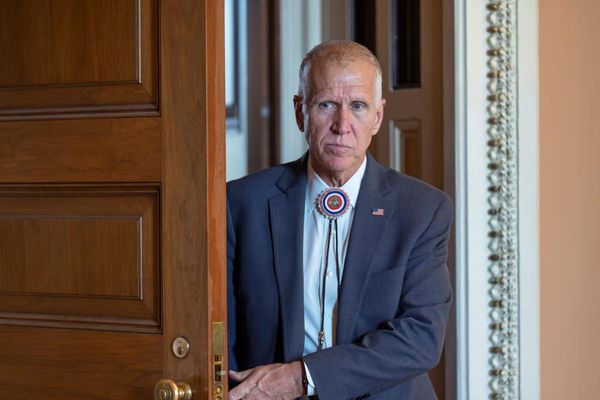
US Secretary of State Mike Pompeo has arrived in Israel for talks on regional security and the Jewish state’s controversial plans to annex parts of the occupied West Bank.
In a rare foreign trip during the coronavirus pandemic, Pompeo plans to meet Prime Minister Benjamin Netanyahu and incoming defence minister Benny Gantz a day before a unity government agreed between the two men is scheduled to be sworn in.
Is that...is that a US flag mask? Indeed it is https://t.co/GMgGLmJbiK
— 𝕤𝕒𝕞𝕒𝕟𝕥𝕙𝕒 𝕞𝕒𝕚𝕕𝕖𝕟 (@samanthamaiden) May 13, 2020
How big tech plans to profit from the pandemic
It has taken some time to gel, but something resembling a coherent pandemic shock doctrine is beginning to emerge. Call it the Screen New Deal. Far more hi-tech than anything we have seen during previous disasters, the future that is being rushed into being as the bodies still pile up treats our past weeks of physical isolation not as a painful necessity to save lives, but as a living laboratory for a permanent – and highly profitable – no-touch future.
This is a future in which, for the privileged, almost everything is home delivered, either virtually via streaming and cloud technology, or physically via driverless vehicle or drone, then screen “shared” on a mediated platform. It’s a future that employs far fewer teachers, doctors and drivers. It accepts no cash or credit cards (under guise of virus control), and has skeletal mass transit and far less live art. It’s a future that claims to be run on “artificial intelligence”, but is actually held together by tens of millions of anonymous workers tucked away in warehouses, data centres, content-moderation mills, electronic sweatshops, lithium mines, industrial farms, meat-processing plants and prisons, where they are left unprotected from disease and hyper-exploitation. It’s a future in which our every move, our every word, our every relationship is trackable, traceable and data-mineable by unprecedented collaborations between government and tech giants.
Nature is healing in San Jose, California:
oh my goat https://t.co/bvcaMIAHgz
— Helen Sullivan (@helenrsullivan) May 13, 2020
Thailand has recorded zero new coronavirus cases for the first time since 9 March, Rueters reports.
Thailand has 3,017 confirmed cases and 56 deaths, according to Johns Hopkins University data.

Summary
- Confirmed deaths worldwide pass 290,000. According to researchers at Johns Hopkins University, at least 4,261,955 people around the world are known to have contracted the virus, while at least 291,964 have died since the pandemic began. The numbers, which are based on official and media reports, are likely to be significant underestimates due to suspected underreporting and differing recording and testing regimes.
- More than 147,000 Americans could die by early August – study. A newly revised coronavirus mortality model predicts more than 147,000 Americans will die from Covid-19 by early August, up nearly 10,000 from the last projection, as restrictions for curbing the pandemic are increasingly relaxed, researchers said on Tuesday. The current US death toll stands at 82,376.
- Brazil reports record deaths. Brazil reported a record 881 Covid-19 deaths in 24 hours on Tuesday, its health ministry said, taking its total to 12,400 and making it the world’s sixth worst-affected country in terms of deaths, according to John Hopkins University figures. Its total of 177,589 confirmed cases is the world’s seventh-highest.
- US Senate threatens sanctions on China over Covid-19 accounting. US Republican senators proposed legislation Tuesday that would empower President Donald Trump to slap sanctions on China if Beijing does not give a “full accounting” for the coronavirus outbreak. The legislation will give Trump 60 days to certify to Congress that China has provided a full accounting on the Covid-19 outbreak to an investigation that could be led by the United States and its allies, or a United Nations body like the World Health Organization.
- Wuhan prepares to test 11 million residents. The Chinese city of Wuhan, the original centre of the pandemic, plans to test all 11 million residents for coronavirus, according to local media. It was widely believed that this will be done within 10 days. However, Chinese media reports have given some more clarity today, suggesting that while there is a citywide testing plan, the time limit is for each region on staggered start times.
- Twitter announces employees will be allowed to work from home ‘forever’. Twitter will allow its employees to work from home “forever”, chief executive officer Jack Dorsey said in a company-wide email Tuesday. Twitter has “strongly encouraged” working from home since 2 March and mandated employees to work from home starting 11 March. Those who want to return to the office will probably need to wait until at least September.
- India PM announces US$270bn virus economic package. India’s Prime Minister Narendra Modi unveiled a stimulus package for labourers and small businesses on Tuesday worth about 10% of India’s GDP. The package came as the country was set to mark its 50th day in the world’s biggest lockdown as the number of virus cases topped 70,000 with 2,200 deaths.
- Pence avoiding Trump after aide’s positive test. The US vice-president, Mike Pence, is keeping his distance from Donald Trump after the former’s press secretary tested positive, the White House spokeswoman Kayleigh McEnany has confirmed.
- Fauci warns of serious consequences if US states reopen early. Dr Anthony Fauci, the director of the National Institute of Allergy and Infectious Diseases, has warned of serious consequences if US states reopen before building capacity to deal with new Covid-19 outbreaks.
- French schools reopen. Thousands of schools have reopened throughout France as the government eased its lockdown rules, despite fears of a second waves of infections, Agence France-Presse reports.
Podcast: do we need more than one Covid-19 vaccine?
Hannah Devlin speaks to Prof Andrew Pollard about the work being done by different teams around the world to create a vaccine for Covid-19, and where his team at Oxford University fit into this international effort
Yemen faces spectre of coronavirus amid aid cuts
Ramadan is a quiet affair in Yemen this year. “People are very afraid,” said Ahmed, an aid worker in the Houthi rebel-controlled capital, Sana’a, who asked for his last name to be withheld. “There’s no money, there’s no healthcare and now you can’t even celebrate iftar with family because of the coronavirus.”
Yemen, where five years of war have already created the worst humanitarian crisis in the world, is uniquely vulnerable to the coronavirus pandemic. Despite a unilateral ceasefire announced by Saudi Arabia last month, there has been an uptick in fighting between the Houthis and the Saudi and Emirati-led coalition fighting on behalf of Yemen’s government, as well as renewed hostilities between the coalition and separatist forces in the country’s south.
The fresh violence, combined with humanitarian funding shortfalls and cuts, means Covid-19 could not have arrived at a worse time:
EU faces ‘existential threat’ if coronavirus recovery is uneven
The risk of an uneven economic recovery from the coronavirus crisis poses an “existential threat” to the European Union, one of its most senior economic policymakers has said.
Paolo Gentiloni, a former Italian prime minister and now the EU’s economy commissioner, said the bloc also had a “historic opportunity” as it charts a plan to rescue Europe’s economy.
In an interview a few days after the commission said Europe had entered “the deepest economic recession in its history”, Gentiloni said the EU needed a “sound recovery plan” to avoid the risks of economic division. Shuttered shops and factories, grounded planes and stay-at-home consumers as a result of lockdown restrictions mean the EU economy is expected to shrink by 7.5% in 2020, a deeper fall than the 2009 financial crisis.
Chinese authorities are preparing to test all 11 million residents of Wuhan, after a small outbreak in the city earlier this week. It’s been widely believed that this will be done within 10 days - an extraordinary undertaking for a city of 11 million people.
However, Chinese media reports have given some more clarity today, suggesting that while there is a citywide testing plan, the time limit is for each region on staggered start times.
“Each district shall make arrangements for nucleic acid screening plan for all members within 10 days,” said a Wuhan government notice.
Caixin Global reported some districts will start this week, and some next.The article cited Wuhan disease control officials saying the testing will be done by third party companies and some hospital and disease control employees.
However, it said the rate of testing couldn’t see more than 100,000 a day.
On Tuesday Yicai news said Wuchang district was to be screened between 13 May and 20 May, but with the intention of finishing by the 17 may to allow three days “to find out and fill in the gaps”.
A resident of Jianghan, once the worst-hit district of Wuhan, told media he’d received a registration form on Tuesday for himself and his family to either report having been tested or register for testing. Peng Zhiyong, director of the intensive care unit at the Wuhan University’s Zhongnan Hospital, told the Global Times that he hadn’t received any details of the testing plan as of Tuesday.
Updated
The lifting of coronavirus lockdowns in China has given the stuttering auto industry a jumpstart, with sales rising for the first time in two years as buyers return as the health crisis eases, AFP reports.

Sales in the world’s biggest car market began to slide in 2018 and plunged further when the pandemic paralysed the economy, but they have rebounded as the country tames the virus and lifts restrictions on travel and businesses.
Sales rose 4.4% year-on-year in April, the latest figures from the China Association of Automobile Manufacturers show, driven by strong demand for commercial vehicles, which soared more than 30%.
The recent uptick came as China emerged from months of lockdown and restrictions on movement imposed around the country earlier this year to curb the spread of the virus.
Passenger car sales suffered at the time, plunging close to 80% from a year ago in February, according to China Passenger Car Association data.
Asian markets fell again Wednesday after Donald Trump’s top virus adviser warned that easing lockdown measures too early could spark another dangerous wave of infections and batter the economic recovery, AFP reports.

Brewing tensions between the US and China added another layer of concern for traders after lawmakers in Washington proposed giving the president powers to impose fresh sanctions if Beijing does not give a “full accounting” for the coronavirus outbreak.
Tokyo ended the morning down 0.8%, while Hong Kong dropped 0.2% and Shanghai slipped 0.3%.
Sydney shed 0.9%, while there were also losses in Seoul, Singapore, Manila, Jakarta and Wellington.
The second day of selling followed losses on Wall Street and eats into recent gains driven by slowing infection and death rates, and the lifting of economy-strangling measures that kept billions at home.
The recent optimism that has flowed through markets, helped by trillions of dollars in worldwide stimulus and central bank backstopping, has been given a jolt by data showing fresh outbreaks in South Korea, China and Germany.
The number of confirmed coronavirus cases in Germany increased by 798 to 171,306, data from the Robert Koch Institute (RKI) for infectious diseases showed on Wednesday.
The reported death toll rose by 101 to 7,634, the tally showed.

Launched amid the mounting scare over the coronavirus, a Japanese video chat website designed for hosting virtual drinking parties has soared in popularity while bars and pubs remain shut, Reuters reports.
Nomikai, or drinking gatherings, are seen by many Japanese as central to building strong relationships among friends and workmates to bond. Tapping into that culture, Tacnom - which means drinks at home in Japanese - has attracted 2.4 million users in its first two months.

“I really didn’t expect this impact and I’m extremely happy,” Takashi Kiyose, chief executive of Tacnom’s operator 1010 Inc, told Reuters.
Tacnom does not require downloads or registrations unlike other online video platforms, but its users can create a URL link and share with their friends to join virtual gatherings of up to 12 people.
“I hope our service can help users meet people they cannot see now. I would be very happy if their time at home due to self-restraints from going out will be enriched,” Kiyose said.
Japan remains under a state of emergency until end of May. The move allows local municipalities to urge people to stay inside, but without punitive measures or legal force. The country has reported about 15,000 coronavirus cases, and 633 deaths from the virus.
Get in touch on Twitter @helenrsullivan.
China reported seven new coronavirus infections on the mainland on 12 May, versus one a day earlier, the national health authority said on Wednesday.
Of the seven new cases reported by mainland China today, six are people who were infected by local transmission in Jilin province, which borders Russia and North Korea. Authorities have now ordered stricter lockdown measures in response.

According to Beijing News, residents of Jilin city must get tested for the virus at their own expense and obtain a negative result before being allowed to travel to other cities. They must also complete strict self quarantine.
There are new requirements for entering and leaving residences, gatherings like dinner parties have been banned and public transportation has been suspended.
It comes after the province’s Shulan city was reclassified as high risk and ordered to partially shut down this week after confirming 12 cases.
Mexico’s government gave the green light on Tuesday for the key automotive industry to restart production after weeks of disruption by the coronavirus pandemic, a decision that should pave the way to reopen North American supply chains, Reuters reports.

The government’s health committee, which issues binding sanitation rules, said it agreed to add makers of transport equipment, a category that includes automotive and aerospace industries, to the list of activities considered essential.
Mexican auto output fell nearly 99% in April, and the government is under pressure from the United States to synchronize its restart with American companies that rely on supply chains from south of the border.
The virus outbreak in Mexico is several weeks behind the US epidemic however, and health authorities have been cautious to avoid moving too fast and putting more lives at risk.
Mexico’s Social Security Institute said 555,247 people registered with it lost their jobs in April, while Mexico’s daily death toll on Tuesday was its highest yet from the outbreak.
Podcast: What does the biggest economic slump in 300 years mean for Britain
As the chancellor announces plans to extend the unprecedented scheme to pay the wages of millions of workers, whole sectors of the economy remain shut because of Covid-19, causing a recession unseen in Britain for centuries. Larry Elliott explains what it will mean for the country:
Foreign Policy has obtained a leaked data set from a Chinese military university which it says could give extraordinary insight into the accuracy of China’s published statistics – but is not being shared with other countries or the World Health Organisation.
“Beijing claims that since the coronavirus pandemic began at the end of last year, there have been only 82,919 confirmed cases and 4,633 deaths in mainland China,” the report says.
“Those numbers could be roughly accurate, and in that case a detailed account would be an important tool in judging the spread of the virus. But it’s also possible that the numbers presented to the rest of the world are vastly understated compared to Beijing’s private figures.”
Each of those updates contains the information about a particular location - from hospitals to hotels - at a particular moment, each involving normally a number of cases. But there are multiple time sequences for each one, and some cases probably cross over between locations.
— James "Stay In. Make Masks. Test People" Palmer (@BeijingPalmer) May 13, 2020
According to Foreign Policy, the dataset has incredibly detailed breakdowns of the country’s epidemic, with more than 640,000 information updates from 230 cities.
“Each update includes the latitude, longitude, and ‘confirmed’ number of cases at the location, for dates ranging from early February to late April,” the report said.
“The dataset, though it contains inconsistencies—and though it may not be comprehensive enough to contradict Beijing’s official numbers—is the most extensive dataset proved to exist about coronavirus cases in China. But more importantly, it can serve as a valuable trove of information for epidemiologists and public health experts around the globe—a dataset that Beijing has almost certainly not shared with US officials or doctors.”
Lives have been lost in the coronavirus pandemic because of the World Health Organization’s (WHO) exclusion of Taiwan and refusal to allow it to share best practices and information, a top US government commission on China said in a new report.
The United States has repeatedly clashed with China over its refusal to allow non-WHO member Taiwan, claimed by China as one of its provinces, full access to the body, becoming another source of rising tensions between Washington and Beijing, Reuters reports.
Taiwan says China and the WHO have conspired for political purposes to lock it out of key meetings, that the WHO has not responded to its requests for coronavirus information and that the WHO has previously misreported Taiwan’s virus case numbers.
The WHO and China strongly dispute this, saying Taiwan has been given all the help it needs, but that only China has the right to represent the democratic island in the WHO.
In a report released on Tuesday, the US Congress’ US-China Economic and Security Review Commission said Taiwan’s exclusion contributed to “critical delays” in timely receipt and accurate guidance for WHO members in the early stages of the outbreak.
“Had the WHO allowed Taiwan’s health experts to share information and best practices in early January, governments around the world could have had more complete information on which to base their public health policies,” it said.
The Guardian’s Charlotte Graham-McLay reports:
“There is no playbook for the recovery we are about to embark on but nor do we need one,” Jacinda Ardern, New Zealand’s prime minister, has said in a speech the day before her government unveils its annual Budget.

“When it has come to Covid-19 we have carved a path based on our people, our health system, and our economy. And now that is exactly what we will do again, as we recover and rebuild.”
Her comments came as New Zealand recorded a second consecutive day of no new Covid-19 cases, and prepares to loosen lockdown restrictions further on Thursday.
Warning that her finance minister’s spending plan would be unveiled during “the most challenging economic conditions faced by any government since the Great Depression,” Ardern said the government would respond not with austerity but with investment.
“We will run the ruler over every line of expenditure, no question we need to ensure our expenditure provides value for money and supports our primary goal of jobs,” she said. “But the notion that at this time of need we would make cuts to the essential services so many New Zealanders need more than ever is not only immoral, it is economically wrong.”
Her government yesterday made a pre-Budget announcement of $4 billion NZD for New Zealand’s health system. Grant Robertson, the finance minister, has already allocated a stimulus of $22 billion NZD -- half of it on wage subsidies -- since Covid-19 reached New Zealand.
You can read our preview of Robertson’s Budget here:
Updated
In other New Zealand news: the country’s ban on large funerals and tangi has been described as “inhumane” by the opposition leader, and “disappointing” and “cruel” by indigenous funeral directors.
New Zealand is set to exit the coronavirus lockdown and resume many parts of normal life on Thursday, but restrictions on funerals and tangi remain, with only ten mourners permitted. The same rules also apply to weddings.
Simon Bridges, the National party leader and a Māori man,said the limit of 10 mourners would cause added grief and pain for families wanting to say goodbye to a loved one.
“It’s not fair that you can have 30 people on a rugby field playing close contact sport but you can’t have more than ten people at a funeral so they can grieve together,” Bridges said in a statement:
The Guardian’s Charlotte Graham-McLay reports:
New Zealand has reported a second consecutive day of no new cases of Covid-19, the day before the government further loosens lockdown restrictions on the country.
94% of the 1,147 people in New Zealand confirmed to have Covid-19 have recovered, said Ashley Bloomfield, the director-general of health, at a news conference in Wellington.
20 people have died of the coronavirus in New Zealand. There were no additional deaths on Wednesday.

New Zealand’s government has drawn praise for its strict and early lockdown of the country when just over 200 people had been diagnosed with Covid-19 and no one had died. A stringent month-long national shutdown followed.
While restrictions have been loosened slightly already, the country will open further tomorrow, with New Zealanders allowed to socialise outside of their homes for the first time in groups of no larger than 10. Many more businesses will re-open, including cafes, shops and restaurants. Next week, schools and bars will re-open; schools had been operating in a limited capacity in recent weeks.
India PM announces US$270bn virus economic package
India’s Prime Minister Narendra Modi unveiled a $270bn stimulus package for labourers and small businesses on Tuesday, to boost flagging growth as the country grapples with the impact of the coronavirus and weeks-long lockdown.

The package – worth about 10% of India’s GDP – came as the country was set to mark its 50th day in the world’s biggest lockdown as the number of virus cases topped 70,000 with 2,200 deaths.
“This economic package is for India’s self-reliant movement. It is for the cottage, small and medium scale industries,” Modi said in a televised address.
The funding includes a $2bn relief package announced at the start of the lockdown in late March and stimulus efforts by the central bank, Modi said.
Finance Minister Nirmala Sitharaman would unveil further details in the next few days, he added.
Israeli police arrested over 300 people Tuesday as officers attempted to control crowds that had assembled at a religious site in northern Israel in violation of coronavirus restrictions, AP reports.
Police said that despite regulations against large assemblies at Mount Meron and police checkpoints on roads near the site, hundreds of religious Jews turned up and some threw stones and other objects a police officers at the scene.

Jews observed the holiday of Lag B’Omer, on which ultra-Orthodox Jews customarily gather at the tomb of a prominent rabbi in antiquity on Mount Meron. Celebrations are typically marked with enormous crowds, dancing and the lighting of bonfires.
Thousands of ultra-Orthodox Israelis marked the holiday in Jerusalem with large assemblies despite bans on public gatherings of more than 20 people due to the pandemic.
Israel’s ultra-Orthodox community has been hit especially hard by the coronavirus outbreak. Interior Minister Aryeh Deri said earlier this week that around 70% of the country’s more than 16,500 confirmed cases were ultra-Orthodox, who make up around 12% of Israel’s population.
Israel started easing restrictions on movement and gathering earlier this month. Israel has reported 260 deaths from Covid-19. More than half of those infected in Israel have recovered.
Something a little lighter now, from AFP:
A lovesick 20-year-old American man tried dressing up as a cleaner to cheat coronavirus border controls in Germany so he could see his girlfriend, police said Tuesday.
After arriving at Frankfurt airport from Washington on Sunday, the young US national donned a high-visibility vest and picked up two bags of rubbish.
“He then tried to convince security staff that he was a cleaner and was supposed to empty the bins behind the security area,” federal police said in a statement.
However, his plan was foiled when a member of staff noticed he was not wearing a security pass and couldn’t speak German. He confessed at a police station that he was desperate to see his girlfriend and couldn’t think of another way of entering the country.
Even if he had managed to reach the bins, the man would still have been in the airport’s transit area, police said – meaning he would still have faced more border controls.
After being questioned, the young romantic was sent back to Washington on Monday.
‘A generation-defining moment’: delivering New Zealand’s pandemic budget
When Grant Robertson, New Zealand’s finance minister, unveiled his last annual budget he told the country that its success would no longer be measured by economic growth and productivity, but instead by the wellbeing of the nation’s population.
A year on and one day before he reveals his new spending plan, Robertson’s so-called wellbeing budget – a concept he intended would frame his fiscal policy for every future year of his term managing the country’s books – faces an extraordinary and unexpected test: a dire global economic outlook caused by the Covid-19 pandemic, with local jobless numbers already topping those seen during the 2008 global financial crisis.

It is a high-stakes document ahead of an election in September, which will function as a referendum on Robertson’s ability to cushion the economy from fallout from plummeting tourism and paralysed industry.
But far from abandoning the wellbeing approach, Robertson told the Guardian that the “horrendous crisis that no one would have wanted to go through” presented an opportunity for change in a country that appears to have largely quashed the spread of Covid-19.
He cited child poverty, expensive housing, polluted waterways and rising emissions as matters to address in a pre-budget speech to a business audience early this month.
“In other words, we are not quite the nation we like to think we are,” he said.
US Senate threatens sanctions on China over Covid-19 accounting
US Republican senators proposed legislation Tuesday that would empower President Donald Trump to slap sanctions on China if Beijing does not give a “full accounting” for the coronavirus outbreak, AFP reports.
“The Chinese Communist Party must be held accountable for the detrimental role they played in this pandemic,” said Senator Jim Inhofe, one of the sponsors of the “Covid-19 Accountability Act.”
“Their outright deception of the origin and spread of the virus cost the world valuable time and lives as it began to spread,” he said in a statement.
The legislation will give Trump 60 days to certify to Congress that China has provided a full accounting on the Covid-19 outbreak to an investigation that could be led by the United States and its allies, or a United Nations body like the World Health Organization.
Trump must also certify that China has closed its highest-risk wet markets and released Hong Kong activists arrested in post-Covid-19 crackdowns.
Without certification, Trump would be authorised under the legislation to impose sanctions like asset freezes, travel bans and visa revocations, as well as restricting Chinese businesses’ access to US bank financing and capital markets.
“China refuses to allow the international community to go into the Wuhan lab to investigate,” said Senator Lindsey Graham, another sponsor of the bill.
“They refuse to allow investigators to study how this outbreak started. I’m convinced China will never cooperate with a serious investigation unless they are made to do so.”
Updated
Twitter announces employees will be allowed to work from home ‘forever’
Twitter will allow its employees to work from home “forever”, chief executive officer Jack Dorsey said in a company-wide email Tuesday.
A spokesperson from Twitter confirmed the decision to the Guardian, saying the company was “one of the first companies to go to a work-from-home model” due to Covid-19, but does not anticipate being one of the first to return to its offices.
“We were uniquely positioned to respond quickly and allow folks to work from home given our emphasis on decentralization and supporting a distributed workforce capable of working from anywhere,” the company said in a blogpost.
“The past few months have proven we can make that work. So if our employees are in a role and situation that enables them to work from home and they want to continue to do so forever, we will make that happen.”
Brazil deaths soar as far-right rulers disconnect from reality
Brazil reported a record 881 Covid-19 deaths in 24 hours on Tuesday, its health ministry said, taking its total to 12,400 and making it the world’s sixth worst-affected country in terms of deaths, according to John Hopkins University figures. Its total of 177,589 confirmed cases is the world’s seventh-highest.
Earlier far-right president Jair Bolsonaro – who has attacked social isolation measures introduced by state governors – issued a decree declaring beauty salons, gyms and barbers “essential services” that could open. Several governors said they would ignore the decree.

Bolsonaro was also battling his latest political crisis – fears that a supreme court judge could release a video of an expletive-filled ministerial meeting held on April 22 which reportedly includes his foreign minister Ernesto Araújo blaming China, Brazil’s biggest trading partner, for the pandemic he dubbed a “comunavirus” (or “communist virus”), aimed at dominating other nations.
Araújo had debuted the term in a lengthy text on his “anti-globalist” blog the same day.
“The coronavirus was again woken us up to the communist nightmare. The comunavirus has arrived,” he wrote. Brazil’s attorney-general’s office had argued against handing over the video to the Supreme Court, claiming it contained “potentially sensitive and reserved state subjects, including foreign relations”, but was overruled.
Adding to the widening sense that Brazil’s far right is increasingly disconnected from the horrific reality of the pandemic as it spreads into poorer, densely packed communities, the presidential family’s guru Olavo de Carvalho questioned its very existence on Tuesday.
“The fear of a supposedly deadly virus is nothing more than a horror story to cow the population and make them accept slavery as a gift from Santa Claus,” tweeted the Richmond, Virginia-based, far-right astrologer-turned-philosopher, believed to have recommended Araújo to the post, to his 291,000 followers.
Updated
More than 147,000 Americans could die by early August – study
A newly revised coronavirus mortality model predicts more than 147,000 Americans will die from Covid-19 by early August, up nearly 10,000 from the last projection, as restrictions for curbing the pandemic are increasingly relaxed, researchers said on Tuesday.
The latest forecast from the University of Washington’s Institute for Health Metrics and Evaluation (IHME) reflects “key drivers of viral transmission like changes in testing and mobility, as well as easing of distancing policies,” the report said.
The current US death toll stands at 82,246.
The revised projection reinforced public health warnings, including US Senate testimony on Tuesday from Dr. Anthony Fauci, the nation’s top infectious disease expert, that prematurely lifting lockdowns could lead to more outbreaks of the respiratory virus.
Fauci and other medical experts have urged caution in relaxing restraints on commerce before diagnostic testing and the ability to trace close contacts of infected individuals can be vastly expanded, along with other safeguards.
Still, IHME researchers acknowledged that precise consequences of moves to reopen shuttered businesses and loosen stay-at-home orders remains difficult to gauge.
Coronavirus in the Pacific: weekly briefing
Dan McGarry and Tess Newton Cain report for the Guardian:
Infection numbers in the region remain low, with minimal increase. New cases have been recorded in the Commonwealth of the Northern Mariana Islands (CNMI), bringing the total across the region to 274.
A number of countries have now been provided with GeneXpert testing cartridges by the World Health Oganization (WHO). They will allow for in-country testing and rapid processing of results. However, due to the global demand, there are only small numbers available in most places. For example, Tonga (where there are no confirmed cases) has requested 6,000 cartridges and has received 120.
The idea of including Pacific island countries in a proposed trans-Tasman bubble being mooted by Australia and New Zealand has received a lot of attention among commentators, despite warnings from Australia’s prime minister, Scott Morrison, that any relaxation of international border closures is still some way off.
Summary
Hello and welcome to our live coverage of how the coronavirus pandemic is affecting countries worldwide.
I’m Helen Sullivan, with you for the next few hours. Get in touch in Twitter @helenrsullivan.
The Chinese city of Wuhan, the original centre of the pandemic, plans to test all 11 million residents for coronavirus over a period of just 10 days, according to local media.
Officials were ordered to submit urgent plans to test all Wuhan’s inhabitants after authorities reported six new cases in a residential compound, the first cluster of new Covid-19 infections since the city reopened on 8 April after 76 days of strict lockdown.
Meanwhile in Brazil, where president Jair Bolsonaro has underplayed the dangers of the virus, a record 881 people died in one day, bringing the total number of deaths to 12,400. Confirmed infections stand at 177,589.
Here are the other main developments from the last few hours.
- Confirmed deaths worldwide pass 290,000. According to researchers at Johns Hopkins University, at least 4,247,709 people around the world are known to have contracted the virus, while at least 290,838 have died since the pandemic began. The numbers, which are based on official and media reports, are likely to be significant underestimates due to suspected underreporting and differing recording and testing regimes.
- Wuhan prepares to test 11 million residents. The Chinese city of Wuhan, the original centre of the pandemic, plans to test all 11 million residents for coronavirus over a period of just 10 days, according to local media.
- Brazil confirmed a record 881 people deaths on Tuesday, bringing the total number of deaths to 12,400. Confirmed infections stand at 177,589.
- Pence avoiding Trump after aide’s positive test. The US vice-president, Mike Pence, is keeping his distance from Donald Trump after the former’s press secretary tested positive, the White House spokeswoman Kayleigh McEnany has confirmed.
- Fauci warns of serious consequences if US states reopen early. Dr Anthony Fauci, the director of the National Institute of Allergy and Infectious Diseases, has warned of serious consequences if US states reopen before building capacity to deal with new Covid-19 outbreaks.
- French schools reopen. Thousands of schools have reopened throughout France as the government eased its lockdown rules, despite fears of a second waves of infections, Agence France-Presse reports.
- Covid-19 R number falls below 1 in Germany. The reproduction rate for the coronavirus pandemic in Germany fell below the critical threshold of 1 with an estimated value of 0.94 on Tuesday after 1.07 on Monday, the Robert Koch Institute for public health and disease control said.
- UK official death toll passes 40,000. The Office for National Statistics says 35,044 deaths involving Covid-19 have been registered in England and Wales up to 9 May. Adding the latest figures for Scotland and Northern Ireland and more up to date fatalities from the four nations, the total official UK death toll now stands at 40,496.
- Spain’s new daily cases lowest in two months. The health ministry identified 594 new cases, bringing the total since the country’s epidemic began to 228,030. The number of fatalities related to the disease rises by 176 to 26,920.
- “Potentially positive data” on drugs, WHO says. The World Health Organization says some treatments appear to be limiting the severity or length of suffering caused by Covid-19 and that it is focusing on learning more about four or five of the most promising ones. “We do have some treatments that seem to be, in very early studies, limiting the severity or the length of the illness, but we do not have anything that can kill or stop the virus,” its spokeswoman Margaret Harris says.
- Saudi oil profits plunge 25%. Saudi Arabia’s state-owned oil company, Saudi Aramco, has posted a 25% dip in profits following the collapse of global oil markets triggered by the coronavirus pandemic.
- Kremlin spokesman in hospital. Dmitry Peskov, the Russian government’s spokesman, is admitted to hospital with Covid-19, local media report. “Yes, I got sick, I’m being treated,” Peskov is quoted as saying. He is at least the second person in Vladimir Putin’s administration to test positive.
- Lebanon orders ‘total lockdown’. People in the eastern Mediterranean country are told to stay at home for four days after an increase in infections followed an easing of restrictions. Lebanese health authorities have officially announced 870 cases of Covid-19, including 11 newly detected on Tuesday, and 26 deaths.
- UK recession ‘already happening’ The UK is effectively in the midst of a recession, its chancellor says. Rishi Sunak tells the BBC: “We already know that many people have lost their jobs and it breaks my heart. We’ve seen what’s happening with universal credit claims already. This is not something that we’re going to wait to see; it’s already happening.”
- Top US adviser testifies. Anthony Fauci, the US government’s top public health expert, warned that official figures are underestimating the death toll in the US and that “the consequences could be really serious” if the country relaxes safeguards too abruptly. Fauci delivered testimony to the Senate on Tuesday as the US president, Donald Trump, encouraged businesses to reopen.
- Virus hits South Sudanese camp. For the first time, Covid-19 has been confirmed in a crowded civilian protection camp in South Sudan’s capital, the United Nations says. It is a worrying development in a country that is one of the world’s least prepared for the virus’s spread.
Updated