Evening summary
- Boris Johnson has insisted the nation has “a moral duty” to reopen schools next month, amid indications he would force pubs, restaurants and shops to close ahead of schools in the event of severe coronavirus flare-ups. The prime minister is understood to favour only closing schools as the last resort after scientific advisers warned more restrictions may be needed to reopen classrooms in England next month.
-
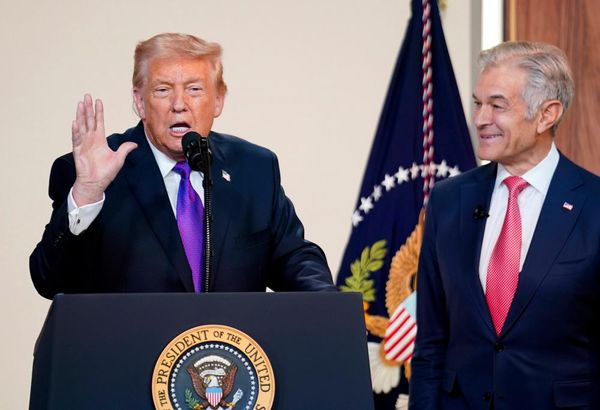
Donald Trump said on Saturday that he would extend enhanced coronavirus unemployment benefits and employment taxes into next year with executive orders, but cut the level of some of the support. Speaking at his golf resort in Bedminster, New Jersey, Trump said he was taking action after Congress had failed to agree a deal, blaming “far left” Democrat demands in a campaign-style speech.
- Belgian police have made several arrests after a brawl broke out on a beach between officers and young people they had told to leave for refusing to respect virus safety measures. The clashes took place at the resort of Blankenberge, which is about 15km north of Bruges. A group of young people became violent after police told them to leave the beach, the daily Het Laatste Niewus reported.
- Cuba has placed Havana back on a strict lockdown following a rebound in coronavirus cases, ordering restaurants, bars and pools once more to close, suspending public transportation and banning access to the beach. Cuba, which has been hailed as a rare success story in Latin America for its textbook handling and containment of its coronavirus outbreak, had eased lockdown restrictions last month after cases dwindled to but a handful per day.
- Thousands of demonstrators gathered in the streets near the official residence of Israeli prime minister Benjamin Netanyahu in central Jerusalem. Throughout the summer, thousands of Israelis have taken to the streets, calling for Netanyahu to resign, protesting his handling of the country’s coronavirus crisis and saying he should not remain in office while on trial for corruption charges.
- Meat giant, Danish Crown announced Saturday it had closed a large slaughterhouse in Denmark after nearly 150 employees tested positive for the novel coronavirus. The abattoir in Ringsted, about 50 kilometres (30 miles) from the capital Copenhagen, employs nearly 900 people and slaughters tens of thousands of pigs every week.
Thousands of Australians trying to leave the country to visit sick family members, reunite with partners, or emigrate to another country of citizenship, have struggled with an exemption system they describe as opaque, arbitrary and dysfunctional.
Hannah Ryan has this report on the stresses of the application process:
More than 10,000 people have died from coronavirus in South Africa since the pandemic arrived in the country in March, the health ministry has said.
The country has registered 553,188 infections – the fifth biggest number of Covid-19 cases in the world.
Minister Zweli Mkhize said in his daily update statement on Saturday that 301 new virus-related deaths had been recorded.
“This means we have breached the 10,000 mark, with 10,210 cumulative deaths now recorded,” he said.
During an inspection of hospitals in the KZN province on Saturday, Mkhize added: “The peak is here, the peak is where we are.”
While South Africa is the continent’s hardest-hit nation in terms of infections, its mortality rate at around 1.8%, is one of the lowest among countries with high numbers of cases.
Reopening schools 'a moral duty' – Johnson
Boris Johnson has insisted the nation has “a moral duty” to reopen schools next month, amid indications he would force pubs, restaurants and shops to close ahead of schools in the event of severe coronavirus flare-ups.
Writing exclusively in the Mail on Sunday, Johnson said it the “national priority” to get all pupils back into classrooms in September after months without in-person education.
“This pandemic isn’t over, and the last thing any of us can afford to do is become complacent,” he wrote.

“But now that we know enough to reopen schools to all pupils safely, we have a moral duty to do so.”
He warned of the “spiralling economic costs” of parents and carers being unable to work, adding: “Keeping our schools closed a moment longer than absolutely necessary is socially intolerable, economically unsustainable and morally indefensible.”
MAIL EXCLUSIVE: @BorisJohnson : It’s a moral duty to reopen schools #TomorrowsPapersToday pic.twitter.com/bjdkpeTnfH
— Neil Henderson (@hendopolis) August 8, 2020
It comes after children’s commissioner for England Anne Longfield had said the reopening of schools “should be prioritised”, insisting they must be first to reopen and last to close during any reintroduction of restrictions.
However leading scientist and teachers unions have expressed concerns about the safety of the government’s plans to reopen schools.
According to the PA news agency, Johnson is understood to favour only closing schools as the last resort after scientific advisers warned more restrictions may be needed to reopen classrooms in England next month.
A No 10 source told PA on Saturday that Mr Johnson’s expectation is that schools would be the last sector to close, with firms being shut first in the event of severe local lockdowns.
“The PM has been clear that businesses including shops, pubs and restaurants should be forced to close first, with schools remaining open for as long as possible,” the source said.
But schools minister Nick Gibb said this week that the government cannot “decree” that classroom education would be prioritised, instead saying decisions would be made by local health chiefs.
Professor Chris Whitty, the chief medical officer for England, has warned the nation has “probably reached near the limit or the limits” of what can be done to reopen society safely.
And Professor Neil Ferguson, whose modelling led to the decision to impose the lockdown, suggested ministers would need to “row back on the relaxation of restrictions” to allow a full-time return to schools while keeping the virus under control.
Schools in England and Wales are braced for a fierce backlash from students and their parents this week, amid fears that A-level results to be published on Thursday will unfairly penalise disadvantaged students.
Since pupils were unable to sit their exams due to the pandemic, their grades will be calculated on the basis of teachers’ estimates, combined with a statistical model based on past results at the school and the student’s prior attainment. In Scotland last week thousands of students received poorer results than they expected when a similar system was used.
Read the full report:
Donald Trump has signed a series of executive orders intended to provide additional relief to address the coronavirus pandemic’s economic fallout after the White House failed to reach a deal with Congress.
Speaking at a news conference from his private golf club in the leafy New Jersey hamlet of Bedminster, the US president said the directives will extend federal unemployment benefits at $400/month (a $200 cut from the present amount), defer payroll tax through the end of 2020 (“most likely” retroactive to 1 July), defer and forgive interest on student loans and extend moratoriums on evictions, defer student loan payments and extend the federal moratorium on evictions.
You can follow the latest on this story on the US-focused coronavirus blog:

Healthcare workers and supporters took to the streets earlier today to protest over pay.
More than 30 marches across the UK were planned on Saturday amid growing anger over the absence of action to match gestures such as a weekly applause.
Here is a selection of photos of the crowds which converged across the country:
Updated
The fourth Covid-19 test result for Ohio governor Mike DeWine came back negative on Saturday after he received conflicting positive and negative results two days before, ahead of a scheduled meeting with President Trump, the Associated Press reports.

On Thursday DeWine was administered a rapid point-of-care antigen test ahead of a planned meeting with Trump, according to his spokesperson Dan Tierney, which gave a positive result.
Shortly afterwards he took a polymerase chain reaction test, which is the most commonly used test in the country and is considered the gold standard by medical professionals. More than 1.3 million Ohioans have been tested with it.
The results were checked twice, both negative.
The conflicting results underscore the problems with both kinds of tests and are bound to spark more questions about their reliability.
Updated
Johnson urged to help out travellers stuck in quarantine
Boris Johnson was under mounting pressure on Saturday to overhaul holiday quarantine rules and compensate those caught out while abroad, amid growing concerns over rising cases of Covid-19 in France.
A cross-party group of senior MPs, scientists and trade unions said that holidaymakers already staying in a country that has been added to the quarantine list should be given statutory sick pay during their two-week isolation, in an effort to improve compliance and help those unable to work.
My colleagues Jamie Doward, Michael Savage and Robin McKie have the full report:
“The last four years have felt pretty momentous,” says David Isaac, who left his position as chair of the Equality and Human Rights Commission on Saturday. “There’s Brexit, there’s the pandemic, there’s Grenfell, Windrush, #MeToo, and George Floyd and Black Lives Matter.”
In an interview with the Observer’s Jamie Doward, Isaac addresses the reasons for his departure, the lessons of Covid-19, and the absence of black EHRC commissioners, among other topics.
Read the full report here:
Belgian police have made several arrests after a brawl broke out on a beach between officers and young people they had told to leave for refusing to respect virus safety measures.
The clashes took place at the resort of Blankenberge, which is about 15km north of Bruges. A group of young people became violent after police told them to leave the beach, the daily Het Laatste Niewus reported.
Belgium is one of the countries worst hit by the virus in terms of its death rate and was one of the first countries to require people to wear masks outdoors in crowded areas.
To date it has recorded more than 72,000 infections and 9,866 deaths.
Cuba has placed Havana back on a strict lockdown following a rebound in coronavirus cases, ordering restaurants, bars and pools once more to close, suspending public transportation and banning access to the beach, Reuters reports.
Cuba, which has been hailed as a rare success story in Latin America for its textbook handling and containment of its coronavirus outbreak, had eased lockdown restrictions last month after cases dwindled to but a handful per day.
But they have risen back to April levels over the past two weeks, with the health ministry reporting 59 cases on Saturday and saying the situation could become “uncontrollable” if authorities did not act fast.
“We are witnessing a new epidemiological outbreak that puts our entire population at risk,” Cuban health minister José Angel Portal said during a daily coronavirus briefing on Saturday.

Cuba’s free community-based health system has been credited, along with measures such as strict isolation of the sick and their contacts, with allowing it to keep the number of cases under 2,900 with 88 deaths for a population of 11 million.
Authorities though have berated Cubans for letting their guard down after lockdown was eased, failing to socially distance or properly wear their face masks, which are obligatory in public spaces, and when gathering in big groups.
One of the latest major events of local transmission was traced back to a religious gathering.
But many of the new cases – 41 of the 59 reported on Saturday – are also imported, often from Venezuela. There is no open travel in Cuba due to the pandemic, so most returnees would likely be from the 20,000 health personnel stationed in Cuba’s leftist ally.

Anyone entering the country is required to quarantine in a state facility for 14 days so contagion from those cases is contained.
While Cuba’s outbreak is focused on Havana, Portal said authorities would need to monitor the rest of the country carefully given the large amount of asymptomatic carriers and nationwide travel that had occurred over the past month.
Updated
French tourist chiefs on knife-edge as country may be next on UK quarantine list
With France’s coronavirus cases accelerating quickly – 2,288 were reported on Friday, a steep rise from Thursday’s 1,604, following a 33% week-on-week increase between 27 July and 2 August – attempts to resuscitate the tourist sector are now under threat.
As the French health ministry warned last week that the country could lose control of the virus “at any time”, the chancellor Rishi Sunak said the government “would not hesitate” to add France to its quarantine list should the situation deteriorate.
Features writer Phil Hoad has the view from southern France in this report for the Observer:
Thousands of demonstrators have gathered in the streets near the official residence of Israeli prime minister Benjamin Netanyahu in central Jerusalem, the Associated Press reports.
It is a renewed show of strength as weeks of protests against the Israeli leader show no signs of slowing.
Throughout the summer, thousands of Israelis have taken to the streets, calling for Netanyahu to resign, protesting his handling of the country’s coronavirus crisis and saying he should not remain in office while on trial for corruption charges.

Self-employed workers whose businesses have been hurt by the economic crisis also joined Saturday’s march.
Though Netanyahu has tried to downplay the protests, the gatherings only appear to be getting stronger.
In Jerusalem on Saturday, protesters held Israeli flags, blew horns and chanted slogans against Netanyahu. Some held posters that read: Crime Minister or branded him out of touch. A large banner projected onto a nearby building said Balfour is in our hands, a reference to the street where Netanyahu lives.
The demonstrators accuse Netanyahu of corruption and the country’s bloated coalition government of failing to recognise the suffering of its citizens.
An estimated 1,000 people also protested at an intersection near Netanyahu’s beach house in the upscale coastal town of Caesaria.
There was a heavy police presence at the demonstrations but no reports of violence in the loud but orderly protests.
The rallies against Netanyahu are the largest Israel has seen since the 2011 protests over the country’s high cost of living.

After moving quickly to contain the virus last spring, many believe Israel reopened its economy too quickly, leading to a surge in cases. The country is now coping with record levels of coronavirus, while unemployment has surged to over 20%.
Many of the demonstrators, including a lot of young unemployed Israelis, accuse Netanyahu of mishandling the coronavirus crisis and the economic damage it has caused.
Netanyahu has dismissed the demonstrators as leftists and anarchists and inciting violence against him. He also accuses the local media of strengthening the demonstrations by giving them heavy coverage.
Updated
After sustaining lockdown losses, UK farmers are now cashing in on the boom in rural staycations by turning to camping and cottage rentals.
Tom Wall digs deeper into this emerging trend in the following report for the Observer:
Meat giant, Danish Crown announced Saturday it had closed a large slaughterhouse in Denmark after nearly 150 employees tested positive for the novel coronavirus.
The abattoir in Ringsted, about 50 kilometres (30 miles) from the capital Copenhagen, employs nearly 900 people and slaughters tens of thousands of pigs every week.
Danish Crown said 120 employees tested positive for the virus in a first round of tests of 600 employees present.
It then retested all the negative cases and detected 22 additional infections.
“For this reason, we are closing the abattoir for at least a week to try to break the chain of transmission among employees on site,” Danish Crown said in a statement.
All the employees must quarantine, said the company, one of Denmark’s biggest exporters and the biggest pork product producer in Europe.
Several European slaughterhouses have been hit with the virus in recent months, particularly in Germany.
The virus cluster at Ringsted is the main active one in Denmark, where the number of cases has increased sharply in recent days.
The resurgence has forced the government to abandon plans to ease restrictions at concert halls and night clubs, and instead prepare new curbs.
Several dozen infections have been registered in Aarhus, the country’s second biggest city.
The prime minister Mette Frederiksen said on Friday that Denmark intends to make masks compulsory on public transport, even though such a measure had not even been recommended recently.
Updated
Facing a new surge of coronavirus infections, one Spanish town is deploying special police units to nightclubs to enforce health regulations to stop the virus from spreading, the Associated Press reports.
The small beach town of Fuengirola near Málaga on Spain’s southern coast has sent police to its nightclubs which are a magnet for young people seeking summer fun to keep them from becoming virus breeding grounds.
“The police pressure that is carried out is essential so that people who are resistant to the law end up complying with it,” police officer Jorge Moreno said, adding that since 15 June , police have issued 2,000 sanctions for not complying with health regulations.
The special unit of 24 officers ensures that both workers and party-goers comply with the mandatory order to wear face masks and that clubs keep tables far enough apart to maintain social distancing between groups.

Nightclubs have been repeatedly cited by regional health authorities as sites of contagion. Northeast Catalonia has ordered them shut down.
Spain is struggling to keep an uptick in infections in check after it had managed to control an initial nationwide outbreak that forced the government to impose a strict three-month lockdown.
The health ministry on Friday reported the country’s highest daily increase in new infections since the lockdown ended in June, with 1,895 cases recorded, some 200 more than the previous day.
Spain has confirmed 28,503 virus deaths in the pandemic but experts say all numbers in all countries are undercounts due to limited testing, missed cases and other issues.
Updated
Several thousand people waving rainbow flags protested in the centre of Warsaw to demand the release of an LGBT activist accused of hanging rainbow banners over statues and damaging an anti-abortion campaigner’s van, Reuters reports.
Crowds chanted “Give us Margot back!” and “Rainbow does not insult you!” outside Warsaw’s Palace of Culture on Saturday.

The peaceful gathering applauded activists hanging another rainbow flag on a statue in front of the palace, while police officers filmed the performance and the protest leaders.
On Friday the police detained 48 people, who were trying to stop the authorities from jailing Margot, the activist accused of hanging flags on statues of Jesus and others and destroying the van of an anti-abortionist.
“We are here to protest against the fact that these people were detained by the police,” Mateusz Wojtowicz, 24, a payroll specialist, told Reuters.

The police started releasing detained protesters on Saturday, but not Margot.
She is a member of the activist group “Stop Bzdurom”. The group have said they hung flags on statues last week as part of a fight for LGBT rights, an issue thrust into the heart of public debate in Poland during last month’s presidential election.
The commissioner for human rights at the Council of Europe, a rights watchdog, called for the immediate release of the activist.
“Order to detain her for two months sends very chilling signal for freedom of speech and LGBT rights in Poland,” commissioner Dunja Mijatovic tweeted.
I call for immediate release of LGBT activist Margot from .@stopbzdurom detained yesterday for blocking an anti-LGBT hate van & putting rainbow flags on #Warsaw monuments.Order to detain her for 2 months sends very chilling signal for #FreedomOfSpeech & #LGBT rights in #Poland
— Commissioner for Human Rights (@CommissionerHR) August 8, 2020
The ruling nationalist Law and Justice (PiS) party says LGBT rights are part of what it calls an invasive foreign ideology that undermines Polish values and the traditional family.
Condemning Friday’s protest, justice minister Zbigniew Ziobro said authorities had to act or face “even more violent” attacks by activists.
Updated
Face masks must be worn outdoors in Paris along the banks of the River Seine and along the Canal St Martin as well as in open-air markets and other places where social distancing is difficult, the Paris prefecture said on Saturday.
Masks will be mandatory from 6am on Monday and the order will remain in place for one month, the prefecture said.
Suppose the jury found you not guilty, but you had been punished by spending years in a cell on remand as if you were a guilty man. No government should have the power to lock you up and forget your existence.
Covid-19 has given this government precisely that power.
In his latest column, Nick Cohen looks at how the “basic tenets of law are being further eroded in an already shambolic legal system” amid the pandemic:
So, could going on a plane amid the pandemic be safer than going to the pub?
Dr Bharat Pankhania, senior clinical lecturer at the University of Exeter, had this to add:
In the pub there is a free for all after a few drinks, whereas in the aeroplane it is a managed environment.
He told PA he would personally avoid going on a plane during a pandemic but thinks planes carry less risk than pubs.
He pointed out that on a plane journey people will be taking precautions such as wearing masks and there will be less conversation, adding:
When people are boarding an aeroplane they are so conscious of a potential risk that they are in prevention mode and in hyper prevention mode.
When you are in a pub your inhibitions by design are reduced and removed and you are never in a prevention mode.
Dr Pankhania pointed out that pubs attract sociable people who are likely to have met up with many other people.
He said:
So they are meeting a lot of people as well as meeting you in the pub. You might be meeting them only, but you don’t know how many they have met.
He added that even people who go to the pub alone for a quiet drink are at risk as they are putting themselves into an environment where the virus could be in free circulation.
Dr Pankhania also commented on restaurants, saying:
I personally think going into a restaurant indoors where there are lots of tables etc in a confined space, without any new attention to increased ventilation, I would say it’s best you avoid it.
Updated
Pubs create the “perfect storm” for spreading coronavirus and carry more risk than planes, academics have told the PA news agency.
Punters drinking together in an indoor pub are potentially subjecting themselves to a build-up of infected droplets caused by poor ventilation and people having continuous conversations, often speaking more loudly to be heard over the din of a noisy bar, the experts warn.
The comments come after households mixing in pubs and homes was blamed for a rise in Covid-19 cases in Preston, resulting in it being the latest area to have lockdown restrictions reimposed.
Aberdeen was also placed in a fresh lockdown after an outbreak of cases linked to a number of bars emerged.
Dr Julian W Tang, honorary associate professor of respiratory sciences at the University of Leicester, said if you can smell garlic on someone’s breath it means you are close enough to be inhaling their air.
“If the air space is poorly ventilated, that air that’s full of virus is not going to go anywhere. It’s going to linger there until the virus dries up and dies over time,” he said, adding that the most common method of transmission in the UK is probably “conversational exposure”.

He pointed out that when people laugh they produce a lot of air, so if someone in a group in the pub makes a joke then they are massively exposed to exhaled air from the laughter around them.
Asked if being in a busy pub is quite similar to being on a plane in terms of risk, Dr Tang said: “It’s even worse because the aeroplane has very good ventilation. The pubs don’t have very good ventilation.”
He said the ventilation system on a plane filters viruses out of the air, adding: “I think a plane is safer because of that ventilation system efficiency.”
Dr Tang said the general public do not realise just how good the ventilation is on planes, adding: “A lot of the fear is due to ignorance.
“To be honest, on a plane the danger is from your nearest neighbours because that air is not filtered away quickly enough before you inhale it. That’s the main risk on a plane.”
He said: “I don’t see planes as a major risk. If you ask me would I rather fly on a plane or go to a pub, I’d rather fly on a plane.”
Dr Tang added: “In a pub you go there to talk, you go there to do exactly what you need to do to transmit the virus to each other.”
Major League Soccer will resume its season once the MLS is Back tournament in Florida wraps up.
The league said on Saturday its 26 teams will each play 18 games, with the first between FC Dallas and Nashville set for 12 August.
Dallas and Nashville are playing three additional games after withdrawing from the league’s tournament because of positive Covid-19 cases.
Here’s the full report:
President Donald Trump on Saturday intends to sign an executive order intended to provide economic relief to Americans hurt by the coronavirus pandemic after the White House failed to reach a deal with Congress, a White House source told Reuters news agency.
Ireland reports 174 new Covid-19 cases
Ireland reported 174 new Covid-19 cases on Saturday, up from 98 on Friday.
Saturday’s increase is more than triple the average of 58 new cases per day seen over the last week.
Chief medical officer Ronan Glynn said 118 of the new cases were linked to the three counties – Kildare, Laois and Offaly – where some restrictions on movement were reintroduced on Friday following a surge in cases there.
“While today’s numbers of confirmed cases are high, they are not unexpected,” Glynn said.
“Our priority now ... is to avoid these cases and clusters leading to widespread community transmission of the disease.”

The new rules for counties Kildare, Laois and Offaly include restricting movement with the exception of work purposes and other essential journeys; restaurants and pubs serving food to close, apart from takeaway services, deliveries and limited outdoor dining; and the closure of indoor entertainment and sport venues such as cinemas, theatres, museums, galleries and bingo halls.
Visits to prisons, acute hospitals and nursing homes will be suspended except on compassionate grounds.
People have been asked not to travel to those counties unless for work.
However, retail shops can remain open with the wearing of face masks, and childcare facilities and schools that are open can remain open.
Outdoor amenities including playgrounds will also remain open with social distancing.
Algeria will further ease its coronavirus lockdown including shortening an overnight curfew and lifting some travel curbs, Reuters reports.
In addition, large mosques will be allowed to reopen, along with beaches, entertainment venues, hotels, restaurants and cafes.
As of Saturday the North African country has recorded 34,155 coronavirus infections, with 1,282 deaths.
The new measures include lifting a travel ban on 29 provinces from 9 August until the end of the month. During that period, a curfew will be shortened and will run from 11pm to 6am from the current 8pm to 5am, the government said on Saturday.
Mosques with a capacity of more than 1,000 worshipers can reopen from 15 August, though Friday prayers, which attract larger numbers of people, will remain banned throughout the country.
The use of air conditioners in mosques also remain banned, as does a prohibition of access for women, vulnerable people and children under 15 years.
The government will also allow the reopening of beaches and entertainment venues, as well as restaurants, cafes and hotels from next Saturday.
It said social distancing and protection masks would be compulsory, and warned any violation of preventive measures against the novel coronavirus would prompt it to reimpose more restrictions.
Algeria resumed some economic activity in June, mainly in the construction and public works sectors, and allowed the reopening of some businesses.
It lifted a curfew and travel restrictions for its remaining 19 provinces in July.
Updated
Brazil’s Covid-19 death toll has risen above 100,000 – the latest grim milestone in the South American country’s ongoing coronavirus crisis.
On Saturday afternoon a coalition of Brazilian news outlets announced the number of deaths had risen by 538 to 100,240, the second highest number on earth after the US.
The group has been compiling Covid-19 statistics since Brazil’s health ministry was accused of seeking to conceal figures in June.
Brazil’s president, Jair Bolsonaro, who has played down the pandemic and undermined social distancing and containment measures, came under heavy attack as the death toll rose above 100,000.
An editorial in the conservative Estado de São Paulo newspaper said: “This tragedy has happened because ever since the pandemic arrived in our country president Jair Bolsonaro adopted such appalling behaviour towards the greatest pain inflicted on Brazilians in more than a century.”
It added: “There was no greater misfortune for the nation than having such an inadequate and indifferent leader in the presidency at such a serious moment. It is not clear whether Bolsonaro will one day face political or legal consequences for his neglect. But he should fear for what might happen.”
Updated
Hundreds of peaceful demonstrators gathered outside Tottenham police station, in north London, to call for an end to what they say is institutionally racist policing, Diane Taylor reports for the Guardian’s national news desk.

Demonstrators take part in a Black Lives Matter protest outside Tottenham police station in London, Britain August 8, 2020. REUTERS/Simon Dawson Photograph: Simon Dawson/Reuters
Crowds of protesters wearing face coverings could be heard chanting “no justice no peace” during the event to mark the ninth anniversary of the fatal shooting by police in Tottenham of Mark Duggan.
His death was followed by the biggest riots in recent times. The event is supported by Black Lives Matter, Tottenham Rights and Stopwatch.
Read the full story here:
Updated
Thousands of bikers heading to South Dakota’s 10-day Sturgis Motorcycle Rally will not be allowed through Cheyenne River Sioux checkpoints, a spokesman for the Native American group said on Saturday.
The decision to prevent access across tribal lands to the annual rally, which could attract as many as 250,000 bikers amid fears it could lead to a massive, regional coronavirus outbreak, comes as part of larger Covid-19 prevention policy. The policy has pitted seven tribes that make up the Great Sioux Nation against federal and state authorities, which both claim that the checkpoints are illegal.
Updated
Several thousand protesters gathered in central Beirut on Saturday to vent their anger at a political elite they blame for a deadly explosion that turned the city into a disaster zone.
The demonstrators, some of them brandishing nooses, called for revenge as a large deployment of security forces tried to contain some groups seeking to advance towards parliament, AFP correspondents reported.

Police used tear gas against groups of demonstrators hurling rocks and sticks on the fringes of the main gathering, which was relatively peaceful despite high tensions since the blast on Tuesday.
Among the main hashtags used on social media to rally protesters was #HangThem, and demonstrators had set up mock gallows on the main square on Friday.
The health ministry said at least 158 people had died as a result of Tuesday’s explosion, an estimated 6,000 were wounded and at least 21 were missing.
The nation has been crippled by a number of long-running crises for decades, among them the Covid-19 pandemic. Lebanon had recorded 5,951 cases of coronavirus with 70 deaths as of 8 August.
Updated
Temperature checks at reception, spaced-out desks, contactless coffee dispensers and plastic lift-button prodders. Welcome back to work – in an anti-Covid-19 office. These features, which would have been deemed eccentric and invasive in January, are some of the measures being deployed for returning employees by one of the UK’s biggest companies, property firm British Land.
Read the full report:
UK coronavirus-related deaths increase by 55 – government figures
The number of people who have died in UK hospitals, care homes and the wider community after testing positive for Covid-19 has increased by 55 to 46,566, according to government figures.
The data, updated at 4pm on Saturday, also show that there have been a further 758 lab-confirmed cases in the 24 hours up to 9am. Overall, a total of 309,763 cases have been confirmed.
Updated
Afternoon summary
- Hispanic and black children in the US are far more likely to be admitted to hospital with Covid-19 than white children, a new study published by the Centers for Disease Control and Prevention has found.
- With coronavirus cases rising steeply for a third straight day in Greece, officials are poised to open what some are describing as a war chest of measures in a bid to contain infection rates. New precautionary steps are likely to be announced on Monday when the Greek prime minister, Kyriakos Mitsotakis, holds talks via teleconference with expert scientists and health officials.
-
Children in the Gaza Strip have returned to class after nearly five months of school closures, according to the Associated Press. Gaza, which is home to about 2 million people, remains one of the few places in the world to have had no known cases of community transmission of coronavirus.
- The UK medicines regulator has recalled hundreds of thousands of Randox home Covid-19 testing kits over safety concerns. The Medicines and Healthcare Regulatory Agency issued the recall notice on Friday night, calling on individuals and organisations to “discontinue use of and quarantine any stock of the Randox Covid-19 home testing kit immediately”.
- Meanwhile, hundreds of people have converged on central London to march for fair pay for NHS staff and recognition of their work during the pandemic. More than 30 marches across the UK are planned on Saturday as anger grows about an absence of action to match gestures such as weekly applause
Hi, it’s Aaron Walawalkar here in London, picking up the blog from my colleague Damien Gayle.
Please get in touch with any suggestions for coverage, or comments by DM on Twitter @AaronWala or by email at aaron.walawalkar@theguardian.com.
Updated
Fifteen more coronavirus-related deaths in English hospitals
A further 15 people who tested positive for the coronavirus have died in hospital in England, bringing the total number of confirmed reported deaths in hospitals to 29,401, NHS England said on Saturday.
The patients were aged between 67 and 100, and all had known underlying health conditions apart from one 91-year-old.
Twelve deaths were reported with no positive Covid-19 test result.
The region with the highest number of deaths was the north-east and Yorkshire with eight.
There were no deaths reported in the north-west, where local lockdown measures in place in Greater Manchester and parts of east Lancashire were extended on Friday to include Preston.
Updated
Germany’s foreign ministry has issued a travel warning for parts of Bulgaria and Romania because of regional increases in coronavirus cases, according to the Associated Press.
The ministry says on its website that tourists should avoid unnecessary travel to Blagoevgrad, Dobrich and Varna in Bulgaria. Varna on the Black Sea coast is a popular tourist destination.
It also urged travellers to avoid seven counties in Romania, most of them in the west of the country.
Travellers returning to Germany from those areas must undergo a compulsory coronavirus test.
Updated
Hispanic and black children in the US are far more likely to be admitted to hospital with Covid-19 than white children, a study published by the Centers for Disease Control and Prevention has found, writes Edward Helmore for the Guardian US in New York.
The study acknowledges that most paediatric incidents of Covid-19 are asymptomatic or mild, and hospital admission rates among children of all ethnicities are low, but found that admission rates among Hispanic children were around eight times higher than for white children. Black children were admitted at rates five times those for white children.
The report, which was released on Friday, focused on data from 14 states. It found that 42% of the children studied had one or more underlying medical conditions. Obesity was found to be the most prevalent, a condition that affects almost one in five US children and is more common among black and Hispanic populations.
Updated
Jair Bolsonaro’s former health minister has accused the Brazilian president of failing to offer “a single word of comfort” to the families of the 100,000 Brazilians who have lost their lives to Covid-19, writes Tom Phillips in Rio de Janeiro, for the Observer.
In an interview marking Brazil’s latest Covid-19 milepost, Luiz Henrique Mandetta – who was sacked in April after challenging the president’s internationally condemned coronavirus response – expressed consternation that Brazil’s leaders had failed to recognise so much pain.
“There are 100,000 Brazilian families who have yet to receive a single word of comfort or solidarity from the government,” Mandetta told the newspaper O Globo.
Brazil’s official coronavirus death toll was poised to top 100,000 on Saturday, with its total rising to 99,572 on Friday after another 1,079 deaths.
Hundreds of NHS Scotland staff fell silent to remember colleagues lost during the coronavirus pandemic at a protest over pay in Glasgow city centre, the PA news agency reports.
The demonstration was one of dozens planned across the country in response to a UK government announcement of a pay rise that campaigners say excludes “a massive number of healthcare workers”.

Many of those at the demonstration in Glasgow Green held banners and signs along with two-metre lengths of blue ribbon to emphasise social distancing. Action also took place in Edinburgh on Saturday morning.
Signs read: “Enough empty praise, geez a fair raise”, “Covid hero pay rise zero”, and “Who saved you Boris?”
Melanie Gale, a senior charge nurse who ran a Covid-positive ward with an “under-staffed hardworking team”, helped to organise the event.
She told PA Media:
It was scary times not knowing what was happening - we were in the middle of a pandemic and our NHS workers stood on that front line and gave their all. I saw on Facebook we needed to organise for Glasgow and I knew how big this was going to be.
They’re an amazing bunch of people that have all got together, all the organisers, to make today happen in two weeks. We’re here today to say we have had enough, we deserve our equal pay. It’s 10 years of not being given a proper pay increase for the jobs we do.
I’d like to thank the public, our speakers and everybody else who has come out today. There are 33 cities today protesting about this and I’m just so amazed.
Updated
Tens of thousands of women working in frontline healthcare in India, the world’s third worst-affected country by coronavirus caseload, have gone on strike to demand better pay and protection, AFP reports.
The two-day strike is due to culminate in a mass protest in Delhi on Sunday.
India now has more than 2 million confirmed cases of coronavirus, and has recorded more than 42,000 deaths.

About a million of the accredited social health activists (Ashas) across India had been given responsibility for tracking down suspected coronavirus cases, especially in villages and slums. They are officially referred to as volunteers and the government gives them an allowance of 1,000 rupees (£10) a month.
They began a strike on Friday to demand a 21,000 rupee salary, a pension, protective equipment and testing. They said they had faced attacks and harassment in some villages.
Shiksha Rana, an Asha in Delhi, told AFP at least 200 of her colleagues had been infected in the Delhi region alone.
“Their families were also infected. We had to crowdfund money for their treatment and food for their families,” she said.
Updated
Germany and France have challenged the US’s claim to lead talks over reforming the World Health Organization, citing Washington’s decision to quit the UN health agency, according to the Associated Press.
Germany’s health ministry said the issue was discussed during a call of health ministers from the G7 leading economies on Thursday.
In a statement on Saturday, the ministry said that given Washington’s withdrawal from the world body, “Germany and France currently see no mandate for the US to lead the WHO reform process for the G7”.
“How can you be leading while you are leaving?” the ministry said.
The Trump administration, which holds the rotating presidency of the G7 this year, has accused the WHO of bowing to pressure from China in its handling of the coronavirus pandemic.
Updated
Hundreds of people have converged on central London to march for fair pay for NHS staff and recognition of their work during the pandemic, writes Mattha Busby for the Guardian’s national desk.
More than 30 marches across the UK are planned on Saturday as anger grows about an absence of action to match gestures such as weekly applause

The government announced a pay rise for NHS doctors last month, but not for nurses and other workers, a move unions described as “the final straw”.
Dr Tony O’Sullivan, co-chair of Keep Our NHS Public, said:
This shameful government has given hundreds of millions to their friends to fund secretive and abysmally failing Covid contracts, overseen the disaster of 65,000 deaths and, with utter hypocrisy, clapped the NHS it has neglected, for its work during this pandemic.
Now it abuses the goodwill and commitment of our nurses and other NHS staff by refusing them any pay award. The government has rejected an opportunity for a meaningful thank you that could have addressed the 20% cuts in pay inflicted since 2010 – small wonder then that there are now 44,000 nurse vacancies.
Updated
With coronavirus cases rising steeply for a third straight day in Greece, officials are poised to open what some are describing as a war chest of measures in an attempt to contain infection rates, writes Helena Smith, the Guardian’s Athens correspondent.
New precautionary steps are likely to be announced on Monday when the Greek prime minister, Kyriakos Mitsotakis, holds talks via teleconference with expert scientists and health officials.
In a surprise step last night, the country’s deputy civil protection minister, Nikos Hardalias, announced that a ban on customers standing in entertainment venues including nightclubs, bars and restaurants will be extended until 31 August – one of many moves aimed at avoiding crowds coalescing.
Church litanies will also be suspended ahead of the country gearing up for the Dormition of the Virgin Mary on 15 August, one of the most important religious festivals in the Orthodox calendar and a celebration that spurs a mass exodus of Greeks to the countryside.
In a third measure, visitors from Malta will also need to prove they have tested negative for Covid-19 at least 72 hours prior to arrival as of next Tuesday.
“We have at our disposal a lot of measures that we can use before deciding to enforce lockdown,” he was cited as saying by Protothema, a leading Greek daily.
On Friday, Greek health authorities reported that those testing positive for the virus had surpassed 150 for a third straight day. Speaking from Rhodes, Mitsotakis said it was crucial the outbreak was nipped in the bud before transmission rates spun out of control.
“I want to emphasise that this is not in its essence an imported increase,” insisted the leader who had previously blamed complacency among the public-at-large for the rise in infections rather than travellers from overseas entering Greece.
Infection rates exceeded 5,000 this week in a nation that until now had been a rare success story in its handling of the virus.

But in what will go down as the strangest summer in modern times, Athens has also begun to see the beginnings of a tourism revival.
The sight of foreign visitors filling bars and eateries in the city centre has sparked hope that at least some of the tourist season can be salvaged in a country so heavily reliant on the sector.
Greece, which derives almost a quarter of its GDP from tourism, is forecast to see its economy contract by at least 6% on account of the loss of tourism earnings, according to the International Monetary Fund. Releasing its External Sector Report 2020 this week, the organisation predicted that, after Thailand, Greece will be heaviest hit by the tourism slowdown globally.

Updated
As Brazilian cities reopen shops and dining even though the pandemic has yet to peak, Dr José Davi Urbaez, a senior member of the Infectious Diseases Society in the largest South American country, said:
We should be living in despair, because this is a tragedy like a world war. But Brazil is under collective anaesthesia.
The government’s message today is: ‘Catch your coronavirus and if it’s serious, there is intensive care.’ That sums up our policy today.
He and other public health experts have raised the alarm that Brazil still has no coordinated plan to fight the pandemic, as many officials focus on “reopening”, which is likely to boost circulation and worsen the outbreak, Reuters reported.
The death toll in the country is approaching the grim milestone of 100,000, after two health ministers, both trained doctors, have resigned over differences with far-right president Jair Bolsonaro. The acting minister is an army general who has abandoned the call for physical distancing.
Bolsonaro, who has called Covid-19 a “little flu”, has said he recovered from his own infection thanks to hydroxychloroquine, an anti-malarial drug that remains unproven against the coronavirus.
“We don’t know where it will stop, maybe at 150,000 or 200,000 deaths. Only time will show the full impact of Covid-19 here,” said Alexandre Naime, head of the Sao Paulo State University’s department of infectious diseases.
He said the only comparison might be diseases brought by colonisers, such as smallpox, that decimated indigenous populations when Europeans first arrived in the Americas.
Updated
Overnight, the Associated Press reported the deaths of four people in the US after drinking alcohol-based hand sanitisers.
US health officials reported this week that 15 adults were poisoned in Arizona and New Mexico in May and June after drinking the liquids. Three have ongoing vision problems after consuming sanitisers containing methanol, or wood alcohol, the Centers for Disease Control and Prevention said.
The active ingredient that kills germs in legitimate sanitisers is ethyl alcohol, which is consumable and can help to stop coronavirus from spreading. But some companies have been replacing it with poisonous methanol, which is used in antifreeze.
The Food and Drug Administration has identified dozens of hand sanitisers that contain methanol and have been recalled in the US by manufacturers and distributors.
Updated
At least 17 participants of a major Afghan grand assembly have tested positive for coronavirus, officials have said.
It comes a day after the high-profile gathering began in Kabul to deliberate over the fate of Taliban prisoners and the beginning of the peace process in the war-torn country, Reuters reported.
The gathering, known as the Loya Jirga – which was called by the Afghan government – began on Friday with more than 3,600 participants amid tight security to debate whether Taliban prisoners should be freed, removing a major obstacle in the peace talks.
“Samples from all 3,620 participants were taken by our health team, and among them result of 17 were positive” for the virus that causes the disease, said Saeed Jami, a spokesman for Afghanistan’s ministry of public health. Some participants were tested twice.
The 17 who tested positive have been sent to the hospital quarantine and treatment, he added. The Loya Jirga, ending on Sunday, shall give non-binding advice to the government.
Afghanistan has officially recorded 37,015 cases of the virus and 1,307 Covid-19 deaths, but officials said this week that at least 10 million people might have been infected.
Updated
The French Riviera resort of Saint-Tropez, known for its high-end, freewheeling summer beach parties, is to require face masks outdoors from today, according to the Associated Press.
More cities and towns, especially in tourist areas, are imposing mask requirements as the country’s coronavirus infections creep up again, with more than 2,000 new cases reported on Friday, the biggest single-day rise since May.
The uptick corresponds with France’s summer holidays, when vacationers head off in droves, often to seashores, for festive gatherings with family and friends. As of Saturday, wearing a mask outdoors is also compulsory in some crowded parts of Marseille, France’s second-largest city.
Paris is expected to announce similar measures in the coming days.
In Saint-Tropez’s resort, a top spot for the international jet set, several restaurants had to close for two weeks after some staff tested positive for the virus. The area where mask-wearing is mandatory includes the picturesque port, the open-air farmers’ market and the narrow streets of the old town lined with chic shops and art galleries.
A 135-euro (£122) fine applies to those who fail to comply. The measure does not apply to children under 11. France has already made mask-wearing mandatory in all indoor public spaces nationwide.
Health authorities on Friday reported 9,330 new cases this week and said the virus is increasingly spreading especially among young adults. More than 593,600 tests were carried out during the week.
France has reported a total of more than 30,300 deaths from Covid-19 in hospitals and nursing homes.
Updated
Four cases of coronavirus were found among staff at a hotel in Cyprus, local media reported on Saturday.
Cyprus has so far avoided a widespread outbreak, recording 1,222 cases and 19 deaths to date, according to the most recent figures published on Friday.
The Cyprus Mail reports that the four new cases were discovered at the Oasis hotel in Protaras, a resort town in eastern Cyprus. They were found during routine testing of staff carried out in response to a rise in cases on the island, the hotel said in a statement.
Updated
Children in the Gaza Strip have returned to class after nearly five months of school closures, according to the Associated Press.
Gaza, which is home to about 2 million people, remains one of the few places in the world to have had no known cases of community transmission of coronavirus.
Hamas, which controls the strip, has implemented strict precautions to prevent an outbreak, including largely shutting borders with Israel and Egypt, which in any case have a blockade on Gaza, and imposing mandatory quarantine for all arrivals.

So far, 78 people have tested positive for Covid-19 and a woman with underlying health issues died, all at isolation centres.
With the virus at bay, 285,000 students at UN-run schools and about 277,000 at public schools returned to school this week. They were not required to wear masks or maintain social distancing, but teachers at the UN Relief and Works Agency schools poured sanitisers on students’ hands.
“The UNRWA did everything possible to secure smooth beginning of this school year by several measures to prepare, clean, disinfect schools and training workers on daily disinfection,” said Farid Abu Athra, the director of the agency’s education programme.
Students will resume classes they missed from the past year in August, with class sessions limited to four a day, playtime cancelled and canteens closed.
Authorities are considering a complete back-to-school start in September.
Updated
Turkmenistan, which is officially free of coronavirus, has given the World Health Organization permission to conduct independent testing, after it expressed serious concern over rising pneumonia cases there, a WHO official has told AFP.
A report on state television on Saturday showing a teleconference involving Turkmenistan’s leader, Gurbanguly Berdymukhamedov, and Tedros Adhanom Ghebreyesus, the WHO director general, made no mention of WHO concern over pneumonia cases or Berdymukhamedov’s pledge over sampling.
Hans Kluge, the WHO’s Europe director, said however that the agency had “expressed serious concern about [a rise] in Covid-19 negative pneumonia” in Turkmenistan during the Friday call with Berdymukhamedov that he also participated in.

A WHO mission to the gas-rich Central Asian country last month advised it to adopt measures including contact tracing “as if Covid-19 were already circulating” but stopped short of saying that it thought the government was covering up cases.
Turkmenistan has since implemented a nationwide lockdown and told citizens to wear masks, citing dust and pathogens carried by wind, rather than the coronavirus.
The country is regularly cited as among the most repressive in the world with no free press or independent institutions to check the power of Berdymukhamedov, who is known as arkadag, or “the protector”.
Updated
Hundreds of thousands of UK home test kits recalled
The UK medicines regulator has recalled hundreds of thousands of Randox home Covid-19 testing kits over safety concerns.
The Medicines and Healthcare Regulatory Agency issued the recall notice on Friday night, calling on individuals and organisations to “discontinue use of and quarantine any stock of the Randox Covid-19 home testing kit immediately”.
The kits are to be returned to the manufacturer.
Medical regulator MHRA recalling up to 750,000 unused Randox coronavirus testing kits sent out to care homes and for individual home testing because of issues over safety standards/certification. Health provider Randox sent out total of 1.3 million kits
— Hugh Pym (@BBCHughPym) August 8, 2020
“The risk to safety is low and test results from Randox kits are not affected,” the MHRA said in a statement.
Updated
People in Preston, northern England, have told PA Media they expect many of their neighbours to ignore the renewed coronavirus restrictions imposed in the city.
A ban on households mixing in homes or gardens in large parts of the north of England was extended to Preston from midnight and will stay in place until at least 14 August.
Aside from official support bubbles, people from different households will only be able to meet in public places such as pubs.
According to PA, many people on the Fishergate shopping street were wearing face coverings.
One man with a stand selling face masks, who did not want to be named, said the city was less busy than the previous weekend, but he said he did not think people were taking restrictions seriously.
You see the older people wearing masks but the younger ones don’t. The problem is in the pubs and they don’t wear masks there.
Charlene Gardner was in Preston city centre to buy school shoes for her two children. She said:
I was happy the restrictions were brought in because I think we do need the police to get involved. The pubs around us were still 30 or 40 deep outside last night.
It won’t mean any changes for us because we haven’t been seeing family anyway but I saw some reaction online last night and I think a lot of people aren’t going to listen to it.
Updated
As of 8 Aug 2020, 12pm, we have preliminarily confirmed an additional 132 cases of COVID-19 infection in Singapore. https://t.co/Qovgu58FcG
— Ministry of Health (@sporeMOH) August 8, 2020
The UK schools minister has said schoolchildren over 11 will be expected to wear face masks on school buses, after the government pledged £40m to set up dedicated school transport to help maintain social distancing.
Nick Gibb told BBC Breakfast:
On that home to school transport there will be hygiene rules, children will be expected if possible to sit with their own year group, and they’re on those buses with the same children most days, it’s not like public transport where you’re meeting strangers.
Gibb said of pupils over 11 “we will be expecting them to wear masks” but reiterated they will not be necessary in the classrooms. He added: “There are a whole raft of other measures we’ve introduced in schools to make sure we minimise the risk of transmission.”
He said other procedures such as bubbles, increased hand hygiene and staggering lunch breaks would be in place to keep pupils distanced in school buildings:
The advice we’ve had about wearing masks in school is if they’re not competently handled you can actually increase the risk of spreading the virus by having the mask worn all day in the school environment.
Updated
Face covering requirements extended in England
Further coronavirus measures come into force in England today.
Face coverings are now mandatory in indoor places of worship, museums and galleries, public areas in hotels and hostels, bingo halls, libraries, cinemas, concert halls, crematoria, aquariums and indoor zoos.
The new requirement comes as figures showed nearly all Britons were wearing face masks outside their homes. An Office for National Statistics survey covering the period of 29 July to 2 August found that 96% of adults said they had worn a mask when they left their homes, according to the Daily Telegraph.
That was an increase from 84% the week before and 71% two weeks earlier.
Updated
The Philippines’ health ministry reported 4,226 new coronavirus infections and 41 additional deaths on Saturday, according to Reuters.
The ministry said total confirmed infections had risen to 126,885 and deaths to 2,209, the bulk of cases and casualties reported in the capital.
The Philippines, with a population of 107 million, has the highest number of cases in south-east Asia and the second highest number of deaths after Indonesia.
Updated
'Don't kill granny,' Preston council warns young people
Preston, the latest UK city to have coronavirus restrictions reimposed, is deploying a “don’t kill granny” message to urge young people to abide by health rules.
Adrian Phillips, chief executive of Preston city council, told BBC Radio 4’s Today programme:
I know our director of public health has said ‘don’t kill granny’ to young people to try and focus the message.
Young people are inevitably among the brave and the bold, they want to be adventurous and out and about but we know that they have the virus, are more likely to at the moment, they often have less symptoms but they do take it back to their household and the community spread we are seeing we believe in many cases are young people taking it home and catching the virus.
We’re going to have to repeat it and whether Radio 4 is the correct channel for that I’m not quite sure but we’re using multiple channels and we’re working with community groups who are doing peer to peer comms around. It’s just trying so many different ways to get the message to all communities, to all areas of our city that the virus is still something to be really wary of.
He also backed the Local Government Association’s call for councils to have greater powers to close pubs to slow the spread of the pandemic.
“You need responsive powers,” he said. “It is useful to have something that can move quickly and we can make it entirely clear to the licensee or the operator what the consequences are.”
Updated
Health authorities in Russia have reported 5,212 new cases coronavirus, pushing its national tally to 882,347, the fourth largest in the world, according to Reuters.
The official death toll rose to 14,854 after officials said 129 people had died across the country in the last 24 hours.
Russia’s own Tass news agency reports that more than 242,000 people in Russia remain under medical supervision for suspected or confirmed Covid-19. Health workers have so far conducted 30.3 million coronavirus tests, with 303,000 tests conducted in the past 24 hours, according to Tass.
This rather amusing video shows which countries US passport holders can currently visit, in light of coronavirus restrictions. Most countries are not keen to receive visitors from the US - at least while it is in the grip of the world’s most widespread coronavirus outbreak.
Yakko Warner sings the nations you can currently travel to from the US without restrictions. pic.twitter.com/3of64izHrO
— Matt Gardner (@wogoat) August 7, 2020
Following the news that up to 40% of teacher-awarded grades may be downgraded, UK private schools are reportedly seeking legal advice as they prepare for a flood of appeals from parents ahead of A-level results day, according to the PA news agency.
Newspaper reports also say exam boards are under pressure to make appeals free so poorer pupils do not miss out, and that 40% of teacher predictions for A-level results will be lowered.
The Times reports that education lawyers are working with schools which could be hit with group appeals over results that have not been decided in the classroom this year due to Covid-19.
With exams cancelled, teachers had to decide grades for each student and rank them in order within their class. Those grades are still likely to be changed by exam boards based on schools’ previous results.
While appeals were allowed only on technical grounds in the past, exams regulator Ofqual on Friday told the Times it would provide greater scope this year, with schools able to challenge results if they had made rapid improvements or had outstanding year groups.
While individual families will still have virtually no grounds for appeal, Neil Roskilly, chief executive of the Independent Schools Association, said he is expecting a “flood of appeals” from schools.
“Parents will immediately be putting pressure on schools to make blanket appeals - schools are going to be inundated with requests from parents,” he told the paper.
The Daily Telegraph reported that English exam boards are coming under pressure to follow their Scottish counterparts and waive appeal fees this year to ensure fairness across socio-economic backgrounds. Schools usually have to pay between 8 and 70 per query for GCSE and A-level re-markings.
The reports come after some 100 school students protested against their exam results in Glasgow on Friday amid continued criticism of Scotland’s marking system, with many fearing being marked harshly due to past results from their schools.
The Scottish Qualifications Authority (SQA) downgraded 124,564 results for exams cancelled due to the pandemic.
Updated
The Guardian’s print edition is leading this morning on the news that two-fifths of predicted grades given by teachers to students unable to take their exams this summer due to the outbreak of coronavirus are to be lowered.
Saturday's Guardian: 40% of teacher predictions for A-levels to be lowered #TomorrowsPapersToday #TheGuardian #Guardian pic.twitter.com/6Kcnc9LnuH
— Tomorrow's Papers Today (@TmorrowsPapers) August 7, 2020
Richard Adams, the Guardian’s education editor, writes:
Analysis of the algorithm and data used by the exam regulator Ofqual to distribute grades after the cancellation of exams amid the coronavirus pandemic found that a net 39% of assessments of A-level grades by teachers are likely to be adjusted down before students receive their results.
That would mean nearly 300,000 A-levels issued are lower than the teacher assessment of the more than 730,000 A-level entries in England this summer.
Including GCSEs, which are expected to have a similar downgrade rate, close to a net 2m teacher assessments will be adjusted downwards and in many cases ignored completely.
Hello, this Damien Gayle picking up the blog in London, at the start of what promises to be a very hot and potentially quite eventful day.
If you have any comments, or tips or suggestions for coverage, you can reach me at damien.gayle@theguardian.com, or via Twitter direct message to @damiengayle.
For more information on the how the Australian state of Victoria is scrambling to contain its outbreak, here is a piece from my colleague Luke Henriques-Gomes about the issues plaguing aged care facilities.
In particular, one private sector operator, Estia, battling its third outbreak.
And for an insight into what Melbourne looks like under the tightened lockdown and curfew introduced last week, my colleague Josh Taylor has written this article with accompanying photographs from Christopher Hopkins of the army patrolling the streets.
Some further information released by health authorities in the Australian state of Victoria – the country’s largest current outbreak – shows a child under 10 years old is in intensive care.
Earlier on Saturday, Victorian authorities announced the death of a man in 30s – the second death in that age bracket in the state in a week.
Latest available Vic hospital Covid data: pic.twitter.com/k9k8hBwGot
— Melissa Davey (@MelissaLDavey) August 8, 2020
Updated
This is where I leave you for the day. I’m handing over to Elias Visontay, in Sydney, to enjoy my government-allocated one hour of outdoor exercise here in Melbourne before the 8pm curfew.
Take care.
Updated
Coatsworth said he had been in “personal communication” with Victoria’s chief health officer, Prof Brett Sutton, about expanding the availability and use of P2 and N95 masks by healthcare workers in Victoria.
An expect expansion, recommended as of yesterday, came through direct discussions between senior control practitioners in Victoria, on the ground infectious disease physicians who had investigated certain healthcare worker cases where standard guidelines and surgical masks and PPE was used.
So this has been a direct result of on the ground frontline communication to [Infection Control Expert Group] and that’s why the adjustment has occurred.
Previously, the national guidance from the ICEG was that the use of P2 and N95 masks was not practicable in all situations, particularly in emergency departments, but that has now been expanded.
Coatsworth said that people living in other Australian states and territories should be on alert for a second-wave outbreak similar to that experienced in Victoria. He said the nine cases of coronavirus that were still under investigation in New South Wales were a concern, because “there must by definition be something going on in the communities that the public health authorities aren’t aware of”.
We as Australians have to have an eye down to Victoria, both in terms of support but also what could happen in our own backyards. So while it’s important for people to feel that their lives are back to the new normal, it’s critically important that we are not going back to the old normal, which means that we have to maintain social distancing, we have to maintain excellent hygiene, we have to get tested whenever we are unwell with any of those symptoms, all those things have to be in place.
And to be honest, in this day and age, the actual idea of attending multiple venues on one night, people need to reflect on whether that is the right thing to do. We were all 20 once, and there will be people who remain in their 20s after the pandemic when this is all over who can go back to the old eight-pub pub crawl, but, for the moment, I think we need to kind of pull back a little bit on our socialising.
Updated
Coatsworth said there were 475 new Covid-19 cases nationally in Australia in the past 24-hours – 466 in Victoria and nine in New South Wales.
Australia’s deputy chief medical officer, Dr Nick Coatsworth, says the number of healthcare workers in Victoria who have tested positive to Covid-19 is of “significant concern to all of us”. As of today, there are 998 active Covid-19 cases among healthcare workers in Victoria.
Coatsworth said he had “spoken directly with my colleagues in Victoria on a number of occasions, to push forward an agenda to get more data on healthcare worker infection”.
He said that he used to work for Médecins Sans Frontières, and was familiar with the mental health impacts on health workers of exposing themselves to risk.
One of those postings was to the Republic of Sudan, which was very challenging, and it exposed me to that risk, anxiety of not knowing what the day would hold or indeed, what personal risk I was going to find myself in. And that takes its toll, of course. We know that it is taking its toll on our colleagues down in Victoria at the moment. I know that feeling of not being able to feel refreshed in the morning. I know that feeling of concern, moving to anxiety, and something that can be constantly there, and stay there for a long time.
So what I would strongly encourage all Victorians to do ... do everything you possibly can to bring these numbers down. For healthcare workers and residential aged care workers, my colleagues in Victoria, please avail yourself of assistance if you are feeling that way.
He recommended people call friends and family working in healthcare settings in Victoria, and encouraged healthcare workers to seek assistance through their GP or support services such as the Blackdog Institute.

Updated
The head of China’s Hong Kong Liaison Office, Luo Huining, has mocked sanctions announced by the US over the crackdown on freedoms in the city, offering to send Donald Trump $100 so he can freeze the asset.
Luo, whose statement appeared on the liaison office’s website on Saturday, is the most senior Chinese figure in the city. “Being put on the US sanctions list just means that I have done what I should do for the nation and Hong Kong,” it read. “Isn’t such a ‘sanction’ in vain as I don’t have any assets abroad? Of course, I can also send $100 to Mr Trump for freezing.”
He is among 11 senior Chinese and Hong Kong officials, including leader Carrie Lam, who face US action in response to the crackdown on free speech and political freedoms in the city.
Face mask manufacturers in China are struggling with falling domestic demand, AFP has reported.
Tens of thousands of mask-making companies mushroomed across China at the start of the coronavirus pandemic, but many are struggling to survive as they face stricter quality control measures and falling domestic demand.
China launched a huge effort to produce protective gear to meet shortages during the outbreak, which first emerged in the country late last year before spreading across the globe.
More than 73,000 companies registered as mask makers in the first half of the year – including over 36,000 new companies in April alone – as prices and demand soared.
But the influx of new companies led to a “dilution in quality and a surge in scams”, according to China-based researchers at Daxue Consulting, as firms from carmakers to diaper producers converted production lines to make masks.
Now the outbreak is largely under control in mainland China, domestic mask demand has dropped dramatically, pushing prices down.
“Our orders have been slashed five or sixfold since April,” said Yang Hao, a sales director at CCST, a company in the southern city of Shenzhen that makes air purifiers but added masks to its repertoire. “We do not need to produce masks days and nights every day now.”
Some of the companies that piled into the industry are now backing out.
Companies contacted by AFP said orders had dropped significantly and some said they were refocusing their business.
“Our company has several business lines, we stepped up the production of masks when the pandemic hard-hit China, but we will shift back to our other productions in the future,” said one sales director surnamed Xu at a company that makes medical products in northern Hebei province.
Xu said the company now sells each mask for 0.4 yuan (about six US cents) – a quarter of the price they sold for at the height of China’s domestic outbreak earlier this year.
After international complaints about low grade products, Chinese authorities now demand a certificate of quality for those looking to export masks, which has also hit some of the smaller producers.
Between March and May, China exported more than 50 billion face masks – a tenfold increase for total production last year, according to analysts.
Updated
More than 19.39m people have been reported to be infected by the coronavirus globally and at least 719,795 people have died, according to the Reuters tally.
California has recorded 7,527 new cases of Covid-19 on Friday, according to Reuters. That brings the total number of cases to 548,889.
Western Australia has recorded no new cases of Covid-19 overnight. It has recorded 642 cases since 1 January.
New Zealand prime minister Jacinda Ardern launches 'Covid election'
New Zealand prime minister Jacinda Ardern has launched her “Covid election” campaign, promising a “laser-like focus” on the economic recovery from Covid-19.
NZ has been one of the most successful countries in the world in managing Covid-19, adopting an elimination strategy through an initial tough lockdown and strict border controls. It has had 1,569 cases in total and 22 deaths.

More from Reuters:
The charismatic 40-year-old leader is on track for a comfortable victory in the 19 September election, according to opinion polls, having won global praise for her leadership during the coronavirus pandemic.
It has been 99 days since New Zealand had any domestic transmission of Covid-19, a rare achievement as the pandemic rages globally, and it has re-opened the economy after undergoing a complete shutdown to eradicate the coronavirus.
“When people ask, is this a Covid election, my answer is yes, it is,” Ardern told her supporters gathered in Auckland for the launch of her Labour Party’s re-election campaign.
In her first campaign speech, Ardern pledged a NZ$311 million scheme aimed at getting 40,000 Kiwis back in work, if her party wins the election.
The funding will allow businesses a subsidy of on average NZ$7500, and up to NZ$22,000, to hire unemployed New Zealanders.
“The new Flexi-wage scheme is a key plank of our economic plan to support businesses to recover and to provide jobs to those who have lost work due to Covid,” Ardern said.

Second wave outbreak in Melbourne has had 'knock-on effects' for Australia's economic recovery
The Australian treasurer, Josh Frydenberg, has told reporters in Melbourne that the hotel quarantine breach which caused the second wave in Victoria was “frustrating” and has set back the national economic recovery, as well as causing more than 170 deaths. He said that 98% of all current cases in Australia were in, or linked back to, Victoria.
He told reporters:
There have clearly been very serious failures when it comes to quarantine in Victoria, with deadly consequences. And Victorians are entitled to know more and to get the answers. They know the what, but they don’t know the how and the why when it comes to the quarantine failures. I’ll leave that to the Victorian government to provide that explanation as Victorians need and deserve.
Asked if Victorian premier Daniel Andrews had been left in an “untenable” position over the hotel quarantine failures, Frydenberg said:
As I’ve said publicly before, no one benefits from a slanging match between the federal government and the Victorian government ... I’ll leave that commentary about Daniel Andrews’ performance to you.
Andrews said this week that, as premier, he is accountable for any failures in hotel quarantine. Prompted again, Frydenberg said:
Well, it’s very frustrating to see failures such as those, absolutely. These were serious failures with deadly consequences. And there needs to be accountability. There needs to be an explanation. Victorians deserve that and want that and need that at this difficult time.
They’re being asked to make major sacrifices right now. You’ve got families who are struggling with homeschooling. You’ve got kids who are missing their friends at school and at weekend sport. You have grandparents who are separated from their grandchildren and millions of Victorians who are worried about their own job security.
This, unfortunately, is the state of disaster, as the premier himself has called it, that we find ourselves here in Victoria. These are unprecedented times. But our focus, as a federal government, is supporting the Victorian government and the Victorian people as much as we can.
Asked if he was frustrated by the impact of the hotel quarantine outbreak on the federal budget, he said:
This has had many knock-on effect for the national recovery effort. And I will leave those answers to the premier and those questions to the premier to provide.
Updated
From Reuters:
Beijing’s top representative office in Hong Kong said on Saturday it strongly condemns sanctions imposed by Washington that targeted the bureau’s most senior official in the city, in addition to other senior current and former officials.
The head of Beijing’s liaison office, Luo Huining, was among those Washington accused of curtailing political freedoms in the global financial hub, along with Hong Kong leader Carrie Lam.
“The unscrupulous intentions of the US politicians to support the anti-China chaos in Hong Kong have been revealed, and their clowning actions are really ridiculous,” the liaison office said in a statement.
Health authorities in New South Wales, Australia, have closed a school in suburban Sydney after a student returned a positive Covid-19 test.
When announcing nine new coronavirus cases on Saturday, NSW Health said it was carrying out contact tracing linked to the student from Tangara School for Girls in Cherrybrook.
The source of transmission for the teenager’s case is unclear.
The school, which has been shut for deep cleaning, is the fourth NSW school in a week to be closed after a student tested positive.
The source of the girl’s transmission was unclear on Saturday morning.
Earlier in the week, the state’s premier, Gladys Berejiklian, on Thursday issued a plea to young adults in NSW to minimise their social interactions.
She said the state was on a “knife’s edge” as it tried to stop Victorian cases from filtering into the NSW community. On Friday, NSW began mandatory hotel quarantine for all returning from Victoria.
However, the NSW government has so far resisted pressure from the state opposition and some medical professionals to make face masks mandatory in certain indoor settings.
Updated
Lebanon’s president Michel Aoun has rejected any international probe into the catastrophic Beirut port blast, saying a missile or negligence could have been responsible as rescuers desperately combed the rubble for survivors.
More from AFP:
The entrenched ruling class has come under fire once again since Tuesday’s explosion, which killed at least 154 people and devastated swathes of the capital.
The revelation that a huge shipment of hazardous ammonium nitrate had languished for years in a warehouse in the heart of the capital served as shocking proof to many Lebanese of the rot at the core of their political system.
Aoun admitted on Friday that the “paralysed” system needed to be “reconsidered”.
He pledged “swift justice”, but rejected widespread calls for an international probe, telling a reporter he saw it as an attempt to “dilute the truth”.
“There are two possible scenarios for what happened: it was either negligence or foreign interference through a missile or bomb,” he said, the first time a top Lebanese official raised the possibility that the port had been attacked.
What ignited the massive shipment of the chemical remains unclear — officials have said work had recently begun on repairs to the warehouse, while others suspected fireworks stored either in the same place or nearby.
Near the site of the explosion, by the carcass of the port’s giant grain silos, rescue teams from France, Russia, Germany, Italy and other countries coordinated their search efforts.
The World Food Programme has promised food for affected families and wheat imports to replace lost stocks from the silos, and US President Donald Trump said he would join other leaders in a conference call Sunday to discuss coordinating international aid.
Meanwhile, the World Health Organization called for $15m to cover immediate health needs.
Lebanon’s hospitals, already strained by rising coronavirus cases and a severe economic crisis, were heavily damaged by the blast and overwhelmed by casualties.
Updated
In Australia, the Victorian government has released some detail about the current outbreaks in Melbourne.
Only 24 of the 466 cases reported overnight have been linked to current outbreaks, meaning the remaining 442 are still under investigation.
Of the 12 deaths reported overnight, six are linked to outbreaks in aged care facilities. One of the people who died was a man in his 30s, the second death of a man in his 30s this week. Neither of the young men were healthcare workers.
To date Victoria has conducted 1.76m Covid-19 tests for a population of 6.4m – that’s one test for every three people. Yesterday more than 29,000 tests were conducted.
The biggest outbreaks in aged care facilities in Melbourne are 184 cases linked to Epping Gardens aged care in Epping, which recorded 12 more cases than yesterday. There were 163 cases linked to St Basil’s home for the aged in Fawkner (up two from yesterday) and 145 cases linked to Estia aged care facility in Ardeer (up one from yesterday).
Ten aged care centres have more than 70 active cases among residents, staff, and close contacts – but last week those outbreaks were increasing by more than 10 or 20 a day, so the pace is slowing.
The other major active outbreaks in meatworks, freight centres, hospitals, and childcare centres. The biggest is the outbreak around Bertocchi Smallgoods in Thomastown, which is now at 198 cases (two more than yesterday) and Somerville Retail Services in Tottenham, which is at 165 (one more than yesterday).
There are 45 cases linked to Nino Early Learning Centre in Bundoora, one more than yesterday, and 92 linked to the Melbourne Health Royal Park Campus, two more than yesterday.
There are also new outbreaks: nine cases linked to Allied Pinnacle bakery in Altona; four linked to Werribee Mercy Hospital; two linked to Ballarat Health Service; two linked to the Ambassador Hotel in Frankston; one linked to Sinclair meats in Ballarat.
As airlines and travellers continue to suffer from Covid-19, one operator in Taiwan is refusing to wait for borders to fully reopen to resume flights.
Starlux airlines, which unfortunately launched earlier this year as travel ground to a halt, has begun offering flights that depart Taipei and land in ... Taipei, several hours later.
According to Nikkei Asian Review, almost 200 passengers boarded one of the services on Friday morning, which toured along Taiwan’s east coast and over the Philippines, before returning to the airport it took off from.
Some of the flight-hungry passengers reportedly prepared duty free shopping lists, and lined up at the check in counters before they opened.
Updated
The Australian state of Queensland has recorded no new Covid-19 cases.
Saturday’s coronavirus update comes after Queensland tightened its border restrictions from 1am, effectively closing the state off to all of New South Wales, the Australian Capital Territory, and Victoria. There are reports of delays of up to 90 minutes for those seeking to cross the border by road this morning from NSW.
Returning residents will have to fly into the state and undergo 14-day mandatory hotel quarantine at their own expense.
Coronavirus (#COVID-19) case update 08/08.
— Queensland Health (@qldhealthnews) August 8, 2020
Detailed information about COVID-19 cases in Queensland can be found here: https://t.co/kapyXpSIAP pic.twitter.com/uq1mPExMiI
Country club members wait for US president Donald Trump to begin a news conference at his golf resort in Bedminster, New Jersey.
I know they are children, but you’re really not meant to touch your face mask once it’s on.


Updated
One in six people in the UK say they are unlikely or definitely will not get a Covid-19 vaccination when one becomes available, according to a survey by King’s College London and Ipsos Mori.
According to PA, the survey results reflect a greater scepticism about science and authority, and reduced concern about the pandemic.PA reported:
The study, based on 2,237 interviews with UK residents aged 16-75, found that one in five (20%) would be fairly likely to have a coronavirus vaccine if one becomes available, while one in six (16%) said they are unlikely to have it or definitely will not.
Of those questioned, 53% said they would be certain or very likely to get a vaccine against the virus.
Higher proportions of the following groups say it is doubtful they would get a vaccine, or say they definitely will not – those who believe face masks are bad for people’s health (37%); those who believe masks do not reduce the spread of Covid-19 (34%); those who think the Government only wants people to wear them as a way of controlling the public (34%).
Others include those who strongly agree that too much fuss is being made about the pandemic (36%), those who say they do not find coronavirus stressful (27%), and those who say they are not worried about lifting lockdown restrictions (24%).
Other groups include those who say they are very much the kind of person for whom it is important to make their own decisions (24%), and who say they are not at all the kind of person who follows the rules at all times (24%), those who say they do not trust scientific experts more as a result of how they have helped during the crisis (33%), and those who believe the UK Government acted too slowly to control the spread of Covid-19 (27%).
There is also an age divide in the likelihood of getting vaccinated, with 16-24s (22%) and 25-34s (22%) twice as likely as 55-75s (11%) to say they are unlikely to do so or definitely will not.
Where people’s knowledge comes from is a factor too, with 27% of those who say they get a great deal of information on Covid-19 from WhatsApp saying they are unlikely to, or definitely will not, get a vaccine.
The Australian Capital Territory has recorded no new cases of Covid-19 and now has no active cases. It has only recorded 113 cases and three deaths since 1 January.
That hasn’t stopped residents from the ACT being banned from Queensland, though.
Back to Victoria, Australia, and a final word from premier Daniel Andrews. He was asked at his daily press conference in Melbourne to predict whether the state might be able to socialise again by Christmas, and whether the family Christmas dinner would be back on.
Said Andrews:
I think what I would want to do is make sure there are as many people at Christmas dinner as possible. To keep these numbers down. We do not want to be asking people to be planning funerals, we need to get these numbers down.
Every part of this year is going to look different. Until we get the vaccine, it is going to be part of our lives, but it is not about going back to normal, it is about finding Covid-normal. The numbers are too high, we have to drive them down, the only way to do that is drive down movement and that is why I am so grateful to everybody who is doing the right thing. To those who are not, make better choices or you will be fined.
The United States has donated $3m to Mexico to help fight Covid-19, Reuters reported.
Mexican Deputy Health Minister Hugo Lopez-Gatell said the donation would be used for research purposes, supplies and tests.
Back in Victoria, the chief health officer Brett Sutton said the effective reproduction number is now about 0.9, but warned that was based on a “best guess” model.
“It’s an assumption around the movements we are seeing across Melbourne or Victoria ... We are headed in the right direction. That 0.9 needs to be at zero point five. I think stage-four restrictions will lead us in that direction. How far we can get there is a matter for all of us as community members and our behaviours.
Sutton said Melbourne was facing the same second wave problems as had been reported overseas – it’s harder to clamp down the second and third time.
We have a challenge that the world has of second waves, behavioural fatigue, the ability to penetrate the message, to sustain those behaviours over such a difficult and long period of time.
That’s why Israel’s second wave is four times bigger than its first, why Spain is looking at a second wave, almost as substantial as its first. That is why Iran never really moved through its wave, they couldn’t get those changes to come into place.
Updated
New South Wales records nine new cases of Covid-19
New South Wales has recorded nine new cases of Covid-19 in the 24-hours to 8pm last night, bringing the total number of cases in NSW to 3,662.
Three of the new cases are under investigation, but two are close contacts with each other.
Of the remaining six cases, two are returned international travellers in hotel quarantine and four were close contacts of already known cases.
NSW Health said:
While most cases in the past week have been associated with local clusters and close contacts with known cases, nine have not been linked to known cases, indicating that Covid-19 is circulating in the community.
The biggest cluster in the state is now the cluster linked to the Thai Rock restaurant Wetherill Park, which is at 111 cases.
A full list of public places and businesses with self-isolation orders and Covid-19 warnings in NSW is here.
Back in Australia, Victorian premier Daniel Andrews has been asked a series of other questions about the hotel quarantine scheme, which chief health officer Brett Sutton has previously said is the source for most of not all of the thousands of coronavirus cases the city has recorded since late May.
Andrews has repeatedly said he will not comment on the hotel quarantine issue while a judicial inquiry, which he ordered, is underway. That inquiry has been extended for more than a month due to stage four restrictions in Melbourne, and its chair, Judge Jennifer Coates, said this week there was nothing constraining politicians from commenting on the issue.
Andrews said:
It’s not a matter of being willing and otherwise, there are many questions which I don’t have the answers and I’ve set up a process to get those answers. I’m not going to sit in judgement of myself, that needs to be arm’s length and independent so it has a budget, broad terms of reference, and a chairperson who has a lifetime’s worth of experience and the skills needed expect needed to get us the answers we are fundamentally entitled to.
New Zealand has recorded no new cases of coronavirus in managed hotel quarantine.
#BREAKING: Zero new cases of COVID-19 in managed isolation https://t.co/ssPLtnteDb pic.twitter.com/KvM2VFasWS
— Newshub Breaking (@NewshubBreaking) August 8, 2020
Victorian authorities were asked about a survey conducted by the Australian College of Nursing, which found that many nurses were concerned that they did not have enough personal protective equipment (PPE) and feared a shortage.
Victorian premier Daniel Andrews said there were “adequate supplies of PPE” in the state.
He said there was a warehouse in Melbourne with 68 million pairs of gloves, 19 million surgical masks, and two million face shields.
He said he would organise a meeting with the Australian College of Nursing and senior hospital managers to “better understand that survey, that data, and if there is any improvement that we need to make, we would stand ready to do that”.
Sutton said there were “ongoing challenges” in the aged care sector, where there are 1,600 active coronavirus cases.
He said healthcare setting and disability services were also high risk.
Across all of those outbreak settings, we really need both prevention, rapid response and then, as community cases are driven down and there is less introduction of the virus into those settings, we really need to make sure they are protected from any further cases if they become Covid-free.
Victoria’s chief health officer, Prof. Brett Sutton, said the daily case numbers in Victoria had “stabilised” at around 400 to 500 per day.
The impact of the stage four restrictions is not expected to be seen until next week.
Sutton:
If we hadn’t stabilised these numbers, we would have seen thousands of cases per day and there are estimates that we’ve averted 20,000 or more cases by virtue of the stage three restrictions, but that hasn’t been enough.
It’s been able to stabilise the numbers, but we can’t have 500 cases every single day and the associated morbidity, hospitalisation, intensive care requirements and debts that are associated with that number every day. Stage four restrictions will make a difference but we won’t see them for another week or more. We can drive numbers down and we will drive numbers down.
Andrews said there had been “thousands” of meetings with industry members and government officers to work out the industry conditions under the stage-four restrictions in Melbourne.
There will continue to be refinements, and that dialogue will serve us well, as we continue to dramatically limit movement and then limit the number of positive coronavirus cases but at the same time ... there is much economic activity that can’t be halted, and can continue in the safest possible way.
He said the industry had been told to develop “very strict” Covid-19 safety plans.
We will have more to say about the enforcement of those plans but industry will know what they have to do. We’re very grateful for the important dialogue and the many discussions with had, to make the best of these incredibly challenging circumstances.
There is no alternative, if there were, we would pursue that. Got to drive down movement and cases to get to the other side of this.
Updated
There are currently 636 people with Covid-19 in hospital in Victoria, 44 of whom are in intensive care and 29 on ventilators.
The number of cases attributed to no known source has gone up by 130 – the number of cases attributed to untraced community transmission in Victoria is now 2,584. Victoria is the only state in Australia with ongoing community transmission that has not been traced back to a known source.
There are now 998 healthcare workers with Covid-19, an increase of 140 since yesterday.
The total number of active cases in Victoria is 7,808 – just over half the total number of cases recorded since 1 January.
Of those active cases, just under 7,100 are in the greater Melbourne metropolitan region and just under 500 are regional areas. Greater Melbourne is under stage-four restrictions, which includes the 8pm curfew, and regional Victoria is under stage-three restrictions.
Victorian premier Daniel Andrews told reporters in Melbourne that he knows that some in regional areas ares frustrated to be under stage-three restrictions when they have such low case numbers, but he said:
The number of mystery cases we have across the state and some in regional Victoria, we have to assume there is more virus, more transmission, more cases out there than the data tells us. That abundance of caution is critically important to get to the other side of this as a whole state.
Updated
Victoria records 466 new cases of coronavirus and 12 new deaths
The state of Victoria in Australia has recorded 466 new cases of coronavirus in the past 24-hours and 12 new deaths.
One of the new deaths is a man in his 30s – it’s second person in their 30s to die after testing positive to Covid-19 in the past week.
The total number of cases in Victoria is now at 14,283, with 193 deaths.
Updated
A little more clarity, if I can call it that, on what US president Donald Trump announced today.
From Reuters:
US president Donald Trump vowed on Friday to act unilaterally to suspend payroll taxes for all Americans through the end of 2020 and possibly longer and extend supplemental unemployment benefits and other coronavirus aid if no deal can be reached with Democrats on a new spending bill.
“If Democrats continue to hold this critical relief hostage I will act under my authority as president to get Americans the relief they need,” Trump said. He added that an executive order could be signed by the end of the week, without specifying whether he meant this week or next week.
He said he would be working in the next couple of weeks on an executive order to require health insurers to cover pre-existing conditions.
“Over the next two weeks I’ll be pursuing a major executive order requiring health insurance companies to cover all pre-existing conditions for all customers,” Trump said.
Sixty-two people were fined $1,652 for breaching the 8pm curfew in Melbourne, Australia, on Friday. A further 36 people were fined $200 for failing to wear a face mask.
Mexico’s health ministry on Friday reported 6,717 new confirmed coronavirus infections and 794 additional fatalities, bringing the total in the country to 469,407 cases and 51,311 deaths.
Officials have said the real number of infected people is likely significantly higher than the confirmed cases.
With the highly contagious virus spreading rapidly across the region, Mexico’s deputy health minister Hugo Lopez-Gatell told reporters “the pandemic will be prolonged.”
Updated
Further north in Australia, there are delays of up to 90 minutes for people seeking to cross the Queensland border from New South Wales, after stricter conditions came into force at 1am.
Under the new conditions, Queensland residents who have been in hotspot areas – that’s all of Victoria, New South Wales and the Australian Capital Territory, according to Queensland – will have to fly into the state and undergo 14-days of quarantine in a hotel at their own expense.
The only exception is for people living in border communities like Tweed Heads, and for freight and some emergency workers. Hospital workers are not exempt, except in exceptional circumstances.
A police officer at the border told reporters this morning that they had turned around 142 people who tried to enter the border without permission. He said:
Of course, the 142 people who were turned around were disappointed, and the 18 Queenslanders no doubt were extremely disappointed, because there’s gonna be considerable cost for them. Not only when they fly back home, they also then need to go into quarantine at their own expense.
So, it’s a very costly exercise. But there was significant warning put out during the week. So, it’s unfortunate, but this is all about stopping Covid-19 coming into Queensland.
Meanwhile, in Australia, the Victorian premier Daniel Andrews is expected to give a daily update on the coronavirus outbreak at 11am local time.
Melbourne is six days into one of the toughest lockdowns in the world, which includes an 8pm curfew and a requirement for people to carry permits to prove that they need to leave home to work.
Donald Trump says he will pursue an executive order over the coming weeks requiring health insurance companies to cover pre-existing conditions, Reuters reports.
Trump has also repeated his claim that the US is showing more Covid-19 cases than other countries because it’s doing more testing. He said:
We’re constantly showing cases, cases, cases, cases.
We’re doing tremendous testing, and we’re especially doing big testing at nursing homes.
This is not true – the US is seeing more cases because there are more cases. Hospitalisation and deaths are also increasing in some regions of the US – they’re not just catching more asymptomatic and mild cases.
Donald Trump lauds coronavirus relief package in New Jersey
US president Donald Trump is announcing the details of another coronavirus relief package.
It includes extending unemployment benefits to the end of the year and deferring student load payments.
According to Reuters, Trump told reporters at the Bedminster press conference that he would suspend payroll tax until the end of 2020, backdated to 1 July.
He said his administration “continues to work in good faith with democrats to extend unemployment benefits and prevent evictions,” then added that if the Democrats hold the relief package hostage, he will “act under his own authority”.
Updated
US president Donald Trump has begun speaking at a press conference at his golf club in Bedminster, New Jersey.
A lot of people were standing less than six feet apart, mostly without face masks, awaiting his arrival earlier.
Country club members awaiting the president pic.twitter.com/cm9FOvtoC9
— Jonathan Lemire (@JonLemire) August 7, 2020
From Reuters:
Brazilian billionaire Jorge Lemann’s foundation and other business interests will fund the building of factory to produce the Covid-19 vaccine being developed by Oxford University and pharmaceutical company AstraZeneca PLC.
The Lemann Foundation said in a statement on Friday that the 100 million reais ($18 million) factory will be donated to Brazil’s premier biomedical research and development lab, the Oswaldo Cruz Foundation, or Fiocruz.
It said the factory will be ready to produce 30 million doses of the vaccine per month as of the beginning of 2021.
Brazil is approaching 100,000 deaths from COVID-19 in the world’s worst coronavirus outbreak after the United States.
The Brazilian government sees the British vaccine as the most promising of the vaccines that are being developed by researchers worldwide. The Oxford/AstraZeneca vaccine is being tested on Brazilian volunteers in a study led by the Federal University of São Paulo that is also funded by the Lemann Foundation.
Other donors to the initiative to ensure Brazil can absorb the technology to produce the potential vaccine include Brazilian brewer Ambev SA, Itaú Unibanco, the Votorantim Institute and the Behring Family Foundation.
Lemann said he hoped the initiative will help Brazil be “better positioned and prepared to face other challenges of this nature that may arise.”
Brazilian President Jair Bolsonaro issued a decree on Thursday setting aside 1.9 billion reais ($356 million) in funds to purchase an initial 100 million doses of the Oxford/AstraZeneca vaccine and to invest in its eventually production in Brazil.
The health ministry reported on Friday 50,230 new cases of the novel coronavirus and 1,079 deaths from the disease caused by the virus in the past 24 hours.
Updated
Good morning and welcome to our rolling coverage of the coronavirus pandemic. Here’s how things stand:
- Brazil’s death toll is rapidly approaching 100,000. It now sits at 99,572, compared to 98,493 yesterday. It has now recorded almost 3 million cases.
- Italy has recorded a 38% jump in the number of infections, recording an increase of 552 cases. It’s the highest daily caseload in the country since May.
- Australia has topped 20,000 coronavirus cases, doubling from 10,000 in less than a month due to the outbreak in Melbourne.
- Norway has advised all its citizens to avoid travelling abroad and will make masks mandatory on public transport from next week.
- Japan has confirmed a record 1,580 new coronavirus infections on Friday.
- The European Union has removed Morocco from its safe list of countries from which the bloc allows non-essential travel. There are now just 10 countries on the list which are deemed to have the pandemic largely under control: Australia, Canada, Georgia, Japan, New Zealand, Rwanda, South Korea, Thailand, Tunisia, and Uruguay.
- Schools in New York have been given the green light to open at the start of the school year.
- France recorded 40% more cases on Friday than it did the day before, raising concerns among UK travellers that France could be the next country added to the quarantine list.
- Hong Kong has announced free testing for all residents, amidst a third wave of infections.
- The Australian state of Queensland toughened its border restrictions overnight, banning travellers from New South Wales and the Australian Capital Territory.
You can follow me on twitter at @callapilla or contact me via email at calla.wahlquist@theguardian.com.
Updated