More and more children are becoming infected with the new coronavirus, with cases among those under 10 exceeding 200. Of the 200, nearly nine out of ten tested positive in or after April.
As most schools across the country have been closed for a protracted period, there appear to be many "in-house infections" with children contracting the virus via their parents, who are still going outside such as for work.
Infections among those under 10 reached 242 as of May 4, according to the figures announced by Tokyo and other 46 prefectures and compiled by The Yomiuri Shimbun. By prefecture, Tokyo accounts for 63, the most, followed by Osaka at 22 and Aichi at 15, with big cities ranked high on the list.
The first two cases of the virus infecting anyone under 10 were confirmed on Feb. 21 -- an elementary school child in Nakafurano, Hokkaido Prefecture, and a preschool child of Saitama Prefecture who returned home from Wuhan, China, via a government-chartered plane. As of the end of March, there were fewer than 30 cases found in children under 10.
Since April, however, the number has soared, with cases exceeding 100 on April 12 and topping 200 on April 25. By week, there were 68 cases from April 12 to 18, and the pace has slowed since then. However, there have been multiple cases of infections confirmed among children in this age group even this month.
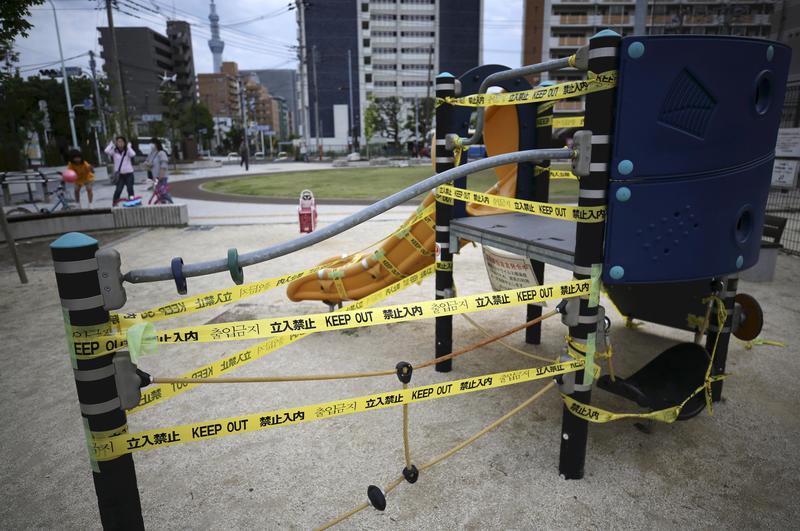
As most schools have been closed amid the impact of the epidemic, children have refrained from going out. This has made it likely many children came into contact with the virus via their parents at home. Yet there were also cases where children were confirmed positive who went to the same school.
At an elementary school run by the City of Toyama, five children -- students of the same class and a sibling -- and a teacher of the class tested positive between April 15 and 25. Although the school had been closed because of the virus, students went to school on April 6, when the inauguration ceremony was held, and between April 8 and 10, when their textbooks were distributed and classes were held.
On the day of school attendance, ample space was placed between desks in the classroom and everyone wore masks, according to the city government of Toyama. The government also said as students and their families mingled among one another outside the school, "It is highly likely the virus was spread outside school," thus ruling out the possibility of a cluster having been formed within the school.
Although the nationwide declaration of the state of emergency was extended, it is expected moves such as resuming school by, for instance, dispersing school attendance to mitigate the risk of transmission, would make headway. If so, what sort of precautions should be taken regarding school life in the days ahead?
At school, there are many facilities where children come and go frequently and share the space: classrooms, the gymnasium, the music class room, and rooms for technical art and home economics.
"It is important that teachers and staff members at a school diligently disinfect the desks, chairs and doorknobs, while seeing to it that children wash their hands and gargle," said Kazue Kawakami, a pediatrician who serves as a school doctor at an elementary school in Tokyo and also is a director at the Tokyo Medical Association.
It is also difficult for pupils in the lower years at school to express in words such symptoms as "a sense of fatigue." Therefore, teachers and parents need to especially pay attention to them and detect any abnormal changes in their expressions and behaviors.
On the other hand, teachers and others must avoid words and actions that would stoke fear among children, such as "If you don't wash your hands, you'll get infected with the coronavirus and die."
"Should teachers and others become too nervous, children will then become frightened of going to school," Kawakami said. "That would be putting the cart before the horse."
Read more from The Japan News at https://japannews.yomiuri.co.jp/