Over the course of lockdown, the UK has experienced bouts of sunny skies interspersed with periods of rainfall.
Following cooler temperatures, the Met Office has announced that the week commencing Monday 22 June will see temperatures steadily increase, with some areas of the UK exceeding “heatwave thresholds” later in the week.
While the warmer weather will likely be enjoyed by many members of the public, for those who suffer from hay fever, it may cause havoc for the allergies.
“It is not good news for hay fever sufferers during this coming week,” the Met Office stated on Twitter.
“Very high levels of grass pollen are expected across most of England and Wales due to the sunny and warm weather.”
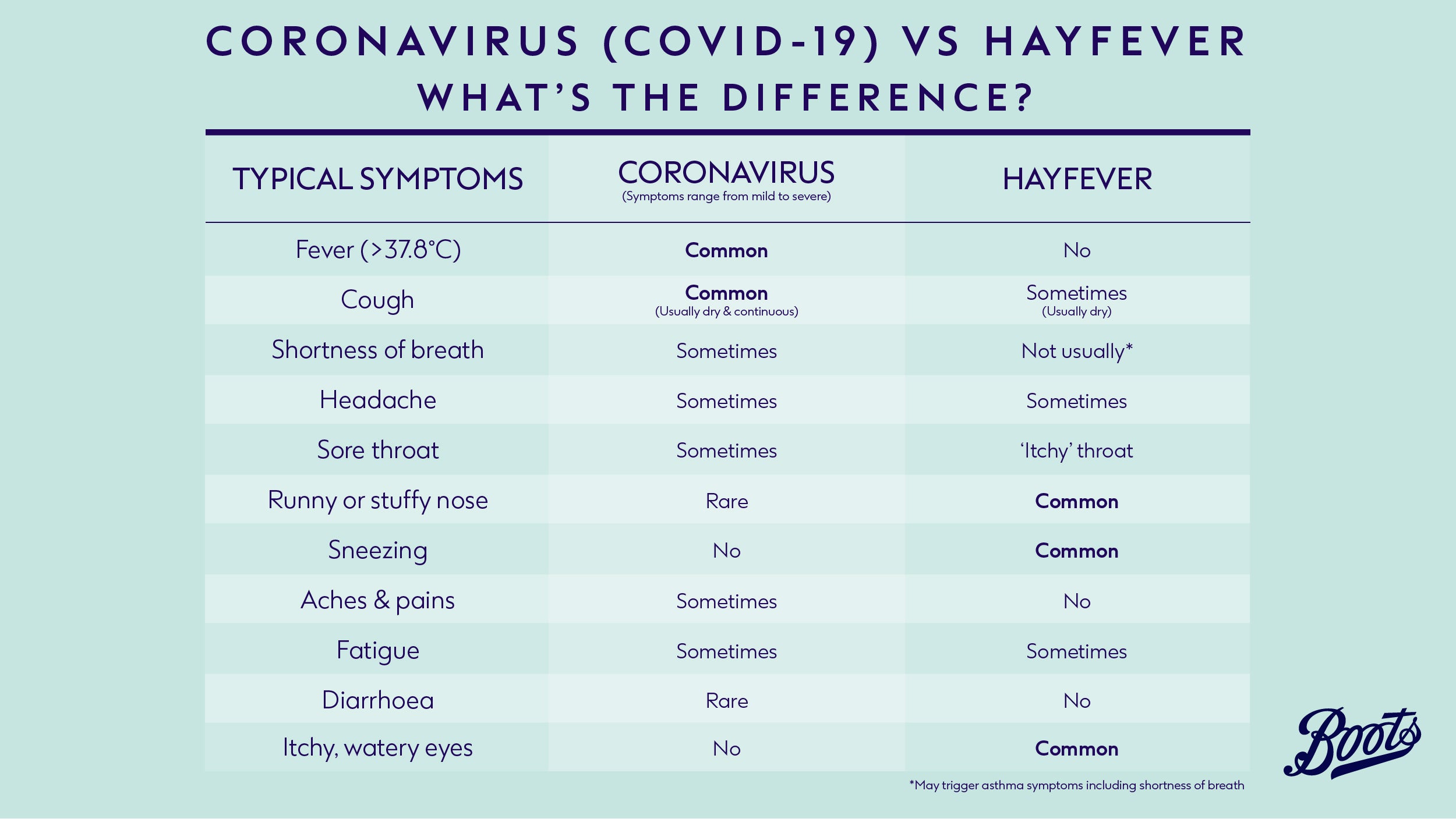
Those who suffer from hay fever may worry that the symptoms they are displaying are signs of contracting Covid-19.
“With the appearance of the sun, we’ve also had a huge surge in springtime pollen, causing many of us to question whether our symptoms are hay fever or coronavirus,” states the London Doctors Clinic.
“If you’re not sure what your symptoms are showing it can be a cause of concern during these unsettling times.”
Here’s how to tell the difference.
What are the main symptoms of hay fever?
The main symptoms of hay fever, the NHS outlines, are:
- Sneezing and coughing
- A runny or blocked nose
- Itchy, red or watery eyes
- Itchy throat, mouth, nose and ears
- Loss of smell
- Pain around your temples and forehead
- Headache
- Earache
- Feeling tired
“Hay fever doesn’t cause a high temperature and most people don’t feel unwell,” says Marc Donovan, chief pharmacist at Boots.
The NHS adds that hay fever symptoms may last for weeks or months.
“In some people, hay fever can trigger allergic asthma, causing a tight chest and difficulty breathing,” Allergy UK states.
If an individual has hay fever and asthma, they may also experience a tight feeling in their chest and shortness of breath, in addition to wheezing and coughing.
How are they different to coronavirus symptoms?
The main symptoms of Covid-19 are a high temperature, a new, continuous cough and loss or changed sense of taste and smell, the NHS outlines.
If you have a high temperature, “this means you feel hot to touch on your chest or back (you do not need to measure your temperature)”, the health service explains.
If you have a new continuous cough, “this means coughing a lot for more than an hour, or three or more coughing episodes in 24 hours”.
“If you usually have a cough, it may be worse than usual,” the NHS adds.
The London Doctors Clinic outlines that other symptoms of the coronavirus may include:
- Tiredness
- Aches and pains
- A sore throat
- Shortness of breath
- Some people have reported diarrhoea, nausea and a runny nose but this is rare
What can you do to ease hay fever symptoms?
You can ease your hay fever symptoms by taking measures such as putting Vaseline around your nostrils to trap pollen, wearing wraparound sunglasses when you’re outside to stop pollen from getting into your eyes and showering and changing your clothes when you come inside to wash the pollen off, the NHS states.
It is also advisable to stay inside and keeping your windows and doors shut as much as possible.
A pharmacist may also be able to advise you on what products may help you, such as antihistamine tablets or nasal sprays.
What should you do if you display signs of Covid-19?
If you experience symptoms that you think may indicate you have the coronavirus, you should use the NHS’s online 111 service to find out what you should do next.
It is important not to leave your home if you have a high temperature or a new, continuous cough.
“To protect others, do not go to places like a GP surgery, pharmacy or hospital. Stay at home,” the NHS says.
The organisation adds that you should only call 111 if you cannot get help through the online service.