What we learned: Wednesday 22 July
That is where I will leave you tonight. Thanks for reading.
Here’s what we learned today:
- Victoria recorded 484 new cases of coronavirus in the past 24 hours, and two more people have died. This set a new daily record for the state, hours before Melburnians will be required to wear face masks in public from midnight. The premier, Daniel Andrews, said the majority of Victorians were still going out despite being sick.
- Australia recorded its largest day of new Covid-19 cases since the pandemic began, in large part due to Victoria’s new cases. The 502 new cases recorded nationally in the 24 hours before 22 July also included 16 new cases in New South Wales, one new case in Queensland, and one in South Australia.
- The NSW premier, Gladys Berejiklian, has said the state “cannot allow” a Black Lives Matter protest scheduled for Tuesday to go ahead, with authorities remaining on “high alert” for clusters spreading into wide-scale outbreaks. Her comments come after the NSW police commissioner, Mick Fuller, vowed to challenge the legality of the march in the supreme court.
- The University of New England could cut up to 210 jobs after announcing it is facing a $25m revenue shortfall in 2020. The vice-chancellor, Brigid Heywood, told Guardian Australia the university’s biggest cost is staff.
- Reports in Queensland suggest there are 210 people who were required to be self-isolating who were not at their quarantine address when police conducted checks.
Updated
According to the ABC, staff and residents at the Ashfield Baptist aged care homes in Sydney’s inner-west are being tested for Covid-19 after a staff member who dined at the Thai Rock restaurant, a known cluster, was diagnosed with coronavirus.
Updated
A reminder from midnight masks are required in Greater Melbourne & Mitchell Shire.
— Greg Hunt (@GregHuntMP) July 22, 2020
Please watch this important message from DCMO Nick Coatsworth.
Wearing a mask is another way you can play your part in stopping the virus and saving lives. https://t.co/MJ5XOCKDLd
In case you missed it earlier, my colleague Paul Karp reported the University of New England could cut up to 210 jobs after announcing it is facing a $25m revenue shortfall in 2020.
The vice-chancellor, Brigid Heywood, told Guardian Australia the university’s biggest cost is staff, so this saving will require cuts in staff costs likely to be in the range of 10-12% but possibly as high as 15%. The university has a headcount of 1,400.
Updated
Qantas’s final Boeing 747 departed Sydney for Los Angeles today after a ceremony at Sydney airport.
My colleagues Carly Earl and Brigid Delaney were given access to the aircraft, and have filed this story (with incredible photos!):
Updated
In some breaking news, the government has announced it will not appeal a federal court decision that declared the 2011 live cattle export ban illegal.
The announcement comes after the National Farmers Federation president, Fiona Simson, issued a plea to Scott Morrison earlier today to “do the right thing, let the decision stand and justice be served”.
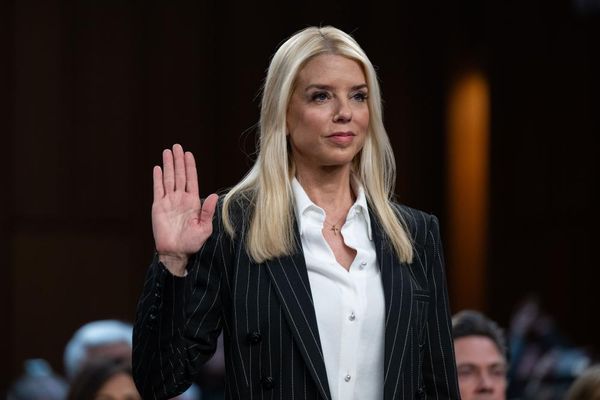
Announcing his government’s decision on Wednesday evening, the attorney general, Christian Porter, said “the Australian government accepts the outcome from the federal court of Australia ... in which orders were made on 29 June 2020”, referring to the legal case of a farming family who challenged the ban, as it stopped them from exporting cattle to Indonesia.
As the prime minister has said, live cattle exporters were dealt with egregiously by the Gillard government. The Coalition government will not jeopardise the outcome they have won in this case.
While the decision raises some important issues of legal principle, they are far outweighed by the very real pain and hurt that the live export ban inflicted on our cattle industry.
This matter has been ongoing since 2014, and the government is pleased that those impacted by the live cattle ban can finally have the issue brought to an end.
The government disagrees with some of the principles as they have been applied by the court. The court’s reasoning in this matter represents a departure from existing legal principles governing both the validity of delegated legislation and the tort of misfeasance in public office.
Updated
In line with incoming face mask requirements for Melbourne later tonight, Uber will require all drivers and UberEats delivery workers to wear a mask.
The rideshare company will send drivers in Melbourne and the Mornington Peninsula a free pack of single-use masks.
The company will use the app drivers run on their phone to verify the driver is wearing a mask (presumably this happens via a camera check).
It comes after Dettol and Uber partnered earlier in the pandemic, so drivers received free sanitisers and cleaning supplies.
Updated
Tighter entry requirements into New South Wales for Victorian residents is stopping some border residents from being able to access their own businesses, according to the mayor of Wodonga, Anna Speedie.
Her comments come as the border restrictions, which required an exemption for those seeking to enter NSW, were recently tightened, to only allow residents from a specified border zone in Wodonga to enter NSW quarantine free.
Speedie complained the tighter restrictions did not take into consideration how many businesses and communities relied on daily movements between the border cities of Albury, in NSW, and Wodonga, in Victoria, especially as Covid-19 numbers in the region had been “incredibly low”.
Speedie told Seven News:
What we’ve seen yet again is implementation without really a plan attached to it. So for example parts of my city of Wodonga are not included in that zone and yet they are very much part of the city. So lots of confusion and lots more difficulty for border residents.
What we’ve seen with these new restrictions is somebody can actually live in Yackandandah (Victoria), so outside of the zone, own a business in Albury, and not be able to get to their own business. So we’ve got some crazy stuff happening here and it’s just made life a hell of a lot harder.
I’ve been fielding phone calls all day, emails all day, just trying to give some clarity to our community. And I guess really point them in a direction to seek some help, if at all possible.
There have been huge delays at border checkpoints into New South Wales as the government tightens up restrictions on entering the state. For more, @mikeamor7 spoke with Wodonga mayor Anna Speedie. https://t.co/AVvaWLotVs #7NEWS pic.twitter.com/RDRiJ2xYXG
— 7NEWS Melbourne (@7NewsMelbourne) July 22, 2020
We’re not seeing much flexibility, we’re asking for the corrections of the zone so at least Wodonga can actually be counted in it, and it’s outlying areas, but it’s really tough here, the queues are long.
It’s harder to get a permit, and people are just not able to get on and do their own business when in actual fact this region has been very safe and has absolutely made sure that the numbers are incredibly low.
Updated
The Victorian Department of Health and Human Services have released more details about today’s numbers, after premier Daniel Andrews announced earlier on Wednesday that the state had recorded 484 new cases.
A DHHS statement said:
The overall total has increased by 450, after 34 cases were reclassified – largely due to duplication.
Within Victoria, 97 of the new cases are linked to outbreaks or complex cases and 387 are under investigation.
Two new deaths have been reported since yesterday. They are both men aged in their 90s that are linked to known outbreaks. To date, 44 people have died from coronavirus in Victoria.
In Victoria at the current time:
- 1,116 cases may indicate community transmission
- 3,408 cases are currently active in Victoria
- 205 cases of coronavirus are in hospital, including 40 in intensive care
- 3,184 people have recovered from the virus
- Of the total cases, 6,204 cases are from metropolitan Melbourne, while 384 are from regional Victoria
- Total cases include 3,432 men and 3,222 women
- More than 1,385,900 tests have been processed
- Total number of healthcare workers: 469, active cases: 187
- -here are currently 383 cases in 45 aged care settings
Cases currently linked to public housing in North Melbourne, Flemington and Carlton are as follows:
- 291 cases are residents of various public housing towers in North Melbourne and Flemington. Investigations are continuing into how these cases are linked.
- 57 cases are residents of various public housing towers in Carlton. Investigations are continuing into if and/or how these cases are linked.
Cases currently linked to key outbreaks are as follows:
- 69 cases have been linked to St Basil’s Homes for the Aged in Fawkner
- 54 cases have been linked to Estia Health in Ardeer
- 37 cases have been linked to Glendale Aged Care facility in Werribee
- 30 cases have been linked to Arcare Aged Care in Craigieburn
- 26 cases have been linked to Estia Health in Heidelberg
- 20 cases have been linked to Baptcare Wyndham Lodge in Werribee
- 18 cases have been linked to Embracia Aged Care Moonee Valley in Avondale Heights
- 61 cases have been linked to Somerville Retail Services in Tottenham
- 47 cases have been linked to JBS in Brooklyn
- 24 cases have been linked to LaManna in Essendon
- 17 cases have been linked to Australian Lamb Company in Colac
There has also been a new outbreak identified in aged care at Kirkbrae Presbyterian Homes in Kilsyth, with two cases in staff and one case in a resident.
People living in metropolitan Melbourne and Mitchell Shire will be required to wear a face covering when leaving home for one of the four reasons. To give people time to purchase or make a face covering, this new rule will be enforced from 11.59pm tonight (Wednesday 22 July).
Updated
South Australia records first Covid-19 cases since Thursday
It was mentioned by the deputy chief medical officer, Michael Kidd, during the national Covid-19 update earlier this afternoon, but South Australia’s coronavirus tally has increased.
According to the Adelaide Advertiser, there are two new cases, but only one is considered active.
It was reported the state’s chief health officer Nicola Spurrier said one case is from Victoria, and one is from overseas.
Kidd earlier said the active case is under investigation.
SA’s last case was recorded on Thursday 16 July.
Updated
Labor’s shadow attorney general, Mark Dreyfus, and financial services spokesman, Stephen Jones, have weighed in on our piece from yesterday revealing that the corporate regulator opposed Josh Frydenberg’s mid-pandemic crackdown on class actions.
Perhaps unsurprisingly, they don’t like what the treasurer has done.
In May, Frydenberg watered down rules that require companies to keep the stock exchange fully informed in a bid to protect them from the “threat of opportunistic class actions for allegedly falling foul of their continuous disclosure obligations if their forecasts are found to be inaccurate”.
But it turns out the Australian Securities and Investments Commission had told Frydenberg the existing regime was not just working well but was extra important during a crisis like the GFC or a pandemic.
Over to Dreyfus and Jones:
The Asic warning shows that, in his rush to undermine class actions, Mr Frydenberg potentially undermined the capacity of Australian companies to raise capital in the middle of a global pandemic.
This is the second time in a week Australia’s corporate regulator has called out the Morrison government for its incompetent and politically driven crackdown on class actions and litigation funds.
Just last week Asic revealed it was not told about the treasurer’s announcement that the Morrison government would regulate litigation funders and plaintiffs in class actions until the night before the announcement – a move that has been consistently opposed by Asic and Treasury.
In other Frydenberg-related news, it also turns out that one of Australia’s leading experts on class actions doesn’t agree with him that such cases have tripled in recent years. We’ve covered that dispute here:
Updated
Asked if there are national guidelines for people who carry out tests to tell people to self-isolate after testing, the deputy chief medical officer, Michael Kidd, says “it depends what’s happening with the epidemic in each state”.
He says in NSW, those in areas of community transmission need to isolate for 14 days regardless of their result.
Kidd says in Victoria, people have been told to isolate at home until they receive their test results, when they will be given further guidance on what to do if their result is negative.
(It’s) very important when we’re dealing with testing that people who have symptoms are staying at home in isolation until we have a result of whether they are Covid-positive or not.
The people who are doing the testing are providing instructions to people as to what they should be doing, telling people about the isolation requirements and of course going to isolation does not mean going to the local pharmacy or to the supermarket on your way home.
It means going straight home and going to isolation.
We cannot afford not to follow the rules. We have to all play our part if we are going to bring the numbers back down in Victoria.
Updated
502 new cases nationally – largest day 'since the pandemic began'
Australia’s deputy chief medical officer, Michael Kidd, is giving a national Covid-19 update.
He confirms today’s number – 502 new cases – is the worst since the pandemic began.
This is the single largest daily number of diagnoses seen of Covid-19 in Australia since the pandemic began. The previous highest reported number of new cases in a single day was 469 cases, almost four months ago on 28 March.
We reported only two cases on 9 June, less than six weeks ago, and this shows how quickly outbreaks can occur and spread.
The breakdown of new infections are:
- 484 in Victoria
- 16 in New South Wales
- One in Queensland
- One in South Australia
There have been two more deaths reported, from Victoria.
Kidd added:
There are approximately 3,500 people currently infected with Covid-19 in our country.
Nationwide there are 214 people with Covid-19 in hospital, which is an additional 31 people hospitalised since yesterday.
There are 205 people in hospital in Victoria. Among those in hospital there are 42 people in intensive care units and this is four more than yesterday – 25 people are reported to be on ventilators, which is three more than yesterday.
Updated
The University of New England has announced that it is facing a $25m revenue shortfall in 2020 and it will conduct a restructure to cut $20m in annual costs.
The vice-chancellor, Brigid Heywood, told Guardian Australia the university’s biggest cost is staff, so this saving will require cuts in staff costs likely to be in the range of 10-12% but possibly as high as 15%.
Heywood would not put a precise estimate on job cuts – but with a current headcount of 1,400, job cuts could be in the order of 140 to 210. Heywood attributed revenue shortfall to the cumulative effect of drought, bushfires and Covid-19.
She said:
We have a very high number of remote and rural students, many of who needed to step away because of those environmental challenges. We’re now seeing a recovery, which is quite significant, that’s very positive, but we’ve had no students in our accommodation for a large part of this year. In our on -campus facilities, we don’t have that community using sport and recreation facilities, which also generate income for us and the region. And then there is the impact of Covid-19 on international student revenue.
There will be cuts to the executive level of the university and promises that the first round of redundancies will be voluntary – before the full restructure is implemented by January 2021 (with no guarantee of no forced redundancies).
Despite the challenges, Heywood is upbeat about education minister Dan Tehan’s university reform package, saying it presents “real opportunities” to help expand the Tamworth campus and get benefits for participation with business in Armidale.
Regional universities get growth in places of 3.5% – higher than fast-growing and established metro unis – which Heywood said “absolutely fits our agenda”.
Updated
I’m going to hand over to Elias Visontay to bring you through the afternoon.
Remember, Melbournians: from midnight, you have to wear a face mask when you go out.
The Australian deputy chief medical officer, Prof Michael Kidd, has given an interview to the Australian Academy of Science. You can watch the full thing below.
Kidd made some comments about reusable face masks, including what you should look for in masks you buy or make.
The optimal masks are the surgical masks or cloth masks with the three layers. We have heard reports that people are being encouraged if they don’t have immediate access to three-ply masks just to cover their face in whatever way they can with bandanas or scarfs or other measures.
(That’s not a report, it’s exactly what the Victorian government is saying. If you don’t have a face mask, just cover your face as best you can.)
You can watch the video of Kidd’s comments on face masks here:
Updated
Would you like some moody photos of Daniel Andrews?


Don’t say I never get you anything, Andrews fans.
Updated
Labor’s housing spokesman, Jason Clare, says homeless people who usually sleep rough but have been housed in hotels during the pandemic should not be sent back out on to the streets.
And he wants national cabinet to address the issue.
Clare says more than 7,000 people who were sleeping rough, or at risk of sleeping rough, in Australia have been given a bed in empty hotel and motel rooms in the past few months, in what he described as one of the “real success stories” of 2020.
The last few months has shown that if we really want to we can significantly reduce the number of Australians sleeping rough.
Now we are at a crossroads. Do we let these Australians just go back to sleeping on the street or in the park or do we provide them with a more permanent roof over their head?
State governments have done some good work here, but we really need a bit of national leadership.
The national cabinet needs to make sure that the homeless Aussies we helped at the height of the pandemic are not thrown back on the street in the next few months.
Clare’s comments come as the Australian Alliance to End Homelessness has written to the prime minister, in a letter supported by 70 organisations, calling on the federal government to make sure homeless Australians are not returned to the street.
Updated
What's the state of play in Victoria?
Quickly summarising the key points in Victoria, for those without the time to read back:
- Victoria recorded 484 new cases of coronavirus in the past 24 hours, the highest one-day total in Australia since the pandemic began.
- Two more people died, bringing the death toll in Victoria to 44. Seventeen people have died in the past seven days, mostly aged-care residents.
- There are now 45 outbreaks in aged-care settings in Victoria.
- There are 3,408 active cases in Victoria now, of which 3,305 are in greater Melbourne and the Mitchell shire.
- Regional Victoria (excluding the Mitchell shire) has 103 active cases. That’s eight more cases in regional Victoria than yesterday.
- Since 1 January there have been 6,739 positive coronavirus cases recorded in Australia and 1,385,964 tests performed.
- There were 24,726 tests conducted in the past 24 hours.
- According to a review of data collected by contact tracers from everyone who tested positive to Covid-19 between 7 and 21 July, nine out of 10 people did not self-isolate when they felt sick, before they went and got a coronavirus test, and one in two did not self-isolate while they were waiting for their test results.
- The Victorian premier, Daniel Andrews, said the failure to self-isolate was driven by insecure work conditions and people not having sick leave. There’s a $1,500 hardship payment for people without sick leave – but at the moment it’s only available to people who have tested positive, not to those self-isolating because they are sick or awaiting a test result.
- As of midnight tonight, greater Melbourne and the Mitchell shire will have been under stage three lockdown for 14 days. The chief health officer, Brett Sutton, said he expected to see daily case numbers of 500 to 600 over the next few days.
- From midnight tonight it will be compulsory for everyone aged 12 and up to wear face masks in Victoria, unless they have a medical reason not to do so. Supermarkets will turn away people not wearing masks.
- Andrews said Victoria was not moving to stage four lockdown at this stage.
Updated
Keep it brief.
Well, no one can say @FionaPattenMLC minces her words. pic.twitter.com/jaaO0pg2W1
— Cait Kelly (@cait__kelly) July 22, 2020
130 in self-isolation in the ACT but no new coronavirus cases
The number of people in self-isolation in the ACT because of the coronavirus outbreak at the Batemans Bay Soldiers Club has risen to 130.
But the state has again recorded no new cases of coronavirus.
People who attended the Batemans Bay Soldiers Club on Monday 13 July, Wednesday 15 July, Thursday 16 July and Friday 17 July are legally required to self-isolate for 14 days from the date of their visit, even if they have since tested negative for Covid-19.
The chief health officer, Dr Kerryn Coleman, said:
We are in a strong position in the ACT at the moment but we all need to work together as a community to ensure it stays that way.
The situation is rapidly evolving so it is important any Canberrans who have been travelling in New South Wales recently to monitor the latest NSW Health advice.
Even for those people who have stayed in the ACT during this holiday period, I remind you to stay vigilant, practice physical distancing and good hygiene practices, and get tested if you have any symptoms.
Ah, a ‘holiday period’. What a quaint, pre-2020 term.
Updated
Sutton has urged people not to vilify people they see not wearing a mask after the mandatory order comes into place at midnight.
You will see some people who were not wearing masks and a number of them are legitimately not able to wear masks so please don’t vilify individuals or don’t make the assumption that they are simply stubborn and refusing to wear masks.
There will be people with medical, behavioural, psychological reasons not to wear a mask. Certainly don’t make an assumption that they should be the subject of your ire.
Updated
There are currently about 100 active cases of coronavirus in regional Victoria. That’s a small percentage of the total number of cases in Victoria, Sutton says.
He says if the numbers show there is a requirement to extend the stage three lockdown beyond greater Melbourne and the Mitchell shire, they will.
Updated
Andrews says they will not make a blanket order on moving aged-care residents who test positive to Covid-19, or are in an environment where there is Covid-19, to a hospital.
I have some experience in a previous life about these matters – moving frail, aged people out of nursing homes is not a good thing to do unless you absolutely have to.
That is just something that those in this sector who know and understand every relevant topic you can’t get the care you need in your home – and it is their home, it is a place where they live. If they can’t get the care they need in their home in the aged-care facility, and they will be moved and there will never be any limiting factor to that.
But when doctors deem that is not necessary, it is very disruptive, it is very traumatic to have people who are frail and older moved to an unfamiliar environment. It is very, very challenging. That is not a value judgment. That is the fact and has been the fact for a long time.
Updated
A reporter asks Andrews how he felt about seeing the record high number of 484 cases today.
It is not about how I feel ... I simply got up and acknowledged that today would be another hard-working day. That is pretty much the story of 2020.

Updated
Andrews is asked if Victoria will have a public sector wage freeze. The state budget has been delayed until later in the year, and Andrews says Victoria has “a very significant revenue writedown”. He says a surplus is not the priority.
The governor of the Reserve Bank has been very clear with us. We need to build and we need to invest and we need to be perhaps more focused on household budgets than we are on immediate repair of the state budget.
We will deliver a budget at the end of the year. The commonwealth treasurer has made it very clear they are borrowing to get to the other side of this. All states and territories, all nations around the world are doing just that. But in terms of the specifics of any measure, all of that will be brought to book when the budget is handed down by the [state] treasurer.
Updated
Andrews says that young children should not be wearing a mask.
The mandatory rule is for kids over the age of 12.
We have seen some reports of people selling masks for toddlers and babies – that is simply not on. Toddlers should not be wearing masks. Kids 12 and up should be. But under that age, they’re not required to, and babies and toddlers should not be wearing masks. Do not buy those products. Do not use those products.
Updated
Andrews says it’s far too early for us to speculate on when masks will no longer be required.
What I can say is they’ll be required so long as they can make a difference. If we can get virus levels to such a low point that they’re deemed not necessarily of any use any further, then we wouldn’t be asking people to wear them.
But I think masks are going to be a feature not just of this second wave, but they will be a feature of preventing a third wave and everything that comes after that. This is not where we wanted to find ourselves, but it is our reality.
He says the Victorian government’s first order of 2m reusable masks will be available soon, and he will make an announcement about where they will be distributed. That could include at GP practices, and he’s already flagged distributing them through public schools.
Updated
There are 45 outbreaks in aged-care settings in Victoria
Andrews says there are now 45 coronavirus outbreaks – some with just single cases – in aged-care settings in Victoria, with 45 positive cases. There are 300 positive cases overall in aged care.
It’s roughly 50-50 in terms of workers and patients. There’ll be charts later today that’ll give you the breakdowns.
On the outbreak at St Basil’s Aged Care Home in Fawkner, Andrews says:
I think there were so many staff that had tested positive, all were close contacts, that there needed to be a supplementary workforce put in.
He says he spoke to the prime minister about the issue last night, because it’s a commonwealth-funded sector.
He says a number of those who were going to work while sick or awaiting test results were aged care workers.
Let’s not judge them. Let’s try and work out what is driving it. I think the financial hardship and insecurity of work is a really big factor, and that is why the payment and perhaps some tweaks, some additional announcements I will make very soon, will be an important part of that.
Updated
Andrews is asked if they will start doing sector-wide asymptomatic testing of high-risk workplaces, like the meat processing sector.
He said not at this stage, because it would take up a lot of laboratory capacity that could otherwise be directed toward symptomatic cases. But he said that may change later.
And if that was deemed an appropriate measure, we wouldn’t hesitate to do it again. I don’t think it would be industry-wide, but it might be an entire workforce. It’s something that might be needed in the future.
Andrews was asked if he may consider a hard lockdown of certain postcodes. He said he will do what the health advice tells him to do, when it tells him to do it, so the question is hypothetical.
Ultimately, when the data tells us we need to go further, we will. Until then, speculating about these things doesn’t serve any real purpose. The most important thing for every single Victorian – follow those rules, only go out for the four permitted reasons, and only when you need to.
If you’re sick, get tested quickly. And while you’re waiting for a result, wait for the result at home.
He said the data analysis from the past two weeks shows that there are 3.1 exposure days per positive coronavirus case.
More than three days of high infectivity before you go into iso in your house .... And then, of course, perhaps the worst of all those statistics — more than half of those who have taken a test and are waiting for a result are not waiting for that result at home. They’re going about their business.
We can’t have that. We’ve got to drive that number much, much higher so that we’ve got a percentage in the 90s where people are waiting at home for the results from the lab.
Updated
Andrews said he was asked by the big supermarkets to tell people that they will be turned away from tomorrow if they are not wearing a face mask or face covering.
For the safety of their staff, for the safety of other customers, and to keep stores open, so that there’s no issue about supplies of food or no greater issues than we might otherwise expect, you need to wear a mask if you’re going to the supermarket.
And you may well be turned away if you turn up at your Coles or Woolies or IGA and you don’t have a mask on. It’s a small thing. Our nurses and doctors wear coverings from head to toe. It is not too much to ask people to wear a mask in order that they don’t find themselves in hospital or contribute to somebody else finishing up in hospital.
Andrews was asked if he is considering the release of low-risk prisoners, now that six prisons are locked down due to a guard testing positive to Covid-19.
Reporter: How concerned are you about people in detention in lockdown?
Andrews:
I was asked this the other day, and my answer hasn’t changed – that is not a focus of our attention at the moment.
I think the corrections commissioner has made some comments this morning about the preventative, abundance of caution lockdown of a number of correctional facilities – I think six in total.
I’ve let her speak to the details of that. This is a challenging environment. We’ve always known there was the potential for somebody connected with this unique environment to be positive. But that’s a, as I’m advised, purely precautionary measure. I think the corrections commissioner’s doing a good job there and is being clear about why she’s done what she’s done today. If there’s any further updates in those settings, I’d leave it to her to update you.
Updated
That $1,500 hardship payment is only available at this stage to people who have tested positive to coronavirus.
The figures Andrews has been focusing on are all pre-test result.
He said they are “having a close look at whether there might be additional support for that waiting period – once you’ve been tested and you’re waiting for the outcome of the test. I’ll have more to say about that too”.
Updated
Sutton said there is no guarantee that a tougher lockdown could reduce the number of cases, because it may not reduce the key drivers of transmission.
He said “everything is under consideration”, but that there was no guarantee that a New Zealand-style lockdown, which people have suggested would be the next logical step-up in restrictions, would work in Victoria.
We have to understand what the dynamics of transmission are in Victoria at this point in time. It may well be that it’s an awful impost on the economy and on people’s lives with no material benefit if we go to a New Zealand-style lockdown. We have to understand where the transmission’s occurring and what measures will be most effective in reducing it.
He said New Zealand didn’t have significant community transmission when it did its four-week lockdown, back in March and April.
Updated
Sutton said they are looking at ways to minimise the number of people working in high-risk settings.
There are some industries, some settings, where it’s practically impossible, but we want it minimised to the fullest extent possible. As you know, we’ve worked with the commonwealth on aged care and really minimising the movement of people between facilities.
He said new cases in recent weeks were mostly contracted at work, or in aged care settings.
We do know that there’s a significant reduction in household-to-household transmission. That’s absolutely a result of the restrictions that have been in place.
Updated
Sutton said the aim was for a contact tracer to phone people who test positive within 24 hours of the positive test result being received.
But he said they were already notified straight away by the pathology provider, so should already know their test result, self-isolate and inform their workplace and close contacts.
Updated
Sutton has asked Victorians to answer private number calls, because it could be from the health department.
If you have had a coronavirus test and test negative, you get a text. If you test positive, you get a call from a private number. For contact tracing to happen quickly, you need to pick up the phone.
He said there was “no specific need to bolster” Victoria’s contact tracing team.
It is huge – over 2,000. The bottleneck is not in outbound calls. We could get through 1,000 cases if we had 1,000 cases today. Our Health Direct staff who are now onboard are numbering in their hundreds. They can each do five to 10 interviews. So we can do a lot of interviews. The complexity is in all of these settings where outbreaks occur and managing all of the difficult circumstances of those outbreak settings. So that’s an ongoing challenge. You can throw people at it, and we’ve got people working on it, but the real challenge is not to have those outbreaks occur in the first place.
And the key element there is to isolate at the first sign or symptoms of coronavirus. For example, in aged care, we’ve got as many staff who’ve become positive with coronavirus as residents – that is a huge challenge, because everyone of those staff members is potentially passing it on to residents, and the residents are the most vulnerable, and that leads to the outbreaks that we’re seeing.
Updated
A journalist asks Sutton if people are not self-isolating after they get their test because they are not told to do so. They point to a DHHS form from 17 May, which says if you are feeling well and don’t have any coronavirus symptoms they can go to work.
Sutton said it should not be adding to confusion, because the rule has always been if you’re sick, and got tested because you are sick, you should self-isolate.
There are some very specific settings where people without symptoms are getting tested. But you are 40, 50, 60 times more likely to have coronavirus whe nyou’re getting a test with symptoms.
Daily coronavirus cases in Victoria could be above 500 in the coming days, says chief health officer
Chief health officer Brett Sutton said Victoria is “at a really, really challenging phase of the pandemic”.
One of the reasons for that is numbers fatigue.
We’re all a bit inured to the numbers. If we had a number close to 500 in March or April, we would have been staying in our bedrooms and not leaving the house.
Sutton said the R-number (the average number of people each infectious person spreads it to) has come down from 1.5 to 1.2. To see a reduction in numbers, the R-number needs to be below one.
Other models show that it might be even lower. My suspicion is it’s still above one.
We can’t necessarily expect numbers to go down. I think that will be an even greater challenge in days ahead. That means that we’re going to look at 500-600 cases per day. I absolutely don’t want us to go there. So we have to reinforce the things that we know will make a difference. And that is the very simple principles of isolation and quarantine.
Sutton said people needed to get tested at the first sign of symptoms.
You’re actually most infectious in the first couple of days of your illness. So the very beginning of that runny nose or sore throat or cough or low-grade fever is when you’re most infectious. You’re probably not that infectious after seven days. So getting tested very early on and isolating right at the beginning is a really key action.
And I think they’re things that are not being done so well through this wave as for our first wave. So I think we’re in pretty tough times if we’re going to turn this around, but we do know what works, and I know that Victorians have stepped up in so many ways, including all the masks that I see now, including the fact that a lot of mobility data suggests that people are absolutely staying home. But there are lots of people who are still moving about and the most critical ones to reach are those who’ve got those early symptoms who need to be at home getting that test and waiting for that result.
To date about 1,200 have applied for the $1,500 hardship payment.
Andrews said they are not introducing a specific penalty for people who are sick and don’t get tested or stay home. (There are already penalties for breaching a self-isolation order, if you’re told to self-isolate.)
(Also how would you police fining people for being sick?)
Andrews said it is “about understanding – not blaming, but understanding – why people are making that choice”.
There’ll always be a percentage who do it for unknown reasons. And we’ve seen a few cases like that recently. But to the extent that economic factors – insecure work, financial pressure, and the fact that if you don’t work the shift, you don’t get paid for the shift, ‘cause there’s no sick leave – to the extent that that’s driving it, I think the payment to the person, rather than fine the person, will be much more effective.
Updated
Andrews says he is not introducing any further restrictions at this stage.
There’s no announcements to be made today about any changes to the rules.
That seems to be because the biggest place of transmisison in recent weeks – 80% of new cases – is the workplace.
If we were to move to a further stage of restrictions where other movement was limited ... where you might be able to go shopping, how many people might be able to leave the house at any one time – just to give you a couple of examples – will that stop people going to work that are going to work now? No.
So the key factor here: we can’t rule those measures out but, at this stage, the key factor here that’s driving the numbers and driving our challenge is people that are sick but not getting tested. They ultimately do get tested, many of them. But in those intervening days, they are going about their business with symptoms at the height of their infectivity, giving it to others.
Updated
Andrews said they are doing some further analysis on the two weeks of case data to figure out what industries are seeing the highest rates of people working while sick.
He said they have seen outbreaks and heard these stories in meatworks and freight, logistics and supply chains-style businesses.
He said the data is “a commentary on insecure work” and reckoning with that will be part of ensuring people stay home when sick.
It’s probably better to focus on the type of worker rather than the work they’re doing. It won’t be exclusive, but there is a large proportion of these people who are making these choices because, in their judgment, they’ll look at their bank balance, they’ll look at the fact that if they don’t work the shift, they won’t get paid for the shift, they don’t have sick leave.
This is a commentary on insecure work. This is a commentary on this as a feature of the Victorian economy and our national economy. That debate, though, can wait. We can have that debate – it’s a very important debate to have – we can have that debate another time. In the meantime, though, trying to hone in on the problem, understand the problem, and then put in place specific measures to deal with it.
He said wearing a face mask does not mean you can work or go out when sick, or when waiting for a test result.
If you’re sick, whether you’ve got a mask on, or two masks, or any other PPE, you should not be out shopping. You should not be going to work. You should be doing the only thing that you can and must do, and that is going and getting tested.
He said not everyone who doesn’t self-isolate when sick or waiting for a test is driven by insecure work (a man reportedly drove to East Gippsland to fish while waiting for a test result this week), but many are.
Updated
We’re into questions now but I just want to flag that a lot of people were supposing Victoria would have further restrictions imposed as a result of the record high number of daily cases today, and that hasn’t been announced.
Andrews said that people who do not have access to sick leave can get the one-off $1,500 support payment by calling 1800 675 398.
He said that was offered because they knew the lack of sick leave was one reason people went to work when sick, and said the Victorian government may need to offer further support later. He’s not announcing further support at this stage.
If your bank balance is driving you to make bad decisions, then there’s that $1,500 payment there – we will make sure that they are processed as fast as they can be so that people no longer have to make those sorts of choices.
But we can’t have, any longer, nine out of 10 people taking too long between when they first feel sick and when they get tested. And we certainly cannot have one in two people who are waiting for a test result simply going about their business as if they didn’t have symptoms, as if they weren’t waiting for a test result, as if this wasn’t a global pandemic.
That will continue to see more workplaces with positive cases. More businesses shutdown. Hundreds and thousands of people isolated at home either as positive cases or close contacts. Ultimately, there’s no reason to be going to work when you’re sick. It’s simply unacceptable. If you have symptoms, the only thing you can and must do is get tested immediately.
Updated
Majority of Victorians are not self-isolating when sick or when waiting for a test, Andrews said.
Andrews foreshadowed earlier that he will set out some “further behaviour change that people are going to have to start exhibiting”.
He said that nine in 10 of all people who have tested positive to coronavirus in Victoria between 7 July and 21 July – that’s 3,400 people – “did not isolate between when they first felt sick and when they went to get a test”.
Now, that’s an interesting measure in that people have felt sick, they’ve got symptoms, and they’ve kept going shopping. They’ve kept going to work. They’ve kept doing. Let’s assume everybody followed the rules and they only went out for the four permitted reasons, which of course some may not have, but let’s assume that.
That means people have felt unwell and just gone about their business. They have gone out shopping. They have gone to work. They have been at the height of their infectivity. And they have just continued on as usual.
He added:
The only thing you can do when you feel sick – the one and only thing that you can and must do when you feel sick – is to go and get tested. Nothing else is acceptable. You must go and get tested when you feel sick. That is the only thing that you can and must do. And if people don’t do that, then we will continue to see numbers increase. I’m being as frank, as blunt, as clear as I can.
Because this message is central to the overall success – or otherwise – of the strategy and the restrictions that we have in place.
People are also required to self-isolate after they have got a test, while they are waiting for their result.
Andrews said that 53% of people who tested positive between 7 and 21 July in Victoria (2,056 of 3,810 cases) did not isolate. So, one in two.
That is, did not stay at home and have no contact with anybody else between when they had their test taken and when they got the results of that test.
Fifty-three per cent of people continuing to go shopping, continuing to go to work, continuing to do all sorts of things even though they’ve got symptoms, they feel sick, sick enough to get a test, and then, somehow, not willing to stay at home and wait – on average – a couple of days, and sometimes sooner, to get the results of that test.
Unless we drive down the time between first illness, first sense of symptoms – in other words, how quickly people then get tested – unless we make that much faster than it is now, and people isolate in that intervening period, and unless we have people who get tested staying at home and isolating until they get their results, then we will not see these numbers come down. They will continue to go up and up.
And a six-week shutdown will not be for six weeks. It will run for much longer than that.
Updated
Two more people have died after testing positive to Covid-19 in Victoria
Two more people, both living in aged care homes, have passed away overnight after testing positive to coronavirus. That brings the death toll in Victoria to 44.
The two most recent deaths are both men in their 90s.
Victorian premier Daniel Andrews said:
I will again take this opportunity to send our best wishes to their loved ones, their friends and family. This will be a very challenging, very sad time for them, and we send our love and best wishes to them.
There are 205 Victorians in hospital, and 40 in intensive care.
Updated
Victoria sets a new record with 484 coronavirus cases
Victoria has recorded a record high number of coronavirus cases, with 484 recorded in the past 24 hours.
It’s higher than the previous record for the number of cases reported by one state in a single day. That was 428 cases, set by Victoria on Friday.
That means Victoria has recorded more cases in one day than the biggest national daily case total recorded to date.
The national peak was on 28 March, when 469 cases were recorded nationally. That was the peak of the first wave. We’re now on the upward curve of the second wave.
We’re now at 501 today, on Victoria, NSW and Queensland alone.
Victorian authorities had previously said we could expect the lockdown in greater Melbourne and the Mitchell Shire to take effect after two weeks. As of midnight tonight, it will have been 14 days.
Updated
Wearing a face covering will already be mandatory, from midnight tonight, for everyone in Melbourne and the Mitchell Shire who doesn’t fall into an exemption category. There’s a $200 fine.
BREAKING:
— Dougal Beatty (@DougalBeatty) July 22, 2020
Woolworths has updated its stance on face coverings for Melbourne.
From tomorrow, "we expect customers entering our stores in Melbourne and Mitchell Shire to wear a face-covering as per the Victorian Government's directive."@9NewsMelb
But there are concerns that those least advantaged, who may not be able to afford a mask, will be even more severely impacted because of this rule.
Updated
No end in sight to coronavirus crisis, says APRA
The chairman of the prudential regulator is giving a lunchtime speech to a Trans-Tasman Business Circle webinar today, warning there is no end in sight to the coronavirus crisis.
Wayne Byres said that with repayments paused on almost $270bn of loans on issue – about 10% of the nation’s borrowings – “ceasing all deferrals in October would not be helpful”.
Equally, just rolling over deferrals without any exit strategy is unlikely to be in borrowers’ or banks’ interests.
He urged banks to use the extra money the Australian Prudential Regulation Authority has forced banks to sock away for the bad times (which, with the economy in recession, are definitely here).
Apra has allowed banks to extend the repayment pause until March this year. Byrnes said:
At the same time, we have made clear that banks should only offer further repayment deferrals in cases where they have some degree of confidence the borrower could return their loan to performing status.
We also granted a window of time and an incentive, via another concessionary capital treatment available for a limited period, for banks to restructure borrowers’ debts with a view to putting them on a sustainable financial footing. This second concession is designed to encourage banks to work with their customers now, rather than simply defer again and hope for the best.
All this is code for foreclosing on houses and businesses, not that Byres made it clear that forcing people to sell their homes or close the doors of their enterprise was what he was talking about.
Meanwhile, preliminary retail data for June showed spending rose 2.4%, driven up by reopened cafes and restaurants plus spending on clothes. (Cafes and restaurants have since gone back to takeaway only in Victoria.)
Economists say the picture is grimmer after October, when the government will reduce jobkeeper and jobseeker payments.
BIS Oxford chief economist Sarah Hunter said:
The government’s announcement yesterday of a tapering of the jobkeeper and jobseeker schemes will weigh on household income from October onwards, particularly if some of the current recipients of jobkeeper are ultimately retrenched once the scheme comes to an end.
And the latest payrolls data and information from the RBA suggests that the indirect impact of the pandemic on the broader economy is now starting to appear, with job losses materialising in sectors such as construction and professional services.
Callam Pickering, Asia Pacific economist for jobs site Indeed, said Victoria’s second lockdown would also hamper recovery.
Victoria accounts for around one-quarter of retail spending and another six-week lockdown will be devastating for retailers across the state.
At the very least it sets the Victorian recovery at least three months behind the other states and that’s assuming that the six-week lockdown won’t be extended further.
Updated
This is an interesting point, although surely the run on supermarkets is caused by the number not the figures being tweeted by journalists before they are officially confirmed. It just starts slightly earlier than it otherwise might.
Concerns in Vic Govt that everytime the unofficial #CovidVic number is tweeted early there is a run on supermarkets etc.
— PatriciaKarvelas (@PatsKarvelas) July 22, 2020
Just a reminder, we’re expecting to hear the Victorian numbers from Daniel Andrews in about 20 minutes.
Journalists are not allowed to travel into NSW under the new tighter restrictions that came into effect at midnight last night, according to Albury-Wodonga based Prime7 journalist Josh Ribarich.
He said journalists are not classified as critical workers so are not able to travel outside the border bubble.
Journalists are NOT classified as critical workers so we are not allowed to travel outside the new #border bubble in Victoria which is roughly a few kilometres from the Murray River... our coverage area is mostly in Vic... @GladysB
— Josh Ribarich (@josh_ribarich) July 21, 2020
@PRIME7Border
Queensland has recorded one new case of coronavirus
Queensland premier Annastacia Palaszczuk says one new coronavirus case was recorded in the state in the past 24-hours, in an ADF member who was in hotel quarantine.
There are three active cases in the state.
Palaszczuk added:
I can also report that the test results of the 18 crew on the cargo ship have all returned a negative result. We have the one person who was positive who was currently in hospital and isolated. We have no concerns about that person. That is actually really good news to hear that the second round of tests of all of the crew on that cargo ship are off the Sunshine Coast have actually come back negative. So that is great news
From the sports grants inquiry this morning:
Incredible scenes... head of public service says "it is not part of the ministerial standards" to establish if McKenzie acted lawfully by giving $100m of grants.
— Paul Karp (@Paul_Karp) July 22, 2020
Appears to think acting lawfully =/= "having legal authority"#auspol #sportsrorts pic.twitter.com/8uH9iKjDoK
Back to the NSW press conference, Berejiklian was asked if she would travel to the NSW-Victorian border to see how it’s working and listen to locals, following repeated concerns raised by local councils including the councils of Albury and Wodonga.
She said her government has “kept our ear to the ground” on the border.
I am in contact with them on a daily basis. We appreciate the frustration, but please also know that when we closed the border initially there was still in excess of 200,000 permits given, and unfortunately, as you see with the situation in Victoria, we don’t have any assurance that there is no community transmission in regional Victoria. That puts all of New South Wales at risk.
She said the Victorian premier Daniel Andrews supports NSW’s position.
It would have been far easier for us to do what Queensland did to us. Could have easily said, that is a hard border and that is it, like what Queensland did. Those communities on the NSW-Victoria border have lived as one for a century. We understand that, and that is why we are going to so much effort to support them and I appreciate there is always a fine line, it is never perfection.
But the new system has only just come in... if we need to tweak anything, we will.
On the Queensland-NSW border, Berejiklian said she got the promised letter from Queensland premier Annastacia Palaszczuk suggesting the border be moved south, into NSW on the other side of Tweed Heads, at 7pm on Monday.
I wrote back yesterday suggesting that we either maintain the status quo, I am happy to move the border north, but I will certainly not subject New South Wales residents to further restrictions. The Queensland Border is a decision for the Queensland government, so it is for them to manage. Suffice to say I did not support her suggestion that was put to me.
This is very bad.
The total number of aged care homes residents infected with coronavirus is 3.5 times higher today than it was at the start of the month. 251 have now been infected since the pandemic began.
— casey briggs (@CaseyBriggs) July 21, 2020
This is a looming disaster.
The fatality rate of infected residents before July was 44%
Chant said NSW health authorities “encourage the use of masks where social distancing is not available”.
She said that if people have cold or flu symptoms they should not go out and about, but should instead self-isolate and get a test.
We also really want to reinforce the messages about social distancing and hand hygiene and we see masks as the fourth prong of a strategy which is really around where you can’t socially distance, use masks to prevent transmission.
Chant clarified that only those who got a coronavirus test because they are a possible contact of an identified case are required to self-isolate for 14 days even if they test negative.
People who get a coronavirus test because they have flu-like symptoms, if they’re not identified as at risk of exposure, only have to self-isolate until they get their test results. (Obviously if the test is positive, you have to keep self-isolating).
Chant said many of the cases identified in connection to the NSW clusters were younger people who have “a very mild course of illness,” often just a headache and a runny nose.
Minimal. They wouldn’t describe themselves as having symptoms. They would describe themselves as well. They are out and about socialising.
That’s why she has called for anyone who attended a place identified as being a potential place of transmission to get tested and self-isolate for 14-days, even if they have no symptoms.
NSW residents urged to limit non-essential travel
Chant asked people to limit non-essential travel for the next few weeks.
I would prefer that we reduce the number of contacts [in a home gathering] to 10 because that is an environment where transmission is more likely to occur when we are in a relaxed environment, where our guard is down, where we are less likely to social distance.
She said health authorities were trying to “put up fences and contain” the outbreaks in southwest Sydney.
As you can see, when we have a case we then identify, we hope to get to them before they have been infectious and out and about. Often we are still getting cases where people may have been for a few days or a day infectious and then we have got another ring of contacts. We are trying to mop up all of the community transmission.
Obviously, the risk of community transmission through undiagnosed chains of infection is highest in southwestern Sydney, in western Sydney, but, as the premier said, we can’t be complacent. With only know what we know. Clearly, we have got to be vigilant in other parts of the state where there may have been introductions into these communities, be it from Sydney or be it from Victoria.
Asked if people from regional NSW should avoid visiting Sydney, or Sydney people avoid visiting the regions, Berejiklian said “we know it doesn’t matter where you live”.
The virus can transfer no matter where you are. Of course we worry about it transferring to the regions, but equally people from the regions coming back to Sydney have been bringing the virus back. So there is no zone which is safe.
All of us, my strongest message is, that all of us are high alert. All of us should be monitoring our behaviour. All of us should consider where we travel. All of us should consider avoiding crowds and those high-risk activities, especially over the weekend.
She said that people should take “extra caution” if they know the coronavirus has been reported in their local community, but added that “eight million of us in NSW have to be on high alert”.
The virus can come to your community. You can unintentionally give it to another community.
Berejiklian said businesses in NSW have had “ample time to get your house in order”.
We have a policy in New South Wales where we want to, of course, manage the virus, but we also want to keep jobs going and that balance can only be met if everybody does the right thing, including individuals and including businesses and my expectation is if you don’t do the right thing from Friday, you will be found out. You will be fined. Worse than that, if you breach again, you will be shut down.
She said that we knew what measures and restrictions helped reduce the spread of the coronavirus, but “the missing link is our behaviour”.
She said businesses should “expect that the next customer that walks into their premises could have the virus”.
And if you have got good CovidSafe plans, the chance of that transmitting is extremely low compared to if you are not doing the right thing. You are likely to have the virus spread toe very single person in that venue if you don’t have a CovidSafe plan. That is fact.
We certainly don’t want to see that happen because we don’t want have to impose further restrictions or further measure that could jeopardise, not just our ability to contain the virus, but our ability to keep people in jobs and to keep communities functioning and to keep all of us having a reasonable life during the pandemic.
Updated
So the main clusters in NSW are:
- Crossroads Hotel cluster - 53 cases.
- Thai Rock restaurant cluster - 37 cases.
- Batemans Bay Soldiers Club - 8 cases.
NSW chief health officer Dr Kerry Chant has run through the new cases.
She said there were 18,465 coronavirus tests conducted in NSW yesterday, and 91 people with coronavirus are currently be treated in hospital. Two people are in intensive care, and one is on life support.
The new cases are:
- Three people who are close contacts of cases from the Crossroads Hotel cluster.
- 11 people associated with the Thai Rock restaurant cluster, including a man in his 60s from the Hunter region.
- One person in Western Sydney who is a close contact of a previously reported case that was not associated with a known cluster.
- One in hotel quarantine.
There are no additional cases connected to the Batemans Bay soldiers club, and the source of that infection is still being investigated.
Chant said:
I would like to thank the Bateman’s Bay community for turning out in high numbers. So that action of that community gives many good assurance that we are not missing any undetected community transmission. The results of that testing will flow through today and in coming days and that will give me a high degree of assurance that theBateman’s Bay community, we don’t have community transmission, but we are very watchful there.
Berejiklian said the next few weeks are “the most critical in New South Wales since the lockdown earlier in March and April”.
This is the most critical time for our state. If we manage get on top of the community transmission at this stage, we have a much better chance of continuing the move forward in a positive way, but the next few weeks are critical.
She added:
It is up to all of us to accept it and even since announcing the extra advice on venues coming into effect on Friday, I am still not seeing the level of compliance I want to see from patrons and also from the businesses themselves.
But that will change on Friday. Any business that doesn’t do the right thing, will have the book thrown at them. If we don’t find them ourselves, we expect members of the community to let us know or staff members for that matter. I know there are many staff who are concerned about what happens in their workplace. Let us know. We will come down hard on those people not doing the right thing because there is so much at stake and so much on the line for the next few weeks.
Berejiklian thanked everyone who had come forward to get a coronavirus test, saying that by doing so they had allowed health officials to identify new cases of community transmission, including in regional areas.
She also repeated comments made earlier this morning, urging anyone who got tested because they believed they may have been exposed to the virus to self-isolate for 14-days.
So even if you have tested negative initially, but you have been exposed, you have been in a venue where someone with the virus has been. If you have been directly exposed and the health advice is for you to stay home for 14 days, please stay home for 14 days. That is why our hotel quarantine system has worked so well because you test people early on, they may not have the virus, you test them on Day 11 and they have the virus.
It is so important for that 14 days at home. If you have been asked to do this, please make sure you fulfil that. Otherwise you will be compromising the health of your family, of your friends, your loved ones and, more broadly, the wider community.
In a message that appeared geared to younger people, or as Berejiklian said “people who are more inclined to socialise than others,” she said:
Know that even though you may not feel the virus can impact you, although it can, you could be taking it home and giving it to a loved one and unintentionally causing grief on so many levels.
Police should 'throw the book' at anyone breaching coronavirus restrictions, says Berejiklian
Berejiklian has urged police to “throw the book” at anyone in NSW who is not following coronavirus restrictions this weekend.
She said the state remains on high alert, and everyone should consider their behaviour this weekend.
Think about the number of people you are having into your home. We know from the health advice, we know from what has happened elsewhere, the highest risk activities are those inside your on home or those inside a confined space such as a hospitality venue.
That is why the restrictions from provide address those issues. The businesses involved have had a whole week to get themselves ready, so there is absolutely no excuse.
My conversations with the police commissioner and with the regulators is: please make sure you throw the book at everybody who is not doing the right thing. Everyone has had ample notice. That includes patrons, as well as the businesses themselves.
NSW has recorded 16 new cases of coronavirus
The new cases were reported in the 24 hours to 8pm.
One of the cases was in hotel quarantine, and premier Gladys Berejiklian says the balance were from previously identified cases.
16 new cases of #COVID19 have been diagnosed in NSW between 8pm on 20 July and 8pm on 21 July.
— NSW Health (@NSWHealth) July 22, 2020
For the latest list of COVID-19 locations, visit: https://t.co/6PUOQ3J3tO pic.twitter.com/hXBMSqnXKP
Updated
Victorian premier Daniel Andrews and health minister Jenny Mikakos will give a press conference at 12.30pm.
As previously mentioned, we’ve heard the numbers today are not good.
Just before we go to the NSW press conference, a reminder that you can follow our ongoing global coverage here.
US blacklists subsidiaries of Covid-19 test provider Beijing Genomics Institute
You may remember that Australia has taken hold of an extraordinary amount Covid-19 tests from a major Chinese genomics company, the Beijing Genomics Institute (BGI).
A BGI subsidiary, Forensic Genomics International, has previously been named by the Australian Strategic Policy Institute as having links to a massive “DNA dragnet” operation targeting the persecuted Uighur minority. The company has stridently denied participating in any such program.
On Monday, the US government announced it was blacklisting two BGI subsidiaries, Xinjiang Silk Road BGI and Beijing Liuhe BGI, meaning they will face new restrictions on accessing US technology and commodities.
The department of commerce said it was taking action against the subsidiaries in connection with the conducting of “genetic analyses used to further the repression of Uyghurs and other Muslim minorities” in Xinjiang.
Australia is taking 10m BGI Covid-19 tests from BGI. The tests were procured by mining magnate Andrew “Twiggy” Forrest and his philanthropic arm the Minderoo Foundation, acting on behalf of the Australian government at the beginning of the pandemic. Minderoo and Forrest made no profit from the deal. The two blacklisted BGI subsidiaries have no involvement in providing the Covid-19 tests to Australia.
In a statement to the New York Times, BGI said it was “puzzled” by the US government decision.
It said it was unclear how either subsidiary could have had been involved in the alleged conduct, because one had conducted no business since being established in 2016, and the other provided commercial gene synthesis for scientists conducting basic and unrelated research.
“BGI Group does not condone and would never be involved in any human rights abuses,” it said in a statement.
Updated
David Morris, the chief executive of the Environmental Defenders Office, said this morning’s federal court judgement dismissing a challenge to the environment minister’s decision not to protect Aboriginal heritage sites within the Shenhua mine footprint was “really disappointing” for the Gomeroi people.
While we haven’t had an opportunity to read it yet, the outcome is another example of the gross inadequacy of cult heritage protection legislation in Australia.
On an extremely related note, the Australian Sports Foundation says that 16,000 community sports clubs in Australia — about one in four community sports clubs nationwide — face collapse because coronavirus restrictions have disrupted their seasons.
Chief executive Patrick Walker said community sport clubs have lost an estimated $1.6bn since the first wave of shutdowns in March.
More on this story from Mike Hytner, here:
Updated
Questioning in the sports grants hearing has established Phil Gaetjens did not consider whether Bridget McKenzie had legal authority to give sports grants.
Labor senator Katy Gallagher noted the ministerial standards require ministers to act lawfully; while Greens senator Janet Rice also noted ministers can’t encourage a breach of law by others — so it should have been considered in the inquiry.
Gaetjens said he looked at the program guidelines which said the minister was the final decision-maker, but he did not consider the legal status of decisions because the prime minister had asked the attorney general to consider that point.
It was separately addressed. I saw no need for a non-lawyer to provide advice on that issue.
Gaetjens said he didn’t have a view on the ANAO’s finding that it was “not evident” what McKenzie’s authority was — because it was “not in my purview or competence to answer that”.
Earlier much of the focus was on an analysis PMC conducted of the outcomes of the community sport infrastructure grant program.
It found:
- 32% of proposed projects in marginal or target seats were ultimately approved, compared with 36% in other electorates
- 180 marginal or targeted projects were recommended by Sport Australia, and 229 were ultimately approved by the minister, representing a 27% increase, but the number of projects funded in non-marginal non-target seats also increased from 325 to 451, or 39%.
Stephanie Foster, the PMC deputy secretary of governance, said this analysis was the basis of the conclusion that PMC “couldn’t find the evidence” that McKenzie was unduly impacted by a seat’s marginal or targeted status.
When Labor senators suggested the analysis only looked at successful but not unsuccessful applicants and he had not considered the “process” by which projects were selected.
Gaetjens defended the exercise:
I will not accept that the analysis was partial or limited. It is arithmetic and mathematics – not process – that is shown in these outcomes.
Labor senator, Katy Gallagher, noted the PMC analysis looked at the number of recipients, not the amount of money given out, suggesting this was the basis of the difference of opinion with the ANAO.
Updated
An update on press conferences: the NSW premier Gladys Berejiklian will give an update at 11am.
We have not yet heard a time for Victoria, and they usually issue that alert about an hour in advance. There are early reports the figures from Victoria today are not good.
That has an extra significance today because tonight marks 14-days since the Melbourne-wide lockdown 2.0 began. Authorities have repeatedly said it takes two weeks usually to see the effect of restrictions on case numbers, and were earlier suggesting we would expect cases to reduce at this point.
Federal court dismisses case to protect Gomeroi sacred sites from the Shenhua coal mine
The Federal Court has dismissed a case which sought to challenge the lawfulness of a decision by the federal Environment Minister, Sussan Ley not to grant protection to several significant areas of Aboriginal cultural heritage within the footprint of the approved Shenhua Watermark open cut coal mine on the Liverpool Plains in northwest NSW.
Gomeroi custodian Dolly Talbot was suing the Environment Minister in the Federal Court, alleging Ley made an error of law in deciding not to make a declaration to protect the Aboriginal heritage.
Federal Court judge Wendy Abraham dismissed the application this morning but the full decision is yet to be released. Judge Abraham ordered the Environmental Defender’s office, which is representing Talbot and the Gomeroi traditional owners, to pay costs of $1000.
Under the Aboriginal and Torres Strait Islander heritage protection act, the environment Minister has the power to protect areas of cultural heritage if she is satisfied they are significant areas that are under threat of injury or desecration.
Ley acknowledged that the sites “retain immeasurable cultural values and connection to country” and “are of particular significance to Aboriginal people” but said the mine’s potential economic and social benefits outweighed their heritage value.
The significant areas include sacred places and significant ceremonial corridors, large grinding groove sites, scarred trees and artefacts Gomeroi people consider sacred and irreplaceable.
In other apocalyptic news:
Victoria Police have issued 61 fines in the past 24-hours to people alleged to have breached lockdown rules.
They include a person who police say travelled from Strathmore in northern Melbourne to the Surf Coast for a surfing trip, a group of people “sitting on a park bench drinking alcohol in the Melbourne CBD”, and people attending a party in Monash.
Nineteen of the 61 fines were issued at vehicle checkpoints at exit points to the city.
Victoria police said they checked 20,246 vehicles at vehicle checkpoints on the main arterial roads in and out of Melbourne in the past 24 hours, and conducted 4,984 spot checks on people in their homes, businesses, or in public places.
Updated

I mentioned earlier that six prisons in Victoria are currently in lockdown, after a prison guard who works at the Ravenhall Correctional Centre in western Melbourne tested positive to Covid-19.
That means they are confined to their cells.
The National Aboriginal and Torres Strait Islander Legal Services (Natsils) has been warning of the risk of a coronavirus outbreak in prisons since the pandemic began. It is now calling for Aboriginal and Torres Strait Islander prisoners, particularly those who are only held on remand and therefore haven’t been found guilty of a crime, to be urgently released to avoid another death in custody.
Co-chair Nerita Waight said:
Our worst fears are confirmed with COVID-19 in adult and youth prisons in Victoria. This is escalating rapidly, with serious risk of a prison outbreak. COVID-19 positive prison officers who move in and out of prisons will place both people in prison and the wider community at risk. The Victorian Government must urgently and responsibly release at risk Aboriginal and Torres Strait Islander people from adult and youth prisons, due to our high vulnerability to severe and lethal impacts of COVID-19.
Many of our people in prison in Victoria are on remand for minor offences. Rolling back the harsh and unjust bail reforms will ensure that our children, young people and adults on remand, who are yet to be found guilty of any criminal offending and who pose a low risk to the community are released.
Fellow co-chair Cheryl Axleby said she was also concerned about the impact of a sustained lockdown on people’s human rights. People in the six prisons will be locked down until the facilities are thoroughly cleaned, and some have been moved into different cells to quarantine.
The decisions that we all make during the second wave will determine whether our communities fall apart or come together. Release of vulnerable imprisoned people is a practical, smart and evidence-based solution to stop the spread of COVID-19 and ensure there are sufficient hospital beds for everyone who urgently needs them.
Updated
210 people 'missing' in self-isolation in Queensland
More than 200 people who are meant to be self-isolating at home in Queensland are missing, according to a report by the ABC.
The ABC said that 185 of the missing gave officials the wrong address and contact details and another 25 had given authorities the correct information but, when police visited to conduct a compliance check, were not at home.
Since April, Queensland police said they have identified 400 people who were supposed to be self-isolating but were not where they were supposed to be.
That includes 125 people who allegedly left the state when they were meant to be self-isolating at home.
Meanwhile, at the Queensland-NSW border, police say they discovered a man trying to hide in the boot of a car to get across.
According to AAP, it was “a scene reminiscent of an East German making a break for freedom beyond the Berlin Wall”.
The vehicle was stopped just after dark on Sunday at Wallangarra, in the Southern Downs, and police found the 41-year-old man hiding in the rear.
He was fined $4,003 for attempting to enter Queensland without a Border Declaration Pass and denied entry while the women, aged 28 and 29, were also refused entry.
Updated
Another aged care home in Melbourne has been locked down after a healthcare worker who visited the facility tested positive to Covid-19.
The healthcare worker visited the Villa Maria Catholic Homes (VMCH) St Bernadette’s Aged Care Residence in Sunshine North on Wednesday, 15 July.
They have since been diagnosed with Covid-19.
In a statement, VMCH said it has notified public health officials and is following infectious disease procedures.
As a precautionary measure, St Bernadette’s Aged Care Residence is now in full lockdown.
Residents who were in close contact are now in isolation within the residence and will undergo testing. Staff who were in close contact will be tested and will self-isolate at home, for a period of 14 days.
Residents are being closely monitored. Should any signs of ill health appear, VMCH will seek medical attention immediately and inform families.
VMCH is taking every step as recommended by authorities to contain the spread, implementing health measures that balance care and compassion with protection and caution.
VMCH has had many precautionary measures in place including the wearing of face masks and temperature testing all of which were well established prior to the visit from the external health professional.
More than 40 aged care homes in Melbourne have now reported coronavirus outbreaks.
The largest outbreak is at St Basil’s Home for the aged in Fawkner, where the number of cases jumped from 13 to 51 yesterday. A staggering 15 people have died in Victoria in the past seven days after testing positive to Covid-19, many of them aged care residents.
Shadow treasurer Jim Chalmers was on AM this morning and asked by host Kim Landers why Labor will not put a figure on what it thinks should be the new permanent jobseeker rate.
Chalmers said:
We don’t have access to all the advice, Kim. We don’t even have an updated budget. We don’t have all of those things that governments rely on. We have been very clear for quite some time now that $40 a day is not enough for people to support themselves. It’s not enough to look for work. It’s bad for the economy because there’s not enough spending power in the economy and that’s why even before this recession we had issues with consumption and we had shops closing all around Australia. It needs to be more than $40 a day. What the Government announced yesterday was a step in the right direction but it didn’t give people certainty beyond Christmas. We want to see a permanent increase to the old Newstart rate which was $40.
Landers: So once you see those budget figures on Thursday, Labor might actually develop a position and come up with a figure of what you want to see JobSeeker on?
Chalmers:
I think it’s more likely we’d come up with a position closer to the election, which takes into account -
Landers: Why wait so long, though?
Chalmers:
The Government themselves have said that they’ll have another look around Christmas time. As much as we would like it to be different, we don’t have the power over the Newstart or the JobSeeker rate as it is. The Government has said that there will be future changes. We need to take them into account. We’ll come up with our policies closer to the election.
To the NSW- Victorian border now, which is reportedly experiencing some of the worst traffic delays since the border was first closed two weeks ago.
That’s due to the tighter restrictions which came into force at midnight last night.
Day 1 of the new cross border restrictions and there is already a long line of traffic waiting to cross into New South Wales. It’s busiest I’ve seen it at this hour since the closures started two weeks ago. Will have the latest on @BreakfastNews after 7am. @abcmelbourne @abcnews pic.twitter.com/6VlXOAUcl5
— Ashlee Aldridge (@Ashlee_Aldridge) July 21, 2020
Under the new restrictions cross-border travel is only permitted for work, education, medical care, supplies, or health services.
More on this from AAP:
Among the changed requirements, staff or students at boarding schools or universities must self-isolate for two weeks and obtain a negative virus swab while seasonal workers from Victoria are barred entry.
Transport Workers Union NSW secretary Richard Olsen said the cancellation of previous travel permits and the need to reapply had caused “confusion, anxiety and angst” in the transport industry on Tuesday.
“Drivers are already under pressure, with the squeeze on the transport industry as a critical service during this pandemic,” Olsen said in a statement. “The NSW government must do better and allow for drivers to plan ahead so they can continue the provision of an essential critical service.”
I just got this text from Spotlight, where I am a member because I have aspirations to be good at sewing and am instead just good at buying fabric.
Spotlight is preparing for a late-night mask-making rush before face masks become mandatory in Melbourne and the Mitchell Shire at midnight. pic.twitter.com/CWjbp6Hosx
— Calla Wahlquist (@callapilla) July 21, 2020
The secretary of the department of prime minister and cabinet, Phil Gaetjens, is appearing at the sports grant inquiry to answer questions about his report finding Bridget McKenzie had breached ministerial standards because she had an “actual conflict of interest” in one grant given through the Community Sport Infrastructure Grant program.
More controversially, Gaetjens found that McKenzie was not “unduly influenced” by whether seats were marginal or targets — a departure from the audit office, which found the program was targeted at such seats by the former sports minister’s decisions.
Asked about changes to the list of round three grants made after the government entered caretaker on 11 April, Gaetjens told the Senate committee he did not inquire into the issue because it wasn’t known at the time.
Explaining why he did not do so, Gaetjens replied:
By that time the minister had resigned. Why does one have to look at it when the minister had resigned?
Asked about McKenzie’s evidence she didn’t make changes after 4 April, he replied:
I’m sorry, I’ve got no role in that. The minister had resigned. What else could I do ...I was asked to inquire into an apparent breach of standards, I did that and she resigned.
Nor did Gaetjens obtain emails exchanged between McKenzie’s office and the prime minister’s office. Gaetjens said that McKenzie’s conduct was the “object of the inquiry” - not the involvement of the prime minister’s office or a fresh audit of the CSIG program.
Gaetjens says his report was both accurate and complete.
Berejiklian: 'We cannot allow that march to continue'
And because this is apparently the issue of the morning, Berejiklian was also asked about the Black Lives Matter rally planned for Sydney next Tuesday.
She said:
Irrespective of the issue, we need to follow the health advice. Large crowds are a huge concern. We cannot allow that march to continue unfortunately. If people feel strongly about that issue, they’re welcome to express their views in different ways, but it’s just not sensible at this time to expose yourself and others to the spread of the virus. We’re at a critical point in New South Wales and we don’t want to see the virus spread and actions like that are a huge health risk.
But going to the football is ok?
Well there’s a difference there, if it’s a seated-ticked event where there’s good social distancing, ironically, an event like that is more controlled than walking into a public space which may have a lot of people. And we also know the health risk is indoor events.
Berejiklian said that family gatherings were among the highest risk transmission events. Much of the community spread in Melbourne has been from family gatherings.
Said Berejiklian:
Even though the health orders Say you can have up to 20 guests in your home, the health advice this weekend is for people to consider not having any more than 10 and even then make sure nobody has symptoms and nobody has been exposed.
Berejiklian says concern 'remains high' in NSW
Berejiklian said she remained on “high alert” about the the spread of community transmission in NSW.
The one positive takeout for us is that yesterday it was confirmed that all the clusters we have in New South Wales at the moment do have the same genomic sequencing which means at this stage we have not found anything which isa new situation, a new cluster. It’s all from the same source, the same genomic sequencing.
That gives us a degree of comfort, but of course our state remains on high alert and I have been saying to citizens — be extra cautious, don’t move around unless you have to, be careful about what you’re intending to do over the weekend, avoid large crowds, and these are just sensible bits of advice to give people in addition to the additional restrictions we have put in place that come into effect on Friday in relation to hospitality venues.
She also reiterated that people who have been exposed to the coronavirus — such as people who attended a venue at the time of an identified transmission event — had to self-isolate for 14-days from the point of exposure even if they tested negative. That’s been the protocol all pandemic long, for people who have been specifically identified as a potential contact.
Asked if she would now consider locking down hotspot suburbs, Berejiklian said she would follow the health advice.
What we also need to remember is when people attend avenue, it’s not necessarily people who live in that locality. They might be coming from suburbs all across the place. Similarly, if there’s a breakout in a regional community, it may have occurred that people from outside that community have been visiting that venue.
Berejiklian said NSW had immediately shut down any venues identified as the site of a transmission event for a deep-cleaning and notified patrons to immediately self-isolate for 14-days in order to stop the spread.
We are at a critical stage when we want to obviously control the spread in New South Wales and that can only happen if all of us do the right thing.
I’m urging everybody in our state to consider what they’re doing over the weekend... just be sensible, have common sense, if we get through the next few weeks in New South Wales and maintain what we have at this stage, we’ll be in a position to continue moving forward and we are definitely at a critical point. Our level of concern remains high, our level of community messaging remains strong in terms of asking people to really consider their mobility over the weekend.
NSW premier Gladys Berejiklian said she would recommend the mandatory wearing of face masks in Sydney if the health advice changed to recommend mandatory face masks. She told ABC News Breakfast:
It would be not the right thing for elected members of parliament to make up policy but for us to take the health advice in our state.
At the moment, people in NSW, particularly in hotspot ares like the southwest suburbs, are recommended to wear face masks in circumstances where they cannot maintain physical distance, including on public transport.
If you happen to be in a situation where people aren’t respecting social distancing, where you do experience crowding, of course, you should wear a mask. That’s been our advice from day one. If — it’s not just related to public transport, it’s related to any situation — if you feel you’re going to be in a situation where people around you or yourself aren’t going to be able to respect the social distancing requirements, then you should be wearing a mask and that’s been the consistent advice from day one. And it remains the advice.
Burney was also asked about the Black Lives Matter march planned for Sydney next Tuesday.
She said both organisers and people who attend the rally need to observe the health advice. Organisers are requiring people to wear masks and remain 1.5m away from each other, as they did at earlier rallies in June.
Burney said she would not tell grieving Aboriginal and Torres Strait Islander families not to protest, but suggested alternative actions people could take.
I will not be telling people who have lost loved ones not to demonstrate. But they have a democratic right to see their local member, to write to their local member and make it very clear what their feelings are.
Labor has been advocating for years that there needs to be justice targets in the new Closing the Gap targets and I understand that’s going to happen. But there is absolutely no way that it is OK that something like 400 people have died in custody since the royal commission and that continues to happen and the incarceration rates of Aboriginal people and Aboriginal young people are completely unacceptable.
Those issues will not go away whether there’s a Black Lives rally or not. Those issues are persistent and they are part of this country and they also have to be dealt with and understood by the public and by government.
Labor’s social affairs spokesperson, Linda Burney, said the new permanent jobseeker rate has to be an amount “where people can live with dignity and children, in particular, are not thrown on to the poverty scrapheap”.
Burney told ABC24:
We have heard that the old Newstart rate, which was $550 a fortnight, was just throwing people into poverty, there was absolutely no way it was an incentive to work.
Labor hasn’t said what it thinks the new rate should be, but Burney said prime minister Scott Morrison should have announced it, whatever it was, yesterday.
One of the things that Labor is saying very clearly is we believe that the Government missed an enormous opportunity yesterday and that is to announce a permanent increase in JobSeeker, which Labor and others have been arguing for for a very long time.
Still on Radio National, the former treasury secretary, Ken Henry, is talking to Fran Kelly now and said, with a laugh, that it was “deeply ironic” to hear Labor criticising waste in the jobkeeper payment system because many people were paid more than the wage they would otherwise have earned, when they were put on the $1,500 flat payment in May. He noted the positions were reversed when he was the head of Treasury during the then Labor government’s response to the GFC.
Henry also said he was surprised the Morrison government didn’t set a permanent new rate for the jobseeker unemployment payment yesterday, instead of just extending the coronavirus supplement, at a reduced rate, for another three months.
I would have thought that the government would have taken an opportunity to announce a permanent new rate for Newstart (jobseeker). I don’t understand why they did not do so. But come October they will have to, because they will have to put a figure in the budget for the budget forecasts.
Henry said government has to “strike the right balance between keeping people out of poverty and at the same time not destroying incentives for people to go out and look for work”.
But he said that with the base, non-supplemented rate of jobseeker set at $560 per fortnight and “widely regarded, in fact I would have thought universally regarded as insufficient,” even increasing it by 50% “would hardly do much to dent incentives to work”.
Interestingly, increasing jobseeker by 50% would bring you to $840 per week. With the reduced coronavirus supplement, jobseeker recipients will be on $815 per week from October to December.
The social services minister, Anne Ruston, has told Radio National that she expects that the unemployment rate and the effective unemployment rate “will actually be reflecting each other at 10%” by Christmas, and that there will be a “higher level of unemployment going into 2021”.
That means there will be a need to maintain “a higher level of support”, but what that support will look like for the 2m people on the jobseeker payment has not been set out.
The jobseeker payment will be stepped down from $1,100 per fortnight to $800 per fortnight from 28 September to the end of the year (by reducing the coronavirus supplement from $550 to $250), and what the payment looks like after that point has not been specified.
Prime minister Scott Morrison yesterday indicated the jobseeker payment would not be returned to its pre-coronavirus rate, of $560 per fortnight, but the question of what it will look like is unlikely to come before the October budget.
RN Breakfast host Fran Kelly asked Ruston if she had any idea what families living on income support had been able to buy with the extra $300 per fortnight.
Ruston said:
Clearly we recognise that the coronavirus payment has had a significant impact on Australians particularly those who lost their jobs in March when we shut the market, basically we shut the jobs market entirely. Now we need to make sure we have the balance of support... we want to encourage people to go out to apply for jobs.
“Oh minister, fair cop,” said Kelly. There are 13 applicants for every job in Victoria at the moment, is she suggesting people are choosing not to get a job?
I am not making that accusation at all, Fran. What I am saying, Fran, is we need to make sure we have got the balance right and we need to make sure people are keen to go out and looking [for a job].
She added that the jobkeeper review found that enhanced income support “may have been creating a reservation for people to go out and find work by providing a floor in the market”.
Ruston would not give a figure for what level the jobseeker payment should be set at post-December.
Morrison was asked about Centre Alliance Senator Rex Patrick’s argument that federal MPs should have their pay docked by $1,000 for every parliamentary sitting day that was cancelled, not rescheduled.
Unsurprisingly, Morrison does not agree.
Well if he’s not working while the parliament’s not sitting that’s a matter for him, I can assure him that my government ministers are certainly working and I’m certainly working... that kind of stuff is just political clickbait.
He was also asked whether more support should be offered for community sport clubs, which may struggle to survive if they have to shut down again due to lockdowns.
Well we did a ... The state government in particular would be the first port of call for them.
Bit of a slip up at the start there. Apropos of nothing, here’s our latest reporting on sports rorts.
Finally, Fordham congratulated Morrison for kicking a ball to start the Southern Districts Rugby Club season. It is “always a bit of a kick and a giggle”, Morrison said.
Updated
Fordham also asked Morrison about the Black Lives Matter protest which has been scheduled for Sydney next Tuesday, and which the NSW police have said they will go to the supreme court — again — to prevent.
The NSW police commissioner Mick Fuller told 2GB on Monday that “we know from the Victorian (BLM) protest that it put a lot of lives at risk and it’s just not worth it”.
Again: that is not true. The Victorian health department has said there is no link between the protest and any other infection clusters in Victoria, that the current second-wave outbreak in Melbourne was traced back to failures in hotel quarantine, and that there was no evidence the six people who attended the June rally and also tested positive to coronavirus were infectious while at the rally, or caught the virus at the rally.
Anyway. Asked about the new protest planned for Sydney, Morrison said:
I just think that’s appalling. Where police and the government have said that there’s a mass gathering that shouldn’t go ahead then they should obey the law ... what gives people a ticket to not obey the law?
Updated
Scott Morrison says coronavirus situation in Melbourne and Sydney 'could not be more different'
Prime minister Scott Morrison has been on 2GB this morning, talking to Ben Fordham. He said that the situation in Melbourne and Sydney at the moment “could not be more different”.
The comment came out of some questions about the wearing of face masks. Fordham asked Morrison if he would wear a face mask, noting that even US president Donald Trump has been photographed in a mask.
Morrison said:
Well if the medical advice wherever I am requires me to do so, of course I would
Does he think people should wear masks on public transport?
Yes. And I should say that’s what the New South Wales government is saying, by the way ... I think the approach is for people to exercise that common sense.
The situation in Sydney and NSW more broadly is not the situation in Melbourne. It could not be more different.
Asked to confirm that the CovidSafe app has not identified a single previously unknown close contact of a coronavirus case, Morrison said that identifying contacts that were not already identified by teams of human contact tracers “wasn’t the point” of the $2m app.
Well that wasnt it’s point. Its point was to support the manual contact tracing being done by the contact tracers … so it’s there as a support, it’s belts and braces, as you say Ben.
That is not how it was sold in April, when the sizzle about the app was that it would ping and identify random contacts, like people standing nearby in a bus queue.
Morrison suggested that it would be more effective if more people downloaded the app. The Australian government back in April set a target of 40% of all Australians who could do so downloading the app, and that target has been met. He told Fordham, “that means 60% hasn’t”.
Updated
Good morning,
The Australian Medical Association has called for the national cabinet to urgently adopt a nationwide position on face masks and the strengthening of domestic borders to curb the spread of Covid-19.
The Australian Health Protection Principal Committee has a position on face masks, which is that they should be worn in situations with a significant risk of transmission when it’s not possible to remain physically distant. The acting chief medical officer, Prof Paul Kelly, said that now included Melbourne and the Mitchell Shire. And the prime minister has repeatedly maintained that decisions on domestic border controls are for state governments to make.
AMA president Dr Tony Bartone said mask use in areas with community transmission is now “essential”.
It is now clear that masks reduce virus spread when worn in areas where there is community transmission ...
The Victorian and NSW governments are to be commended for encouraging mask use, but a consistent National Cabinet-backed approach is now needed should outbreaks occur elsewhere.
Every Australian in current areas of community transmission must make mask use part of their daily routines.
Bartone said the AMA wanted national cabinet to release community transmission modelling to inform the community about virus spread patterns, and develop a national network of contact tracing.
Meanwhile, haberdashery suppliers Lincraft have reported that Victoria and NSW are experiencing a run on fabric and Victoria risks running out of elastic because of people making cloth face masks. From midnight tonight, it will be compulsory to wear a face-covering when you leave your house, with limited exceptions, in Melbourne and the Mitchell Shire.
Staying in Victoria, and the thing justice advocates have feared has come to pass. Six prisons are now under lockdown after a guard tested positive. Advocates have called for low-risk prisoners to be released.
Nerita Waight, the co-chair of National Aboriginal and Torres Strait Islander Legal Services, said Victoria should:
... urgently and responsibly release at-risk Aboriginal and Torres Strait Islander people from adult and youth prisons due to our high vulnerability to severe and lethal impacts of Covid-19.
Let’s crack on. You can follow me on twitter at @callapilla or email me at calla.wahlquist@theguardian.com
Updated