What we learned this Tuesday 18 August
That’s it for today. Amy Remeikis will be back with you first thing. Thanks again for reading along.
Here’s what we learned today:
- Victoria recorded 222 new Covid-19 cases and 17 deaths. Testing numbers are down in that state by about 17% and authorities are urging people to keep coming forward for tests.
- At least 90% of the current coronavirus cases in Victoria can be linked back to an outbreak from a family that returned in early May and quarantined in the Rydges hotel, the hotel quarantine inquiry heard.
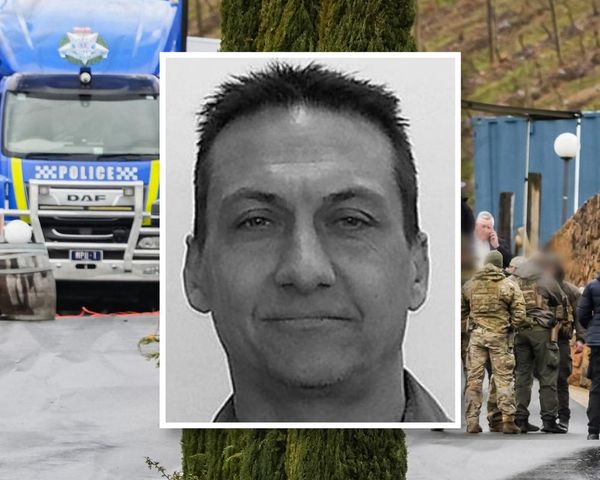
- A Sydney man who tested positive for Covid-19 appears to have contracted the virus while working as a security guard at a hotel used as a quarantine facility. He later worked at Parramatta local court and Flemington market. Police and NSW Health are investigating how he got the virus.
- NSW recorded three new cases of coronavirus.
-
Two women have been arrested and charged in Perth after escaping hotel quarantine. The women, from South Australia, allegedly caught a taxi from the hotel to a unit, after arriving in the state without a valid reason.
- Deputy chief medical officer Dr Michael Kidd warned that symptoms of the flu are more likely to be coronavirus, as Australia is having a fairly tame flu season.
- Domestic travel looks like it will take a while to rev back up again: Tasmania will keep its borders closed until at least 1 December.
Updated
The security guard who appears to have contracted Covid-19 while working at a hotel quarantine facility later worked at Sydney’s Flemington market and Parramatta local court, but did not work at Bankstown Central shopping centre, as chief health officer Dr Kerry Chant indicated earlier.
A previous case attended the shopping centre on 8 August.
The security guard worked at the Marriott hotel on 3, 4, 7 and 8 August, developed symptoms on 11 August and was diagnosed late on 15 August.
According to NSW Health, he was infectious while working at the Flemington market on 9 August between 8am and 4pm, and at Parramatta local court on 11 and 12 August between 8.30am and 12.30pm.
People present at those places at those times should be alert for symptoms and get tested.

Updated
No pension increase until at least March next year
The Senate committee examining the Morrison government’s response to Covid-19 heard from officials from the Department of Social Services this afternoon. They confirmed that Australian pensioners would not have their payments indexed until at least next March because of soft economic conditions.
In plain English, this means no increase to pensions.
Pensions are indexed twice a year: in March and September. The next indexation was due on 20 Septembe. The benchmark for indexation is CPI and the pensioner and beneficiary living cost index – so if they don’t move, neither does the pension.
The Labor senator at the table, Katy Gallagher, asked officials whether the practical effect of that was no increase in the pension for 12 months. Officialsed confirm that’s the case because of the “statutory formula”.
The shadow minister for families and community services, Linda Burney, said this was a shocker.
It’s unacceptable that the government is allowing pensions to stagnate in the middle of the coronavirus crisis and the prime minister must outline what he is going to do to fix this.
Updated
The NSW opposition is calling for expanded testing in light of revelations that a Sydney security guard working at a hotel used as a quarantine facility has tested positive for Covid-19.
Labor’s shadow health minister, Ryan Park, said:
NSW shouldn’t take a ‘wait and see’ approach here. There should be additional testing around locations this person visited, including pop-up clinics in Flemington and surrounding areas.
Additionally [health minister] Brad Hazzard should urgently outline what steps are being taken to ensure hotel quarantine is robust and working properly.
Is he increasing PPE supplies or staff training to ensure the safety of those in quarantine, those working in quarantine and the wider community?
If there is a risk of exposure, should we be employing these guards full-time so we can prevent community transmission?
Updated
In non-coronavirus news, the Google v ACCC fight has developed today, with Google asking YouTube creators and viewers around the world to swamp the Australian competition watchdog with complaints about its proposed mandatory news code.
Updated
Meanwhile, in international news ...
what a ... good idea? https://t.co/kGJtyOm6g3
— Bonnie Malkin (@bonniemalkin) August 18, 2020
Updated
The ACTU president, Michele O’Neil, is the latest person to weigh in on the conversation sparked by revelations a security guard appears to have caught Covid-19 from hotel quarantine, and then worked at numerous other venues:
So this is the same problem which could have been prevented. Workers in insecure work, having to work multiple jobs without paid pandemic leave. https://t.co/EqC7xGCR71
— Michele O'Neil (@MicheleONeilAU) August 18, 2020
Updated
My colleague Naaman Zhou has been watching on as the disability royal commission holds urgent hearings into the impact that coronavirus is having on people with disabilities.
Australians with disabilities have suffered higher rates of domestic and family violence, are experiencing suicidal thoughts, and felt “expendable” during the Covid-19 pandemic, the commission has heard.
The trade and tourism minister, Simon Birmingham, is now doing an interview on ABC News. He’s urging state and territory ministers to be flexible with domestic borders when they can:
I would urge all states and territories to take a sensible and proportionate approach to these things. I’m standing in South Australia where SA has really from the start of the pandemic had in place restrictions on Victoria that are much tighter now than they were, has continually had restrictions on New South Wales as well, but has opened up its borders in relation to Queensland, the Northern Territory, WA and Tasmania.
Now, whatever people think about the arguments of the SA-NSW border, you can see a proportionate approach, where other states and territories who have had similar success in suppressing Covid, have been opened up from a South Australian perspective. I’d urge the other premiers and chief ministers to think about adopting a similar stance, rather than a blanket stance that is only going to continue to harm the tourism industry in those states, particularly when there are opportunities going begging from similar states that have similarly successfully suppressed Covid in their community.

Updated
Great, just great. Magpies might be more aggressive in Victoria this year as they get confused and misdirected by face masks, according to one birdlife expert.
The New South Wales security guard case from hotel quarantine at the Marriott hotel will likely raise questions about the state’s approach to hotel quarantine, after so much attention has been on Victoria’s hotel quarantine outbreaks leading to 99% of the state’s current positive cases.
Genomic sequencing data linked the security guard’s infection to a returned overseas traveller staying in hotel quarantine earlier this month.
Officials say there has been no evidence of a breach in hotel quarantine – and the guard does not remember getting in contact with a hotel guest – but will be scouring CCTV footage to figure out what happened.
The biggest issue likely to arise is that the guard, one of 2,000 to work in the state’s hotel quarantine system, was allowed to work at Parramatta local court in the same time period.
The guard also worked Bankstown Central shopping centre and Flemington market.

Insecure work has been a defining feature of Victoria’s second wave, and it is unclear whether the state government checked whether guards working at hotel quarantine were also working in other locations.
Unlike the Victorian hotel quarantine system, in which security guards were given bad advice by the state government on PPE use in the hotels, New South Wales chief health officer Dr Kerry Chant said full PPE had been in use.
The next few days will be crucial for the state government to limit any potential outbreak. While the source of the Victorian second wave can be traced directly back to the hotels, it was what came after, and the failure to quickly locate clusters and get on top of community transmission, that led to thousands of cases and stage four restrictions being imposed.
Updated
According to Dreibergs, the women caught a taxi from the hotel to a unit early in the morning. The women did not have permission to be in WA in the first place, he says.
Updated
Dreibergs describes the incident as “a very serious matter”. The women were not tested for Covid-19 on arrival in Perth. Police were called by security guards at the hotel, he says.
Police officers will now be present when WA does a risk assessment of people entering the state, and that risk assessment will be more thorough, he says. Police will be placed at hotels where they deem it necessary.
Updated
Two women charged with fleeing hotel quarantine in WA
Western Australia’s acting police commissioner, Gary Dreibergs, is up now, saying that two South Australian women, aged 19 and 22, were arrested this morning and charged after escaping hotel quarantine.
The two will go before the magistrates court this afternoon. He says the evidence is they don’t pose a significant health risk.
Updated
We haven’t confirmed this story but will be keeping an eye on it:
#BREAKING: Two women are in police custody after reportedly escaping from hotel quarantine after arriving in Western Australia last night.https://t.co/ugJ9uKtcI1
— news.com.au (@newscomauHQ) August 18, 2020
Updated
Tracking back now to the concerning news of a security guard who worked at the Marriott Hotel in Sydney’s Circular Quay and has tested positive for Covid-19. Plenty of people are asking on social media why guards working in hotel quarantine could also be working across different venues:
A security guard who worked at Parramatta Local Court and also wat the Marriott Hotel where NSW Health isolating returned travelers is one of 3 new cases. CHO Dr Kerry Chant said genomic testing revealed 1 returned traveler's strain was similar to the infected guards.
— Patrick Durkin (@patrickdurkin) August 18, 2020
Updated
Dr Kidd gets a question about the long-term impacts of Covid-19:
Research is continuing into all aspects of Covid-19 both here and in Australia, as well as in overseas ... particularly in looking at what are going to be the long-term healthcare needs of any of the people who have recovered from Covid-19, including rehabilitation needs and especially the needs of allied health providers supporting people in their ongoing recovery.
Updated
Dr Michael Kidd is asked if we can estimate how many people will die from Covid-19 over the coming weeks.
The answer: no, we can’t. Community transmission is dramatically reducing, he says. But:
Unfortunately the tragedy of Covid-19 is that when you have high levels of community transmission, you do get deaths occurring, and the deaths follow one or two weeks after the high numbers we have seen. I hope we see a decline with the number of deaths over the coming week or two, but we can’t make accurate predictions.

Updated
Dr Kidd urges Australians not to avoid going to the doctor during the pandemic:
It is essential we continue to focus on all the other healthcare issues that affect people of Australia. As a GP, I remain very concerned about reports of some people delaying presentation for new health problems, especially among those living under the restrictions in Victoria. The Australian attitude of ‘she’ll be right’ doesn’t apply to your health or to the health of your loved ones.
Kidd says people need to keep going to the GP to investigate concerns, and attend appointments for chronic health conditions.
[This] also includes people with mental health concerns. This especially applies in Victoria: if you have an existing mental healthcare concern, please use telehealth to reach out to your GP or therapist and arrange a continuing care plan.
Updated
Dr Kidd repeats what we were told about influenza yesterday:
If you have symptoms of fever, aches and pains, cough or sore throat, that is unlikely to be influenza and more likely to be Covid-19, so please, if you have symptoms, no matter how mild, arrange to get tested.
We’ve had low numbers of influenza this year, partly due to high immunisation rates and physical distancing.
Australia’s deputy chief medical officer Dr Michael Kidd is speaking now. He gives a rundown of the numbers:
- The death toll is now at 438 after 17 new deaths were reported in Victoria
- Victoria has 222 new cases
- NSW has three new cases, two locally acquired and one in hotel quarantine
- Western Australia has one new case, acquired overseas, in hotel quarantine
- 23,773 people have been diagnosed with Covid-19 in Australia since the start of the pandemic
- 2,076 have been diagnosed in the past week
- Almost 15,000 people have recovered from the disease
- 52 people are in ICU, 37 are on ventilators
Updated
It’s fair to say the press conference from Dr Kerry Chant gave us more questions than answers.
Wondering why NSW didn't immediately check what private security contractors it was using after Victoria and how the staffing was being done. https://t.co/K1BSuLTOba
— Josh Taylor (@joshgnosis) August 18, 2020
Birmingham says there’s no prima facie case to warrant an investigation.
It is for China and Beijing to explain the rationale behind these actions and why they have [started this investigation].
Birmingham says it’s China’s right to investigate allegations of dumping, but Australia will put forward a strong case that there is no dumping, only “world-class wine...at world-class prices”.
He says it’s “disappointing” that he has not spoken to any Chinese counterparts in relation to this issue.
Australia stands ready to engage constructively with China at any moment. I will certainly reach out on the political level in terms of providing evidence to review these claims.
Hello, hello.
Trade minister Simon Birmingham is up now, talking Australian wine and pledging to defend the industry. He describes allegations of dumping in China as “perplexing”.

Updated
There is a national Covid update coming up in the next 15 minutes or so.
Hannah Ryan will take you through that.
Thank you again for joining me today – I very much appreciate it. Just a reminder that if you aren’t part of Melbourne’s lockdown, stay in touch with your loved ones - but make sure it’s on their terms. Not everyone wants to constantly talk about how they are, or how they are handling things, as they try and carve out some normality in a very not-normal situation. It can be a lot of work reassuring people you’re fine.
Thank you again for keeping me company. I’ll be back tomorrow morning, but in the meantime – take care of you.
Updated
So far, authorities don’t know how an infection went from a guest to the security guard, but Dr Kerry Chant says they are keeping “a very open mind”.
Some of the shifts overlapped when this person [the guest] was there.
We are reviewing CCTV footage. The person has, in preliminary interviews, no recall of coming in contact with any guests at the hotel directly, but these are a matter for us to review security footage.
You can imagine we had to do some quick alignment of dates and putting together some pieces. You can imagine when you are asked to remember your movements on a certain date many days ago, you need those prompts to reconstruct your movements.
Obviously we are keeping a very open mind, and I would like to acknowledge the cooperation of all parties, and the cooperation with police – and quickly getting access to the CCTV footage – and the joint investigation currently underway.
The guard worked on 3 and 4 August as well as the 7th and 8th.
We are just looking in relation to the 3rd and 4th, dates where the person would have potentially been exposed directly, although it’s premature.
Clearly the 7th and 8th, the hypothesis that the acquired it that [at] time – there may have been an intermediary who got infected.
These are just hypotheses. You would expect us, in our detective work, to put forward our interviews and review of the CCTV footage, and investigations will establish the facts of the matter.

Updated
Dr Kerry Chant:
To clarify, the particular security contractor did not work while he was infectious at the Marriott. Just to be very clear, investigations that we brief you on today are just to identify how he acquired his infection.
Updated
NSW police investigate security guard Covid infection
Police assistant commissioner Leanne McCusker says an investigation has been launched into how the infection was acquired:
The hotel quarantine program has been in place since the 29 March, and today over 47,000 return travellers have been part of the hotel quarantine program, with no community transmissions today.
What has occurred over the last couple of days is no doubt concerning.
And we will continue. New South Wales police are working strongly with NSW Health, in terms of the investigation regarding this, and we are currently doing that as we speak at the Marriott hotel, in terms of viewing CCTV footage, conducting various interviews and having conversations with those that are involved in this matter.
In terms of the police and the security guard, can I say that we have strong and robust safety protocols in place. All police and security guard prior to deployment are part of a safety briefing.
The PPE equipment is worn appropriately, in particular, when close contact is taking place, and police continue to make sure safety observation and strict safety protocols at these locations.
Again, two-and-a-half thousand police to the state have been involved in the hotel quarantine program; 2,000 security guards, who have been no transmissions to the state; and all police and security that have been working at the Marriott hotel – particular when the security guard was working – have been tested, [and] prior to any results were self-isolating.
I’m pleased to say all police have tested negative.
Results are back, they have tested negative, we have received over 50% of the security guards results back. Again, the ones of the tests we have received are also negative
Updated
NSW chief medical officer Dr Kerry Chant is giving an update on NSW’s three cases today.
One of the cases looks like a security guard at one of the quarantine hotels:
In terms of this case, what I am reporting is not when he was infectious and could have affected others, I am reporting detective work. It indicated the most likely source of infection was his acquisition at the Marriott hotel.
The exact nature of how that infection could have been acquired as a matter under intense investigation as we speak.
Updated
And Labor has also responded to China’s announcement:
Madeleine King, the shadow minister for trade, said:
Labor is deeply concerned about reports that China’s ministry of commerce has started an anti-dumping investigation into Australian wine.
Australian wine exports to China were worth $1.1b in the year to 30 June, according to Wine Australia figures.
The Australian wine industry and Chinese consumers have long benefited from a productive and respectful mutual relationship.
Labor urges the government to use all appropriate diplomatic channels to address these allegations during the upcoming investigation process to ensure China does not ultimately proceed to levy import duties on Australian wine.
In our relationship with China, as with any country, we must always assert our values and our interests, including transparency and sovereignty.
Labor is concerned that this latest trade threat follow China’s suspension of imports from red meat abattoirs in Queensland and NSW, and the imposition of 80% tariffs on Australian barley exports to China.
Updated
The federal government has been asked at the disability royal commission to urgently review the stockpile of personal protective equipment for disability carers.
It is the first day of a week of urgent hearings, held by the royal commission, into the impact of the pandemic on people with a disability.
Ross Joyce, the chief executive of the Australian Federation of Disability Organisations, said:
Service providers in the disability sector weren’t recognised as able to access the PPE stockpile.
It has principally been aimed at health and health professionals. And service providers that support people with disability in the sector weren’t eligible to access that.
Joyce told the commission he had “asked the federal government to undertake an urgent review” of the PPE stockpile, to also help prepare for coming months and future pandemics.
Patrick McGee, the national manager of policy at the AFDO, added:
The impact of not being able to access PPE simply means people don’t go out. And that leaves people very isolated and vulnerable.
Earlier, the commission heard from multiple witnesses who said that Australians with disabilities have suffered higher rates of domestic and family violence, are experiencing suicidal thoughts, and felt “expendable” during the pandemic.
Last week, the aged care royal commission also heard that the government should have made masks mandatory much earlier for aged care staff.
Earlier today, the chair of the disability royal commission and one of the senior counsel assisting, drew links to the experience of aged care, saying that both sectors had a “precariously employed and inadequately trained care force”.
Joyce said PPE was needed for all kinds of disability service providers.
It needs to apply for kitchen staff, it needs to apply for cleaning staff, and gardening staff. It doesn’t matter who it is, we need to learn the lessons.
Updated
The wine industry has responded to the anti-dumping investigation announcement from China:
Australian Grape & Wine is aware of the request by the Chinese industry to the Chinese ministry of commerce to launch an anti-dumping investigation on Australian wine in China.
We believe that the Australian grape and wine sector is well placed to respond to this investigation and Australian Grape & Wine and our exporting companies will cooperate fully.
China is an important market for Australian wine and our wine is in demand from Chinese consumers.
Australia has a large number of exporters with close cultural ties to China. The Australian industry welcomes the opportunity to build on these ties and work with the Chinese industry and government to further technical cooperation and develop lasting relationships.
Updated
For more detail on what the hotel quarantine inquiry has heard today, you can read this story from Josh Taylor:
Hotel quarantine linked to 99% of Victoria's Covid cases, inquiry told https://t.co/T54xg87nca
— The Guardian (@guardian) August 18, 2020
Lidia Thorpe will be joining the parliament very soon*.
The Victorian senator replaces Richard Di Natale, who announced he was resigning in February.
*It was meant to be this sitting, but the Victorian lockdown has changed things somewhat, because the Victorian parliament hasn’t sat, which changes some things in terms of confirmation/swearing in. So hopefully we’ll see Senator Thorpe in the next sitting fortnight (October).
Do ya think they’ll let me in on my first day of parliament in my uniform? pic.twitter.com/6CoSeYPnJ0
— Lidia Thorpe (@lidia__thorpe) August 18, 2020
Updated
I woke up this morning convinced it was October, if you’re wondering how I am viewing time at the moment.
But given this will be a pretty big deal at the end of the year, here is Michelle Obama’s take on Donald Trump’s presidency.
November will be here before we know it.
'It is what it is': Michelle Obama picks Trump apart in gripping DNC speech https://t.co/eSEn1qqmKW
— The Guardian (@guardian) August 18, 2020
Updated
Queensland’s premier, Annastacia Palaszczuk, says she is open to talking about the border issues when national cabinet meets again on Friday.
She said the prime minister’s letter sent on the issue was pretty beige:
The prime minister has written to all premiers. We only just received that letter. It’s a very generic letter and of course we’re happy to have further discussions at national cabinet.
It’s just a very generic letter. It talks about health, freight – we have a national agreement about freight – and the testing of drivers. And in relation to health we want the best healthcare for all Australians, no matter where they live.
Updated
ADF confirms it offered hotel quarantine support to Victoria
Australian Defence Force officials have confirmed that support for hotel quarantine was specifically offered to Victoria, amid an ongoing dispute between the Victorian and federal governments over the hotel quarantine system which led to Victoria’s second wave.
The commander of Defence’s coronavirus taskforce, Lieut Gen John Frewen, told the committee that after the 27 March announcement from the prime minister of hotel quarantine and ADF support, the ADF made sure 100 personnel were on standby in the larger states, and 50 were on standby in the smaller states, if the states requested assistance.
He said “that offer was made specifically around mandatory quarantine”.
The Victorian emergency management commissioner, Andrew Crisp, released a statement last week saying that while the ADF had been involved in planning and coordination meetings on 27 and 28 March, there was no offer for assistance in hotel quarantine, nor did he seek it.
Frewen said that in New South Wales and Queensland where ADF support was used for hotel quarantine, among general concierge work, the ADF supported police inside the hotel to ensure people were not sneaking out.
Frewen also confirmed that in mid-June, Victoria requested 850 personnel, only to cancel the request the following day. He said he was unaware why Victoria had cancelled the request.

There are now 3,459 ADF personnel assisting with Covid responses in states and territories around Australia, with the majority in Victoria.
Victoria has made 11 requests for ADF assistance, and withdrawn two of those. One Victorian government request for support on aerial surveillance was rejected by the ADF. Frewen said the reason it was knocked back was “we didn’t think it was the right thing for us to be supporting.”
The committee heard that since 27 July, the ADF has provided support in four aged care facilities, and is still providing support in two of those.
Updated
There is still no official go-ahead, but the parliament is getting ready to accept MPs virtually, as Mike Bowers captured a little earlier today:

Updated
HRH Prince Charles has recorded a message for Victorians:
There will be a national Covid update, with Prof Michael Kidd, at 3.30 today.
Updated
Remember when half the government kept insisting the barley decision had nothing to do with Australia’s strained diplomatic relations with China?
I mean, it probably doesn’t take much imagination to see what the next step was.
This doesn’t make it right – or suggest we shouldn’t be standing up to countries, regardless of their trading status with Australia – but it also seems like something the government should have prepared for.
“This is a very disappointing and perplexing development” - Trade Minister @Birmo on #China’s anti-dumping probe into Australian wine @SBSNews pic.twitter.com/OFt4WYfv86
— Brett Mason (@BrettMasonNews) August 18, 2020
Updated
Back to the Covid committee hearing:
Victoria asked for aerial surveillance support of the ADF, but the ADF didn't think it was appropriate for them to support it.
— Josh Taylor (@joshgnosis) August 18, 2020
I just need a moment after that transcript.
Neil Mitchell spoke to Labor’s Peta Murphy about her quarantining ahead of her return to Canberra for the coming sitting, and well, what started out as a nice chat about her cancer fight (Murphy was re-diagnosed with breast cancer shortly after winning her seat and has been undergoing treatment) became very quickly weird:
Mitchell: Are you in a big house?
Murphy: No, we don’t have a huge house anyway – we have a nice house, but it needs work done. So just before the first lot of social restrictions, my husband and I moved into a rental – one-bedroom, open-planned townhouse – while our house got worked on, and we haven’t been able to move out.
So we’re now on complete quarantine, and Rod was nice enough to say he would do it with me so I didn’t have to be in a hotel room on my own in Canberra, because I’m not one of those politicians that owns a house in Canberra. So it’s Rod and myself and Bert and Ernie, who are seven-month-old Labrador puppies in a one-bedroom townhouse with a courtyard.
Mitchell: I’ve seen some footage of them rampaging.
Murphy: Oh my goodness, they like to rampage. There’s a little, I guess you’d call it an alleyway whatever it is with the fence and concrete down the side of the house, and the dogs and I have been doing or trying to do some shuttle runs to try to get them to calm down. But it’s resulted in quite a lot of bruises.
Mitchell: Labs that age are notorious for their energy but they hit 12 months, start eating, and don’t move for the next 10 years.
Murphy: I can’t wait for that to happen.
Mitchell: Have you considered eating them? Because North Korea have started eating their dogs because they’re short of food. Would Bert and Ernie make a good feed, would they?
Murphy: No, they wouldn’t, no. Don’t even say that.

Updated
The Chair's opening address from this morning is available on our website. https://t.co/VQZP3HgoQa#DisabilityRC #DisabilityRoyalCommission
— Disability Royal Commission (@DRC_AU) August 18, 2020
The ADF are speaking at the Covid committee – and say that 100 personnel were on standby in Victoria.
Then it is added that an offer was “specially made” around mandatory quarantine on 27 March.
Points out ADF have been supporting police in NSW in the hotels, including making sure people don't sneak out of the hotels.
— Josh Taylor (@joshgnosis) August 18, 2020
Updated
Oh this will fix it.
I mean, it totally worked for the barley industry.
(Narrator: it did not.)
David Littleproud responds to China’s latest volley at Australia:
Our farmers are amongst the most efficient and least subsidised producers in the world, recognised as second only to New Zealand in our levels of support.
While we respect the right of any nation to defend their domestic producers from unfair and uncompetitive trade practices, we reject any claim that Australian wine product has been “dumped” into China.
I note that this anti-dumping investigation will run for up to 12 months, and I am committed to working with the Australian wine industry to ensure that all necessary information is provided to refute any claim that Australian wine is being dumped.
Australia produces some of the best quality and most popular wine in the world, with our wines exported to numerous markets globally.
That reputation has been recognised by Chinese consumers, who have helped make China our largest export market with $1.1bn exported in 2019/20.
The Australian government will continue to work closely with industry to fight these claims.
Updated
Police have fined someone $1,000 for organising a drumming circle in Maroubra.
The only good fine, tbh.
From NSW police:
Two people have been issued with penalty infringement notices (PINs) since the last update:
- About 6pm on Sunday (16 August 2020), officers from Eastern Beaches police area command responded to reports of a large gathering at Jack Vanny Memorial Park, Maroubra. Officers spoke with a 33-year-old man who was one of the organisers of the event, before the crowd was dispersed without incident. Following inquiries, the man was issued with a $1,000 PIN yesterday (Monday 17 August 2020) for fail to comply with noticed direction in relation to s7/8/9 – Covid-19.
- On Friday 14 August 2020, a 57-year-old man attended Bourke hospital with possible Covid-19 symptoms. He was tested for the virus and directed to self-isolate at home. About 3.30pm yesterday (Monday 18 August 2020) the man was located at a friend’s house. Further inquiries revealed the man had attended a local shop the same morning. He was issued with a $1,000 PIN for fail to comply with noticed direction.
Updated
The federal government has previously said the international borders would stay closed until at least July, so this from Steven Marshall isn’t pie-in-the-sky stuff.
But, of course, that all depends on whether or not there is a vaccine, or at least a treatment.
Via AAP:
South Australian premier Steven Marshall says he’s hopeful international tourists will return to South Australia by the middle of next year.
The premier has marked progress on a hotel development in Adelaide and says it’s important the accommodation sector is ready to bounce back when the Covid-19 crisis is over.
Mr Marshall said on Tuesday:
We’re confident that we will work towards a time when we can attract and invite guests from around the world to come back to Adelaide.
What we know is that South Australia and Australia more broadly is going to become a very attractive place on the other side of the coronavirus.
We’ve been able to manage the situation in Australia best in the world and I think that will attract a new type of visitor.
Maybe I am being optimistic but I’m hopeful we can have people return from overseas next year, but we will not be doing it before it is safe.
The premier said that while there had been talk of travel bubbles with New Zealand or other Covid-safe nations, he did not think that was likely in the coming months.
But I am hopeful by the middle of next year we will be open to international travellers.

Updated
But ... isn’t it suppose to be “their money”?
Bit of mixed messaging here. There were no checks as to whether or not a person had suffered financial hardship before accessing the federal government’s early access scheme. That’s how it was set up. And the government has spent a lot of time defending it as “their money”.
So ... why go after people for accessing their own money, if there is no problem with it and no checks were put in place?
#EXCLUSIVE
— The Daily Telegraph (@dailytelegraph) August 18, 2020
The Australian Taxation Office is investigating people who have incorrectly withdrawn up to $20,000 of their retirement savings under the Federal Government’s early access to super scheme. https://t.co/HaW3b0En1M
Updated
Important clarification:
Important clarification – @NSWHealth has listed the City’s east as an area requiring increased testing and surveillance, which means it is recommended that if you live in or have visited the area and you develop symptoms (even if mild) you should get tested. https://t.co/tRuyuDBN6b
— Clover Moore (@CloverMoore) August 18, 2020
The global blog has all your international Covid news – including what is happening in New Zealand.
Our neighbours have reported 13 new cases of Covid today, 12 of which are linked to the Auckland family cluster.
That brings the number of known cases of Covid in New Zealand to 69 (resist it).
There are still no answers to how the virus took hold again, given NZ went 102 days with no community transmission, but health director general Ashley Bloomfield said investigations were ongoing.
One of the cases in New Zealand is a maintenance worker at the Rydges hotel in Auckland, which is a managed isolation facility. He tested positive on 16 August.
Bloomfield said the man performed maintenance on hotel rooms between bookings, after the rooms had been cleaned.
The genome sequencing indicates his case is not linked to the current outbreak in the community but is most closely linked to a positive case that was in the Rydges and identified was on 31st of July. This is a returnee from the USA.
Further genome testing is being carried out on these cases today.
Updated
The three residents who had respiratory illness symptoms at the Immanuel Gardens Sunshine Coast aged care home and were put into isolation have all tested negative for Covid.
A fourth resident who has developed symptoms is yet to be tested, but chief medical officer Jeannette Young is hopeful the resident will return a negative test as well.
Updated
Treasury Wines announces trading halt over China probe
Treasury Wines, one of the biggest wine exporters to China, has announced a trading halt to the ASX in response to the anti-dumping investigation announcement from China:
Treasury Wine Estates Ltd (ASX: TWE) has been advised that the Chinese ministry of commerce has initiated an anti-dumping investigation into Australian wine exports into China.
TWE will of course cooperate with any requests that we receive for information from Chinese or Australian authorities.
TWE has had a long and respectful relationship with China over many years through its team, partners, customers and consumers.
As an importer of high-quality, premium Australian wine, including brands such as Penfolds, TWE remains committed to China as a priority market and will continue to invest in its Chinese business and its relationships with customers and consumers.
TWE’s focus will remain on building premium and luxury brands, investing in the local operating model and team, and working with partners to enhance the wine category and grow our contribution to China.

Updated
There have also been some tighter restrictions put on community sport in NSW.
For the next six weeks (at least) there can be no zone, regional or state championships.
Award ceremonies and parties are banned. End-of-season gatherings are banned. After-training gatherings are banned.
When it comes to children’s team sport, only one spectator is allowed per child (where there needs to be parental or guardian supervision).
Updated
For those who missed it yesterday, here is a list of what is banned in NSW government run schools for term 3 (via AAP):
- No school formals, dances, graduation or other social events.
- No group singing (choirs) and/or other chanting activities.
- No wind instruments in group settings. Special arrangements for HSC students.
- No interschool sport, drama, debating and other events outside of the local community or zone, including gala days and regional sporting carnivals.
- Sport between schools will be restricted to competing students and staff, with parents and spectators banned.
- No large arts and sports events.
- No travel outside the local community area. Metropolitan schools cannot travel outside their local area or to regional areas. Regional areas cannot travel into metropolitan areas or other regional areas.
- No school camps, excursions, interstate excursions, international excursions.
- No parents at assemblies and other school events.
- No parent volunteers in classrooms – canteen and uniform shop volunteers allowed.
- No parent/community functions, working bees, fundraisers, school BBQs, large parent information evenings or large on-site cultural events.
- Only providers essential to the delivery of the curriculum can provide services and programs.
- No parents/carers and other non-essential visitors allowed on school grounds.
- No kindergarten orientation.
- No Year 7 orientation (delayed until term 4).
- No school or community-run playgroups.
- No face-to-face professional learning for staff.
- Students and staff with flu-like symptoms will need to provide a copy of a negative Covid-19 test result before being permitted to return to school.
Updated
While we are all trapped in our individual bubbles, perhaps you might consider living in an actual bubble or 11.
So @clarecmoore found a country getaway https://t.co/U1Dysdc0fM
— dave graney (@davegraney) August 18, 2020
Farmers got a permit:
A new permit! Farm workers from Victoria can now be permitted to enter NSW. pic.twitter.com/39Pfvmb4lw
— Kath Sullivan (@KathSully) August 18, 2020
Updated
Reuters has some more on China’s latest salvo:
China’s ministry of commerce said on Tuesday it had begun an anti-dumping investigation into imports of wine from Australia following a call from the China Alcoholic Drinks Association on behalf of the domestic industry last month.
The anti-dumping probe will look at imports of wine from Australia in containers holding two litres or less in 2019, the ministry said in a statement on its website, adding that it would also investigate any damage done to the Chinese wine industry from 2015-19.
Updated
Anthony Albansese had a few things to say this morning:
Paid pandemic leave must be available to all who need it. The fact is, due to the nature of the industry, a range of these workers work not in one facility but in multiple facilities, in casualised employment.
They need the security to know that staying home when they should stay home will not mean that their families don’t have food on the table, will not mean that they can’t pay their mortgage or their rent.
That’s an essential component which is missing at the moment.
We also need to know that there’s national coordination, as was called for at the royal commission last week. It’s extraordinary that even after Newmarch and after other events, we did not see a national response. And the federal government has clear responsibility for aged care.
Richard Colbeck has been a failure in every portfolio he has ever held. There’s some irony between him now being in charge of sport and in charge of aged care.
The fact is that this government simply needs to do better. The fact that protective equipment is not available to all workers at these aged care facilities is quite shocking at this point in the pandemic.
The fact is that this government is good at announcements, but not good at delivery.
The fact is that this government is always there for the photo op, but never there for the follow up.
The fact is that this government, once they hear the sound of the camera shutter, they’re out of there. Not so much nick-on as nick-off.
That’s what this government does when it gets difficult to actually follow through.
Well, they can’t duck responsibility. The prime minister had nothing to say for three days last week. Well, he’s on notice with a question without notice.
Next Monday and Tuesday and Wednesday and Thursday, he will be accountable in the national Parliament.
We need to have answers. Australians deserve answers. These workers who are putting themselves at risk in order to look after vulnerable elderly Australians deserve answers as well.
And we can’t wait for the royal commission to get those answers. We need government responses. We need appropriate resources. We need support for staff right now.
Updated
This could be potentially devastating to the Australian wine industry:
Earlier this year when China concluded an anti-dumping investigation of Australian barley, Beijing imposed huge tariffs that crippled the trade. This graph below from TheDrinksBusiness shows how China is Aus’ biggest wine export market by a mile. pic.twitter.com/KgaDQ8y2Mt
— Bill Birtles (@billbirtles) August 18, 2020
So that means we won’t be going to:
Tasmania: Until at least December 1
Queensland: Until after Christmas (for Qld declared hotspots)
WA: Probably never again
SA: TBA (for declared hotspots)
NT: January 2022 (for declared hotspots)
Michael Outram has confirmed the cost of reopening Christmas Island is $55.6m over six months. There are currently 16 people there and another 15 have gone today. Total expected to be 250 #auspol @AmyRemeikis
— Katharine Murphy (@murpharoo) August 18, 2020
Kristina Keneally wants to know who made the decision to refuse the summons for federal officials to appear before the Walker inquiry?
The commonwealth gave evidence via submissions.
Andrew Metcalfe says officials “obviously worked very closely with the Australian government solicitor” during the period where the decision was made to provide submissions and not appear at the Ruby Princess inquiry.
The secretary won’t say whether that decision was a cabinet decision or a decision from a cabinet sub-committee. Metcalfe takes that on notice.
Updated
Tasmania's borders to remain closed until at least December
Looks like no one is going anywhere
#BREAKING: Tasmania’s Premier has announced the state’s borders will remain closed until at least December 1.
— ABC News (@abcnews) August 18, 2020
The Labor senator Kristina Keneally is back with Michael Outram and the Ruby Princess. Keneally wants to know if the ABF could have stopped the cruise ship from coming to Sydney. Outram said under the Customs Act “I could have held it out at sea but I didn’t have a reason to do so”.
Keneally asks why the ABF lacks biosecurity powers during the pandemic to stop the entry of cruise ships.
Why no powers regarding human health?
Outram says if another department had told the ABF there was a biosecurity risk with the Ruby Princess “I could have stopped it”. Outram says the government has given him authority during the pandemic to stop cruise ships entering Australian waters, but giving the ABF power over human health would have required legislative change.
Outram says he’s entirely content with the authority he’s been given. He doesn’t need legislative change. He notes by the end of April, all cruise ships and their crews had departed Australian waters.
Keneally then moves to Andrew Metcalfe.
She references a recent interview by the agriculture minister David Littleproud where the minister apparently indicated his department did not have responsibility for human health, when it does in terms of biosecurity.
Metcalfe says he didn’t hear the minister’s interview but says “the minister is obviously aware” of the scope of the department’s responsibilities.
“He’s been briefed extensively”.
Keneally wonders whether the department will be advising the minister of his error.
Metcalfe thinks he’ll take all that on notice.
OK, back to what else has been happening in the last hour.
Updated
In terms of the genomic testing which has linked back the bulk of Victoria’s cases to a family four in hotel quarantine, Daniel Andrews says he is not ruling anything in or out, until he hears from the hotel quarantine inquiry, including whether security guards were the source of the cluster:
That is why we have set up a proper inquiry at arm’s length. It is for judge Coate and her process to give us exact real those sorts of answers. I am not in a position to be able to confirm or rule in or rule out or provide you with a view on that
Will we see what happened at Epping Gardens again?
Daniel Andrews:
I can’t guarantee there won’t be outbreaks in more aged care facility but I can with some confidence say to you that we have been asked to step in and provide some help. We are doing that, everyone is working together as best they possibly can and the only focus, whether it be in surge capacity workforce, so our staff going into another system, but still to get the job done, transports to hospital, all of these things are guided by one thing – that is, the best interests, the care and dignity of every one of the residents.
Updated
What is the state’s responsibility in terms of staff for aged care?
Daniel Andrews:
I would not accept there was not surge capacity and every effort made to provide care and support to residents who are – let’s be very clear about this, these residents have absolutely nothing to do with the public health system – hospitals, for instance, nurses, personal workers, have gone in there because they have been asked to do so and they have done their level best, their level best.
In fact, I think that they should be singled out for praise.
There will always be a bit of back and forth about individual settings and individual circumstances.
We saw – we’ve seen some things you probably never would have thought you’d see.
One of the managers of one of these facilities out in a car park having an argument about whether the facility should be handed over or not.
I am limited in what I can say – I might like to say lots on that and a few of the examples you have given me but there is legal action going there and I don’t think a fight is necessarily what anyone need now.
We have a situation where, if I can just take you back to the update I just provided you, we’ve got 1,972 shifts that have been filled by hospital nurses and others.
They are doing a great job. We’ve got additional capacity. I won’t for a moment try and convince you that is easy, it is always challenging and it is very challenging work.
That’s why it is a small amount of money $250,000 but we have added to the counselling services because these nurses and workers that have come from very different have gone into these aged care facilities that are in complete crisis and they need some support because they have been involved in some things that have been very, very challenging for them.
Updated
Where are the cases coming from now? Workplaces or family gatherings?
Brett Sutton:
It is certainly a bit of both. We know that there is a cycle of picking it up in a workplace for, you know, those settings that are still open and essential work that is going on but people bring it back to their home and they might transmit to their family members before their symptoms have kicked in so you have got transmission occurring in the home as well.
Some of those family members, again, before a test result might come back, are going to other workplaces.
So there is that cycle between work and home that we’re trying to break with all of these restrictions but it is a combination.
Obviously we get a very clear picture of transmission that occurs when we know the close contacts and we know that there’s a very significant proportion of our cases that are linked to a close contact, a family member.
We can’t also determine if it has been picked up at work except where there are outbreaks or clusters but workplaces must be significant settings as well. We are still seeing outbreaks in those cases.
Prof Brett Sutton would like it if daily testing rates got above 25,000.
Updated
Again, if you have any flu symptoms, it is more likely you have Covid at this point in time, given the low rates of actual flu in Australia at the moment.
Prof Brett Sutton:
Flu has disappeared – 10 cases a week. You are much, much, much more likely to have coronavirus than influenza if you have symptoms.
But there are other respiratory viruses out. There they won’t have all disappeared.
We still have kids with runny noses and coughs and colds that are occurring but the general way that we have gone about our physical distancing and all of the things that we are recommending in terms of hand hygiene will have also contributed to all of those respiratory viruses.
What we want is at least 50% of people who are symptomatic to get tested. For severe illness we are above 50% but for mild illness we are below. We certainly want to encourage people with mild symptoms to come forward as well.
Updated
What about the difference in the “mystery cases” number?
Prof Brett Sutton:
So certainly that 700 number was the number that was closed off in terms of investigation at that point in time. We have now closed off over 3,000.
For the day-to-day proportion of our daily cases that are mystery cases, if we can map back all of those closed days to the specific day that they relate to, we’ve gone from, in June, fewer than 20% of our daily cases being mystery cases.
It went up to almost a third. It is now back below 20%. So it is all going in the right direction but we are closing off a lot more cases in terms of that finalisation of the investigation.
It is not concerning if we were to close off 500 cases tomorrow that would be great. We’d know what the story is but they wouldn’t all be allocated to that particular day.
Updated
The health worker data breakdown (where were the infections from – work or the community – is not yet completed.
Updated
What about people who maybe don’t want to get a test because then they’ll lose their ability to leave the house for the allowable hour?
Daniel Andrews:
Well, I suppose it is pretty hard to try to interpret whether people who would otherwise be intent on doing the wrong thing – it is pretty hard to interpret them.
I think that the vast, vast majority of Victorians are doing the right thing. I think that number is growing. I think that people genuinely want this to be over.
They want to get to if other side of this and a critically important part of that is not only driving down case numbers through all of our contact tracing efforts and all the other things we are doing but it is also about brake management and all of that, but it is about test making sure we have a testing picture that is broad enough and big enough that we think it is a truly representative sample of how much virus is out there.
My message to anybody in that category, say, if you want this to be over, indeed to all Victorian, we all want this to be of and that means anybody who has symptoms needs to come forward and get tested.
Updated
Who can get a test in Victoria?
Practically anyone with a sniffle.
Daniel Andrews:
What I would say is this – the criteria is very, very broad at the moment.
So it is not like we are saying only certain symptoms, really tight definition and they have to be acute before you can come, we are basically saying to people if you have any of these well-known and well understood coronavirus symptom, so scratchy throat, runny nose, a change to taste, smell, headache, fever, it is a pretty big list and we are not saying you have to be at a certain point, anything in that kind of realm, please come forward and get tested.
It is a very broad case criteria.
It is – it has driven nearly 2 million tests over the course of this year. We just have to remain vigilant that getting tested is just as important as following the rules. It is just as important as obeying the curfew and washing your hands and cough etiquette and all of those things. I think asymptomatic testing – Brett has spoken to this many types and I have as well - the kind of return rate, the success rate is so low that we have not done very much asymptomatic testing.
However, if you are in a workplace, if there is an outbreak, if you are a close contact and that’s deemed an appropriate thing to do then of course we don’t from this podium send out messages around asymptomatic testing or pre-symptomatic testing. That is much more a personal thing and we will sit and work through – you will probably remember we did - I can’t recall the exact number but it was many thousands of teachers before schools went back in term two.
We have done literally thousands and thousands of workers in lots of high-risk sites where there’s been an outbreak and for the purposes of elimination we have done lots of that.
That is what guides it, I think, rather than just the kind of general – I would like the peace of mind of knowing that I don’t have it so I have no symptoms and I have no reason to believe I’ve got it but I want to get a test.
Updated
It’s not that 17,000 tests gives an inaccurate picture, but it doesn’t not do that, says Daniel Andrews.
We wouldn’t want a situation where we have less people getting tested rather than more.
We want the highest percentage possible of people who have symptoms as quickly as possible coming forward, getting tested, we will do our level base to process as quickly as we can.
It isn’t a criticism or anything, it is not like people ant taking it seriously, I think they are, but it will be a function of muches will movement and so it is perhaps much more of a thing to make an appropriate decision to leave the House when you weren’t otherwise leaving to get tested.
The one thing you must go out to do, although we will come to you if you have personal stages that make it critical, the one thing that is critical to to get tested even with mild symptoms.
We get the same warning we got yesterday – from both NSW and Victoria – about what flu symptoms mean.
It’s there’s a high chance, (Cardi B voice) it’s coronavirus.
Daniel Andrews:
Flu numbers across not just Victoria but across Australia are so low because of physical distancing and hand hygiene and all the things we have been doing so if you have these symptoms, even really mild symptoms, there is every chance you have got this virus.
Again, that is another reason why if your body is telling you that you are unwell, even mildly, then you have got to come forward and get tested.
We just have to keep those test numbers up and I would be grateful to all of you if you can make that testing push a feature because as I said before, we don’t want a situation where we have numbers that are in the hundreds or even lore but we have seen also a decrease in the number of tests and we don’t have that sense of clarity and certain they the picture is big enough for us to then move to a new set of rule, which of course we all desperately want to do as soon as it is safe to do so.
So I’d be very grateful if we could push that message out as much as possible. You can rest assure we will be on every conceivable platform we will try make that point in coming days.
Updated
It looks like there is some sort of solution for farmers on the NSW-Victoria border.
People have been unable to run their stock as usual, because of the closures.
Daniel Andrews:
My update on farmer border permits, for want of a better term, we have made some very significant progress on that front and I am very grateful to Gladys and to her team, they are going to make those announcements as is appropriate.
They will make those quite soon. There will be some conditions and distance limits but I think that whilst it won’t necessarily be a perfect outcome it will be a significant step forward for those in our primary production sector and our ag sector to be able to move more freely while at the same time protecting public health.
We know how important that is to keeping food on our supermarket shelves and getting the job done in a broader sense.
I will leave to it the New South Wales government to make the more detailed announcements but we have made some very significant progress there and I am very grateful to Gladys Berejiklian on that front.
Updated
Daniel Andrews press conference
The Victorian premier has stepped up for his daily press conference.
As always, we start with a breakdown of who died.
Of course our thoughts and best wishes, our prayers are with the families of those 17 Victorians.
This will be an incredibly difficult time for them and we send our best wishes to them.
By way of detail I can confirm one male in their 60s, one female and one male in their 70s, two females and four males in their 80s, four females and four males in their 90s. Thirteen of those 17 are linked to aged care outbreaks.
There are 665 Victorians who are in hospital, 45 of those are in intensive care and 32 of those 45 are on a ventilator.
Updated
But testing numbers are down in Victoria – by about 17%.
And that is worrying authorities.
Daniel Andrews says that is partly because movement has been curtailed so much, but health authorities need testing rates to remain high, so they can judge what the drop in case numbers mean.
I know we are asking a lot of Victorians at the moment, but if I can just simply say to each and every Victorian, if you have any symptoms at all, please come forward and get tested.
We will get your results back to you as quickly as possible. The lab teams are working very, very hard.
It is a big, important, powerful contribution that you can make to our collective fight against this enemy.
I don’t want a situation where we see numbers continue to fall but at the same time the total number of tests falling also because that will mean we don’t have confidence that we have an accurate picture of how much virus is in the community.
We don’t want that to be an inhibitor in any way of moving to a new phase and a new set of rules.
We have to have that confidence that we are getting a complete, or as close to a complete picture, as we possibly can. More test results obviously are much better than less. It’s not surprising in some ways given the amount of movement that just isn’t happening.
That’s really important – critical in fact – but I would just ask every single Victorian, no matter where you live, if you have any symptoms please come forward and get tested.
Updated
There is some good news in the case numbers in regional Victoria.
Daniel Andrews:
Pleasingly regional Victorian numbers continue to come down – 422 active cases are now in those regional local government areas that are the subject of stage 3 restrictions.
To give you a breakdown with those three large regional cities that we have been concerned about, Geelong is at 159 active case, greater Bendigo, 44, and Ballarat at 24.
So they are relatively stable but in aggregate terms the total number of regional Victorian cases are down, I think the best part of 90 cases in the past four or five days.
Updated
Mark McGowan was asked about the chances of a Perth AFL grand final, given the extension of the phase-four restrictions, which includes a 50% capacity limit on Optus Stadium:
I don’t know what date the grand final is scheduled for, I’m not sure they know what date it is, clearly our advice is to keep phase 4 in place for two months and that means that up until that date we expect that we will have the current restrictions at Optus Stadium remain in place.
Look, the truth of the matter is that the grand final is one of those things I get asked a lot about, particularly at press conferences, but it is not our main priority, it is not our main focus.
Keeping people safe, getting our economy back up is our main focus.
If the grand final wanted to be held here in a Covid Safe way and the requirement is that the stadium only have a half capacity crowd that would be the rule that the grand final had to abide by, the AFL had to abide by.
It would still with the bigger stadium and crowd in Australia so it is not like they would have lost anything. The reality is we have big issues to worry about, the grand final is not one of them.
Updated
Meanwhile, in case you missed it this morning:
An MP with hefty wage and no financial issues is quite happy to have less super, but unfortunately has to accept the compulsory 15% super package which comes with his job (which, at the moment, is opposing compulsory super).
Many of our viewers this morning pointed out the Liberal MP’s opposing a rise in compulsory super were at the same time enjoying the benefits of the generous Parliamentary scheme.
— Michael Rowland (@mjrowland68) August 18, 2020
I put that to @ajamesbragg. #auspol pic.twitter.com/55QWX96VdP
Updated
The RBA believes an extension of the government fiscal support is needed:
The extension of government policy support would continue to support household incomes and assist the recovery over the following few quarters. While household income was expected to decline for a period when this support was tapered, consumption would continue to be supported by higher savings, which would assist in smoothing consumption through temporary dips in income in the period ahead.
In considering the substantial amount of fiscal policy support, members noted that around 30 per cent of Australia’s working-age population was receiving JobKeeper, JobSeeker or an equivalent payment.
The JobKeeper program had been extended to March 2021, with tighter eligibility requirements and lower, tiered payments for full-time and part-time workers.
The Coronavirus Supplement, paid to JobSeeker recipients, had also been extended at a lower rate from September. Combined with other measures and the usual automatic stabilisers, the net positive fiscal impact from the expected change in Australian Government finances was equivalent to around 4 per cent of GDP in 2019/20 and a further 5 per cent in 2020/21. State governments had also provided some support, mostly in the form of increased funding for public services and relief from taxes and fees.
Updated
The RBA’s latest meeting minutes is out.
In it, is a discussion of the domestic economic situation – and what could happen:
Members considered three scenarios for the economic outlook, given the high degree of uncertainty.
The baseline scenario assumed that the Stage 4 restrictions in Victoria were not materially extended and that Australia’s international borders remained closed until mid 2021. In this scenario, the recovery over the second half of 2020 was forecast to be more gradual than envisaged three months earlier. This was partly because of the reinstated lockdown in Melbourne, and partly because uncertainty had been affecting demand beyond the industries most affected by the Stage 3 restrictions on activity. In this scenario, output was expected to recover somewhat over the second half of the year, bringing the contraction over 2020 to 6 per cent. Output was then expected to expand by 5 per cent over 2021 and 4 per cent over 2022. These projections indicated that, by the end of the forecast period, GDP was expected to remain short of the level forecast before the pandemic.
The two other scenarios – an upside and a downside scenario – differed primarily in terms of assumptions over the evolution of the coronavirus. The upside scenario embodied a stronger and faster recovery on the basis of rapid progress in containing the virus in Australia, with no further extension to the Melbourne lockdown and progressive easing of restrictions nationwide after that. In this scenario, the faster pace of recovery was driven by restored confidence, which would encourage stronger consumption and the recent run-up in savings being unwound at a faster pace than assumed in the baseline scenario. Much of the near-term decline in GDP would reverse over 2020-21 as consumption growth rebounded strongly in this scenario.
The downside scenario assumed a globally widespread resurgence in infections in the near term and that Australia was faced with periodic outbreaks and ‘rolling’ lockdowns. In this scenario, consumption would fall further over the second half of 2020, despite ongoing policy support. With border restrictions remaining in place until the end of 2021, the recovery in services exports would be delayed. As a result, GDP would not recover over the second half of 2020 and the subsequent recovery would be slower, partly because of the damage to confidence (in addition to the direct effects of more lockdowns). This would affect consumption and investment even after restrictions were lifted. Members noted that the downside scenario entailed a much larger deviation in output from the baseline compared with the upside scenario, reflecting that the risks around the outlook were to the downside.
Updated
90% or more of Victorian Covid cases linked to quarantine outbreak
“Ninety per cent or more” of the cases of Covid-19 currently in Victoria can be linked back to an outbreak from a family that returned in early May and quarantine in the Rydges Hotel on Swanston Street, Dr Charles Alpren has told the inquiry.
Alpren, an epidemiologist with the Victorian Department of Health and Human Services, told day two of the hotel quarantine inquiry the genomic sequencing data for 14 of 17 cases in the initial outbreak in the Rydges Hotel were linked to a family of four that returned to Australia on 9 May and were quarantined in the hotel.
Alpren said 3,183 of the 3,234 cases where genomic sequencing data is available for cases in the past month – out of around 12,000 cases – are linked to the Rydges outbreak.
For the outbreak at the Stamford Plaza hotel, 35 of the 46 cases where genomic sequencing data was available could be linked back to a man who returned to Australia on 1 June, and a couple who returned to Australia from mid-June.
But the proportion of cases of transmission from Stamford Plaza is much lower.
“It’s likely that a high proportion, approximately 99% of current cases of Covid-19 in Victoria have arisen from Rydges or Stamford,” he said.
“However, I cannot be very precise in the number ... As a result of each outbreak separately, there’s likely that a small proportion, approximately 10% or less of current Covid-19 infections in Victoria can be traced to the Stamford.”
Updated
Just in case you missed that at the bottom of Murph’s post – reopening Christmas Island has cost $55m over six months.
Let that sink in.
The detention facility that was reopened to host the influx of asylum seekers and refugees who were supposedly going to flood our health system after medevac was passed (they didn’t) and has since been used to detain a family who just want to go home to Biloela, after Jacqui Lambie’s vote helped overturn the medevac legislation, is costing $55m over six months.
Cool beans.
Updated
The Labor senator Kristina Keneally is questioning the ABF commissioner, Michael Outram.
She’s wondering why ABF officers were looking at the health of passengers on the Ruby Princess when they had no legislative responsibility or authority to do so – (which is a point Scott Morrison and Peter Dutton make regularly to argue what happened with that cruise ship was not a misstep by the ABF).
Outram says: “I think they were just trying to be helpful, senator.”
He says ABF officers were aware of what had happened on other cruise ships in other parts of the world during the pandemic.
Keneally wonders whether it would have made a difference if the ABF officers had been more helpful, having already stepped outside their legal authority – if they’d made a call to someone signalling there might be a problem on the Ruby Princess.
“I’m not going to criticise my officers for trying to be helpful,” Outram says.
“It’s clear my officers weren’t operating under law or statute”.
He says the ABF officials were curious and trying to be helpful. Outram says after the Walker report (which cleared his agency of any wrongdoing) the agency will look at what could be improved.
* Outram also answers a question put earlier by Nick McKim about the cost of reopening Christmas Island to relocate immigration detainees. He says the cost is $55m.
Updated
Mark McGowan is also cancelling the WA Royal Agricultural Show.
As someone who saw the Ekka cancelled this year, I feel their pain.
Mark McGowan says it is about balancing public health with keeping the economy open.
The reality is nothing is perfect.
Nothing is perfect when it comes to dealing with this virus. While we have had no community transmission in WA for 129 days now, we simply can’t afford to get complacent because the virus could sneak back into WA and spread like wildfire.
If we can learn anything from over east and overseas, including New Zealand recently, it is that this virus can spread extremely fast.
Our chief health officer has advised that it could take two months or longer for the outbreaks in Victoria to be fully under control.
While other jurisdictions have introduced and strengthened restrictions recently, we have been fortunate enough to remain in phase four.
This has been crucial to kick-starting our economy and providing West Australians with the freedoms we experience now as well as the economic activity we experience now. There are many benefits associated with this and that is why we don’t want to take unnecessary risks.
By remaining in phase four for longer, it assists us in reducing the numbers of people who could be potentially exposed and requiring health responses, should an outbreak occur in our State.
The reality is, here in WA, we are way ahead of the rest of the nation but we don’t need to push the envelope.
Updated
That could have implications for the AFL grand final – there were suggestions it should be played in Perth.
Can’t see a grand final going ahead in a stadium that is only allowed to be half-full.
Updated
Mark McGowan delays easing restrictions
The WA premier has announced the government has decided to extend its phase four restrictions, following advice from the chief medical officer, until 24 October.
When introduced, phase five would also see the removal of the 50% capacity limit for major venues like Optus Stadium.
Two weeks ago, I announced the third extension of phase four.
Previously we have implemented two-week extensions each time.
I understand these short extensions create uncertainty. It is difficult for many people across our community and across a wide section of industries to properly plan.
As a result, today I will be announcing a longer extension to phase four.
Our Chief Health Officer has recommended a further extension of phase 4 by two months. On the advice of the Chief Health Officer, the new tentative start date of phase five will now be Saturday, October 24.
As always, this is a tentative date only. We will likely provide clarity in October about whether or not we can proceed with this timeline, or if the date could be brought forward.
I know this will cause some frustration and problems for parts of our community. I can understand many people were hoping and planning for phase five to be introduced sooner. This decision will throw those plans out.
Updated
The Labor leader Kristina Keneally is back now with Andrew Metcalfe.
She is comparing what the secretary said earlier today at the Covid inquiry – that oral permission was granted before people disembarked the Ruby Princess – with a commonwealth submission to the Walker inquiry that is more equivocal.
Who gave the permission to disembark, and when, she asks?
Metcalfe says there was “a practical granting of practique”. There was a practical granting, Metcalfe says. By who? Who gave the clearance from a human biosecurity standpoint, Keneally insists?
Metcalfe says one of his officers.
There were two on site.
Keneally asks which one. Metcalfe responds by saying people got off the ship because his officers did not seek to prevent departure – so a passive assessment rather than an active one.
Keneally asks was it possible there was confusion – his officials let people disembark because they thought it was ok to disembark even though the correct protocols hadn’t been followed? There is a long pause.
Metcalfe takes the question on notice because he doesn’t have all the detail in front of him.
The secretary accepts that events on that morning were neither “crisp, nor formal”.
“The system did not work as it should have. I’m not resiling from the fact that we are part of the system”.
“We have very much learned from this situation”.
Labor senator Katy Gallagher says they are seeking an answer to the question: who lifted the rope, who let people off the ship? Will an answer be provided on notice?
Metcalfe says it will.
Updated
As Josh Taylor reported, Dr Charles Alpren, an epidemiologist from the Department of Health, is giving evidence at the hotel quarantine inquiry.
He says contact tracing was a little challenging at times:
We are limited, generally, by the information that people are prepared to divulge.
It is possible to talk with others, to go back where we notice inconsistencies and to ask people again.
We work with employers, etc, to get information from elsewhere but, in the end, we are dependent on information volunteered to us on questioning by people.
Updated
NSW announces three new coronavirus cases
NSW has recorded three new cases of Covid in the past 24 hours.
One is in hotel quarantine and one is linked to a known cluster.
So that means there is one case they can’t identify the source for as yet
Updated
Josh Taylor is watching the hotel quarantine inquiry:
46 people in the Stamford Plaza outbreak linked to a man and a couple who returned to Australia in early and mid June.
— Josh Taylor (@joshgnosis) August 18, 2020
Epidemiologist Dr Charles Alpren says there's no epidemiological link between the Stamford Plaza and Rydges outbreaks.
As well as Andrew Metcalfe, the Covid commission is hearing from the Australian Border Force commissioner Michael Outram.
Greens senator Nick McKim is pursuing questions about Covid-19 and immigration detention.
McKim wants to know if the risks of infection are being managed. Outram says they are. He says there are no cases, and that’s suggestive of risks being managed effectively.
McKim wants to know what will happen with temporary visa holders during the pandemic.
He says some people have been separated from their families for months because of travel restrictions.
Outram says ABF is allowing people to visit family members on a case by case basis if there are compelling reasons to do so. He says he’d be surprised if there are large numbers of people in this position, but he says border policy is being set by health advice.
Updated
It’s not the usual 11am
Daniel Andrews will give a press conference at 11.45am @AmyRemeikis
— Calla Wahlquist (@callapilla) August 18, 2020
2020 really just keeps on delivering.
Looks like my life record of never being swooped by a magpie is about to be broken. (It is for the common good though, so I’ll just have to take my lumps).
Via AAP:
Just like the red rag to a bull, compulsory masks could spell a particularly nasty Victorian magpie-swooping season.
One birdlife expert is speculating swooping might be worse than usual because magpies will find it harder to recognise people.
All Victorians must wear masks as part of the state’s lockdown restrictions.
“There is a chance, because what we do know is magpies can recognise individual people,” Birdlife Australia’s Sean Dooley told 3AW on Tuesday.
“If you think a magpie has it in for you, you’re probably right.
“Research has shown magpies can recognise up to at least 100 different people and we think the main factor is facial recognition.
“They tend to swoop the people they see as a threat.”
Swooping season reaches its peak in September-October, as magpies breed and guard their nests.
The birds are renowned for repeatedly targetting individuals they perceive as threats.
While some people come under constant aerial attack, others are never harassed.
“What we’re really fascinated with is whether, especially in Melbourne in lockdown ... is if you’re wearing a mask, they may not be able to recognise you,” Mr Dooley said.
Updated
Who and when? Who started letting people off this ship? Kristina Keneally is locked on Andrew Metcalfe.
The secretary of the department says “clearly permission was granted at 630”.
He says that permission was granted orally.
Keneally persists. Who gave the permission? Metcalfe isn’t sure.
He says he doesn’t think think “there is any doubt that our officers granted practique in a very busy working environment”.
Metcalfe says “I think it’s pretty clear it was an authorised officer”.
(For people who don’t speak ship, practique is permission to enter the port).
“The reason it is clear is because people starting leaving the ship,” Metcalfe says.
The Labor senator Kristina Keneally is on Andrew Metcalfe’s case. Why wasn’t protocol followed in the middle of a global pandemic?
Metcalfe says there were “local arrangements in place in Sydney” that were reliant on interplay between state and federal officials.
“In hindsight the national protocol was not followed,” the departmental secretary says.
Wasn’t the doctor on the Ruby Princess so overwhelmed with illness by the time the cruise ship arrived in the port she couldn’t update her log for New South Wales health? Isn’t this a classic case where federal officials should step in to detect a late outbreak of illness? Aren’t you the last line of defence, Keneally asks?
Metcalfe suggests Keneally should review the Walker report.
“I believe his report is the best place to find the answer”.
Keneally says, actually you are the best place to find the answer.
You know what happened on that morning because your officers were there.
Metcalfe says the system failed in a number of places.
“Our officers adopted a local practice at the Port of Sydney. That is a clear lesson that has been learned. There are many lessons to be learned from this sad case”.
“My job is to look at what happened and see what we can do better”.

Updated
The royal commission into disability abuse has turned its focus to the response during the pandemic.
The counsel assisting the royal commission Kate Eastman SC has opened proceedings with some awful data
The Australian Institute of Criminology conducted a national survey.
That survey included 11% of participants being women identifying with disability.
The results of the survey are frightening. One in four - 23% - said they had experienced physical violence during COVID-19. One in six - 16% - said they had experienced sexual violence during COVID-19.
And two in five - 42% - said they had experienced emotional, abusive, harassing or controlling behaviours during COVID-19.
Three in four women with disability who reported domestic violence said it was either the first time it had happened in their relationship or the violence had escalated in frequency and severity over the 6-month period of the pandemic.
The survey results reveal that compared to other women, women with disability were significantly more likely to experience the onset or escalation of domestic violence during the initial stages of the pandemic.
The findings also reveal that the risk of domestic violence has not been evenly distributed.
First Nations women, women from non-English speaking backgrounds, were more likely to have experienced recent domestic violence compared to non-indigenous women and women from English-speaking backgrounds.
Morning all.
I’m watching the Covid committee this morning. Proceedings today open with an apology from Andrew Metcalfe, the secretary of the department of agriculture.
The hearing today will focus on the debacle of the Ruby Princess. Metcalfe says evidence he’s previously given to the Covid committee wasn’t entirely correct.
“We are not perfect but we continue to learn,” Metcalfe said.
The secretary says the Walker inquiry in New South Wales, which reported late last week, “found, and we fully accept, the need for improvement”.
Metcalfe says his officers did not entirely follow protocol on the day passengers were let off the cruise ship.
He says federal officers only relied on the NSW assessment on that day. Metcalfe also offers some general commentary.
“Very sadly,” the secretary says, a risk management system that worked well on other occasions “clearly didn’t do so on this occasion”.
Metcalfe says:
“We are all committed to learning from this very sad event.”

Updated
Meanwhile, it’s not just the arts who are in danger of having events cancelled:
(Via AAP)
A coalition of mass participation sporting events will ask the federal government for a $48 million stimulus package to help restart the industry out of COVID-19.
Around 8,500 events have been postponed or cancelled this year, including Ironman Australia and the Sydney running festival as well as several smaller regional meets.
City2Surf organisers also announced this year the race would be held virtually, while Melbourne and Gold Coast marathons have been forced to do similar.
Experts claim the cancellations have affected more than 3.1 million people and 11,000 employees, leaving a $1.1 billion hole in the economy and the industry in a dire position.
It’s feared a number of the smaller community events like local fun runs and triathlon events will fall through and be unable to return without assistance.
The alliance of sporting organisations hope a stimulus package will help them begin planning for events next year, aiming for when it is again safe to do so.
If granted, it would mean the industry would receive $220 million in funding over the next 12 months when counted alongside the existing JobKeeper program.
Organisers claim the package would then bring them in line with the assistance offered to the tourism, arts and live music industries and would largely help regional economies.
“(That’s) the amount we’ve calculated is required for the industry to survive,” managing director of the Ironman Group David Beeche said.
“As an industry we want to emerge from this crisis in a position to support Australia’s recovery.
“Our industry provides vital support and opportunities for regional Australia and we believe that with government assistance we can be a key player in the country’s revival.”
The Covid committee has begun its daily hearing.
BREAKING- Federal Department of Agriculture admits its #RubyPrincess failures to the Senate COVID-19 Committee.
— Kristina Keneally (@KKeneally) August 18, 2020
The Dept's Secretary says his officers did NOT administer the Traveller Illness Checklist for Ruby Princess passengers on 19 March & protocols NOT followed #auspol pic.twitter.com/JFiFn8xNQX
It is indeed
Worth a look. #COVID19Vic https://t.co/CRnfIHp9fE
— Michael Rowland (@mjrowland68) August 17, 2020
Richard Marles also thinks the federal government needs to take some responsibility over Victoria’s hotel quarantine:
Daniel Andrews has put in place a judicial inquiry but is also fronting cameras every single day and making it clear not just where responsibility has been accepted but what the government is trying to do to fix this.
It’s all well and good for the prime minister to do a press conference last week but, by and large, what we’ve seen on the part of the federal government is fingers being pointed everywhere but themselves and certainly there is no sense at all being given by the federal government about what they intend to do going forward in terms of fixing this.
What we’re seeing in aged care, which is clearly the federal government’s responsibility, is the single most terrifying and most lethal aspect of the whole coronavirus pandemic playing out in Victoria right now. It’s obviously a sector in crisis and there is no sense at all that the government has a plan going forward.
Updated
Queensland has NO new Covid cases to report.
Kristina Keneally wants the federal government to take some responsibility for the Ruby Princess.
This is some of what she had to say on ABC RN radio this morning:
What Commissioner Walker’s report lays bare is that the Prime Minister Scott Morrison ... well, let’s call a spade a shovel here, flat out lied when he announced on the 15th of March, that arriving cruise ships would be under “bespoke arrangements” under the “direct command” of the Australian Border Force.
Four days later the Ruby Princess arrived and what Commissioner Walker’s report lays bare that the Australian Border Force had absolutely no power to stop that ship.
Despite the Prime Minister’s grand announcements just four days earlier, Australian Border Force were unable to stop passengers from disembarking from the ship and were unable to stop the ship from even arriving.
Now, this is so typical of Scott Morrison. I mean he might be the Prime Minister of Oz, but he’s more like the Wizard of Oz. He’s standing up making these big announcements but when you pull back the curtain, you realise it’s all just smoke and mirrors there’s nothing much of substance there.
Updated
You may have noticed the ADF have been largely silent in the Victoria-federal fight over whether or not ADF personnel were offered for the hotel quarantine program.
Well, that is about to change.
Semantics are about to become very important.
The COVID-19 Select Committee is holding a public hearing today
— Australian Senate (@AuSenate) August 17, 2020
Live: https://t.co/9Lgw5iFZlr
More information: https://t.co/kjFKySE11i pic.twitter.com/ZrkkgzrRnP
Updated
The commemorations have been overshadowed somewhat.
These images here are thanks to our own Mike Bowers.
The world marked the 75th anniversary of the end of World War II over the weekend, and we've gone back through the Hansard to look at how the House responded to the news in 1945 - including a surprising family connection to @GovHouseWA.
— Australian House of Representatives (@AboutTheHouse) August 17, 2020
Read more here: https://t.co/eGVnjNVk94 pic.twitter.com/0FXcvMgUpl
Updated
The ACT is headed to the polls as well. Some ACT residents received calls last night:
Can confirm a burst of robo push-polling in Canberra tonight-authorised by a deeply conservative Melbourne based group called Binary Australia.
— Andrew Barr MLA (@ABarrMLA) August 17, 2020
I received their robo-call peddling offensive nonsense. Nasty stuff.
Fortunately our city is inclusive and welcoming of LGBTIQ people. https://t.co/TH2ECfaYkD
The Victorian ombudsman, Deborah Glass, has received 89 complaints and 55 submissions in her investigation into the treatments of the residents of the public housing tower at 33 Alfred Street, North Melbourne, one of nine towers in Melbourne subject to the hard lockdown last month.
Glass said the submissions tell of the ondoing distress and concern residents feel due to the swift and severe implementation of the lockdown. She said:
“We are hearing very strong concerns about the lack of access people had to information, as well as to fresh air, exercise and medical supplies.
“Even with Melbourne in stage-four lockdown, generally most people still have access to essential supplies, fresh air and exercise.
“It is important that we document and understand what happened and learn lessons from what occurred, so that in the future the human rights of public housing tenants are recognised as much as everyone else’s.”
Submissions close on 28 August.
Updated
The Victorian hotel quarantine inquiry picks up again today.
Meanwhile, big bank Westpac has cancelled its interim dividend after reporting a cash profit for the three months to the end of June of $1.32bn.
CEO Peter King (who took over after the bank’s recent unpleasantness):
Westpac’s priority has been to remain strong so we can continue supporting customers through this challenging period.
We have maintained our strong balance sheet and increased provisions for bad debts to support our prudent approach to managing impairments.
Our third-quarter 2020 result excluding notables is higher than first half average, mostly due to lower impairment charges. Nevertheless, the impact of the COVID-19 pandemic is clear as activity fell and margins declined.
Updated
BHP will sell some of its most carbon-producing coalmines, including the Mt Arthur mine in NSW, the global miner says.
However, it is holding on to its interest in mines in Queensland’s Bowen Basin that produce coking coal, which is used in steelmaking.
The move follows pressure from investors, including Norway’s $1.1tn sovereign wealth fund, which in May put BHP on “observation” over its coal interests.
BHP will attempt to sell its stake in a joint venture with Mitsui that produces lower value coal in Queensland, the Mt Arthur mine, which fuels the Liddell and Bayswater power stations, and its share of the Cerrejón mine in Colombia.
The company’s been trying to sell Mt Arthur for some time, but this is the first time that it has formally put a bundle of coalmines on the sales block. The mines it is keeping in Queensland are a joint venture with Mitsubishi.
Here’s some corporate gobbledegook in which BHP attempts to explain the moves:
To ensure that we mitigate the risks that this changing world presents and take advantage of the many opportunities to grow value, it will require us to continue to be active portfolio managers.
Even against the backdrop of the decarbonisation of the global economy, metallurgical coal will remain an essential input into the steel-making process for a long time yet(iv) .
However, as steel makers seek to reduce their carbon intensity of production, we anticipate that markets will evolve to place an even higher relative value on higher quality HCC that increase blast furnace productivity and reduce emissions intensity of steel production.
We will pursue options to divest our interests in BMC, NSWEC and Cerrejón. These are large-scale and long life assets.
They produce good cash flow through-the-cycle and have the potential for value growth, including through productivity driven volume growth, further cost reductions and embedded expansion options. Given our focus on HCC, these assets would better compete for capital outside of BHP.
We will look to maximise the value of these assets, including via a demerger of an independent, listed company and trade sale opportunities.
BHP declared a profit of US$7.95bn and will pay a dividend of US55c.
Updated
Yup. Superannuation is going to be one of the big issues in the coming parliamentary sittings.
Via AAP:
Australia’s superannuation industry believes the Morrison government is softening the ground to scrap a legislated rise in employer contributions due to begin next year.
The assistant minister for superannuation, Jane Hume, has stakeholders on edge after declaring she is “ambivalent” about raising the super guarantee from 9.5 per cent to 12 per cent over the next five years.
Industry Super Australia chairman Greg Combet, a former Labor minister and ACTU secretary, believes the government is laying the groundwork to dump the scheduled rises.
“It’s best for the government to just really state its position rather than pussyfooting around,” he told ABC radio on Tuesday.
“If that’s where they’re going then they should really say so.”
A growing group of coalition backbenchers are attempting to delay or dump the legislated rise, with some citing the coronavirus recession as a reason to pump the brakes.
Mr Combet is bracing for a “fair old free-for-all” in the Senate if the government tries to change course.
Senator Hume has warned the legislated super increase could come at the cost of pay rises, but Mr Combet disputes the suggested link.
While there has been no super guarantee rise for the past seven years, wage growth has also been sluggish over the period.
“There is not a direct correlation in these things,” Mr Combet said.
Updated
Voting early is now a part of the system.
2020 Territory Election
— NTEC (@NTElecComm) August 17, 2020
Thirty-two per cent of eligible NT electors have now cast their vote in the 2020 Territory Election.
A further 4,892 electors cast their votes today, taking the overall total to 45,240. #ntvotes pic.twitter.com/Y1sdJVQFxP
The last time we saw a daily case number this low in Victoria was in mid-July.
According to our statistics, it’s the lowest number of cases since 17 July, when there were 217 new cases in Victoria.
Updated
Yesterday, there were 282 new cases of Covid-19 diagnosed in Victoria.
The daily numbers will be up and down for a while yet, but given we were seeing cases in the high 300s to mid 400s not so long ago, this is good news.
I know you are sick of hearing this, particularly if you are in Melbourne, but it’s the seven day average to watch. And so far, it is going in the right direction.
Still, I’m saying all of this from a jurisdiction which isn’t in stage-four lockdown. But I understand there is more than just numbers behind all of this, and I am thinking of all you guys, so I hope we can deliver some good news to you soon.
Updated
Victoria records 222 new cases, 17 deaths
The Victorian numbers are in:
#Covid19VicData for 18 August 2020.
— VicGovDHHS (@VicGovDHHS) August 17, 2020
There are 222 new cases of #coronavirus (#COVID19) detected in Victoria in the last 24 hours. We are sad to report that there were 17 deaths. More information will be available later today. pic.twitter.com/xeQx3hnVJX
It’s 9.30am for the Queensland press conference.
Updated
So even though the Coalition will keep pointing to the fact that the super guarantee has been legislated, that doesn’t mean anything when you control the numbers in the House, and can just pass legislation to delay/scrap it.
Prepare for the super guarantee to be delayed/scrapped.
Andrew Bragg was on the ABC this morning, building on Jane Hume’s “ambivalence” from yesterday:
I think we have to look very carefully at increasing super.
This is the first recession we’ve ever had with compulsory super. The trade-off for many Australians is real.
The RBA Governor, Grattan Institute, Acoss, have all raised concerns – these are all third party independent groups – with the idea of going to 12% super.
We are in a recession. The most important to make about super is, super is fundamentally a good idea but it hadn’t performed well.
The main organisations that are seeking more and more super are actually the superannuation funds and the unions, and the financial institutions.
So we have to make a judgment that’s right for all Australian workers and that needs to take into account whether or not this scheme is working well.
I would say it is a scheme that costs more than it saves and it’s a scheme that still sees almost every Australian taking a pension now through to mid-century.
It is a scheme that is a good idea but one that’s been poorly run. An important stat is Australians spend more than super fees than they do on power bills.
This year alone they’ll spend $32bn in the super space. The vested interests in this space are very powerful, they run ads all over the media telling Australians how good super is but for many Australians it is not a good deal.
Updated
Daniel Hurst has a rundown of the issues around the aged care failings, which gets to the heart of the matter (without all the swearing I would have used).
Updated
As we reported last week, all Queensland MPs who attend the parliamentary hearing next week will have to quarantine upon their return. But they can do it at home, and their families don’t have to lock down with them. (As long as the MP tests negative for Covid, obviously.)
That was a pretty big concern for the MPs, who, from the October sittings, will be in a parliament-quarantine-parliament cycle until Christmas.
Staffers will have to quarantine in a hotel though. So they will most likely not make the trip.
Queensland has declared the ACT a hotspot, not because it is – there are no known cases of Covid in the ACT – but because Queensland was concerned people from Sydney were using the Canberra airport to fly into Queensland.
Updated
So that is where the ABC interview ends.
But you know why all the talk of “how could we have known” is bullshit? Because we all saw what happened in NSW at the beginning of the pandemic, in Newmarch House in particular. We ALL saw that. We saw Queensland see that, and respond by immediately locking down aged care homes, isolating residents who had been exposed, in their own rooms, or in hospital, with staff and resources made available to ensure they were looked after.
The federal government knew what could happen. We had all seen it. But when the second wave hit Victoria, those most vulnerable to the virus were not protected.
Updated
Q: One last question, if we put aside all the mistakes being made, what’s the future? Are people in aged care facilities safe in another state if there’s a spike in coronavirus? What can you tell people?
Richard Colbeck:
While ever there is virus in the community, there is community risk. There is risk to everybody in the community including in aged care. You have three people in isolation in aged care in Queensland overnight, that is of genuine concern.
The speed of reaction in that facility is very positive but there is a concern. We are all at risk, particularly people in aged care.
The only way to stop that risk is to completely isolate aged care from the rest of the community. There’s a real question about the viability of actually shutting off the entire sector because that has concerns itself.
We heard to the royal commission last week about the impact of isolation on residents and their mental health. This is an extremely stressful and distressing situation for us all. My condolences again to all those who’ve lost loved ones through the virus and the impact through the community.
Updated
Is Richard Colbeck sorry? He is supposed to have ultimate responsibility. Scott Morrison said he was sorry for the failures of THE system, which was a nice piece of verbal distancing.
What does Colbeck have to say?
We of course are sorry and we extend our sincere condolences that those who’ve been impacted by the virus, particularly those who’ve lost loved ones.
This is a tragic circumstance. You can see from the advertisements released yesterday, about how widely it spreads, that’s why we’ve been urging people to cough and sneeze etiquette, not going out ...
So an apology wrapped up with a cover your mouth message. Cool.
Updated
So, if there is large scale community transmission, is Richard Colbeck saying aged care residents can’t be protected, and just *shrug emoji* there is nothing we can do? Because that seems to be his answers here.
No well, no, I didn’t say that but I did say on many occasions that whilever there was community transmission, aged care was at risk.
It’s just the same as the situation in Victoria’s hospitals right now, where you’ve got significant outbreaks in a number of Victoria’s hospitals, largely being brought in by staff who are contracting the virus in the community, and similar issues within those facilities with respect to infection rates.
So we have always acknowledged and we’ve always said that whilever there was community transmission, there was going to be risk to everyone in the community, but particularly to residents in aged care, because they are the most vulnerable with respect to survival rates, and it’s always been a concern.
And the front line of our approach to the infection of COVID-19 all along has to be control community infection rates because we understood, only too graphically, how devastating it would be if it gets into aged care, transmitted in by staff members who were showing no symptoms, they didn’t know they had the virus, and they were infecting ... the facilities before anybody knew what was happening.
So what about that plan we heard so much about? You know, the aged-care specific plan, that the royal commission heard didn’t exist, but the federal government insists it had, complete with shiny brochure its leaders could wave around?
Wasn’t there a plan for how to cover the workforce in the plan?
Richard Colbeck:
Well, there has been surge [in the] workforce and we continue to build that all the time and we continue to do that.
The issue is that you had such a significant extent of community transfer of COVID-19 and nobody is safe in that circumstance.
It’s carried into aged care facilities with staff and that’s predominantly the way it’s been managed. They don’t know they have it, the infection spreads and by the time we get the first test result the infection in the facility has largely occurred...
Q: Do you accept it was a wrong decision not to accept patients into hospital, do you accept it was a wrong decision given 28 people have now died from that nursing home?
Richard Colbeck: We’ve maintained a process of looking at each facility on a case-by-case basis. Somebody needs to go to hospital they will ...
Q: But they’re saying they got knocked back. They’re saying they couldn’t, that they weren’t able to get them to hospital?
Colbeck: They were asking for every Covid-positive resident to be taken to hospital and that’s not the approach that’s been taken, clearly not the approach being taken.
That’s why the decision between the Victorian government and the federal government was so important when we released so much of that private hospital capacity to have residents transferred to assist with the management of workforce shortage and that’s what occurred at Epping Gardens.
There were some transfers out so that the workforce capacity issues we were finding inside could be managed within the facility but we could also release that into some of the private hospitals.
When we reached with the Victorian government to cease elective surgery. That’s why that decision in Victoria was such an important one and we continue to work closely with the Victorian government through the Victorian Aged Care Response Centre to manage facilities in just that manner.
Updated
Q: So you’re saying nothing more could have been done when the CEO contacted federal departments and said, “We’re down to one staff member for every 19 residents.” It got to a point where it wasn’t safe for the residents and they needed more help and they said that help didn’t turn up.
Richard Colbeck:
We did provide additional resources through our surge workforce processes. I’d have to go back through the case notes to look at specific timings. There were periods of time when the level of staffing wasn’t as it should have. But as I said, the entire workforce in Victoria was under severe stress, there were a number of other significant outbreaks in Victoria, and I can tell you our workforce was working round-the-clock
If you have been following along with the aged care story, you would know about a lot of the issues at the Epping Gardens Aged Care home in Melbourne already.
Last night’s Four Corners examined the aged care response and included Epping Gardens - including the increasingly desperate calls for more staff, as the centre became very quickly overwhelmed by a Covid outbreak.
The calls went unanswered. Even when they were down to one staff member for every 19 residents.
Colbeck says it is not all the federal government’s responsibility:
I’m not saying it’s all their fault but I’m just making the point that there were some things in that facility that we were clearly not happy with,” he told the ABC.
They had a perception about the way things might be played out. Their expectation was that every COVID-positive patient would go to hospital and that’s never been the position, particularly in Victoria.
It is in South Australia and Queensland but it’s not in Victoria, and there’s a process that we go through to manage that.
But there were a number of things that we were concerned about. There were some issues with recruitment of staff and that’s clearly understood.
We continue to build measures on ensuring search workforce but we have a situation in Victoria right now where the entire health and aged care workforce is under extreme stress and recruiting staff, bearing in mind there are a number of other significant outbreaks going on at the same time, has been a real battle for us all.
The aged care minister, Richard Colbeck, is continuing his media tour. That has *really* ramped up since the aged care royal commission turned its focus to the pandemic response, and heard it wasn’t – and still isn’t – prepared to handle Covid.
Scott Morrison dismissed criticism from the counsel assisting the commissioner, Peter Rozen QC, as “assertions” from “people” and insists there is a plan, but with community transmission there isn’t a lot that could be done to keep the virus away from those who are most vulnerable – residents in aged care.
Which is a cop-out.
Colbeck will be on the ABC to continue that line.
Read Daniel Hurst’s analysis of the government’s response to the aged care crisis here.
Updated
The Sydney Markets at Flemington have been added to the “monitor for symptoms” list by NSW Health.
Updated
There is a little more on the threatened bus driver strike I mentioned earlier – via AAP:
The Rail, Tram and Bus Union NSW has written to the Premier Gladys Berejiklian, giving notice of a 48-hour work stoppage next week unless the government enforces health and safety guidelines to keep commuters and transport workers safe.
RTBU Tram and Bus Division secretary David Babineau said since the Covid-19 outbreak the state government had refused to meet with the union to “meaningfully” address bus drivers’ concerns.
“Bus drivers have been fronting up to work every day during this pandemic, despite great personal risk to themselves and their families, to keep our state moving,” he said on Tuesday.
“We’re calling on the Berejiklian government to put the needs and safety of the travelling public first.
“We need a clear protocol for enforcing safe travelling guidelines that includes compulsory mask-wearing by passengers when there are more passengers than green dots on buses and trams, providing clarity around the enforcement of physical distancing on transport and ditching privatisation plans until this crisis is over.”
The strike is planned for Monday and will affect bus operations in Regions 7, 8 and 9, covering North West Sydney, the North Shore, Northern Beaches and Eastern Suburbs.
Updated
Good morning
Welcome to Tuesday – which looks a lot like Monday, but I promise you, it is not.
NSW Health has been adding spots to its Covid alert list, as authorities look nervously around at schools. Yesterday, Gladys Berejiklian said she was “anxious” over the number of mystery community transmissions. Those cases are popping up every day. There’s still no mandate to wear a mask, but it can only be a matter of time - the union which represents public transport workers is threatening to strike unless masks are compulsory on trains and buses, so I’d say it’s a case of when, not if, in NSW.
The Victorian hotel quarantine inquiry will continue today. Yesterday it heard that almost all of the cases Victoria is seeing at the moment can be linked to the program. That inquiry will continue off and on all week, so you’ll be hearing about that quite a bit.
You’ll also be hearing a lot about borders – with national cabinet coming up on Friday and most borders within the nation closed, border communities are getting the rough end of the stick. We know Queensland isn’t planning on opening up to Victoria and NSW until there is no community transmission – which Qld estimates will mean the borders won’t be open until Christmas. The Northern Territory has said it won’t be opening it’s borders to hotspots for at least 18 months. South Australia and Tasmania have delayed their reopenings and WA isn’t inclined to really let anyone in without an exemption.
But the beginnings of rumblings over the closures are starting up again, particularly for communities who fall on one side of a border line, but live most of their life on the other. So Scott Morrison will begin to make “suggestions” to the states in an attempt to get some uniformity. But that’s all he can do – offer suggestions. Under the federation, the states rule.
We’ll cover the day as it happens. You have Amy Remeikis with you. As soon as I get another coffee, all will be golden. Go grab yourself something warm to drink too and we’ll jump into it.
Updated