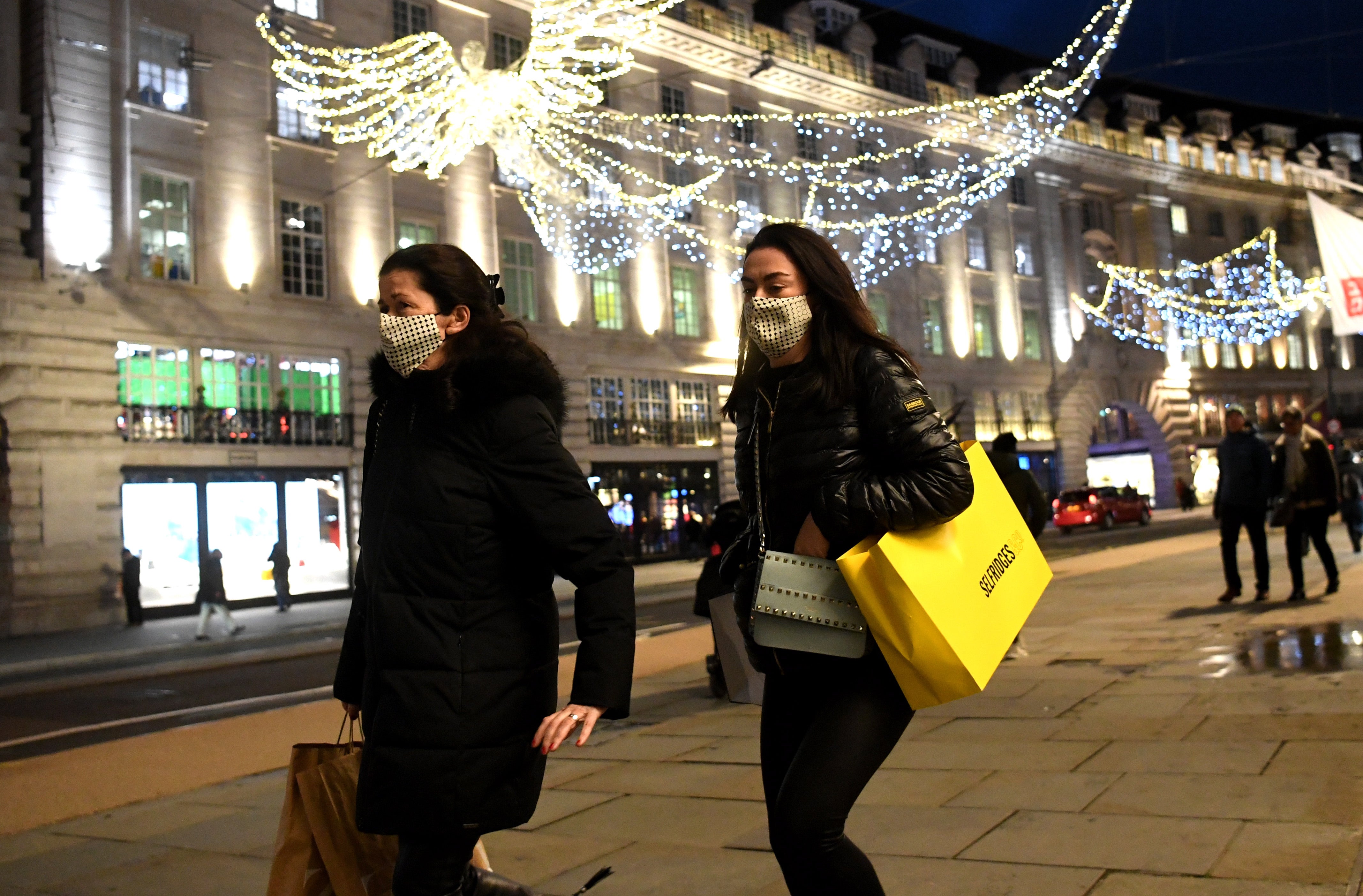
Around 34 million people in England – about 60 per cent of the population – are set to be under the highest level of coronavirus restrictions as London, most of Essex and parts of Hertfordshire move into tier 3 at a minute past midnight on Wednesday.
Matt Hancock, the health secretary, announced the measures earlier this week following a surge in cases and the discovery of a new strain of Covid-19 in the southeast.
The move to tier 3 will shut all pubs, cafes and restaurants – though takeaway and delivery will remain – and restricts people to meeting friends and family in a limited range of public outdoor spaces, including parks.
Indoor entertainment venues, such as theatres and cinemas, must remain shut and sports fans are barred from attending events in stadiums.
As well as the whole of inner and outer London, the tougher restrictions will cover south and west Essex, including Basildon, Brentwood, Harlow, Epping Forest, Castle Point, Rochford, Braintree, Thurrock, Southend and Chelmsford.
In Hertfordshire, the council areas of Broxbourne, Hertsmere, Watford and Three Rivers will also go into tier 3.
They join Kent, Medway and Slough in the southeast, as well as much of the Midlands, the northwest and the northeast, which were already under the strictest tier.
It comes as Covid-19 case rates are rising in more than three-quarters of all local areas in England, according to the latest data.
A total of 246 out of 315 local authority areas (78 per cent) recorded a week-on-week increase in rates in the seven days to 11 December.
This includes every borough of London, 42 of the 45 local areas in eastern England, and 66 of the 67 local areas in southeast England.
In northwest England, where rates had previously been falling across almost the whole region, the latest figures show they are up in nearly two-thirds of areas (25 out of a total of 39).
All figures are based on Public Health England data published on Tuesday afternoon.
Additional reporting by PA