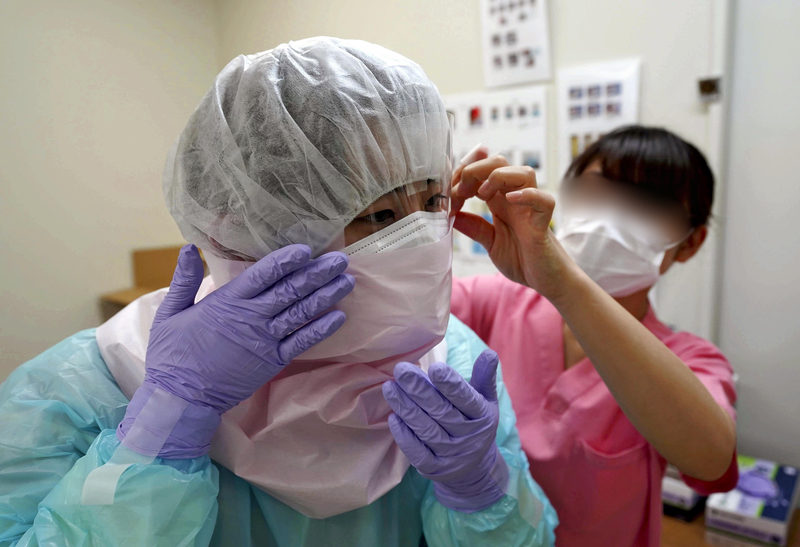
Discrimination and slander are also spreading along with the coronavirus. If medical staff become the target of discrimination, it could cause doctors and nurses to want to quit, putting the foundation of the entire medical system at risk as it continues to combat the pandemic. The current situation and the issues surrounding "corona discrimination" must be brought into the light.
"I understand that people are afraid of an unknown virus, but it's hard to hold it together when people say offensive things to us," a female nurse working at a hospital in Fukuoka Prefecture said. The hospital she works at accepts patients infected with the new coronavirus.
With the spread of the virus, she feels that the attitudes of her usually friendly neighbors have drastically changed. Some people greet her with such remarks as "The hospital is accepting [coronavirus] patients, right?" or "Are you okay?" But their facial expressions indicate less concern and more disapproval. She also hesitates to take the elevator in her building.
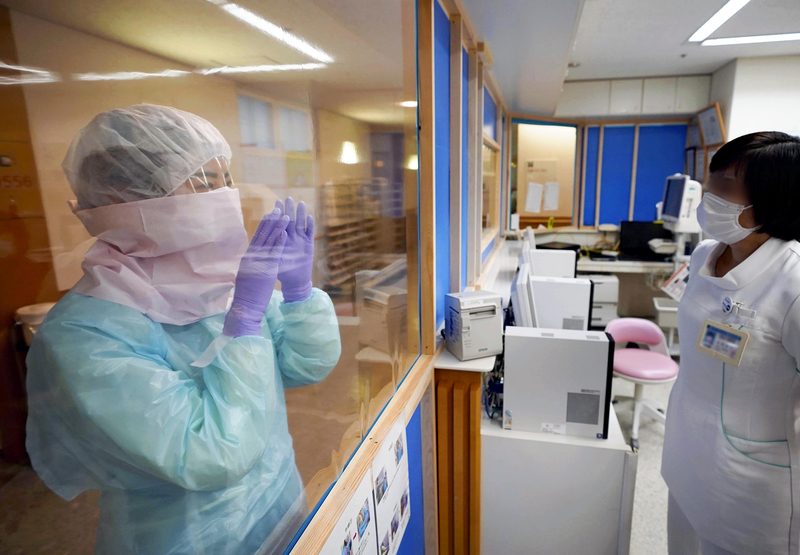
"I am working with the fear that I might get infected, so this [cold treatment] really hurts," she said, sighing.
Discrimination and prejudice are not only targeted at the medical staff themselves but to their family members as well.
In mid-April, a female nurse, 37, at Fujita Health University Hospital, in Toyoake, Aichi Prefecture, took her 3-year-old son to a nursery school before going to work. A staff member at the gate told her, "We would like those who work at Fujita hospital to refrain from coming to our nursery school." She had no other place to take her son, so she did not go to work that day.
"I was hurt that my son couldn't go to nursery school just because I work at a hospital accepting infected patients," she said.
An official of the nursery school operator explained: "We prioritized the lives of other children. That was not discrimination." However, the nursery school later decided to accept children if they had a document proving that their parents have not had "close contact" with coronavirus patients.
There are many medical workers across the country who are troubled by the attitudes of people around them. In an April survey of the Japan Federation of Medical Worker's Unions, which consists of about 177,000 medical personnel, 15 medical institutions, or 10%, of 152 respondents said their staff were being discriminated against and harassed.
"Discriminatory attitudes toward medical workers have become stronger than ever," said Susumu Morita, secretary general of the federation.
These types of situations also cause distrust among medical professionals. At a hospital in the Kanto region, a nurse working with coronavirus patients is said to have heard nurses from another department whisper in a locker room, "Nurses dealing with [coronavirus] patients must be infected."
Read more from The Japan News at https://japannews.yomiuri.co.jp/