Afternoon summary
- In his first official engagement as Labour party leader, Jeremy Corbyn has given a speech about mental health to a small crowd at the Camden and Islington NHS Mental Health Trust fun day in St Pancras gardens, central London.
Stop the jokes, stop the cheap jibes, stop the unpleasant language to describe people who are going through a crisis in their lives and recognise that we could all be in that place.
- Tom Watson, Labour’s new deputy leader, gave an interview to Andrew Marr this morning in which he made clear his opposition to Corbyn’s views on nuclear weapons. “I think the deterrent has kept the peace in the world for half a century,” he said. Watson argued that people did not vote for Labour’s new leader simply because of his opposition to renewing Trident and, like Corbyn, said the party would need to have a debate on the issue.
- Justice secretary, Michael Gove, denied that the Conservative party were jubilant at Corbyn’s win. “The attitude of most of us who are Conservatives is sombre, respectful of Jeremy Corbyn’s mandate, but also concerned about what it means for the country,” he told Andrew Marr.
Jeremy is not going to take us out of Nato. Jeremy is not going to take us out of the EU. If [those who have ruled themselves out of the shadow cabinet] have some passionate commitment to nuclear weapons there may be a difficulty for them with a Jeremy Corbyn leadership, but if they have a passionate commitment to nuclear weapons they may find themselves out of step with Labour party members.
- Frank Field, the Labour MP and former welfare minister – who was one of the Labour MPs who nominated Jeremy Corbyn for the leadership even though he did not support him – told Sky’s Murnaghan programme that Corbyn won because the other three candidates did not have anything to say.
That’s all for today. Andrew Sparrow will be back tomorrow morning to bring you more live political news. Thanks for all the tweets and comments.
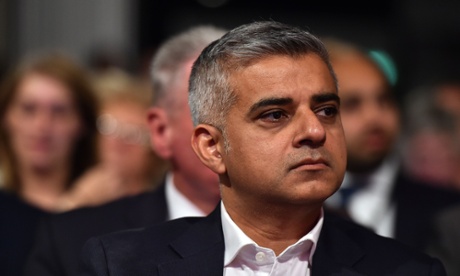
Politics Home has quotes from Sadiq Khan’s interview with Sky News, which I missed. Labour’s new London mayoral candidate said he was an “independent-minded” person and that there could be issues he would disagree with Corbyn over in the future.
There may be times when Jeremy and I agree. There may be times we disagree. I’m sure there will be more occasions where we agree. And just like I will fight with the Government if I need to to get the best deal for London, there may be tension between me and the Labour leadership. I’m an independent-minded person.
Updated
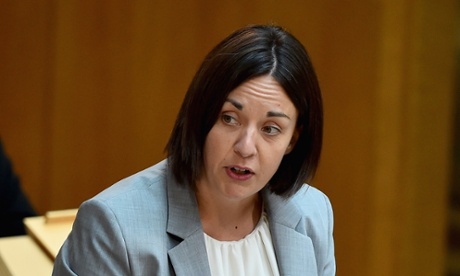
The Guardian’s Scotland correspondent, Libby Brooks, reports on Kezia Dugdale’s appearance on Sky News.
Speaking on Sky News, the Scottish Labour leader Kezia Dugdale said that she saw it as “the job of everyone in the Labour party to unite behind Jeremy Corbyn and make it work”.
Despite openly expressing her concerns about Corbyn before the vote, Dugdale was one of the first people that the new UK leader met after his election yesterday, and acknowledged in his acceptance speech the fight that Scottish Labour faces in advance of next May’s Holyrood elections. He is expected to visit Scotland next week.
Asked about Nicola Sturgeon’s comments suggesting that if Corbyn’s leadership failed to offer a convincing alternative to the Tories then it would make the case for independence stronger, she said: “It’s very interesting to hear Nicola Sturgeon say these things because during the summer she was championing Jeremy Corbyn and so the change of tune is quite significant.”
Adding that voters in Scotland “don’t want to reheat the arguments of the past”, she added: “We were told here in Scotland that the referendum on independence was a once in a lifetime, once in a generation opportunity. 85% of Scots went to a ballot box last year and [the majority] voted no.”
In an interview with the Guardian in July, Dugdale offered serious reservations about Corbyn’s candidacy.
“There are loads of people [in the Labour party] who are quite prepared to say ‘Och, it doesn’t matter if he doesn’t look like a prime minister, there’s someone who’s authentic and says what they believe’.”
“But I want there to be a Labour government; otherwise I’m wasting my time. I don’t want to spend my whole life just carping from the sidelines.”
“So you have to convince me that he can be [prime minister]. Here’s a guy that’s broken the whip 500 times. So how can the leader of the party enforce discipline with that record?”
However, today she insisted that the Labour party should now unite behind a leader with a “whopping” mandate, while maintaining her autonomy as Scottish leader: “I am the leader of the Scottish Labour party so the positions that we take will be decided by me here in Scotland alongside my team.”
“I look forward to welcoming Jeremy to Scotland next week, we’ll do a visit together, we step on the front foot, standing up for hard working families,we stand side by side on issues like taking on the Tories’ attack on trade union rights, on their attempts to cut working family tax credits, I think that’s what people across the country want to see.”
“I see a united Labour party, a leader with a convincing mandate, a whopping 69%. It’s the job of everyone in the Labour party to unite behind Jeremy Corbyn and make it work.”
A Labour source says it’s unlikely that there will be any shadow cabinet announcements today, though they weren’t ruling it out completely.
Would be very surprised if Umunna stayed on. For one thing, he's already given his staffers redundancy, AIUI.
— Stephen Bush (@stephenkb) September 13, 2015
I wonder who will speak for Labour tomorrow in DCLG questions and TU debate with Emma Reynolds and Chuka gone (or has he)?
— Therese Coffey (@theresecoffey) September 13, 2015
Chuka Umunna still hanging in. Sources say he plans to lead Labour opposition to Trade Union Bill in Commons tomoro - unless he's sacked...
— Jason Groves (@JasonGroves1) September 13, 2015
The New Statesman has a good list of who is in and who is out of the new shadow cabinet here.
Updated
Corbyn will not take the UK out of Nato, says Abbott
Diane Abbott, one of Corbyn’s most vocal supporters among Labour MPs, has told the BBC’s World this Weekend that he will not be pulling the UK out of NATO or the European Union.
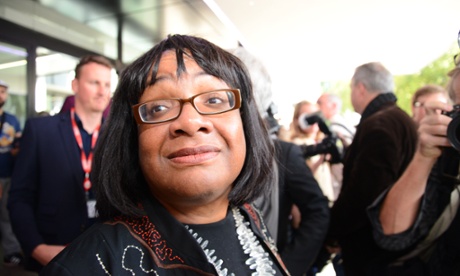
Asked whether she would serve in Corbyn’s shadow cabinet, Abbott said: “I haven’t been asked and unlike some people, I’m not turning down jobs I haven’t been offered. I think it’s extraordinary all of these people getting front page attention for resigning from jobs they haven’t been offered.”
She said she thought that those who had ruled themselves out of serving on Labour’s new front bench should “stop reading the papers about what Jeremy thinks and ask Jeremy what he thinks.”
“Jeremy is not going to take us out of Nato. Jeremy is not going to take us out of the EU. If [those who have ruled themselves out of the shadow cabinet] have some passionate commitment to nuclear weapons there may be a difficulty for them with a Jeremy Corbyn leadership, but if they have a passionate commitment to nuclear weapons they may find themselves out of step with Labour party members.”
She said of leaving Nato and the EU: “That’s not the programme [Corbyn] competed to be the leader on. I can say with confidence, Jeremy is not taking us out of Nato and he is not taking us out of the EU. Those are red herrings.”
Corbyn has previously said that there needed to be a “serious debate” about the UK’s membership of Nato, arguing in a leadership campaign hustings organised by the Daily Mirror that it was a Cold War organisation and “should have been would up in 1990”.
Updated
Jeremy Corbyn gives a speech on mental health
On his first full day as Labour party leader, Jeremy Corbyn has given a speech to a small crowd at the Camden and Islington NHS Mental Health Trust fun day in St Pancras gardens, central London. He describes it as his first official engagement as leader of the opposition.
You can watch the speech on Periscope here and here is an extract from the beginning of his speech
I want to make it clear that this is the first official engagement since the election yesterday and I do so for a number of reasons. Because I’m a local MP and support the work of the trust and all the volunteer groups and all the other groups that come together to build that community around mental health. But also because I wanted to send out a message that all of us together have got to work on issues of mental health, mental health policy and mental health spending within our national health service.
I’ve just completed this Labour party leadership election campaign yesterday and yesterday was the 100th event that I’ve done since the campaign started, coincidentally 100 days ago, and during that time I’ve taken part in 29 or 30 hustings meetings and lots of other public meetings and rallies, discussions, debates and so on... I make a note of all of the questions put to me and I’ve dealt with well over 1,000 questions during that period all over Britain – England, Wales, Scotland, Northern Ireland, Dublin as well because we had a union conference there, and in many many towns and cities all across the country – and in almost every single one of them, if I hadn’t already raised the issue of mental health expenditure in my speech at the opening, it was certainly raised in discussion....
Because as a society we have to recognise that one in four of us during out life time will suffer a degree of depression, some of it will be very severe, some of it will be less so. Many of us will become sufferers of Alzheimers or other forms of dementia. We all have family or friends who are going through periods of stress. And now this can be dealt with, it can be supported, it can be treated. It can be treated by various therapies, talking therapies, as well as drug therapies. In some cases people need to go into hospital to be cared for and supported. But we have to do two things – recognise that mental health is an intrinsic part of our national health service... it’s instrinsic, central and absolutely the main part of it for many people and their lives.
...Stop the jokes, stop the cheap jibes, stop the unpleasant language to describe people who are going through a crisis in their lives and recognise that we could all be in that place.
Updated
Instead of speaking to Andrew Marr this morning, Corbyn has been at his local NHS mental health trust’s fun day.
Attended & spoke at Camden & Islington NHS Mental Health Trust's Fun Day -important annual community engagement event pic.twitter.com/sZO81K6yGT
— Jeremy Corbyn MP (@jeremycorbyn) September 13, 2015
Jeremy Corbyn's first morning as Labour leader: speaking in Islington on mental health, a longstanding engagement: https://t.co/ddHNOgev0t
— Rowena Mason (@rowenamason) September 13, 2015
Updated
The man himself, Jeremy Corbyn, has penned a piece for Comment is Free in the wake of his victory.
He says that nobody can now “seriously claim that young people aren’t interested in politics or that there is no appetite for a new kind of politics” and insists that his leadership will be about unity.
Here are some key quotes from the piece –
- “We fought and won on the basis of policies, not personalities, without abuse or rancour. For the absolute avoidance of doubt, my leadership will be about unity, drawing on all the talents – with women representing half of the shadow cabinet – and working together at every level of the party.”
- “This is not going to be about the leader issuing edicts from on high. My leadership will be about bringing together ideas from all levels of the party and Labour movement, from the backbench as well as the front bench, drawing inspiration from a hugely expanded party in the communities and using everyone’s talents to develop policy, resist this government’s attacks on communities and build support for political change.”
- “The most important message my election offers to the millions who we need to vote Labour and turn the Tories out of office is that the party is now unequivocally on their side. We understand aspiration and we understand that it is only collectively that our aspirations can be realised.”
My colleague Matthew Taylor is at the Trade Union Congress annual conference in Brighton. He sends this report.
As delegates arrived for the annual get together of the Trade Union movement in Brighton this morning there was a sense of wary celebration following the election of Jeremy Corbyn as Labour leader.
The trade unions overwhelmingly backed Corbyn in the leadership race but for Glen Kelly, who was setting up an anti-austerity stall on Brighton sea front, Saturday’s result is the start rather than the end of the challenge facing Corbyn’s supporters.
“The real fight starts now, he has got to watch his back and his front... there are those in the Labour party who are out to get him already and therefore he is going to need all the allies and support he can get from the trade union movement.”
Inside the hall one delegate who had been at Corbyn’s celebratory party in a central London pub on Saturday night, said there had been a sense celebration but also of “bafflement” among his inner circle.
“It is very exciting but now there is a bit of bafflement - we have won, and we are not really used to winning, so what what happens next will be very interesting.”
Tom Hedley, 65, articulated the thoughts of many when he said Corbyn’s success indicated the old political rules were changing.
“It is part of a different type of politics that has seen the rise of UKIP, the SNP and the Green party. It is good to see someone recognising that and taking it on... I would be interested to see what he does in terms of reaching out to the Green Party and the SNP because if we all get together on key issues it will be very intersting.”
I’m Frances Perraudin and I’ll be taking over from Andrew Sparrow for the rest of the day.
Following Corbyn’s decisive victory yesterday, I’ve dug out an interview I did with him for the Guardian’s Politics Weekly podcast on 10th June. I spoke to him a week after he’d declared his candidacy and five days before he made it on to the ballot.
It makes for interesting listening given all that’s happened. Here is a key quote.
“[There were] a number of discussions among left MPs in parliament about what to do and eventually, a week ago, we said we’d try and put somebody’s hat in the ring to try and promote that [anti-austerity] debate,” says Corbyn.
“If we get [on to the ballot paper], great,” he adds. “We’ll see what happens, but as far as I’m concerned we’ve already – by the action we took a week ago – changed the terms of debate.”
“There are a lot of people who actually profoundly disagree with me, and have disagreed with me for 30 years, who say ‘well, at least you’re saying something different’. They are kind of appreciative of that.”
You can read my write-up of the interview here.
Actually, I see that it may take quite some time before we get the full Labour front bench. In an interview with the Sunday Mirror Jeremy Corbyn said that he would try to appoint as many shadow ministers as possible over the weekend, but he suggested the full team might not be ready until the start of Labour conference at the end of the month.
I’m now handing over to my colleague Frances Perraudin for the afternoon.
On Radio 5 Live Pienaar’s Politics Len McCluskey, the Unite general secretary, also said he thought the shadow cabinet would be the best for many years.
It will be a talented shadow cabinet, perhaps the best we have seen for many years, and I think it will be balanced and will be drawn from all elements of the party.
Quite when we will get the shadow cabinet, though, remains to be seen.
Field says Corbyn's three leadership rivals 'had nothing much to say'
Frank Field, the Labour MP and former welfare minister, was one of the Labour MPs who nominated Jeremy Corbyn for the leadership so that he could get on the ballot even though he did not support him, told Sky’s Murnaghan programme that Corbyn won because the other three candidates did not have anything to say.
I nominated Jeremy, hoping that we would get [a great policy debate], and Jeremy set out, as he has always done over all the years that I’ve known him, the views he held when he first came into parliament. What was shocking and surprising and challenging was that the other three candidates, who in a sense in different ways represent the Blair children of the Labour party, had nothing much to say. The cupboard is bare. They didn’t take him on because it turned out they didn’t have actually much to say. We were offered thin Blairite gruel which one realised immediately where this would have landed us in 2020.
But he also warned that he did not think the voters would back Corbyn’s idea.
I’ve taken the quote from PoliticsHome.

Gove says Corbyn's victory could increase the chances of street protests
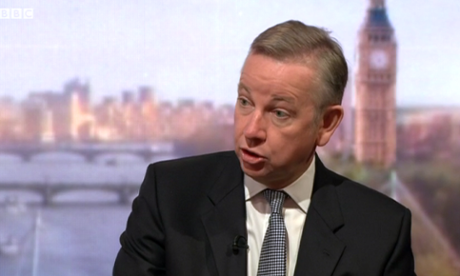
And here are the key points from Michael Gove’s interview on the Andrew Marr Show.
-
Michael Gove, the justice secretary, claimed that Conservatives were “sombre”, not jubilant, about Jeremy Corbyn’s victory.
The attitude of most of us who are Conservatives is sombre, respectful of Jeremy Corbyn’s mandate, but also concerned about what it means for the country.
-
Gove claimed that Corbyn’s victory could increase the chances of protests breaking out on the streets.
There are some people behind [Corbyn] who do have a tradition in politics which is very different to Jeremy Corbyn’s own humane tradition. And I do worry, as we saw even in the last parliament with organisations like UK Uncut, that there are some people who want to bring protest onto the street. I think it’s important that we keep our politics civilised.
And one other concern that I have is that, actually, if you have a strong opposition leader, if you have a strong alternative prime minister then people are less inclined to take their anger onto the streets; they’re more inclined to see the House of Commons and civilised political discourse as the way to change this county. So there is a danger, I think, to the health of our democracy overall that Labour have not chosen someone who would be their strongest alternative prime minister.
-
Gove said Corbyn could become prime minister.
It is conceivable that Jeremy Corbyn would become prime minister and have to face up to that reality.
-
He said a Corbyn premiership would threaten national security.
He would give up our nuclear deterrent at a time when other countries, and indeed terrorists, are anxious to acquire a nuclear capacity. He would, as he made perfectly clear, like to leave the Nato alliance, desert our friends - the Dutch, the French, the Americans. And the people he calls friends in the international sphere are the terrorist organisations Hamas and Hezbollah.
I’ve taken some of the quotes from PoliticsHome.
Earlier I posted the Survation figures showing what voters think of Jeremy Corbyn. (See 9.01am.) I said that in the circumstances, his polling figures were not as bad as one might expect.
On Radio 5 Live’s Pienaar’s Politics Len McCluskey, the Unite general secretary, made a similar point. He said:
I noticed a Survation poll this morning in one of the papers and the most extraordinary thing about it was the huge amount of don’t knows. Now, given the fact that over the past four months Jeremy has been absolutely attacked unmercifully, day in, day out, day in, day out, the fact that so many people are saying they are still not sure, that means they are saying ‘Give him a chance, we’ll listen to what he’s got to say’.
In the comments yahyah asked what the approval ratings were for leaders like Tony Blair and David Cameron when they first became opposition leader. This Ipsos MORI chart provides some answers.
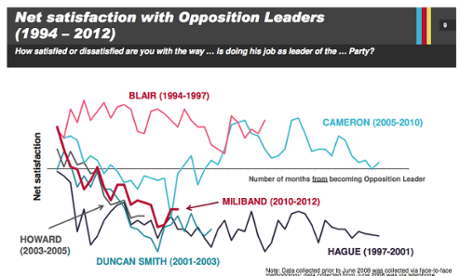
Marcus Roberts, the former Fabian Society deputy general secretary and one of the managers of Sadiq Khan’s campaign for the London mayoral nomination, has written a piece for the Guardian website that will be going up shortly. In it, he predicts that Jeremy Corbyn will enjoy a bounce in the polls. Here’s an excerpt.
Offering clarity on politics that for years now Labour has given complicated answers to will be well received by an electorate tired of long, caveated policy statements from politicians. Rather Corbyn will be to many voters refreshingly direct with a political stance which might be boiled down to ‘immigration good, spending good, welfare good; war bad’.
This clarity will underscore his authenticity - a vital ingredient for connecting with voters as the electorate will know swiftly who he is and what he stands for - hurdles that Ed Miliband even after five years in the job struggled to overcome. Expect even voters who disagree with Corbyn’s politics to give him high marks for having the courage of his convictions and clearly stating his beliefs.
The risk is that this may create a strange polling situation in which Corbyn enjoys artificially high personal approval ratings as even those with no intention of voting for him tell pollsters they view him positively whilst still having no intention of voting for him.
Tom Watson's Andrew Marr interview - Summary
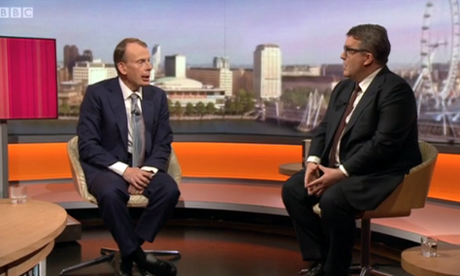
Here are the key points from Andrew Marr’s interview with Tom Watson, the new Labour deputy leader.
- Watson signalled that he would resist Jeremy Corbyn’s attempt to commit Labour to getting rid of the nuclear deterrent. He said the party would have to settle this disagreement. But it would not be “easy”, he said. Corbyn is a unilateralist, and yesterday he said he hoped the party would “come together” behind his position.
My views on Trident are very well known. There has to be a discussion about that, and I’m hoping that the party will come together around this issue. We don’t need nuclear weapons. We need to keep those people who make them in good jobs so we have defence diversification. But we need to fulfil our obligations under the non-proliferation treaty.
But Watson told Marr that he personally was in favour of the nuclear deterrent. “I think the deterrent has kept the peace in the world for half a century,” he said. Like Corbyn, he said this was a matter that the party would have to resolve. But he said that, just because Corbyn had a mandate, that did not mean that the party would have to follow his view. Watson said he had his own mandate:
I’ve stood on a platform. I’ve got my own mandate to reform the Labour party ... But I’ve also been very honest about where I stand in that process and the members have given me my own mandate. I guess what that says is, ‘Let’s give our democracy back to our Labour party members and let’s have a democratic decision on that through our own internal mechanisms’, and we’re all going to have to adhere to that. And that’s not going to be easy.
Watson also said he not not accept that people were voting for Corbyn solely on the issue of Trident.
-
Watson said that he did not know precisely what Corbyn’s position on Nato was. Watson confirmed he was pro-Nato. In the past Corbyn has been anti-Nato, but during the campaign he watered down his opposition, saying he accepted there was no public appetite for leaving it. Watson said:
If I’m being honest with you, I don’t know precisely what Jeremy’s position is. But I know that what I’ve read in the papers is that he understands that Nato needs to exist, he respects the views of many party MPs and members on this, but he wants to make sure that it does not expand eastwards.
-
He said that Corbyn wanted to end the “bully-boy” nature of prime minister’s questions in the Commons.
The one thing I hope we can change is that sort of bully-boy, scoring points at prime minister’s Question Time. The Speaker has spoken about this a lot. I’m with Jeremy on this. I detest prime minister’s question time. I think it’s a very bad showcase for British democracy. And I hope we can work with David Cameron to make it more inquisitive and more thoughtful.
But he said he did not know whether Corbyn would be going ahead with the proposal to allow other Labour MPs to stand in for him on occasion.
- Watson said there was “zero chance” of Corbyn being toppled in a coup. “Labour party members will not accept that,” he said.
- Watson played down concerns that Labour MPs opposed to Corbyn would be deselected. Corbyn wanted a broad-based party, he said.
- He played down the significance of MPs refusing to serve on the front bench, saying there were “plenty of ambitious and talented people” in the parliamentary Labour party who could serve instead.
-
He said he and Corbyn wanted to democratise the Labour party. Too many other parties were “shell parties”, he said.
There are too many political parties across Western Europe, and I look at our opponents - they are almost shell parties. They are run by advisers and people on the front bench. What we want is a vibrant democracy.
Updated
Gove says the decision to authorise the drone strike that killed two British jihadis in Syria was taken on the grounds of self-defence. The decision was not taken lightly. There was extensive consideration of the legal arguments.
Q: Was the UN notified?
Gove says he does not know.
(Number 10 said the UN was notified, but only about two weeks after the attack, when it was made public.)
Q: Do we need another vote on Syria?
Gove says he thinks it was a “great pity” that the Commons did not vote to authorise air strikes against Syria in 2013.
Q: Does Corbyn’s election make it harder for the government to win a vote on this?
Gove says he does not know.
And that’s it. The Marr show is over. I’ll post a summary soon.
Newsnight’s Jess Brammar also thinks Gove deserves an acting award.
@janinegibson his "Tories aren't gleeful, they're sombre" act is hilarious
— Jess Brammar (@jessbrammar) September 13, 2015
The Daily Mail’s Jason Groves is not impressed by Michael Gove’s “Corbyn could be prime minister” assertion.
Michael Gove doing an impressive job keeping a straight face while saying: 'It is conceivable that Jeremy Corbyn could become PM'
— Jason Groves (@JasonGroves1) September 13, 2015
Gove says the Tories need to lay out the scale of the risk to the UK Corbyn would pose.
Corbyn would unilaterally disarm, at a time when other countries are trying to acquire nuclear arms, he says.
Q: Some people look at all the wars we’ve had and said they feel less secure, not more secure.
Gove says he understands that. Intervening in the affairs of another country is a very serious thing to do.
Corbyn is simultaneously isolationist, but also minded to sympathise with people engaged in conflict.
Q: Could there be a left and right alliance taking us out of Europe?
Gove says he does not expect that. He thinks David Cameron will secure change in Europe.
Michael Gove's Andrew Marr interview
Michael Gove, the Conservative justice secretary, is one now.
He congratulates Jeremy Corbyn.
Tories are not gleeful, he says. They are respectful of his mandate. But his policies would be very bad for the country, he says.
He says Corbyn could win an election.
Some people are treating the election just as a social media event.
Having Corbyn as prime minister would be a threat to our national security, and to our economic security, he says.
Q: What is your view on bombing Islamic State in Syria?
Watson says he is concerned about the “mood music” around this. As a former defence minister, he knows air power alone cannot defeat Isis. He would want to hear what David Cameron’s plans are. And there is no support for troops on the ground.
Q: Can Corbyn’s Labour speak with one voice on Europe?
Yes, says Watson.
He says Europe has delivered many benefits. He will definitely be a yes to Europe campaigner, he says.
Q: Corbyn is a serial rebel. And you helped to bring down Tony Blair. How can you appeal for loyalty?
Watson says he hopes the power of argument will apply.
Q: There are no women at the top of the Labour party now.
Watson says he hopes there will be gender parity in the shadow cabinet.
But he wants more working class representation in parliament.
And there are no Sikhs in any legislature in the UK.
Q: Do you want the £3 supporters to become members?
Yes, says Watson. He would like them to pay more money so they become members.
Q: So you won’t just convert them into members?
Watson says he is not sure that is practical.
Q: How are you going to be able to be loyal to Corbyn when you are pro Trident and pro Nato, and Corbyn is not?
Watson says the party will have to work this out.
Q: But Corbyn was elected with 60% support?
Watson says he has a mandate too.
Let’s give democracy back to Labour members, he says.
Q: But what about the fact that people were voting for Corbyn because they wanted him to scrap Trident?
Watson says he would be surprised if that was the only reason people were voting for him.
Q: Corbyn is chair of the Stop the War Coalition. There is a massive disagreement on this.
Watson says he does not know precisely what Corbyn’s position on Nato is.
He says Corbyn accepts Nato should exist, but he wants to stop its expansion.
Q: Will people be able to serve on the front bench but criticise the party’s policy?
Watson says Corbyn wants to create an intellectually curious party.
There are too many shell parties in the western world, he says.
Q: Is it right that Corbyn won’t be doing PMQs himself all the time?
Watson says he “detests” PMQs. He wants to change the bully-boy aspect of it, and make it focus on policy.
Q: Will Corbyn rotate MPs at PMQs?
That has not been decided yet, says Watson.
Tom Watson's Andrew Marr interview
Tom Watson is on the Andrew Marr show.
He says he understands the concern that Labour MPs feel about the fear of being deselected.
But Jeremy Corbyn has a big mandate, he says.
And Corbyn says he wants to build a broad-based party.
Q: And what is your message to MPs talking about a coup?
That is not going to happen, Watson says.
He says he understands people leaving the frontbench. He has done it himself some times.
Jeremy Corbyn is working on his shadow cabinet today. This extract, from Tim Shipman’s Sunday Times Red Box morning email briefing, usefully sums up the state of play on shadow cabinet posts.
Turning to the shadow cabinet, Rosie Winterton is already the face of continuity as chief whip. Angela Eagle is a racing certainty for shadow chancellor and Hilary Benn is expected to keep the foreign portfolio. But the revolt of the moderates has begun and at least ten of them are refusing to serve in Corbyn’s top team.
Rachel Reeves, Yvette Cooper, Liz Kendall, Tristram Hunt, Chris Leslie, Emma Reynolds and Jamie Reed are gone. Dan Jarvis, Vernon Coaker and Shabana Mahmood have all said they would not serve, and Chuka Umunna is expected to follow them. Stella Creasy, the runner-up for the deputy leadership, said she had no interest in a job either. Friends of Burnham say he would rather spend time with his kids.
The Mail on Sunday has published the findings of an online Survation poll about Jeremy Corbyn than it says it carried out straight after his victory yesterday. They’ve led their story on the finding that almost 40% of people say they expect Labour to lose the next two elections now he has become leader.
First post-Corbyn elected polls - Survation in Mail on Sunday pic.twitter.com/QeCCSZ556Q
— Mike Smithson (@MSmithsonPB) September 12, 2015
But, actually, that’s a fairly daft question, because 2025 is so far away that it is hard to have a sensible view on what might happen then.
Some of the other findings are more useful. Here are the figures for whether Corbyn is fit to be prime minister, and whether his victory makes people more or less likely to vote Labour.
More for findings from first post Corbyn election poll - Survation in Mail on Sunday pic.twitter.com/aX0wGUpbC2
— Mike Smithson (@MSmithsonPB) September 12, 2015
And here are the figures for who would be the best prime minister.
David Cameron: 44%
Jeremy Corbyn: 27%
These are poor, but they are not half as bad as one might expect given what people have been saying about Corbyn.
Perhaps what’s reassuring is that 43% say they just don’t know whether Corbyn is fit to be prime minister. Given that he has been Labour leader for less than 24 hours, and that what he will be like as leader is still largely a mystery, this shows a large number of respondents giving a rather sensible answer.
It’s Jeremy Corbyn’s first full day as Labour leader. He is not due to give interviews today, but he is drawing up a new shadow cabinet (it is not clear yet when we will get the names) and we will not be short of reaction to his remarkable victory yesterday.
As the Observer reports in its splash, Corbyn said yesterday that he had had won a “huge mandate” and that he expected senior figures in the party to support him.
I think the membership and supporters will want and expect members of the parliamentary party to cooperate with the new leader and let us develop an effective strategy for opposing the Tories on the issues I outlined in my speech: welfare reform, trade unions, budget and so on.
But there seem to be plenty of figures, particularly on the right of the party, who seem to be in no mood to rally behind Corbyn and they feature prominently in the Sunday papers. For example, David Blunkett, the former home secretary, says the Corbynites live “in a parrallel universe to the rest of the electorate”. In an article in the Mail on Sunday he writes:
The new leadership and those around them have tapped into an anti-establishment, anti-austerity, anti-war mood.
Ironically, it will be their determination not to compromise, including with the electorate, which will bring them down. Because disillusionment will follow as night follows day when it becomes clear that they are disengaged from, and in a parallel universe to, the bulk of the electorate.
Those of us who have seen this all before can forgive young people eager for something new and those under 40 who have no meaningful recollection of the politics of the 1980s. The same cannot be said for the zealots who have re-emerged to capture the Labour Party and take it back to a bygone era.
Blunkett also says he is worried that Corbyn’s victory could lead to the return of leftwing “thuggery” in Labour politics.
There is one other lesson of the early 1980s that we must not have to learn all over again. This was a form of internal politics which can only be described as thuggery: the attempt to intimidate, to bully and to manipulate the internal processes of the Labour Party in the interests of a few while proclaiming that this was for the benefit of the many ...
Jeremy is not a thug but those hanging on his coat-tails have been less than reassuring in their pronouncements.

In an article in the Sunday Times (paywall), Lord Mandelson, the former business secretary, says Labour cannot win under Corbyn’s policies.
It is not Corbyn’s values or personality that are the problem but his views and policies. They are far to the left of Labour’s historic mainstream, basically a rehash of the early 1980s leftism that allowed Margaret Thatcher to secure a series of electoral victories. It was a political programme that wouldn’t work then and most certainly will not work three or more decades later.
And on Radio 4 this morning Frank Field, the former welfare minister, has said Labour is in crisis.
The crisis engulfing Labour is immensely serious, says MP Frank Field. Attacks paucity of ideas among Corbyn rivals
— steve hawkes (@steve_hawkes) September 13, 2015
"All the evidence we have suggests that Jeremy will lead the party in to a political cul de sac," says Frank Field,one of Corbyn's nominees.
— Harry Phibbs (@harryph) September 13, 2015
I will flag up more from the papers as the day goes on.
And I will be covering the Sunday morning political progammes. Jeremy Corbyn turned down an invitation to appear on the Andrew Marr show, but Tom Watson, the new deputy Labour leader, Michael Gove, the Conservative justice secretary, and David Blunkett will be on the programme.
I will be blogging until 12pm, and then my colleague Frances Perraudin will be taking over.
If you want to follow me or contact me on Twitter, I’m on@AndrewSparrow
Updated