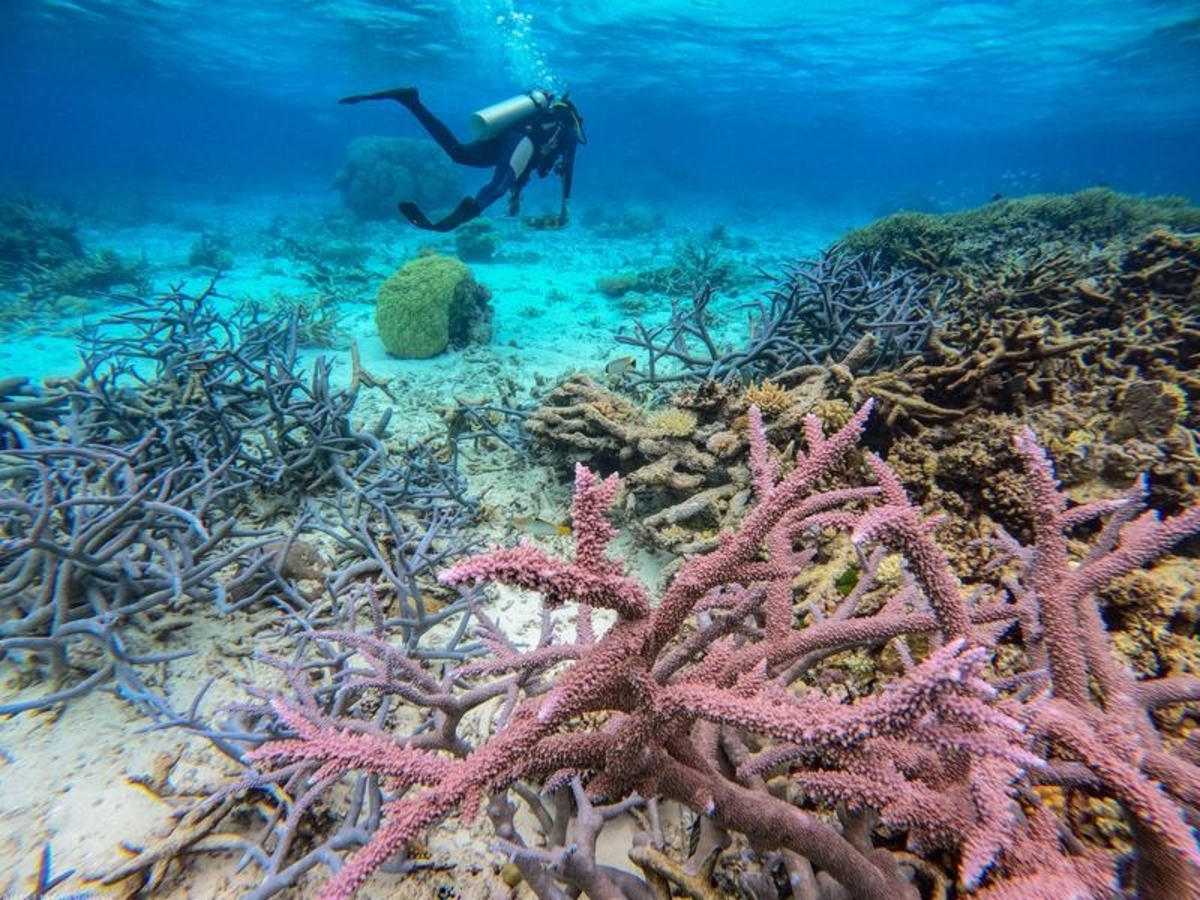
Scientists have returned from the northernmost reaches of the Great Barrier Reef with a precious cargo that could help the natural wonder adapt to climate change.
A dedicated team has been carefully gathering resilient specimens over the past two weeks in the hope of breeding new corals.
The harvested corals are now sitting in outdoor tanks at the world's most advanced research aquarium, near Townsville.
Four to five days after the full moon this month they will release their payloads of eggs and sperm which the scientists will gather and pair with corals from cooler reefs more than 800 kilometres away.
The firm hope is that the new coral will also be tougher and more capable of surviving in warming oceans.
Expedition lead Kate Quigley knows there is a high chance of further success from the project, which is led by the Australian Institute of Marine Science.
It has already spawned and mixed five coral species, with the standout performer - a branching coral called Acropora tenius - able to cope with an extra 3C.
That's no small thing, given repeated warnings by the United Nations that up to 90 per cent of the world's tropical coral reefs will vanish if global warming hits 1.5C, and will be basically wiped out at 2C.
This year's efforts will be focused on new "trickier" species of coral, including one boulder-like type that's important for reef structure and recovery after damaging events such as bleaching and cyclones.
Dr Quigley says the breeding program is an important part of efforts to help the reef, but it's no silver bullet.
"That three degrees (example) was with a very resilient coral. And we know there's many, many hundreds of species on the Great Barrier Reef so more than likely we won't be able to increase all species by the same amount," she told AAP.
"This intervention is very very promising, but we still have to get our emissions under control and we have to have good management on the Great Barrier Reef in order to sustain it into the future."