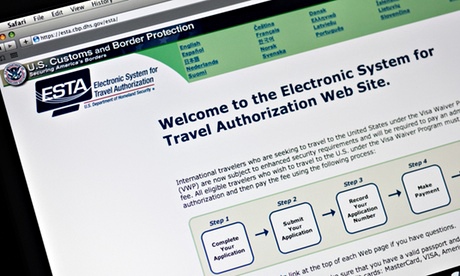
Holidaymakers heading to the US this summer are being warned not to fall for the copycat websites that aim to dupe those applying for the Esta permit – the US’s online visa system – into paying unnecessary fees.
All Brits entering the US either for a holiday or even to switch planes are required under the terms of the Visa Waiver Program to apply online at esta.cbp.dhs.gov/esta, at least 72 hours prior to travel and pay a $14 (£9.15) fee.
However, a host of unscrupulous people have set up copycat websites, where the sole purpose seems to be to catch out the unwary and get them to hand over an additional service or administration fee. They do so by making their website look like the official site, or by just hoping that some consumers don’t know better – and will pay them for the unnecessary service.
Guardian Money has repeatedly warned about this issue, but despite moves by Google, and promises of action by UK ministers, it shows no sign of going away. There is even a warning about fake sites on the official Esta site.
This week Money was contacted by a family from the north east who say they have ended up paying over £100 more than they would have done had they gone to the official US site. They had Googled Esta and clicked on Estavisas.org.uk, which was at the top of the search results.
The site warns that its services are “not in any way affiliated” with the US government’s official portal.
“We provide a reviewing and submitting service for all Esta applications charging a service processing fee,” it claims. Other sites offer a similar service.
However, critics says it is hard to see what services such websites provide, as users simply input their passport details and other information.
And it is not just travellers to the US who are being targeted. Similar sites have been set up in the past to “help” people apply for the free European health (EHIC) card, as well a range of other government or agency services – especially passport renewals.
Both Google and the UK government have pledged to clamp down on a problem that has seen consumers hand over millions of pounds unnecessarily.
In the March budget, George Osborne said the government would give the National Trading Standards Board an extra £250,000 to help it crack down on copycat websites masquerading as legitimate government services.
Trading Standards has warned in the past that online scams and rip-offs are the “fastest growing threat to consumers and businesses in the UK”.
A spokeswoman for Google says the company is “determined to make sure users don’t feel misled” by its ads. It has removed many of the copycat sites in recent months that used to appear at the top of searches.
“We have a set of policies which govern what ads we do and do not allow on Google. Our ‘misrepresentation of self, product or service policy and in particular untrustworthy promotions’ makes it very clear that we do not allow the promotion of sites or services that conceal or mis-state information about the business, product or service – for example, charging users for products or services typically available for free. If we discover sites or services that are in violation of this policy, we will take appropriate action.”
One copycat Esta site was removed from Google searches this week. However, the esta-registration.co.uk site, which charges £29 per application, was still being displayed this week.