Get all your news in one place.
100’s of premium titles.
One app.
Start reading
The Guardian - UK
The Guardian - UK
World

Coping with drought: farmers in east Africa - in pictures

MDG Farmers case studies: Anunu Lojila, Camp-Garba dispensary, Isiolo
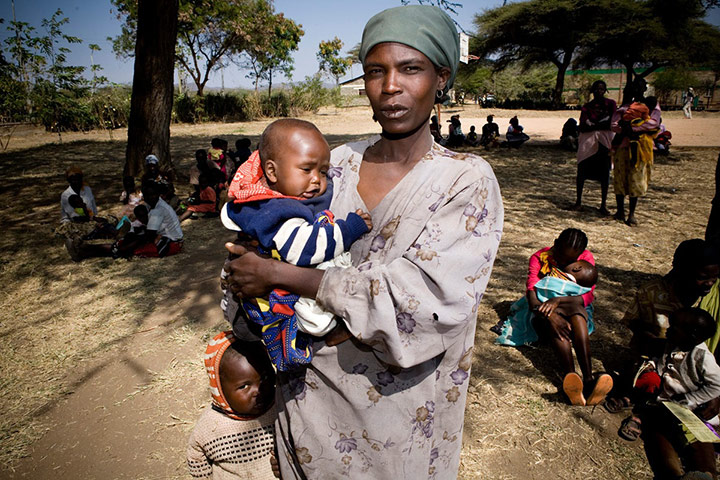
Anunu Lojila, a 35-year-old single mother, at a food distribution centre in Isiolo, Kenya, with Lumuacher and Ekambata, two of her five children. Struggling to pay school fees and buy food because of the drought, she was forced to sell the two goats that were the key to her livelihood. 'We are now fully dependent on relief food,' says Lojila
Photograph: Siegfried Modola/ActionAid Kenya
MDG Farmers case studies:  Ekiu Longolea, Isiolo
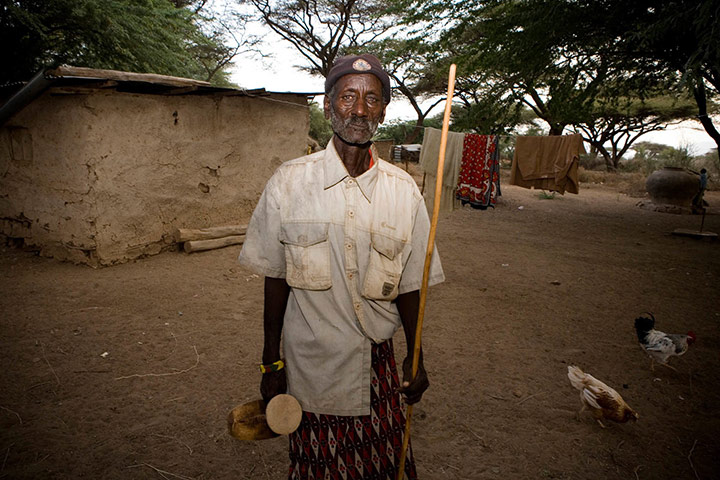
Cattle farmer Ikeru Longolea, 80, has two wives and 18 children. He lives in Ngaremara village, in Isiolo county, Kenya, another area reliant on food relief. 'In my village we all used to have a lot of livestock and we could feed our children very well,' he says. 'Over the past seven years the droughts have become more frequent and severe. Every time a drought comes, the few animals that survive are soon hit by another drought. The other, bigger problem is the scarcity of water. Now, the main source of water is a river about 16km away'
Photograph: Siegfried Modola/ActionAid Kenya
MDG Farmers case studies: Halima Bidu, Modogash
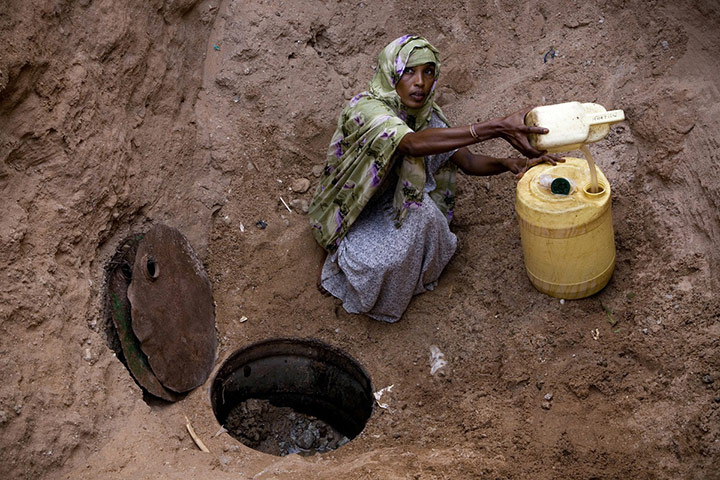
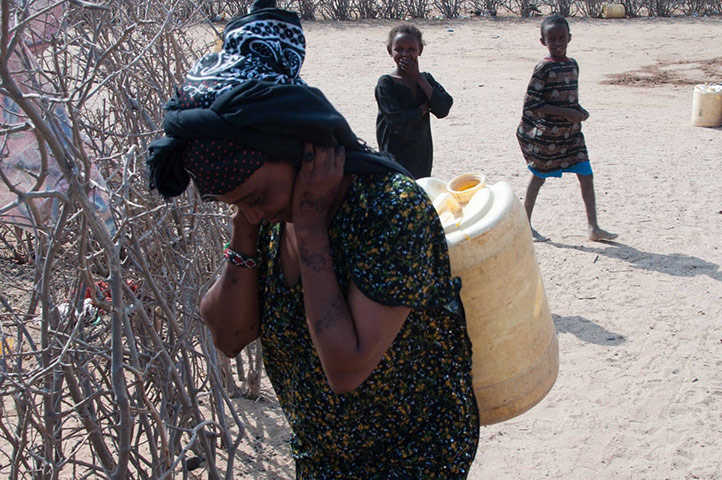
Halima Bidu, 38, is married with four children. She is a herder and teacher, and lives in Modogashe, in the Garba-Tulla district of Isiolo South. 'We have a lot of problems with water here,' she says. 'It can take two hours to fill my jerrycan when I take water from this well because there is so little. We live like animals. I’ve never seen anything as severe as this. I don’t have a single animal left, they all died.” ActionAid is supplying fresh water to affected communities and providing food supplies to families
Photograph: Siegfried Modola/ActionAid Kenya
MDG Farmers case studies: Rose Asunyan and her grandson Felix, Camp-Garba dispensary, Isiolo
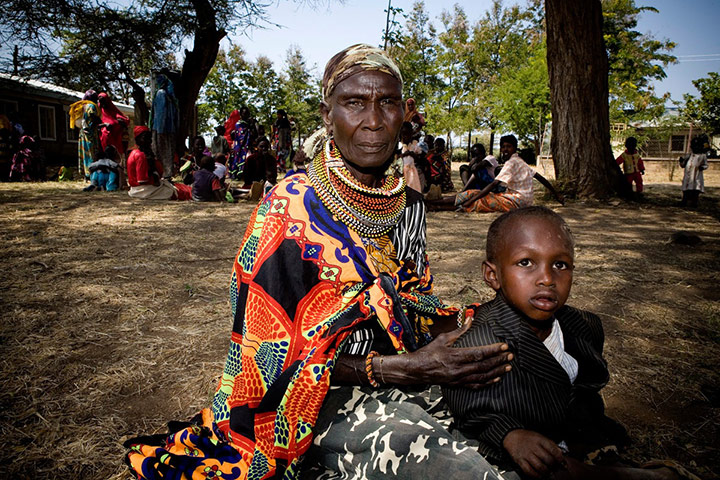
Five-year-old Felix, the grandson of Rose Asunyan, 70, is malnourished. 'My grandson is weaker than the rest of the kids in my family because the others are older and are able to seek casual jobs and buy a little food with the meagre wages they get,' says Rose. 'When they don't get any money they go to Isiolo town and feed from the garbage dumps there.' At Camp-Garba, ActionAid is providing supplementary feeding for malnourished under-fives as well as pregnant women and nursing mothers
Photograph: Siegfried Modola/ActionAid Kenya
MDG Farmers case studies: Asna Hamo with son Yasin
Asna Hamo, 29, has been abandoned by her husband and lives alone with her son and daughter. She collects firewood for a living. They live in Sericho village in north-east Kenya, which has a population of approximately 6,000 pastoralists. 'When I can’t give the children dinner I give them salted water, or I mix a little bit of milk with water. My son gets lunch when he attends school. They also distribute relief food in the village. Without that, we would die’
Photograph: Picasa/ActionAid Kenya
MDG Farmers case studies: a beneficiary of FARM-Africa’s Moyale Pastoralist Project
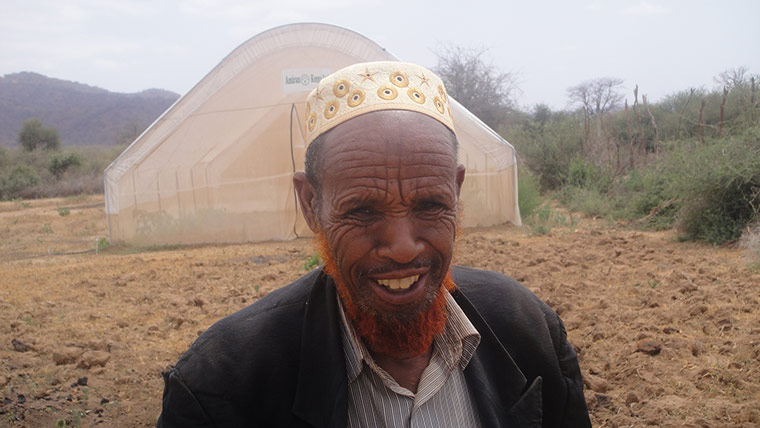
Hapicha Sharamo Adano, 76, is one of many farmers in Kinisa, in Moyale district in northern Kenya, to benefit from Farm-Africa’s Moyale Pastoralist Project. Adano is an agro-pastoralist; he belongs to farmers' group that has received training on farm management, bee-keeping and business development. The Kenyan government has also helped the group. 'We have not experienced such a continuous drought before,' he says. 'The frequency of drought has increased. I had over 100 cattle in 2008. Now, only 11 cows are left. Before, I had wealth to raise my family but now my children and other local children are missing food'
Photograph: FARM-Africa
MDG Farmers case studies: CASE STUDIES LAKE ZIWAY, RIFT VALLEY, ETHIOPIA
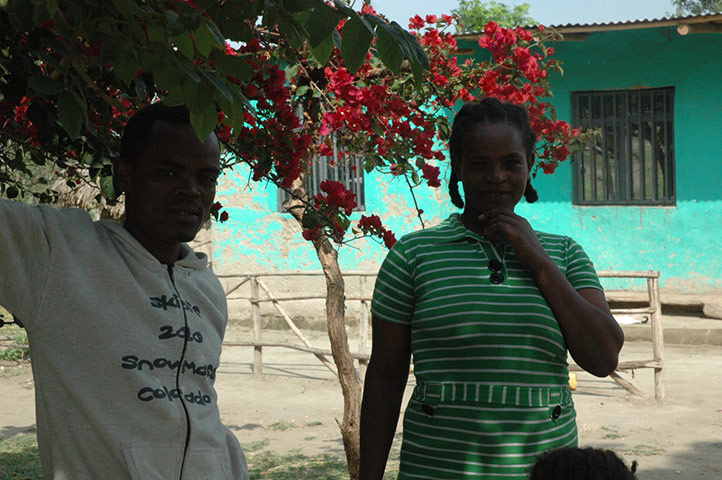
Kuafa Safawo lives with his wife in Lake Ziway, in Ethiopia's Rift Valley. They have plots in their home compounds but make most of their money from fields irrigated by diesel pumps from Lake Ziway, where they grow crops and vegetables. 'There is a recurrent drought every year. When there is no rain we can't grow corn, beans, other crops. Even the irrigation fields can fail'
Photograph: sendacow.org.uk
MDG Farmers case studies: CASE STUDIES LAKE ZIWAY, RIFT VALLEY, ETHIOPIA
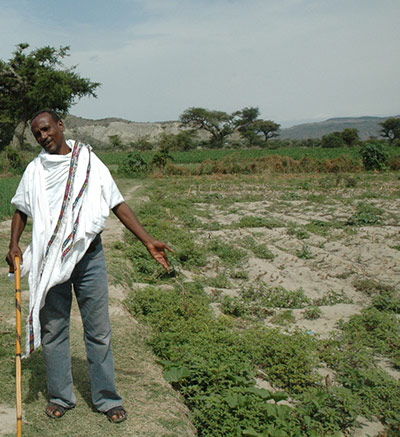
Hirpo Balcha and his wife Tarike Baba also farm for themselves in Lake Ziway. 'Drought has reoccurred for more than four years now. It’s getting more intense. I am very worried about the next few months. My cattle and oxen are already very skinny. They don’t give milk when they get very thin. The hot sun makes the water evaporate when we irrigate our land, before it seeps into the soil. I think this year will be worse than last year and I doubt that the rain will come in the autumn. I am preparing by planting trees that grow better in dry conditions. I am also building a borehole for water in my yard'
Photograph: sendacow.org.uk
MDG Farmers case studies: CASE STUDIES LAKE ZIWAY, RIFT VALLEY, ETHIOPIA
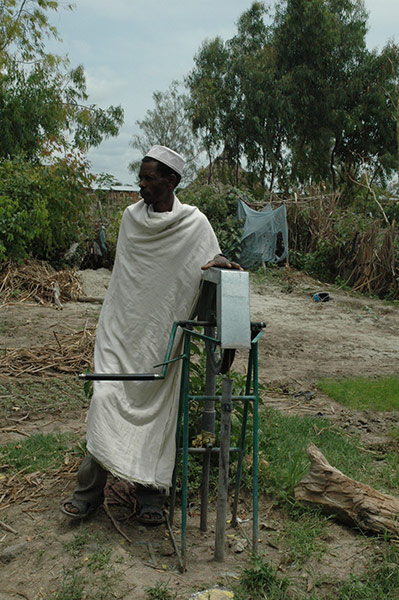
Fadlu Nuriye is a farmer in Lake Ziway. 'I am worried because the weather is so dry at the moment. This year, I planted onions but because there was not enough rain the crop failed so my cattle ended up eating them. Only God knows what will happen in the future'
Photograph: sendacow.org.uk
MDG Farmers case studies: CASE STUDIES LAKE ZIWAY, RIFT VALLEY, ETHIOPIA
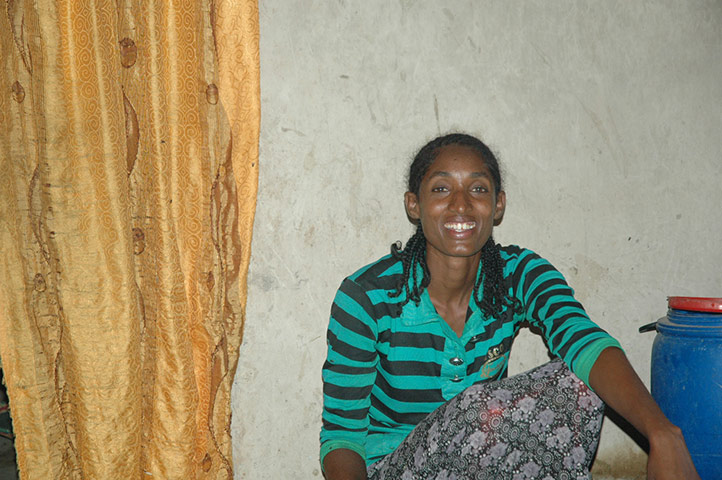
Hawa Galato also lives near Lake Ziway, 'My husband is a teacher and lives far from home. I farm the compound and am also chairlady for my group, Koka Nega. This year the weather has been very different from previous years. If the grass doesn't grow now, there won't be food for the cattle. Fortunately, it was a fruitful year last year and we are still eating corn that we have stored since then'
Photograph: sendacow.org.uk
MDG Farmers case studies: SEND A COW, TESO DISTRICT
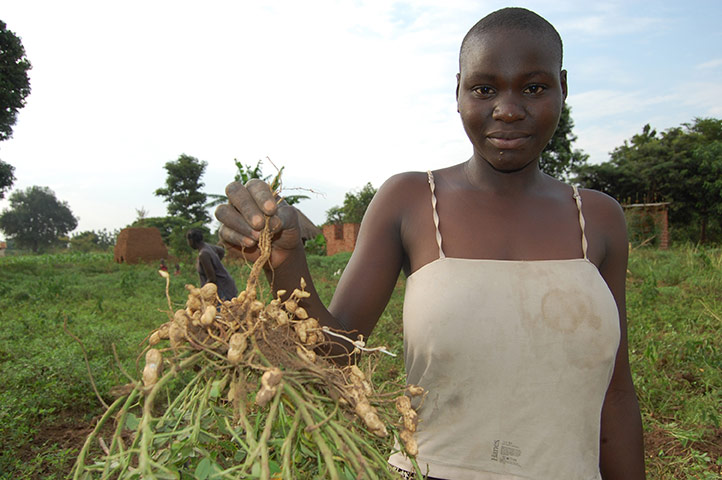
Dinah Akiror, holds peanuts that have been stunted due to the dry weather in Teso district, Uganda. 'We have been told that it is because people have cut the trees and because the Awoja swamp is drying up. We first started to be affected as early as October 2010 and it has gone on ceaselessly till now. Send a Cow gave us improved seeds in 2007 but because of replanting, the grade keeps on reducing'
Photograph: sendacow.org.uk

MDG Farmers case studies: SEND A COW, TESO DISTRICT
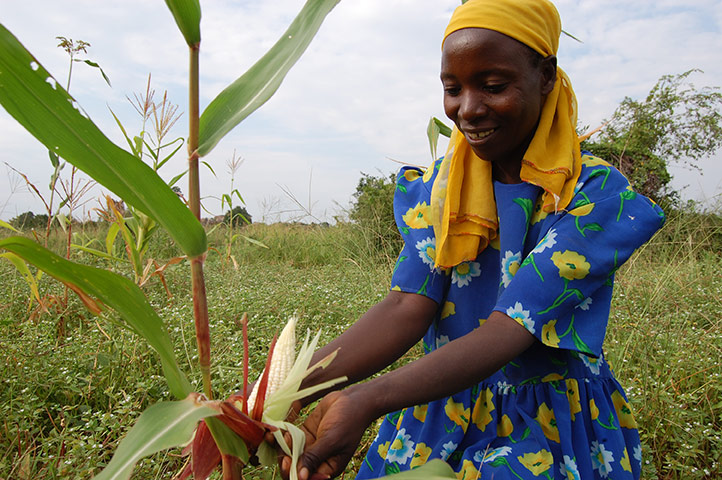
Hellen Akol, 40, who has 10 children, tends to her maize, which has been stunted by the weather in Teso district. 'I have had the worst harvest in more than 10 years. I do not have enough to feed my children. I am not sure I will be able to send my children to school in the next term. The water table has lowered, shallow wells are drying up, and it is a struggle to get water. I do not have any saved seed for the next planting season, yet I do not have money'
Photograph: sendacow.org.uk

Sign up to read this article
Read news from 100’s of titles, curated specifically for you.
Already a member? Sign in here
Related Stories
Top stories on inkl right now
One subscription that gives you access to news from hundreds of sites
Already a member? Sign in here
Our Picks
Fourteen days free
Download the app
One app. One membership.
100+ trusted global sources.