That is it for the liveblog today. A lot has happened and it certainly got more exciting as the day wore on. Here is a quick round up of where we are.
- A draft of the Cop26 negotiation outcome was published overnight. Reaction has largely been negative, but there are some areas where progress has been made. We’ll have a detailed analysis of what it all means from our resident expert Fiona Harvey shortly.
- On transport day, protesters have been advocating for better public transport and a greater focus on sustainable transport modes such as cycling and walking, which have been largely overlooked by officials.
- The Cop26 president, Alok Sharma, urged delegates to “come armed with the currency of compromise … what we agree will set the future for our children and grandchildren and I know we will not want to fail them”.
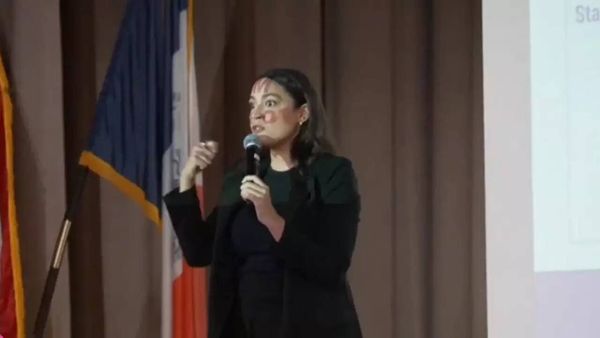
- Thirsty congresswoman Alexandria Ocasio-Cortez is on the hunt for some Irn-Bru..
- Boris Johnson made a very brief visit to Glasgow urging world leaders to make a final effort in negotiations as Cop26 draws to a close
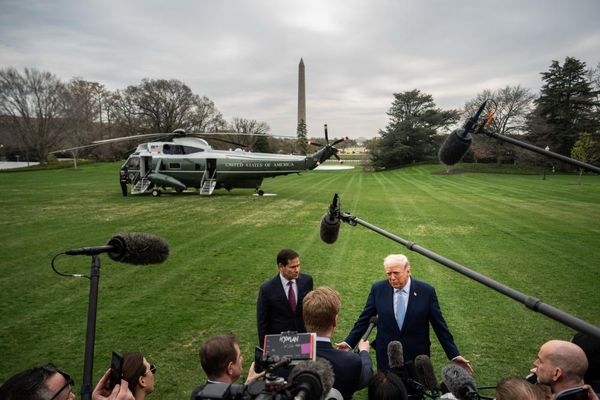
- An hour or so later [though not sure it had anything to do with the UK prime minister] the US and China, world’s two biggest emitters, revealed a joint declaration promising to work together across a range of critical issues, surprising many observers and potentially breathing some life into the last days of this summit.
Join us tomorrow for day 11 at Cop26.
Updated
The US-China Joint Glasgow Declaration follows a flurry of diplomacy. My hopes were raised when I saw John Kerry sit down with Xie Zhenhua and other officials in the China delegation office last week. At the time I tweeted “Fingers crossed that chief negotiators of worlds two biggest emitters can work together and nudge the world closer to 1.5C climate target.”
Just saw John Kerry sitting down with Xie Zhenhua. Fingers crossed that chief negotiators of worlds two biggest emitters 🇨🇳🇺🇸 can work together and nudge the world closer to 1.5C climate target.
— jonathanwatts (@jonathanwatts) November 4, 2021
I’d also heard from sources in China that the two climate diplomats held a convivial meeting in London shortly before the conference started. The foundations for an agreement were coming together. In an interview last week, senior adviser Wang Yi made clear China could peak coal use by 2025. He also said China was taking domestic action on methane and other non-carbon dioxide greenhouse gases, though on principle it did not sign up to last week’s Glasgow alliance on this subject because it felt developed nations should take the lead. That position appears to have softened in this agreement, which Kerry will be able to take back to Washington as a sign that the two nations can work together on climate, even if they remain at odds in other areas of gepolitics. This has got to be a boost for negotiations in Glasgow. The biggest historical emitter (USA) and the biggest current emitter (China) have sent a strong signal they will scale back together. That has made my day. No meaningful deal is possible without them. Now, let’s see how far they are willing to go.
Bernice Lee, an expert in environment and climate politics from Chatham House think tank, said:
It can only be good news that the US and China are working closely on climate change and slashing methane emissions. Details remain patchy but this declaration should dissolve any fears that US-China tensions will stand in the way of success at COP26. But the statement is not enough to close the deal. The real test of Washington and Beijing is how hard they push for a 1.5C aligned deal here in Glasgow.
Updated
Thom Woodroofe, a former climate diplomat and now fellow at the Asia Society Policy Institute working on US-China climate cooperation, says the declaration by the two countries is an important acknowledgement by the two big emitters “that more needs to be done and of their responsibility to do more”.
But he says it is also an acknowledgement of the shortcomings of the outcome expected in Glasgow, and the extent to which the world is relying on what happens next.
”While this is not a game-changer in the way the 2014 US-China climate deal was, in many ways it’s just as much of a step forward given the geopolitical state of the relationship. It means the intense level of US-China dialogue on climate can now begin to translate into cooperation.
”Both sides benefit from this. For the US, it shows they are coming away from Glasgow with at least a signal by China that they hope to be able to do more this decade and with ways to hold their feet to the fire. For China, it helps stem the perception they came to Glasgow entirely empty handed. It will also be a helpful shot in the arm for the final COP26 negotiations over the coming days and helps smooth the runway for next week’s Biden-Xi call.
”The big substantive outcome here is China’s affirmation of acting in line with the Paris temperature goals, to ‘make best efforts to accelerate’ a decrease in coal consumption and joining the tent on methane reductions (but stopping short of signing the recent global methane pledge).”
The Kerry conference has now finished.
Back in the press conference Kerry says that there are lots of people around the world “ready to come to the table” and that together they will be able to move things forward much faster. “If we work hard we can take this to a better level.”
A bit more reaction coming in on the US/China deal.
This from the secretary general of the UN.
I welcome today's agreement between China and the USA to work together to take more ambitious #ClimateAction in this decade.
— António Guterres (@antonioguterres) November 10, 2021
Tackling the climate crisis requires international collaboration and solidarity, and this is an important step in the right direction. #COP26
Meanwhile E3G chief executive Nick Mabey said: “The big significance of this is geopolitical. US & China have signalled they will end the wars of words that marred the past days. They will now build climate cooperation bilaterally & in multilateral fora. This high profile commitment puts pressure on both countries to move their positions to make COP 26 a success.”
Kerry said the US and China had been honest with each other. He said both presidents had made it clear that while there were differences on many issues between the two countries they were determined to work together on the climate crisis which he said was the most pressing issue facing the world. “We are stepping up,” he added.
John Kerry is now speaking. He says out of the co-operation between China and the US will accelerate the reduction in emissions. He said people could leave Glasgow with people working together to solve the issue of climate change and that is the road US and China had chosen.
This is from my colleague Fiona Harvey.
China and the US announced a surprise plan to work together on cutting greenhouse gas emissions in the crucial next decade, in a strong boost to the Cop26 summit, as negotiators wrangled over a draft outcome.
The world’s two biggest emitters had been trading insults since before the start of the conference, but on Wednesday evening unveiled a joint declaration that would see the world’s two biggest economies cooperate closely on the emissions cuts scientists say are needed in the next ten years to stay within 1.5C.
The remarkable turnaround came as a surprise to the UK hosts, and will send a strong signal to the 190-plus other countries at the talks. China and the US will work together on some key specific areas, such as cutting methane – a powerful greenhouse gas – and emissions from transport, energy and industry.
Xie Zhenhua, China’s head of delegation, said: “Climate change is becoming an increasingly urgent challenge.We hope this joint declaration will help to achieve success at Cop26.”
John Kerry said: “The two largest economies in the world have agreed to work together on emissions in this decisive decade.”
The China US Glasgow Declaration on Enhancing Climate Action in the 2020s came despite growing political tensions between the two powers, that had been reflected in the climate talks. In his parting shot at the conference, Joe Biden on Tuesday slammed China’s president Xi Jinping for “not turning up”. After that, Xie took a swipe at the US in an interview with the Guardian, saying: “We are not like some countries who withdrew from the Paris Agreement after entering into talks.”
Updated
Reaction on the China US declaration from climate scientist and author Simon Lewis here.
A major fear inside #COP26 presidency was lack of US-China cooperation. Big moment in getting a deal on Paris Rulebook and overall deal. Finance still massive sticking point. https://t.co/o5fJtAVPFc
— Simon Lewis (@SimonLLewis) November 10, 2021
Updated
While we are waiting for Kerry’s press conference to start it is worth saying that this already feels like a big moment at Cop26. The world’s two most powerful countries - and biggest emitters - have done what feels like a fairly far reaching deal setting out ongoing co-operation over the next decade across a wide range of issues.
Xie says he hopes to create a global carbon market to enhance efforts to tackle emissions. Then he says that is the end of the press conference as John Kerry is waiting outside and wants to give his briefing.
The full declaration is now available here online. It states:
The United States and China, alarmed by reports including the Working Group I Contribution to the IPCC Sixth Assessment Report released on August 9th, 2021, further recognize the seriousness and urgency of the climate crisis.
And adds:
The two sides intend to cooperate on:
a. regulatory frameworks and environmental standards related to reducing emissions of greenhouse gases in the 2020s;
b. maximizing the societal benefits of the clean energy transition;
c. policies to encourage decarbonization and electrification of end-use sectors;
d. key areas related to the circular economy, such as green design and renewable resource utilization; and
e. deployment and application of technology such as CCUS and direct air capture.
Recognizing specifically the significant role that emissions of methane play in increasing temperatures, both countries consider increased action to control and reduce such emissions to be a matter of necessity in the 2020s. To this end:
a. The two countries intend to cooperate to enhance the measurement of methane emissions; to exchange information on their respective policies and programs for strengthening management and control of methane; and to foster joint research into methane emission reduction challenges and solutions.
b. The United States has announced the U.S. Methane Emissions Reduction Action Plan.
c. Taking into account the above cooperation, as appropriate, the two sides intend to do the following before COP 27:
i. They intend to develop additional measures to enhance methane emission control, at both the national and sub-national levels.
ii. In addition to its recently communicated NDC, China intends to develop a comprehensive and ambitious National Action Plan on methane aiming to achieve a significant effect on methane emissions control and reductions in the 2020s.
d. The United States and China intend to convene a meeting in the first half of 2022 to focus on the specifics of enhancing measurement and mitigation of methane, including through standards to reduce methane from the fossil and waste sectors, as well as incentives and programs to reduce methane from the agricultural sector.
In order to reduce CO2 emissions:
a. The two countries intend to cooperate on:
i. Policies that support the effective integration of high shares of low-cost intermittent renewable energy;
ii. Transmission policies that encourage efficient balancing of electricity supply and demand across broad geographies;
iii. Distributed generation policies that encourage integration of solar, storage, and other clean power solutions closer to electricity users; and
iv. Energy efficiency policies and standards to reduce electricity waste.
b. The United States has set a goal to reach 100% carbon pollution-free electricity by 2035.
c. China will phase down coal consumption during the 15th Five Year Plan and make best efforts to accelerate this work.
Recognizing that eliminating global illegal deforestation would contribute meaningfully to the effort to reach the Paris goals, the two countries welcome the Glasgow Leaders’ Declaration on Forests and Land Use. The two sides intend to engage collaboratively in support of eliminating global illegal deforestation through effectively enforcing their respective laws on banning illegal imports.
Xie is now taking questions and said a joint working group between China and the US would meet in the first half of next year and would focus on methane reduction, decarbonisation and deforestation.
China and US to ‘actively address climate change and through co-operation’
Xie said China and US needed to “think big and be responsible” and “actively address climate change and through cooperation” bring huge benefits to people around the world.
Updated
It seems like China and US are planning to work together across a wide range of climate issues. Xie Zhenhua said the two countries intended to put their cooperation on a firmer footing in the years ahead.
He said climate change was a common challenge faced by humanity and was an existential threat. He said that on climate change there was more agreement than divergence between China and US and he hoped this new declaration would help make Cop26 a success.
Updated
He said both sides had agreed to cooperate on renewable energy rollout and decarbonising the energy system. He said China planned to set up its own methane reduction plan to work alongside the deal set out by the US and others last week.
Updated
He said the US and China had reached agreement on climate finance, NDCs and would work with other countries to tackle other issues.
He said both countries had reiterated the Paris goal and committed to adapt to an “enhanced climate action” progress in the 2020s.
The press conference has started and China’s climate spokesman Xie Zhenhua has announced a “China-US joint Glasgow declaration on enhancing climate action”.
He said since the beginning of this year the two teams had been working in dialogue, have had 30 virtual meetings and have reached an agreement.
Updated
We are expecting a press conference from the Chinese delegation shortly. It is not clear (at least to me) what the main thrust of it will be but my colleague Fiona Harvey is there and we will keep us updated.
Updated
Not many people addressing Cop26 are speaking up for fossil fuels openly (though it appears hundreds probably are behind closed doors), but Yury Sentyurin, the secretary general of the Gas Exporting Countries Forum, gave it a go today. The GECF includes Russia, Iran, Nigeria and Qatar.
Sentyurin ticked off all the industry talking points. “Natural gas complements intermittent renewables,” he said. Hundreds of millions of people in Africa without access to electricity or clean cooking fuel should “use gas as the core source of energy”.
“We believe sincerely that natural gas does offer the balanced solution that the world seeks to achieve sustainable development goals,” he concluded.
The problem is not many agree these days that gas should be a bridge fuel between coal and renewables. That’s because burning gas still produces a lot of CO2, time is very short to halt the climate emergency and renewables are getting ever cheaper.
Last week, a report from Climate Analytics (the team behind the alarming 2.4C projection that made headlines yesterday) dismissed the arguments for gas. “Gas is not a bridging fuel, blue hydrogen is not a bridging technology, ultimately, gas is a bridge to nowhere. All governments concerned about climate change who have stated their support for transitioning to a 1.5C world need to understand one thing: gas is the new coal,” said Bill Hare at CA.
In September, a scientific study found that 59% of existing gas reserves must stay in the ground to keep global temperature rise below 1.5C.
Updated
This is a quick report of Johnson’s speech from my colleague Peter Walker.
Boris Johnson has urged fellow world leaders to make a final effort in negotiations as Cop26 draws to a close, warning them that failure to reach an effective agreement would bring an “immense” and well-deserved backlash from around the globe.
Speaking at the start of a press conference as he made his second visit to Glasgow, the UK prime minister called for “a determined push to get us over the line” – and said some countries had not done enough to achieve this.
Leaders not in Glasgow needed to “pick up the phone to their teams here and give them the negotiating margin, give them the space they need in which to manoeuvre and get this done”, Johnson said.
“Here in Glasgow the world is closer than it has ever been to signalling the beginning of the end of anthropogenic climate change, and it’s the greatest gift we can possibly bestow on our children and our grandchildren and generations unborn.
“We just need to reach out together and grasp it. And so my question to my fellow world leaders this afternoon as we enter the last hours of Cop is – will you help us do that, will you help us graph that opportunity, or will you stand in the way?”
Johnson criticised some countries, which he did not name, for “conspicuously patting themselves on the back” for signing up to the Paris climate accord but doing too little at Cop.
Citing speeches to the conference such as one given at the start by Mia Mottley, the Barbados prime minister, who called for concerted action, Johnson said: “If you stood and applauded her then, you cannot now sit on your hands as the world asks you to act. Because the world knows what a mess our planet is in.
“The world will find it absolutely incomprehensible if we fail to deliver that. And the backlash from people will be immense and it will be long-lasting, and frankly we will deserve their criticism and their opprobrium.
“Because we know what needs to be done, and we all agree what needs to be done. We just need the courage, actually, to get on and do it.
“So now is the time for everyone to come together and show the determination needed to power on through the blockages.”
Updated
With the prime minister’s brief intervention seemingly over it is worth remembering this is supposed to be transport day at Cop26.
My colleague Severin Carrell has this update on the failure to tackle global aviation emissions.
Transport campaigners have roundly condemned a decision to postpone for at least a year any detailed proposals to curb the global aviation industry’s climate emissions, unveiled during transport day at the Cop summit.
A declaration backed by 20 states who are the first to join the international aviation climate ambition coalition (IACAC) was published on Wednesday, signed by some major economies such as the UK, US, Japan and France. But other major economies – Germany, China, Russia, and India – were noticeably absent.
It commits signatories to “align” aviation with the Paris target of limiting temperature increases to 1.5C, but has postponed adopting interim reduction targets and strategies until an assembly of the International Civil Aviation Organisation – the industry’s governing body, in a year’s time.
Cait Hewitt, policy director of the Aviation Environment Federation, said: “Our politicians seem to be living in a fairytale world where the aviation sector quits its dependence on fossil fuels – and overcomes all the barriers that have existed so far to decarbonisation – at no cost and with no need to curb passenger growth.
“We need our leaders to stop pretending that these targets can be achieved just through new fuels and technofixes.”
At present, airlines and manufacturers are focusing on “sustainable aviation fuel”, carbon-based fuels that replace or dilute kerosene; carbon offsetting; electrification and hydrogen-fueled aircraft. But there is little expectation green technologies will work on long-haul flights for many years.
Haldane Dodd, of the air transport action group in Geneva, told an audience at the summit only 6.5% of global aviation fuel needs would be met by sustainable biofuel sources by 2030.
Mira Kapfinger, from the coalition group Stay Grounded, said the technical fixes were illusory and failed to tackled the core issue with aviation: its unrestricted growth and its failure to pay the true environment costs.
“More flights mean more emissions - that’s why any serious climate deal for aviation must include measures to reduce air traffic in rich countries,” she said. “IACAC relies on the same strategies that have been proven not to work for years such as offsets and the wait for technological solutions that will not be ready for decades.”
Pete Buttigieg, the US transport secretary, told the summit the US, which emits the most aviation emissions per capita of any major country, had yesterday committed its aviation sector to meeting the 2050 net zero target which has already been endorsed by ICAO.
It would target 20% lower aviation emissions by 2030, he said, but added that the laws of physics dictated how fast new low carbon technologies could be found, tested and deployed.
“It’s a significant contributor to climate change and without dramatic urgent action, there will be a substantial additional growth in emissions, so it falls to us to limit those emissions urgently: the question becomes will we act quickly enough,” he said.
Updated
One small but important point that is worth flagging up. Johnson said during the press conference that the UK would look at what is being proposed by Denmark and Costa Rica who are organising a coalition of countries committed to phasing out oil and gas production. It gave the impression that this was the first the UK had heard of the plans, but as my colleague Damian Carrington reported this morning, the UK government has already said it is not signing up.
And with that Johnson leaves the stage telling the audience he is heading back to London. Short and typically light on specifics. I am not sure that brief intervention is really going to move the dial much on the negotiations.
Updated
Asked what his presidency has achieved, Johnson said he has tried to listen to the NGOs and those that speak for billions of ordinary people around the world. He says the key outstanding issue is securing a financial deal between the rich, developed world and the countries in the global south on the frontline of the climate crisis.
Updated
Asked whether the UK will join a international initiative to phase out fossil fuels over the next 30 years put forward by Denmark and Costa Rica, Johnson points to the UK’s record (though of course does not mention the new oilfield off Shetland or its £750m backing for a massive new gas terminal in Africa) and says it will take a look at the proposals on the table.
Updated
Johnson says he does not want to single out any specific countries at this stage but again urges leaders to take responsibility, to ring up their negotiators and tell them to make progress.
Johnson says there are billions of people around the world who are worried about climate change. He adds that Cop26 is not going to solve the issue on its own. But adds that if “things go well … there is the possibility we can still come away” with “a roadmap” for a solution to “anthropogenic climate change”.
Updated
Asked what can be done to keep 1.5C of warming alive, Johnson says that that critical target is “in the balance”. He says there was progress last week, but says things are now “tough”. He says the 1.5C target is still possible but adds it is “anything but a done deal”.
Updated
Johnson acknowledges it is not going to be easy and adds what Cop26 achieves “may not be enough” but he urges everyone to step up as the negotiations enter the final hours.
He says the world is closer than it has ever been to tackling climate change. He says tackling climate change is within reach – “we just need to reach out and grasp it”. Johnson calls on world leaders to help achieve that, to pick up the phone and give their negotiators the room to compromise and to be more ambitious.
Updated
Johnson is speaking now and urges “everyone to come together and power on through the blockages”.
Updated
While we are waiting for Boris Johnson to begin speaking it is worth flagging up this extremely useful guide by my colleague Fiona Harvey which expertly explains and dissects the draft text that was released this morning.
Updated
A quick Irn-Bru/ Alexandria Ocasio-Cortez update. It appears no less than the Scottish first minister hand delivered the can of fizzy pop to the US congresswoman.
🇺🇸🏴 Amidst all the serious business at #COP26 today, I’m pleased to also report that @AOC now has a supply of Irn Bru pic.twitter.com/3yhisZ9PiN
— Nicola Sturgeon (@NicolaSturgeon) November 10, 2021
Boris Johnson due to address Cop26 in Glasgow
The UK prime minister, Boris Johnson, is due to address the Cop26 climate summit shortly urging climate negotiators to “pull out all the stops” with just days of the conference left.
The prime minister travelled by train this afternoon after being criticised for flying back from the summit to London last Tuesday (before heading straight to The Garrick Club in London for dinner with the former Telegraph editor Charles Moore, a climate denier).
Despite a flurry of carbon-cutting pledges from governments in the first week of Cop26, a new report released yesterday said the world is on track for disastrous levels of global heating far in excess of the limits in the Paris climate agreement.
Before today’s speech Johnson said: “This is bigger than any one country and it is time for nations to put aside differences and come together for our planet and our people. We need to pull out all the stops if we’re going to keep 1.5C within our grasp.”
Earlier Ed Miliband, the shadow energy secretary, said the prime minister should remain in Glasgow until the end of the summit, and call out countries that are not doing enough.
“You’re going to have to have a big public fight about this,” he said. “Don’t go back home after a few hours: stay!”
Updated
Boris Johnson should stay until the end of Cop26 and wade into the negotiations to prevent the summit ending in failure, Ed Miliband has warned.
The prime minister has made a day-trip to Scotland’s second city to meet negotiators and is due to speak shortly – but the shadow energy secretary said Johnson should remain in Glasgow and call out countries that are not doing enough.
“You’re going to have to have a big public fight about this,” he said. “Don’t go back home after a few hours: stay!”
He added: “The message to world leaders from Boris Johnson today should be very clear, which is no more fudges, no more loopholes, no more get-out-of-jail cards”.
Miliband said the UK should be pushing for an unambiguous commitment to 1.5C warming, and to revisiting emissions targets next year, to be clearly included in the final text.
“We are in the territory of doing everything in our power in the time that we’ve got left to salvage what we can from this, because it’s not an overstatement to say that future generations depend on this,” he said, briefing journalists in Glasgow.
“The world cannot wait until 2025 to return to these decisions. Because if we did, 1.5 would effectively be dead in the water,” he added.
Miliband said the summit should have aimed to cut carbon emissions from a projected 53bn tonnes in 2030 to 25bn tonnes, to keep 1.5C of warming in sight – but just 4.8bn tonnes of that gap had been closed through the short-term pledges made.
Updated
Sharma says he is pushing “very hard” to increase finance for adaption for countries on the frontline of the climate crisis.
Sharma reiterates it is vital to keep 1.5C of heating in reach, reminding people of the words of the prime minister of Barbados, Mia Mottley, who told the summit last week that 2C of heating for her country would be a death sentence.
Updated
Alok Sharma, the Cop26 president, is now holding a press conference. It was only a couple of hours ago since he gave his last update, but we will keep across the latest event for anything new.
Updated
An interesting response to activists opposing greenwashing and net zero targets here from whoever is in control of “external projections” at the Cop26 venue [worth looking at the entire thread....]
STORY-TIME Part1.
— Tommy Vickerstaff (@VickerstaffT) November 10, 2021
Right have I got a tale for YOU
Last night I went down to support @gastivists woth a projection on #COP26 venue, calling out greenwashing and demanding that fossil fuels are left in the ground.#NotHereNotAnywhere #NetZero pic.twitter.com/NFDIFJl0vw
Environment campaigners have attacked Scottish government proposals to dramatically increase hydrogen production in Scotland as a way of “sneaking fossil fuels in by the back door”.
The government, which now includes two Scottish Green party ministers alongside the Scottish National party, has unveiled draft proposals to develop around 5GW of hydrogen power within a decade, in a programme initially priced at £100m.
It would be used to heat homes, fuel buses and lorries, and power industries, and provide nearly a sixth of Scotland’s energy needs by 2030, promoting regional hydrogen production hubs.
The government said it will promote alternative low and zero-carbon fuels, but Friends of the Earth Scotland said it was in reality a trojan horse for North Sea oil and gas.
Michael Matheson, the Scottish climate minister, said earlier this month his government supported continued oil and gas extraction. It is putting heavy emphasis on using carbon capture and storage to trap CO2 emissions from gas-sourced hydrogen.
The plan promotes “blue hydrogen”, where natural gas is used to create hydrogen, as well as renewables-powered “green” hydrogen. FoES said the policy failed to set out how much of that 5GW came from fossil fuels
Alex Lee, a FoES climate campaigner, said: “This is a plan to sneak fossil fuels in the back door through the use of blue hydrogen. The Scottish Government is marketing blue hydrogen, made from gas, as ‘low-carbon hydrogen’ but studies have shown [it] actually releases more carbon emissions than just burning gas.
“The plan also states that hydrogen could be used to heat homes and to power transport. However these uses are an inefficient, misdirected and expensive use of renewable electricity, which should be used to directly power electric vehicles and keep homes warm rather than converting electricity to hydrogen power.”
After he arrived by train into Glasgow this afternoon, Boris Johnson paid a brief visit to look at two eco-friendly trains at the city’s central station – the country’s first hydrogen-powered train and the first electric battery train.
He spoke to West Midlands mayor, Andy Street, about the trains, both of which were developed in the West Midlands.
Boris Johnson has returned to Glasgow to attend #COP26 three days before it is due to end - he arrived by train and briefly stopped to chat to West Mids mayor Andy Street at a showcase of an electric battery and hydrogen powered train, both of which were made in the region pic.twitter.com/COEGsY0RZ5
— Jessica Murray (@JournoJess_) November 10, 2021
“The West Midlands was the home of the first industrial revolution and we will be the home of the green industrial revolution,” said Street. “It is critical to our future economic success that we take our historical strength and apply it in these new areas. Clean technology is already the fastest growing area of our economy, 94,000 people are already employed in it and it grew 7% last year.”
On whether the conference will be a success, Street said it’s still too early to tell but was adamant the UK government had done enough.
“It’s still in the balance, but I think Britain has made a really convincing show,” he said. “Whether it will be enough to get all participants on board we don’t know, but it’s hard to think what more, as the host country, we could have done.”
Updated
I have been speaking with Dr Andrew Steer, president and CEO of the Bezos Earth Fund, about how the organisation plans to give away $10bn of the Amazon founder’s money by the end of the decade. So far, $947m has been given in grants.
“We are willing to take significant risks when the potential gain is very large,” the former head of the World Resources Institute said. “It’s a wonderful privilege to be able to help do this. Before the end of November, we will be announcing a set of grantees in the Congo Basin and the tropical Andes. Those will generally be groups that will be internationally recognised. They themselves will have deep roots into those geographies.”
Steer said: “Whilst we’ve been here in Glasgow, we’ve had several meetings with indigenous leaders and we will be channelling funds through organisations that specialise in working with indigenous peoples.”
Back to the big drink issue of the day briefly as US congresswoman Alexandria Ocasio-Cortez, who is in Glasgow for Cop26, says she has now managed to acquire some Irn-Bru.
I finally got a hold of some Irn-Bru at #COP26! 🤗🥤
— Alexandria Ocasio-Cortez (@AOC) November 10, 2021
Last week, the Guardian interviewed delegates about their experiences with the famous Scottish pop, producing typically divisive responses – and earlier today AOC appealed to her Instagram followers to help her find some. We are yet to hear her verdict …
Updated
The EU’s Franz Timmermans, vice-president of the European Commission, has told Cop26 his “sleeves are rolled up” as the summit enters the critical part of the negotiations, when compromises must be made to avoid failure. The EU was criticised earlier for not stepping up.
“Consider my sleeves rolled,” said Timmermans. “We’re ready and willing to make sure we deliver on the highest possible levels of ambition, leading to prompt global action.”
He said the “clear intention” in the draft “cover decision” to close the gap in emissions cuts needed to keep 1.5C alive within a year was extremely important.
The cover decision was seen as weak on the finance needed by vulnerable nations. But Timmermans said: “In the past three days, nearly $800 million has been raised for adaptation finance, in support of the most vulnerable developing countries. More than three-quarters of that has come from Europe.”
“I hear the calls for more. And I can just say: the EU is here. We will continue to listen, and we are willing to engage in discussions about future commitments.”
Updated
A new poll has found that concern for the environment among the UK public has hit a record high, with more than 40% of the UK population putting it in their top three issues facing the country.
Anxiety about the state of the planet comes behind the economy at 43%, and health at 48%, a YouGov poll found.
The number of people worried by climate change has been climbing since 2018, YouGov said, and its pollsters found that concern accelerated following the first wave of Extinction Rebellion protests in 2019 (and presumably the school strike movement and the ever clearer evidence of climate breakdown in the form of wildfires, extreme heatwaves and floods.)
Young people are most concerned, with 43% citing it as the top concern facing the country – but all ages are worried, with 39% of those aged 65 and above saying climate change is a major issue.
Updated
UK PM Boris Johnson has arrived in Glasgow - by train this time - ahead of his speech at 4.30pm, and is wearing a small badge with the Cop26 Earth logo:

Lunchtime summary
A quick recap of the day so far:
- A draft of the Cop26 negotiation outcome was published overnight. Reaction has largely been negative, but there are some areas where progress has been made. We’ll have a detailed analysis of what it all means from our resident expert Fiona Harvey shortly.
- On transport day, protesters have been advocating for better public transport and a greater focus on sustainable transport modes such as cycling and walking, which have been largely overlooked by officials.
- The Cop26 president, Alok Sharma, urged delegates to “come armed with the currency of compromise … what we agree will set the future for our children and grandchildren and I know we will not want to fail them”.
- Thirsty congresswoman Alexandria Ocasio-Cortez is on the hunt for some Irn-Bru. Naturally, we’ll keep you up to date with any developments.
I’m now handing over to my colleague Matthew Taylor. You can email him at matthew.taylor@theguardian.com or find him on Twitter at @mrmatthewtaylor
Updated
The three joint winners of the Cop26 Photo Competition organised by Nature Picture Library have been announced.
According to NPL, “they were selected by public vote because they best encapsulated the beauty of the natural world and our critical relationship with nature and the environment”.
Here they are:


You can browse all the entries here.
Updated
The Guardian is running a live event at 8pm GMT focused on youth climate activists and school strikers. It will be hosted by Franny Armstrong, director of The Age of Stupid, and feature activists Fatima Ibrahim, Slater Jewell-Kemker, Alexandria Villaseñor, Nisreen Elsaim and Luisa Neubauer.
For more details and tickets, see here.
Sharma says it is clear some significant issues remain unresolved, and reiterates that he expects a comprehensive and ambitious outcome to be reached on Friday. He says his team will review documents and progress from 7pm this evening, and that the final documents will be published in all UN languages (unlike this morning’s draft text, which was only available in English).
Sharma says he invites anyone who wishes to meet him in the next few days to contact him – his mobile phone will be buzzing already.
He urges delegates: “Please come armed with the currency of compromise … what we agree will set the future for our children and grandchildren and I know we will not want to fail them.”
Updated
Dan Jørgensen of Denmark is now speaking about the crucial goal of keeping a heating target of 1.5C in reach, arguably the main focus of Cop26. He says countries all recognised that damage will be much lower if heating is limited to 1.5C, but that there was a significant gap between what is needed and pledges so far.
He says many parties called for updated pledges in 2022 and for speedy improvements to their commitments.
“The sense of urgency was made very clear,” he says.
Simon Stiell of Grenada, who has also been working on mitigation, says countries agree that the Paris agreement should not be renegotiated.
He says this is reflected in the draft text released this morning, but that they would continue to refine the text over the coming days.
Updated
The UK’s rail unions have called for a massive increase in spending on rail services and infrastructure, and deep cuts to fares, in a bid to shift people from their cars onto zero carbon trains.
Gary Kelly, a Scottish organiser with the TSSA union, said the International Panel on Climate Change had warned this summer it was “code red” for humanity.
“It’s not just the climate which is code red, it’s the railway itself,” Kelly told an event in Glasgow timed to coincide with Cop. “The time for talking is over, and we need action.”
In a rare joint policy statement the four rail unions, the TSSA, the RMT, Unite and Aslef, have called for all Scottish rail services to be nationalised, peak rail fares to be scrapped and significant extra spending to update and upgrade the network, including much greater use of freight trains.
Kelly said the UK government proposed cutting up to 10,000 rail jobs UK-wide and closing ticket offices. Last year’s Stonehaven derailment in north east Scotland, which killed three people and injured six in August 2020, was caused by climate-change-triggered storms that weakened the embankment.
ScotRail and the Scottish government wanted to cut 300 services a day, said Mick Hogg, of the RMT. That would damage services and increase reliance on cars and roads.
“As far as we’re concerned, Scotland’s railway is burning and no-one is listening,” Hogg said.
Simonetta Sommaruga, the Swiss delegate handling the question of how quickly countries will have to update their pledges, says progress is being made on that front – another area where there is understood to be significant disagreement between countries – and that she thinks they are heading towards what she describes as a “landing zone” of agreement.
If countries are not expected to bring back improved pledges before 2025, this will be seen as a significant failure of the conference, and many countries have been pushing for annual updates to pledges.
Updated
Sharma introduces a Norwegian delegate to report back on article 6, which relates to the implementation of carbon markets.
Espen Barth Eide says there have been 15 rounds of negotiations, and that good progress has been made. He says one of the main outstanding issues is that of money for adaptation for poorer countries, which has long been a sticking point. But he says the negotiations have been conducted in a positive spirit and that he is optimistic negotiations can be concluded by 6pm on Friday.
Alok Sharma has finally begun speaking at the stocktaking plenary. He opens by thanking delegates for their cooperation so far and exhorts them to “continue to rise to the challenge”.
He says he still intends to close Cop26 on time this Friday, which draws a small laugh from those in the room.
The draft text of the final Cop26 “cover decision” is pretty strong on the necessity to cut emissions by 45% this decade to keep 1.5C alive, say expert NGO observers. But they say it is much too weak on other critical issues - the money needed by vulnerable and poorer nations to fund clean development, to protect their populations against the impacts of global heating hitting already (adaptation) and to compensate for the damages already being caused (loss and damages).
They also said the EU and US had not yet stepped up in the negotiations to drive towards a strong outcome. The EU and US must form alliances with the vulnerable and poorer nations in order to face down the “blockers”, the experts said.
“The text currently put forward by the UK presidency is extremely problematic, as it does not actually address the crucial need to scale up adaptation finance and mitigation finance,”said Eddy Pérez, at Climate Action Network Canada.
“It is not enough to just acknowledge that there is a need for loss and damage finance, there needs to be greater clarity that, if we are to keep 1.5C within reach, the resources need to be there so that developing countries and emerging economies have access to the trillions of dollars that are needed to really close the gap,” he said.
Alden Meyer, at the thinktank e3g said: “Is 1.5C alive?Just barely. We’ve particularly not seen the EU and US step up to push for the financial support they need to deliver for vulnerable countries to bring balance to the [Cop26] package.”
I’ve been in this process for a long time, and I’ve seen the bargaining game go on,” he said. “But if the EU and the US hold their bargaining chips to the very end game, on Thursday morning or Friday night, their money is going to be worthless.”
“To get what they say they want in Glasgow on [emissions cuts] and transparency from countries like China and others, they need to build a much stronger high ambition coalition by giving the vulnerable countries what they need and deserve on adaptation and finance and loss and damage. And for both the US and the EU, that means crossing some of their red lines.”
Meyer also said it was “absurd” that a commitment to end fossil fuels subsidies were only entering Cop texts 13 years after the G20 first pledged to end them: “We are still paying hundreds of billions of dollars a year in taxpayer money to encourage production and consumption of fossil fuels. The first rule of finding yourself in a hole is stop digging.”
Jennifer Morgan, at Greenpeace International, said: “I think you’ll see the most vulnerable countries of the world coming out and just fighting for their very lives, which is what is at stake here.”
At a protest held in Glasgow’s George Square this morning, local residents and climate activists called for greater investment in public transport, rather than just shifting people to electric vehicles.
Nancy Henderson, an artist who lives in Glasgow, said that cycling flourished during lockdown but that many people have switched back to cars as they don’t feel safe in traffic.
“That’s an issue with electric cars, people will still feel unsafe with them around,” she said. “It doesn’t actually change the issue of congestion and the number of cars on our streets. Going electric doesn’t change the blight of cars in our cities, we are still isolated in our little booth, not communicating, not meeting other people.”
Henderson said many Glaswegians were resentful of the smartcard public transport passes given to Cop26 delegates which enables unlimited use of trains and buses during the conference.
“No-one else around here has ever got one of those smartcards,” she said. “It marginalises people when you don’t have good public transport.”

UK prime minister Boris Johnson called Mohammed bin Salman, crown prince of Saudi Arabia, this morning on his way to Cop26 at Glasgow. Oil-rich Saudi Arabia has often sought to weaken the climate decisions taken at Cops, which are agreed by consensus among the 196 nations.
A Downing Street spokesperson said: “[Johnson] welcomed Saudi Arabia’s commitment to reach net zero by 2060 and their efforts to transition away from fossil fuels. They discussed the importance of making progress in negotiations in the final days of Cop26”
“The prime minister said all countries needed to come to the table with increased ambition if we are to keep the target of limiting global warming to 1.5C alive.”
We will see if Johnson’s intervention softens the Saudi’s stance.
Alok Sharma, the Cop26 president from the UK, will be holding an “informal stocktaking plenary” at 12.30pm.
Early this morning the presidency released an early draft of the “overarching decision”, the main document that will come out of the conference. Reaction has largely been negative, but some have pointed out areas in which progress appears to have been made, not least an ambition to bring countries back with improved pledges next year.
For some countries, especially those who believe not enough action is being taken, the stocktaking meeting may provide an opportunity to have their say and lay out what they believe is missing.
For anyone who wants to watch live, a stream can be found on this page.
My colleague Damian Carrington will be following along and we’ll bring you updates on this liveblog.
Updated
Myles Allen, the Oxford geoscience professor, does not mince his words on the wording of the draft text:
“Hmmm … are they now telling us that by ‘keep 1.5 alive’ they always meant ‘buy a big defibrillator to resuscitate 1.5C by 2100’?
“It’s a bit worrying that they seem to suggesting the parties agree things that aren’t true, such as: ‘limiting global warming to 1.5C by 2100 requires rapid, deep and sustained reductions in global greenhouse gas emissions, including reducing global carbon dioxide emissions by 45% by 2030 relative to the 2010 level and to net zero around mid-century’.
“First, does this mean we have all now agreed that pursuing efforts to limit warming to 1.5C in the Paris agreement always meant getting temperatures back to 1.5C by 2100? I always thought it meant limiting peak warming (which is the main driver of peak impacts) to as close to 1.5C as possible.
“And if it is now agreed that the 1.5C goal does not refer to peak warming at all (I confess I missed that memo), then the statement simply isn’t true. What 45% by 2030 and net zero around mid-century delivers is to halt warming to close to 1.5C (probably within the range of recent revisions to pre-industrial temperatures) not long after mid-century, nothing more – temperature trends after mid-century will depend on the balance of emissions and removals after mid-century, which are not in the control of today’s decision-makers anyway.”
Updated
Oceanographer Sylvia Earle, the “queen of the deep”, has been in Glasgow calling for an end to industrial fishing on the high seas.
“It’s the No 1 priority, because we have the chance, in a stroke, to safeguard the blue heart of the planet,” she said. “It’s where most of the oxygen that comes from the ocean is generated. It’s where most of the carbon is taken up.
“All of that wildlife taken out of the ocean not only affects biodiversity and fosters extinctions at an accelerated rate. It breaks the carbon cycle – the nutrient chain that maintains the fabric of life on Earth.”
Dan Collyns has the story here:
The Alliance of Small Island States, a group of countries who are especially vulnerable to the effects of climate breakdown, have expressed their disappointment with what they see as a disappointing draft text.
Aubrey Webson, an ambassador from Antigua and Barbuda, said: “The text provides a basis for moving forward but it needs to be strengthened in key areas in order to respond to the needs of the most vulnerable, particularly on finance.
“We won’t get the ambition on emissions we need for 1.5C if we don’t scale up the provision of finance, and this includes the long overdue recognition of a separate and additional component for loss and damage.
“‘Urging’, ‘calling’, ‘encouraging’ and ‘inviting’ is not the decisive language that this moment calls for. We have limited time left in the Cop to get this right and send a clear message to our children, and the most vulnerable communities, that we hear you and we are taking this crisis seriously.”
Updated
Sustainable transport campaigners gathered outside Glasgow city chambers on Wednesday morning to protest at a lack of integrated and affordable bus and rail services in the city – contrasting that with unique multimodal travel cards handed out to Cop delegates.
Ellie Harrison, a campaigner with Get Glasgow Moving, said the city region’s residents faced very high fares, a deregulated bus service and poorly integrated bus, tube and rail networks, despite the region’s historically high and disproportionate levels of poverty.
She said a standard single bus fare in Glasgow, where a large majority of services were run by First Group, cost £2.50. In London, where fares are regulated, a single is £1.55 and travellers have the multimodal Oyster card; in Edinburgh, where bus services are publicly owned, a single bus fare is £1.80.
“It’s Cop transport day and we wanted to draw attention to the services that have been laid on for Cop delegates, who have all been given multimodal travel passes to get around the city easily.
“Compare those to the services that Glaswegians are used to, which is zero integration between the bus network, subway and our trains, as well as extortionate fares.”
Updated
US congresswoman Alexandria Ocasio-Cortez is in Glasgow for Cop26 and in between her packed schedule, she appealed to her Instagram followers to help her find the famous Scottish delicacy Irn-Bru.
In response to a question about whether she had tried the fizzy drink, AOC said she was trying to get her hands on some and asked where she could find it. (If you’re reading this, AOC: nearly every shop and vending machine at the SEC venue.)
In a separate post, Ocasio-Cortez said she wanted to try Irn-Bru, touch Harris tweed and see a castle before she leaves.
Last week, we interviewed delegates about their experiences with the drink, producing typically divisive responses, especially among the Rwandan delegation: “Is it lemonade? Is it cola? Is it alcohol? It’s not even written what it is. I don’t understand it.”


Updated
Here’s some footage of a protest this morning by cycling advocates who are angry that the Cop26 day dedicated to transport focuses almost exclusively on fossil fuel-powered means such as motor vehicles and aviation, with almost no attention paid to sustainable methods of transport such as cycling and walking, which already exist.
Separately, the European Cyclists’ Federation, Greenpeace and more than 300 civil society groups have signed an open letter to governments and transport ministers:
Our world is on fire. We must urgently leverage the solutions that cycling offers by radically scaling up its use. What we need now is for governments to politically and financially commit to more, safer and integrated cycling that is equitable for everyone living in our countries, cities and regions.
Read the full letter here.
Guardian columnist George Monbiot has written this morning about the need to make extreme wealth extinct:
Big money now buys everything: even access to the meetings that should address these dysfunctions. On some accounts, Cop26 is the most exclusive of all climate summits. Delegates from poor nations have been thwarted by a cruel combination of byzantine visa requirements, broken promises to make Covid vaccines available, and the mad costs of accommodation, thanks to government failures to cap local prices, or make rooms available. Even when delegates from poorer nations can scale these walls, they often find themselves excluded from the negotiating areas, and therefore unable to influence the talks.
Read the full piece here:
The UK, host of the Cop26 conference, is not joining the Beyond Oil and Gas Alliance, which was founded by Denmark and Costa Rica as a club of countries committed to phasing out oil and gas production.
The announcement of new members was expected on Wednesday but appears to have been pushed back until Thursday, perhaps to try to corral more countries.
The absence of the UK from the initiative could be embarrassing, and the country has been criticised at home for failing to rule out a large new oilfield called Cambo off the Shetland islands, as well as a new coalmine in Cumbria.
A UK government spokesperson said: “No other significant oil and gas producing nation has gone as far as the UK in supporting the sector’s gradual transition to a low carbon future, as demonstrated by our North Sea Transition Deal.
“While the UK’s reliance on fossil fuels continues to fall, there will continue to be ongoing but diminishing need for oil and gas over the coming years while we ramp up renewable energy capacity, as recognised by the independent Climate Change Committee.
“The UK will continue to work with international partners on supporting the transition away from fossil fuels towards clean energy so we can create jobs, build new industries and drive economic growth.”
Updated
24 countries and a handful of car manufacturers have today joined a pledge to end the era of fossil-fuel powered vehicles by 2040 “or earlier”. However, the group largely consists of countries who had already made that pledge such as the UK and Ireland, and does not contain major car manufacturing countries such as the US or Germany.
Meanwhile, the car manufacturers’ pledges contain caveats such as that their phaseout promises only apply in “leading markets”.
My colleague Oliver Milman has the full story here:
The European NGO group Transport & Environment said the pledge needs to be supported by binding targets.
Julia Poliscanova, T&E’s senior director for vehicles and e-mobility, said: “The car industry’s electrification plans place it ahead of regulators on climate action. But these won’t materialise without actual targets to end car emissions by 2035 at the latest. The US and Europe, especially Germany and France, need to lead.”

Updated
More reaction to the draft Cop26 “cover decision” text, this time from scientists:
Neil Harris, professor of atmospheric informatics at Cranfield University, said: “The current text shows that the world’s governments are yet again incapable of addressing this issue. Politics is getting in the way. They seem to be happy if they can get a reduction in warming from 2.7 to 2.4C agreed at this Cop and to leave further decisions for the future.
“The only hope is that the slack [from governments] is taken up by local and regional governments (especially cities), the private sector and by individuals. The anger of the youth, the indigenous peoples and the global south is entirely justified.”
Updated
Bob Ward, policy director at the Grantham Institute on Climate Change, is more optimistic than some about the wording of the draft text, but points out that the target of “keeping 1.5C alive” is not currently in reach:
“This draft includes all the key elements of a successful outcome, but there needs to be more ambition and more precision,” he said. “It is clear that the current set of pledges on emissions are not yet consistent with having a reasonable chance of holding warming to no more than 1.5C.
“We need countries to agree to return every one or two years with more ambitious pledges. We also need stronger evidence of action to deliver the pledges. Rich countries must come forward with credible plans for delivering the overdue financial support for developing countries and offer significantly increased support from 2025 onwards.”
Often during Cop26 the UK government have put out a press release late in the afternoon detailing their big announcement for the next day, usually embargoed until 10.30pm or midnight. Some have been quite good (deforestation) and some not so good (see my colleague Fiona Harvey’s analysis of last week’s coal press release here).
It’s safe to say this announcement last night teeing up Cop26’s transport day is one of the less memorable, amounting to a restatement of a pledge made in July and a new design for electric vehicle charging points.

For those of you wondering, this is what the charging point looks like, as modelled by Grant Shapps. The press release goes on to say the charger “could become as iconic as the Great British post box, London bus or black cab.” We’ll have to let posterity be the judge of that.

Campaign group Global Witness have responded negatively to this morning’s draft text release. Although the text mentions phasing out fossil fuel subsidies, coal is the only fossil fuel it explicitly mentions phasing out.
Campaigner Murray Worthy says: “It’s plain to see the impact of the hundreds of fossil fuel lobbyists at the Cop in this draft decision. The science is clear – we must start phasing out all fossil fuels, starting now, if we’re to have a hope of limiting warming to 1.5C.
“Yet this agreement falls spectacularly short – only calling for an accelerated phaseout of coal, and an end to taxpayers bankrolling the fossil fuel industry through subsidies. Emissions from coal are less than half the problem – if the final declaration is to have any credibility it must call for a phaseout of all fossil fuels.
“This simply does not match the ambition people all over the world have looked to Cop26 for. Nor does it match what is needed to avert the climate crisis the world is currently experiencing.”
This morning youth activists including Greta Thunberg filed a petition to the UN secretary general, António Guterres, demanding that the UN declare a “global level 3 emergency”, the highest level available.
If one were declared, it would allow more resources and technical expertise to be directed to countries which have been hit hardest by climate breakdown.
Miranda Bryant has the full story here:

Updated
Yanis Varoufakis, the former Greek finance minister, has written in the Guardian this morning about the “hollow promise” of a net zero target. It will not surprise followers of his work that he blames capitalism for the state we find ourselves in.
[Capitalism] has always gained pace through the incessant commodification of everything, beginning with land, labour and technology before spreading to genetically modified organisms, and even a woman’s womb or an asteroid. As capitalism’s realm spread, price-less goods turned into pricey commodities. The owners of the machinery and the land necessary for the commodification of goods profited, while everyone else progressed from the wretchedness of the 19th century working class to the soothing fantasies of mindless petit-bourgeois consumerism.
You can read the full piece here, and as a bonus you’ll get to see one of the more striking byline photos we’ve published:
My colleagues Adam Morton and Fiona Harvey have published a first take on the draft text published this morning.
It includes reaction from Bill Hare of Climate Analytics, one of the groups behind yesterday’s projection of 2.4C of global heating under current plans. He says the draft does not recognise the urgency needed to close the 2030 emissions gap:
The UN secretary general should be invited to convene world leaders at the end of 2022 specifically to address closing the 2030 mitigation and finance gap,” he said. “If this is pushed off until 2023 then the process will really only be addressed in commitment for 2035 – nearly 15 years away – leaving the massive gaps in 2030 unaddressed.”
You can read the full news story here:
Updated
Ed Miliband, the shadow business secretary, has weighed in on this morning’s draft Cop26 text:
“The last 24 hours have been a devastating reality check on what has actually been delivered at this summit,” he said. “We are miles from where we need to be to halve global emissions this decade. Today, Boris Johnson needs to stop the spin and confront the reality. Given this summit will not deliver anything like what we needed, now he has to turn to plotting a path out of Glasgow that can keep 1.5C alive.”
Dozens of protesters stood with their bicycles at the entrance of the Cop26 conference in the early morning, ringing their bells under the slogan “this machine fights climate change”.
Electric cars will be the main point on the agenda for transport day at the climate conference and bikes are not expected to be discussed at all.
Eleanor, who has cycled every day since she was a child, said cycling should be made safer in Glasgow for more people to enjoy the physical and mental health benefits.
“Cycling is activism,” she said. “The infrastructure isn’t fully set up yet, so if cycling is your main mode of transport, you need to be prepared to make the effort.”

Bob, from Glasgow agreed with the sentiment: “Cycling’s been airbrushed out of our future,” he warned, saying electric cars should not be the main vehicle on the agenda.
“Children shouldn’t be told they’ll get a car when they grow up, but they’ll get to own a bicycle.”
Get Glasgow Moving are also be holding a demo on public transport from 9am this morning.
Updated
For the masochists among you, all the key UN texts can be found on this page, and the key draft Cop decision is here.
As for the rest of the day, the focus will be on transport. Here are the key events:
9.15am: Launch of initiative to establish “green shipping corridors”.
10.45am: Event on accelerating uptake of electric vehicles.
3pm: Launch of coalition aiming to encourage and promote sustainable aviation.
4.30pm: Event looking at future of road freight.
Also at 4.30pm, we’re expecting the UK prime minister, Boris Johnson, to give a speech.
If any of these take your fancy, streaming links for all these events and more can be found here.
Updated
So what happens next? Negotiators from countries around the world will now take this draft text back to their bosses and identify areas they want to change. We can still expect significant changes to be made to the text before it’s finally published this weekend. There will be a flurry of negotiations with countries using their bargaining chips to strengthen or weaken the wording of passages that most affect their own interests.
The UK presidency has said it expects the summit to finish on time at 6pm on Friday, but you’d be unwise to bet on that actually happening - negotiations at Cop summits almost invariably run late into Friday and often into Saturday or even Sunday.
Updated
One crucial inclusion in the draft text relates to the acceleration of the ratchet mechanism.
Here’s the relevant passage:
30. Recalls Article 4, paragraphs 3 and 11, of the Paris Agreement, and urges Parties to revisit and strengthen the 2030 targets in their nationally determined contributions, as necessary to align with the Paris Agreement temperature goal by the end of 2022;
Much of the hopes for Cop26 are being pinned on an agreement to speed up the ratchet mechanism by which countries would return with improved pledges, known as NDCs, annually instead of every five years. The UN secretary-general, António Guterres, said on Monday that this would be an essential outcome of the talks and behind-the-scenes negotiations on the subject have been taking place through the conference.
The inclusion of a request for strengthened targets by the end of 2022 is not a commitment to annual updates, but will still please the poor and developing countries who had been pushing hardest for the acceleration.
It does not, however, specify the 1.5C target, just the ParisaAgreement, so countries could argue that they are aiming for the lower 2C target included in that document.
Updated
Draft text published by Cop26 presidency
The big news overnight was the release of the latest draft text. It was only released about an hour ago so analysts are still getting their heads around it, but early observations include that it explicitly mentions the phaseout of fossil fuel subsidies (seen as a step forward), emphasises the Paris agreement target of 1.5C above pre-industrial levels (rather than focusing on the lower 2C target) and criticises developed countries for their failure to meet the $100bn annual target of climate finance for developing countries promised in Paris in 2015.
Greenpeace International’s executive director, Jennifer Morgan, was one of the first to react: “This draft deal is not a plan to solve the climate crisis, it’s an agreement that we’ll all cross our fingers and hope for the best. It’s a polite request that countries maybe, possibly, do more next year. Well, that’s not good enough and the negotiators shouldn’t even think about leaving this city until they’ve agreed a deal that meets the moment. Because most assuredly, this one does not.
“We’ve just had a landmark study showing we’re heading for 2.4C of warming. The job of this conference was always to get that number down to 1.5C, but with this text world leaders are punting it to next year. If this is the best they can come up with then it’s no wonder kids today are furious at them.
“The text needs to be much stronger on finance and adaptation and needs to include real numbers in the hundreds of billions, with a delivery plan for richer countries to support less developed nations. And we need to see a deal that commits countries to coming back every year with new and better plans until together they get us over the bar and we can stay below 1.5C of warming.
“And while the text calls for an accelerated phaseout of coal and fossil fuel subsidies, wreckers like the Saudi and Australian governments will be working to gut that part before this conference closes. Ministers now have three days to turn this around and get the job done here in Glasgow instead of once again kicking the climate can down the road.”
Updated
Welcome to the Guardian’s coverage of day 10 of the Cop26 climate summit, which is supposed to be dedicated to transport.
The UK government’s self-identified four big themes for the conference were “coal, cars, cash and trees”. The other three have been the subject of much debate and a few pledges, but nothing of note has been agreed on cars yet.
Of course, cars are only one form of transport, though one of the most polluting. Walking and cycling advocates have complained that the official schedule for transport day seems to focus solely on motorised transport - cars, ships and planes - rather than more sustainable forms of travel which could in themselves provide part of the solution to the climate crisis.
We’ll be following the action throughout the day. You can get in touch with me at alan.evans@theguardian.com or on Twitter at @itsalanevans.