Afternoon summary

When will this all finish? Well that’s it from me on the live blog today, but don’t expect the conference to finish as planned tomorrow evening. Plenty of journalists reporting that it will “drag on until Saturday” as countries argue over the wording of the final text (which among other things should explain how countries are going to keep global heating to 1.5C).
Sticking points certainly likely to include phasing out fossil fuels and what support will be given to poor countries to help them cut greenhouse gas emissions and cope with the impacts of extreme weather.
Here’s a quick summary of what happened this afternoon:
- The optimism around the US-Chinese deal announced yesterday to cut emissions was dampened today by the UN secretary general António Guterres’s criticism of the lack of ambition at the summit and call to end the trillions in subsidies given to the fossil fuel industry.
- Pledges announced at Glasgow on methane, coal, transport and deforestation could nudge the world 9% closer to a pathway that keeps heating to 1.5C, according to a study by the world’s most respected climate analysis coalition. But, it still leaves the world heading towards climate catastrophe.
- Ugandan activist Vanessa Nakate has been giving a voice to those on the frontline of the climate crisis. “We are drowning in promises. Promises will not stop the suffering of people. Only immediate and drastic action will pull us back from the abyss,” she said.
- Scottish First Minister Nicola Sturgeon has been under pressure over Scotland’s failure to join a new alliance that aims to phase out fossil fuels, despite her rhetoric on climate justice and photographs with Greta Thunberg. The UK has also decided not to join the alliance.
- Finally, with one day to go, scientists have been talking of their optimism and anxiety at the progress being made at the conference. While warning that the speed of action was worrying, they believed world leaders were listening to the need to act.
Fifteen years ago you had to be up in the Arctic or in a low-lying island to experience climate change. Today, wherever we live we are seeing the impacts and governments are responding.
Updated

Protesters let out a guttural scream outside the Cop summit in an Emotional Rebellion to the climate emergency.
The action was delayed as police officers, who largely outnumbered the small group of participants, moved demonstrators four times before allowing the small group to ‘Deep Heart Scream’ near the river Clyde.
‘I felt a great release,’ said activist Chrs Philpott. ‘I’ve not had an opportunity to vent my emotions during the summit and now I feel calm, and I realise my grief’.
The group shouted under the Glasgow drizzle against greenwashing, consumerism and for their future and the loss of their children’s futures.
Updated
There have been a number of protests by activists outside the conference today (and reports of asylum seekers being advised not to take part), but my colleague Jessica Murray has just spotted one inside the Cop26 conference venue this evening. “The people united will never be defeated,” sing a group of climate justice protesters.
Protesters stage a climate justice march inside #COP26 just now pic.twitter.com/1kV5lClfO8
— Jessica Murray (@JournoJess_) November 11, 2021

Updated
Protesters in Glasgow have deflated the tyres of a number of SUV vehicles in the city, and attached “Climate violation” notices to the windscreens.
At least four SUVs in the city’s West End had their tyres deflated, GlasgowLive reports. The flyer attached to the car windscreen reads: “Your SUV contributes to the second biggest cause of carbon emissions rise in the last decade. This is why we have disarmed your car by deflating one or more of its tyres”.
“If SUV drivers were a nation, in 2018 they would have ranked as the 7th biggest emitter of Co2,” it adds.
The Scotsman reports that solicitor Lucy Conn, 31, who lives on Parkgrove Terrace in the West End of Glasgow, left her house at around 12.30pm on Thursday to discover her tyres had been deflated, along with a number of vehicles in the street. However, she said she had been unfairly targeted as her vehicle is not an SUV.
A Police Scotland spokesperson said: “We are aware of these incidents and there will be increased patrols in the area to provide reassurance to local residents.”
NEW: activists have deflated the tires of around 60 4X4s in a Glasgow's west end in protest at the cars high levels of emissions. according to the International Energy Agency SUVS were the 2nd largest contributor to the increase in global carbon emissions after power 2010-2018 pic.twitter.com/FsDLLO37Gq
— huck (@HUCKmagazine) November 11, 2021
Updated

My colleague Jonathan Watts has been reporting on scientific reaction so far to Cop26.
How much of a difference the conference will make is fiercely debated, writes Watts. Last week the International Energy Agency said the promises made in Glasgow could put the world on track to limit warming to 1.8C by the end of the century, if every country lived up to its long-term net zero commitments.
But this optimism, Watts writes, was hosed down by a subsequent assessment by Climate Action Tracker, the world’s most respected climate analysis coalition, which showed how weak short-term goals were likely to push global heating to at least 2.4C.
The good news is that scientists believe the reality of climate change is now being recognised by world leaders.
Fifteen years ago you had to be up in the Arctic or in a low-lying island to experience climate change. Today, wherever we live we are seeing the impacts and governments are responding.
Read the story in full.
Updated

Scottish First Minister Nicola Sturgeon has been under pressure today over Scotland’s failure to join a new alliance that aims to phase out fossil fuels (see earlier post on it).
The campaign group Friends of the Earth has criticised Sturgeon for posing for photographs with leading youth climate activists such as Greta Thunberg and Vanessa Nakate and promising climate action:
Nicola Sturgeon is keen to use the language of climate justice and be photographed with Greta Thunberg but at some point her fine rhetoric has to translate into a commitment to stopping the oil and gas production that is driving the climate crisis. Refusing to join the Beyond Oil and Gas Alliance is a failure to follow through on her Government’s recent change of position to no longer support unlimited oil and gas extraction. To meet the 1.5C goal, we need to keep coal, oil and gas safe in the ground.
Speaking at Cop26 this afternoon Sturgeon admitted that she had not yet done enough to reduce Scotland’s climate emissions.
We are half-way to net zero. We have a target of net zero by 2045, but I am mindful that is meaningless unless we do what is required by 2030. We have a 75% reduction target in Scotland by 2030 which will be tough to achieve. We’re trying to lead by example.
She also talked up the importance of the conference getting an agreement on financial help for vulnerable countries.
We owe a debt to developing vulnerable countries because we’ve created climate change and benefited through generations from emissions pumped into the atmosphere. Finance is key to this, not as an act of charity but reparations. It would be shameful if we came out of Cop26 without that commitment [to provide $100 billion a year in climate finance] in being met in full.
*Poor countries need climate finance to help them cut greenhouse gas emissions and cope with the impacts of extreme weather. They were promised in 2009 that $100bn a year would be provided, from public and private sources, from 2020 to 2025.
Updated
The Cop26 climate summit has seen world leaders, big business and international delegations converge on Glasgow promising to tackle global heating.
But outside the closed negotiation doors, activists from around the globe are the strongest voices, holding those in power to account on their environmental pledges.
My colleagues Elena Morresi and Nikhita Chulani followed Fatima Ibrahim, activist and co-director of Green New Deal Rising, as she navigated a day at the climate conference.

Poland has confirmed that it plans to continue burning coal for more than another quarter century, in a statement bound to disappoint those looking for a swift exit from the most polluting fuels.
The central European country was one of the headline signatories of a British-organised pledge to phase out coal last week, a statement also signed by Canada, South Korea and Ukraine, and hailed by the UK government as “marking a milestone moment at COP26 in the global clean energy transition”.
Poland has now confirmed that it will phase out coal by 2049, in line with its existing policy.
Poland’s climate and environment ministry said in a statement: “No responsible government would shun its energy sources overnight, as this would lead to a situation where we could not ensure energy security and there would be no stable power supply.”
It added that it expects coal will be generating between 11-28% of Poland’s electricity supply in 2040. Poland gets 70% of its energy from coal and said the transition would take twenty to thirty years.
Under the “clean power transition statement” major economies have agreed to phase out coal in the 2030 and the rest of the world in the 2040s.
Poland, deemed a high-income country by the World Bank, does not consider itself a major economy.
The Polish government, the last to sign an EU pledge for net zero emissions by 2050, said it was committed to the mid century target. “We are on board for the EU target,” said Adam Guibourgé-Czetwertyński, a junior climate and environment minister.
The presence of coal in the Polish energy mix until 2048 will require other EU member states to do more to hit the 2050 net-zero target. Polish officials argue that is fair, as other European countries have a head-start on Poland, which is more dependent on coal.
The EU’s top climate envoy Frans Timmermans said urgency had increased on phasing out coal across the EU. Speaking on Thursday in Glasgow, he said.
“Even some of our member states only a couple of years ago were saying coal is forever. And now every member state in the European Union knows that there is no future for coal. That happened over a couple of years. So I think the sense of urgency has increased.”
Delegates in Glasgow are wrangling over the COP26 draft agreement, which includes for the first time language on phasing out coal. Timmermans said removing that reference from the text would be an extremely bad signal.
“If you remove it from the text what is the message you are sending there? Because the only way humanity can learn to live within planetary boundaries is if we rid ourselves of dependency on fossil fields that are making our survival impossible.”
Updated
We are drowning in promises but need drastic action, says Ugandan activist Vanessa Nakate

Ugandan youth activist Vanessa Nakate was speaking at the high-level Cop26 event addressed by UN secretary general António Guterres just now, and she is certainly holding delegates “feet to the fire”, as the UN boss put it.
There have been 25 Cops before this one. And every year, leaders come to these climate negotiations with an array of new pledges, commitments and promises. And as each Cop comes and goes, emissions continue to rise.
This year will be no different. CO2 emissions are forecast to jump in 2021 by the second biggest annual rise in history.
So, I hope you can understand why many of the activists who are here in Glasgow – and millions of activists who could not be here – do not see the success that is being applauded within these halls.
I hope you can appreciate that where I live, a 2C world means that a billion people will be affected by extreme heat stress. In a 2C world, some places in the global south will regularly reach a ‘wet-bulb’ temperature of 35C. At that temperature, the human body cannot cool itself by sweating. At that temperature, even healthy people sitting in the shade will die within six hours.
We see business leaders and investors flying into Cop on private jets. We see them making fancy speeches. We hear about new pledges and promises. We are drowning in promises. Promises will not stop the suffering of people. Only immediate and drastic action will pull us back from the abyss.
It’s hard to believe business and finance leaders when they haven’t delivered before. We simply don’t believe it. But I am here right now to say: prove us wrong.
I am actually here to beg you to prove us wrong. God help us all if you fail to prove us wrong. God help us.
Updated
End trillions in subsidies given to fossil fuel industry, says UN chief
The UN secretary general, António Guterres, has addressed the Cop26 summit as it enters its critical phase, where nations must compromise to deliver a deal to keep the target of 1.5C of global heating within reach.
The announcements here in Glasgow on forests, methane, clean technology and more were encouraging, he said. “But they are far from enough. The emissions gap remains a devastating threat. The finance and adaptation gap represent a glaring injustice for the developing world.”
“Promises ring hollow when the fossil fuels industry still receives trillions in subsidies, as measured by the IMF,” he said. “Or when countries are still building coal plants.”
“Governments need to pick up the pace and show the necessary ambition – we cannot settle for the lowest common denominator,” Guterres said. Cop decisions are reached by consensus between 196 countries, rather than voting, making ambitious action hard to agree.
But Guterres also hit an optimistic note: “I am inspired by the mobilisation of civil society, by the moral voice of young people keeping our feet to the fire, by the dynamism and example of indigenous communities, by the tireless engagement of women’s groups, by the action of more and more cities around the world, by a growing consciousness as the private sector aligns balance sheets and investment decisions around net zero.”
The UN secretary general also highlighted a forthcoming, UN-backed body to expose greenwash from companies pledging to cut emissions without credible – or any – plans to meet them.
“We have a critical mass of global commitments to net-zero. We must now zoom in on the quality and implementation of plans,” he said. “That is why I have decided to establish a High-Level Expert Group to propose clear standards to measure and analyze net zero commitments from non-state actors. We need action if commitments are to pass the credibility test.”

Updated

Every morning on their way into Cop26, thousands of delegates have been greeted by the unusual sight of Darth Vader singing outside the entrance to the venue.
The man in question is Jamen Shivley, who wants to use his unique platform to inspire “collective conversations”. “It’s not a protest, if it was a protest I would be opposed to something,” he said. “I’m trying to inspire a conversation on how we save, heal and transform life on earth. Starting with how we cool the planet.”
His costume is a reference to Star Wars: Episode IV “when the Death Star is moving in to range to blow up the planet”, he said. “Time is running out, it’s getting in range. We need to launch the jet fighters, red leader to gold leader. It’s a call to action and urgency.”
Shivley, who travelled to the conference from his home on an island off the coast of Washington in the US, said he has been singing Spanish love songs, as well as some of his favourites such as Georgy Girl, Don’t You (Forget About Me) and Raindrops Keep Falling on My Head, with some twists to the lyrics to help get his message across.
He has been outside Cop singing every day come rain or shine, but even a Sith Lord needs to rest sometimes, he said. “I am human and despite my voice amplification, I was starting to get quite tired so I had to have a break on Tuesday.”
This guy dressed as Darth Vader is having the time of his life outside #COP26. He just said “it’s party time, get into it” as I was walking away 😂 pic.twitter.com/sau1H3kCVS
— Abbi Garton-Crosbie (@agc_reports) November 10, 2021
Updated

Updated
World still heading for climate catastrophe
New Cop26 pledges announced on methane, coal, transport and deforestation could nudge the world 9% closer to a pathway that keeps heating to 1.5C, according to a study by the world’s most respected climate analysis coalition.
Jonathan Watts reports on a new analysis that shows commitments announced in Glasgow still leave the world heading towards ever more dangerous levels of heating.
And my colleague Rebecca Ratcliffe has been reminding us why this matters, reporting on how the climate crisis is already a terrifying daily reality for people.
Read more stories from our series: Living on the frontline of global heating.
Updated
Today is cities and buildings day at Cop26 and my colleague Chris Michael, former editor of the brilliant Guardian Cities, is running an event Cities4Children right now hearing from the voices of youth, local governments and experts about their solutions for the climate crisis.
Chris has just referenced this study that estimates 20,000 childhood asthma cases and 65,000 adverse birth outcomes could be prevented annually by achieving ‘net zero’ in 16 cities.
You can watch a livestream of the event here.
It’s amazing to think what a city that was for children would look like ... I’m sure my six-year-old would be very happy if he was able to ride across a mega-sized junction like these Spanish schoolchildren!
Barcelona has an amazing school cycle bus every Friday. Wherever you are in the world, few kids will see this and think “I’d like to be driven to school instead”.
— Adam Tranter (@adamtranter) October 16, 2021
When the project started there were just five children taking part. Change can happen fast.pic.twitter.com/uvVHKTIFrG
If you’re interested in this topic, here’s a good read on the topic:
And here is some more inspiration:
Updated
My colleague Damian Carrington has been collecting reaction to the Beyond Oil and Gas Alliance – a club of countries committed to phasing out oil and gas production founded by Denmark and Costa Rica.
Six nations will join the alliance as full members including France, Greenland, Ireland, Quebec, Sweden and Wales. The state of California, Portugal, and New Zealand will also join the alliance as associate members, and Italy will join as a Friends of BOGA.
All countries, including BOGA members, must now commit to ending all new oil and gas projects, including in already licensed areas, and global north producing countries must start reducing production immediately and at an accelerated pace as part of an equitable phase out of global fossil fuel production.
Bob Ward, the policy director at the Grantham Research Institute on Climate Change at the London School of Economics, said:
This is a welcome and vital initiative to accelerate an end to the age of fossil fuels. The International Energy Agency made clear earlier this year that limiting warming to 1.5C and reaching net zero emissions by 2050 means no new development of oil, coal and gas. Logically, every country that has now set a 2050 net zero target, including the UK and United States, should be joining this alliance.
*To remind you, the UK decided not to join.
Lyndsay Walsh, Oxfam:
The UK may have led the way on committing to net zero emissions, but it must now address the epic contradiction of continuing to grant oil and gas licences in the North Sea.”
Romain Ioualalen, Oil Change International:
It’s a turning point. For far too long, climate negotiations have ignored the basic reality that keeping 1.5C alive requires an equitable global plan to keep fossil fuels in the ground. [But] the creation of this alliance puts to shame claims of climate leadership among countries like the UK, Norway, US, and Canada, all of which have yet to answer this simple question: Where is your plan to stop producing the fossil fuels that are driving the climate crisis?”
Mohamed Adow, Power Shift Africa:
In order to begin healing from the climate catastrophe we have created we must first stop digging our way to destruction. In Africa, we are acutely aware of the suffering that fossil fuels can cause yet we have done almost nothing to cause this suffering.”
Updated
With outright climate science denial relegated to the fringes, opponents of urgent action on climate emergency have been forced to switch tack. Jack Shenker has been writing about how the plight of a disused airport in Kent has seen the climate crisis tangled up in culture wars.
The biggest single threat to the net zero transition is a culture war-style backlash that heavily politicises this agenda and spooks governments into moving more slowly.

Big recommend on this piece on climate 'inactivism' by @hackneylad
— Adam Corner (@AJCorner) November 11, 2021
It carefully unpicks the tangled social/political threads and crucially doesn't dismiss the v real concerns about inequality that the cost of net zero crowd is now playing onhttps://t.co/Jb5aHi4jgN
Updated
Police creating atmosphere of fear, protesters say

Accumulated incidents of police intimidation, harassment and aggression towards activists at Cop26 are creating “an atmosphere of fear and repression” on the streets of Glasgow and have had a chilling effect on protest, reports my colleague Libby Brooks.
Updated
We’re now heading into the afternoon session of the penultimate day of Cop26. As my colleague Oliver Holmes has said, we’re expecting the talks to become more fraught as the deadline looms.
Expect more calls from developing countries for more financial help from wealthy ones (who are also the historical polluters) and more debate on phasing out the use of fossil fuels (as well as the trillions spent subsidising them).
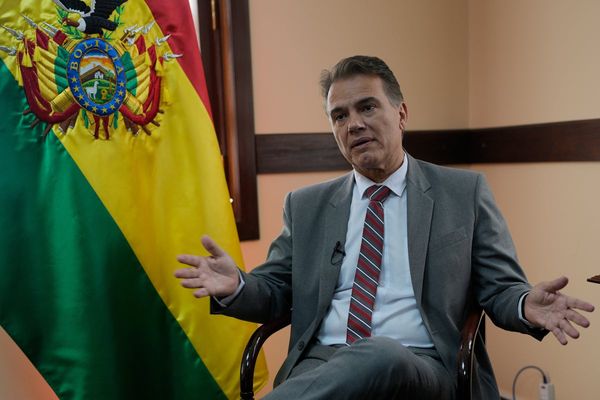
Bolivian negotiator at #COP26 for the LMDCs - group that includes China and India - emphasises that countries are not all equally responsible for climate change. “History matters."
— Josh Gabbatiss (@Josh_Gabbatiss) November 11, 2021
Also says “developed countries have a history of broken promises.” pic.twitter.com/sOE9kOeNix
But if the lack of progress starts to depress you, it’s nice to be reminded of some positives...
If you're looking for #COP26 upsides it's notable no one is arguing about the science, no one is arguing about whether climate change is a crisis, and no one is arguing whether we need to get to net zero emissions or not. The disagreements are all about precisely how we deliver.
— James Murray (@James_BG) November 11, 2021
Tom Levitt here taking over the live blog throughout the rest of the afternoon. You can email me at tom.levitt.casual@theguardian.com, or send me a message on Twitter at @tom_levitt.
Updated
Morning Summary
The mood music at Cop26 is getting increasingly desperate as we head into the final stretch.
Perhaps no more than usual, my colleagues point out, as it’s crunch time to agree on a deal before the summit ends, and negotiators will be pushing hard.
Here’s what has happened today:
- Delegates have been trying to make sense of a US-Chinese deal announced yesterday to cut emissions. The deal is broad and vague but marks a diplomatic breakthrough.
- Meanwhile, a draft text agreement on the summit has been criticised by the Cop president, Alok Sharma, as unsatisfying in its current form.
- The UN secretary general, António Guterres, said there is a general lack of ambition at the summit.
- Australia’s former Cop negotiator has slammed his country as a climate problem nation in the ranks of Saudi Arabia and Russia. Richie Merzian said all Canberra had brought to Cop was “good coffee”.
- Global publishers have released academic articles on climate change for free.
- A poll found fewer than one in five Britons think politicians will get the job done, with only 17% saying they trust UK policymakers.
That’s it from me today. I’ll be handing the blog over now to Tom Levitt.
Updated
Looks like someone gave John Kerry some Irn-Bru.

A new international alliance targeting an end to new oil and gas projects has failed to convince key oil-producing countries to ban fossil fuel exploration at Cop26 this week.
The Beyond Oil and Gas Alliance launched today under co-chairs Denmark and Costa Rica – with France, Ireland, Wales, Sweden, Greenland, Quebec, California and New Zealand alongside the founding members.
Under the alliance, these regions have all signed up to setting a deadline on new oil and gas licensing – but they were all relatively modest oil-producing nations that have already put forward plans to ban new oil and gas exploration in the past.
The alliance does not include the world’s biggest oil producers – the US, Saudi Arabia, Russia and Canada – or Europe’s largest producers, the UK and Norway.
Tessa Khan, director of the UK NGO Uplift, said: “This alliance shows how far behind the UK has fallen when it comes to genuine climate leadership. While our neighbours power past fossil fuels, Boris Johnson is contemplating approving new oil and gas projects, like the Cambo field.”
The lack of support from new regions willing to mark a cut-off for new fossil fuel projects, which the International Energy Agency has warned is vital to limiting global heating to 1.5C, has come amid growing concern that the Cop26 draft final agreement fails to go far enough in tackling fossil fuels.
Murray Worthy, a campaigner at Global Witness, said: “The science is clear – we must start phasing out all fossil fuels, starting now, if we’re to have a hope of limiting warming to 1.5°C. Yet this agreement falls spectacularly short – only calling for an accelerated phase out of coal, and an end to taxpayers bankrolling the fossil fuel industry through subsidies.
“This simply does not match the ambition people all over the world have looked to Cop26 for. Nor does it match what is needed to avert the climate crisis the world is currently experiencing,” he added.
The UK prime minister, Boris Johnson, was asked about the alliance yesterday and said he will “look” at what they are doing.
Asked by @bwebster135 if the UK should join the Beyond Oil and Gas Alliance @cop26 & phase out oil and gas in 30 years, @BorisJohnson said: 'We'll look at what Denmark and Costa Rica are doing'. #BOGA & 'we want to move beyond hydrocarbons' pic.twitter.com/ET2N926HIU
— Colin Fernandez (@colin_gram) November 10, 2021
Updated
Forty-three British members of parliament have written to the foreign secretary, Liz Truss, in the final days of Cop26, calling on the UK government to push for debt cancellation for climate-vulnerable countries.
Signatory MPs are from Labour, the SNP, Sinn Féin, Plaid Cymru and the Liberal Democrats.
The letter reads:
After centuries of exploitation and underdevelopment by wealthy countries, the global South is now being forced to confront the climate emergency with both hands tied behind its back.
Updated
Civil society now has the floor at Cop26 – they are not happy with the current state of the draft agreement text.
Teresa Anderson, from ActionAid and speaking for the UN-recognised Climate Action Network, told delegates:
Cop26 is the opportunity to prove that you are serious about preventing a deepening of the climate crisis. But instead of doing what is needed, your draft decisions do not provide justice or offer support to the millions already facing loss and damage due to climate change. Nor do they keep 1.5C in sight to avert future worsening impacts.
Let us be clear, limiting dangerous warming to 1.5C requires all fossil fuels to be phased out – not only coal, but also oil and gas.
The phase out of coal is mentioned in the draft text – the first time any Cop text has named a fossil fuel – but not oil and gas.
Anderson had harsh words for the negotiations on article 6 – the rules for a global carbon market to allow nations to buy carbon credits from others, instead of cutting emissions themselves.
We can’t believe we actually have to make the following remarks that human rights and rights of indigenous peoples are not negotiable and must be in the text.
It is ridiculous that double counting of emissions is even an option in these talks. And the same goes for carryover of junk credits [from a previous UN scheme] to cheat on accounting towards your climate goals. Negotiations on this inadequate basis does not bring justice to people on the planet.
Updated
Follow up: big publishers have long been criticised (including by the Guardian’s editorial board) for massive profits from academic papers.
Updated
Global publishers release academic articles on climate crisis for free
To coincide with the Cop26 summit, 15 of the world’s largest and most reputable academic publishers – including Elsevier and Cambridge University Press – have, for the first time, made available their most important articles on climate heating.
The papers have been shared to make it much easier for the public to find and act on the world’s most important and scientifically verified climate research, according to the publishers.
These will include research by 2021 Nobel prize winner Syukuro Manabe, which used the first scientific model to accurately predict rising temperatures as a result of CO2 emissions, and is considered by many to be the most influential climate science paper of all time.
The collection will also include work by former science teacher Seth Wynes, who identified the best ways individuals can reduce their impact on the environment, and a paper by Bharat Desai and Moumita Mandal, which identifies how climate change-related disasters lead to increased violence towards women.
Updated
Alok Sharma, president of Cop26, has just updated the summit on progress.
In summary, there’s a lot to do before the scheduled end of the meeting tomorrow evening.
Sharma said delegates had been working “tirelessly” and had made a “significant step forward” on the outstanding disagreements. But he added: “I am under no illusion that any [country] is really satisfied with where the [draft agreement] text stands. There is still a lot more to be done.”
He highlighted finance as a major difficulty – the money developing nations need for clean development, adapting to the climate crisis and paying for the damage that is now inevitable. The draft text was seen as quite strong on cutting emissions but vague and unambitious on funding. Sharma said his intention was to publish the next version of the draft text overnight tonight.
“Please bring the currency of compromise to your discussions – we will all reap the benefits,” Sharma said, reminding delegates of the ambition world leaders called for at the start of Cop26. “The world is watching – we cannot afford to fail them.”
Updated
A large area of Glasgow city centre, which has been notorious for its air pollution and congestion, will become car-free within five years, the city’s council leader has pledged.
Glasgow’s car-centric design, crisscrossed by a network of heavily used urban motorways, and the pollution emitted by companies operating its deregulated bus services, has long been criticised by environmental campaigners.
The city, which has invested heavily recently in dedicated bike lanes on once busy main roads and in “spaces for people” projects, is due to introduce a low emission zone, which has been criticised for being too soft on polluters. Its dominant bus operator, First Bus, has also unveiled a fleet of electric buses.
Susan Aitken said on Thursday the car-free zone would extend from George Square, site of Glasgow’s city chambers, to Hope Street in the west and from Cathedral Street in the north, south to Argyle Street. That would capture streets around Glasgow’s busiest rail termini: Queen Street and Central stations.

Spanning some of Glasgow’s busiest shopping and hospitality streets, parts of it – notably Buchanan Street – are already pedestrianised. Apart from disabled access, the area would be “entirely free of private cars”, the Herald reported.
“This core of Glasgow city centre will be given over entirely to public transport and to people moving actively,” said Aitken. “It’s a big step and we don’t underestimate the challenge of making that transition from what has been for far too long a private car dominated city centre.”
She said it would be delivered in stages in collaboration with city centre businesses. “I think it’s the kind of ambition that we have to demonstrate. We have to move beyond doing this partially and do it on a bigger sale.”
Updated
Australia is Cop26 'problem nation' similar to Saudi Arabia and Russia - former negotiator
The Australian government should be viewed like fellow fossil fuel giants and Cop26 problem nations like Saudia Arabia and Russia, according to a savage assessment by Richie Merzian, who spent a decade as an Australian Cop negotiator and is now at the thinktank the Australia Institute.
“The Australian government came to Cop26 to get away with doing as little as possible. It only agreed to net zero by 2050 two days before Prime Minister Scott Morrison took off [for Glasgow],” Merzian said. They have not committed to doing anything more in the next crucial 10 years, he said.
“They only want to look at technology and to support corporations – technologies that support the continued production of fossil fuels,” Merzian said. “The Australian government has over 100 new fossil fuel projects in the pipeline. It is the third-largest exporter of fossil fuels in the world after Russia and Saudi Arabia and it should be seen in the same grouping as Russia and Saudi Arabia.
“The only thing Australian has brought to this negotiation is good coffee over at the Australian pavilion,” he said.
“Australia’s in a unique position as the permanent chair for the ‘umbrella group’ of countries, all [developed] countries that aren’t part of the EU,” Merzian said. “So every morning it meets with the US, Russia, Japan, Canada, Norway etc, in order to discuss the issues of the day, and so it does have some influence here.
“It can act as a handbrake on ambition here,” he said. “If Australia refuses to increase its ambition for 2030, it provides cover for other countries to not do the same, because they can say: ‘If Australia doesn’t do it as a wealthy developed country, why should we?’ That’s the real problem here.
“The Australian government has said that it sees a bright future beyond 2050 for coal and gas production – there’s over 70 new coalmine proposals in Australia. So you can’t underestimate Australia’s interests here, which is the longevity of its fossil fuel production. That is running directly counter to what the UK is trying to push in terms of consigning coal to history.”
Updated
The UN’s António Guterres is underwhelmed by the pledges so far.
Bit of a theme here in the final push of the summit to make Cop26 a world-saver, rather than a historical disappointment. Lots of voices calling for more “ambition”.
One day before the end of #COP26, we cannot settle for the lowest common #ClimateAction denominator.
— António Guterres (@antonioguterres) November 11, 2021
I appeal to all countries to increase ambition in mitigation, in adaptation and in finance.
Updated
On Kenmure Street, activists from some of Glasgow’s grassroots migrant support groups have assembled to march on the nearby Home Office, with the message “climate justice equals migrant justice”.
This street was the scene of the famous battle of Kenmure Street earlier this year, when local residents and activists came together to block an immigration van that was attempting to remove two asylum seekers.
Yvonne from MORE (Migrants Organising for Rights and Empowerment) Glasgow told the crowd: “Six months ago something happened here that shows how Glasgow supports refugees and how we unite.”
Climate justice = migrant justice say @MOREGlasgow @ScotlandXr marching from Kenmure Street to the home office this morning pic.twitter.com/6muxqqQ2HF
— Libby Brooks (@libby_brooks) November 11, 2021
Nearly half of Brits following Cop26, only one in five trust politicians to deliver
Almost half of Britons are following the Cop26 climate talks in Glasgow, but only 20% trust politicians to deliver an agreement to stave off runaway global warming, new polling has found, according to PA Media.
Some 46% of Britons have been following the summit, with about one in 10 saying they are following it closely, PA reports.
The UK public had the most faith in experts to ensure the negotiations reach a viable agreement, with four in 10 saying scientists were best placed to achieve this, according to research by Ipsos Mori.
As the talks enter their final phase, less than one in five think politicians will get the job done, with only 17% saying they trust UK policymakers, and only 14% having faith in those from other countries.
Updated
Cop summits are notorious for not ending on time, with negotiations running well into the weekend.
Ed King, who founded Climate Home News, is reporting that – in an effort to avoid delays – Mexico offered the UK’s Lead Climate Negotiator Archie Young, a bottle of tequila to end the talks on time tomorrow.
Hearing Mexico offered a bottle of tequila to UK's @archieyounguk if countries manage to close talks by Friday... here's hoping #COP26
— Ed King (@edking_I) November 10, 2021
And Russia is offering up vodka, too, he said.
Update: Russia offered shots of vodka https://t.co/Ieh11tQixY
— Ed King (@edking_I) November 10, 2021
Armed forces are among the biggest polluters on the planet but are avoiding scrutiny because countries do not have to include their emissions in their targets, scientists say.
The world’s militaries combined, and the industries that provide their equipment, are estimated to create 6% of all global emissions, according to Scientists for Global Responsibility (SGR).
Owing to what they describe as a “large loophole” in the Paris agreement, governments are not required to provide full data on greenhouse gases being emitted by armed forces. Previously, under the Kyoto protocol, militaries were given an automatic exemption from CO2 targets, after lobbying from the US government.
Campaigners say the current situation, whereby it is only voluntary for states to include armed forces in their carbon-cutting obligations, is undermining efforts to tackle the climate crisis.
SGR’s executive director, Dr Stuart Parkinson, said that as military spending increased, the loophole continued to grow:
Military carbon emissions matter because they are a potentially large loophole in the Paris targets – especially for the high military spenders like the US, China, UK, Russia, India, Saudi Arabia and France.
With military spending rapidly rising, this loophole is set to grow at a time when other emissions are falling. The seriousness with how these nations deal with this issue will affect action in other sectors and in other nations.”
Jarvis Cocker isn’t the only person to have written a song for Cop26.
Musician Kate Ellis collaborated with a painter, Geraldine van Heemstra, to “process and express their hopes and fears about the environment” in this little number.
More on that project here: https://www.ourwonderland.org/
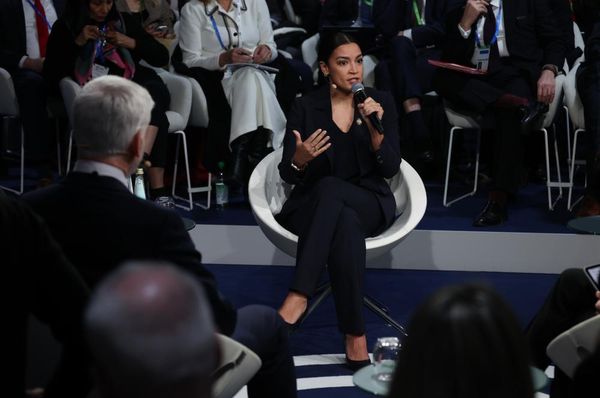
Blog readers yesterday would have heard that Alexandria Ocasio-Cortez was on the hunt for some Irn-Bru at the summit.
Update: She found some, and loves it.
Jarvis Cocker has teamed up with the electronic DJ Riton to release what he calls “the world’s first sustainable banger” to encourage action to address the climate crisis.
Let’s Stick Around, released on Thursday to coincide with Cop26, brings together one of the figureheads of Britpop with a powerhouse of electronic dance music. “Anybody with any sense is passionate about the climate emergency, it’s moving more into the centre of everybody’s consciousness,” Cocker said.
The former Pulp frontman was approached to do the vocals last year by the Grammy-nominated Riton and Ben Rymer, who together make up Gucci Soundsystem.
“It seemed appropriate to unleash it on an unsuspecting world during Cop26,” Cocker said. “A lot of debates in the modern world devolve into people shouting at each other from opposite corners of a room. The idea was that anybody could dance to this song and agree with it. That’s what music does so well. It brings people together.”
Cocker has long been an advocate for climate action. His concerts have featured stalls for Extinction Rebellion, some of whose members joined him on the Q awards red carpet in 2019.
Every day at Cop26 has a theme. And today’s is (drum roll)...
Cities, Regions & Built Environment Day
A bit wordy, yes. But it is vital that cities, and the way they are built and operate, change to slow global heating.
It’s Cities, Regions & Built Environment Day at #COP26
— COP26 (@COP26) November 11, 2021
With 68% of the global population living in cities by 2050, it's vital we build a sustainable and resilient future.
Find out more 👇#TogetherForOurPlanet
PS: “Built Environment” just means buildings.
Updated
Unexpected US-China deal shakes up conference
The world’s two biggest emitters (and not always the best of friends!), the US and China, announced an agreement yesterday to work together on cutting their emissions.
In a shock announcement, which possibly came as a surprise even to the UK hosts, Washington and Beijing said they would cooperate on regulations in decarbonisation, reducing methane emissions and fighting deforestation.
While both short in length and broad in scope, the agreement marks a diplomatic breakthrough after days of mud-slinging from the two powers.
Our colleagues in Glasgow are rushing around to find out more.
Meanwhile, a draft text of the outcome of the talks is still being haggled over by delegates. Developing countries have called for wealthy nations to come forward with more financial help for vulnerable countries.
Good morning! I’m Oliver Holmes, firing up a fresh liveblog for Day 11 of Cop26.
Do send anything worth putting on the blog to me: oliver.holmes@theguardian.com
Updated