What is Can Cook? A glance at all the strands of this Liverpool-based social enterprise won’t help you neatly pin down everything it does, but for director Robbie Davison it’s quite simple: “We only want people to eat well – whatever their income, whatever their circumstances.”
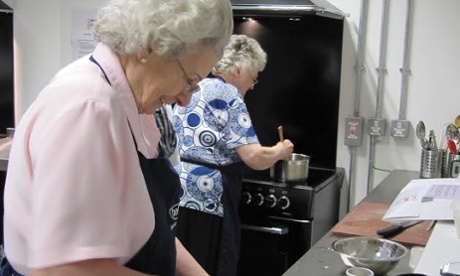
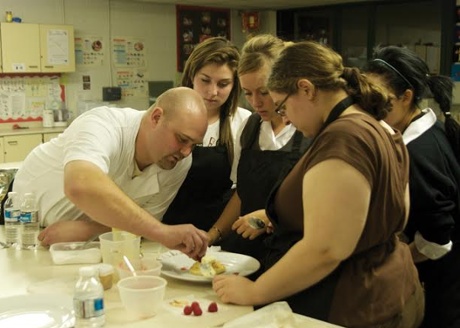
When it started in 2007, Can Cook’s drive was to get people feeding themselves by building confidence in the kitchen through training (to date, 13,500 adults and children have been trained). While training is still an important part of Can Cook’s offer, 2015 will see the launch of a further initiative: Cooked - a model to bring older people healthy fresh prepared food.
Davison explains: “We kept bumping into the same problem: older people weren’t eating well. So, we approached Liverpool city council to look at how the kitchen at Middleton Court, one of its reablement hubs, was managed, and in particular how food quality was viewed as a means of keeping people well.
“The meals we have been developing are food that people will recognise as food. If people grew up cooking for themselves it’s the food they would have had at home. Our aim is to focus on the fundamentals – to make really good food all of the time.”

The idea of Cooked grew out of this work in care facilities. As well as feeding people in care and also in their own homes, Can Cook will also set up food hub outlets where people can purchase lower cost, higher quality meals. Together, the Cooked and food hub models also present an innovative approach to traditional meals-on-wheels delivery, shifting the emphasis from just being fed to choosing to eat.
Davison continues: “Our meals are delivered chilled, not frozen, or with a ready-to-eat hot option. Our delivery will be responsive enough to do this and this also means that people will eat fresher food. Food can also be part-cooked so it can be finished off in a microwave or oven. We have just introduced a 10-minute roast dinner!”
Cooked, and the wider Can Cook project, are characterised by flexibility, which is made possible by talent. “Good food targeting social impact is hard,” says Davison. “If you want to get it right, you have to search for the best staff and work hard to never compromise quality. If all you want to do is make money and feed people badly then the challenge is that much easier.
“What we have found is that in many care facilities there are two types of kitchen. One: frozen food is bought in and a cook warms it up. Or two: there are people who cook from scratch but aren’t chefs. They’re cooks whose menus are based on home-cooking knowledge. These two kitchens are all about cost. What makes us different is that we use trained chefs who understand skilled food production and who are able to create meals that price match other options but always maintain quality.”
Can Cook’s chefs have developed 52 meals and from August 2015 they will be working in a 5,500sq ft-kitchen where, within a year, they will be producing 10,000 meals a month. This “MegaKitchen” in south Liverpool will play an important part in achieving Can Cook’s wider mission: to solve food poverty in Liverpool.
Through a concept called Share, 15 pence from every meal sold across all Can Cook’s projects goes towards providing a fresh meal to anyone who is hungry in Liverpool. It is anticipated that up to 20,000 meals each year will be provided free.
Just as Can Cook’s responsiveness is built on having the right people in place, the social part of Can Cook’s social enterprise is progressing thanks to a solid business base. While admitting he knew very little about food before he started developing Can Cook, Davison’s experience in developing social enterprises, such as the Furniture Resource Centre has led directly to the current venture’s success.
For Cooked, £250,000 has already been raised from private and social investment, with a further £750,000 to come which will take the model through all of its next stages of growth. Employee numbers are set to increase from 14 to 30 and will include a trainee programme for young people to get working in the food industry. The long-term plan is for the model to be rolled out to five cities over the next four years.
“There is no other model like ours in the UK and I’m not surprised,” says Davison. “Social enterprises take about eight or nine years to gestate to our sort of size and to create our kind of impact.
“Also, most people don’t ‘get’ social enterprise. Charities see social enterprise as an often ill-thought-out route to new revenue, and mainstream business often sees them as no more than a soft touch, giving people something for nothing and not as real businesses in their own right.
“Moreover, investors have little understanding of social enterprises, they are seen as a risk, meaning that the social enterprise movement remains undeveloped at a time when the model is needed more than ever.”
To find out more about Can Cook’s initiatives email info@cancook.co.uk or follow on Twitter.
Content on this page is produced and controlled by Liverpool city council, sponsor of the adult social care hub