
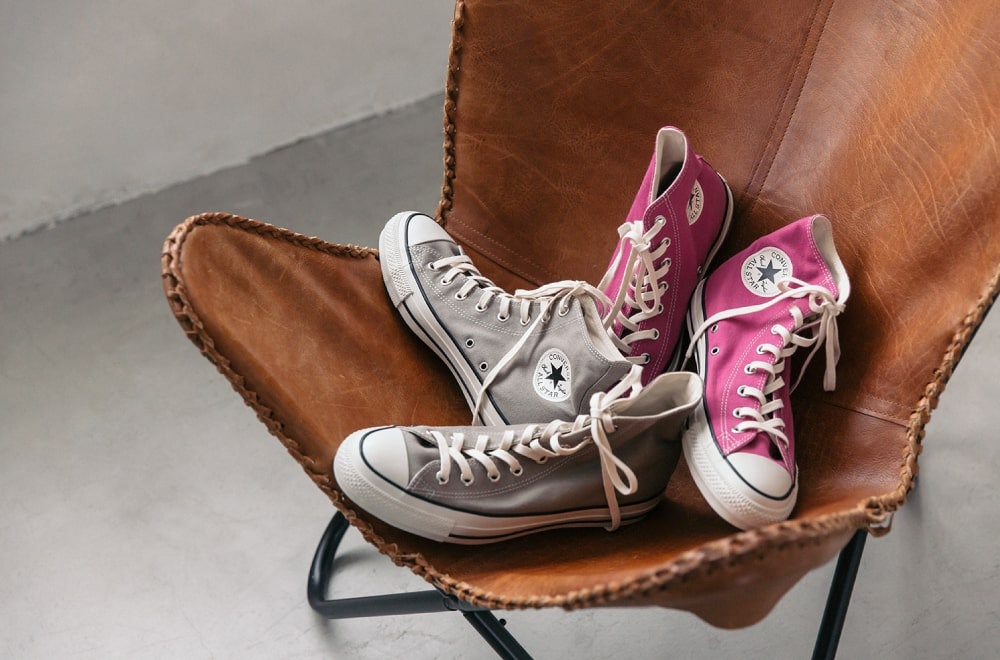
While Converse proper is utilizing recycled fabrics and rubber in a bid for sustainability, Converse Japan is taking a different approach by dyeing Chuck Taylors with food waste. Next month, the Japanese licensee will release a pair of Chucks dyed using juniper and purple cabbage. The kicks are made in collaboration with Food Textile, a Japanese company that specializes in using food waste to dye materials for other brands and its own in-house line.
The release, which is slated for August, comes under Converse's experimental and sustainability-oriented Eclab division. In addition to the more sustainable dye, the Chuck Taylors also have an outsole made of recycled rubber and Ortholite Eco insoles made of castor oil-based polyurethane.
Converse Japan has used food-based dye before —
Converse Japan debuted its Eclab line last August with a trio of Chuck Taylors dyed with used coffee grounds, cherry blossom petals, and the herb Mallow Blue. The latter two are still available for purchase — you may need a proxy — as is Eclab's "Musenshoku" Chuck Taylor, which eschews dye altogether on canvas made from cotton stems and leaves. Because of its raw finish, it was able to reduce its water usage to 7.08 liters per meter of fabric.
Smaller brands in the industry have also turned to food waste as they strive for sustainability. No Saints, an Australian footwear company, uses apples and pineapples for two of its leathers. Apple leather is made from apple skins and cores discarded by juicing and compote industries. The pineapple leather, which is called Piñatex, is made from leaf fibers sourced from the harvesting of the fruit in the Philippines. In addition to preventing the leaves from going to waste, the leather also provides another source of income to the farming communities.
Another brand called Thousand Fell has designed sneakers that can be sent back at the end of their life to be cleaned and donated or broken down for recycling back into the company's supply chain. The sneakers' materials include sourcing from sugar cane, aloe vera, and coconut.
Food and textile waste are both major issues —
Food waste may be one issue that footwear and apparel industry hasn't created, but addressing it can kill two birds with one stone.