Major retailers, whose profits suffered between March and May because of the coronavirus-related state of emergency, saw business pick up between June and August when there was a rise in consumer spending, according to their midterm consolidated account settlements for the six-month period ending in August. However, major convenience store chains operating mainly in urban areas are struggling as more employees telework and fewer customers come into the stores.
Meeting needs of stay-at-home consumer
Seven & i Holdings Co. announced that its group's net profit for the six-month period was 72.5 billion yen, down 34.5% compared to the same period last year.
Although there was a decrease in profit, it increased significantly from 13.9 billion yen between March and May. Supermarket sales made up for the decline in business at convenience stores.
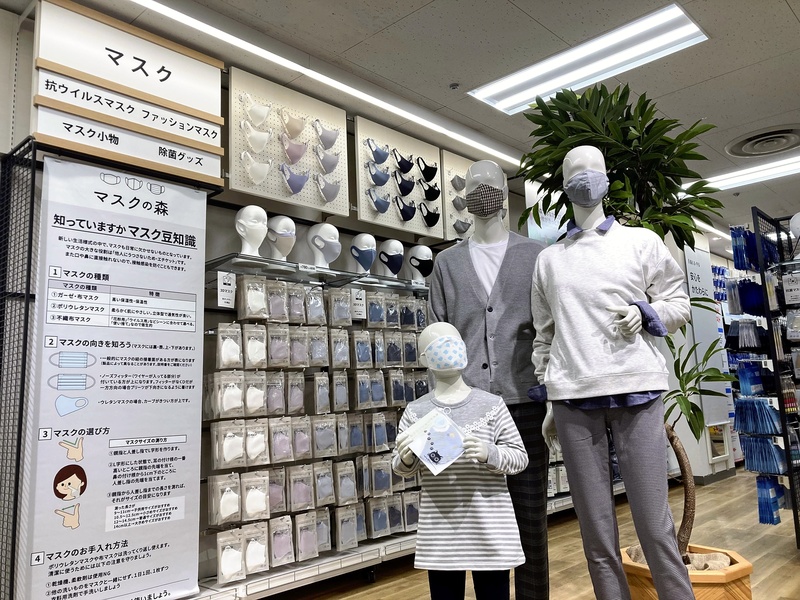
Ito-Yokado Co., a supermarket owned by Seven & i Holdings, is seeing an increase in sales for hygiene products such as masks and disinfectants, as well as paper products such as tissues. Sales are also going up for its mainstay food products, focusing on the demands of the stay-at-home consumer. The company was also able to operate as usual during the summer and that contributed to higher earnings, compared to the spring when the company was forced to cut business hours because of the state of emergency.
In its earnings forecast for the business year ending in February 2021 -- account settlements for retailers' business year tend to end in February -- Ito-Yokado raised its net profit to 138.5 billion yen from 120 billion yen in July. This was the result of seeing signs of economic recovery after the government lifted its state of emergency.
Meanwhile, Aeon Co. posted a net loss of 57.5 billion yen for the six-month period ending in August. The deficit between March and May was 53.9 billion yen, but it decreased to 3.5 billion yen between June and August. Sales at supermarkets increased as many customers went shopping because they were tired of staying home or stayed local during the Bon Festival period, rather than go back to their hometowns.
Profits affected by location
The profits for Seven-Eleven Japan Co., FamilyMart Co. and Lawson Inc. all differed. Seven-Eleven Japan had a relatively small slump because many of its stores are located near residential areas. However, FamilyMart and Lawson saw fewer customers because many of their stores are located in business districts, which are now less busy because more employees are teleworking. Convenience stores that operate inside a building were also hit hard by the temporary closure of their buildings, as well as those located near tourist spots.
As the virus spread, the needs of the stay-at-home consumer changed, leading to sales differences for certain items compared to previous years.
At Lawson, sales for hygiene products, frozen foods and seasonings rose more than 10% in the first six months compared to the same period last year.
"Consumption is shrinking due to falling incomes, and there are concerns that the infection may spread further in the winter," said Shun Tanaka at SBI Securities Co., an expert in the distribution industry. "As teleworking becomes more common, it will impact the industry, and store locations will need to be reviewed in response to changes in consumer behavior."
Read more from The Japan News at https://japannews.yomiuri.co.jp/