Convenience stores and restaurant chains, which have for years been growing through round-the-clock operations and increasing their outlets, are facing a turning point.
As the number of customers has plateaued due to lifestyle changes, these businesses are facing difficulties in making profits. Their labor costs also are increasing because of the labor shortage. In addition, there is a societywide recognition that excessive services at these establishments are putting a burden on their workers. Companies are being pressed to focus on labor-saving investments.
Decline in late-night customers
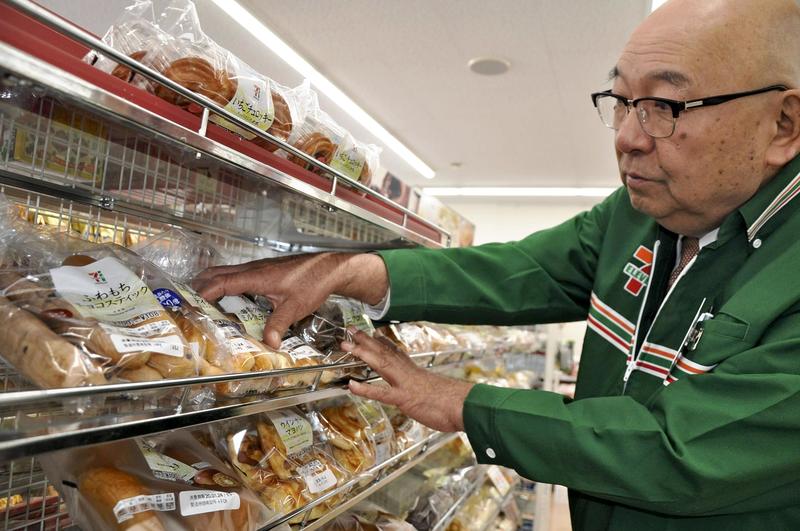
A Seven-Eleven Japan Co. outlet near Tokyo's JR Hachioji Station is crowded with neighboring residents and commuters during the daytime every day. On the morning of Jan. 21, onigiri rice balls and boxed lunches sold well at the Hachioji Yorozucho shop. But the number of late-night and early-morning customers is declining. The store sees about three customers an hour after 2 a.m.
Twenty part-time workers work in shifts to support the store's 24-hour operation. Many of them are students from China, as the job is not popular among Japanese nowadays. Since there are three other Seven-Eleven stores in the neighborhood, the shops are vying for part-time workers.
The 71-year-old owner of the shop in Hachioji said: "The Seven-Eleven headquarters should be aware of changes in the social structure. The uniform convenience store model is being left stranded."
For companies in general, shortening business hours serves as a big part of so-called work style reforms. Seven-Eleven and Lawson Inc. shut their stores for the first time on New Year's Day this year as a trial.
The values of customers are also changing. Only 10% of convenience store users said they think convenience stores need to be open late at night, according to a survey by the Economy, Trade and Industry Ministry.
As the labor shortage drags on, there is a growing awareness among both companies and customers that excessive services provided at convenience stores are a burden on the workers.
Technology utilization
What will happen to convenience stores and restaurants in the future? They are looking for ways to introduce cutting-edge technologies and use them to offer convenience without relying on humans. They have steadily increased overall sales through the opening of new stores every year, but now they are set to shift their focus from quantity to quality by maintaining their networks of outlets through investing in existing shops while restricting the number of new openings.
Since last summer, Lawson has been conducting tests at an unmanned store in Yokohama where customers pay at self-checkout counters. Lawson also plans to open its first store without a cash register this summer, utilizing such technology as facial recognition to enable customers to pay for items automatically.
McDonald's Co. (Japan) launched a mobile ordering system last year through which customers can use their smartphones to place orders and pay in advance, making lines at outlets shorter and reducing the workload for cashiers.
In another example of innovation, sushi restaurant chain operator Hamazushi Co. installed humanoid robots at all of its restaurants.
Read more from The Japan News at https://japannews.yomiuri.co.jp/