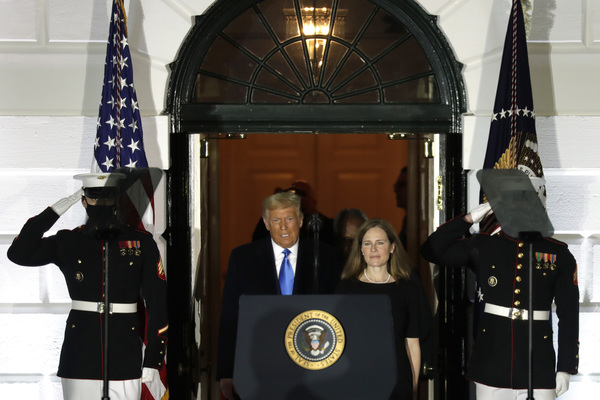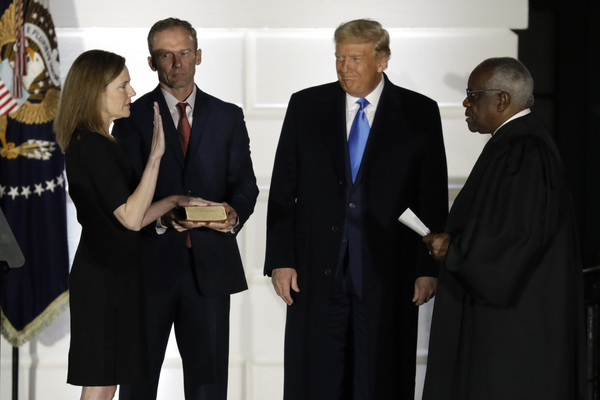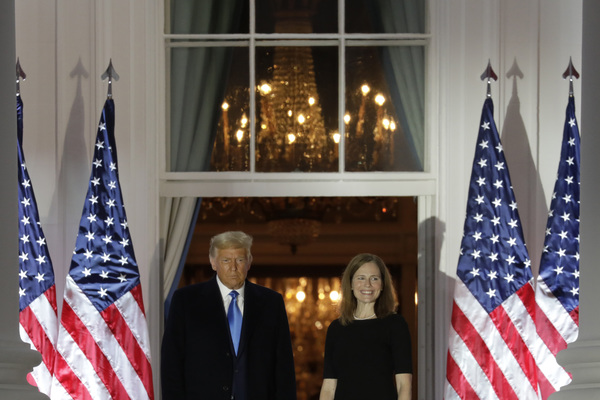
WASHINGTON — Senate Republicans will finish their race Monday to confirm Amy Coney Barrett and boost the long-running conservative advantage on the Supreme Court, where her actions on consequential cases in the coming days and months could amplify calls to revamp the high court and change Senate rules to do so.
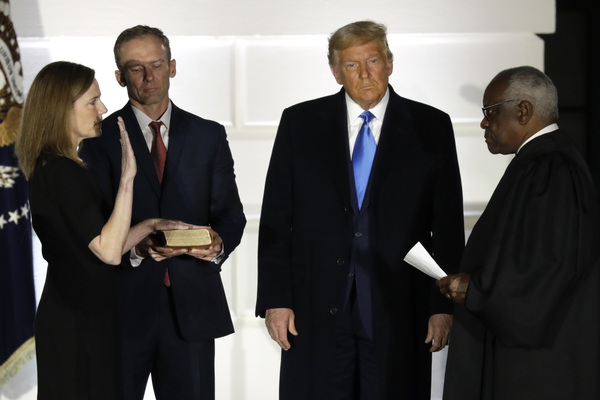
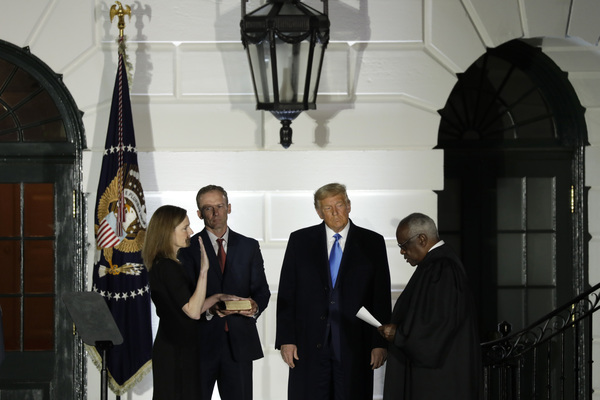
Barrett is expected to narrowly win confirmation in a vote Monday evening almost entirely along party lines, and be sworn in as early as Monday night to fill the vacancy left by the death last month of liberal Justice Ruth Bader Ginsburg. She will join the court in time to consider legal fights over the presidential election and decide whether the entire 2010 health care law should be wiped out.
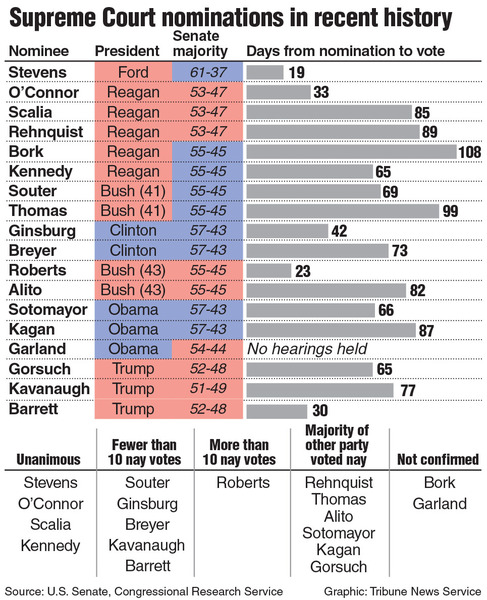
Democrats decried Republicans for what they called a sham and hypocritical confirmation process so close to the Nov. 3 elections that will determine control of the White House and the Senate. Four years earlier, Republicans refused to consider President Barack Obama's nominee, Merrick B. Garland, for eight months because they said it was too close to a presidential election.
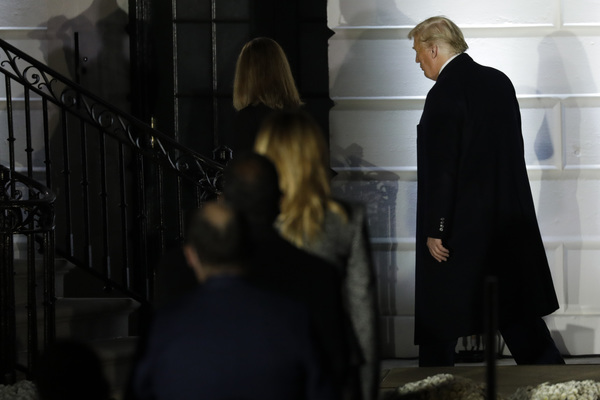
But Democrats are powerless to stop Majority Leader Mitch McConnell from strengthening the long-running advantage for justices appointed by Republican presidents from 5-4 to 6-3, including a third President Donald Trump appointee.
The political spotlight will quickly shift from the Senate chamber to the Supreme Court docket. What happens there, and at the ballot box, will shape whether Democrats and their allies press for actions to rebalance the court such as adding more justices to recoup what they consider a stolen seat.
Those fixes would almost certainly require the end of the Senate's longstanding rules that allow the minority to block legislation, and some Democrats suggested that might need to be done no matter how the Supreme Court's rulings come down.
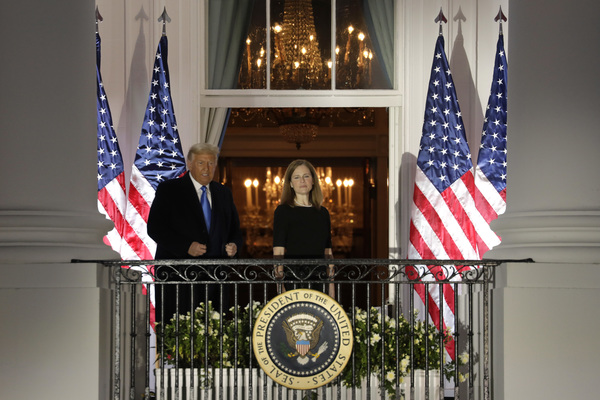
"Let's be very clear: If Trump and Republicans succeed in ramming this nomination through, the American people will expect us to use every tool we have to undo the damage and restore the court's integrity," Massachusetts Democratic Sen. Elizabeth Warren said Sunday on the floor.
But such a move would require Democratic control of the Senate and White House. And that appetite for change could grow if Supreme Court decisions cut against positions favored by Democrats, particularly if it happens on issues that also have support from voters nationwide.
Senate Minority Leader Charles E. Schumer of New York in a floor speech Sunday laid out the issues he and other Democrats will be watching, in addition to their fears that Barrett's confirmation could mean rulings that side with conservatives on voting rights, global warming, gun control, LGBTQ rights and more.
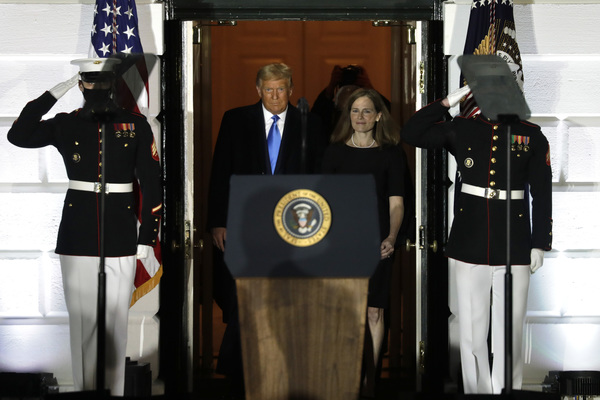
"I want the American people to know: The far right is lining up, right now, to get the Supreme Court to review your fundamental rights because they think Judge Barrett might provide a certain outcome," Schumer said.
Texas Republican Sen. John Cornyn said that Barrett has all the qualities sought in a judge, would apply the law fairly even in the health care case, and did not prejudge cases and give any hint or prediction of outcomes or an agenda.
If a judge made those sorts of commitments on policy issues at the confirmation hearing, Cornyn said, "that would be disqualifying in and of itself. That person ought to run for Congress. They ought to run for city council. They ought to run for the school board. They should not be a federal judge. That is not what federal judges are supposed to do."
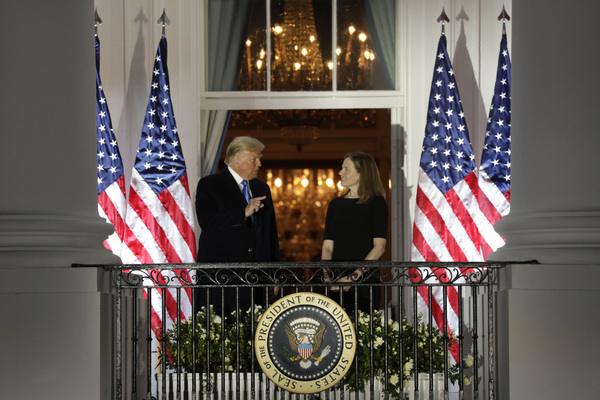
Barrett could be the deciding vote as Republicans in the key presidential swing state of Pennsylvania asked the Supreme Court to stop a state court's decision that would allow election officials to count mail-in ballots that arrive up to three days after Nov. 3, Schumer said.
Mississippi state officials have asked the Supreme Court to review a state law that bans abortions after 15 weeks, "an invitation for a new configuration on the court to revisit Roe v. Wade," the landmark 1973 case that established a constitutional right to abortion, Schumer said.
And, the issue that Democrats focused on most during the confirmation process, the Supreme Court on Nov. 10 hears arguments from the Trump administration and a coalition of officials from Republican-led states that if one part of the health care law is unconstitutional then the entire law must fall, along with popular provisions such as protections for people with pre-existing conditions.
In those cases and more, the Supreme Court's three justices in the liberal wing would have to pick up at least two votes from the conservative wing to find any victories on ideologically divisive issues.
But it's not clear that Barrett, who when she was a legal academic criticized previous Supreme Court decisions that upheld the health care law, will cast the deciding vote in that case. Legal experts say a majority of current justices already signaled strong support for the legal approach that would carve out any unconstitutional provision and let the rest of the law stand.
Also, the Supreme Court, which seeks to defend the legitimacy of its rulings as rooted in the law and not political ideology, knows the political world is watching if they approve the Republican plan to torpedo the health law.
"We want to make sure we make as much noise about this as possible, so that Republicans are accountable for that choice when it happens," Rhode Island Democratic Sen. Sheldon Whitehouse said on a press call Sunday. "And maybe, just maybe, the Supreme Court dials back and doesn't do what the plan is because they're worried about all the noise we've made."
Barrett, a Roman Catholic and federal appeals court judge since 2017, will immediately be tested on her statements about setting aside personal beliefs for the law, including on abortion, the death penalty and the health care law.
Also on the docket before the end of the year are cases on the Trump administration's handling of the 2020 census and the House Judiciary Committee's effort to see grand jury materials from former special counsel Robert S. Mueller III's probe into Russian interference in the 2016 election.

If Democrats do win the White House and Senate, and retain control of the House, they have legislation that McConnell has blocked on gun control, policing and more.
"The first thing out of the box may be the John Lewis Voting Rights Act, to restore voting rights that the Supreme Court has taken away," Ohio Democratic Sen. Sherrod Brown said Sunday on NBC's "Meet the Press."
Barrett did little in her three days before the Senate Judiciary Committee to illuminate how she might rule in pending cases, and whether she might recuse herself from certain issues such as a contested presidential election.
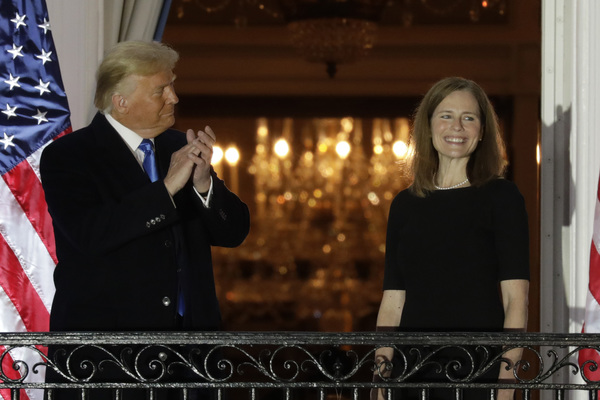
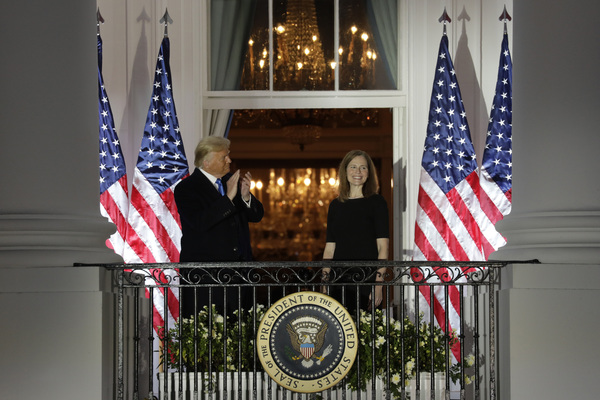
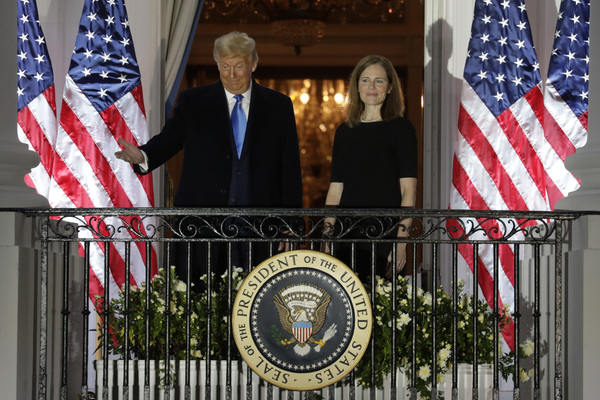
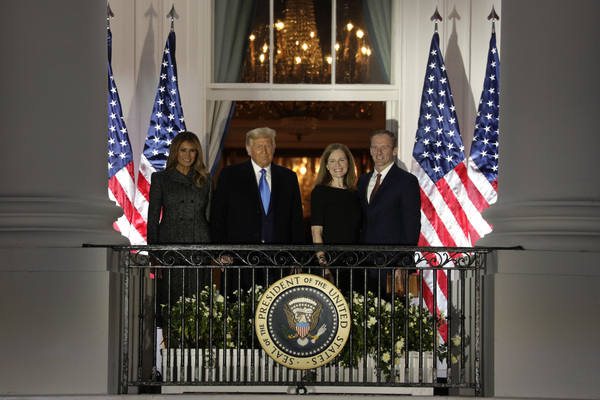
Barrett told the country that her judicial philosophy is that of the late conservative Justice Antonin Scalia, but she said she would be her own justice. Democrats contend that approach will put Barrett on the wrong side of the country's sentiment on major issues.
McConnell gave voice to the long-term consequences of Barrett's confirmation to solidify the Supreme Court's conservative shift, and what it means for the work of Congress. He hinted to his colleagues ahead of a procedural vote Sunday that Barrett's vote on the court could stand in the way of liberal policies for decades.
"A lot of what we've done over the last four years will be undone, sooner or later, by the next election," McConnell said. "Won't be able to do much about this, for a long time to come."
Maine Independent Sen. Angus King was one of the members of the Democratic caucus who hinted that something like adding justices should be done much sooner.
"I don't want to pack the court. I don't want to change the number," King said Sunday on the floor. "I don't want to have to do that, but if all of this rule-breaking is taking place, what does the majority expect? What do they expect?"