WASHINGTON _ The House Intelligence Committee released a controversial classified memo Friday that Republicans say reveals improper government surveillance during the 2016 presidential race _ which President Donald Trump said shows a pro-Democratic tilt at the FBI and Justice Department _ but that the FBI warned is inaccurate.
Given the weekslong partisan furor that preceded its release, the contents of the memo seem far less explosive than Republicans had claimed, and far less dangerous than Democrats had asserted. It neither proves an anti-Trump bias at the FBI and Justice Department, nor reveals previously unknown intelligence sources and methods.
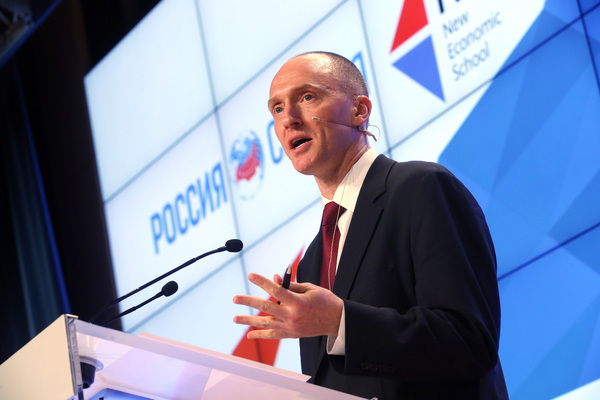
The four-page memo says Justice Department officials investigating Russian meddling in the 2016 campaign relied in part on research funded by Democrats to obtain a secret warrant to eavesdrop on Carter Page, one of then-GOP presidential candidate Donald Trump's foreign policy advisers, who had multiple contacts with Russia.
The research, which became part of a now-notorious dossier concerning Trump's alleged ties to Russia, was a major part of an October 2016 application by the FBI and Justice Department to the Foreign Intelligence Surveillance Court, according to the memo.
That warrant was renewed three times, including after Trump took office. Although the renewals may indicate that the FISA court judges believed the surveillance was bearing fruit, the memo sharply criticizes the FBI for failing to indicate to the court that some of the research was funded by Democrats.
Trump gave the green light Friday morning for the Intelligence Committee to make the document public, and he told reporters in the Oval Office that "it's a disgrace what's happening in this country."
Earlier, the president tweeted that the "top Leadership and Investigators of the FBI and the Justice Department have politicized the sacred investigative process in favor of Democrats and against Republicans _ something which would have been unthinkable just a short time ago. Rank & File are great people!"
Democrats, in turn, accused the White House and Republicans of using the memo to politicize a legitimate investigation into a foreign power attempts to influence a U.S. presidential election, and of undermining public confidence in the criminal investigation led by special counsel Robert S. Mueller III.
There was no immediate comment from the FBI, but the association that represents FBI agents said it would not permit partisan bias to color its investigations.
"The American people should know that they continue to be well-served by the world's preeminent law enforcement agency," it said. "FBI Special Agents have not, and will not, allow partisan politics to distract us from our solemn commitment to our mission."
The GOP memo came out despite efforts by senior Justice Department and intelligence officials to block or delay its release.
On Monday, FBI Director Christopher Wray and Deputy Attorney General Rod Rosenstein went to the White House to ask John Kelly, the chief of staff, to call Rep. Devin Nunes, a California Republican and chairman of the House Intelligence Committee, and ask him to delay a committee vote on releasing the memo. Kelly declined, according to a government official.
The Republican-led committee voted along party lines later that day to release the memo. It also voted against the simultaneous release of a rebuttal drafted by Democrats on the panel.
The document was written by aides to Nunes, a close ally of the president, whose committee is conducting an inquiry into Russian meddling in the 2016 election.
"The Committee has discovered serious violations of the public trust, and the American people have a right to know when officials in crucial institutions are abusing their authority for political purposes," Nunes said in a statement.
The surveillance described in the memo dates back to the early days of the Russia probe, before special counsel Mueller was appointed last May. But Democrats fear the document will be used as a political cudgel against the investigation, saying in a statement that the memo is "a shameful effort to discredit these institutions, undermine the Special Counsel's ongoing investigation, and undercut congressional probes."
The memo is based, in part, on FBI interviews with confidential informants, classified documents provided to the FISA court, and other sensitive material.
In a highly unusual challenge to the White House, the FBI issued a public statement Wednesday warning that it has "grave concerns about material omissions of fact that fundamentally impact the memo's accuracy." The statement came after senior FBI officials appealed to the White House to block the memo's release.
Director of National Intelligence Dan Coats, the nation's top intelligence official, also told the White House that releasing the memo could set a troubling precedent for revealing classified information.
The committee vote on Monday sent the memo to the White House, where Trump made clear he wanted it out despite the intelligence community's concerns.
The White House promised a careful review process before the memo would become public, but Trump seemed to have already made up his mind before reading it.
When a Republican congressman approached him after Tuesday night's State of the Union address and urged him to release the memo, the president responded "100 percent" in an interaction captured by a C-SPAN camera.
Republicans have insisted the memo would increase transparency around the secretive surveillance process, and Nunes rejected what he called the FBI's "spurious objections."
"It's clear that top officials used unverified information in a court document to fuel a counter-intelligence investigation during an American political campaign," he said in a statement.
House Speaker Paul Ryan, R-Wis., supported Nunes' work on the memo and said it raises "legitimate questions about whether an American's civil liberties were violated."
Democrats accused Republicans of skewing the facts to undermine public confidence in the Mueller investigation.
"This is an effort to circle the wagons around the White House and distract from the Russia probe," said Rep. Adam Schiff of California, the top Democrat on the Intelligence Committee.
Schiff made a last-ditch effort to forestall the memo's release on Wednesday night, accusing Nunes of sending a version to the White House that had been "secretly altered" with "material changes." Because of the modifications, Schiff contended, the process for releasing the document needed to be restarted.
A spokesman for Nunes defended the changes as "minor edits" and described Schiff's letter as part of an "increasingly strange attempt" to keep the memo under wraps.
Nunes made headlines last March when he visited the White House compound late at night and then announced the next day that some members of Trump's transition team had come under U.S. surveillance and might have been improperly "unmasked" in intelligence reports.
That led to an investigation by the House Ethics Committee on whether he had mishandled classified information, forcing him to step down from overseeing the Russia inquiry. He was later cleared of wrongdoing.