Last Thursday, Indiana governor Mike Pence signed the Religious Freedom Restoration Act into law. The ‘religious freedom’ restored by the bill refers to is the freedom of businesses and associations to refuse to offer services to individuals for religious reasons. Many have alleged that the law essentially legalizes discrimination against certain groups, specifically those in the LGBT community.
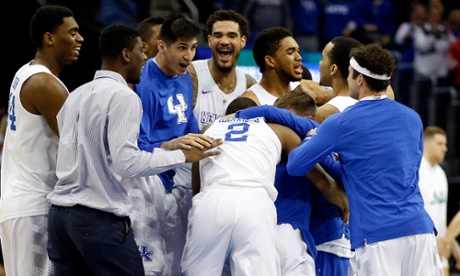
The timing of the bill’s passing couldn’t have been worse for the NCAA as the Final Four set to begin at Indianapolis’s Lucas Oil Stadium on Saturday. This means that the nationally televised games, the climax of one of America’s biggest sporting events, could end up being overshadowed by the latest battle in an ongoing civil rights debate.
The NCAA, its network partners – who have paid $10.5bn for broadcast rights through 2024 – and their mammoth list of corporate sponsors would much rather the focus be on the games, players and schools and stay far away as possible from any divisive social or political issues. That absolutely will not be possible when the tournament shifts to Indianapolis. Nor should it.
It’s often possible, and sometimes even preferable, to separate sports and politics, but not when laws designed to legalize – and possibly promote – discrimination are in play. It would have been shameful to cover the Sochi Olympics without addressing Russia’s deplorable anti-gay laws. Certainly we in America should hold ourselves to much higher standards.
Among those who plan to use the run-up to the Final Four as a platform to rally against the Religious Freedom Act is Cyd Zeigler, founder of OutSports and occasional Guardian contributor. Zeigler views the Final Four as a place to make a statement that it’s not acceptable to award sporting events to places which treat certain groups of people as second-class citizens:
Attending the Final Four this year isn’t just about the Final Four, it’s setting the stage for major sports events to vacate the state. If the NCAA, NFL, Big Ten and others don’t pull their events out of Indiana, other states will be quick to follow with pro-discrimination laws of their own.
Now, could any combination of protest, outrage, media attention and boycotting actually lead to organizations pulling events from Indiana, as Zeigler hopes? It’s at least possible. The NCAA doesn’t stage tournaments in South Carolina because they fly the Confederate flag at their capital. In 1990, the NFL moved the 1993 Super Bowl out of Arizona because the state refused to recognize Martin Luther King Day.
There are also, obviously, plenty of examples where public outcry has done very little. There was a major push for Major League Baseball to move the 2011 All-Star Game out of Arizona after the state had passed a controversial immigration bill, but the outrage eventually dissipated and the game went on as planned. Perhaps most notoriously, there is apparently no amount of pushback, protests or appeals to basic human dignity that will convince the professional football team in Washington DC to stop using a racial slur as a team name.
Obviously, although some have called for it, this came too late for the NCAA to relocate this year’s Final Four. Even if the NCAA, whose national office also just happen to be in Indianapolis, wanted to make that decision, it’s too late in the process. The tickets have been sold, the media is en route and the logo is already on the court.
NCAA president Mark Emmert has, however, released a statement that leaves open the possibility of altering future plans. In the brief statement Emmert says they “intend to closely examine the implications of this bill and how it might affect future events as well as our workforce.”
Emmert went even further in an interview with the Indianapolis Star’s Gregg Doyel:
We don’t want to, because of political activity, disrupt an event that’s been in the making for so long, (and now) you’ve changed the experience for the student-athletes. But if we have to move events, we’ll do it.
These future events could include the 2021 Final Four, the 2016 Women’s Final Four and this year’s Big Ten Conference Championship, all of which are currently scheduled to take place in Indianapolis.
Emmert’s comments are deliberately non-committal, but it’s telling that the NCAA, an organization which usually protects the status quo of college sports from anything resembling progress, has made any such statement at all. As Grantland’s Charlie Pierce has noted, “when you’ve ceded the moral high ground to the NCAA, you have drifted far from the pack indeed”.
They are also not the only ones expressing disapproval of the bill, the NBA and NASCAR have released their own statements in the following week. (The NFL has so far remained silent.) In addition, all four coaches of the teams playing in the Final Four released a joint-statement condemning discrimination.
If the NCAA does make any changes due to RFRA, it won’t be acting out of any sort of sense of moral duty. Whether it’s bad optics, decreased viewership or lost sponsors, there would have to be some potential threat for the NCAA to start moving events. As North Carolina State forward Abdul-Malik Abu told USA Today, “I know that decision probably won’t be based on moral views but probably more currency-based.”
It’s also possible that other schools will make the decision not to attend events in Indiana as long as the law remains on the books, a development that certainly would hasten any decision the NCAA could make. The University of Connecticut has already said it will not send anyone on their basketball team’s staff to the National Association of Basketball Coaches convention set to coincide with the Final Four.
The NCAA will only make significant changes if there’s continuous outside pressure put upon them to do so. As we’ve learned with the NFL last season, today’s accelerated media cycles make it possible for organizations to wait out even the most serious of scandals.
That makes this week, when the sports media spotlight is focused right on Indiana, a crucial period for those who want to make it clear that laws like RFRA aren’t acceptable. If this overshadows the actual games it’s for a good reason. There’s a lot at stake in Indiana right now, and none of it will be decided on the basketball court.
- Note: on Thursday, the NCAA said it was ‘very pleased’ with new amendments to the RFRA.