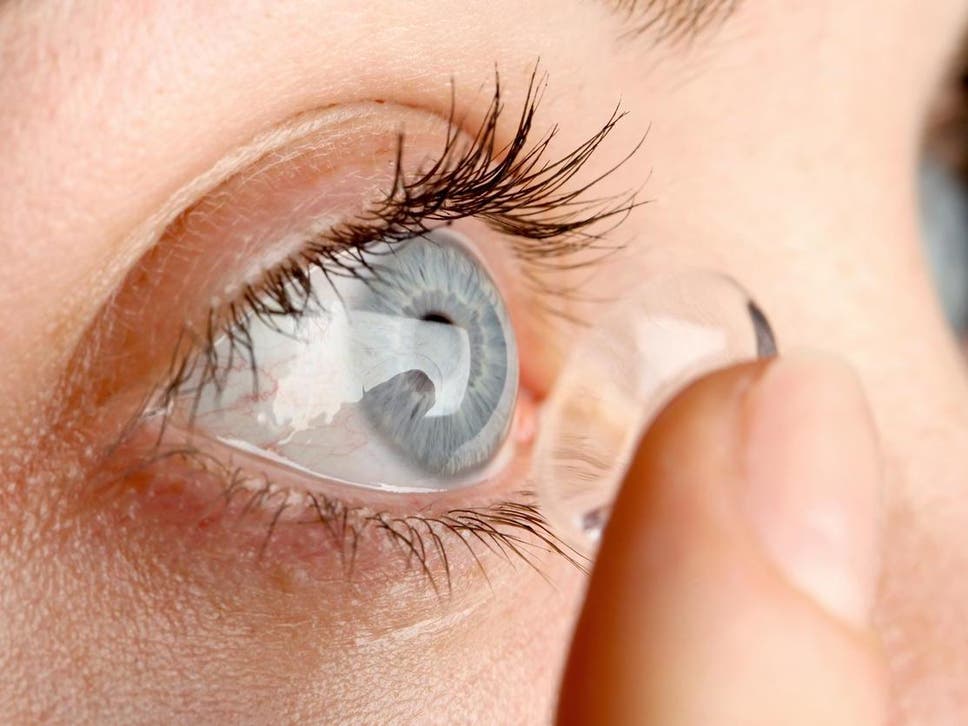
Contact lens wearers have been warned to look after their eye hygiene following an outbreak of a rare infection which can cause blindness.
A preventable infection called Acanthamoeba keratitis causes the front surface of the eye to become inflamed – and contact lens wearers are most at risk.
Experts warned that poor hygiene habits while handling contact lenses can increase the risk of contamination. Showering or swimming while wearing contact lenses is also a risk factor.
The most severely affected patients are left with less than 25 per cent of their vision or become blind after contracting the disease.
Moorfields Eye Hospital in London has seen a worrying rise in the number of cases of the disease since 2011.
Between 2000 and 2003, eight to 10 cases a year were recorded at the hospital, according to a new study published in the British Journal of Ophthalmology.
But from 2011 to 2016, the number of cases increased to between 35 and 65 annually.
Lead author Professor John Dart, from the UCL Institute of Ophthalmology and Moorfields Eye Hospital, said: “This increase in cases highlights the need for contact lens users to be aware of the risks.”
Acanthamoeba, a cyst-forming microorganism, is found in high levels in UK domestic water supplies.
Reusable contact lens wearers with the eye infection are more likely to have used ineffective contact lens solution, have contaminated their lenses with water or to have reported poor hygiene habits, the researchers said.
Showering, swimming and using hot tubs while wearing contact lenses was also a risk factor.
Professor Dart said: “People who wear reusable contact lenses need to make sure they thoroughly wash and dry their hands before handling contact lenses, and avoid wearing them while swimming, face washing or bathing.”
A study in 2002 estimated the prevalence of Acanthamoeba keratitis in south east England to be 2.5 cases per 100,000 contact lens wearers, but it is currently two to three times higher, researchers from University College London and Moorfields Eye Hospital said.
Irenie Ekkeshis, part of Acanthamoeba Keratitis Patient Support Group UK, said: “It is absolutely imperative that regulators and those working in the optical sector take the findings seriously, and use the recommendations to take immediate and urgent action on prevention.
“Contact lenses are medical devices and should be supplied with warnings regarding safe use.”
Additional reporting by Press Association