“Although individual decisions may seem small in the face of global threats and trends, when billions of people join forces in common purpose, we can make a tremendous difference.” - UN Secretary-General Ban Ki-Moon
Given the huge scale of the problem facing the planet, individuals can sometimes feel powerless to make an impact, but, as Ban Ki-Moon says, when huge quantities of people take action, those small changes can lead to major changes.
So, how can you play a role in creating a more sustainable future? Some of the suggestions below are extremely simple; others take a little more thought. But it’s important to remember that you don’t have to adopt all of these habits at once to create a positive impact. Why not challenge yourself to make one or two of the following changes each year?
“No water, no life. No blue, no green.” - US marine biologist and author
Sylvia Earle
Conserving water is a big issue, but arguably the one on which the average person can make the biggest impact. For example, if you fit your shower with low-flow fixtures, you can save between 25% and 60% of the water used - while saving yourself money in the process. While you’re doing that, make sure your fixtures and fittings are also in good working order — just one dripping tap could cost you an extra $1 (65p) per month. Not much, but it all adds up.
As does the $0.40 (26p) per load you’ll save by washing clothes with cold water instead of hot water; and fear not, the laundry detergent actually works just as well no matter the temperature of the water.
Of course, the health benefits of drinking plenty of water throughout the day are well-established - and you shouldn’t look to save water in that way - but you should think about how you drink that water. Most offices have disposable paper cups for you to use but, why not switch those out for a water bottle or coffee mug you can use again and again. Even by cutting back one cup a day, you’ll be saving the equivalent of 24 trees’ worth of paper over a 40 year working career.
Some people prefer buying their drinks in glass bottles rather than queuing at the water cooler or coffee machine; make sure you opt for a beverage that comes in recycled glass, which results in 20% less air pollution than new glass. And, of course, make sure you dispose of it in a responsible (and recyclable way) once you’re done. Or cut out the middle man and recycle it yourself — used glass bottles become beautiful home décor elements, such as vases, candle holders and lights in the hands of creative minds.
“There is no sincerer love than the love of food.” - Irish playwright
George Bernard Shaw
We have all read about the containers full of food that are discarded by grocery stores, but households can be just as wasteful. If you do your weekly shopping at the weekend, why not designate Thursday or Friday night as “use-it-up” meal night?
This could not only result in some truly imaginative combinations - burgers, spaghetti and hummus, anyone? - but will also save you money in the long-run.
If you decide to make your use-it-up meal into a romantic dinner for two, you should also make sure you switch your conventional light bulbs to LEDs. Not only can you change the colour and turn down the intensity to create the perfect atmosphere, but smart lighting technology that allows you to actively control consumption means that, in 15 years, you will have saved enough electricity to buy 750 roses for your significant other.
“Together we can face any challenges as deep as the ocean and as high as the sky.” - Indian politician Sonia Gandhi
Cities and countries also have significant roles to play. A city, for example, can save an average of 40% of its expanded energy simply by switching to energy-efficient lighting technologies such as LEDs. And if all cities around the world made that switch, the planet would see a reduction of around one gigatonne of CO2 creation by 2030. For those unable to picture a gigatonne of CO2, that’s roughly the equivalent of the amount captured by a million square kilometers of trees - an area the size of France, Germany, the Netherlands and Belgium put together. To put that in cold, hard cash terms, it’s in the vicinity of $114bn (£74.9bn) in reduced energy costs.
“Almost all quality improvement comes via simplification of design, manufacturing… layout, processes, and procedures.” - US business writer Tom Philips
And what about businesses? How can large corporations change the way we perceive and use natural resources? At Philips, we passionately believe that the old “take, make, dispose” linear economy model should be a thing of the past. The alternative, we believe, is a global transition to the circular economy model; a model which could represent $1tn (£656.8m) in savings by 2025, with the creation of hundreds of thousands of new jobs in the process.
Such a transition is realistic and proven. As well as Philips (with pioneering closed material loop products such as the SENSEO Up coffee machine), companies like Lego have embraced the circular model by taking into account recycled product adoption from the starting point of design, and adopting “no end-of-life” eco-design into their standard processes.
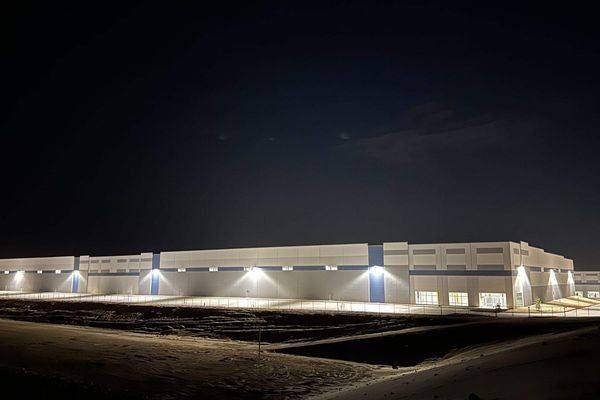
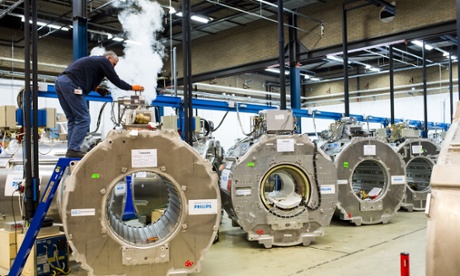
A new economic model can impact upon more than single products too. From vendor relationships and packaging to waste management and employee training, the whole operational process has been reconsidered at this healthcare manufacturing facility in Seattle.
Meanwhile, Amsterdam’s Circular Buiskloterham and Stockholm’s Hammarby district are examples of how thinking circular can rehabilitate entire cities to make them more efficient.
If you’d like to find out more about World Environment Day, visit the homepage. Or let us know what you’re doing to consume with care by sending a tweet to @Philips or dropping by our Facebook page and using #WED2015.
For 10 things you need to know about the circular economy, visit this great article on The Guardian.
Content on this page is produced and controlled by Philips, supporter of the circular economy hub