The novel coronavirus outbreak has stagnated support for foreigners residing in Japan. How can infection prevention measures be conveyed to those who have only been in Japan for a short time and are unfamiliar with the language and lifestyle? Among the members of a civic group limited in what they can do due to having no medical expertise, the feeling of "wanting to further enrich the local government's support system" is palpable.
In Ota city, Gunma Prefecture, foreigners account for 5% of the population. Amigos, a locally based nonprofit medical consultation organization that provides health counseling for foreigners, has been receiving urgent phone calls since March: "I have a fever. What should I do?" "I can't get a mask."
The NPO took their symptoms into account and suggested hospitals, if necessary. However, many people were hesitant to seek medical care due to having lost their jobs amid the new coronavirus outbreak and were concerned about the burden of medical costs.
Additionally, the number of those who refused medical treatment due to a lack of proficiency in the Japanese language has increased. Masataka Nagasawa, an Amigos director said, "Foreigners cohabitating in small apartments could become infected with the coronavirus and spread it in their surroundings. So, I strongly recommend ensuring an opportunity to receive appropriate medical care."
In Tamamura, Gunma Prefecture, a man in his 20s from Southeast Asia staying illegally in Japan was involved in a traffic accident. After being taken to a hospital, he was found to be infected. The man was later arrested on suspicion of violating the Immigration Control and Refugee Recognition Law, but the arresting officers were required to self-quarantine at home to avoid close contact with others. "This case of infection was discovered completely by accident, but isn't this just the tip of the iceberg?" an executive member of the prefectural police department said.
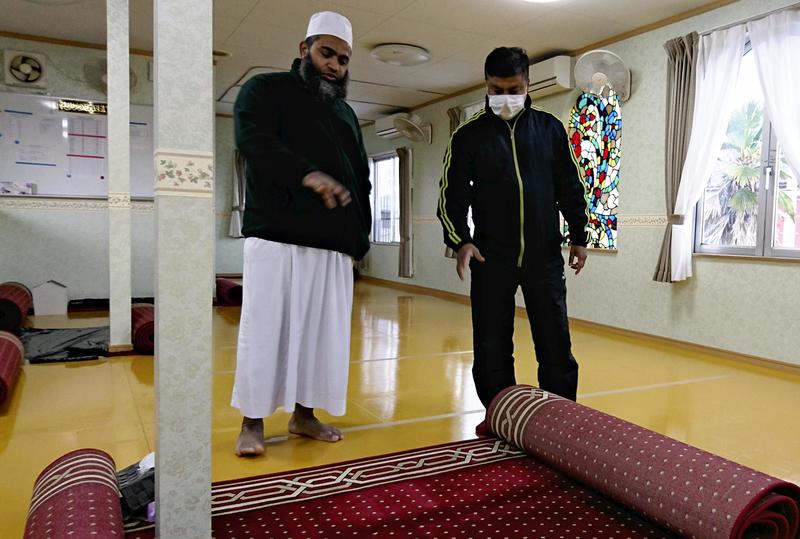
Amid the prolonged impact of the new coronavirus outbreak, requests to refrain from either going out or traveling, or the encouragement to take vacation days from work have become more complicated as the duration and details of the requests differs between each local government. While it is necessary to make this well-known to foreigners in greater detail, many cultural exchange events held by local support groups have been canceled. Furthermore, it has become difficult for foreigners to gather in places, such as mosques for Muslims, where such information can be exchanged.
An organization supporting Japanese-Brazilians in Kosai, Shizuoka Prefecture, has had to suspend their Japanese language classes for children. "There aren't any places where the students can interact with Japanese people, so we're worried about how foreign residents are doing [at this time]. Children may wind up forgetting the Japanese they have just begun to acquire," said Hidenori Ii, the organization's director.
The government provides counseling via telephone to foreigners at returnees and close contact consultation centers. They also provide information on infection prevention and employment on the websites of various organizations, including the Health, Labor and Welfare Ministry. However, telephone lines remain busy and operators are difficult to reach, and the websites do not answer any individual concerns or questions.
Yoneyuki Kobayashi, head of the nonprofit organization AMDA International Medical Information Center points out, "The current administrative support from the government is apparently unfriendly and inadequate." AMDA provides telephone services (03 ・ 6233 ・ 9266) in eight languages for those seeking advice on the new coronavirus. "Many foreigners have anxieties about their lives and questions about health care and medical affairs, and they want to be informed in an easy-to-understand manner," he said. Adding, "The central government is responsible for accelerating the improvement of multilingual telephone consultation services, rather than leaving the handling of such services to busy local governments and medical institutions."
Read more from The Japan News at https://japannews.yomiuri.co.jp/