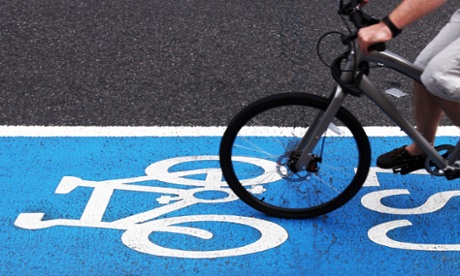
The City of London Corporation, planning authority of the Square Mile, has considered its response to Boris Johnson’s most recent flagship cycling policy, a pair of segregated “superhighways” running through the centre of the capital. A report has confirmed its support for the principle, saying this “fully accords” with core policy objectives and that a reduction in motor traffic could assist with improving air quality, tackling climate change, enhancing health and reducing noise. Yet a draft formal response confirms “considerable reservations” about the plans as they stand.
The City is not alone in its disquiet. London Travelwatch, the statutory body representing users of London’s transport networks, describes the latest superhighway plans as “innovative, exciting and potentially far-reaching” but also as giving “some grounds for concern”. Officers of Westminster City Council have raised “a number of key concerns” about parts of the ambitious east-west superhighway route that would run through its territory, based on modelling they commissioned themselves. Then there’s Living Streets, the national charity that sticks up for pedestrians. Its response to the Transport for London (TfL) consultations on the east-west and north-south superhighways is expected to temper a broad welcome with a number of worries about the implications for those travelling on foot.
The common theme is that the possible negative impacts on people other than cyclists have not yet been properly considered, even though the consultation period, which has already been extended by nearly month, is about to end. Westminster and the City, two central London local authorities for which Johnson’s plans could have wider street management consequences, are worried about knock-on effects from already crowded road space being dedicated solely to bikes, such as increased motor traffic on other roads nearby.
Both authorities are now engaging constructively with TfL, but much detailed work remains and some negotiation too. Westminster is looking at suggesting an alternative section for part of the east-west route so it avoids Parliament Square. City approval will be required if the east-west track is to go through Castle Baynard Street at Blackfriars, as presently planned. This will not be forthcoming unless agreement is reached over aspects of the north-south route first.
London Travelwatch, whose consultation response also covers alterations to cycle superhighway 2, says the “big bang approach” superhighways represent will have “significant impacts on London’s bus services and passengers” over “a wider area than just the superhighway routes” and hopes TfL’s promised mitigation measures are effective. And all four bodies are worried about the impact on pedestrians.
Living Streets, for example, welcomes additional signalised crossings, while opposing plans to make pedestrians wait longer before they can cross roads at, among other places, Southwark tube station, Ludgate Circus, Hyde Park Corner and Parliament Square. Waiting times that already exceed 90 seconds are in some cases earmarked to be extended by another 24. Like the City, it believes they ought to be made shorter instead. While recognising an overall footway gain, Living Streets has noted that these additions to pedestrian space aren’t necessarily where they are most needed.
It also has worries about “bus stop by-passes”, whereby cycle tracks cut through pavements and behind bus stops. This is a good way of reducing collisions between bikes and buses, but in the case of the superhighways could mean pedestrians having to traverse cycle lanes four metres wide and full of fast-moving two-wheel traffic in order to catch a bus. Living Streets rightly considers that the effectiveness with which Johnson’s schemes design out conflict between cyclists and pedestrians and make walking as well as cycling on these routes easier will be an important measure of their success.
The backdrop to all this, of course, is the political ambition of the mayor. At TfL’s February board meeting he described segregation as surplus to requirements except for beginner cyclists, suggesting he might not be fully convinced by the approach himself. Certainly, it doesn’t sit entirely comfortably with his otherwise deregulatory approach to London’s roads.
However, his poor performance at City Hall might gain a late superficial gloss if the two highest profile superhighways are completed before May 2016, when he is scheduled to formally step down. London Travelwatch suggests consideration be given to a “staged approach” to implementation, to lessen disruption and create leeway for trial and error. Maybe they shouldn’t hold their breath.