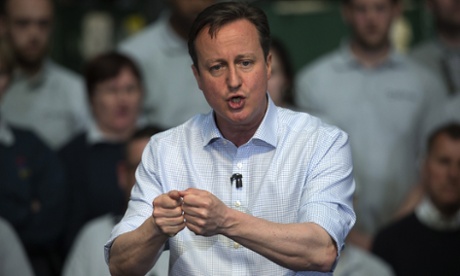
David Cameron’s pledge to wrap VAT, income tax and national insurance rates in a protective law, preserving them at current rates for the lifetime of the next parliament, is foolish, even desperate, according to some economists.
It also leaves the door open for a Tory chancellor to swell the Treasury’s coffers with tax hikes in other, less talked about areas.
Samuel Tombs, UK economist at consultancy Capital Economics, said: “There is little merit in economic terms of tying your hands so far in the future. We don’t know what the economic weather will be like in five years, so to enshrine in law current tax rates makes little economic sense.”
Steve Barrow, head of G-10 strategy at Standard Bank, warned the new law “could cause monumental damage if it has to be defied in the event of a deterioration of the economy”. He said it showed the Conservatives were “the more desperate party” as the 7 May election draws closer.

The Tories have derided similar proposals in the past for just this reason. George Osborne told parliament prior to the last election when Labour proposed a Fiscal Responsibility Act that set targets for deficit reduction: “No other chancellor in the long history of the office has felt the need to pass a law in order to convince people that he has the political will to implement his own budget.”
The mood music created by the Conservatives’ vow could lull the electorate into believing that tax rises are a thing of the past, but there are plenty more tax bills to pay than the three on Cameron’s list. And the next government will almost certainly need extra tax income.
According to the Institute for Fiscal Studies (IFS), the wishful thinking in the revenue forecasts produced by all three major political parties will result in tax rises to fill the gap.
Carl Emmerson, deputy director of the IFS, said there are all the usual tricks available to a future chancellor to bypass the rule, from freezing income tax and national insurance thresholds, which would boost the number of people paying higher rates, to raising revenue from other taxes.
“After the early 1990s recession, the UK raised fuel duties to repair the public finances. There is the option of doing that again,” he said. Only a fortnight ago, the International Monetary Fund urged western governments to use the current low oil prices to soften the blow of a necessary fuel duty rise.
Council tax is another potential goldmine. The coalition has bribed councils to freeze rates over the past five years and told those tempted to push through a 2% or more rise that they must put the proposal to a referendum.
Ending the bribes, worth around £600m a year, and allowing councils to vote through increases would be a return to the pre-financial crisis days when the last Labour government took a more laissez-faire attitude and council tax bills rose steeply.
Otherwise, the main parties have fought shy of raising taxes on wealth. Tombs said only the Liberal Democrats have targeted a rise in capital gains tax (CGT) – from 28% to 35%. Labour might be tempted, though it is a small revenue earner and susceptible to all kinds of avoidance techniques that are costly to pursue.
The IFS has long argued for greater transparency from governments seeking to raise revenue. Emmerson said there was a danger the refusal of all political parties to contemplate a rise in the three biggest revenue earners would heighten the risk of stealth taxes shouldering the burden.
Under Gordon Brown, the phrase “stealth tax” was used by his critics at every budget. Maybe the next government, whatever the colour, will indulge in the same antics and suffer the same brickbats.