Summary
Here the latest key developments at a glance:
- Coronavirus cases levelled off in England and Northern Ireland and rose in Scotland last week, the latest data from the Office for National Statistics (ONS) suggests.
- The UK’s R number rose slightly over the past week, and now stands at 0.7 to 0.9, which means that, on average, every 10 people infected will infect between 7 and 9 other people.
- Covid-19 infection levels among children of secondary school age in England have increased slightly, new figures suggest.
- The former SNP leader Alex Salmond has announced he will form a new party called Alba to run in the Scottish parliament elections in May, with the aim “to secure independence”, and that the party will not be challenging the SNP in the constituencies. An SNP spokesperson said this was “perhaps the most predictable development in Scottish politics for quite some time.”
- 14% of adults with Covid in England broke self-isolation rules in the first week of March, the ONS said, meaning around three in 20 adults who tested positive said they had done at least one activity during self-isolation that did not adhere to the rules.
- Prime minister Boris Johnson joined ministers and MPs in criticising China’s sanctions agianst several British MPs and organisations over their stance on the country’s “gross human rights violations”, as Johnson put it.
- The UK is not dependent on the EU for vaccine supplies, Dr Sarah Schiffling, senior lecturer in supply chain management at Liverpool John Moores University, said.
- Almost 100,000 fines have been handed out for breaches of coronavirus regulations since they first came into force last year, new figures show.
- More than 40,600 people have been likely infected with coronavirus while being treated in hospital in England for another reason, raising concerns about the NHS’s inability to protect them.
That’s all from me, for more updates on the pandemic you can follow our global live blog.
Retailers in England to stay open until 10pm six days a week as safety measure, government says
Retailers in England will be able to stay open until 10pm six days a week when they welcome back customers after months of closures, the government has announced.
PA reports:
Communities Secretary Robert Jenrick has said extended opening hours from Monday to Saturday will help shoppers return to high streets safely when non-essential shops reopen from April 12.
Shops will be able to extend their opening hours from 7am to 10pm to help customers to avoid peak times and ease transport pressures, according to the Ministry of Housing, Communities and Local Government.
Under the road map for easing lockdown measures, non-essential retailers could open again from April 12, at the earliest, provided conditions are met.
Announcing the temporary measures, Mr Jenrick said: “To support businesses to reopen and recover, I’ve extended measures to allow shops to stay open for longer.
“This is part of a package of support to help reopen our shops and high streets safely - backed by 56 million.
“This will provide a much-needed boost for many businesses - protecting jobs, reducing pressure on public transport and supporting people and communities to continue to visit their high streets safely and shop locally.”
The Government has also announced it will extend flexible working hours on construction sites, and will allow food deliveries to supermarkets over more time periods.
Other measures also included keeping the flexibility for pubs and restaurants to put up marquees to help increase seating capacity in a Covid-secure way.
Updated
China’s top diplomat in London was told Beijing’s retaliatory move to impose sanctions on British MPs and peers is “unacceptable” after being summoned to the Foreign, Commonwealth & Development Office (FCDO).
An FCDO spokesman said:
Today the Chinese charge d’affaires, Yang Xiaoguang, was summoned to the Foreign, Commonwealth and Development Office.
Minister for Asia, Nigel Adams MP, made clear Beijing’s decision to impose sanctions on British individuals and entities is unwarranted and unacceptable.
The minister noted that China has chosen to sanction individuals and entities that are seeking to shine a light on human rights violations and that today’s actions would not distract attention away from those very violations taking place in Xinjiang.
Former prime minister David Cameron has been cleared of breaking lobbying rules following claims he tried to persuade government figures to grant loans to a financial firm he worked for.
PA reports:
The investigation by the lobbying watchdog concluded that Mr Cameron was an employee of Greensill Capital and so was not required to declare himself on the register of consultant lobbyists.
Mr Cameron reportedly sent a number of texts to the Chancellor’s private phone asking for support for the company through the government’s Covid Corporate Financing Facility (CCFF).
He is also alleged to have approached the Bank of England about the firm, which collapsed into administration earlier this month.
His activities were investigated by Harry Rich, the Registrar of Consultant Lobbyists - a post set up in legislation passed by Mr Cameron’s Government in 2014.
“Based on detailed information and assurances provided, Mr Cameron’s activities do not fall within the criteria that require registration on the Register of Consultant Lobbyists,” the watchdog’s decision said.
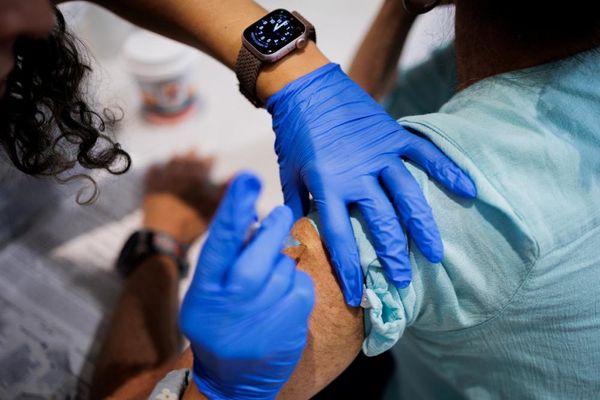
Government data up to 25 March shows that of the 32,325,993 jabs given in the UK so far, 29,316,130 were first doses - a rise of 324,942 on the previous day.
Some 3,009,863 were second doses, an increase of 234,382.
On Saturday, a combined record total of 844,285 first or second doses were given.
By Thursday, 43.9% of the UK population had received at least one vaccine dose.
The UK has recorded 6,187 new coronavirus infections, down from 6,397 on Thursday but up from 4,802 fresh cases recorded a week ago.
The government said a further 70 people had died within 28 days of testing positive for Covid-19 as of Friday, bringing the UK’s total death toll from the virus to 126,515.
Separate figures published by the UK’s statistics agencies show there have now been 149,000 deaths registered in the UK where Covid-19 was mentioned on the death certificate.
In total, 4,325,315 infections have been recorded in the country since the pandemic began.
Virgin Atlantic has become the latest airline to announce a trial of so-called vaccine passports.
PA reports:
Customers on flights to Barbados from April 16 will be invited to use the Travel Pass app to verify they meet the Caribbean island’s entry requirements for pre-departure coronavirus testing.
Future versions of the app - developed by airline trade body the International Air Transport Association - will incorporate coronavirus vaccine records.
Virgin Atlantic said it will seek permission from the UK government to expand the trial to accommodate customers arriving on flights from Barbados to London Heathrow.
A number of other airlines are also using the app, including British Airways, Singapore Airlines, Emirates, Qantas and Qatar Airways.
Virgin Atlantic chief customer and operating officer Corneel Koster said: “In parallel to the UK’s successful vaccination programme and accompanied by a risk-based, phased easing of restrictions, we can see a flightpath to soon allow the safe restart of international travel at scale, in time for summer.
“When the skies reopen, rapid affordable testing combined with digital health integration will be vital to streamline and simplify the customer experience, make border health checks manageable and build consumer confidence.
“Governments, industry and technology companies need to work together to lead the adoption of digital solutions with global common standards that are accepted at borders.”
Overseas holidays are banned due to the UK’s coronavirus lockdown, but Boris Johnson said on Wednesday he will make an announcement on April 5 about lifting restrictions.
More than 40,600 people have been likely infected with coronavirus while being treated in hospital in England for another reason, raising concerns about the NHS’s inability to protect them.
In one in five hospitals at least a fifth of all patients found to have the virus caught it while an inpatient. North Devon district hospital in Barnstaple had the highest rate of such cases among acute trusts in England at 31%.
NHS England figures also reveal stark regional differences in patients’ risk of catching the virus that causes Covid-19 during their stay. Just under a fifth (19%) of those in hospital in the north-west became infected while an inpatient, almost double the 11% rate in London hospitals.
My colleagues Denis Campbell and Caelainn Barr report.
Devices which measure blood oxygen levels could be giving “seriously misleading” results for black and minority ethnic people, possibly contributing to increased Covid-19 mortality, experts have warned.
PA reports:
Pulse oximeters attach a clip-like device to a person’s finger, toe or earlobe and send a beam of light to measure oxygen levels in the blood.
The resulting SpO2 reading can be used to monitor oxygen levels of people with a variety of conditions, including by people at home with coronavirus, and to assess patients in hospital.
But a new paper cites a “growing body of evidence” that pulse oximetry is less accurate in darker skinned patients.
This could be contributing to health inequalities such as the increased Covid-19 mortality rates of ethnic minority patients, according to a review conducted for the NHS Race and Health Observatory.
It is calling for the Medicines and Healthcare products Regulatory Agency (MHRA) to urgently review pulse oximetry products for ethnic minority people used in hospitals and by the UK public.
The review, by Olamide Dada, from Cardiff University School of Medicine, cites evidence from more than three decades of inaccurate and ambiguous readings for those with darker pigmentation and skin tones.
The review says: “Given the increased mortality amongst ethnic minority patients during the Covid-19 pandemic, it is possible that the differential accuracy of pulse oximetry is a contributing factor to this health inequality.”
Responding to the launch of Alex Salmond’s new political party, an SNP spokesperson said:
This is perhaps the most predictable development in Scottish politics for quite some time.
At this time of crisis, the interests of the country must come first and should not be obscured by the self interest of someone who shows no sign whatsoever of reflecting on serious concerns about his own conduct - concerns which, to put it mildly, raise real questions about the appropriateness of a return to public office.
The SNP has led the country through the last 12 months of the Covid pandemic, and at this election we offer the experienced, responsible and forward-looking leadership that the country needs.
Our plans to get Scotland through and out of the Covid crisis, and support a recovery with fairness and equality at its heart, with the opportunity to put Scotland’s future in Scotland’s hands, will be the focus of our election campaign.
The only way to secure strong leadership, a referendum on independence, and a positive future for the country is to cast both votes for the SNP on May 6.
Covid-19 infection levels among children of secondary school age in England have increased slightly, new figures suggest.
The percentage of children in school years 7 to 11 likely to have tested positive for Covid-19 in the week to March 20 is 0.43%, up from 0.32% the previous week, PA reports.
The estimates, from the Office for National Statistics (ONS), coincide with the return from 8 March of pupils to secondary schools across England - a move that is likely to have affected the spread of coronavirus, thanks to the mixing of staff, parents and students.
Testing has also been scaled up, with all students in secondary schools expected to complete three rapid Covid-19 tests on their return, spaced three to five days apart, then further tests twice a week.
The ONS said rates are likely to have fallen among older teenagers and young adults (school year 12 to age 34) as well as those aged 50 to 69, but the trend is uncertain for other age groups.
All figures are for infections reported by people in private households, not other settings such as hospitals and care homes.
The estimates should be treated with caution, the ONS said, as they are based on small sample sizes and have a higher degree of uncertainty than the figures for England as a whole, which in that same week were estimated to have been at the lowest since the week to 24 September 2020.
Five of the parliamentarians sanctioned by China have released a joint statement vowing to “redouble” their efforts to campaign against human rights abuses.
MPs Sir Iain Duncan Smith, Nusrat Ghani, Tim Loughton and peers Lord Alton and Baroness Kennedy said:
Today’s sanctions have unmasked the Chinese Communist Party.
These actions are not only an attack on us as individuals but an attempt to stifle the free and open debate that is at the heart of our parliamentary democracy.
Intimidation will only serve to encourage us to redouble our efforts.
We will continue to advocate on behalf of the Uighurs, Tibetans, Hong Kongers and all other persecuted groups in China.
These are the true victims of the Chinese government’s authoritarian rule, not us.
They, like the government, called for “international investigations into the alleged abuses” in Xingjian against the Uighur people.
Alex Salmond has issued some further remarks about his new party:
I see different strands of independence thinking in the parliament as a great strength of achieving progress in the negotiations which would happen, if that parliament is elected, with the UK government.
I think the position of Boris Johnson will be fundamentally weaker if he has to say no to an entire parliament representing an entire nation as opposed to being able to cast it as just something which is being promoted by the SNP.
I see the range of independence viewpoints as a strength and I hope that Alba can contribute to that.
NHS England data shows a total of 3,301,334 jabs were given to people in London between 8 December and 25 March, including 3,012,718 first doses and 288,616 second doses.
This compares with 4,843,981 first doses and 371,376 second doses given to people in the Midlands, a total of 5,215,357.
The breakdown for the other regions is:
- East of England: 2,983,141 first doses and 238,415 second doses, making 3,221,556 in total
- North-east and Yorkshire: 3,876,445 first and 395,362 second doses (4,271,807)
- North-west: 3,176,707 first and 293,576 second doses (3,470,283)
- South-east: 4,102,707 first and 378,010 second doses (4,480,717)
- South-west: 2,828,039 first and 250,857 second doses (3,078,896)
Updated
Alex Salmond said about his announcement that he will form a new political party called Alba to run in the Scottish parliament elections in May:
The Alba party is a list party, we are standing only in the list. We are not challenging the SNP in the constituencies.
Indeed we are saying vote SNP or for an independence party on the constituency section. We are giving that support.
Our campaign that we have launched is going to be entirely positive.
The former SNP leader told potential supporters to vote for his old party in constituency seats or an “independence” party.
He said:
The strategic aim of Alba is to secure independence which is a substantial strategic aim.
We think building that substantial majority in the Scottish parliament is the key to unlock that question and it’s the key to the way forward.
If Alba helps and it is helping because we are not standing on the constituency ballot, we expect that to be dominated by the Scottish National party, but if Alba can help by contributing independence-supporting MSPs and their expertise they’re contributing to the new platform that we’re going to have to build on independence, meet the new political realities, ideas to get us out of the pandemic in an economic sense as quickly as possible, if we can contribute these then that’s an entirely positive thing.
Salmond added he hoped to build an independence “super majority” in Scotland’s parliament, PA Media reports.
Updated
A further 43 people who tested positive for coronavirus have died in hospital in England, bringing the total number of confirmed deaths reported in hospitals to 86,096, NHS England said on Friday.
Patients were aged between 47 and 94 and all except three (aged between 47 and 66) had known underlying health conditions.
The deaths occurred between 29 January and 25 March.
There were 14 other deaths reported with no positive Covid-19 test result.
This from home secretary Priti Patel on Boris Johnson’s comments on China’s sanctions against British MPs and organisations this morning:
The Prime Minister is right.
— Priti Patel (@pritipatel) March 26, 2021
Freedom to speak out in opposition to abuse is fundamental. https://t.co/tk6u2RZOt4
Almost 100,000 fines have been handed out for breaches of coronavirus regulations since they first came into force last year, new figures show.
PA reports:
Provisional data published by the National Police Chiefs’ Council (NPCC) on Friday shows a total of 94,368 fixed penalty notices (FPNs) were issued by police forces, including 85,975 in England and 8,393 in Wales, between March 27 last year and March 14 2021.
Some 25,416 of those, or more than a quarter, were issued in the latest four-week period – down from more than 26,000 the previous month.
The figures show a total of 284 10,000 fines have been handed to organisers of mass gatherings of more than 30 people, including illegal raves, parties and protests, in England, with three in Wales. And 1,647 800 tickets have been issued to people attending gatherings of more than 15 people.
The NPCC chairman, Martin Hewitt, said: “[...] Looking ahead as restrictions start to ease, we will be focusing our efforts on these types of large indoor gatherings. Any person who organises or attends these events clearly doesn’t need the regulations explaining to them and we will not hesitate to issue fines where necessary.”
The NPCC said the Metropolitan police disrupted an illegal rave at a disused bank in Southall, west London, in the early hours of 7 March, while officers in Leicestershire handed out 35 fines after shutting down three parties between 12.15am and 2.50am on 27 February.
Updated
Tom Tugendhat, the chairman of the Commons foreign affairs committee and one of the politicians facing Chinese sanctions, said it was an attempt to “subvert the democracy and sovereignty of the British people”.
The Conservative MP told BBC Radio 4’s World at One programme:
I think the government could have gone further, faster on China.
In November 2019, the foreign affairs committee, which I was then chairing as well, identified autocratic interference in British universities and in other ways in democracies.
And that is something that we have been highlighting for a while, because actually, the truth is, China has been playing in the internal affairs of the United Kingdom for a number of years.
The attempt to sanction me and other colleagues is another attempt to subvert the democracy and sovereignty of the British people.
Updated
Scotland’s former first minister Alex Salmond has announced he is setting up a new political party to run in the Scottish parliament elections in May.
Salmond said the Albaparty will be a list party under his leadership.
He said: “Over the next six weeks we will promote new ideas about taking Scotland forward, giving primacy to economic recovery from the pandemic and the achievement of independence for our country.
“We expect to field a minimum of four candidates in each regional list and we’re hoping to elect Alba MSPs from every area of Scotland.”
This from Holyrood Daily’s Andrew Learmonth:
BREAKING: Alex Salmond is standing for Holyrood. Former first minister has taken over the leadership of the list only ALBA party. He will be a launch candidate alongside Cllr Chris McEleny, laywer Eva Comrie, and businesswoman Cynthia Guthrie.
— Andrew Learmonth (@andrewlearmonth) March 26, 2021
Updated
Police will not stop or arrest people leaving the country in breach of the government’s holiday ban, a senior officer has confirmed.
PA reports:
Under the new coronavirus regulations coming into force on Monday, people leaving England without a valid reason could face a £5,000 fine.
National Police Chiefs’ Council (NPCC) chairman Martin Hewitt said officers would hand out the penalties to anyone found flouting the rules to go on holiday.
However, he said barring anyone from travelling is a matter for UK Border Force, adding: “We are not simply going to arrest people because they are trying to leave the country.”
Mr Hewitt was speaking to reporters after the release of NPCC data showing 508 fines had been issued by forces in England and three in Wales to people failing to self-isolate after arriving from a country on the Government quarantine list up to March 14.
He said no fines had been handed out by police for breaching regulations around hotel quarantine for those entering from red countries, which came into force on February 15, explaining enforcement was primarily a matter for Border Force and private security contractors.
Mr Hewitt said police have increased the number of officers in ports and airports, and are continuing to carry out checks of people who should be self-isolating.
“Police will not automatically stop travellers, though officers will continue to question people about the reasons for their travel in the airport terminals or the car park or the other points of entry and exit,” he said.
“With the new legislation in relation to travel coming into force on Monday, if officers do discover anyone who is breaching the rules, then we will issue a fine where necessary.
“Whether people become barred from travelling is not a police issue, though, that is for UK Border Force.”
Updated
Shadow foreign secretary Lisa Nandy called the sanctions by China a “warning shot” and said it was a move intended to “silence and intimidate” those who criticised Beijing.
The Labour MP told BBC Radio 4’s World at One programme:
This is not something that is designed to have immediate practical effects.
The sanctions on Conservative MPs, a Labour peer and others, won’t have a major impact on them in particular in relation to them having huge business dealings or stakes in China.
But nevertheless it is a warning shot which is designed to silence and intimidate those who criticise the actions of the Chinese government.
Nandy said she had spoken with Tom Tugendhat, the chairman of the Commons foreign affairs committee included in the sanctions, adding:
This will only strengthen our collective resolve to be more vocal and more resolute in challenging grotesque crimes against humanity in Xinjiang.
We will not be divided on this, whichever political tradition we come from, we are democrats first and foremost, and we stand up for those values when they are under attack, overseas but particularly here in the United Kingdom as well.
Russia presents the most acute and immediate threat to the UK, the new head of Britain’s cyber-security centre has warned, while predicting that future dangers will emerge as hostile states and criminals increasingly get their hands on new “off the shelf” technologies.
Covid-19 had also highlighted the scale of Britain’s dependence on the digital world, said Lindy Cameron on a day when she made her inaugural speech as the CEO of the National Cyber Security Centre, a part of GCHQ. While identifying Russia as a threat, she hedged her language about China, saying the UK must be “clear eyed about Chinese ambition.”
But she warned: “We have grown up with a largely western internet, where most of the key hardware was made, most of the intellectual property owned, most of the software was designed, and most of the standards driven by Western values.
“It assumes a level of influence we can no longer assume will protect our national security.”
Cameron also warned that cyber-security is still not taken as seriously as it should be, “and simply is not embedded into the UK’s boardroom thinking.”
Updated
UK's R number rises slightly to between 0.7 and 0.9
The latest R range for the UK is 0.7 to 0.9, which means that, on average, every 10 people infected will infect between 7 and 9 other people.
This is compared to a figure of between 0.6 and 0.9 last week.
The latest growth rate for coronavirus in the UK is -5% to -2%, according to government data.
A growth rate of between -5% and -2% means that the number of new infections is shrinking by between 2% and 5% every day.
I’m Jedidajah Otte and am now taking back over from my colleague Nicola Slawson. If you would like to get in touch with tips or comments, you can reach me on Twitter @JedySays.
Updated
The first guests of the season are expected to arrive at the luxury lodges on Lôn Farm in the Cambrian mountains bright and early on Saturday.
“We can’t wait to greet them,” said Kerena Pugh, who runs the holiday business – as well as a busy sheep and cattle farm – with her husband, Stephen.
By the time darkness descends in this faraway-feeling spot near the market town of Rhayader in mid Wales, the guests may well be in the hot tub, and if there is a break in the clouds they will be treated to a spectacular starry sky. “I think that is just the sort of thing people need at the moment,” said Pugh. “It’s been crazy busy with bookings. We’re pretty much full now all the way through the summer.”
It was only late on Thursday night that the first minister, Mark Drakeford, announced that the “stay local” rule would be lifted and Wales would become the first part of the UK to begin welcoming back tourism.
Read the full story here:
When modelling the level of infection among different age groups in England, the ONS said rates increased among secondary school-aged children (school years 7 to 11) in the week to March 20.
The week commencing March 15 was the second week that school children were back in the classrooms following the easing of lockdown restrictions. Most children and teenagers in England had been home-schooled since the third lockdown began in January.
This follows yesterday’s news that Public Health England the reopening of schools has led to a ‘slight’ increase in Covid case rates in younger age groups in England.
The ONS has found that rates fell among older teenagers and young adults (school year 12 to age 34) as well as those aged 50 to 69, but the trend is uncertain for other age groups, PA Media reports.
Public Health Wales said a total of 1,341,620 first doses of the Covid-19 vaccine had now been given in Wales, an increase of 21,432 from the previous day.
The agency said 389,663 second doses had also been given, an increase of 10,868.
The suspension of the AstraZeneca vaccine by some countries over blood clotting concerns had no impact on the UK public’s intention of getting the jab, new research suggests.
France, Germany, Italy and other European countries suspended use of the vaccine last week, although they later said they would resume its rollout after the European Medicines Agency regulator concluded it is “safe and effective”, PA Media reports.
University of Stirling researchers were collecting data for a wider project on fear and concerns relating to Covid-19 and examined whether negative news reports about the AstraZeneca jab resulted in “vaccine hesitancy”.
Comparing data from 12-15 March, before the story reached its peak, with that from 17 March, the day after the story peaked, they found no drop in intentions or attitudes towards getting the jab.
On Monday 15 March, researchers found 83.3% of respondents said they intended to receive the vaccine. On 17 March, the figure was 86.1%.
Dr David Comerford, of the university’s Behavioural Science Centre, said:
Our data provided time-lapse footage of the public’s response to the story.
We found no effect of the press stories on intentions to take the vaccine or on intentions to refuse it. Furthermore, there was no change to the perceived costs and benefits of being vaccinated.
This is not to say that the UK public were not concerned by the news. Google Trends data shows increasing search activity for the terms ‘vaccine’ and ‘safe’ as the AstraZeneca suspension story was unfolding, but that concern did not translate into mistrust of the vaccination programme in the UK.
In fact, a record number of people took the vaccine on the following Saturday 20 March.
Updated
Research into the Pfizer/BioNTech vaccine, which found that the jab generates a robust immune response in 99% of people after one dose has been welcomed by a leading scientist.
Prof Daniel Altmann, Professor of Immunology at Imperial College London, who was not involved in the work, said:
This interesting study adds to the existing body of work from antibody studies, now showing that both antibodies and also T cell responses show a considerable boost in people who have had their first dose of Pfizer vaccine, having been previously primed through natural infection with the virus.
Responses are extremely high – higher than seen for the conventional situation of two vaccine doses without prior infection. Of course, findings such as this have inevitably led to debate about whether vaccine supplies could be stretched further by offering only a single dose to those known to have been previously infected.
For most of the world, including the UK, there may be sufficient diagnostic uncertainty as to who was definitely infected to make this approach hard to implement efficiently.
Updated
A single dose of the Pfizer/BioNTech Covid jab in people who have never had Covid generates an immune response similar to that seen in those who previously had Covid but have not yet been vaccinated, researchers have revealed.
Scientists behind The Protective Immunity from T cells to COVID-19 in Health workers study (PITCH), looked at two arms of the immune system: T-cells and antibodies.
Antibodies are proteins, produced by B cells, that can stick to the virus and prevent it from entering cells, while T cells can kill virus-infected cells and make proteins that can aid in the production of antibodies. However while antibody levels are fairly quick and easy to measure, T cell analyses is much more arduous.
The latest results, which have yet to be peer reviewed, detail the T-Cell and antibody responses to the Pfizer/BioNTech jab for a total of 237 healthcare workers across four UK hospitals, 124 of whom had not previously had Covid, and 113 who had – most of these infections were caught during the first wave of Covid, about nine months before.
For each participant, a blood sample was taken before the individual received their first dose of the jab, and again after they had been vaccinated. In total 103 of those who had never had Covid were assessed around four weeks after having had one dose of the jab, while 21 participants were only assessed after having two doses of the jab, three weeks apart.
The 113 participants who had previously had Covid were only assessed four weeks after having one dose of the jab.
The results, based on data collected between 9 December 2020 and 9 February 2021, reveal that a single dose of the Pfizer/BioNTech Covid jab in people who have never had Covid generates slightly higher antibody responses and similar T-cell responses to those seen in those who previously had Covid but had not yet been vaccinated.
But the jab boosted the immune response of those who previously had Covid. These participants had, on average, antibody responses almost seven times higher and T cell responses six times higher than those who had received a single dose of the jab but never had the infection. What’s more, the team found that the jab appeared to broaden the T-cell responses among individuals, meaning the cells responded to more parts of the spike protein that is found on the surface of the coronavirus.
The study also found that the T cell levels among those who had two doses of the jab but had never had Covid were similar to those seen among those who previously had an infection and received one shot of the vaccine. However the antibody response of the latter was around three times higher than the former.
Updated
Dominic Raab said the sanctions imposed by China in retaliation to those by the UK would not stop Britain from speaking out about the “industrial-scale human rights abuses taking place in Xinjiang”.
The Foreign secretary told broadcasters on Friday:
We stand in total solidarity with the nine individuals who were sanctioned today.
It is not going to stop them, it is not going to stop the British government from speaking up about the industrial-scale human rights abuses taking place in Xinjiang.
If the Chinese government want to continue with these blanket denials that anything wrong is taking place in Xinjiang, the obvious thing for them to do would be to allow access to the United Nations’ high commissioner for human rights Michelle Bachelet.
As long as they continue to resist and refuse to do so, the international pressure will only continue to grow.
Percentage testing positive for Covid in England levels off but cases rise in Scotland – ONS figures reveal
Coronavirus cases levelled off in England and Northern Ireland and rose in Scotland last week, the latest data from the Office for National Statistics (ONS) suggests.
In England, the percentage of people testing positive for the coronavirus is likely to have levelled off in the week ending 20 March 2021, with the ONS estimating that 162,500 people within the community population in England had Covid-19 equating to around one in 340 people.
It is the lowest figure since the week to September 24 2020, when the estimate stood at one in 470 people.
However, this is unchanged from one in 340 people that were estimated to test positive for coronavirus in the previous week ending 13 March, and compares to one in 270 in the week before.
6,700 people in Wales were estimated to have had Covid-19 in that week, equating to around one in 450 people.
In Northern Ireland, the percentage of people testing positive appeared to have remained level in the week ending 20 March 2021, although there is high uncertainty, the ONS said, estimating that 5,800 people in Northern Ireland had the virus in the third week of March, equating to around one in 320 people.
In Scotland, the percentage of people testing positive increased over the two weeks up to 20 March 2021. “We estimate that 21,500 people in Scotland had Covid-19 (95% credible interval: 15,600 to 28,500) equating to around one in 240 people,” the ONS said.
In the previous week, ending 13 March, the picture looked similar, with new infections continuing to fall in England and Wales, while cases appeared to level off in Northern Ireland and rose slightly in Scotland.
Updated
The European Commission, asked about the progress of negotiations with the UK on sharing coronavirus vaccines, said discussions were “ongoing”.
Chief spokesman Eric Mamer told a press briefing in Brussels:
All I can tell you is that discussions with the UK are ongoing. We don’t have any comments to make at the moment on the gist and content of those discussions.
Our common aim is to ensure we have good co-operation in terms of supply chains and producing the vaccine.
Asked whether the commission was worried the issue with vaccine supply from India into the UK could hinder a Brussels-London sharing agreement, Mamer added:
We have noted the India decision. I have no comment to make on the link between the Indian decision and any possible discussions under way with the United Kingdom.
Six of the UK’s largest investment firms have said they will reject the chance to buy shares in Deliveroo’s stock market listing amid concerns over worker rights.
PA reports:
Legal & General Investment Management, the UK’s largest fund manager, has become the latest to say it plans to skip the initial public offering.
Deliveroo said earlier this week that it is targeting a valuation between 7.6 billion and 8.8 billion in the London Stock Exchange listing.
However, now GIM, Aberdeen Standard, Aviva Investors, BMO Global, CCLA and M&G have said they do not plan to invest in the takeaway delivery operator.
The fund managers said they were put off the opportunity due to factors including the working conditions of its riders and the company’s recent losses.
Deliveroo said it has “received very significant demand from institutions across the globe”.
In response, a company spokesman said: “The [IPO] roadshow began on Monday and the deal was covered by demand across the full price range by the end of the first morning.
“Demand has continued to build since then, including via our community offer, and we look forward to welcoming new shareholders next week alongside our currently highly respected existing investors.”
A number of the investors who said they will not buy shares have also raised concerns over the company’s proposed shareholder structure.
Deliveroo has said it plans a share structure which will mean that votes by its founder, Will Shu, will be worth 20 times more per share than other investors when the firm takes votes on major decisions.
The move will give Mr Shu, who founded the business in London in 2013, more than 50% of shareholder voting rights.
L&G IM raised concerns over this “unequal voting structure”.
The fund manager said: “It is important to protect minority and end-investors against potential poor management behaviour, that could lead to value destruction and avoidable investor loss.”
M&G’s head of corporate finance and stewardship, Rupert Krefting, raised concerns over its reliance on gig economy workers, saying this presented a risk to “the sustainability of its business model”.
On Thursday, the company faced further criticism over its worker practices as a study by the Bureau of Investigative Journalism and the IWGB union found that some workers were paid less on an hourly basis than the minimum wage.

New results from a study looking at the immune response of healthcare workers to the Pfizer Covid vaccine have been released, revealing that one dose of the jab in people who never had Covid produces an immune response on a par with that seen for unvaccinated individuals who had a natural infection about eight months before.
The Protective Immunity from T cells to COVID-19 in Health workers study (PITCH), which looked at T cell and antibody responses among a total of 237 people, also found that the immune response among individuals who had previously and Covid and then receive one dose of the vaccine were similar to those who had never had Covid but had been given two doses of the vaccine.
Dr Thushan de Silva, study author from the University of Sheffield, said:
Our study is one of the largest and most comprehensive accounts of the immune response to one dose of Pfizer/BioNTech vaccine comparing previously infected and infection-naive individuals.
Our results demonstrate that T cell and antibody responses induced by natural infection are boosted significantly by a single dose of vaccine. While the response to a single dose was lower in infection-naïve individuals, it was still equivalent or better than the immunity in previously infected individuals before it is boosted by vaccination.
The China Research Group said in response to China’s sanctions against several MPs and organisations in the UK:
It is tempting to laugh off this measure as a diplomatic tantrum. But in reality it is profoundly sinister and just serves as a clear demonstration of many of the concerns we have been raising about the direction of China under Xi Jinping.
Other mainstream European think tanks have also been sanctioned this week and it is telling that China now responds to even moderate criticism with sanctions, rather than attempting to defend its actions in Hong Kong and Xinjiang.
As British legislators this will not actually affect us hugely, but the point of Beijing’s actions is to make others feel threatened, and to have a chilling effect on business people in particular.
The CRG said the breadth of the sanction’s impact on group members was unclear.
The Bar Council strongly condemned any threat against members of the Bar simply for doing their job. “Sanctioning a chambers or any legal organisation because a member has given a legal opinion in accordance with their professional obligations is an attack on the rule of law,” it said.
Hong Kong Watch said:
As British parliamentarians, QCs, and even the Conservative Party’s Human Rights Commission are now on a Chinese sanctions list, the time has come to ask why none of the officials and entities responsible for the crackdown in Hong Kong have been sanctioned.
It is clear that the UK Government must immediately review the UK’s strategic dependency on China, consider counter-measures in the form of targeted Magnitsky sanctions, and review the role UK finance and pension funds play in propping up China companies engaged in human rights abuses.
Lord Alton, the cross bench peer that has led the calls for the treatment of the Uyghurs to be termed a genocide by the UK government said:
The CCP assumes that trading with a State credibly accused of Genocide will be more important to the UK than defending the values we cherish. They are fundamentally mistaken.
Labour leader Sir Keir Starmer along with other Labour front benchers, Nick Thomas Symonds, Holly Lynch and Nick Brown are sponsoring an early day motion calling for new rules which make it more likely victims of trafficking will be locked up, to be abandoned.
Under the new measures, brought in by statutory instrument, which does not require parliamentary debate, it will be harder for modern slavery victims to be released from immigration detention.
At the moment if someone is identified as a potential victim of trafficking while in detention release is generally automatic, unless there are overriding reasons to continue detention.
The new rules will change this and place the onus on the trafficking victims to provide medical evidence that continued detention would cause them harm.
In submissions to the secondary Legislation Scrutiny Committee, Home Office officials said: “Some individuals may, as a result of the changes, be more likely to be detained or have their detention continued than would currently be the case.”
More than a dozen NGOs who support victims of trafficking and oppose the new statutory instrument, have issued a statement today (Friday) backing the EDM and condemning the new government measures.
Signatories include After Exploitation, Anti Slavery International, Bail for Immigration Detainees, ECPAT,and Freedom From Torture.
They said:
We are deeply concerned by imminent changes to detention policy – due to become law on 25 May 2021 – which will increase the number of modern slavery survivors locked up due to their immigration status. The changes to vulnerability criteria, laid before Parliament without debate, will remove safeguards for people recognised as ‘potential victims of trafficking’.
The Home Office said:
The Government’s generous safeguards for victims are open to abuse by failed asylum seekers or foreign criminals who have no right to be here. Attempts to cheat the system diverts resources away from genuine victims of trafficking, persecution and serious harm.
The UK has led the world in protecting the victims of modern slavery and we will continue to support those who have suffered intolerable abuse at the hands of criminals and traffickers so they can rebuild their lives, while preventing the exploitation of the system.
We are fixing an anomaly in the system to make sure that those who we believe may have been a victim of modern slavery are treated consistently with all other vulnerable people in immigration detention, such as those with serious physical disabilities.
Women who worked at Asda welcomed a court decision on equal pay, but said the supermarket giant should have resolved the issue years ago.
PA reports:
More than 40,000 Asda store workers, about two-thirds of whom are women, brought equal pay claims after complaining that staff working in distribution depots unfairly get more money.
Supreme Court justices were asked to consider whether the store workers are entitled to compare themselves to distribution staff for equal pay purposes - and on Friday they ruled against Asda bosses who had claimed that comparison could not be made.
Kate Gorton, one of the claimants in the case, told the PA news agency that the difference between the pay of workers on the shop floor and distribution centres is “significant”.
Ms Gorton, who worked in Asda stores in Stoke-on-Trent and Coventry between 2011 and 2019, said: “The difference in pay was between 1 and 4 an hour. This case goes back to 2016 so Asda should have resolved it a long time ago.
“The difference in pay still goes on today.”
Wendy Arundale, who worked for Asda for 32 years, added: “I’m delighted that shop floor workers are one step closer to achieving equal pay.
“I loved my job, but knowing that male colleagues working in distribution centres were being paid more left a bitter taste in my mouth.
“It’s not much to ask to be paid an equal wage for work of equal value, and I’m glad the Supreme Court reached the same conclusion as all the other courts.”
Young people are more likely to help out friends as a result of the impact of the coronavirus crisis, new research suggests.
The Co-op’s charity said young people have responded to a year of social distancing and lockdowns with a spirits of caring and community.
The Co-op Foundation said its survey of 2,000 people aged 10 to 25 found that almost two thirds were more likely to reach out to friends who they think need help, compared to the start of the pandemic.
Almost half of respondents said they have tried to make their social media more positive over the past year and a similar number have made friends through online hobbies.
The study also revealed problems such as feeling more lonely than during the first national lockdown last year, while one in two said they feel less confident.
Nick Crofts, chief executive of the Co-op Foundation, said:
Our research shows how important co-operation has been for young people over an incredibly challenging 12 months of lockdown, loneliness and isolation.
Young people have reached out to others who need help and they’ve found new ways to build relationships while regular settings like schools and colleges have closed their doors.
The Co-op has launched a campaign aimed at tackling the stigma of youth loneliness.
Minister for Loneliness, Baroness Barran, told PA:
Young people have faced some unprecedented challenges over the last year but as this Co-op Foundation research reveals they have also shown real compassion, caring and community spirit.
I hope that as restrictions lift and people start to return to their day-to-day lives we don’t forget about the power of social connections in tackling loneliness and isolation.
In fact, it will be more important than ever to take action if you or someone you know is feeling lonely.
The Chinese embassy in the UK staged a glowing presentation from Xinjiang saying it had erradicated terrorism from the province over the past four years, as well as invested in the province’s infrastructure, poverty alleviation for 3.5m people and compulsory education.
The new Chinese charge d’affaires at the London embassy Yang Xiaoguang said: “Xinjiang does not deserve the negative attention it is getting now. Human rights cannot be defined by a few satellite images, fake reports cobbled together by people thousands of miles away or by the performance of anti-China activists. It is unfair to 25m people living in the region”.
These lies of the century were designed to interfere in China’s internal affairs and in order to serve some countries such as the UK, he said.
He added: “China does not stir up trouble but China is not afraid of what others do. China never provokes confrontation with anyone but if anyone turns to confrontation with China we are ready to keep them company. China has been focussing on developments at home and minding its own business.”
Updated
Tom Tugendhat, Conservative chairman of the Commons Foreign Affairs Committee, said the decision by China to sanction him and other parliamentarians were the actions of a “vulnerable and weak” state, and accused President Xi of “failing the Chinese people”.
He told BBC News:
I view this as a direct assault on British democracy and an attempt to silence the British people who have chosen me to speak for them - if that isn’t an assault on British sovereignty, I don’t know what is.
I think the British government should make it absolutely plain today and now that it stands with the democratic rights of the British people to express their views in whatever ways they see fit.
This is after all what sovereignty means. There is no point in taking back control from Brussels only to hand it over to Beijing.
What we are seeing at the moment is a vulnerable and weak China that has failed in its democratic outreach to states around the region, it has failed to undermine the coalition of countries that are standing up for human rights and it has failed to undermine the connection between the UK, the US and indeed Europe, so what they are doing is lashing out.
Sadly this is a sign of weakness and not a sign of strength and a demonstration that President Xi is failing the Chinese people, the Chinese Community Party and, indeed, failing the whole world.
Pubs and restaurants in England have seen a huge surge in bookings for outdoor tables ahead of lockdown restrictions being eased next month, according to research.
PA reports:
Hospitality website Caterer.com said millions of people were making reservations for the two weeks after April 12.
Restaurants and pubs in England will be able to serve customers in outdoor seating areas from April 12 in the latest phase of the lockdown easing.
Caterer.com spokesman Neil Pattison said: “Hospitality businesses have been unfairly subjected to tighter restrictions than other sectors throughout the pandemic and our research shows just how eager people are to get back into hospitality venues.
“As we’ve seen over the last year, businesses have gone to great lengths to ensure the safety of customers.
“Many have remodelled to allow for more outdoor space enabling them to remain open within safety guidelines.”
A survey of 2,000 adults showed a third believed the hospitality sector should be allowed to reopen indoors sooner than the planned date of May 17, said the report.
Just over half of respondents said hospitality venues have higher cleanliness and Covid-19 safety precautions than other industries and public spaces, such as supermarkets.
Updated
14% of adults with Covid in England broke self-isolation rules in first week of March, ONS says
Around three in 20 adults (14%) in England who tested positive for Covid-19 said they had done at least one activity during self-isolation that did not adhere to the rules, such as leaving their home for a reason not permitted under the law, the Office for National Statistics (ONS) said.
Non-adherence with self-isolation requirements is illegal, unless there are exceptional circumstances such as emergency medical reasons.
One in five (22%) of adults who did not adhere to the rules said they had at least one visitor to their home during the self-isolation period, where the visit was not to support personal care.
More than four in five (83%) of those who did not adhere to the rules said they had left home for a reason not permitted, such as going to the shops, work or school.
Data collected by the ONS from 1 March to 6 March 2021 show that the majority (90%) of respondents who were required to self-isolate after being in contact with someone who has tested positive for coronavirus reported being fully adherent to self-isolation requirements throughout their 10-day self-isolation period.
Of respondents who reported non-adherent behaviour, 33% reported allowing one or more visitors into their homes and 22% reported leaving home for a medical reason other than getting or returning a Covid-19 test.
Contact with non-household members was a non-adherent behaviour reported by 6% of all respondents, the ONS said.
Approximately a third (32%) of respondents reported that self-isolation had a negative effect on their well-being and mental health, and 28% of respondents reported having lost income because of self-isolation.
Updated
Robert Jenrick said there was no “immediate plan” to make an announcement on the use of vaccine passports and suggested any rollout would not be until after the “whole country has been vaccinated”.
Asked about Tory objections to the possible scheme, the Communities Secretary told Times Radio:
I completely understand the reservations that many people have in Parliament and across the country. We’re considering a whole range of things and doing that very carefully.
We’re looking into the practical issues, the ethical concerns and we’re being guided by the best medical and scientific opinion and we will be bringing forward the outcome of that work in the coming weeks.
We don’t have an immediate plan to take action. Our focus at the moment is the vaccine rollout - that has to be our priority.
Jenrick told LBC radio that vaccine passports were part of a “wide range of options” which were being considered “in the longer-term, once the whole country has been vaccinated”.
Professor Julia Buckingham, president of Universities UK (UUK), said she is “really concerned” about the mental health of the “50%” of students who are not yet back on campuses due to coronavirus restrictions.
UUK, which represents vice-chancellors, has urged the Government to allow students back on campus as soon as possible after Easter, as my colleague Rachel Hall reported earlier.
Speaking on Sky News, Prof Buckingham said:
I am really concerned about students’ mental health and wellbeing and very concerned also about the personal development of students, so much of which depends on those face-to-face human interactions.
I run a university where I have a huge number of students from underprivileged backgrounds, and I know only too well it is those personal interactions that help those students develop the confidence and the other skills that perhaps their more privileged peers have already got, and I want to be in a position where I can really help those students.
Buckingham added that universities are “very well prepared to welcome students back” and have “invested huge amounts of money” in making campuses Covid-safe, such as in “asymptomatic testing facilities” through which students would be tested twice a week.
She said:
I want to stress that there is minimal evidence of transmission in face-to-face learning environments, and the ONS data shows infection rates among staff in higher education are very low.

Plaid Cymru has launched its Welsh parliament election campaign, claiming that a vote for it will put an end to Labour’s “poverty of ambition” and help stop the Tories wiping the country “off the political map”.
Key Plaid Cymru policies include:
- Delivering 50,000 social and affordable homes
- A “green economic stimulus” creating 60,000 jobs
- Extending free school Meals to every child in primary school
- Training and recruiting 1,000 doctors, 4,000 nurses and 1,000 allied health professionals
- Good quality green space within a five-minute walk of all households
- Reforming council tax and cutting the average bill
Leader Adam Price said:
The next Welsh government will face a huge challenge in tackling unemployment, supporting businesses, and getting our schools and NHS back on track.
Plaid Cymru is the only party offering a programme for government with economic dynamism and social justice at its heart. Plaid Cymru will build a new economy that will form the foundations of a new and independent Wales.
Putting Wales’ future in Wales’ hands is the only way to put and end to the poverty of ambition under Labour and to thwart the Tory threat to wipe our country off the political map.
Government minister Robert Jenrick said there was “no reason to worry” when it came to UK vaccine supply.
The communities secretary was asked on ITV’s Good Morning Britain whether all adults would still be offered a jab by July amid the EU vaccine supply row.
Jenrick said:
Absolutely, we are confident we have got the supplies that we need both to meet our mid-April target of vaccinating all the over-50s and those people with clinical vulnerabilities, and the bigger target, which is that every adult at least has had their first jab by the end of July.
Of course, anyone who has an appointment for a jab, either their first one or second one, there is no need to worry - those appointments will be honoured.
Pressed on where UK vaccine doses would come from if the EU did apply an export ban, he added:
We’ve chosen since the start not to discuss our supply chains. We think that’s the right decision.
We’re getting our vaccines from multiple manufacturers, from all over the world with complex international supply chains - none of them are reliant on any one factory or any one country.
What I can assure your viewers of is our absolute commitment and confidence that we will be able to deliver on the targets that the prime minister has set out, so there is no reason to worry - the vaccine programme will continue and it is going to continue to be a world-leading one.
UK not dependent on EU for vaccine supplies, British expert says
Dr Sarah Schiffling, senior lecturer in supply chain management at Liverpool John Moores University, said the UK is “not that dependant on the EU” for vaccine supplies, amid tensions with the bloc.
Speaking on Sky News, she said:
We have a lot of supply of AstraZeneca within the country [...] we’re not that dependant on the EU for imports of AstraZeneca.
We have been importing a lot of doses of Pfizer vaccine from the EU, [but] this doesn’t seem to be right, now, in the eye of the European Commission.
So the blockage of AstraZeneca, we have alternative supplies for that.
Professor Adam Finn, of the Joint Committee on Vaccination and Immunisation (JCVI), said on Friday the upcoming “slight slowdown” in the vaccine rollout is due to increased demand worldwide, and said Britons should be “prepared for the possibility of changes” in the vaccine rollout as global demand increases, placing pressure on limited supplies.
Speaking on BBC Breakfast, he said:
The demand for vaccine is racking up massively faster, so all the different programmes in different countries are really getting going, and so we’re moving into a phase where the rate-limiting step is vaccine supply.
The other part of it is that the process of making vaccines is enormously complicated, it involves literally dozens if not hundreds of steps, and so getting those supplies going and making sure that all of the vaccine is in good quality, good shape, and good purity if you like, is always going to lead to some delays along the way.
We’re just in a phase now where that’s accelerating and the supply will be racking up over the coming weeks to meet the enormously rising demand.
But this is not a complete standstill, it’s just a slight slowdown, and things are still moving forward really fast.
I think people should be prepared for the possibility of changes going forward, because we will see different vaccines coming through, all of them are slightly different from each other and there will be different supplies.
Having said that, at the moment, the plans remain very much as we already announced.
Universities are urging the government to allow face-to-face teaching to resume for all students on 12 April amid concerns that their return will be delayed until 17 May, which coincides with the end of the teaching term for most institutions.
A statement from Universities UK said that universities have put extensive work into making their campuses covid secure in anticipation of students who are not studying for practical degrees returning.
However vice-chancellors are concerned that prime minister Boris Johnson plans to exclude universities from plans to reopen other areas of the economy, including non-essential shops, as part of the third phase of the roadmap.
Prof Julia Buckingham, president of Universities UK said: “University students have been extremely tolerant in the face of huge disruption and a radically different experience this year, and have willingly made sacrifices in the interests of public safety. But the government must not take their resilience for granted.”
The University and College Union criticised the universities’ demands as motivated by self-interest and jeopardising the safety of staff, students and the wider public. The trade union is calling for courses to be taught online until the end of the academic year wherever possible.
UCU General Secretary Jo Grady said: “University staff are burnt out from the chaotic and unsustainable demands which the sector has placed on them this year and we will not let universities sacrifice their well-being on the altar of short-term financial incentives.”
The Department for Education said: “We will be reviewing options for the timing of the return of all remaining students by the end of the Easter holidays.”
Prime minister Boris Johnson criticises Chinese sanctions over Britain's stance on "gross human rights violations"
Boris Johnson also went on the offensive and said that he stood with the lawmakers and citizens sanctioned by China over speaking out about what he said were “gross human rights violations” against Uyghur Muslims in Xinjiang.
The prime minister wrote on Twitter:
The MPs and other British citizens sanctioned by China today are performing a vital role shining a light on the gross human rights violations being perpetrated against Uyghur Muslims.
Freedom to speak out in opposition to abuse is fundamental and I stand firmly with them.
The MPs and other British citizens sanctioned by China today are performing a vital role shining a light on the gross human rights violations being perpetrated against Uyghur Muslims.
— Boris Johnson (@BorisJohnson) March 26, 2021
Freedom to speak out in opposition to abuse is fundamental and I stand firmly with them.
Updated
The communities secretary Robert Jenrick called the decision by China to sanction British institutions and MPs “completely wrong” in response to similar moves by the UK over the treatment of people in Xinjiang.
Jenrick told Times Radio:
I think it was completely wrong for China to place these restrictions on members of our Parliament, who were simply exercising their democratic right in this country.
Knowing those MPs, I doubt that they will be silenced or intimidated by this action and the UK certainly won’t step back from its important role in calling out China for its human rights abuses.
We’ve been leading the world in that respect, at the United Nations and with our international partners, and I know the foreign secretary [Dominic Raab] will continue that work.
We’ve already applied restrictions on certain Chinese individuals and we’re taking action against companies which are importing products into the UK and other markets from those provinces in China - that’s the right course and the foreign secretary will keep up that work on the international stage.
But we completely condemn the action we’ve heard from China this morning.
The Inter-Parliamentary Alliance on China (IPAC) described the Chinese sanctions on parliamentarians as “bullying” and a “flagrant assault” on democracy, and said that there would be no change in members’ approach to criticising the Far East nation.
Of the seven sanctioned parliamentarians, five are IPAC members: Tory MPs Sir Iain Duncan Smith, Nusrat Ghani and Tim Loughton, and peers Baroness Kennedy and Lord Alton.
An IPAC spokesman said:
The decision to sanction five of our British members is a flagrant assault on those parliamentarians’ rights to conduct their duties.
We will be making urgent representations to ministers and the House authorities to see that they’re protected from danger or harm as a result of the (Chinese) Communist Party’s bullying.
No member of IPAC will change their approach in any way and we will continue to advocate for oppressed people in China whatever aggression the Chinese Communist Party seeks to respond with.
Shadow foreign secretary Lisa Nandy said China would “not succeed” in silencing British criticism of “horrific” human rights abuses following the decision to apply sanctions.
In a statement, the senior Labour MP said:
These sanctions are a blatant attempt to silence British parliamentarians who are shining a spotlight on the appalling persecution of the Uighur people. They will not succeed.
The UK has a moral duty to continue to raise the horrific abuses taking place in Xinjiang and we will continue to press the Government to lead the international community to hold the Chinese government to account for their actions.
Iain Duncan Smith also said he considered being the target of Chinese sanctions a “badge of honour”.
He said:
It is our duty to call out the Chinese government’s human rights abuses in Hong Kong and their genocide of the Uighur people.
Those of us who live free lives under the rule of law must speak for those who have no voice. If that brings the anger of China down upon me the I shall wear that as a badge of honour.
Foreign secretary Dominic Raab said:
It speaks volumes that, while the UK joins the international community in sanctioning those responsible for human rights abuses, the Chinese government sanctions its critics.
If Beijing want to credibly rebut claims of human rights abuses in Xinjiang, it should allow the UN High Commissioner for Human Rights full access to verify the truth.
Updated
Good morning.
A British MP who has been sanctioned by China as one of several organisations and individuals in the UK for what it described as “lies and disinformation” about Xinjiang has said this was “a wake-up call for all democratic countries”.
The Chinese foreign ministry said in a statement that it is imposing sanctions on four entities and nine individuals after Britain levelled sanctions for human rights abuses in the western Chinese region.
Those sanctioned include the former Conservative party leader Iain Duncan Smith and the Conservative party’s own Human Rights Commission.
Other individuals named were MPs Tom Tugendhat (who chairs the foreign affairs select committee), Neil O’Brien, Nusrat Ghani and Tim Loughton; as well as two members of the Lords, David Alton and Helena Kennedy QC.
Ghani, a Conservative MP, told the Today programme:
This is a wake-up call for all democratic countries and lawmakers that we will not be able to conduct our day-to-day business without China sanctioning us for just attempting to expose what’s happening in Xinjiang and the abuse against the Uighurs.
To sanction MPs who are just doing their jobs here in the UK is extraordinary.
I know I won’t be intimidated, this has now made me feel even more determined to speak about the Uighur.
Ghani wrote on Twitter: “Sanctioned by China for daring to expose the Uyghur genocide in [British] parliament. I won’t be intimidated or silenced and neither must Government.”
She added she would “take this sanction as a badge of honour”.
Sanctioned by China for daring to expose the Uyghur Genocide in 🇬🇧 Parliament.
— Nus Ghani MP (@Nus_Ghani) March 26, 2021
I won’t be intimidated or silenced & neither must Government.
I will use my freedom to raise the plight of the Uyghur & I will take this sanction as badge of honour. https://t.co/Jx52ntsZwD
I’m Jedidajah Otte and will be at the helm of this blog for the next few hours. If you have anything you want to flag, you can reach me on Twitter @JedySays or via email.