The short-lived era of progressive economic policy making is dead. War in Ukraine has led to at least a short-term surge in the price of commodities like oil, and has made both inflation and national security more salient in the minds of voters.
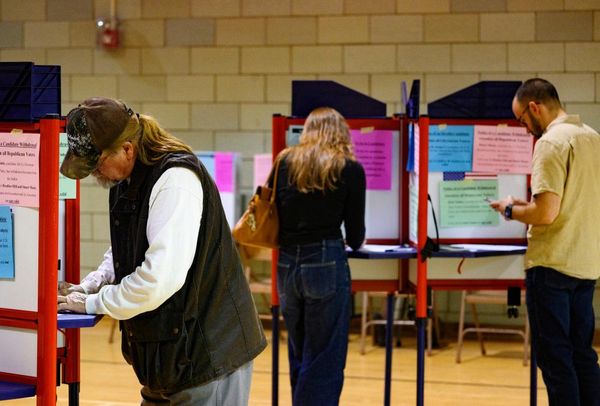
Midterm elections are usually rough for the sitting president's party, and at the moment a divided government is looking more likely in 2023 than the chance of Democrats retaining control of both Congress and the White House. But don't look for 2023 to be a replay of the political environment we had in 2011 after Republicans swept Congress under President Barack Obama.
Back then the economy was struggling with high unemployment, but Republicans weren't interested in increasing spending, which led to many policy fights over the next several years. So the U.S. got slower economic growth and higher unemployment than we would have with a more pro-spending agenda.
Here in 2022, the odds are rising that inflation will remain a concern while national security and energy security are front of mind for most Americans. Given that progressive ideas will probably get nowhere at this point, center-right policies supported by both Democrats and Republicans will get most of the attention. Here are a few I'd like to see emerge:
If inflation remains a concern in 2023, the body best-positioned to address it is the Federal Reserve. Rather than easing up interest rates, as they're going to do this year — while keeping them below their estimate of neutral, 2.5% — they should become more restrictive, raising the Fed Funds rate to 3% or more.
There's still time this year for supply chains to heal and pandemic-related factors to normalize, so it's possible this won't be necessary. But it's also possible that it will be, and we should expect the Fed to move in that direction if inflation is still running north of 4% next year.
Congress isn't off the hook when it comes to inflation, but many of the policies it could pass take years to play out, such as investments in infrastructure. But one policy that would help moderate a large source of short-term inflation would be a consumption tax on durables such as automobiles and household appliances. It would be an effective, though unpopular, way of reducing demand.
Durables comprise 13% of the consumer price index basket and have soared by 18.4% over the past year, when in most years they hardly rise in price at all. Taxing these types of goods for some number of months or until their prices normalize would target a main area of inflation as an alternative to even higher interest rates. When prices cool down, the tax could be quickly lifted.
The intersection of national security and energy security is the most intriguing area where a divided government might come together. Sen. Joe Manchin of West Virginia, a Democrat who hails from a state former President Donald Trump won by almost 40% in 2020, may best encapsulate this kind of politics. Manchin tweeted out on Wednesday a call for #AmericanEnergyIndependence now, linking it to national security.
Both Republicans and Democrats have room for agreement here. Weaning Americans off foreign oil in the name of national security might have been a pipe dream 20 years ago, but it's plausible now. In the short run that might mean incentivizing domestic oil companies to increase production.
I'd consider going even farther. We're in a transitional decade when it comes to energy in the U.S. as we boost investment and production in renewable sources like wind and solar while remaining dependent on oil and gas. As we're experiencing right now, disruptions in fossil fuel supplies remain incredibly painful.
Utility companies have a regulated rate of return on their investments; We could use a similar guarantee to increase oil production, with the provision that the policy sunsets after some number of years when renewable energy sources have come online.
To mitigate opposition from climate activists, increased investments in renewable energy and infrastructure would have to be part of the deal. Nuclear energy production should be on the table, too. As Germany has learned, phasing out nuclear energy before renewable sources can pick up the slack increases a country's dependence on foreign oil — potentially from hostile nations such as Russia. That doesn't make sense on either a climate or a national security basis.
This is the beginning of a list of potential center-right ideas, but it illustrates the mindset we should be getting into as we move forward. Political winds are shifting, national security concerns are on the rise and inflation is looking more persistent than first thought. There's room for agreement to address these issues, but it's going to need some buy-in from President Joe Biden, senators like Manchin and Republicans in Congress, rather than depending on a consensus of the Democratic Party.