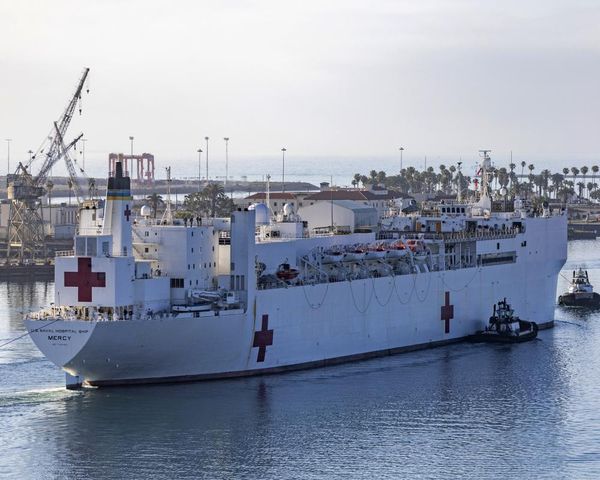
WASHINGTON _ While lawmakers push for more federal disaster funding in their home states after Hurricane Harvey, Hurricane Irma and a spate of wildfires across the West caused billions in damage, hundreds of thousands of Puerto Ricans are still without power and running water, and they don't have a vote in Congress.
Their governor, Ricardo Rossello, visited Washington on Thursday to ask for more help.
But the first person Rossello met with wasn't President Donald Trump or Senate Majority Leader Mitch McConnell, R-Ky. It was Sen. Marco Rubio, R-Fla., the first senator to visit Puerto Rico after Hurricane Maria wreaked havoc on the U.S. territory one month ago.
Puerto Ricans can't vote for Rubio, though thousands are expected to move to Florida after Maria destroyed most of the island's power and roads. But the second-term Republican said Thursday that a $36.5 billion disaster relief bill passed by the House last week doesn't do enough for the island.
The House proposal gives large sums of money to federal agencies for hurricane relief but does not include specific provisions that immediately fund rebuilding efforts in Puerto Rico.
"It's not so much the dollar amount, it's really how those funds would be accessed," Rubio said. "For example, it requires ... a damage assessment. They're not going to be able to do this in a timely fashion while they're trying to restore power and get water and food to people. (Puerto Ricans) are today, four weeks after the storm, where Florida was 48 hours after the storm. They're still dealing with the acute, immediate challenges."
Rubio said he has been working with Texas Republican Sens. Ted Cruz and John Cornyn, who have both criticized the pending disaster-aid package because it lacks specific provisions, along with Senate Democratic leader Chuck Schumer of New York, to make changes to the relief bill before the Senate votes on it Friday.
Cornyn said Thursday he's still putting together details for the package and that he's looking to add money.
"We're talking about it," said Cornyn, the Senate's second-ranking Republican. "We're trying to do something that works for everybody who has been affected by this."
Texas is asking for an additional $18 billion for Harvey relief, but Cornyn wouldn't say if the figure would go higher.
"It's easy to get impressed by some of the dollar figures that are in there which is substantial," Rubio said. "The problem for Puerto Rico and Florida and Texas is the package is not structured in a way that actually helps us entirely. In the case of Florida it leaves out key industries that need to be addressed. In the case of Puerto Rico it fails to adequately address the liquidity issue, and that is the ability to access the funds quickly to continue basic governmental operations."
Florida Democratic Sen. Bill Nelson said Thursday that he expects additional money for Florida's citrus industry to be added in the relief bill. A $2.5 billion request from Florida Agriculture Commissioner Adam Putnam wasn't included in the House bill last week because there wasn't enough time to put it in.
But Rubio argued that the situation in Puerto Rico is more dire than the situation facing his home state.
Rubio warned that the Puerto Rican government could shut down in the next 30-45 days if Congress doesn't allocate funds specifically to the U.S. territory. A shutdown would be "incredibly cataclysmic" to Puerto Rico's relief effort, Rubio said.
Rossello met with Rubio on Thursday morning to update the senator on relief efforts before meeting Trump. Rossello, who has been quick to publicly praise the federal government's response in the weeks after Hurricane Maria, did not criticize Congress or the Trump administration response during remarks at the White House.
"I am confident that, with your commitment and with your support, Mr. President ... we will be able to come out of this in the long haul together with Puerto Rico and give the U.S. citizens the adequate resources," Rossello said. "Treat us the same as citizens in Texas, in Florida, and elsewhere."
Trump lauded the disaster response in Puerto Rico, giving the effort a 10 out of 10 when asked by a reporter to grade his administration's work.
"I'd say it was a 10," Trump said. "I'd say it was probably the most difficult _ when you talk about relief, when you talk about search, when you talk about all of the different levels, and even when you talk about lives saved. If you look at the number _ I mean, this was, I think, it was worse than Katrina. It was in many ways worse than anything people have ever seen."
But Rubio said that Rossello informed him during their meeting that the Army Corps of Engineers has yet to begin the process of power restoration even though they have been on the ground for three weeks.
"They apparently, according to the governor of Puerto Rico, have yet to execute a power-restoration contract to begin the power restoration or even the immediate work, and so that's concerning," Rubio said.
Rubio emphasized that he was not blaming anyone in Congress or at the White House for their response to Hurricane Maria, but that the storm was a unique event that requires a unique response from Washington.
"It's not ill intent by anyone. ... We are addressing it in a traditional, conventional way," Rubio said. "This is not a traditional, conventional event."