Get all your news in one place.
100’s of premium titles.
One app.
Start reading
The Guardian - UK
The Guardian - UK
Lifestyle
Stephan Vanfleteren

Congo: 50 years, 50 faces

Congo: 50 years, 50 lives: Congo:
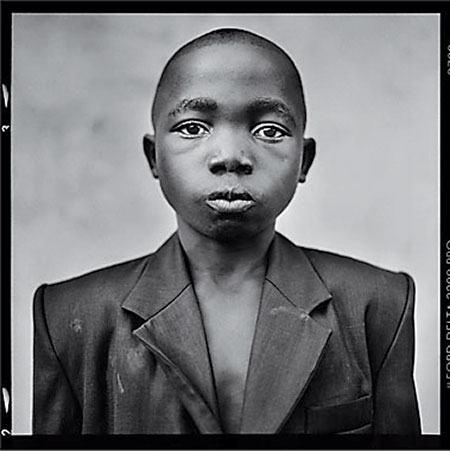
Abel, 71, schools inspector 'I should have retired in 2001, but people don't retire any more. So I'm still working.The monthly salary isn't always paid. The teachers go hungry. The level of education is very low. In the old days I had a bus pass and I could read my newspaper in peace. Now I have to take the mini bus, one of these VW vans with up to 40 of us on board. I'm dressed in the only suit I own. I've been wearing it since 1987.'
Photograph: Stephan Vanfleteren/Panos Pictures
Congo: 50 years, 50 lives: Alpha
Alpha, student.
Photograph: Stephan Vanfleteren/Panos Pictures
Congo: 50 years, 50 lives: Congo: Albert
Albert, 53, butler, Belgian embassy 'The first day I got the job, I said to myself, "You're in Belgium now, not the Congo." The ambassador's residence must always be clean. I learned everything I know from the consul general's wife: how to fill glasses, lay out the cutlery, make the beds. I've served four ambassadors in my time. The Belgians know how to run things. Here, there's electricity on tap. It's not like being at home – we sometimes don't even have water. The streets are completely wrecked. Every morning I leave home at 4.30am because I have to start work at 6am. I wash and dress when I get there. Then I prepare breakfast for the ambassador and his wife. They are good to me. I have three children at university, but one syllabus can easily cost US$15. So the ambassador's wife helps me out. The Belgians ought to rebuild everything here. I've taught my wife how to make beds properly. And she's taught me how to write French. Reading is what I find difficult.'
Photograph: Stephan Vanfleteren/Panos Pictures
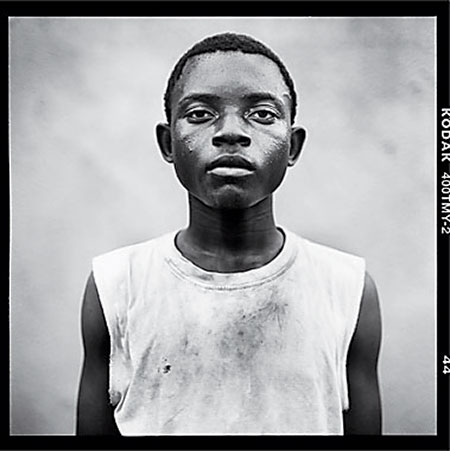
Congo: 50 years, 50 lives: Congo: Amis John
John Amis, bicycle taxi driver, Kisangani 'I know every street in Kisangani. Not a hole or bump in the street is unknown to me. The shortest distance between two points? No problem. Knowing the route is very important. You get fewer flat tyres and the customer sits more comfortably on the back of the bike. Quite important for the tip. You are my fourth customer today. I do 10 on average a day. I use the money to pay for my school. I started with the "tokelo" when I was 13. My first customer was a girl. It was a wonderful feeling to earn my first 250 Congolese francs myself. The "mamas" are the most difficult to carry. Not only because they generally have shopping with them for the market, but because they are often on the heavy side. But this is the best training for the legs.'
Photograph: Stephan Vanfleteren/Panos Pictures
Congo: 50 years, 50 lives: Congo: Augustin Mfukidi
Augustin Mfukidi 'I am the only Catholic in a family of Protestants. In the 20s, my parents were under the spell of a preacher in a local church formed by British Protestants: my older brother had a hump and was miracu­l­ously healed by him. But the Belgians were not of our faith; we were persecuted, displaced and exiled. As the youngest, I was forced into Catholicism.'
Photograph: Stephan Vanfleteren/Panos Pictures
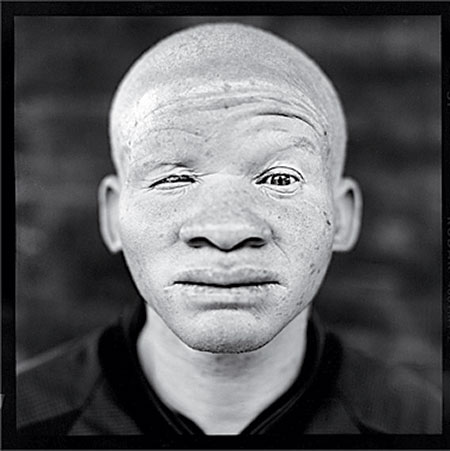
Congo: 50 years, 50 lives: Congo: Baelongandi Roger
Roger Baelongandi, priest, Kisangani 'My father is black, my mother is black and I am white. My mother wondered how a white man could come out of her stomach. It was God's will. It makes me feel good. My skin is certainly more sensitive, and in a country on the Equator that's sometimes a problem. But look at the Maranatha church here. We have a roof over our heads, not only for the rain from heaven but also for shade.'
Photograph: Stephan Vanfleteren/Panos Pictures
Congo: 50 years, 50 lives: Congo: Bakozi Ndirikwendela
Ndirikwendela Bakozi, nightwatchman, Virunga 'I long for the time when the tourists come back. The war has stopped them coming. But I clean the rooms and make sure that the land stays in good order. There's enough work. Sweeping up the dust in the dry season, cleaning the mud in the rainy season. I come here from the refugee camp each day, except on Sundays. Then I go to the mass with my four children and my wife. I originally had seven children, but three of them died during the cholera epidemic. I still think of them every day.'
Photograph: Stephan Vanfleteren/Panos Pictures
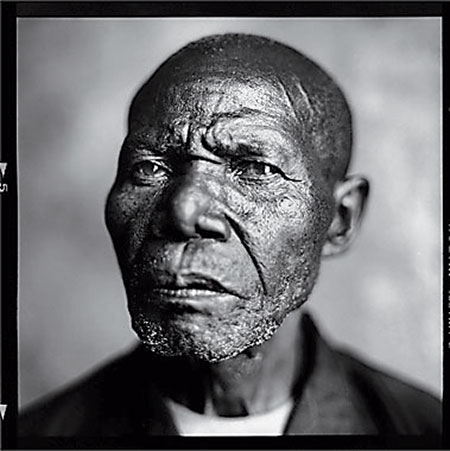
Congo: 50 years, 50 lives: Congo: Bamb Ilia
Ilia Bambé, ex-cafe owner, Kisangani 'I had three bars. Good days in good times. The Elite bar, the Matete bar and the Pumuzika bar, which means "rest a while". The businesses did well. I sold Primus and Skoll beer. I have 24 children. Four have already died. One of them was caught by the "Crocodile Man" who lives on the bottom of the Congo River. Now and again he comes to the surface and drags people into the water. There are many of them. Water magic. He can take the form of a snake or hippopotamus. They can capsize a pirangue. That's what happened with my son. A fisherman saw how he was taken down under the water. My son's body was found 125 kilometres downstream. He was still wearing only his T-shirt and his underpants. We buried him in peace in Yngambi-Lokele.'
Photograph: Stephan Vanfleteren/Panos Pictures
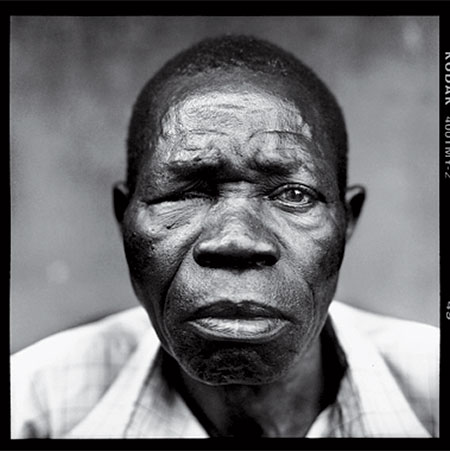
Congo: 50 years, 50 lives: Congo: Baonga Jerome
Jerome Baonga, boatman, Kisangani 'We hid in the bush for six days. That was June 2003. The Ugandans and Rwandans felt they had to fight their war here. Fighting went on day and night. Many dead soldiers were lying rotting on the street when we came back to our district, on the left bank of the Congo river. My little nephew was shot when he went to fetch food in the village. The start of the Mobutu period was good, but after 10 years the gloss had worn off again. Under Father Kabila, it was a little paradise here. When we heard the news on that our president had been murdered in Kinshasa, people died of sorrow here.'
Photograph: Stephan Vanfleteren/Panos Pictures
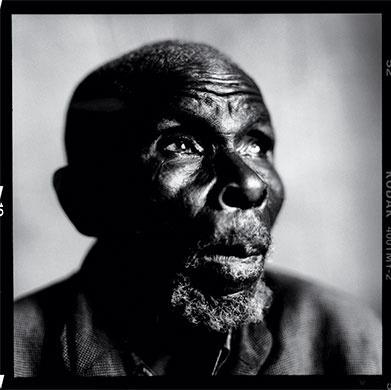
Congo: 50 years, 50 lives: Congo: Buhendwa Emmanuel
Emmanuel Buhendwa, beggar, Bukavu 'My children have no money and so cannot look after me. During the day I beg in the streets of Bukavu. My wife works on a small plot of land where we have just enough to ward off starvation. Once I was a security officer, and a sergeant major in Katanga under President Mobutu. Before that, when Congo was still a Belgian colony, I worked as a gardener for a white man. Unfortunately, I can no longer remember his name. I am 96 years old, not only are my legs worn out but my memory has gone the same way. I no longer even know how many grandchildren I have, let alone great-grandchildren. But my stomach is still working, because it certainly remembers when I have to eat, whenever hunger returns.'
Photograph: Stephan Vanfleteren/Panos Pictures
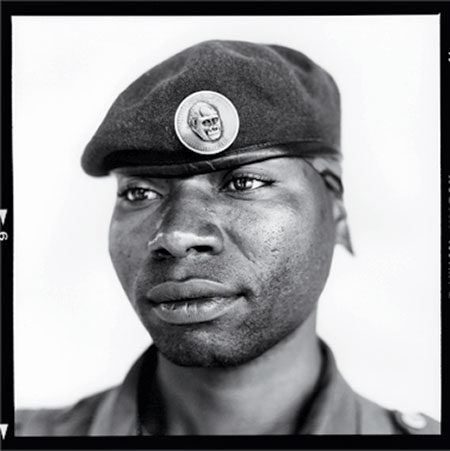
Congo: 50 years, 50 lives: Congo: Buyori Kambale
Kambale Buyori, park-keeper, Rumangabo 'I've been at the Virunga park for six years. Before that, I was a private soldier. I often ended up in fire fights. Shooting on all sides, from hilltop to hilltop. I wasn't afraid – that's part of the game. But I still don't like seeing corpses. As a park-keeper, I have to arrest smugglers in the illegal charcoal trade and protect the gorillas against the rebels and poachers. I consider that an honour, because I am moved by the beauty and power of the rare mountain gorilla. There are only 700 left in the world, 150 of them here in the Virunga Park. With such a small population, you realise how important just one gorilla life is. We often come into contact with them in the hills. I once patted the knee of the gorilla leader, Mukoya. Mukoya means, "He that comes closer". Believe me, when you sit next to such an imposing animal, it's a privilege to risk your life to preserve such a rare and fine species.'
Photograph: Stephan Vanfleteren/Panos Pictures
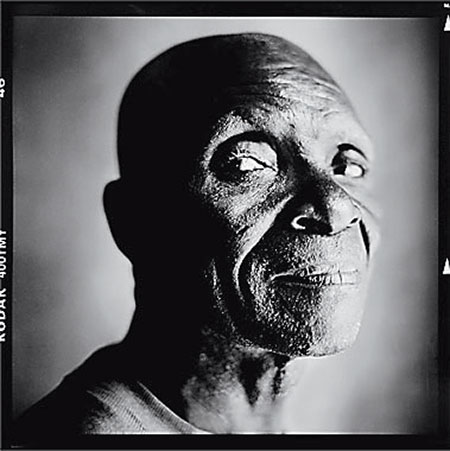
Congo: 50 years, 50 lives: Congo: Camile
Camile, 75, crocodile keeper 'Simon and Antoinette have been here since the zoo opened in 1938. Crocodiles can live until they're 100 years old. As long as there are visitors, I'll put on a show. Look closely, first of all I tap them on the head. Then I tap harder. Then on the front leg, like this, then on the back leg. And lastly, on the tail. You have to watch out for where the tail is. I've been doing this since 1968, every day except Fridays. There was a guy who stood in for me, Mafu. But he wasn't careful. One Friday in 1985, Antoinette bit off his arm, and two months later, he died. Why do I keep my clothes horse in the cage? It's the only place that the thieves won't dare go!'
Photograph: Stephan Vanfleteren/Panos Pictures
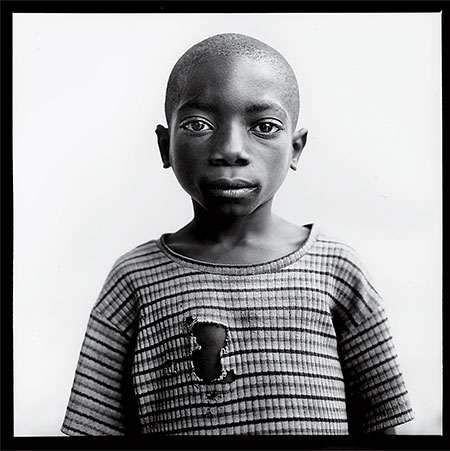
Congo: 50 years, 50 lives: Congo: Chance
Chance, Bukavu 'My mother is sick. She is in the hospital here. I don't know what's wrong with her. I don't know my father, or where he is. I don't know where I was born. I have been living here all my life, as far as I can remember. What do I want to be? I don't know.'
Photograph: Stephan Vanfleteren/Panos Pictures
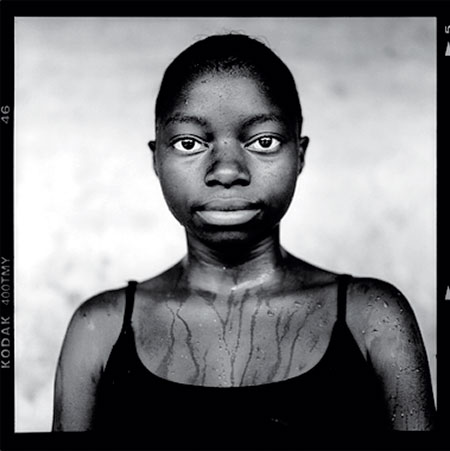
Congo: 50 years, 50 lives: Congo: Christiane
Christiane, 15, market trader 'I come here to the mill every day. Then I sell manioc flour in the market, even in the rainy season. It takes about half an hour at the mill. But sometimes I have to wait the whole night because there isn't any power. So I take a nap inside with the other women under a plastic shelter. They come from Kasai, I've already seen them eat dog. In Kasai it's not only men who eat dog. But there's no money here and dog meat isn't expensive. My dream is to become a nurse, or if not, go to Europe. I'd like to marry a white man and become white myself. I couldn't be completely white, that's not possible, but dairy cream is good for whitening the skin.'
Photograph: Stephan Vanfleteren/Panos Pictures
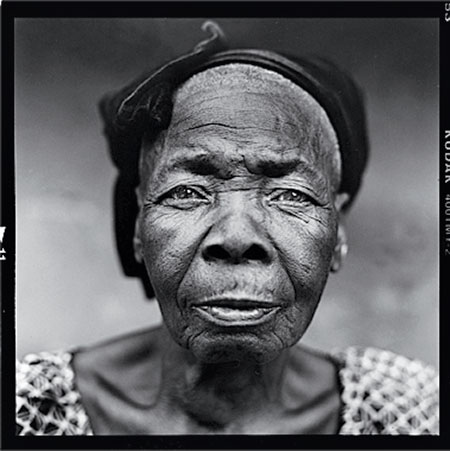
Congo: 50 years, 50 lives: Congo: Damari Wasinga
Wasinga Damari, housewife, Kisangani 'Things were good in the past. There was enough money to look after my family. The children went to school, and we could buy new clothes regularly. But at the end of the 1980s life became steadily more difficult. People no longer had any money and business was bad. Our firm went bankrupt and we became poor. And then the war came. The Rwandans had their guns on this side, with which they fired at the Ugandans on the other side of the Congo river. And the Ugandans shelled our area. We all had to flee. Thousands of us. Into the jungle.'
Photograph: Stephan Vanfleteren/Panos Pictures
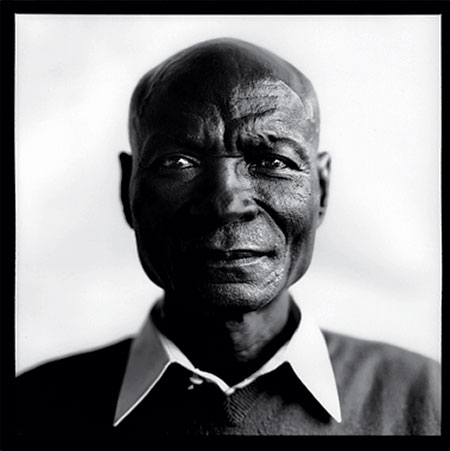
Congo: 50 years, 50 lives: Congo: Elunga Sukamai Victor
Victor Sukamai Elunga, police superintendant, Kinshasa 'No, I never arrested a white man in my 35-year career, only Congolese. The biggest criminal I was able to arrest in my career was Anewalina. He specialised in home-jacking. We tried to arrest him for years, but he was always too quick for us. After a tip from an informer, we were able to locate him in the Memling hotel, Kinshasa's poshest hotel. We demanded the key from the reception. We burst into the room with five constables. He was lying in bed with two women in room 13. We took him to the station in his underpants.'
Photograph: Stephan Vanfleteren/Panos Pictures
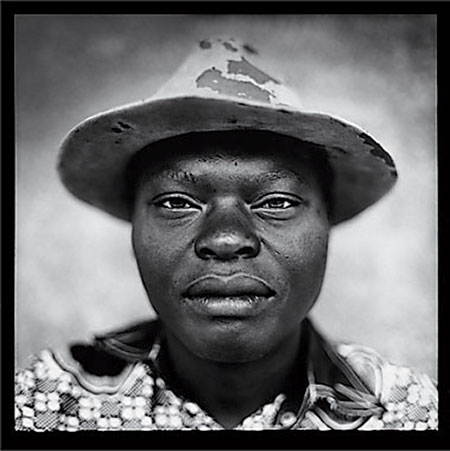
Congo: 50 years, 50 lives: Congo: Kabula Badibanga Jules
Jules Badibanga Kabula, headmaster, Mikalay 'No, no, I don't want to go back to the colonial times with Belgium. But why can't we work together? In the past, the roads were good, the schools were excellent and we could live a civilised life. But the dynamism in this region disappeared with the last white father. The people wept. We got corrupt, incompetent leaders instead. Fanatics serving their own interests. And when they visit the schools, they just complain how bad everything is and give out a football or two. Always giving away these footballs. I don't want to see another football. Instead of investing money in the schools, they are putting it in their own pockets.'
Photograph: Stephan Vanfleteren/Panos Pictures
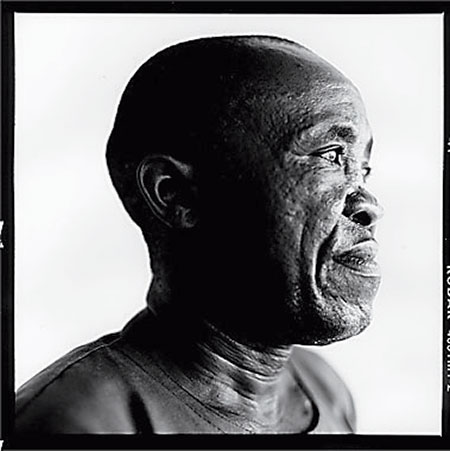
Congo: 50 years, 50 lives: Congo: Kalalu Dieudonn
Dieudonné Kabula, room servant, Bukavu 'I have been working here in this beautiful luxury Hotel Orchid on Lake Kivu for 20 years. I am responsible for eight of the 24 rooms. I have been allowed to clean the rooms of all kinds of important people. Businessmen, ministers, ambassadors, even the well-known Congolese popstar Kofi. But the best known was Bill Gates. He was very friendly and gave me a fine tip with his own hands.'
Photograph: Stephan Vanfleteren/Panos Pictures
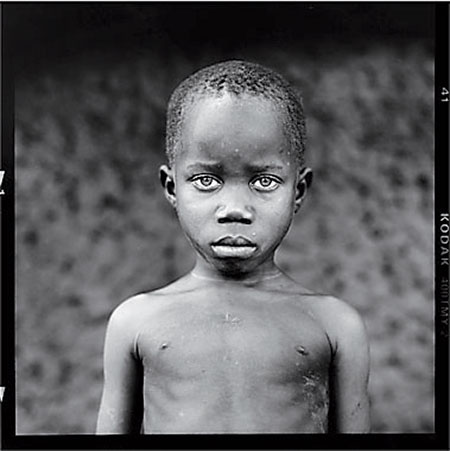
Congo: 50 years, 50 lives: Congo: Kanyonga Nkongolo
Nkongolo Kanyonga, student, Shamatenge 'Each of my four brothers has light eyes. They are grey and green. Why that should be so, I don't know. It just happened. My ma has brown eyes, but my dad also has these green ones. It was already like that with my ancestors. God gave us them.'
Photograph: Stephan Vanfleteren/Panos Pictures
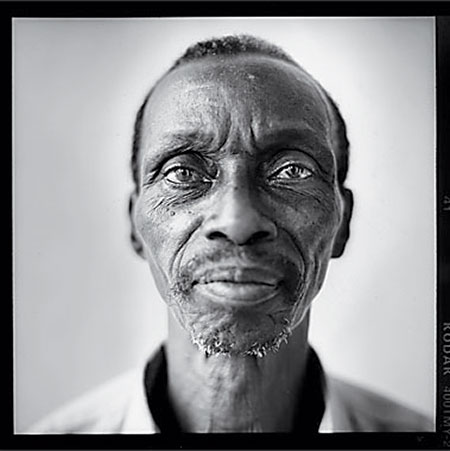
Congo: 50 years, 50 lives: Congo: Kipembo Lokonda Aloys
Aloys Kipembo Lokonda, head teacher, Kisangani 'Well, you know, the state pays us 35,000 Congolese francs, less than $50 - a pittance. What can you do with that? Nothing. That's why we ask parents for a premium, a gratuity of 2,500 Congolese francs. If they can't pay, they have to leave the school. It's a problem that goes back to the 1990s under President Mobutu. Our salaries haven't changed in 20 years. That's if they are paid at all. I think it's a sorry situation, but we are forced to ask for a little extra here and there, otherwise we couldn't survive.'
Photograph: Stephan Vanfleteren/Panos Pictures
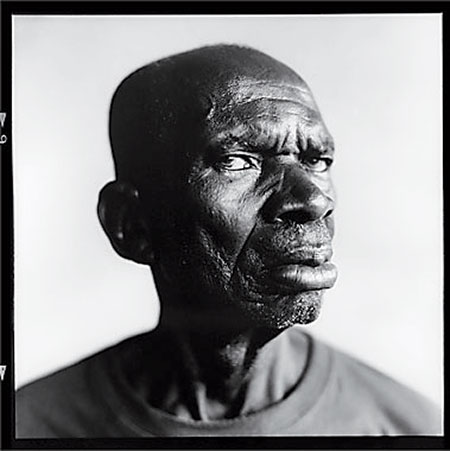
Congo: 50 years, 50 lives: Congo: Kisobele Nsontini Norbert
Norbert Kisobele Nsontini, veteran, Kinshasa 'There are still 100 of us living here in Kinshasa. Every time a veteran dies, the funeral is a big event. All the medals are pinned to the deceased's suit. As long as our health permits, we meet here in our pub, Les Anciens Combatants. Even though, at our age, it's not at all easy to get here. When we take the bus, people fortunately make room for us to sit down.'
Photograph: Stephan Vanfleteren/Panos Pictures
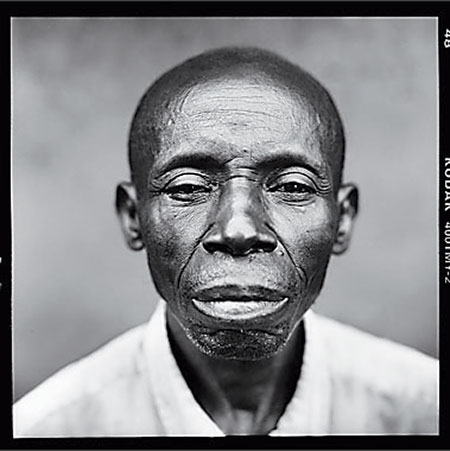
Congo: 50 years, 50 lives: Congo: Komboi Kiloko Victor
Victor Komboi Kiloko, fisherman, Kisangani 'First I had to learn how to swim, and only then could I accompany my father to learn how to fish. I was six years old when I was allowed to come along on the pirangue for the first time. A few years later I had my own "kai", my own paddle. We have new ones made every year because the powerful Congo river wears them out. Each paddle is different, like each pirangue is also different and the Congo River is also different each day. It has been flowing along here for ages but you never know the river entirely.'
Photograph: Stephan Vanfleteren/Panos Pictures
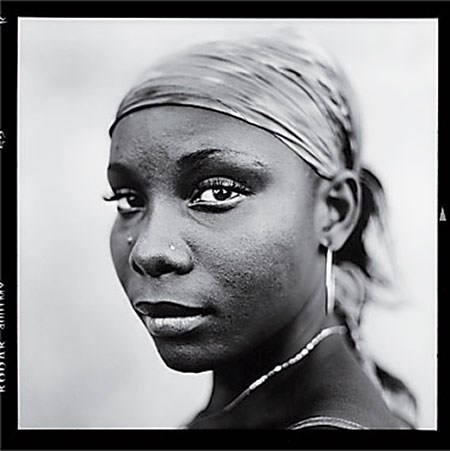
Congo: 50 years, 50 lives: Congo: Laetitia
Laetitia, 22, model 'I've got my period, that's why I've got spots. I've been working for Top Models Agency for four years now. I'm 1.78m and normally weigh 58 kilos, but I'm a bit heavier at the moment. When my manager's back, I just eat chips and drink tea. I don't know if my boyfriend is faithful to me. He lives on the other side of Brazzaville. He's a man, isn't he? But I, too, need a little tenderness sometimes. Sometimes I see my ex, the guy I lost my virginity to. Well, you know the rest. I don't know if I want children yet. I'm worried it'll go wrong, and I've heard that afterwards you have less orgasms. And all these Congolese women who let their men's sperm make them fat!'
Photograph: Stephan Vanfleteren/Panos Pictures
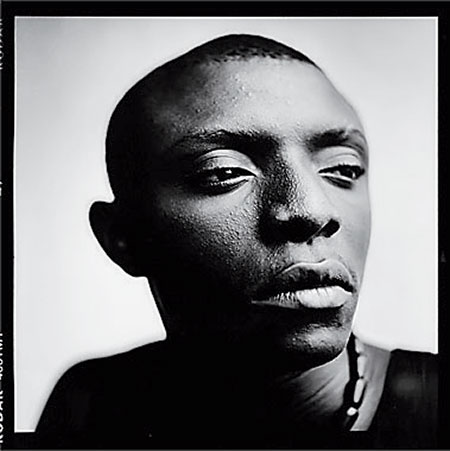
Congo: 50 years, 50 lives: Congo: Larousse-Marciano
Larousse-Marciano, musician 'I mix American hip-hop with atalaku, our kind of rap. That's my thing. My dad was always getting me to look up words in the dictionary - so that's where "Larousse" came from. Rocky Marciano was the only heavyweight never to be knocked out. Me, I box with words, and I want the whole world to know me. Then I can go out drinking with friends, and all the ladies will come and make up to us. With my money I would also like to build schools and hospitals. When I'm ill, I think about death: I don't like being sick. Actually, I'm off to a funeral now - my friend's cousin. She was 25 years old and she died of, erm, cancer.'
Photograph: Stephan Vanfleteren/Panos Pictures
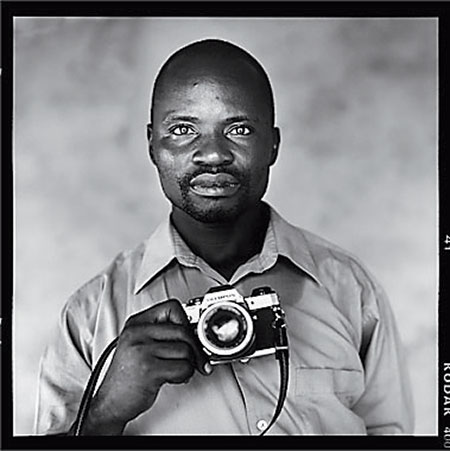
Congo: 50 years, 50 lives: Congo: Lofili Jean-Claude
Jean-Claude Lusumba, photographer, Kisangani 'I have to pay $25 each year to be allowed to photograph in the street, and even then I often have to pay bribes to soldiers so they don't confiscate my camera. Even with an innocent family photo under a tree, the soldiers can claim that that tree is an "object of military importance". Because there is no work, I started photographing people in the street. I have my films developed by the Lebanese for 300 Congolese francs. I have to be careful with the pictures. Often two exposures per portrait, three at most. But always with flash. That makes the person more clearly visible and it is also more important. Flash is for starlets, and that's what we Congolese like. Apart from the films and developing, the batteries for the flash gun are a heavy expense. A wedding photo costs $1, a funeral photo $2. Why twice as much? People always come to collect a wedding photo but that's far less likely with a photo of a corpse.'
Photograph: Stephan Vanfleteren/Panos Pictures
Congo: 50 years, 50 lives: Congo: Lukadi
Lukadi Victoril, widow, Mikalay 'My husband lost at a game of cards. He had to pay his debts and wanted to sell me to his opponent. I refused and fled from Kasumba. My husband then went to my family and demanded five goats as compensation. That made my family cross and I can't go back until I have paid back the value of the five goats.'
Photograph: Stephan Vanfleteren/Panos Pictures
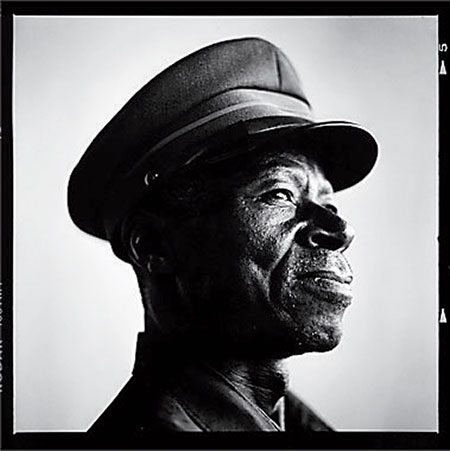
Congo: 50 years, 50 lives: Congo: Lumbala
Lumbala, nightwatchman 'Let's say I'm 30 years old, or maybe 40. You don't believe me? Well, I've worked for Madame for the past 30 years, first at Tabazaire's place and now just for her. Her husband was director of the tobacco factory, but he died, choked on his food. I think he was poisoned. I hang our mat in the sun and then go to sleep. I never sleep deeply – a nightwatchman never sleeps deeply. Why should I be afraid of burglars? I've got two dogs. My radio is tuned to Digital Mission radio. The Lord is never far away. I have everything I need. Two Belgian army caps. I've also got two wives, one is 17, the other 19. You still don't believe me?'
Photograph: Stephan Vanfleteren/Panos Pictures
Congo: 50 years, 50 lives: Congo: Lusumba Lucy
Lucy Lusumba, housewife, Shamatenge 'I was born in the village here and have never travelled far. Just 10km from here to sell my vegetables at the market. But just because I never go to the city doesn't mean I don't want to look good. I get my hair done each week. Sometimes short, sometimes rather longer, or like now as a "satellite". I don't do it just to look nice, but also because my hairdo is the only event in my life.'
Photograph: Stephan Vanfleteren/Panos Pictures
Congo: 50 years, 50 lives: Congo: Maman Annie
Maman Annie, housewife ' "I feel something else" – that's what the midwife said to me. So what happened? That day my husband had gone to Lubumbashi to cover the visit of King Baudouin and Queen Fabiola. He was working as a journalist for Mobutu. Someone had tipped manioc flour into his hair - that's what we do if someone's carrying twins. When Mobutu saw this, he came over and congratulated him. When he heard we were having a little girl and a little boy, he said 'Well, we'll have to call them Baudouin and Fabiola.' And that's what they've been called ever since!'
Photograph: Stephan Vanfleteren/Panos Pictures
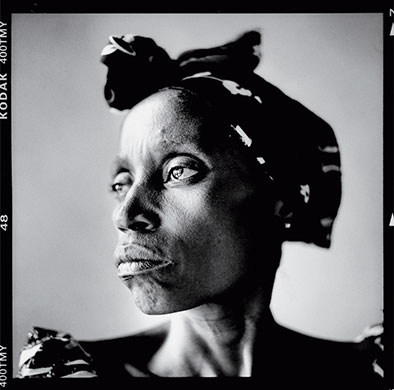
Congo: 50 years, 50 lives: Congo: Maman Nicole
Maman Nicole 'I've known I was HIV positive since 1993. When my husband died of Aids, my family rejected me. Look at Marianne: her husband was the ambassador and she ended up sleeping on a cardboard box! There's only the two of us here now, at Femmes Plus (Positive Women). Chantal used to sleep on a piece of fabric, her food covered in mould. She used to have to drag herself to the filthy toilets on all fours. When she died, we buried her. The street kids who live in the cemetery called out, "How long have women had to bury the dead?" The coffin was too heavy for us. They ran over, pushed us aside and took the coffin on their shoulders. They had tears in their eyes.'
Photograph: Stephan Vanfleteren/Panos Pictures
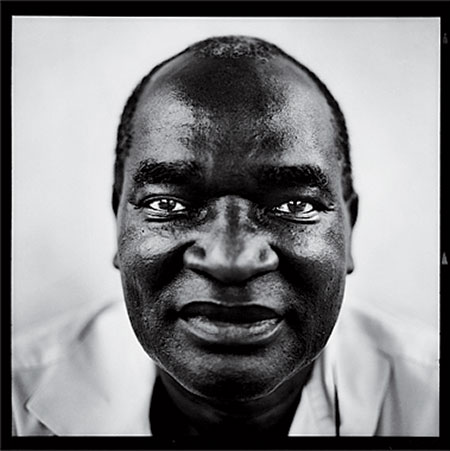
Congo: 50 years, 50 lives: Congo: Manono Roger
Roger Manono, doctor, Kinshasa 'When I became the hospital director, ministers came and visited me there. Why did I always wear jeans and a T-shirt? I have my doctor's coat. That should be enough. This country is a building site full of mud. Is it really necessary now to wear expensive suits and shiny shoes? And all those politicians with their $40,000 jeeps. Kabila's first official visit was to this hospital. And his wife came here without a bodyguard, and his son. I became friendly with him, ha! No, I do not need an umbrella because if you lose it, you are left standing in the rain. It can rain here, in buckets! The only real umbrella is the job. This country needs hard workers. That's why I came back here after training in Belgium. Unfortunately, I am well past 20.'
Photograph: Stephan Vanfleteren/Panos Pictures
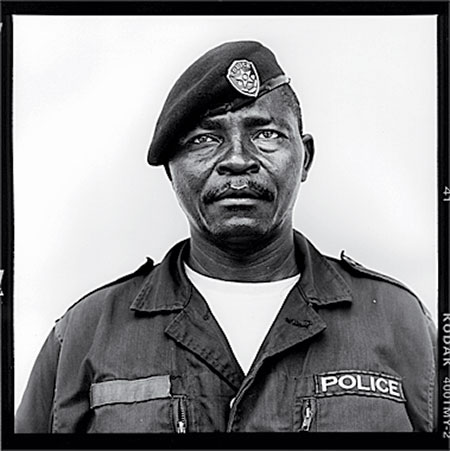
Congo: 50 years, 50 lives: Congo: Mbaja Lumbi
Lumbi Mbaja, policeman, Kinshasa 'No, I never wanted to be a soldier. What are you thinking of? Days spent training in the bush in the heat among vermin. Just give me the city, as a policemen. A policeman is in contact with the population. As long as we don't have to go on "point duty". I see no fun in controlling traffic on a busy crossroads. Having to stand in the middle of the heat and dust, waving your arms between smelly buses and hooting cars.'
Photograph: Stephan Vanfleteren/Panos Pictures
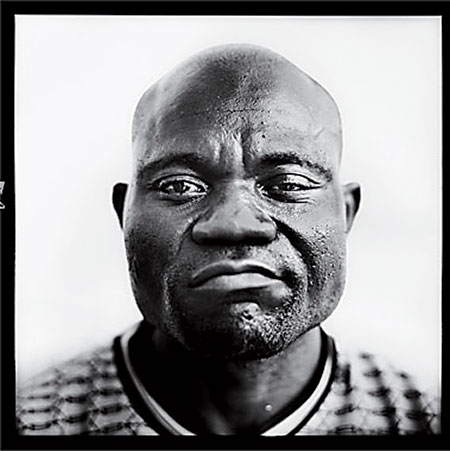
Congo: 50 years, 50 lives: Congo: Monga Samuel
Samuel Monga, car mechanic, Bukavu 'Ten months ago, I was in road accident on the way to Uvira. The lorry I was travelling on lost its balance and we were catapulted from the loading platform. Thirteen were killed and many were injured. The helicopter from the Monuc peacekeepers flew me to hospital. It was my first flight, but unfortunately I couldn't appreciate it. My leg was crushed. I spent two days in reanimation. I hope I will still be able to work. Fortunately my family sends me $10 from Kinshasa each month. I don't know how I would survive otherwise. I long to see my wife and children again. Since the accident, I have only spoken to them on the phone. Unfortunately there's no money for them to come here.'
Photograph: Stephan Vanfleteren/Panos Pictures
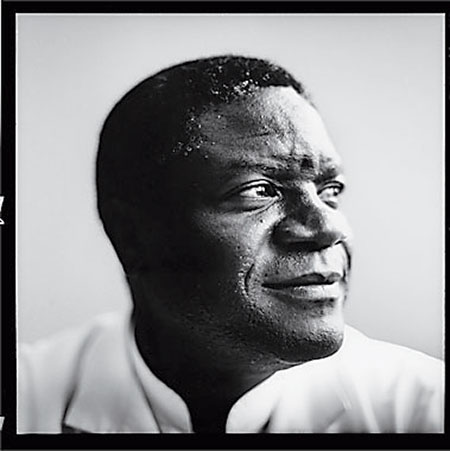
Congo: 50 years, 50 lives: Congo: Mukwenge Denis
Denis Mukwenge, surgeon, Bukavu 'This hospital is really a maternity clinic, but because of the war it became an asylum for thousands of women who had been sexually assaulted. An average of 10 new victims a day report to the hospital. Sexual violence is a weapon of war, a nuclear bomb that blows society apart. Things were very difficult from the start. Various armies came here to fight their battles: Ugandans, Rwandans, Burundians, Zimbabweans and Congolese. It was total war, and it seemed as if all the soldiers were looking to rape Congolese women. I was operating almost non-stop. I have chalked up 25,000 operations. By 2001 I had had enough. I felt it was not enough to operate on one violated woman after another. The extent and brutality of the violence was intolerable. So I contacted Human Rights Watch. I thought: OK, now the world knows, now something will surely be done. Well, I was wrong.'
Photograph: Stephan Vanfleteren/Panos Pictures
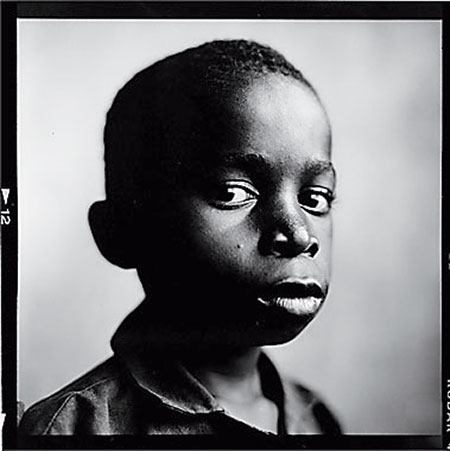
Congo: 50 years, 50 lives: Congo: Mulamba Francis
Francis Mulamba, orphan, Mikalay 'People told me that my ma died from loss of blood when I was born. She saw me and held me for a moment, but died a few hours later. My dad is in Tshikapa. He did not want to look after me, and left. He came and visited me once. The orphanage then asked for money but he said that he was in no position to pay them. That was the last and only time that my dad saw me.'
Photograph: Stephan Vanfleteren/Panos Pictures
Congo: 50 years, 50 lives: Congo: Mumbu Bibiche
Mumbu Bibiche, journalist
Photograph: Stephan Vanfleteren/Panos Pictures
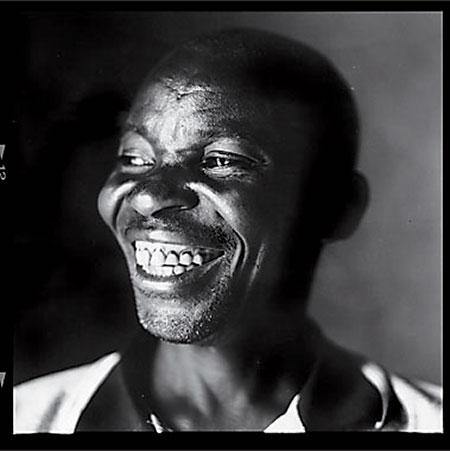
Congo: 50 years, 50 lives: Congo: Mushegerha Jean Berghmans
Jean Berghmans Mushegerha, teacher, Mushengi 'I have been teaching psychology, history, philosophy and geography for 20 years now. Six days a week, I walk the 17km from my home to the school and the 17km back again. And on Sunday after the mass I sometimes still come to tutor the final-year students. The state no longer pays our wages, but I still come. Even though it's difficult to bring up my 11 children without an income. The educational level has deteriorated compared with the past. Motivation has gone, they have no time to study because they have to work the land. Some are even traumatised by the war. They sit in the classroom, but their minds are somewhere else. It's my duty to prepare these children so that this country can get back on its feet.'
Photograph: Stephan Vanfleteren/Panos Pictures
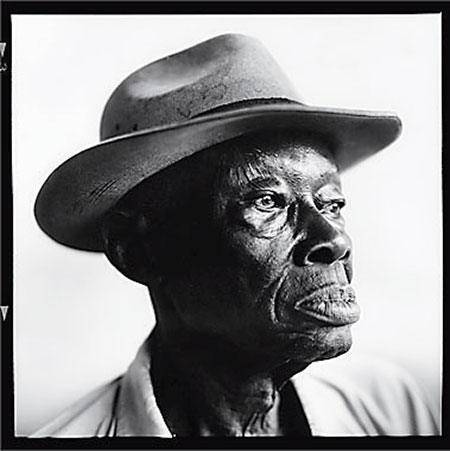
Congo: 50 years, 50 lives: Congo: Muteba Benoit
Benoit Muteba, military postal clerk, Kinshasa 'I did 25 years' military service. I was a soldier during the second world war. Thank God I had to stay in Kinshasa. I was a telegraph operator at TSF, the telegram service. Tap, tap, tap, tap, tap, tap all day long. I could communicate faster in code than with my tongue.'
Photograph: Stephan Vanfleteren/Panos Pictures
Congo: 50 years, 50 lives: Congo: Ndamuso m'Rashagua Seyota
Seyota Ndamuso m'Rashagua, farmer's widow, Mushengi 'My husband died from hunger six years ago. He was so terribly thin at the end of his life. He had no strength left. Each day we had to go to the valley with the children to grow cheap manioc on our infertile patch. In the end, my husband had no strength left. Sometimes we had to give up our meagre proceeds to soldiers on the way home in the evening. That was terrible, but it was better than a beating or, worse still, having one our children carried off to be recruited as a child soldier in some army.'
Photograph: Stephan Vanfleteren/Panos Pictures
Congo: 50 years, 50 lives: Congo: Ngwadi Longin
Longin Ngwadi, ex-footballer, Kikwit 'I was 17. I didn't know anyone when I arrived in Kinshasa, no one at all. A nightwatchman called me in to the property he had to look after. He was someone from my district. I was allowed to sleep on the ground there, in the open air. Shortly after that, I got my first job in a multiple store. I had to sell trousers, shirts, soap, sugar, all kinds of things. I later sold sausages on the street until I was dismissed because I once sold someone some bad liver sausage. Eventually I had the opportunity to go and work as a waiter for the next-to-last governor-general of the Belgian Congo.I worked for him for four years. I was even able to go with him to Belgium during the world exhibition in Brussels in 1958, by aircraft. But I was unable to see the Atomium because I had to cook and wash in Namur, a city 60km from Brussels, all the time. I had a very good time in Belgium. Namur was an intelligent city, just like Kikwit.'
Photograph: Stephan Vanfleteren/Panos Pictures
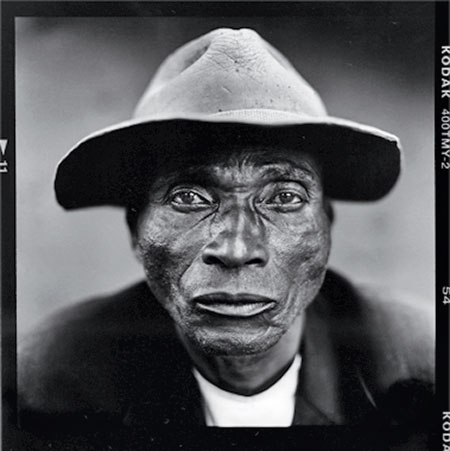
Congo: 50 years, 50 lives: Congo: Nyongamukoka Jean-Pierre
Jean-Pierre Nyongamukoka, group head and soothsayer, Bena-Ngoji 'Give me a goat and I will tell you where your wife is. I then, of course, have to consult several proverbs, but that's not a problem. Rain? No problem. I see to it, for a chicken or alcohol. I call the rain down. When I am older, I will choose one of my sons to pass my knowledge on. The gift comes from my ancestors. It's in our blood. The magic must not die out.'
Photograph: Stephan Vanfleteren/Panos Pictures
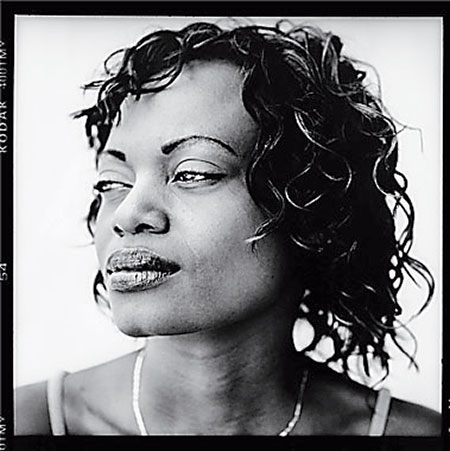
Congo: 50 years, 50 lives: Congo: Rosalie
Rosalie, 26, office worker 'My mother always says, "All that reading and studying, you'll never get yourself a good husband like your sister! You're too complicated for a black man. You'll end up falling in love with a white man! Journalism's a whore's game." That's what she says. The fact is, I'd like to become minister for women's affairs. Black men don't think anything about beating their wives. It's illegal where you come from. But you get divorced so easily, in 48 hours sometimes! Why then should I go to Europe? I'd end up washing up somewhere, for sure.'
Photograph: Stephan Vanfleteren/Panos Pictures
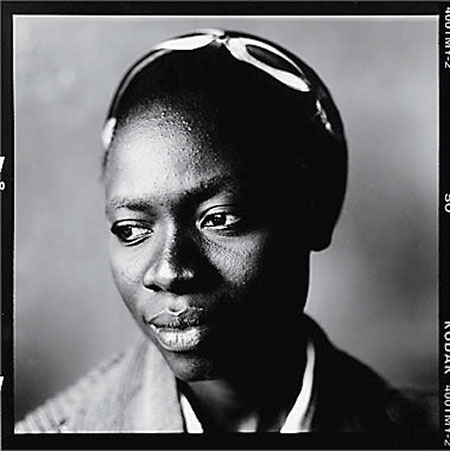
Congo: 50 years, 50 lives: Congo: Soeur Bernadette
Sister Bernadette, nun, Mikalay 'I am the youngest sister in this cloister. I never knew the white nuns. Nor any white fathers, either, on the other side of this building. There are only two brothers in the monastery there. Here, with us women, there is more vocation. We get up early in the morning for first prayers. We then have to go to the church with our torches. We have no electricity here, only a generator, and we try to be as economic as possible about using it.'
Photograph: Stephan Vanfleteren/Panos Pictures
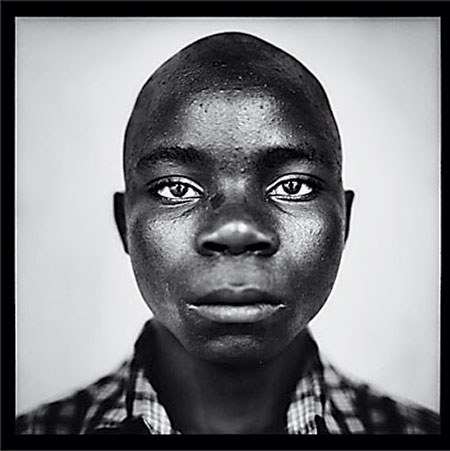
Congo: 50 years, 50 lives: Congo: T k l
Tékélé, ferryman, Kisangani 'I had to wait until I was strong enough to work as oarsman on the pirongues. I am pleased, but the days are long. I start at 6am and work until sundown. Ten trips across the Congo River a day. It's hard work, paddling against the current, loading and unloading sacks, making sure passengers pay correctly, repairing and cleaning the pirongues. But I like the work. Between trips, I sometimes play football with the other young ferrymen. I have just left school. I had to because I no longer had any money. So I became a paddler. I had no choice.'
Photograph: Stephan Vanfleteren/Panos Pictures
Congo: 50 years, 50 lives: Congo: Tshipa Star
Tshipa Star, dancer, Kinshasa 'Our music system sometimes gives out, and then we continue dancing without music. We then find a mechanic who can get the thing working again, generally with car spares. Our old Sony contains screws and bolts from old Renaults and Toyotas. It's not really a Sony any more, but a Renault. The only thing that can stop us are power cuts or showers. Then we take a short break from dancing.'
Photograph: Stephan Vanfleteren/Panos Pictures
Congo: 50 years, 50 lives: Congo: Tsimba Freddy
Freddy Tsimba, sculptor, Kinshasa 'Whenever a white man visited my workshop, the rent goes up. It'll happen again now that they've seen you. People think I am becoming stinking rich from my sculpting. Ten of my sculptures were seized at the N'Djili airport in Kinshasa when they came back from an exhibition in Europe. I have to pay the customs people to get my sculptures back. But I do not have the money to do this at present.'
Photograph: Stephan Vanfleteren/Panos Pictures
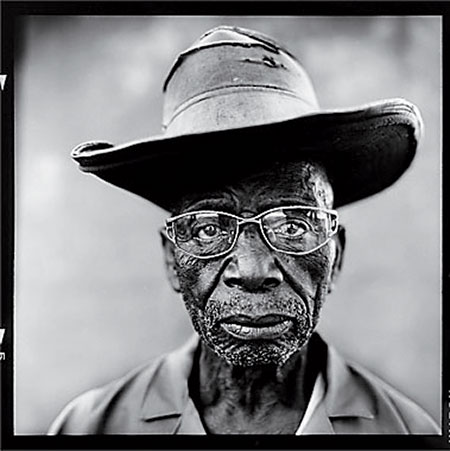
Congo: 50 years, 50 lives: Congo: Tuidike Mibanga Leon
Leon Tuidike Mibanga, chief soothsayer, Shamatenge 'I am the oldest man in the village, age 82. My rod is a sign that I am chief soothsayer. The carved snake is a symbol of my power. With this rod I can save lives and punish people. Couples sometimes come to me because they can't have children. Fertility sits in this rod and comes from the forest and the Savannah. It is a rod of life.'
Photograph: Stephan Vanfleteren/Panos Pictures
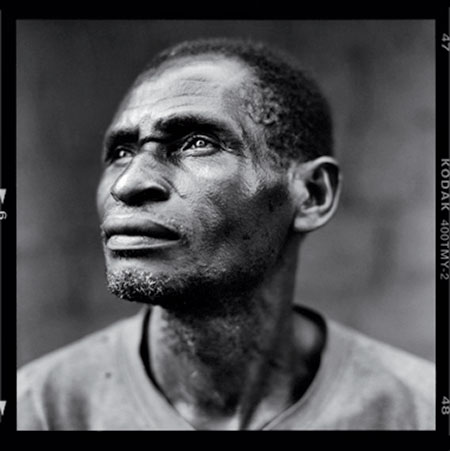
Congo: 50 years, 50 lives: Congo: Tuite Raphael
Raphael Tuite, farmer, Shamatenge 'I am not working today. It is my "rest day". Normally I go off into the forest for 5km with my machete, but today I stay sitting in the shade of my tree. Resting and enjoying. The manioc will undoubtedly grow today just as well without me.'
Photograph: Stephan Vanfleteren/Panos Pictures
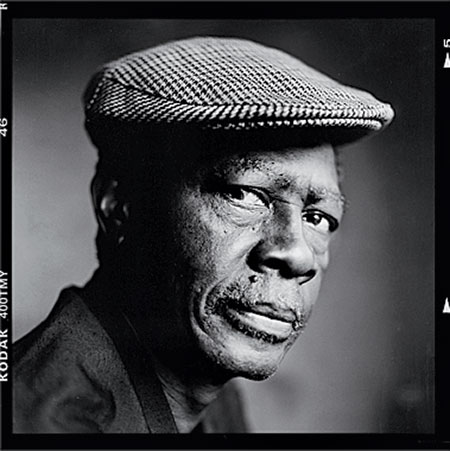
Congo: 50 years, 50 lives: Congo: Vincent Lombume Kalimasi
Vincent Lombume Kalimasi, writer 'I dream that my children shall have their own dreams, and that they will grow up to be true men. My dream is the dream of my country. That we will get over our misfortune. I am truly optimistic, but not for tomorrow. Perhaps for 200 years into the future. I'm a believer. My dream belongs to the magma of all dreams. It's the coming together of all these dreams which makes a nation.'
Photograph: Stephan Vanfleteren/Panos Pictures
Congo: General Malick
Malick Kijege, military general 'My dream for the Congo is for an ex president, just someone simply who hasn't been assassinated, who hasn't gone to live in exile, who hasn't had any reason to go and live in exile, who doesn't have to illegally stay in power, but who can continue to live here peaceably at the end of his term. Do you know we only ever had one single minister who's voluntarily stepped down from power. The rest hang on for dear life.' Photograph: Stephan Vanfleteren/PANOS

Photograph: Stephan Vanfleteren/PANOS
Sign up to read this article
Read news from 100’s of titles, curated specifically for you.
Already a member? Sign in here
Related Stories
Top stories on inkl right now
Our Picks
Fourteen days free
Download the app
One app. One membership.
100+ trusted global sources.