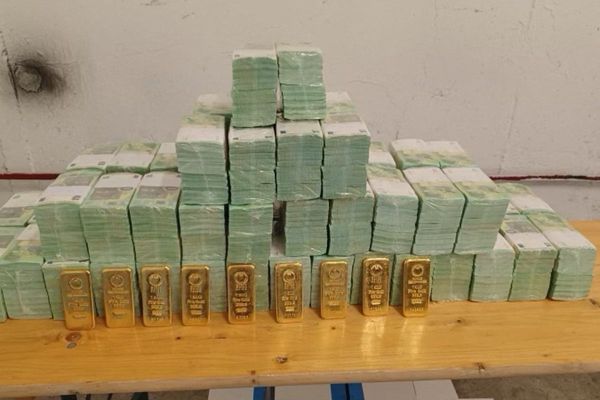
A conflict between Commonwealth and ACT laws could be raised over a proposed drug decriminalisation bill due to the seriousness of some drugs included in the bill such as ice, lawyers have said.
A push to decriminalise small amounts of certain drugs including ice, heroin and cocaine is being examined by an ACT Legislative Assembly committee.
The committee heard from lawyers about a potential inconsistency between Commonwealth and ACT law. The same issues were raised when the Assembly passed laws to legalise cannabis in 2019.
At the time, former attorney-general Christian Porter said the ACT law had no effect, given Commonwealth law trumps territory law. However, the federal government has not yet intervened and there has not been a test case meaning the issue remains unresolved.
But the ACT Law Society told an Assembly committee hearing the issue could arise given the drugs were more serious than cannabis.
"We also have concerns that we did raise previously in relation to cannabis in relation to the interplay between the Commonwealth and territory legislation," ACT Law Society criminal law committee chair Michael Kukulies-Smith told the committee inquiry.
"And it would seem that from a practical standpoint, given the general hierarchy that is assumed between the drugs ... that the prospect of that issue arising seems greater in relation to these drugs, than perhaps in relation to cannabis."
However, ACT Law Society criminal law committee member Paul Edmonds said the inconsistency between the laws could be less as the drugs are effectively still illegal.
"It would be accepted that potential inconsistency arguments in relation to this bill, save in respect of methylamphetamine ... perhaps are not as significant an issue as the recent effective legalisation of cannabis," Mr Edmonds said.
"That's partly because under this bill, the various substances referred to would still remain illegal to possess so to that extent there's no inconsistency with Commonwealth law."
But Mr Edmonds said the possession amount of two grams for methylamphetamine proposed in the ACT bill would be inconsistent with Commonwealth law.
That is because methylamphetamine is the active ingredient for both ice and speed. Mr Edmonds said under Commonwealth law the trafficable quantity for speed was two grams but for ice it was 0.75 grams.
"It appears there has been some oversight by a legal officer advising the parliamentary draftsperson in respect of the bill," he said.
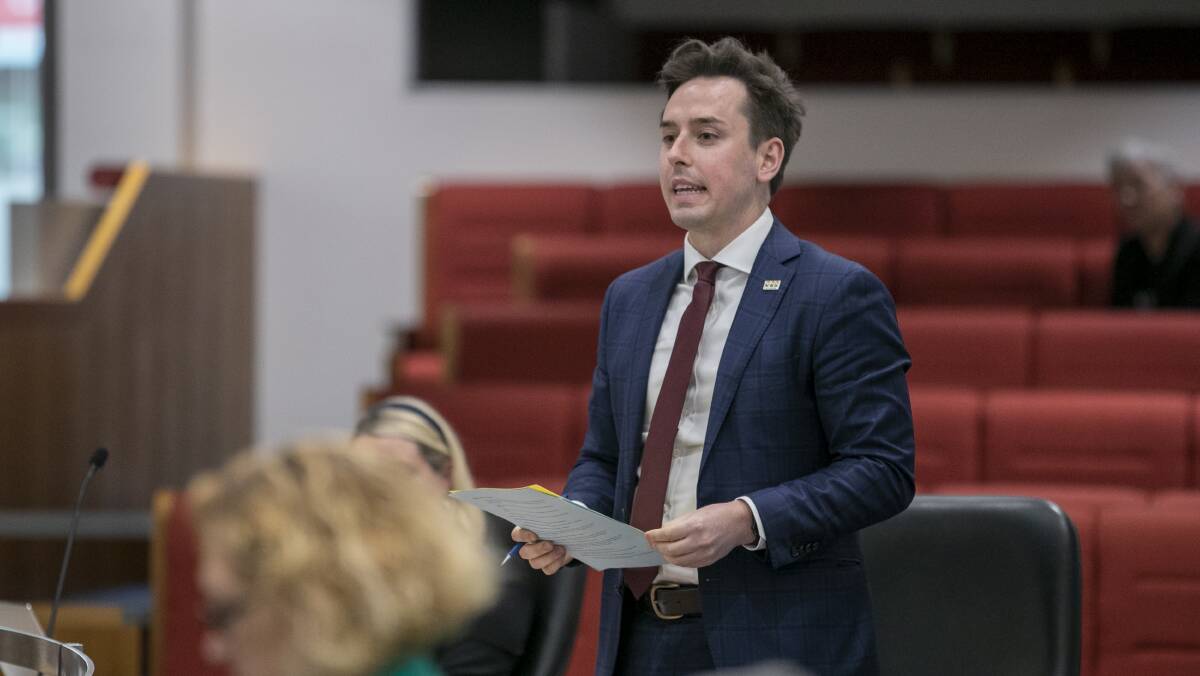
The private members' bill, introduced by Labor backbencher Michael Pettersson, bases the possession amounts on the trafficable quantity under Commonwealth law. It sets a possession limit of two grams for cocaine, ice and heroin and 0.5 grams for ecstasy.
Those caught with drugs within the possession limits would face a fine of $100 as opposed to going through the criminal justice system.
MORE A.C.T. POLITICS NEWS:
- 'We shouldn't be doing illiberal things' Coalition senator backs ACT's euthanasia rights
- Difficult shift before virus is managed in ACT community: Health Minister
- Symbolic shift: working to find the right emblem for the ACT
ACT police have also been put in a precarious position over the legalisation of cannabis as to whether to enforce Commonwealth or ACT law. Police have adopted internal governance procedures to help with this.
But Australian Federal Police Association president Alex Caruana said in the hearing on Friday that members were put in a "conflicting position".
He said officers used discretion, and some actually still charged for cannabis possession.
"I'll be honest, there are police officers out there that will charge members if they are caught with cannabis under the current legislation," Mr Caruana said.
Mr Caruana also said he would lobby the Commonwealth to act should the proposed bill in its current form pass the ACT Legislative Assembly.
"We will be lobbying the Commonwealth to act, because a lot of those drugs we would say aren't socially acceptable and they wouldn't pass the pub test," he said.