There is nothing more strange than the recent past. Before it becomes hallowed by time, before it becomes dismissable with a shrug and an “Oh, everything was SO different then” it is just … bizarre. How bizarre that children were once given free milk in school and sold sweet cigarettes in the shops outside. How odd that buses once had conductors with little machines hanging round their necks that actually printed your ticket out once you had handed over a handful of small coins. How extraordinary that when I was at university it was only a tiny number of the very nerdiest of nerds, taking degrees in computer science, who were using an inexplicable thing called email to keep in touch with the nerdiest nerds next to them and across the oceans.
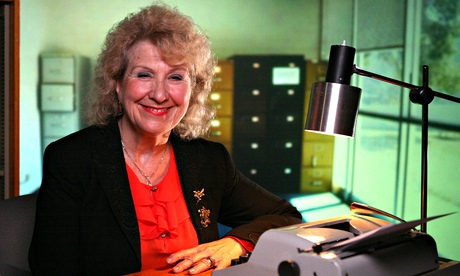
The latest instalment in Channel 4’s Confessions of … series took us into the world of secretaries, from the 1960s to the present day. For the first third of the programme, it wasn’t the sexism that made you gape (yea, verily, but Mad Men lied to us only with regard to the likely handsomosity of its gropers – not one of the reformed-by-legislation practitioners of the yucky art looked anything like Don Draper) so much as the more incidental details of office life. Leaving a job one day because you couldn’t do it or didn’t like it and walking into a new one the next. Two-hour, three-course, silver service lunches – not for the bosses, but their staff, every day. Being let off early if you had a “do” to go to in the evening. Getting your knitting out for half an hour until your supervisor came round and told you it was time to do some work again. It spoke of a vanished world of plenty – plenty of jobs, plenty of perks, plenty of life – that for anyone under the age of 50 sounded more like a dream than something that existed well within living memory.
After that quick recap of the highlights, however, the programme deepened and darkened as we returned to that whole groping thing. Former secretaries – now morphing into personal assistants as the job became more professionalised and computerised and many of whom would eventually climb high up the corporate career ladder – recalled being pressured for sex (“I don’t think he cared whether I liked him or not”) by married bosses, or dragged into empty offices and spanked and thrown to the floor by those they’d displeased (“It didn’t occur to me to complain – I don’t know who I would have complained to”).
Legislation arrived to help, but while it did so in the long term, in the short term it simply pushed the harassers underground. And even when pressed into active service, the process took – still takes – its own toll. Vanessa Turley’s boss tried to force her to give him a blow-job and it took two years, during which she became suicidally depressed, for her to emerge victorious at a tribunal.
It’s a wonderful, thorough series that manages to be dispassionate and brilliantly nosy at the same time. Next week it ends with confessions of teachers, but a second series surely beckons. You don’t take just one trip around a foreign country as strange and fertile as this.
Another unexpectedly engrossing offering last night came from Channel 5’s Living on the Edge: Blood in the Sea, the first in a three part series of documentaries made by one man – Chris Terrill, who is basically Bear Grylls with anthropological chops. With camera in hand he follows people who wrest their lives and livings from some of the most extreme and unforgiving environments in the world. Last night we watched Mauritanian fishermen in West Africa set sail in the pitch dark and light-, radar- and GPS-free boats to try to capture the fish on which they, their families and their local economies depend.
It began very much in a Boy’s Own adventure style (“They work these dangerous oceans with nothing but muscle and guts!”) but like Confessions, quickly deepened into something much more satisfying and rewarding. Tirrell, as his own cameraman, can’t get involved in what is going on, so we are spared the otherwise inevitable brake on proceedings as the presenter tries to emulate his subjects’ skills. We are given time to learn about and appreciate not just the muscle and the guts, but the danger and the glory, the primitivism and ingenuity of it all, the fragility of the flesh and of a society in which so much depends on the luck of the night nets’ draw. It was an hour that left you understanding both Terrill and his multi-multilingual interpreter Ahmed Taleb’s awe and admiration, and the boat captain’s wish for a better life for his son.