Composer Hisato Ozawa (1906-53) made his name as a composer in the West before World War II, composing about 1,000 works in his lifetime. But after his death, he remained an almost forgotten figure for a long time.
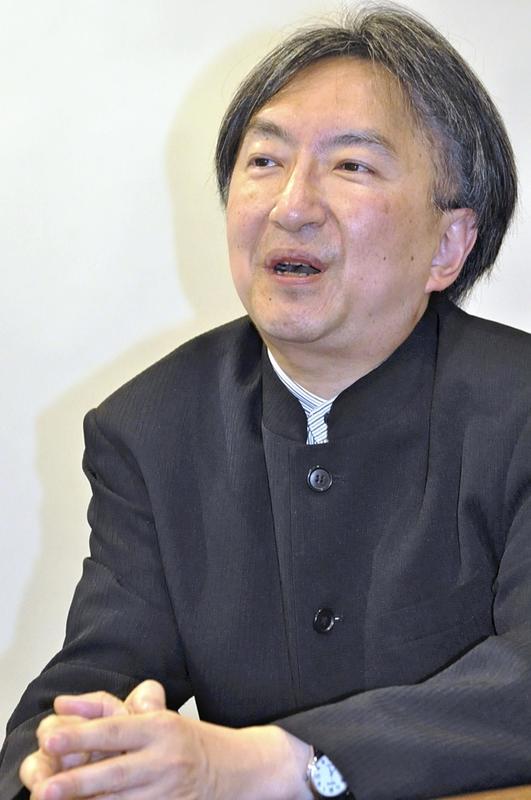
Now his genius is being rediscovered, with music critic and Keio University Prof. Morihide Katayama explaining why.
Ozawa, a native of Kobe, went to Boston in 1930 to study music. He composed many pieces there and conducted the Boston Symphony Orchestra in a concert featuring his work. He then moved to Paris and won praise by great composers of the day, such as Honegger and Ibert.
But after returning to Japan, Ozawa failed to win the recognition that he deserved, partly because of WWII. He wrote music for radio and films, and taught music as a professor of Kobe College, before passing away at the age of 47.
"He didn't fit in in various aspects of the music scene in Japan at the time, such as what the scene demanded and the levels of Japanese musicians' skills and the audience's ability to understand music," Katayama said.
Most of Ozawa's works were neither published or recorded, but Katayama found that the composer's bereaved family kept a vast amount of his manuscript scores. Based on them, performances of his works began taking place little by little from around 2003.
In July, a double-disc album of Ozawa's music was released on the Denon label. Titled "Ozawa Hisato no Geijutsu" (The Art of Hisato Ohzawa), it features a live recording of a concert of his music at Suntory Hall in Tokyo on Sept. 3 last year, which was performed by the Japan Philharmonic Orchestra under the baton of Kazuki Yamada. The album produced by Katayama contains the world premieres of Concerto for Double-Bass and Orchestra and Symphony No. 1, both completed in Boston in 1934; and Piano Concerto No. 3 "Kamikaze" (1938) -- the title refers to an airplane named Kamikaze-go that successfully flew between Tokyo and London in 1937.
"You can recognize the sonority of modern French music, such as works by Debussy and Ravel, [in the symphony] but this work also has a structural twist of a grand symphony, which reminds one of post-romantic music. Its eclectic and chaotic feel, in a good way, is similar to Mahler," Katayama said in appreciation of the symphony.
As for the Contrabass Concerto, he said, "One of the movements sounds like noh music translated for an orchestra. Obviously, he incorporated Japanese elements into this work."
Ozawa's music has a distinct character, Katayama said, adding, "He was also radical and expressed the chaos of his time."
"He is a composer who must be discussed alongside such composers as Kosaku Yamada, Saburo Moroi and Akira Ifukube, especially when you speculate on the history of Japanese compositions in the first half of the 20th century. His works deserve regular performances by major Japanese orchestras," Katayama said.
Passing on the music
A biography of Ozawa was published last year. Titled "Tensai Sakkyokuka Ozawa Hisato" (Genius composer Hisato Ozawa), the book released by Misuzu Shobo was written by Mikiko Ikushima, a lecturer of Kobe College. In 2006, Ozawa's family donated to the college about 30,000 source materials related to Ozawa, including his manuscript scores. Ikushima is the head of a project organizing the materials and promoting his music.
Most of Ozawa's works remain unpublished. Many musicians can perform a piece of instrumental music only after the score has been edited and parts for all the instruments are available.
Ikushima is hoping that interest in Ozawa's music will grow further. "We must keep on working on publishing the final version [for each work] and pass down his music for posterity," she said.
Read more from The Japan News at https://japannews.yomiuri.co.jp/