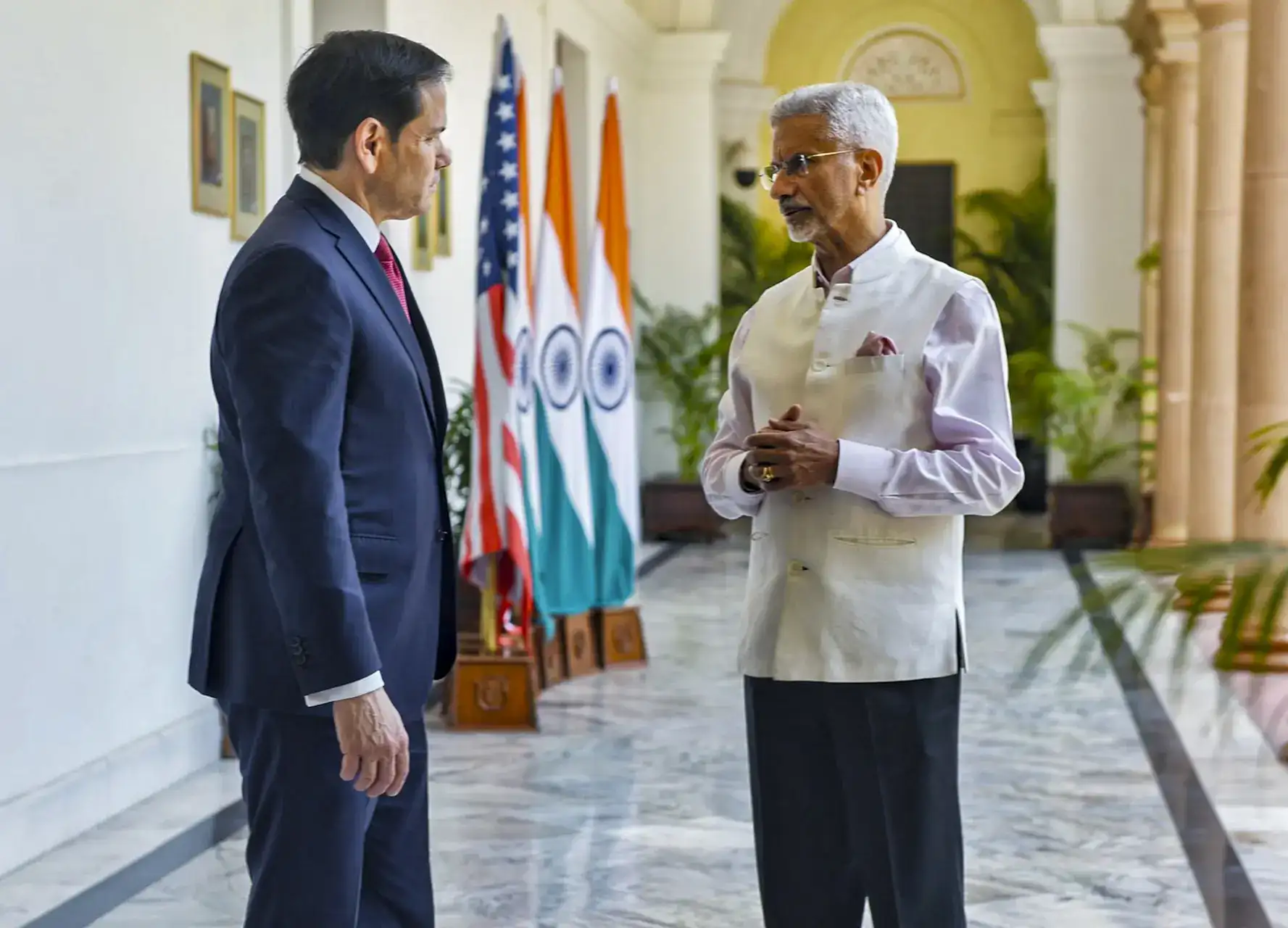
US Secretary of State Marco Rubio told External Affairs Minister S Jaishankar that all commercial vessels in the Strait of Hormuz must immediately comply with orders from American forces, and that violations of the US blockade and the illicit transport of Iranian oil will not be tolerated, according to a statement from the State Department.
The statement, attributed to Principal Deputy Spokesperson Tommy Pigott, said the two officials discussed recent events in the Strait of Hormuz. "The Secretary stressed that all commercial vessels should immediately comply with orders from US forces as they seek to uphold peace and security in the Strait," it said.
Also read: Indian seafarers' deaths, disputed attacks and a widening US-Iran blame game
The call comes days after Jaishankar lodged a strong protest with Rubio over attacks by the US Navy in the Gulf that killed three Indian mariners, saying such lethal actions against commercial shipping were not justified.
A Palau-flagged tanker, MT Settebello, was struck in the Gulf of Oman on Wednesday, killing three of the 24 Indian nationals aboard. US forces said the vessel had breached the naval blockade imposed on Iranian ports. Another Palau-flagged tanker, MT Marivex, was hit on Monday with 24 Indian seafarers on board, all of whom were safely rescued. A third vessel, the Guinea-Bissau-flagged MT Jalveer, was struck on Thursday and had 20 Indian sailors on board.
India also summoned the Charge d'Affaires of the US Embassy in New Delhi to formally lodge its protest over the attacks.
Also read: Shipowners on edge for news on Hormuz as ‘dark’ oil flows swell
Official estimates say 622 Indian seafarers on 13 India-flagged vessels are currently operating in waters to the west and east of the Strait of Hormuz. Nearly 18,000 Indian nationals are employed on foreign-flagged merchant ships across the wider Gulf region.
The US imposed a naval blockade on Iran on April 13 following the failure of the Islamabad Talks. The blockade has seen 85 vessels intercepted and three ships seized, according to CENTCOM.