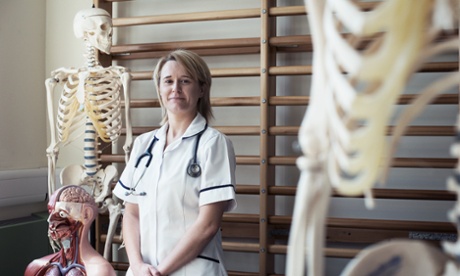
“I never wanted to do anything else. My dad was a semi-professional footballer and had some physio, which introduced me to the profession. I wasn’t clever enough to be a doctor and I loved the idea of helping people get back to living their lives,” says Jackie Hammerton, who has been a physiotherapist for 30 years.
Today, Hammerton works two days a week in private practice and spends the rest of her time as programme lead for physiotherapy at Sheffield Hallam University, where she helps train the next generation of physiotherapists. Among them is Shelley Hassall, who has just graduated from the only UK practice-based learning degree programme designed exclusively for physiotherapy support workers.
Hassall was attracted to the course because she received the equivalent of her salary while studying and because she wanted to become a qualified physiotherapist: “I love the rehabilitation part of the work – the physical improvement you see in people and helping them get back into their world.”
There are typically two applicants chasing every course place, but in Sheffield the competition is even fiercer; for the 87 places on Sheffield degrees this year there were about 950 applicants.
So what do admissions tutors look for? “It’s really important that students understand what physiotherapists do,” says Hammerton. “We don’t want them thinking they’ll be running on to the football pitch to rub down David Beckham’s legs. They have to understand the breadth of the job.” Prospective students need to show compassion and motivation, she says: “When people are in pain it’s not easy to get them moving. You have to show empathy rather than sympathy.”
Nina Paterson, CSP’s education and continuing professional development adviser, says work experience and an understanding of what it means to be a health professional in the current environment are vital: “You need to have an understanding of the ageing population, but also be a rounded individual with the right values and ability to care.”
Physiotherapy is graduate-entry and 36 UK universities offer undergraduate or postgraduate options. Once qualified, graduates are entitled to register with the Health and Care Professions Council, which allows them to practise, and become a member of the professional association the Chartered Society of Physiotherapy.
The full-time undergraduate programme takes three years in England but four in Scotland. Tuition fees for home students in England are paid in most cases and are fully paid for home students in Wales and Northern Ireland. Home students do not pay tuition fees in Scotland on undergraduate programmes, but do pay fees for the master’s programmes.
Case study: back in the chair
Hannah Jones is returning to physiotherapy after putting her career on hold to look after her three children.
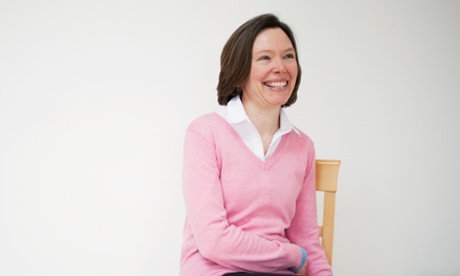
Hannah Jones gave up a physiotherapy career in paediatrics to look after her three children because of the challenges of juggling work and childcare costs. When her youngest child started school four years ago, she decided to become a teaching assistant, because the part-time role fitted in with her family commitments.
But now Jones (41) who lives in Weybridge, Surrey, is returning to physiotherapy after the headteacher at the primary school where she works announced that he wanted a physiotherapist to bolster his special educational needs team.
Jones must accrue the 60 days’ clinical practice and study time the Health and Care Professions Council regulator has made mandatory for those who have not practised for five years or more.
“The school is keen to develop a therapy service and is supportive of my return to practice, but it hasn’t been easy finding a clinical placement to get the supervised practice I need. I was lucky to secure one at my old place of work. I’ve really enjoyed having the opportunity for dedicated study time – something that is often difficult to squeeze in when you are working full-time.
“I am really looking forward to practising again and being an autonomous member of a team and having that patient contact with the child again – having that one-to-one and being able to make a difference. I am now halfway through my return to practice and can see how it’s all going to pan out and it’s very exciting to see it all come together.”