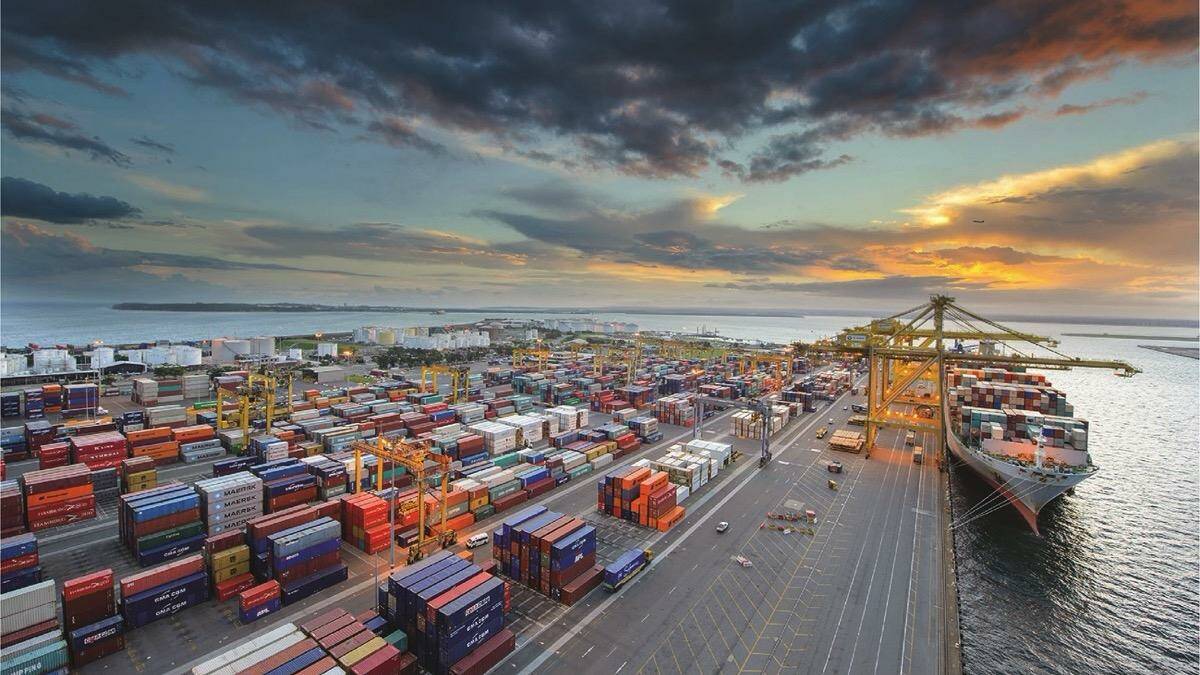
THE Australian Competition and Consumer Commission's decision to appeal against last month's Federal Court container terminal decision has been welcomed by the Port of Newcastle.
And it should be welcomed by the Hunter as a whole, because this terminal has long been recognised as the future use of the former steelworks site: job-creating infrastructure destined to play a crucial part in the industrial transition of this region if the export coal industry is wound down.
The ACCC lost its case, in part, because the court found the government was immune from competition law at the time of the privatisations.
This meant NSW Ports - the successful bidder for Port Botany and Port Kembla - had a "derivative crown immunity".
In the news
- COVID case numbers reach 172 today
- New Coon Island name approved by Lake Macquarie City Council
- More fines amid spike in COVID-19 public health order breaches at Lake Macquarie
- 'Freedumb' protesters set shocking example
- Tokyo Olympics day four: live coverage
The court also found that the compensation Newcastle would have to pay to operate a container terminal was primarily designed to boost the price of the Sydney ports, and did not have "an anti-competitive purpose or effect".
The ACCC still disagrees, and hopes to prove its case before a Full Federal Court.
Just before the ACCC went public, another player in the container saga issued a rare media release yesterday.
Mayfield Development Corporation had been negotiating to build a container terminal in Newcastle before the port was privatised, and had a similar case to the ACCC's lodged in the same court, before the same judge, Justice Jayne Jagot. Mayfield's case had been "stayed" to allow the ACCC's to proceed.
At various points in the ACCC case, Justice Jagot expressed doubts about the ability of both the privatised Port of Newcastle and Mayfield when it came to financing and building a container terminal.
Yesterday, Mayfield managing director Richard Setchell said he was "perplexed" to hear his company's efforts described by the judge as "unconnected to reality". Mayfield, now backed by the shipping giant Maersk, wants to return to court.
Whatever happens, it is manifestly unfair that a court should penalise any city, any region, from undertaking private enterprise.
Yes, a Newcastle container terminal would make use of state-owned roads and railways, and at this stage it appears the NSW government does not want the business to succeed.
Related reading
-
Opinion: there's the courts, then there's the real world
-
Editorial: Botany admits competition concerns but handcuffs 'not anti-competitive'?
-
Port says scrap penalties if Newcastle terminal 'fanciful'
But Australia is a country built on private enterprise, and Coalition governments - far more so than Labor - claim to represent the endeavours of private capital.
In refusing to acknowledge the anti-competitive nature of its port privatisations, the NSW government is acting more like Communist China than a political champion of free enterprise.
At its heart, this is a commercial dispute, and commercial disputes are always capable of resolution.
The cost of settling it will be somewhere between what NSW Ports demands, what the Port of Newcastle is initially prepared to pay, and what the NSW government is prepared to give back from what will otherwise always be tainted privatisation.
ISSUE: 39,628