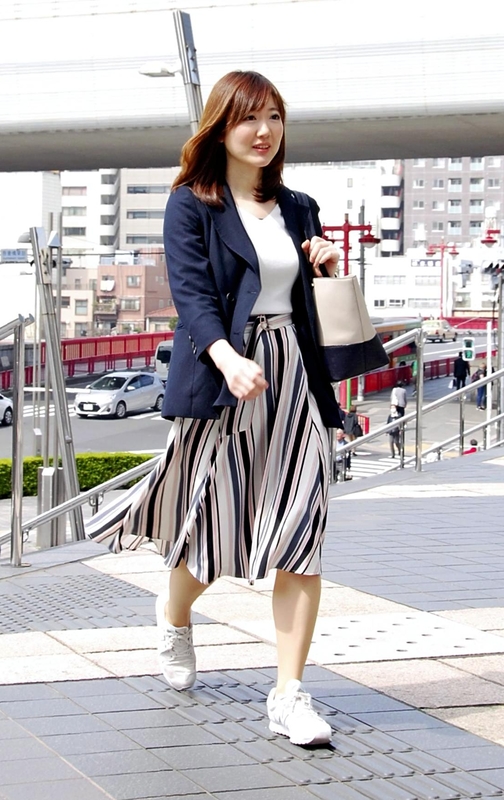
A growing number of companies are encouraging their employees to wear sneakers during their commute, as part of efforts to address their lack of physical exercise.
Some offices have put up maps indicating the approximate walking distances to nearby stations, while others are holding competitions among their employees for the number of steps they walk. The government is also supporting so-called sneaker commuting as an effort in which anyone can easily participate.
In January, Tokyo-based Asahi Soft Drinks Co. started allowing its employees to come to their offices in sneakers.
Mariko Inomata, 27, of the sales department used to take the bus, but now she walks between her home in Tokyo and the office, wearing sneakers for the 25-minute trip each way.
"I walk while listening to music, which makes me feel great. And I can start my job with energy," Inomata said.
The company has a map at the office indicating walking distances and the time it takes to get to nearby stations, calling for employees to get off one station earlier and walk the extra way.
Asahi Soft Drinks started distributing in March a pedometer app on employees' smartphones. It has also embarked on a program through which employees receive points for the number of steps they take, and exchange the points for prizes.
According to the Japan Sports Agency, 51.5 percent of adults played sports at least once a week in fiscal 2017. By age, 50 percent of people in their 20s exercise at least once a week, while people in their 30s, 40s and 50s were in the 40 percent range.
At least 80 percent of people aged from 20 to 59 said they felt their exercise was very insufficient or somewhat insufficient.
For that reason, the agency embarked on the "Fun plus Walk Project" in March as part of its efforts to have people increase their walking distance in their daily life such as in commuting, under the slogan "Take 1,000 more steps each day than usual."
The Chiba city government encourages its officials to wear sneakers when commuting, in line with the agency-led project. If the health benefits are confirmed, the city government intends to ask companies in the city to join the project.
Tokyo-based Tokyu Corp. has recommended since 2016 that its employees don sneakers while commuting, under its "Walk Biz" project.
The company's different departments compete with each other over the average number of steps taken and the participation rate in the project, using a smartphone app. The average number of steps the participants walk is about 8,500 per day, according to the firm.
"Sometimes I have to wear leather shoes when I meet with customers. If sneaker commuting gains recognition, more people may accept wearing sneakers as one of the working style like 'cool biz,'" said Takeshi Komatsubara, 31, a Tokyu employee in charge of the project.
Ryoko Mori, a lecturer with the Japan Service Manner Association, which provides education on business etiquette, said wearing sneakers helps maintain employees' health, but it is not common to don sneakers in business settings.
"It's essential to consider wearing suitable shoes when having a business talk with customers. At first, I suggest you wear sneakers while commuting or working in the office," Mori said.
Match shoes to suits
Suits and leather shoes are a normal combination in business, but what kind of sneakers should be worn with work clothes?
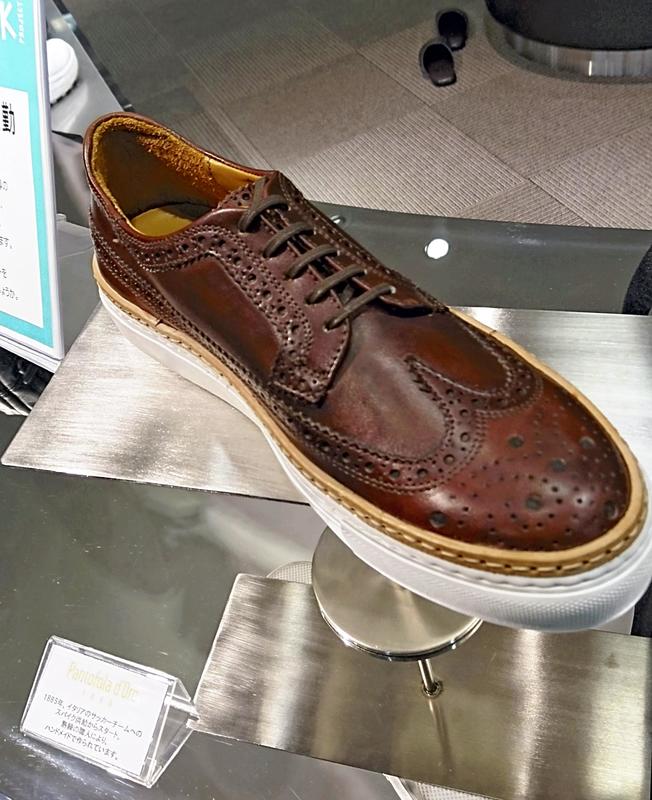
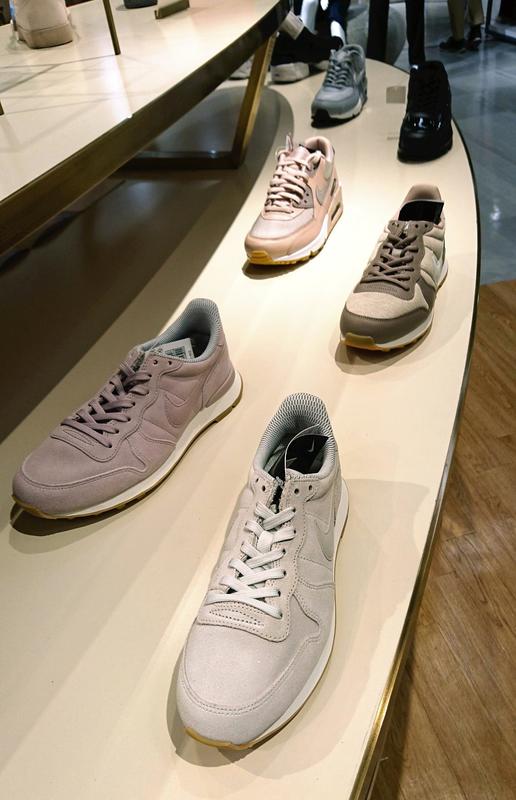
Black, white and gray sneakers go well with suits, according to Takafumi Kanke, 34, the senior manager of the Shinjuku Takashimaya department store in Tokyo. The department store supports the agency's campaign to promote the wearing of sneakers.
Sneakers with a shoe-like upper are chosen without hesitation by people who usually wear leather shoes.
With a dark-blue necktie, Kanke suggests sneakers with dark-blue logos or lines, but it's best to have a maximum of two colors on one's sneakers. "Sneakers with three colors stand out more than the suit," he said.
Women may want to color-coordinate their accessories and the sneakers' logo.
"There are a wide variety of combinations, so people should try different ones," Kanke said.
Read more from The Japan News at https://japannews.yomiuri.co.jp/