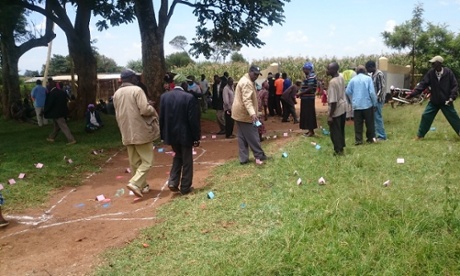
Sanitation has emerged from being a neglected topic to being a key priority for donors and governments. As its priority has increased, the approach to sanitation has shifted to be more of everyone’s issue in the community as well as being driven by the private sector.
Community Led Total Sanitation (CLTS) as an approach for ensuring that the rural communities have increased access to sanitation has been successful in many communities in Africa and Asia since its inception in 2005. If one takes time to take stock of gains made, the figures are impressive. While we swiftly transition from the MDGs to the SDGs, we are obviously taking stock of previous successes and failures and looking at what has been achieved in the past decade in WASH, among many other development aspects.
Great work and resource has been invested in implementing CLTS in countries that were considered to have low latrine coverage and poor hygiene practices. Reports from various countries, programs and donor partners indicate the massive behavior change achievements made with several thousands of villages being declared Open Defecation Free (ODF).
This has tremendously contributed to the global progress on sanitation and hygiene. That said, the question that remains is; how does one sustain gains made and build on them? For me, most importantly, the question is, who has the responsibility of sustaining gains made in CLTS implementation?
When the CLTS process is initiated, the ultimate goal has been to ensure that the communities become ODF. This has been widely achieved, whilst many communities have increased their capacity for dealing with sanitation issues. This process has done more than just to ensure that communities are ODF. The approach has also improved community cohesion, positively impacted gender and duty bearer and rights holders’ relations, as well as the involvement of non-traditional sanitation actors.
Government staff, major donors and implementing NGOs pull out after communities are declared ODF. That is when the real work begins.
Various aspects of sanitation kick in and take the up the validity of sustainable gains made during the CLTS process. At this point in time, sanitation becomes more than just toilets and moves forward to involve other sector players whilst cutting across various sectors such as agriculture, trade, education, energy, economics etc.
Knowing the difference between getting something for free vs. having to pay for something with value, has caused a big shift in the sanitation sector. By paying for sanitation, people become aware of its value and are motivated to use sanitation services more carefully. Because governments often minimally support rural household sanitation , their products are not so attractive. With this in mind, the private sector has stepped in to the sanitation field to provide what people really want, as they easily understand the market needs. Thus, the emergence of sanitation entrepreneurs.
Economically, there are currently two sanitation business models that have emerged:
Isolated business model – whereby the focus is on a single activity on the sanitation chain, such as toilet usage, collection or treatment
Integrated business model – that covers the entire business sanitation chain.
There are various examples of these in Cambodia, Uganda, Niger, Kenya, Haiti. Sanitation entrepreneurs were unheard of a decade ago, but currently, there is a groundswell of these kinds of businesses across continents.
Various countries have developed innovative ideas to sustain and augment ODF, making sanitation a movement rather than just being about toilets. A few cases to note:
- a) Madagascar has a team of identified and trained Community Consultants and Champions who work closely with the government, through the traditional and cultural leadership structures in the lowest units known as Tangalamena or Ampjanka (Pasteur et al 2014).
- b) Malawi has trained sanitation entrepreneurs through support from UNICEF and also works with traditional authorities, extension agents, Health Surveillance Assistants (HSA) supported by care groups that were traditionally not sanitation implementers (Govt of Malawi 2015)
- c) Kenya has identified Sanitation champions, trained sanitation entrepreneurs and Natural Leaders in all the 248 sub counties who would ordinarily not be involved in sanitation. And has integrated CLTS gains with the Community Health Strategy rolled out by Government, working with Community Health Volunteers.
- d) Ethiopia is working with Community Health Extension workers beyond ODF, who were previously not involved in sanitation matters. (Singeling 2015)
- e) Somalia is fast learning from other countries and is now working at integrating ODF indicators as part of routine health monitoring, thus entrenching sanitation as part of basic health programming appearing in the job description of health workers.
CLTS has opened new frontiers to community work that was previously not envisaged. Often, the implementation agencies trigger a chain reaction and let the fire spread in the communities through cross-learning or self-triggering of villages.
Soon enough, communal challenges borne out of awareness created during the triggering process through shame and disgust produce other positive byproducts. This approach has proven to be truly self (community) driven despite being initiated by implementing partners.
Content on this page is paid for and provided by WSSCC, a sponsor of the Guardian Global Development Professionals Network.