The EU carries out so much work on such a wide scale that it is vitally important to keep the public and the media updated on its activities. Communicators in the EU work on a variety of different key issues. These include managing the EU's digital engagement, liaising with press on urgent matters, developing and delivering communications campaigns and working in public relations to highlight the outcomes of EU activities.
Because the work of the EU affects all of us on a daily basis, it needs to be open and transparent. This means the role of communicators is incredibly important in explaining what the EU does, how it affects us and allowing us to find out more.
There has never been a more exciting time to work as a communicator for the EU institutions.
Antonia Mochan's career has taken her to Canada, Ukraine and the UN General Assembly in New York and she has worked on subjects ranging from nuclear fusion to education, training and youth. As she says:
"It's a career I'd readily recommend."
Read more below.
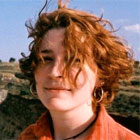
My EU career: Antonia Mochan
Employer: European Commission Representation in the UK
Occupation: Head of communication, partnerships and networks
Studied: Government (including French and German), LSE
After my degree, I went on to the UK government's European Fast Stream programme and while I was there I started the recruitment competition for the EU and in 1995 I was transferred to Brussels.
I started work immediately for the Commission. My first experience was in the Directorates-General (DG) for Education, Training and Youth. Those early years were an exciting time for me, as I moved around the different departments of the Commission. For example I was involved in the setting up of new structures for the Common Foreign and Security Policy, the first efforts to make sure the EU spoke more coherently in foreign policy, and could do its own military and civilian operations, such as the police and justice support in Kosovo, or the anti-piracy naval force off Somalia. This job also involved travelling to Canada, Ukraine and the UN General Assembly in New York.
In 2003 I became involved in media relations for the Commission when I was recruited as the spokesperson for Employment and Social Affairs, working directly with the Commissioner. A spokesperson is the primary press officer for a particular subject, taking questions from journalists, drafting material for the media, preparing the Commissioner for his or her media activities, and organising press conferences and interviews. I then became the spokesperson for science and research, a fascinating job making the case for the EU making more of its science and innovation base, and allowing me to get involved with some amazingly exciting projects, such as ITER, the nuclear fusion research project, and Boron Nucleus Capture Therapy, a promising new way of treating very aggressive cancers.
I then moved to London to work as head of media in the UK. Basically this meant being the Commission's spokesperson in the UK. – I'm now working in a slightly different role, building partnerships with organisations outside the EU to talk about issues of interest in the UK. I have particular responsibility for extending our partnerships and networks outside London, to make sure we are hearing the full range of views from across the UK. Since coming to London I've also been involved in developing our use of digital media and our cultural activities in the UK with the British creative community and also cultural organisations from other EU countries.
It's a career I'd readily recommend. I'm not saying it's easy – it can be stressful at times. But it's definitely varied and stimulating. It's difficult to describe the sense of achievement when you have briefed on a tricky issue, such as the use of human embryonic stem cells in research, and seen that the Commission's message has been properly understood and passed on to readers.
I have had jobs which took me all over the world and others where the extent of my travel was a monthly trip from my office to the Commission's conference building. There are opportunities in the European Commission for vets, engineers, scientists, doctors, linguists, generalists, PR professionals, agronomists - you name it, there's probably a Directorates-General of the Commission that needs your skills.
Content produced by EU Careers.